In 2016 Al Murray – best known for his comedy creation The Pub Landlord – told Prog about his eclectic attitude to music, which gave rise to his extensive and wide-ranging record collection.
When I went to boarding school in Bedford, everyone was into punk. I thought, “I want to be into something for myself – how can I carve out my own thing?” Someone had a copy of Genesis’ Seconds Out so I got into that. The sound of strings doesn’t frighten me: I don’t come at prog thinking it’s elitist music. I played in orchestras growing up and they were not elite; they were people scraping away to make a nice sound. So I don’t have an allergy to musicianship or classical music. I was always coming at rock music with that on board.
The first album I bought was And Then There Were Three. You’d go into Andy’s Records in Bedford with four quid in your pocket and think, “I like that band, but I can’t afford that double album, so what can I get?” It was all about cassette tapes for me – at school you couldn’t have a record player and you had to pack things away neatly, like being in the army. So you might not buy that expensive double, but you’d get what was in your price bracket.
Browsing in record shops was exactly how Nick Hornby describes it in High Fidelity: you don’t just look at the records you want, but the ones you already have; you’re touching base. I was looking at stuff I couldn’t afford and thinking, “One day I’ll buy that copy of Relayer.”
I learned about prog through making friends who were into it. When I got to uni (I studied History at Oxford) on my first weekend I met Simon Oakes from Suns Of The Tundra and he had a tape of Genesis at Knebworth – wow, that was like gold dust. At uni I had more money to spend and that’s when I really started listening to and playing music.
I’d studied percussion at school and I played in a jazz band there. On my year off I was in a covers band who I tortured into playing Solsbury Hill. I was like, “Right lads, this is in 7,” and they were like, “What the fuck are you on about?” “Basically we miss a bit of the end of this bar – don’t worry, I’ll play it right.” And then there’s that bit where we’ve all got to really count.
At uni I had a friend who was a massive Rush fan so occasionally you’d try and play some really difficult music. It was fun, but I always just tried to have a broader palette than fall back on the music I really love – I’m a big fan of lots of “normal” rock and pop too. Although I do remember a friend coming round with a Jane Siberry tape and me throwing it behind a cupboard because I wanted to listen to Larks’ Tongues In Aspic. I lied to him about it for ages. He still won’t know – he’s not a Prog reader!
From Larks’ Tongues to Red, that period of King Crimson is really amazing – you can’t take it as three records; it’s one hot stretch. Look at the YouTube footage. That music is angry for a reason. They’re all pushing to get space. When I moved into my first flat in London, Red was the soundtrack to nights in playing Risk. It’s my favourite Crimson album, and that’ll always stay with me.
I never got tribalism in music – if something’s good I’ll like it. But prog always felt like something I had to defend. Bowie walks along the faultline between rock and prog all the time. He inhabits the faultline – utilises it. Those Berlin albums are especially out there because Brian Eno’s an art rocker; and then you’ve got Robert Fripp. You’re not going to have Fripp on a record and it come out ordinary.
In the 90s I listened to a lot of Beatles. Revolver is the first prog record of all, and their best by a million miles. There’s a constant stylistic shift – each track is something one band alone would mine a career from. Tomorrow Never Knows is the invention modal, syncretic music that would become dance music – yes, the Beatles did that too.
Similarly, King Crimson’s In The Court Of The Crimson King isn’t the first prog album, it’s just the first that announces it is. The Who had been mining that seam for years and you can hear their effect on Genesis – who want to be The Who, but they’re too polite. They also want to be soul boys, but if you’ve got a classically-trained pianist in the band you’ll end up with Selling England By The Pound, which isn’t about having your heart broken but having your country broken – as worthwhile a lament as any love song.
Tool’s Lateralus sounds completely timeless; it doesn’t sound like it’s been glued together, like a Metallica record
My favourite Genesis record ia a toss-up between The Lamb Lies Down On Broadway – no one’s made anything that good for a very long time – and Duke, which is a very compelling record. I follow Genesis through the “pop” years too, because even singles like Mama are plain weird.
In the 80s and 90s prog lost its confidence – it had the shit kicked out of it and was told to go away. It went in on itself and doubled down on the gnarly bits rather than writing lovely melodies. Then people start not taking no for an answer and you got fantastic bands like Tool coming through.
Lateralus sounds completely timeless; it doesn’t sound like it’s been glued together, like a Metallica record – and I love Metallica, but their records do sound like they’ve been boiled in a bag a bit. You know Tool can play the record from start to finish. Danny Carey is such an amazing drummer; you wanna hear him, you don’t want to be deprived of that band.
The stuff I’ve got into in the last year has stemmed from Steven Wilson’s Hand.Cannot.Erase.. I was completely beguiled by that record. I always liked Porcupine Tree, but here he’s coming from pure melody, and you get this witheringly good band playing it. From there you listen to Marco Minnemann, who I’m a little afraid of because he’s a drummer. The Aristocrats stuff is hilarious; then there’s Nick Beggs’ stuff, and Craig Blundell, who’s a friend of mine – he does this prog dubstep grime project, Dr Octopus.
But my kids have influenced me on this last one: Elvis. They were really into him for a while and I don’t know where they found him. Suddenly they wanted The Sun Sessions on all the time. Elvis is prog rock: he invents rock and roll by taking two things and sticking them together. He’s even wearing capes by the end of it. In his Vegas period he invents orchestration in rock and roll in the way Jon Anderson describes how he puts his own music together.
Elvis would do that live: “I need a trombone here and the drummer to go nuts.” All the time Ronnie Tutt’s going for it with a huge drumkit. If you leave Elvis out of this you’re making a fundamental mistake. He came onstage to Also Sprach Zarathustra – how much more prog could you be?
Southern Rock veterans Molly Hatchet have released their new single Once A Gambler, taken from the band’s forthcoming studio album Lost Horizon. The new album will be released worldwide through Steamhammer on 27 November 2026. Once A Gambler is available now alongside an accompanying video.
Guitarist Bobby Ingram says the song is about living at full speed and repeatedly putting everything on the line. “Win or lose, playing the game, living your life at high speed. Gambling that the winner takes it all. Once a gambling man, always a gambling man with every aspect of life. Always thinking you are ready to bet it all, having a fierce attitude with no regrets. Living everyday with the positive attitude of betting everything.
“Even if losing it didn’t matter. The next day you were back at sitting down and gambling to win as much as you can. Never looking back, always looking forward and betting on your life’s winning to live another day and start it all over again but in another town when the winnings were good.”
Lost Horizon Tracklist
Firing Line (Enhanced Version)
Whiskey Desperado
Jacksonvillain
Dixie Highway
Lost Horizon
The Answer
Moonshine All Mine
Helter Skelter
Stand Up For Freedom
Stronger
Once A Gambler
Coming Home
Lost Horizon Release Formats
Standard stream and download
Exclusive LP version and CD/LP bundles with a shirt and hoodie through the Steamhammer shop
2LP gatefold edition on 140g black vinyl with padded inner sleeves and two coloured inserts
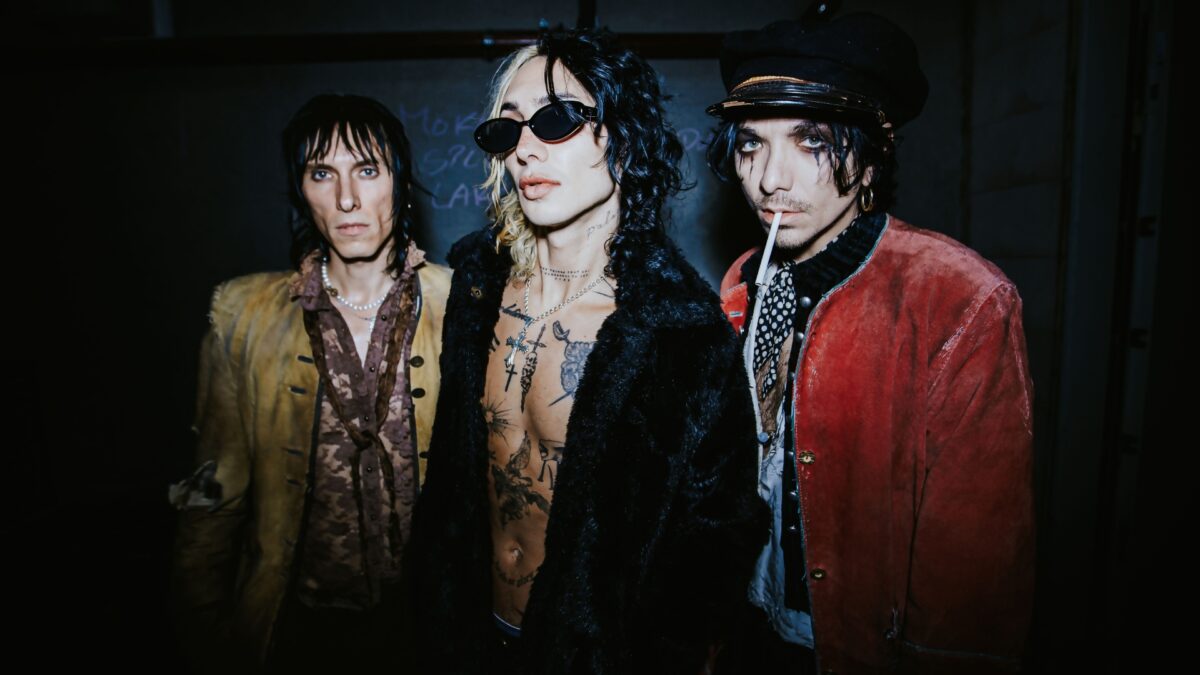
Palaye Royale have revealed all of the details of their new album ‘Amsterdamage’, and it is set to be an absolute riot.
The record is set for release on January 22 via Sumerian Records, and serves as the follow-up to the band’s 2024 full-length ‘Death or Glory’.
Drummer Emerson Barrett had this to say about what it means to the trio:
“I think if we didn’t have this album, we would have all kind of gone separate ways. After losing our mother, this is our phoenix rising from the ashes. Each one of us took our own paths in dealing with death, and rejoined not only as individuals, but with our partners, and as brothers. This creative bond was the thing that kept us together.”
The band announced the record with a special show outside of London’s iconic Kings Cross Station, which looked a lot like this:
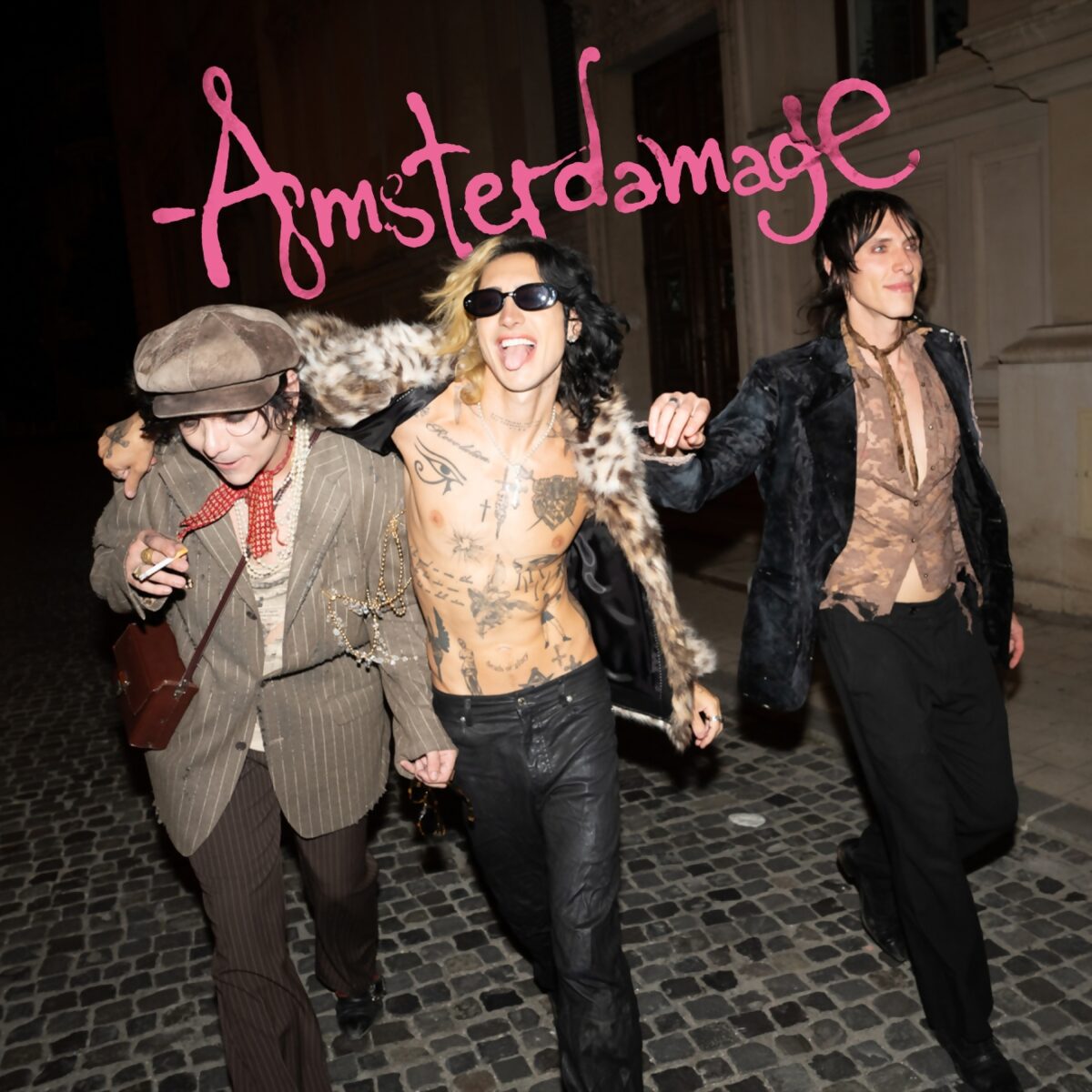
The artwork for ‘Amsterdamage’ is loads of fun and looks like this:
Whilst the tracklisting looks like this:
1. A Little More 2. Confidant 3. Lost in Translation 4. Amsterdamage 5. Hit the Sky 6. Fiending! 7. Heaven Can Wait 8. Baby Blue 9. Allergic to Myself 10. Bat Without Wings 11. As the Sun Sets 12. Déjà Là
You can also hear the first taste of the body of work now in the form of ‘Lost In Translation’, a gorgeously melodic piece of wonderlust and rock-and-roll wonderment.
Vocalist Remington Leith had this to say about the track, and where it fits into their whole journey:
We felt pretty nostalgic writing this one. It took us back to the music we grew up on which was a lot of mid 2000s Brit rock bands. We wanted something upbeat and one that would go crazy live but the lyrics represent wanting to make something work so bad, whether it be a dream or a relationship and it seems like something is in the way of it working out and trying to push through at any cost.”
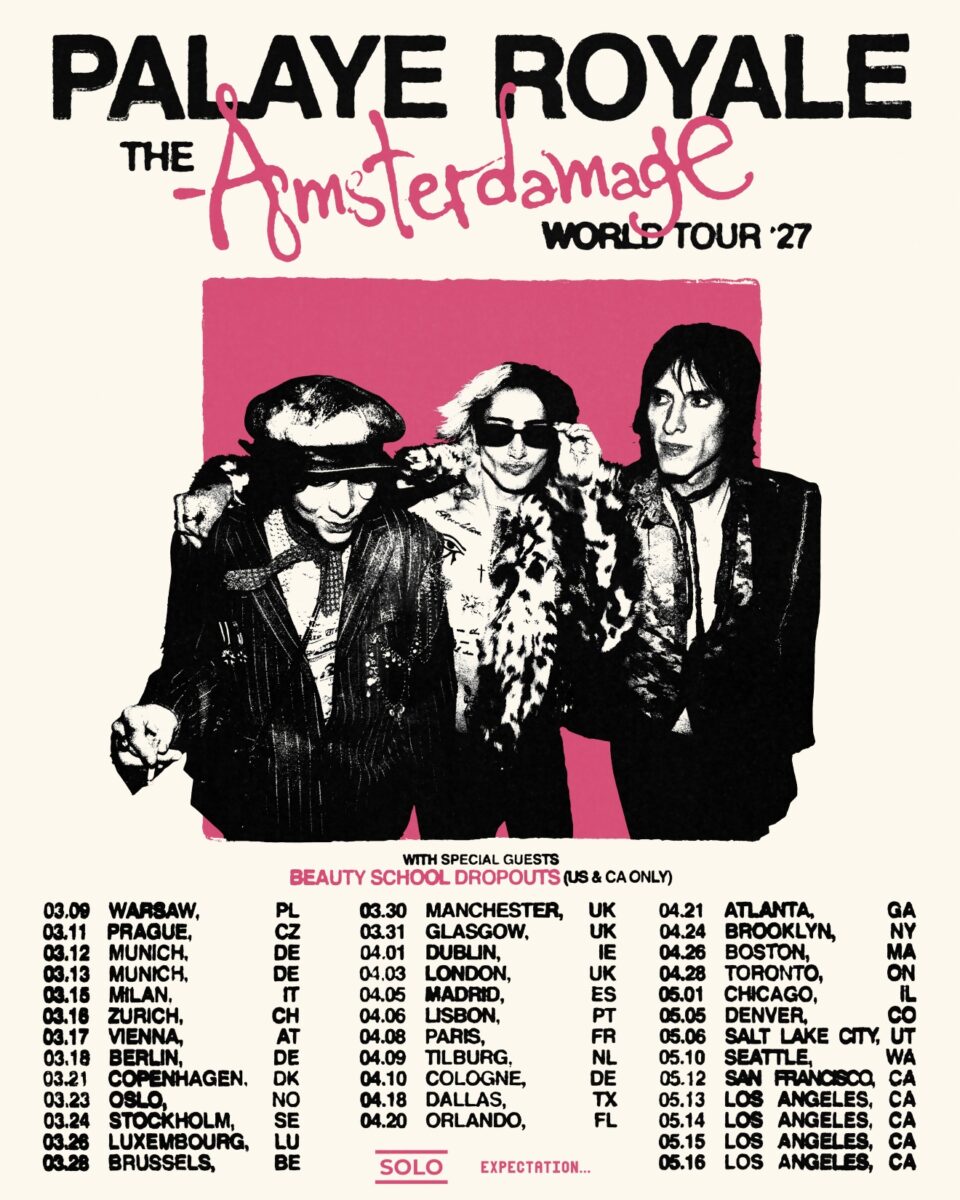
If that wasn’t enough, the band are also set to hit the road for an extensive tour across Europe and the US. Here are all of the dates:
MARCH 2027
09 – WARSAW COS Torwar 11 – PRAGUE Forum Karlin 12 – MUNICH Tonhalle 13 – MUNICH Kesselhaus 15 – MILAN Fabrique 16 – ZURICH Volkshaus 17 – VIENNA Gasometer 18 – BERLIN Huxleys 21 – COPENHAGEN VEGA 23 – OSLO Sentrum Scene 24 – STOCKHOLM Borsen Live 26 – LUXEMBOURG Den Atelier 28 – BRUSSELS AB 30 – MANCHESTER Apollo 31 – GLASGOW Academy
APRIL 2027
01 – DUBLIN 3Olympia 03 – LONDON OVO Arena Wembley 05 – MADRID La Riviera 06 – LISBON LAV 08 – PARIS Olympi 09 – TILBURG 013 Poppodium 10 – COLOGNE Palladium 18 – DALLAS The Bomb Factory 20 – ORLANDO The Beacham 21 – ATLANTA The Eastern 24 – BROOKLYN Brooklyn Steel 26 – BOSTON Paradise Rock Club 28 – TORONTO Massey Hall
MAY 2027
01 – CHICAGO House of Blues 05 – DENVER Ogden Theatre 06 – SALT LAKE CITY The Depot 10 – SEATTLE Neptune Theatre 12 – SAN FRANCISCO The Castro 13 – LOS ANGELES El Rey 14 – LOS ANGELES The Roxy 15 – LOS ANGELES The Viper Room 16 – LOS ANGELES The Fonda Theatre
Long Island-based hardcore metal brutalists Pain of Truth return with a righteously blistering new album, hot on the heels of their ongoing and permanently busy release schedule. Quantity has in no way replaced quality though, only given them a sufficient head of steam, writes MK Bennett. Hardcore is enjoying a glorious renaissance right now, thanks […]
As Butcher Babies prepare to release Nightbloom, Heidi Shepherd spoke to MetalTalk. Having spent considerable time looking backwards to some of her life’s darkest moments, she reveals her most personal album yet. For Heidi Shepherd, Nightbloom feels like an act of catharsis. Shaped through therapy and intense self-reflection, the album channels some of the most difficult chapters of her life into a deeply personal and raw body of work.
The album grew out of a period when Heidi Shepherd was forced to look back at experiences she had spent years putting to one side. Therapy brought some of those memories back into focus, but songwriting gave her somewhere to put them.
“The album, for me personally, is pretty much an autobiography.”
That is a theme Heidi Shepherd returns to repeatedly throughout our conversation. A genuine sincerity runs through the way she discusses Nightbloom. Nothing feels rehearsed or packaged. Instead, she speaks openly about a record that only emerged after starting therapy for the first time in 2024.
Like many, she discovered that revisiting old memories can drag long-buried emotions back to the surface. What followed became a massive catalyst for creativity.
“Being able to put these emotions into songs has turned a lot of negative experiences and negative emotions into something positive.”
Music has always offered an outlet for emotions that can be difficult to articulate anywhere else. What makes Nightbloom land different is the degree to which Shepherd allows herself to sit with those feelings and examine them head-on.
Shepherd says therapy brought old memories back into focus and writing songs gave her a way to process those experiences. “Once I decided I was going to make these experiences into songs, the emotions just poured out. Nothing was forced at all. It was like a waterfall of emotions.”
Butcher Babies did not chase a rigid concept for the album, Shepherd explained how she opened the door and let years of buried experiences find their own path into the songs. The result is a record that embraces vulnerability rather than hiding behind it.
Heidi went on to capture the spirit of the project. “This new album isn’t about the suffering,” she said. “It’s about the survival.” Conversations around mental health often focus entirely on the pain itself.
Throughout our discussion, Shepherd consistently anchored us to what comes next, healing and growth, and shared her perspective on what emerges after weathering the storm. “I truly believe that the dark moments in our lives can shape us in positive ways,” she said.
Few songs capture that perspective more clearly than Broken & Beautiful. Discussing the track, Shepherd references Kintsugi, the Japanese practice of repairing broken pottery with gold. Instead of hiding the fractures, the process highlights them, making them a beautiful part of the history of the piece.
Shepherd describes songwriting as a way of turning those experiences into something positive. On Nightbloom, the past is not something she says she can erase. Instead, she has found a way to give it a place in the music.
Listening to Shepherd speak about therapy and self-discovery, Nightbloom feels like the product of somebody willing to face difficult truths rather than avoid them. Her openness carries weight because vulnerability is still too often mistaken for weakness.
Shepherd sees strength differently. She does not see resilience as pretending things are fine, or that pain doesn’t exist. For her, sometimes it means admitting something is not ok and confronting the uncomfortable truths.
That conversation about resilience naturally leads us towards Shepherd’s experiences as a woman in heavy music.
When she entered the industry in 2009, she remembers being told how women were supposed to dress, sound and behave if they wanted to succeed. Nearly two decades later, she has watched a new generation of women enter the scene with far fewer expectations about where they are supposed to fit.
Shepherd has been part of that change herself, but she is also conscious of how different her experience was at the beginning. There is a noticeable sense of pride when she talks about the younger women coming through now, particularly those who seem less willing to accept somebody else’s definition of what they should be.
Her voice becomes more animated when she talks about the younger women entering the industry. “No matter how many times somebody tells you ‘no’, you can still say yes to yourself.” The comment feels rooted in Shepherd’s own experiences navigating an industry that often tried to tell women where they fit.
That sense of purpose comes alive on stage. During a recent Butcher Babies European tour, Shepherd was performing Lost In Your Touch when she noticed someone in the crowd. Earlier in the show, the fan had been charging around the pit with relentless energy. Then the song began. As his friends lifted him up, tears streamed down his face while he sang every word back towards the stage.
For Heidi Shepherd, the moment was unforgettable. “All of that pain, everything I poured into these songs and all of those experiences I wrote about, dating all the way back to high school, suddenly felt worth it because of that exact moment.”
We have all felt that remarkable moment in music, when an artist writes from personal experience, and we find pieces of our own life hidden in the same words.
When she reflects on the experience, Shepherd speaks about the way performing these songs has changed her relationship with the memories behind them. “When I get on stage and play these songs, it gives new memories to events in my life. New memories, positive memories.”
Later, I ask whether Nightbloom feels like a love letter to her younger self.
Her response is immediate. “Yeah. That’s what we have described it as from the beginning.”
Butcher Babies released their new album, NIGHTBLOOM, on 2 October 2026 via Judge & Jury Records. For more details, visit ffm.to/nightbloom. The album single Blame It On The Wind has already surpassed one million Spotify streams.
Joy Division and New Order will enter the Rock & Roll Hall of Fame together in 2026, with the Hall treating them as one connected musical story rather than two separate inductions.
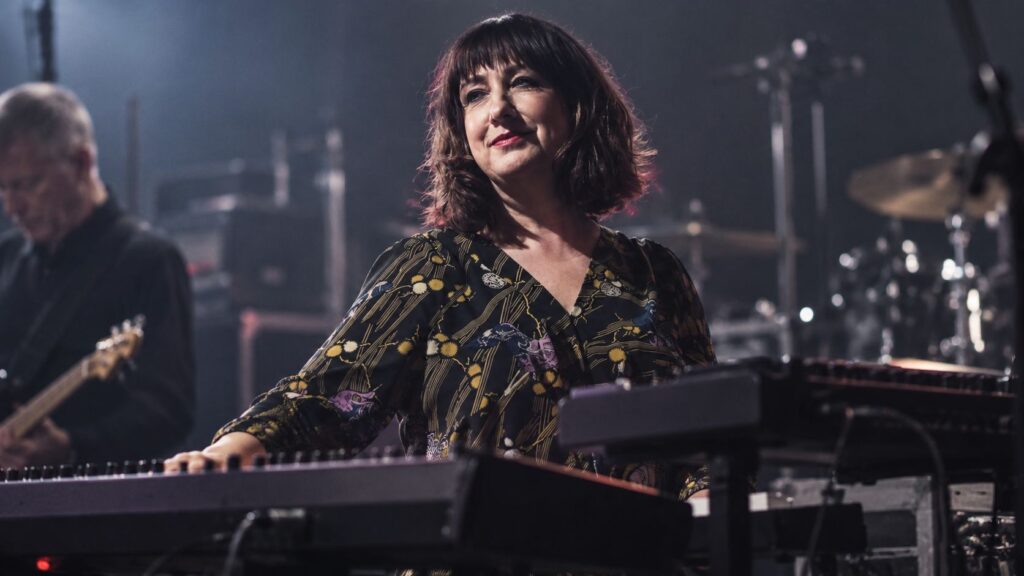
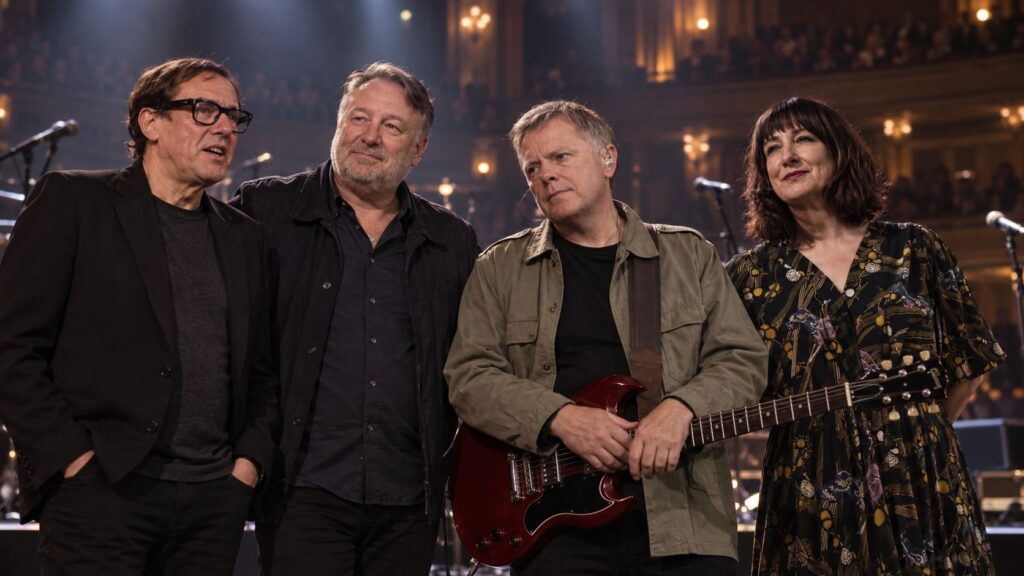
The decision fits the history better than it might appear at first. Bernard Sumner, Peter Hook and Stephen Morris played in both bands. Ian Curtis gave Joy Division its voice and much of its emotional identity. Gillian Gilbert joined after his death and became central to the electronic direction that allowed New Order to develop into something very different.
The official Rock Hall entry names Ian Curtis, Gillian Gilbert, Peter Hook, Stephen Morris and Bernard Sumner as the five inductees. The ceremony takes place on November 14, 2026, at the Peacock Theater in Los Angeles.
The shared induction also raises an obvious question. Where does Joy Division end and New Order actually begin? The answer is more complicated than a simple name change.
Three Musicians Connect Joy Division Directly to New Order
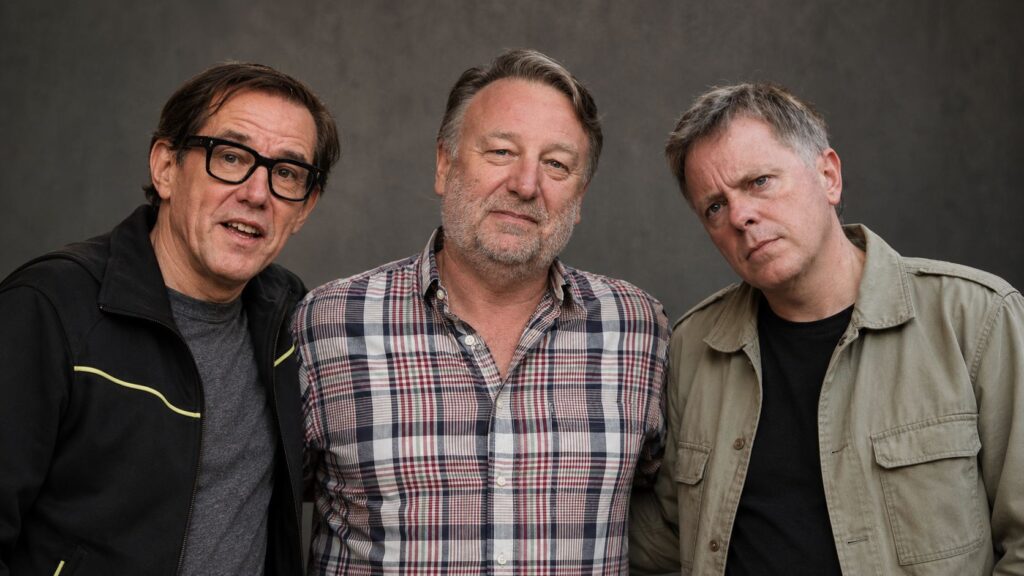
Bernard Sumner, Peter Hook and Stephen Morris form the physical connection between the two groups. Sumner played guitar and keyboards in Joy Division, Hook developed the unusually melodic bass style that became one of the band’s signatures, and Morris provided the precise drumming underneath it.
After Ian Curtis died in May 1980, the remaining three continued together. They did not hire another singer and carry on as Joy Division. They changed the name, shared vocal duties at first and eventually settled on Sumner as the main singer.
Peter Hook recently told Rolling Stone that he agrees with the decision to induct both bands together. His reasoning is straightforward. The core writing group behind Joy Division remained the core of New Order.
Hook also pointed to the first New Order album, Movement, as evidence. Listen to it after Closer and the distance between the bands feels much smaller than it does when jumping directly from “Love Will Tear Us Apart” to “Blue Monday.”
All three musicians were members of Joy Division before continuing together as New Order after Ian Curtis died in 1980.
The Story Starts With Manchester Punk in 1976
Sumner and Hook were among the young musicians energized by the Sex Pistols’ famous Manchester performances at the Lesser Free Trade Hall in 1976. The concerts have acquired almost mythical status because so many people associated with the future Manchester music scene were either present or connected to the audience around them.
Sumner and Hook decided to form a band despite having limited experience. Ian Curtis later joined as singer, and Stephen Morris became the drummer after several earlier lineup changes.
The group initially performed under the name Warsaw before becoming Joy Division. By the time the classic lineup was settled, the band consisted of Curtis, Sumner, Hook and Morris.
Early punk supplied the push, but Joy Division moved away from straightforward punk quickly. The Factory Records archive documents the band’s early releases and its close relationship with the Manchester label that would follow both Joy Division and New Order through their most important years.
Joy Division Found a Sound That Did Not Resemble Anyone Else
Joy Division’s first album, Unknown Pleasures, arrived through Factory Records in 1979. Producer Martin Hannett played a major role in turning the band’s raw live sound into something colder, wider and more unsettling in the studio.
Hannett used delay, reverb, separation between instruments and early electronic effects to give the recordings unusual amounts of space. The Factory history of Martin Hannett describes how his production pushed the band away from a conventional punk recording and toward the sound now associated with Joy Division.
Peter Hook’s bass frequently carried melody instead of sitting underneath the guitar. Morris played with a degree of mechanical precision that later made the band’s transition toward electronic rhythm feel less surprising. Sumner’s guitar was sparse, sharp and more interested in texture than traditional rock heroics.
Then there was Curtis. His voice, lyrics and stage presence made Joy Division instantly recognizable, but the music around him was never simply backing. The four members worked as an unusually tight unit, which helps explain why three of them were able to continue writing together after his death.
Joy Division released “Transmission,” recorded Closer and completed songs including “Love Will Tear Us Apart” during a remarkably short period. Their recorded career lasted only a few years, yet the sound became one of the main reference points for later post-punk. You can hear that lineage throughout the post-punk bands of the 2010s that followed decades later.
Ian Curtis Died Just Before Joy Division Were Due to Tour America
Ian Curtis died by suicide on May 18, 1980. Joy Division had been preparing to leave for their first North American tour.
The timing left the remaining members with two separate questions. They had lost their singer and friend, and they also had to decide if the music they had built together could continue at all.
The answer was not immediate reinvention. Early New Order recordings sound like musicians working through the transition in real time.
Bernard Sumner later described that period in the official Transmissions history, explaining that there was no alternative career waiting for them and no obvious plan to fall back on. Music was what they had built together, so they continued.
Ceremony Is the Song Where Both Bands Meet
No recording explains the shared history better than “Ceremony.”
Joy Division wrote and performed the song before Curtis died, but New Order released it as their first single in 1981. Its B-side, “In a Lonely Place,” had also originated with Joy Division.
The Factory Records entry for FAC 33 identifies “Ceremony” as a Joy Division composition released by New Order. An early New Order version appeared before Gillian Gilbert joined, followed by another recording after she became part of the band.
You can hear the problem the surviving musicians faced inside the song. The bass, drums and guitar belong to the world of Joy Division, but Curtis is missing. Sumner’s voice occupies the space differently, and the result already sounds like a band trying to move forward without pretending nothing happened.
I find “Ceremony” more revealing than any neat explanation of where one group ends and the other begins. It belongs emotionally and musically to both.
Gillian Gilbert Helped New Order Become a Four-Piece Again
Gilbert joined New Order in 1980, helping restore the group to a four-member lineup and expanding its use of keyboards and synthesizers.
Gillian Gilbert joined Sumner, Hook and Morris during the first year of New Order. Her arrival restored a four-person lineup, but she was not a replacement for Ian Curtis.
Gilbert played guitar and keyboards, giving the group more freedom as Sumner took on vocals alongside guitar and synthesizer duties. Her role became increasingly important as electronics moved toward the center of New Order’s music.
The original New Order lineup was therefore Sumner, Hook, Morris and Gilbert. Factory Records lists that four-piece as the group that developed from the surviving members of Joy Division.
The change also allowed Sumner to grow into the frontman gradually. Joy Division had a clearly defined singer in Curtis. Early New Order did not begin with the same arrangement. Sumner, Hook and Morris experimented with vocals before Sumner became the main voice listeners now associate with the band.
Movement Sounds Like the Missing Chapter Between the Bands
New Order released Movement in 1981. The album remains darker and more restrained than the records that followed, and Martin Hannett’s production kept a clear connection with Joy Division.
Anyone trying to understand why the Rock Hall combined the two names should listen to Closer, “Ceremony” and Movement in sequence. The evolution becomes much easier to hear.
New Order had not yet reached the bright synthesizers and huge dance rhythms associated with their later work. Hook’s bass remained prominent, Morris still drove songs with tight repetitive patterns, and Sumner was developing a vocal identity that did not simply imitate Curtis.
The separation became much clearer over the next two years.
Blue Monday Made New Order Something Joy Division Never Had Time to Become
By 1982 and 1983, New Order were moving deeper into synthesizers, sequencers and drum machines. Their influences increasingly included electronic acts such as Kraftwerk alongside the American club music they encountered while traveling.
Peter Hook has spoken openly about Kraftwerk’s influence on both groups, particularly once New Order could afford the electronic equipment needed to turn those ideas into records.
“Blue Monday” arrived in 1983 and became the point where New Order stopped sounding like a continuation people could easily explain through Joy Division. Its sequenced rhythm, synthesizers, electronic percussion and detached vocal approach belonged to a different musical world.
The song became the best-selling 12-inch single associated with the era, and New Order’s own Power, Corruption & Lies archive describes its place alongside the sessions and singles that defined the band’s breakthrough period.
New Order were now creating music that worked inside rock clubs and dance clubs at the same time. That combination helped make them one of the defining bands of the 1980s.
The Haçienda Connected the Band to Manchester Club Culture
New Order’s relationship with dance music was not limited to records. The band was financially involved with the Haçienda, the Factory Records nightclub that opened in Manchester in 1982.
The club struggled at first, then became a central location in Britain’s developing dance culture. The Science Museum Group history records how house music, resident DJs and changing club nights transformed the Haçienda during the 1980s.
New Order were therefore participating in the same culture influencing their music. Club rhythms entered their records as their own money helped support a venue where new dance sounds were developing in front of them.
Albums including Power, Corruption & Lies, Low-Life, Brotherhood and Technique kept moving between guitars and electronics rather than choosing one side.
The Shared History Eventually Became a Divided One
The relationship among the surviving original members did not remain intact forever.
New Order stopped and restarted more than once, and Peter Hook eventually left after the 2007 period of the band. New Order returned in 2011 without him, with Tom Chapman taking over bass duties alongside Sumner, Morris, Gilbert and guitarist Phil Cunningham.
The band’s own history of the 2011 return explains how two benefit concerts developed into a new period of touring and eventually new recordings.
Hook and his former bandmates have remained publicly estranged. Legal disputes and years of criticism from both sides turned the Rock Hall induction into something more complicated than the usual reunion speculation.
The 2026 Rock Hall Ceremony Could Put the Original Members in the Same Room
Joy Division and New Order will be inducted together into the Rock & Roll Hall of Fame on November 14, 2026.
Joy Division and New Order were previously nominated together before finally making the 2026 class. The Hall announced them in the Performer category alongside Phil Collins, Billy Idol, Iron Maiden, Oasis, Sade, Luther Vandross and Wu-Tang Clan.
Peter Hook has said he plans to attend and dedicated the honor to Ian Curtis. He has been less certain about any reunion with the current members of New Order. In his 2026 interview about the induction, Hook left the possibility open but made clear that there would have to be some form of communication first.
Stephen Morris has also discussed the unusual nature of a joint induction. Speaking to Rolling Stone in September 2026, he joked about the two-band arrangement but said he appreciated the recognition.
No confirmed original-lineup New Order performance has been announced at the time of writing. The interesting part of November may therefore be less about a reunion song and more about who actually appears together on stage.
The Rock Hall Is Inducting Five People From Two Eras
The names selected by the Hall explain its interpretation of the story.
Ian Curtis represents the voice and lyrical identity of Joy Division.
Bernard Sumner connects both bands through guitar, keyboards, songwriting and eventually lead vocals.
Peter Hook played bass across both classic lineups and developed one of the most recognizable bass styles in post-punk.
Stephen Morris carried the rhythmic foundation from Joy Division into New Order’s increasingly electronic music.
Gillian Gilbert completed the classic New Order lineup and became central to its guitar and keyboard arrangements.
Later New Order members Phil Cunningham and Tom Chapman are not listed among the Rock Hall inductees. The Hall has drawn its line around Joy Division and the classic four-member New Order lineup that followed.
One Shared Induction Fits the Music Better Than Two Separate Stories
Joy Division and New Order should not be treated as the same band with a different singer. The death of Ian Curtis changed the writing, the vocals, the emotional center and eventually the entire musical direction.
Calling them completely separate creates a different problem. Sumner, Hook and Morris did not abandon one project and meet years later in another. They kept working almost immediately, carried unfinished Joy Division material into the first New Order single and built the next band from the chemistry they already had.
Gillian Gilbert then helped the group move into territory Joy Division never reached. By the time of “Blue Monday,” the transformation was obvious.
The connection is also visible in how New Order have treated the catalogue ever since. Modern New Order concerts regularly include Joy Division songs, and official live releases combine material from both periods. The band’s Alexandra Palace set, for example, moved from “True Faith” and “Blue Monday” into “Atmosphere,” “Decades” and “Love Will Tear Us Apart.”
The Influence Runs From Post-Punk to Electronic Dance Music
New Order combined guitars with synthesizers, sequencers and drum machines to bridge post-punk and dance music.
Joy Division influenced generations of alternative and post-punk bands through rhythm, atmosphere, guitar texture and Curtis’s writing. New Order carried part of that language into electronic music and helped make the border between a rock band and a dance act much less rigid.
The Rock Hall biography points to artists including U2, The Cure, Nine Inch Nails and Chvrches among the musicians influenced by their work.
The path is unusually wide. A band influenced by Joy Division might focus on Hook’s bass and Sumner’s guitar. Someone coming through New Order might start with drum machines, sequencers or club production. Both routes lead back to many of the same musicians.
September 2026 brought another reminder of how much material remains alive. The new Eternal (Live) collection gathers recordings from 16 Joy Division performances along with rare concert footage, giving listeners a much fuller picture of the group as a live band before everything changed in May 1980.
Metallica completely changed their setlist for their second Las Vegas Sphere show (including performing a 'Reload' deep cut for the first time in 18 years)! Continue reading…
A-tota-so – I Told You So (bUTTONpUSHER) [Matt Bladen]
The self confessed “silly little band” A-tota-soreturn with another record of genre busting, noise that’s alt-rock but not as you know it.
From the fret scrape and jazz drum line of Death Rattle to the dreamy end of Raykens, I Told You So takes you on a sonic journey so full of turbulence that you’d think you were on a Ryanair flight. They released their last album in 2022 and have been ignighting stages across the country before and after that, channeling their stage ferocity into their recordings while never wanting to retread old ground.
With this album the collaborative guest vocalists if album two are gone and album three has a renewed confidence, a refocus of identity and sees guitarists Marty Toner become lead vocalist for the first time. His vocals are just as expressive as his guitar playing, shouting with angst on the jangly post rocker Form Of Mass, while drummer Jamie Cattermole and bassist Chris Marsh, lay down a left field, off-kilter rhythms, though Exit Wounds sees them in more regular patterns.
The record is a bit of downer lyrically dealing with anxiety, depression and grief but attempts to find some sort of solace, though this constant mental battle is so often showcased in these cuts, from the proggy start-stop of aggression of Masks, through the grooving GRLD where the influence of Tool is obvious, while No Tears No Sound, is driven by sense of paranoia.
I Told You So, feels like a reset for A-tota-so, the use of just one voice letting them hone into what they are as band, direct and noisy but also experimental and muted, often in the same bar, a great listening experience for those that appreciate music that’s on a tangent of it’s own. 8/10
Hubris – White Shores (Self Released) [Mike Bailey]
White Shores is the fifth album by Swiss post-rock band hubris. and is a notable departure in inspiration for this outfit. The previous four albums were inspired by Greek mythology, whereas for this album it was a little closer to home. In the wake of his grandfather’s passing, Jonathan Hohl began writing this album to navigate his grief and loss.
Into this, Hohl pulled inspiration from The Lord Of The Rings – themes of immortality versus mortality and how they were experienced by the different races of Middle-earth – and how there is so much more to that sadness in passing.
The album title White Shores refers to the place many beings return to at the end of their lives, but the song titles refer to an exchange between Gandalf and Pippin. It is an attempt to express the importance of death and loss as meaningful outside of the sadness it has caused – Death Is Just Another Path.
Each track feels self-contained, a meditation on a specific idea, and work through different stages of grief. Much like navigating grief, it is not a clean or precise process, but a process of unearthing themes, revisiting them and moving forward. The sound is organic, the layers of guitar, bass and drum (Matthieu Grillet, Lucien Leclerc and Nathan Gros, respectively) interact, swell and lift to bring the themes fully to life, as well as reflect how community helps process loss through collaboration and the space to process.
While the theme and inspiration behind White Shores is a departure, the music still evokes the ethereal, swelling and subsiding, deeply moving sound they are known for. 8/10 Cinema Stereo – 12:34 (Cargo UK Records) [Keith Boswell]
The Nashville based triumvirate that is Cinema Stereo release their first full length album 12:34 under the Cinema Stereo LLC label on the 2nd October 2026. It encompasses twelve tracks and delivers forty-three minutes worth of high energy, at times almost psychedelic, alternative rock that has its roots firmly embedded in the 60’s and 70’s.
Indeed, the influences of Rush, Led Zepplin and Queen are clear for all to see providing a spine onto which their own brand of musicality is added I have to say at this point that this is not an album I would readily listen to of my own volition and it has taken me at least four spins to really break through the unconscious bias that I sometimes uphold. But boy am I glad I persevered!
Tracks like Flood which is catchy and has a great groove to it immediately caught my attention, similarly Over The Edge has a fantastic intro, it is lively and foot tapping with a great delivery from guitarist Seb Borysek. Undoubtedly this will be a popular crown pleaser during their up-and-coming tour of the UK. The bands most recent single Expectations delivers some excellent melodic vocals from Ian Rayha along with some spacy type interludes harking back to the early days of prog rock but with modern twists throughout.
Rayha’s catchy vocals are once again to the fore in Ride To The Sun which attracted me instantly to this song along with the strong verse hook and prominent keyboards. Proxima is the final song on the album and is possibly my favourite. The beat in the song is very contagious and the guitar licks throughout are very welcomed.
Whilst there are tracks that I enjoy thoroughly on the album there are a small number of songs that don’t quite do it for me. That said I’m sure others will find them enjoyable. A further positive, to the bands credit, is that the tracks are all individual and are reflected in a change in beat, vocal or intensity.
Check this album outs it’s definitely worth your time! 7/10
Forsaken Eternity – Shades Of Existence EP (Rottweiler Records) [Myrto-Panagiota Zacharof]
Shades Of Existence will be of great appeal to fans of melodic/symphonic black metal! Powerful drums, imposing atmosphere due to vocals, guitar solos & keyboards all put into compact songs to keep the attention of the listener high, while also putting attention on the also interesting lyrics as well.
The opening song of the record, Adrift In A Twisted Ethereal brings forward the band’s stigma which is certainly the strong drums, howling vocals exchanging with haunting deep voices, highly melodic and intensive guitars, setting the mood just right for the next track. That next track is Whispers Of The Moon, which has quite an operatic feeling, combining the bands clear black metal attributes with atmospheric riffs & breaks of keyboards.
From here we have Celestial Witch a song that clearly stands out from the rest, as it combines numerous approaches of what one can consider melodic atmospheric metal. Cleverly using the keyboards to give a notion of space & chaos, with sudden breaks of melody over the rampant drums and guitars. The vocals are really outstanding, joining the listener from the abyss as the album ends with Shades Of Existence, a marching outro song, closing the loop and demonstrating clearly the technical abilities but also the love for dramatic dark atmosphere through dark melody.
Shades Of Existence is an album that features highly technical, long guitar pieces and at times clear almost sterile sound, With strong influences from the early days of Cradle of Filth , Dimmu Borgir , Gehenna & Children of Bottom (90s era). With the music here and the simple but powerful image of Red Death, can be seen as either dispersing or growing Forsaken Eternity are starting to find their own unique sound in the balck emtal world. 7/10