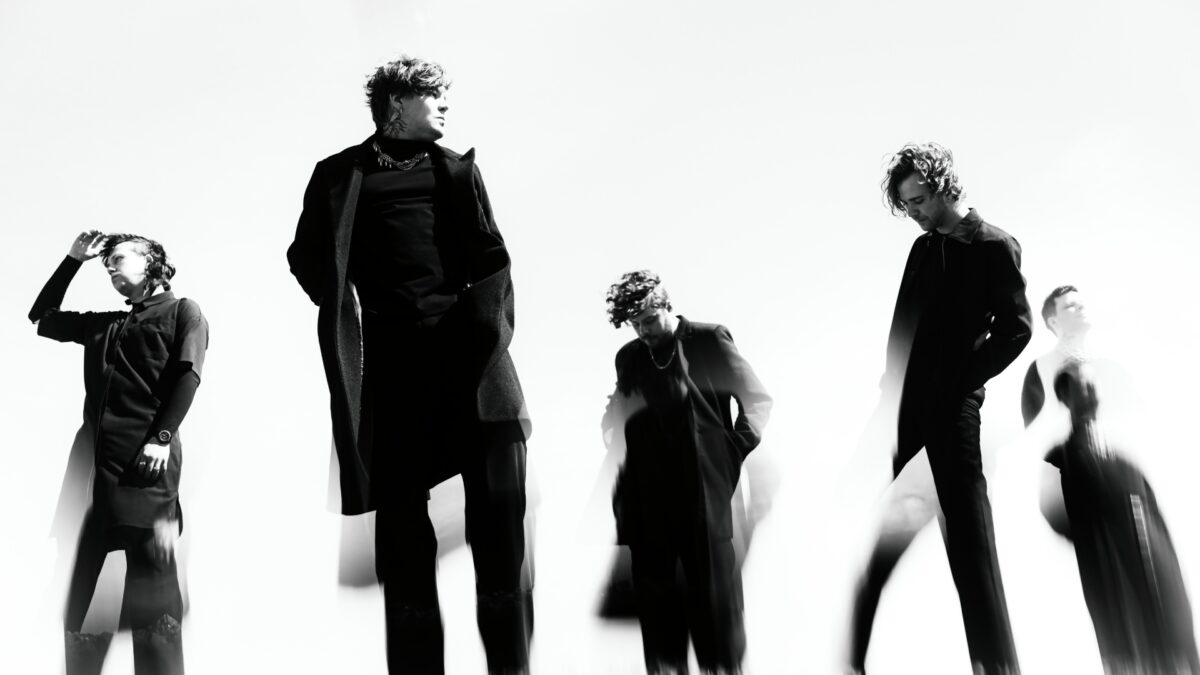
Their guest-filled new album is expected out later this year.
The post Reach NYC Drop “Fake Friends” Music Video appeared first on Theprp.com.
Their guest-filled new album is expected out later this year.
The post Reach NYC Drop “Fake Friends” Music Video appeared first on Theprp.com.
Elvis Costello’s catalog is filled with sharp writing, restless invention, and songs that have continued to reveal new layers over decades. This list of 25 essential Elvis Costello songs brings together fan favorites, major singles, deep cuts, and collaborations that capture the full range of one of rock music’s most distinctive songwriters. Our 25 Essential Elvis Costello Songs is an attempt to list some of the most critical works Elvis Costello has contributed to classic rock history. With a tremendous body of work and a reputation among the finest, it is no easy feat to choose just 25 Elvis Costello
The post 25 Essential Elvis Costello Songs And Fan Favorites appeared first on ClassicRockHistory.com.
See what they took home.
The post Converge’s Jacob Bannon & Nate Newton Take Part In Amoeba Music’s ‘What’s In My Bag?’ Series appeared first on Theprp.com.

Every major outlet in heavy music media has taken a swing at ranking Black Sabbath’s catalog. This is our Black Sabbath Albums Ranked list, and it’s built different: instead of spreading thin across two decades of lineup changes, we’re going deep on the eight albums that actually invented heavy metal — the original run with Ozzy Osbourne, Tony Iommi, Geezer Butler, and Bill Ward, from 1970’s self-titled debut through 1978’s “Never Say Die!” No Dio era, no Tony Martin years, no “13.” Just the eight records that changed music forever, ranked worst to best, with the actual history behind every one of them.
Full disclosure up front: I’ve been a Sabbath obsessive since I first heard that opening tritone as a teenager, and that’s going to come through in every entry below. This isn’t a detached gallery of stock photos and one-line captions. It’s an argument. Come argue back.
Black Sabbath’s discography is enormous — 19 studio albums stretching from 1970 to 2013, spanning Ozzy, Ronnie James Dio, Ian Gillan, Glenn Hughes, Tony Martin, and Dave Walker on vocals. That’s a lot of ground, and most “definitive” rankings try to cover all of it in one pass, which means every album gets a paragraph and nobody gets the real story. We’re doing something different: this list covers exactly the eight studio albums the original lineup made together, back to back, before Osbourne’s 1979 exit. If you’re here for Heaven and Hell or the Tony Martin years, we’ve already given that era its own deep dive — it deserves better than a rushed afterthought at the bottom of a 19-album gallery, and so does this run.

Two more scope notes: the 1998 live album “Reunion” doesn’t count here since it’s a live record, not a studio album, though its two new studio tracks were the last new Sabbath music for 15 years. And 2013’s “13” — while a genuine studio reunion with Osbourne and Geezer Butler — isn’t part of this ranking either, for the simplest reason possible: it isn’t really the original lineup. Bill Ward sat out over a contractual dispute, and Rage Against The Machine’s Brad Wilk played drums instead. A Sabbath album without Bill Ward on it is a different animal from the eight we’re ranking today.

Here’s where we’re going to lose some of you immediately, because plenty of critics rank “Never Say Die!” lower. We don’t. Hear us out.
“Technical Ecstasy” was recorded at Criteria Studios in Miami in 1976, with the Bee Gees working down the hall and the Eagles recording in the room next door — literally so loud that the Eagles had to pack up and leave. Iommi spent a chunk of the sessions hanging out and doing cocaine with Barry Gibb instead of, you know, being in the studio with his own band. Geezer Butler has said they had to scrape cocaine residue off the mixing board before they could even start work. This was not a band operating with a clear creative vision — it was four guys who’d been run into the ground by six years of nonstop touring, addiction, and a legal war with their former management, trying to figure out what a Black Sabbath record was supposed to sound like anymore.
The results are genuinely divisive even among the band. “It’s Alright” — sung by Bill Ward instead of Osbourne, the first time that ever happened — sounds like a lost Badfinger single. “Dirty Women” is a legitimate highlight and stayed in the live set for years. But the record as a whole plays like a band actively trying to become someone else, chasing sounds that belonged to other bands entirely. Even Butler has since described it as a response to punk rock, which is its own kind of telling — Sabbath weren’t supposed to be reacting to anyone.
Key tracks: “Dirty Women,” “It’s Alright”
The verdict: “Never Say Die!” is a mess, but it’s a mess with heart and two genuinely great songs bookending it. “Technical Ecstasy” is the sound of Black Sabbath forgetting what made them Black Sabbath in the first place, and that’s a harder thing to forgive.

The end of the original lineup’s run is a genuinely sad story before you even get to the music. Osbourne quit the band in late 1977, and Iommi — desperate for a singer before studio time booked in — brought in Dave Walker, a Birmingham native who’d fronted Fleetwood Mac and Savoy Brown. Walker’s entire tenure amounted to one local TV appearance on January 6, 1978, performing a snippet of “War Pigs” and an early version of what would become “Junior’s Eyes.” Weeks later, with no warning, Bill Ward told Walker: “We’re in, you’re out.” Osbourne was back — but he refused to sing a note of the material written with Walker, so the band scrambled to rewrite everything from scratch. In the middle of it all, Osbourne’s father died, and the band took three months off out of respect before finishing the record in Toronto.
Osbourne himself has called “Never Say Die!” “the worst piece of work I’ve ever had anything to do with,” which is about as damning as a self-review gets. And yet — the title track is a genuine gem, propulsive and immediate, and “Junior’s Eyes” might contain one of Osbourne’s best vocal performances of the entire original run, threading a melody that doesn’t just mimic Iommi’s riff the way some critics accuse Ozzy of doing elsewhere. Bill Ward took a second lead vocal turn on closer “Swinging the Chain,” continuing the trend “Technical Ecstasy” started. The album limped to Gold certification — but not until November 1997, nearly 20 years after release.
Key tracks: “Never Say Die!,” “Junior’s Eyes”
The verdict: It’s chaotic, rushed, and by the band’s own admission a low point. But there’s real feeling in “Junior’s Eyes” that “Technical Ecstasy” never manages to find, and that’s enough to keep it off the very bottom.

The album that started everything deserves respect it didn’t get on arrival. Recorded in a single grueling stretch — the band was given just two days of studio time, one for tracking and one for mixing, at Regent Sound Studios in London with producer Rodger Bain — “Black Sabbath” was essentially the band’s live set captured in one take, overdubs and all, for a total recording cost of around £600. Released on Friday the 13th, February 1970 (a coincidence the band couldn’t have scripted better), it reached No. 8 on the UK charts and No. 23 in the US, where it stayed on the Billboard chart for over a year and sold a million copies — all with virtually no promotion.
Critics hated it. Rolling Stone’s Lester Bangs infamously dismissed the band as “just like Cream! But worse.” It didn’t matter. The opening title track — built on a tritone interval Geezer Butler says was partly inspired by Gustav Holst’s “Mars, the Bringer of War” — is now credited by Rolling Stone as the greatest heavy metal song ever written, and by most serious historians as the actual birth of doom metal as a genre. Tony Iommi’s downtuned, doom-laden guitar style, which would define the next five decades of heavy music, traces directly back to a factory accident that severed the tips of two fingers on his fretting hand years earlier — the whole sound of heavy metal exists partly because Iommi refused to let that injury end his career.
Key tracks: “Black Sabbath,” “N.I.B.,” “Wicked World”
The verdict: Historically untouchable. Musically, it’s a little rougher and less assured than what came immediately after — which, given what came immediately after, is a very high bar to clear.

They wanted to call this one “Snowblind.” Warner Bros. said absolutely not, for reasons that become obvious about ten seconds into the song “Snowblind” itself. Recorded at a rented Bel Air mansion — owned, in one of rock history’s stranger footnotes, by John du Pont, the DuPont heir who would later be convicted of murder — the “Vol. 4” sessions were fueled by a genuinely staggering amount of cocaine. Geezer Butler has said the album cost around $65,000 to make, and the band’s cocaine bill came to roughly $75,000 — more than the record itself. The band, denied their preferred title, got the last laugh anyway: the liner notes thank “the great COKE-Cola Company of Los Angeles.”
Amid all that chaos, the band self-produced for the first time (with manager Patrick Meehan taking a co-production credit he apparently did almost nothing to earn) and made one of their most ambitious records. “Changes” is a piano ballad — Iommi taught himself piano on an instrument he found in the mansion’s ballroom, and Bill Ward’s own divorce inspired the lyrics. “Supernaut” became a favorite of both Frank Zappa and John Bonham. Not everything about the sessions was fun: Bill Ward nearly died after bandmates painted him gold from head to toe as a prank and he began convulsing from the toxic paint fumes. “Vol. 4” went gold within a month of its September 25, 1972 release and eventually platinum, peaking at No. 8 in the UK and No. 13 in the US.
Key tracks: “Changes,” “Supernaut,” “Snowblind,” “Wheels of Confusion”
The verdict: Genuinely excellent and still a little underrated, but the album’s sprawl and the band’s own admitted haze during recording keep it a notch below the tighter, harder records surrounding it.

No other Black Sabbath album — arguably no other album in rock history — was recorded quite like this one. By 1975, the band had discovered their former management was systematically ripping them off, and “Sabotage” was written and recorded in the middle of active litigation against former manager Patrick Meehan. Bill Ward has said it’s likely the only album ever made with lawyers physically present in the studio, and at one point a process server walked directly into the live room mid-session to hand Iommi a writ. The title isn’t metaphorical — the band genuinely felt sabotaged from every direction, and it bled into the record.
That fury produced something remarkable. “The Writ” is one of the only Sabbath songs Osbourne wrote entirely himself, and he’s described writing it as therapy: all his rage at Meehan poured directly onto the page. “Symptom of the Universe” is now widely credited as a direct ancestor of thrash metal, arriving a full five years before Metallica or Slayer existed. Rolling Stone’s contemporary review called “Sabotage” “not only Black Sabbath’s best record since Paranoid, it might be their best ever” — high praise that hasn’t aged badly at all. Commercially it was a step down, becoming the first Sabbath album not to go platinum in the US, but it’s sold over 2.5 million copies worldwide since.
Key tracks: “Symptom of the Universe,” “Hole in the Sky,” “Megalomania,” “The Writ”
The verdict: As heavy and urgent as anything the band ever made, with a legitimate claim to being their angriest and most focused record. It misses our top three only because what’s directly ahead of it is that good.

This one almost didn’t happen. After the “Vol. 4” tour, the band tried to write album five in Los Angeles and hit a total wall — Iommi, the band’s primary riff engine, simply couldn’t come up with anything for a solid month, which the band has since admitted was probably less “writer’s block” and more a symptom of the sheer amount of cocaine involved. Desperate, they flew back to England and rented Clearwell Castle, a genuinely creepy 15th-century Gloucestershire estate, and set up in the dungeon. It worked almost immediately — Iommi conceived the title track’s iconic riff down there within days. It also came with side effects: Iommi and Osbourne both reported seeing a cloaked figure vanish in a castle corridor, and Osbourne nearly burned the place down after falling asleep with his boot in the fireplace.
The resulting album is widely regarded — including by Iommi himself — as the high-water mark of the entire original lineup, and Loaded Radio’s own deep dive into the album’s haunted origin story is one of our most-read Sabbath pieces for a reason. Yes keyboardist Rick Wakeman, recording “Tales From Topographic Oceans” in the studio next door, guested on “Sabbra Cadabra” and reportedly refused payment, taking beer instead. John Bonham wanted in too, but the band decided his style would throw off the track’s flow — an unreleased jam session apparently exists from that visit. Osbourne has called it “our last truly great album” in his own autobiography, which, coming from Ozzy about his own band, is about as high a compliment as exists.
Key tracks: “Sabbath Bloody Sabbath,” “Sabbra Cadabra,” “A National Acrobat,” “Spiral Architect”
The verdict: The most sophisticated, complete album the original lineup ever made — synthesizers, orchestration, and genuine songwriting ambition, without sacrificing an ounce of weight. It’s our No. 3 only because Nos. 1 and 2 are two of the most important heavy metal records ever pressed to vinyl.

This is the album that should get more credit for literally inventing entire subgenres. Recorded at Island Studios in London in early 1971, “Master of Reality” is where Tony Iommi first downtuned his guitar a full step — on “Children of the Grave,” “Lord of This World,” and “Into the Void” — partly for a heavier tone and partly because it made the guitar physically easier on his still-injured fretting hand. Geezer Butler downtuned his bass to match. That single technical decision is the direct ancestor of doom metal, stoner rock, and sludge metal as we know them — bands from Sleep to Kyuss to Electric Wizard all trace their entire sonic DNA back to this record.
The album opens with one of rock’s most famous unplanned moments: Osbourne handed Iommi an enormous joint mid-session, Iommi coughed uncontrollably while recording acoustic overdubs, and producer Rodger Bain looped the coughing fit into the intro of “Sweet Leaf” — an ode to marijuana so unapologetic that Geezer Butler named it after a pack of Sweet Afton cigarettes he’d bought in Dublin. On “Solitude,” Iommi plays guitar, flute, and piano in the same track. At a lean 34 minutes across six songs and two brief interludes, there’s not a single wasted second — Rolling Stone ranked it at No. 234 on their list of the 500 greatest albums of all time, and it’s still routinely cited by musicians as the heaviest of Sabbath’s first six records.
Key tracks: “Sweet Leaf,” “Children of the Grave,” “Into the Void,” “After Forever”
The verdict: For a huge number of hardcore Sabbath fans — and on more days than not, for us too — this is the real No. 1. It’s the heaviest, most focused, most purely influential record the band ever made. It loses the top spot by the thinnest possible margin, and only because of what “Paranoid” means to the entire genre.

This one almost got called “War Pigs” instead — the title track was meant to headline the record until Warner Bros. got nervous about a song that directly attacked the Vietnam War as its lead single. Most of the album’s material was road-tested during an absurd six-week residency at a Zurich club, where the band played seven 45-minute sets a day and worked the songs into shape live before ever entering a studio. And in one of rock history’s great accidents, the album’s title track — now one of the most recognizable riffs ever written — exists because the band was one song short. Bill Ward has said Iommi just played the “Paranoid” riff on the spot, and the entire song came together in twenty, twenty-five minutes.
The results speak for themselves in a way almost no other album in the genre can match. “Paranoid” hit No. 1 on the UK Albums Chart — the only time an original-lineup Sabbath studio album would top that chart until “13” matched the feat 43 years later. The “Paranoid” single reached No. 4 on the UK singles chart, still the band’s only top-10 hit ever. In the US, the album sold four million copies with almost no radio airplay, on the strength of word of mouth and a legion of fans who’d never heard anything like it. It contains three of the single most important songs in heavy metal history on one record — “War Pigs,” “Paranoid,” and “Iron Man” — a concentration of genre-defining tracks that no other Sabbath album, including “Master of Reality,” can quite claim.
Key tracks: “War Pigs,” “Paranoid,” “Iron Man,” “Fairies Wear Boots”
The verdict: “Master of Reality” might be the heavier record, and depending on the day, it might even be the better listen front to back. But “Paranoid” is the album that made heavy metal a genre people couldn’t ignore anymore, and that makes it No. 1. Fight us in the comments.
“Paranoid” (1970) is the best Black Sabbath album, narrowly ahead of “Master of Reality,” on the strength of containing “War Pigs,” “Paranoid,” and “Iron Man” — three of the most influential songs in heavy metal history — on one record.
Among the original lineup’s eight studio albums, “Technical Ecstasy” (1976) ranks last, edging out “Never Say Die!” for the bottom spot due to its more scattered, unfocused songwriting.
Eight studio albums with Ozzy Osbourne, Tony Iommi, Geezer Butler, and Bill Ward together: “Black Sabbath” (1970) through “Never Say Die!” (1978).
“13” (2013) reunited Osbourne, Iommi, and Butler, but Bill Ward did not play on the album due to a contractual dispute; Rage Against The Machine’s Brad Wilk played drums instead, making it a different lineup than the eight albums ranked here.
Many fans and critics consider “Master of Reality” the heavier, more downtuned record thanks to tracks like “Children of the Grave” and “Into the Void,” even though “Paranoid” edges it out for the No. 1 spot overall.
We said it above and we’ll say it again: fight us on this one. Where would you put “Master of Reality” vs. “Paranoid”? Let us know in the comments. Follow Loaded Radio for daily rock and metal news.
The post Black Sabbath’s Original 4: All 8 Albums Ranked appeared first on Loaded Radio.
Die 35. Ausgabe des Wacken Open Air – das Jubiläum – steht vor der Tür!
Harry Metal setzt einmal mehr seine flinken Füße auf den heiligen Acker. Für einen ersten Ground Check zeigt er euch in diesem Einblick unter anderem, wie einer neuer befestigter Weg entsteht, welcher auch als Rettungsweg dienen wird.
Natürlich war das noch nicht alles von Harry Metal und mit neuen Episoden geht es bis zum Fest in regelmäßigen Abständen weiter!
Euer
W:O:A Team
Der Beitrag W:O:A 2026 – Harry Metal – Episode #1 erschien zuerst auf Live, laut, legendär!.
Six months before the release of Hail to the King, M. Shadows told Metal Hammer that Avenged Sevenfold‘s new album would have more of a classic rock feel.
“The new album has a lot more of a Sabbath and Zeppelin feel to it,” said the vocalist. “We’re going back to Sabbath stuff. We’re looking at blues chords they’re playing most of their stuff in. We’re listening to Zeppelin. We’re going backwards with what we want this record to feel like. I wanna write a classic metal record, a classic rock record in 2013.”
It appeared that the Huntington Beach quintet were beginning a brand new chapter. In some part, their previous album Nightmare helped the four surviving members of the band process the grief of losing their drummer James ‘The Rev’ Sullivan. But with drummer Arin Ilejay on board, the band were ready to start afresh and explore new musical territory.
“The first show we played without The Rev was probably one of the most difficult things I’ve done in my entire life,” Gates told Metal Hammer. “When we walked onstage we could barely even play our instruments because we were shaking so badly. But we saw our fans and they were so supportive and in that moment we knew that we had an entirely new life for Avenged Sevenfold. We knew then that we had served a greater purpose, and that our time definitely hadn’t run out.”
And sure enough, the song Hail to the King was released five weeks ahead of the album and signposted their new musical direction.
“It’s definitely a song that we want to come out to say, ‘OK, buckle your fucking safety belts, this is what we’re doing now…’” said Gates.

“[Hail to the King] was a response to the fact that we were a big band, but everywhere we went none of our songs could be played anywhere, like in a bar,” Shadows told YouTuber Bradley Hall. “We have nothing that lives up to AC/DC or Metallica’s Black Album or all these records that we love, all of our stuff’s a little too complex, a little too complicated, a little too neoclassical.
“So we started really cutting close to wearing our influences very much on our sleeves in this sort of dumbed-down version of rock music,” he continued, “and that’s not a shot on those bands because they do it brilliantly, they do it better than us, but we wanted to try our hand at doing some things like that. It’s very unnatural for us. It’s not what we do.”
All of our stuff’s a little too complex, a little too complicated, a little too neoclassical.
M. Shadows
Following the release of the single, the album topped the UK Albums Chart, debuted at number 2 in Finland, number 5 in Germany and went in at number one on the US Billboard 200 chart.
Despite its huge popularity, Shadows took to Twitter almost a decade after its release to say some fans were not exactly enamoured with their back-to-basics approach.
“‘Hail to the King’ (the song) streams more than double any other track we have weekly,” he tweeted. “The album is on track to out-sell all the others… yet a portion of the fan base acts like it was a failure by all accounts.”
Some 13 years after its release, the album’s title track remains the band’s most popular song on Spotify with 819.8 million streams to date. The album in total has amassed 1.56 billion plays.
Not band for something the singer once described as a “funny little experiment.”


Bradley Denniston delivers an uplifting blend of indie pop and folk-tinged songwriting on Full Bloom, a heartfelt anthem about resilience, growth, and trusting life’s unpredictable path. Warm acoustic textures, polished production, and an expressive vocal performance combine to create an inviting atmosphere that feels both intimate and inspiring. The memorable melody reinforces the song’s hopeful message without sacrificing sincerity, while the understated arrangement allows the emotion to shine through naturally. Honest, optimistic, and beautifully crafted, Full Bloom is a reminder that even life’s most difficult moments can lead to something meaningful.
Connect:
L7 bassist, photographer and multidisciplinary artist Jennifer Finch has been diagnosed with an aggressive form of brain cancer and is currently undergoing treatment. What initially appeared to be a condition that could be addressed through treatment and a full course of radiation has progressed rapidly, requiring Jennifer to undergo multiple surgeries and resulting in significant physical limitations. She now requires extensive ongoing medical care, rehabilitation, and professional in-home assistance.
Jennifer’s many friends, collaborators and family have launched a GoFundMe campaign to help cover the substantial expenses associated with her treatment and recovery. The campaign can be found at gofundme.com/f/jennifer-finch-vs-brain-cancer-its-time-to-make-noise.
Jennifer’s diagnosis also means that she will be unable to participate in the fall 2026 U.S. leg of L7’s previously announced “The Last Hurrah Tour.” L7’s final tour was planned with Jennifer when all four members were in good health and spirits. Although she will not be able to join the band for the upcoming U.S. dates, Jennifer has asked L7 to continue with the tour as planned, which the band has made the decision to do. She will be temporarily replaced at these concerts by Tsuzumi Okai, who was previously a touring bassist for Limp Bizkit in 2018.
Donita Sparks said on behalf of the band: “We are all devastated by the news and are surrounding her with love, protecting her privacy and dignity, while helping raise the resources she urgently needs for the care ahead. Jennifer is family, and we want her to feel the full strength of the community that has loved and supported her for so many years.”
“The Last Hurrah Tour” — the first leg of L7’s final world tour — kicks off in the U.S. on Oct. 9, with stops planned in New York City, Washington D.C., Nashville, Chicago, Seattle and more, wrapping up with a hometown celebration in Los Angeles.
L7 was formed in 1985 and went on indefinite hiatus in 2001. A 2015 reunion tour was followed by the documentary L7: Pretend We’re Dead in 2016. L7’s first album in 20 years, Scatter The Rats, was released in May 2019 via Joan Jett’s Blackheart Records.
L7’s self-titled debut album arrived in 1988. The band’s third studio effort, Bricks Are Heavy, came out in 1992 and peaked at No. 160 on the Billboard 200; 1994’s Hungry For Stink reached No. 117; and 1997’s The Beauty Process: Triple Platinum achieved a No. 172 high. The 1992 single “Pretend We’re Dead” peaked at No. 8 on the Alternative Airplay chart, while “Andres” off Hungry For Stink reached No. 20. Several of L7’s songs have appeared on major film soundtracks, including “Sh*tlist” on both Pet Sematary II and Natural Born Killers, and “Shove” on Tank Girl.
The post L7’s JENNIFER FINCH Diagnosed With Aggressive Brain Cancer; GoFundMe Campaign Launches appeared first on Sonic Perspectives.
If you’re looking to have a morbid Monday, you’ve come to the right place. “There is no cure/ Not for this curse/ When will it end/ Or will it get worse,” Joyeria deadpans on his alluringly eerie new Decay Decay Decay single “The Curse.”
The post Joyeria – “The Curse” appeared first on Stereogum.