Blog
-
Chuck Billy Reflects – ’70s Inspiration, Testament Getting Signed
Testament's Chuck Billy discusses his KISS fandom, his family's musical background and key moments of the band's career. Continue reading… -
Steven Wilson shares new single “A Basket of Bees” from new album ‘Requiem For A Village’
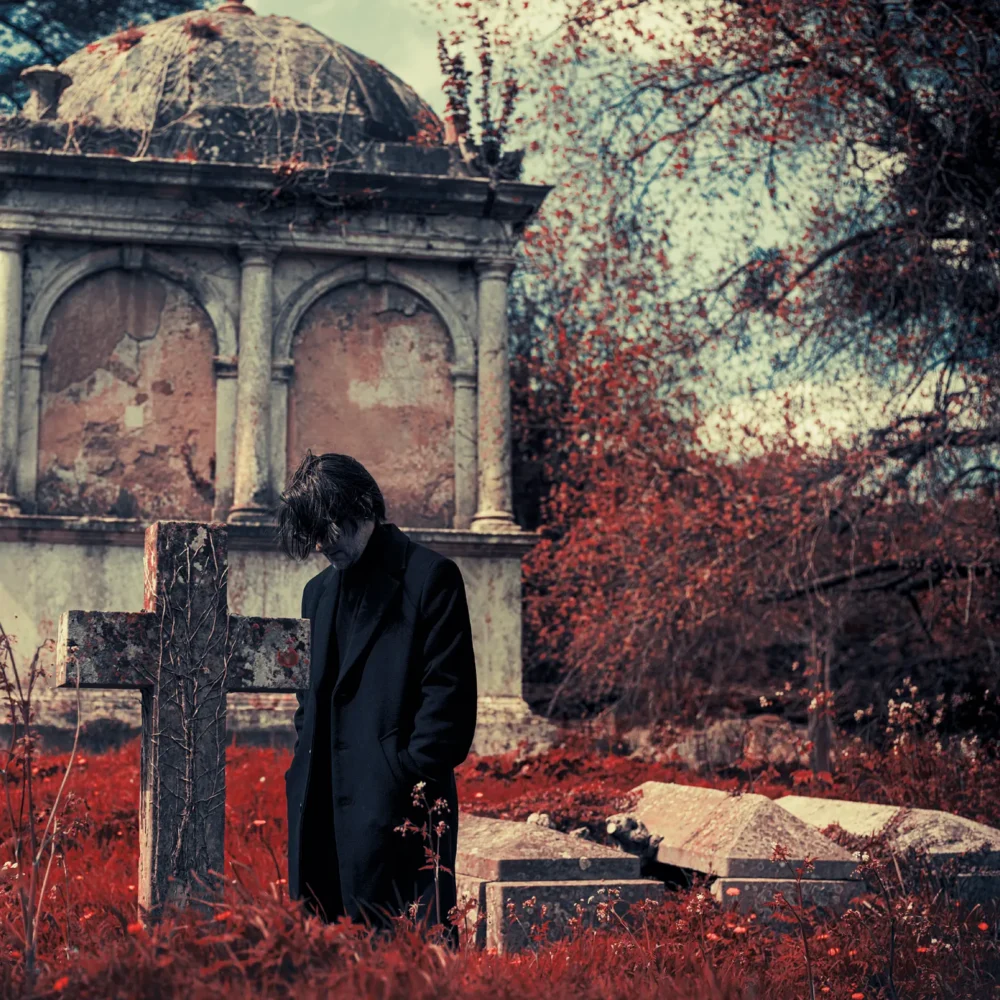
Steven Wilson is set to release his new studio album, Requiem For A Village, on November 6th via Fiction Records. Today, he has shared the new single “A Basket of Bees” with a new performance video.
“Once again yours truthfully, The Mink, and Rustle gathered in the village hall today for music making, our attempts to depart this place strangely thwarted. Look out for a guest appearance from Ms Shelby Logan Warne, caretaker of the hall and headmistress of the village school. Watch the bees for signs. They buzz buzz buzz in perfect circles. They hum between your knees. But these are old superstitions, and we are modern people, are we not?!
Several old Pan Book of Horror paperbacks are cunningly placed in the room. Try to identify how many, and which numbers in the series they are. You’ll never do it! There’s a lot to remember in the song we’re going to play today, complicated with several instrument changes for me, but mistakes are all part of the magic.
The instruments are reassuringly untuned, so here we go! Hang on to your kite…”
Scottish actor David Tennant provides the narration on the new album, and is joined by former XTC man Andy Partridge, who has written the narration and some of the lyrics, multi-instrumentalist Randy McStine, drummer Russell Holzman (on the tracks Requiem For A Village, Now Departing, A Basket Of Bees and Wheel) and vocalist Katherine Priddy (Murmuration).
Tracklisting
Swirl In A Lark’s Eye
Requiem For A Village
The Same River Twice
Now Departing
Hireath
On Chapel Slope
Murmuration
Curcus Fingerprint
A Basket Of Bees
Great Green Map
Wheel
The Old God Is BuriedThe album will be available on CD, Blu-ray, 140g double black vinyl and oxblood-colored double vinyl. A deluxe box set will feature two CDs and a Blu-ray packaged with a 96-page hardback book. Limited signed CDs will also be available through Amazon, while HMV will offer a CD edition with exclusive packaging.
Pre-order now at https://stevenwilson.lnk.to/Requiem-for-a-Village
The post Steven Wilson shares new single “A Basket of Bees” from new album ‘Requiem For A Village’ appeared first on The Prog Report.
-
Ren Shares Scathing New Track ‘The Music Business’
Ren has shared a new piece of music titled ‘The Music Business’ where he isn’t pulling any punches on his experiences within the music industry.

An acoustic-led ditty that is as catchy as it is cutting, Ren goes through every aspect of his journey and the communications he has had with people within music, those who have no concern about the art and only with the profit that is there to be made, and how he absolutely hates it all.
It’s a summation of so many of the reasons that he makes art the way that he does now. Why he is so fiercely independent, why he works with people who are aligned with him and why he will always call out the shit that he sees in hopes of helping those in a similar position.
It’s going to make some people very angry, and that is the point.
Here we go:
It’s the first new music from Ren since the release of ‘ASYLUM’, his collaborative album with Chris Webby.
Here is how that project came to life, from front to back:The post Ren Shares Scathing New Track ‘The Music Business’ appeared first on Rock Sound.
-
Tedeschi Trucks Band Announces 10-Night NYC Residency for 2027
They will return to the iconic Manhattan venue they've played many times before. Continue reading… -
Video Premiere: Gates of Ishtar – “Ghosts”
Just for perspective, the last time that Swedish melodic death metal legends Gates of Ishtar released new material (1998’s At Dusk and Forever), Decibel was just a glimmer in Editor-in-Chief Albert Mudrian’s eye. So, it is with great anticipation that we offer up their first single, the appropriately titled “Ghosts,” after nearly three decades. The reinvigorated lineup features original members Andreas Johansson (rhythm guitars), Tomas Jutenfäldt (rhythm/lead guitar) and Mikael Sandorf (vocals) joined by new bassist Markus Parkkilla and session/live drummer Fredrik Andersson on a track filled with classic, hummable melodic DM guitar lines informed by modern black metal. “Ghosts” brings the band’s late-’90s aesthetic into the new millennium with confidence and fury.
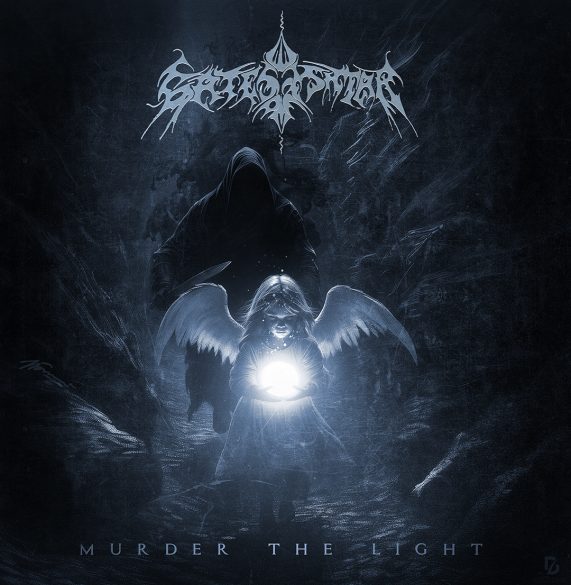
The drum and bass parts were for Murder the Light were recorded at the Humbucker Studios in Hagsätra, Sweden, in May 2026. Guitars and vocal parts were recorded in the next two months, June and July, at Fallen Studios. Production, mixing and mastering was handled by Robert Pehrson at Fallen Studios. It’s set for release on limited leather box set, gatefold vinyl, CD, cassette and digitally via The Circle Music on January 21, 2027. You can place your preorder here.
The band offered this enthusiastic statement regarding its return to the fray:
“We’re incredibly proud to finally present ‘Ghosts,’ the first single from our upcoming album Murder the Light. After all these years, it feels amazing to share new material with you again. [It’s] not a look back, but a continuation built on the same foundation and spirit that defined us then and still drives us now. The new material stays true to the sound and identity that shaped our earlier work. While reflecting the years that have passed and the experiences gained along the way, now nearly thirty years later, the fire still burns even brighter and more intensely than ever.”
The post Video Premiere: Gates of Ishtar – “Ghosts” appeared first on Decibel Magazine.
-
TORN WIDE OPEN: NEUROSIS RETURNS TO THE BAY AREA
(On the 16th of this month our friend Ben Manzella attended a show by Neurosis and Terry Gross at The Fillmore in San Francisco, and we’re grateful for his evocative review of the performances that you’ll find below, and for his wonderful photos of the event.) I feel a bit suspended in time as I […]
The post TORN WIDE OPEN: NEUROSIS RETURNS TO THE BAY AREA appeared first on NO CLEAN SINGING.
-
Who Will Rise as This Week’s Champion on the MDR Battle Of The Bands? 10/26/26 – 10/30/26 – @thebeast
🔥 Who Will Rise as This Week’s Champion on the MDR Battle Of The Bands? 🔥
And who will dominate next month as Band of the Month on Metal Devastation Radio?
Last month’s winners, ANOTHER DEMON, crushed the competition with a staggering 27,455,987 VOTES, claiming the title of Band of the Month on Metal Devastation Radio! You can check them out HERE!
This is the weekly championship edition of the Band Of The Month – Battle Of The Bands that we host every month on MDR!
How does it work?
Every Monday, we launch a new poll featuring bands that submit music each week on metaldevastationradio.com. Voting runs until Friday at 9PM EST.
Each Friday night, at the start of The Zach Moonshine Show, I’ll be spinning the Top Six weekly winners, and announcing the #1 band of the week live on air — getting thousands of listens on Mixcloud!
At the end of the month, all weekly votes are added up, and the band with the highest total votes becomes our Band of the Month!
Winning Band of the Month gets:
A featured post on our Facebook page, reaching thousands of fans
A front-page spotlight on metaldevastationradio.com, which pulls in hundreds of thousands of views every month
A free PR email blast from Metal Devastation PR, hitting 40,000+ contacts including labels, zines, stations, and more
Airplay every hour during general rotation
Tons of social media shares and exposure across our network
If you want the world to know who your band is, this is the easiest way to make it happen!
💥 Want in on the next battle?
Comment below with your band name and we’ll add you to next week’s poll — or email me at zach@metaldevastationradio.com with “Battle Submission” in the subject line.
Bands can compete as many times as they want, and if you enter multiple weeks in the same month, your votes combine toward the Band of the Month title!
👇 Click on the bands below to vote as many times as you like, or add your own! Poll closes Friday, October 30th at 9PM EST!
Who Will Rise as This Week’s Champion on the MDR Battle Of The Bands? 10/26/26 – 10/30/26
-
Who Will Rise as This Week’s Champion on the MDR Battle Of The Bands? 10/26/26 – 10/30/26 – @thebeast
🔥 Who Will Rise as This Week’s Champion on the MDR Battle Of The Bands? 🔥
And who will dominate next month as Band of the Month on Metal Devastation Radio?
Last month’s winners, ANOTHER DEMON, crushed the competition with a staggering 27,455,987 VOTES, claiming the title of Band of the Month on Metal Devastation Radio! You can check them out HERE !
This is the weekly championship edition of the Band Of The Month – Battle Of The Bands that we host every month on MDR!
How does it work?
Every Monday, we launch a new poll featuring bands that submit music each week on metaldevastationradio.com. Voting runs until Friday at 9PM EST .
Each Friday night , at the start of The Zach Moonshine Show , I’ll be spinning the Top Six weekly winners , and announcing the #1 band of the week live on air — getting thousands of listens on Mixcloud !
At the end of the month , all weekly votes are added up, and the band with the highest total votes becomes our Band of the Month !
Winning Band of the Month gets:
A featured post on our Facebook page, reaching thousands of fans
A front-page spotlight on metaldevastationradio.com , which pulls in hundreds of thousands of views every month
A free PR email blast from Metal Devastation PR, hitting 40,000+ contacts including labels, zines, stations, and more
Airplay every hour during general rotation
Tons of social media shares and exposure across our network
If you want the world to know who your band is, this is the easiest way to make it happen!
💥 Want in on the next battle?
Comment below with your band name and we’ll add you to next week’s poll — or email me at zach@metaldevastationradio.com with “Battle Submission” in the subject line.
Bands can compete as many times as they want , and if you enter multiple weeks in the same month, your votes combine toward the Band of the Month title!
👇 Click on the bands below to vote as many times as you like, or add your own! Poll closes Friday, October 30th at 9PM EST!
Who Will Rise as This Week’s Champion on the MDR Battle Of The Bands? 10/26/26 – 10/30/26
-
Entheos Rebuild Themselves and Find They’re Anything but “Empty on the Inside” (Interview + Review)
You might not get what they were expecting from the new Entheos album. With cofounder and multi-instrumentalist Navene Koperweis’ background in Animals as Leaders and Animosity, one could be forgiven for anticipating their Sumeriancore roots. That escalating cycle of deathcore bands looking to be more technical and brutal than the last. Empty on the Inside, Entheos’ latest record, dramatically subverts that expectation. Industrial, gothy vibes, buttressed by prog-rock sensibilities and energetic choruses, layer onto the techy deathcore skeleton that the band is known for.
“We never wanted to participate in this arms race of technicality,” vocalist Chaney Crabb says. “We feel like such outsiders compared to other, like, tech bands or even deathcore, really.”
…
…
Entheos’ technical mastery feels restrained on Empty on the Inside. Crabb’s account makes the shift sound less like a retreat from complexity than a commitment to instincts that were there all along. She points to “I Am the Void,” from 2023’s Time Will Take Us All, as an important step. “I was horrified to release it,” she says. Their manager asked whether she was proud of the song. If she was, the reaction didn’t fucking matter.
“Let’s stop dipping our toes in shit and let’s actually be the band that we want to be.”
“Golden Crown” makes that commitment stick. Its moody low-end intro gives way to a catchy nu-metal chorus that sounds more than a little Linkin Park-y. Even with more straightforward timing than we usually hear from Entheos, Koperweis’ ghost notes in the chorus and whirling fills reward closer listening, which you’ll do because the song gets stuck in your head pretty easily. The more restrained songwriting preserves his drumming’s personality without the steady barrage of older material.
Crabb’s expanded vocal approach similarly moves beyond the typical trappings of the genre. On “Hollow,” gravelly textures blur the harsh/clean divide, letting her pull off intense transitions into far more brutal voices. “Call My Name” balances techy death metal with a sharply hooked chorus that transitions into gutturals and squeals. Chester Bennington-like screamsinging passages flow into full-on death metal shrieks without sounding like a vocalist abruptly shifting gears. Certain parts sound like they could have been inspired directly by early Slipknot.
“I mean, I’m from Des Moines, Iowa,” Crabb says, mentioning influences including Otep and Mudvayne’s LD 50. The nu-metal roots are front and center, but she’s still learning from newer generations and the vocal olympics fad. “I was like, all right, let me learn some shit from these kids, you know?” she says. More melodic approaches also free her from fitting words into rigid syllabic patterns, opening up a wider vocabulary and different emotions. The hooks benefit from that room to breathe.
The collaboration has expanded, too. Guitarists Scott Carstairs of Fallujah and Michael Stancel of Allegaeon join the core duo, bringing more voices into the writing. Crabb describes Stancel writing industrial standout “Undone” overnight and showing it to the others the next day. “Yes, abso-fucking-lutely, this is going on the record,” Crabb says, adding that it helped replace two death metal songs they originally planned.
That track’s industrial swells feel like the rising blood pressure of an anxious machine. Across the Mark Lewis-produced record, the electronics have a fuzzier, dirtier edge than Koperweis’ familiar polished clicks and swirls. The grittier treatment keeps the huge choruses from disappearing into the hyper-polished modern-metal finish these songs could have received. The hooks are immediate, but the surfaces retain some grit.
“Tomblight,” featuring The Contortionist’s Michael Lessard, motions towards radio-friendliness before dropping into a crushing deathcore breakdown. Lessard is a fitting guest for a band renegotiating its place on the prog/tech spectrum. Together with “Golden Crown” and “Undone,” it cements the middle of the album as the core of its stylistic pivot.
Forunately, there’s still plenty for the death metal heads. Carstairs’ expressive leads suit the moodier vibe of opener “Hell Is a Part of Me,” while the quick tech-death runs and solo in “Pale Faith” keep Entheos connected to modern prog metal’s flashier impulses. The latter might be the most brutal song on the record. Those restrained technical instincts make the moments where the band rightfully shows off slap harder.
Longtime collaborator and bassist Evan Brewer does feel conspicuously absent. He plays on the album, but there isn’t much room for the floaty, progged-out basslines that has made him a compelling presence on previous releases and in other bands like The Faceless. The production doesn’t lack for low-end weight; it just feels largely occupied by the synths.
Empty on the Inside is an excellent modern example of a band making a risky stylistic change and not completely fucking it up. The hooks sink deep, the industrial grit works, and the technical flourishes hit harder when they have room to breathe. Entheos sound increasingly comfortable being the band they say they’ve always wanted to be.
…
Empty on the Inside is available now via Metal Blade Records.