On Wednesday, November 4, Twangville presents Robert Cody Maxwell, Brandon Callies, and Bird Streets. The show has moved from Groove to Wild Horses, a brand-new East Village room that’s ready for its first Twangville night. Maxwell’s songs draw on early heartland rock, moving between folksy confessionals and full-volume rock and roll. Callies pairs roots-rock grit […]
The $41 million lawsuit contends that the A.I. company used Presley’s music to train its models without permission. Anthropic disagrees with the claims.
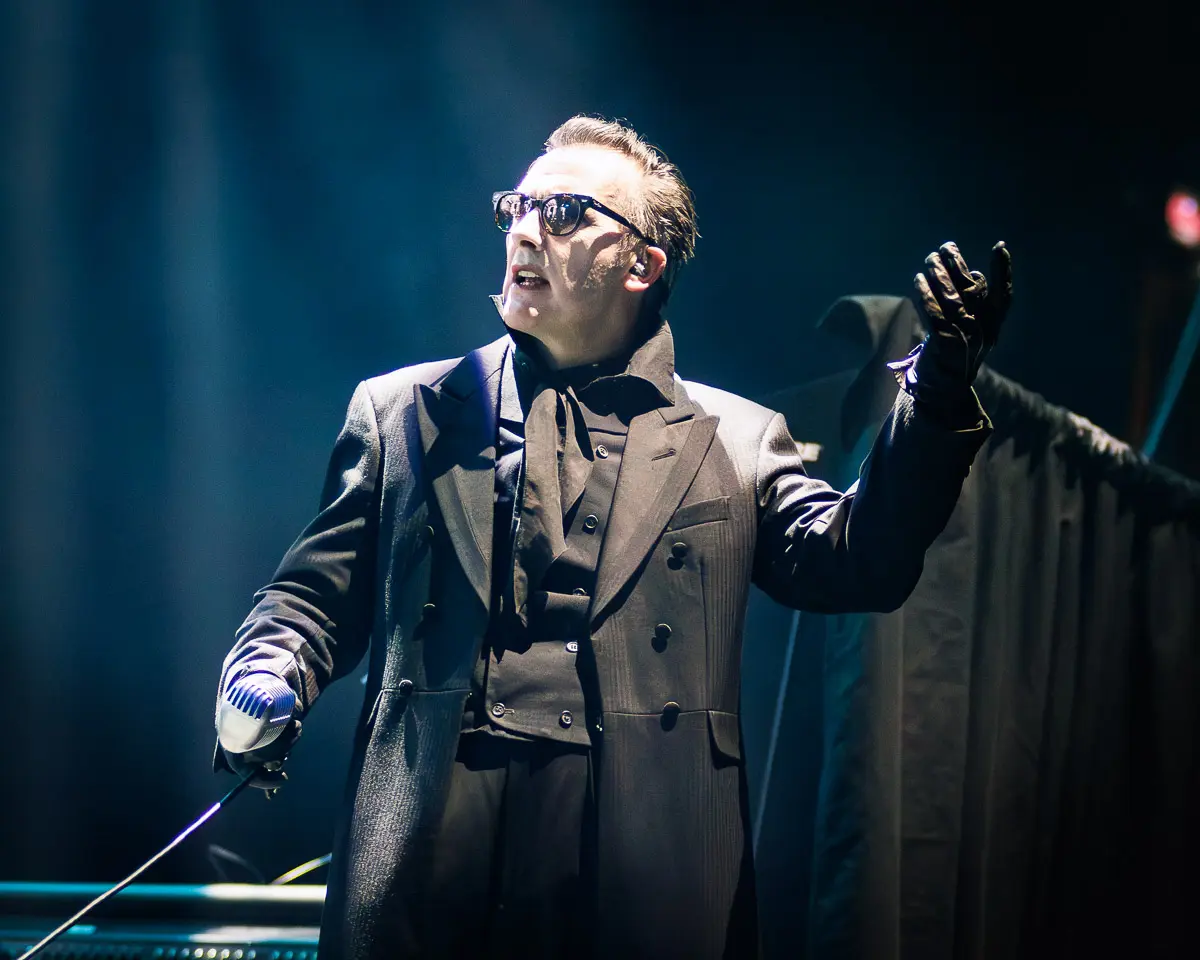
Formed in 1976, seminal punk band The Damned are now approaching their 50th Anniversary and are out on the road to celebrate and show you cannot keep a good dog down. Following a successful anniversary show at Wembley Arena in April, they are setting out on the road later this year.
The band currently consist of the classic line-up of Dave Vanian, Captain Sensible, Paul Gray, Monty Oxymoron and Rat Scabies.
“Half a century on and who would have thought we would still be upright and breathing,” Rat Scabies said. “We never thought we would make it this far, and neither did you! But here we are, a finely tuned engine. The Damned still has the power and finesse to excite, entertain and accelerate into our 50th year.”
The Damned – OVO Arena Wembley – 11 April 2026. Photo: Manuela Langotsch/MetalTalk
The show at OVO Arena Wembley in April was a massive success and, given it was their biggest UK show to date, a worthy celebration. These more intimate shows, by comparison, are sure to be epic events for fans.
“With 50 years of catalogue to choose from, only the best songs from our chequered history will be performed, and with the passion and commitment all good music lovers deserve,” Captain Sensible said. “You know we won’t disappoint.”
Formed in 1976, seminal punk band The Damned are now approaching their 50th Anniversary and are out on the road to celebrate and show you cannot keep a good dog
Event Details
Formed in 1976, seminal punk band The Damned are now approaching their 50th Anniversary and are out on the road to celebrate and show you cannot keep a good dog down. Following a successful anniversary show at Wembley Arena in April, they are setting out on the road later this year.
Formed in 1976, seminal punk band The Damned are now approaching their 50th Anniversary and are out on the road to celebrate and show you cannot keep a good dog
Event Details
Formed in 1976, seminal punk band The Damned are now approaching their 50th Anniversary and are out on the road to celebrate and show you cannot keep a good dog down. Following a successful anniversary show at Wembley Arena in April, they are setting out on the road later this year.
Formed in 1976, seminal punk band The Damned are now approaching their 50th Anniversary and are out on the road to celebrate and show you cannot keep a good dog
Event Details
Formed in 1976, seminal punk band The Damned are now approaching their 50th Anniversary and are out on the road to celebrate and show you cannot keep a good dog down. Following a successful anniversary show at Wembley Arena in April, they are setting out on the road later this year.
Formed in 1976, seminal punk band The Damned are now approaching their 50th Anniversary and are out on the road to celebrate and show you cannot keep a good dog
Event Details
Formed in 1976, seminal punk band The Damned are now approaching their 50th Anniversary and are out on the road to celebrate and show you cannot keep a good dog down. Following a successful anniversary show at Wembley Arena in April, they are setting out on the road later this year.
Formed in 1976, seminal punk band The Damned are now approaching their 50th Anniversary and are out on the road to celebrate and show you cannot keep a good dog
Event Details
Formed in 1976, seminal punk band The Damned are now approaching their 50th Anniversary and are out on the road to celebrate and show you cannot keep a good dog down. Following a successful anniversary show at Wembley Arena in April, they are setting out on the road later this year.
Formed in 1976, seminal punk band The Damned are now approaching their 50th Anniversary and are out on the road to celebrate and show you cannot keep a good dog
Event Details
Formed in 1976, seminal punk band The Damned are now approaching their 50th Anniversary and are out on the road to celebrate and show you cannot keep a good dog down. Following a successful anniversary show at Wembley Arena in April, they are setting out on the road later this year.
Formed in 1976, seminal punk band The Damned are now approaching their 50th Anniversary and are out on the road to celebrate and show you cannot keep a good dog
Event Details
Formed in 1976, seminal punk band The Damned are now approaching their 50th Anniversary and are out on the road to celebrate and show you cannot keep a good dog down. Following a successful anniversary show at Wembley Arena in April, they are setting out on the road later this year.
Formed in 1976, seminal punk band The Damned are now approaching their 50th Anniversary and are out on the road to celebrate and show you cannot keep a good dog
Event Details
Formed in 1976, seminal punk band The Damned are now approaching their 50th Anniversary and are out on the road to celebrate and show you cannot keep a good dog down. Following a successful anniversary show at Wembley Arena in April, they are setting out on the road later this year.
Metal Breakdown Daily is one page, every weekday: the episode on the player below and the three stories in print, so you can listen, read, or both. Today it leads with Jack Osbourne, who says the backlash to the family’s AI Ozzy avatar “was my own fault,” that people wrongly assumed “it’s gonna be Ozzy Osbourne selling cell phones,” and that building a “digital fingerprint” of his father is about owning the IP the way Bob Marley’s and Michael Jackson’s estates do.
Then Crowbar, where Kirk Windstein says the band “start writing first of the year,” three weeks before Down release Volume V, their first full album since 2007. And Dead Wyte, the new band from Mudvayne’s Greg Tribbett and his brother Tripp, whose first single is called “Mother Trucker.”
STREAM THE METAL BREAKDOWN DAILY NOW:
Scott Penfold opens today’s Metal Breakdown Daily with Jack Osbourne’s mea culpa and the AI Ozzy timeline from the Licensing Expo to now, then Kirk Windstein on Crowbar and Down, and the Tribbett brothers’ Dead Wyte, and takes a side on whether the AI Ozzy problem was ever really about explaining it. Download the free Loaded Radio App on Apple iOS and Google Play and stream the show now.
Jack Osbourne: The AI Ozzy Backlash “Was My Own Fault”
Speaking on Great Company With Jamie Laing, Jack Osbourne said the backlash to the Osbourne family’s AI avatar of Ozzy “was my own fault” because he “wasn’t properly armed with the way to properly explain what it was,” and insisted that the project is about owning Ozzy’s digital IP, not “Ozzy Osbourne selling cell phones.”
The timeline matters. In May, Jack and Sharon Osbourne appeared at the Licensing Expo in Las Vegas to announce a partnership with Hyperreal, a company whose “digital DNA” platform builds AI likenesses from a person’s voice, image and movement. The avatar was to appear in Proto Luma units, life-size holographic displays 86 inches tall, where, as Sharon put it, “you can ask Ozzy anything and he will answer you in his own voice.” Ozzy had died ten months earlier. The reaction, in the family’s own description, was that it was a ghoulish cash grab.
In June, on The Osbournes Podcast, Sharon said she neither wanted nor needed anyone’s money and that the project was “for our grandkids,” and Jack said it “isn’t ChatGPT with dad’s face on it,” describing a closed AI not connected to the internet. Now he’s gone further. “The backlash, it was my own fault,” he told Laing. “We’d just kind of figured this thing out, that we were gonna do it, and I guess I wasn’t properly armed with the way to properly explain what it was. And I think people thought that next thing it’s gonna be Ozzy Osbourne selling cell phones. No.”
His case, second time around: “A lot of people are doing this now. Creating the AI model and creating the digital fingerprint of whoever, whether it’s my father or Bob Marley’s people are doing it, and Michael Jackson’s team are doing it. By kind of creating this digital fingerprint, you ultimately will own the digital IP and image of that person.” And: “It’s no different than saying, ‘I wanna own my images of my father.’ It’s just another avenue.” The family, he said, chose to be “out in front of this” rather than “on the back foot.”
Crowbar Start Writing In January, Three Weeks After Down’s Volume V
Kirk Windstein told the Metalcavern channel that Crowbar will “start writing first of the year” for the follow-up to 2022’s Zero And Below, and that bassist Pat Bruders, who he calls “an amazing writer,” wrote much of the strongest material on Down’s Volume V, due November 20 on Nuclear Blast.
Windstein says Crowbar write quickly, that “it’s been a while since we’ve written,” and that he wants a “three-day-a-week” rehearsal schedule to make up the time; the only moving part is drummer Tommy Buckley’s calendar. “We just need to get with Tommy’s schedule.” Buckley lives in Covington, on the north shore of New Orleans, ten to fifteen minutes from Phil Anselmo; Windstein, guitarist Matt Brunson and Bruders live closer to the rehearsal room. Windstein writes most of the riffs; Brunson writes less, but “what he writes is great.”
Zero And Below, released in April 2022 on MNRK Heavy and produced by Duane Simoneaux, was pitched by the label as the band’s most doom-driven record since 1998’s Odd Fellows Rest. Crowbar are already on the Sonic Temple 2027 bill.
The Down record is the bigger date. Volume V is the first full-length Down album since Down III: Over The Under in 2007 and the band’s first release of any kind since the Down IV Part II EP in 2014. The lineup is Anselmo, Pepper Keenan, Jimmy Bower, Windstein and Bruders. Ten tracks, opening with “The Myth” and closing with “Twice-Told Tales,” on which Anselmo says he felt Ozzy’s influence; the track before it is called “Ozz.” King Diamond duets with Anselmo on “Merciful Fate,” with Livia Zita also appearing. “Blood Oath” is the first single. “The record is a journey,” Anselmo said. “It’s classic Down, but it’s also unique.”
Crowbar have made twelve studio albums without a bad one, which is a claim you can make about very few bands in doom. A bassist walking straight from writing half a Down album into a Crowbar room in January is the most promising sentence in this story.
LIVE & LOUD: Stream the World’s Hardest Radio Station 24/7
Dead Wyte: Greg Tribbett And His Brother Release “Mother Trucker”
Mudvayne guitarist Greg Tribbett and his brother Derrick “Tripp” Tribbett, formerly of Twisted Method and Dope, have launched a band called Dead Wyte with a debut single, “Mother Trucker,” released October 24 with a video directed by Dusten Boles; no label, album or tour dates have been announced.
The song is an original rather than a reworking of either brother’s past material, and the brothers haven’t issued a statement with it. Their histories do the talking. Greg co-founded Mudvayne in Peoria, Illinois in 1996 and played on every record through the 2010 hiatus, co-founded Hellyeah with Chad Gray in 2006 and left in 2014, made two albums with Audiotopsy alongside Mudvayne drummer Matthew McDonough, and has been part of the Mudvayne reunion since 2021. Tripp fronted Florida’s Twisted Method, played bass and sang backing vocals in Dope, and appeared on VH1’s Daisy Of Love in 2009 under the name Sinister.
The context the press release leaves out: Greg’s wife died in September 2025 after a long illness, and he sat out Mudvayne’s L.D.50 twenty-fifth anniversary tour that fall. The band released two comeback singles in 2025, “Sticks And Stones” and “Hurt People Hurt People,” and in January Chad Gray announced on Instagram that Mudvayne were “taking a break for 2026.” Gray has spent the year on solo “30 Years Of Madness” shows and is billed at Sonic Temple 2027 as “Chad Gray: Voice Of Mudvayne & Hellyeah,” not as Mudvayne. Nobody has said the band is finished.
A Mudvayne guitarist starting a band with his brother a year after losing his wife, while his singer tours under a billing that pointedly isn’t the band’s name, is a musician going back to work the only way he knows. The title tells you how seriously he wants it taken, which is not very, and that’s probably the point.
The Take: The AI Ozzy Backlash Was Never About Cell Phones
Jack Osbourne is right that the family should own Ozzy’s digital likeness before someone else fakes it, and wrong about why people recoiled: the problem was never the explanation, it was an 86-inch talking hologram announced at a trade show ten months after the funeral.
On ownership, he’s correct, and so is Sharon. If the Osbournes don’t build the digital Ozzy, somebody else builds it anyway, badly, on a free app, and the family has no recourse. The Bob Marley and Michael Jackson comparison is the honest one. Locking down the voice, the face and the movement while the law is still catching up isn’t a cash grab; it’s estate management in 2026, and every famous family is going to have to do it. Ozzy’s catalog is worth protecting.
But nobody thought Ozzy was going to sell phones. People saw a life-size box where you can walk up and ask a dead man anything and he answers in his own voice, announced at a licensing convention, and reacted the way people react to that. A better explanation doesn’t make the box less strange. That’s a product problem, not a communication problem, and “it was my own fault” is generous about the wrong thing.
The counter-argument is that you can’t own it without building it, which is true. But owning the digital Ozzy and shipping a talking hologram of him this year are two separate decisions, and the family made them together and was surprised that the public only saw the second. Build the asset, lock the rights, and leave the box in the drawer until there’s a reason for it that isn’t a trade show. Jack says they wanted to be “out in front of this.” They were. That was the problem.
TL;DR
Jack Osbourne says the backlash to the family’s AI Ozzy avatar “was my own fault,” that people wrongly assumed “Ozzy Osbourne selling cell phones,” and that building the “digital fingerprint” is about owning Ozzy’s IP as the Marley and Jackson estates do. The project, announced with Hyperreal at the Licensing Expo in May, is still going ahead; the Back To The Beginning film opens Wednesday.
Kirk Windstein says Crowbar “start writing first of the year” for the follow-up to Zero And Below (2022). Down’s Volume V, their first full album since 2007 with King Diamond guesting on “Merciful Fate” and a track called “Ozz,” is out November 20 on Nuclear Blast.
Mudvayne’s Greg Tribbett and his brother Derrick “Tripp” Tribbett (Twisted Method, Dope) have launched Dead Wyte with the single “Mother Trucker”; no label or album yet. Mudvayne are on a 2026 break announced by Chad Gray in January.
The Take: Jack is right about owning the digital Ozzy and wrong about the backlash. It was the talking hologram at a trade show, not the explanation.
FAQ
What is the AI Ozzy Osbourne avatar?
In May 2026, Jack and Sharon Osbourne announced a partnership with Hyperreal at the Licensing Expo in Las Vegas to build an AI likeness of Ozzy Osbourne from his voice, image and movement, described by Jack as “the digital DNA of Ozzy Osbourne.” It is a closed AI, not connected to the internet, intended to appear in life-size Proto Luma holographic units where, in Sharon’s words, “you can ask Ozzy anything and he will answer you in his own voice.”
What did Jack Osbourne say about the AI Ozzy backlash?
On Great Company With Jamie Laing, published October 25, 2026, Jack Osbourne said “the backlash, it was my own fault” because he “wasn’t properly armed with the way to properly explain what it was,” and that people wrongly assumed “it’s gonna be Ozzy Osbourne selling cell phones.” He compared the project to the Bob Marley and Michael Jackson estates building digital likenesses to own the artist’s IP.
When is the new Crowbar album coming out?
No release date has been announced. Kirk Windstein said in October 2026 that Crowbar will “start writing first of the year,” meaning January 2027, for the follow-up to Zero And Below, released in April 2022 on MNRK Heavy. The lineup is Windstein, guitarist Matt Brunson, bassist Pat Bruders and drummer Tommy Buckley.
When is Down’s Volume V out?
Down’s Volume V is released November 20, 2026 on Nuclear Blast. It is the band’s first full-length album since Down III: Over The Under (2007) and features Phil Anselmo, Pepper Keenan, Jimmy Bower, Kirk Windstein and Pat Bruders, with King Diamond duetting with Anselmo on “Merciful Fate.” “Blood Oath” is the first single.
Who is in Dead Wyte?
Dead Wyte is the new band of Mudvayne guitarist Greg Tribbett and his brother Derrick “Tripp” Tribbett, former frontman of Twisted Method and former bassist of Dope. Their debut single, “Mother Trucker,” was released October 24, 2026 with a video directed by Dusten Boles. No other members, label, album or tour dates have been announced.
Metal Breakdown Daily is Loaded Radio’s weekday hard rock and metal news show: three stories, one opinion, a new episode every weekday on the free Loaded Radio app for Apple iOS and Google Play. Follow Loaded Radio for the full stories behind every episode.
Hannah Wicklund has released her new single ‘The Pier’, the latest song to be taken from her critically acclaimed new album ‘War On Women; Calling All Good Men‘ (review here). The album is available to purchase now on CD, vinyl and digital download via Strawberry Moon Records here. The album sees Hannah putting the power […]


 STREAM THE METAL BREAKDOWN DAILY NOW:
 LIVE & LOUD: Stream the World’s Hardest Radio Station 24/7