Blog

  • Karen Salicath Jamali Only In Love We Are Review

    Karen Salicath Jamali Only In Love We Are Review

    This song is a gift, transporting listeners to a solitary dimension reminiscent of a bygone village. An atmosphere unfolds where a man whistles and women seem to sing a chant while working. It evokes a proud and distant past, emphasized by reverberated guitar arpeggios that wrap around the listener like a mirage. This music paints scenes from a long-lost era, deeply influenced by ethnic roots with an almost ritualistic quality.

    Karen Salicath Jamali Only In Love We Are

    “Only In Love We Are” explores love as the essence of human existence. This piece places the listener in a unique limbo, creating a suspended atmosphere. It showcases the remarkable compositional skills of Karen Salicath Jamali, who successfully draws her audience into this enchanting space. The song feels like it could serve as the soundtrack for a film set in Greece or Southern Italy. In these historic lands, where ancient and modern collide, love has transcended time, forging a connection that remains palpable.

    The track’s arrangement captures the essence of rural life and intimate relationships. Layers of voices infuse emotional depth, enhancing the nostalgic quality. Jamali’s choice of instrumentation further heightens this experience, incorporating sounds that seem to echo from another time and place. The gently flowing rhythm invites listeners to reflect on the powerful nature of love and its enduring presence throughout history.

    Only In Love We Are – Sound and Atmosphere

    The essence of this track lies in its ability to transcend language and cultural barriers. Even if one does not understand the lyrics, the feelings conveyed are universally relatable. The intertwining of traditional and contemporary influences gives the song a timeless appeal. It evokes memories and dreams, inspiring listeners to contemplate their own stories of love.

    There is a serene yet profound stillness within the music. Moments of silence punctuate the melody, allowing listeners to absorb the emotions thoroughly. Each note resonates with heartfelt authenticity, making the experience deeply personal. It’s as if the song beckons one to pause and appreciate the beauty of love in all its forms.

    Only In Love We Are – Performance and Production

    As the song unfolds, it evokes a sense of yearning and nostalgia. The rhythmic patterns and gentle melodies are reminiscent of folktales passed down through generations. This narrative quality enhances the song’s impact, making it not just a listening experience but a storytelling journey.

    “Only In Love We Are” is a sublime offering that deserves recognition. It encapsulates a rich cultural heritage while standing firm in contemporary relevance. The music serves as a bridge connecting listeners with their innermost feelings, illuminating the enduring power of love.

    Jamali has crafted a masterpiece that will likely resonate for years to come. It encourages a deeper understanding of love’s role in shaping our lives and experiences. This track truly invites everyone to embrace the beauty found in love, making it an essential listen.


    Transcendental

    🔥 If you love this music: Discover More


    Find Karen Salicath Jamali here:
    Spotify | Instagram

    The post Karen Salicath Jamali Only In Love We Are Review appeared first on Edgar Allan Poets – Noir Rock Band.

  • The Neuroscience of Fear: Why Horror Feels Good

    The Neuroscience of Fear: Why Horror Feels Good

    Fear is supposed to protect us. It accelerates the heartbeat, sharpens attention, floods the nervous system with adrenaline, and prepares the body for survival. Yet millions of people voluntarily seek terrifying films, psychological horror, haunted attractions, Gothic fiction, and emotionally disturbing stories for pleasure.

    The contradiction fascinated psychologists and neuroscientists for decades: why does the human brain sometimes transform fear into enjoyment? The answer reveals something deeper than entertainment alone. Horror allows people to experience danger, emotional intensity, and psychological uncertainty inside controlled environments where fear becomes both stimulation and emotional release.

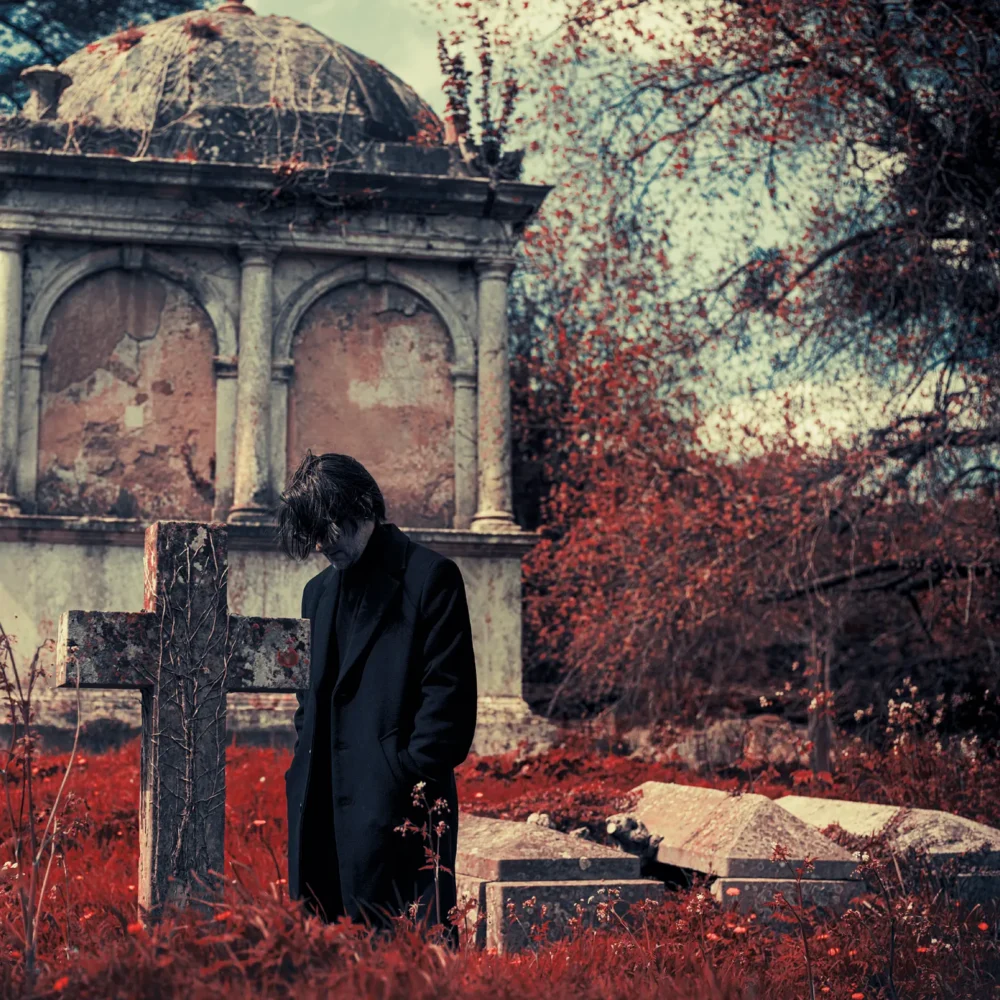
    Dark cinematic illustration showing a human brain, Gothic horror imagery, Edgar Allan Poe references, ravens, and psychological fear symbolism.

    A Gothic cinematic visualization exploring the neuroscience of fear, emotional tension, horror psychology, and why terrifying experiences can feel pleasurable.

    Modern neuroscience increasingly suggests that horror engages multiple systems inside the brain simultaneously. Fear activates survival responses, but safe exposure to fear can also stimulate reward pathways, emotional regulation, curiosity, and social bonding.

    This explains why horror rarely functions as simple terror alone. Beneath the darkness lies a complex psychological experience combining stress, fascination, anticipation, emotional catharsis, and controlled uncertainty.


    What Happens Inside the Brain During Fear

    When humans encounter perceived danger, the amygdala immediately activates. This small almond-shaped structure inside the brain processes emotional threat detection and rapidly signals the nervous system to prepare for survival.

    Heart rate increases. Adrenaline and cortisol enter the bloodstream. Attention narrows toward potential danger. Sensory awareness intensifies. The body prepares instinctively for fight, flight, or freezing behavior.

    Neuroscientist Joseph LeDoux, whose research transformed modern understanding of fear processing, demonstrated that emotional threat responses often occur before conscious rational interpretation fully develops. The brain reacts first and explains later.

    Horror cinema and psychological fiction deliberately exploit this mechanism through tension, anticipation, uncertainty, darkness, sudden sound shifts, distorted faces, unstable environments, and unpredictable narrative structure.

    The audience experiences real physiological activation even while intellectually understanding the danger is fictional.


    Why Controlled Fear Becomes Pleasure

    The key difference between traumatic fear and enjoyable horror lies largely in perceived safety. Inside controlled environments, the brain can experience intense emotional stimulation without genuine physical danger.

    Psychologists sometimes describe this as “recreational fear.” Horror allows people to engage survival systems temporarily while maintaining subconscious awareness that the threat remains contained.

    This creates a strange neurological paradox. Fear activates stress responses, yet the safe resolution of tension can simultaneously trigger dopamine release associated with reward, relief, curiosity, and emotional satisfaction.

    The pleasure often emerges not from fear itself, but from successfully navigating emotional tension and returning safely from it.

    In this sense, horror behaves almost like emotional simulation. The brain rehearses danger while remaining physically protected.


    The Attraction of Psychological Horror

    Psychological horror frequently affects audiences more deeply than graphic violence because it destabilizes perception itself. Instead of relying entirely on physical threat, psychological horror manipulates uncertainty, identity, memory, guilt, obsession, paranoia, and emotional ambiguity.

    This explains why writers such as Edgar Allan Poe remain enormously influential inside modern horror. Stories like The Tell-Tale Heart or The Black Cat force readers into unstable mental states where perception gradually becomes unreliable.

    The fear emerges internally rather than externally. Readers recognize distorted thought patterns, emotional collapse, compulsive reasoning, and fragmented perception within recognizable human psychology.

    Neuroscientific studies increasingly suggest that uncertainty itself intensifies emotional engagement because the brain constantly attempts to predict outcomes. Ambiguous threats often sustain stronger psychological tension than visible danger because uncertainty prevents emotional resolution.


    Fear, Catharsis, and Emotional Regulation

    Horror also provides emotional catharsis. Aristotle originally used the term catharsis to describe how tragedy purges emotional tension through artistic experience. Modern psychology suggests horror may perform a similar function for anxiety, stress, grief, and emotional pressure.

    During periods of social instability, economic uncertainty, war, pandemics, or cultural anxiety, horror frequently becomes more popular rather than less. Audiences often turn toward dark fiction because controlled fear can create emotional structure around otherwise invisible anxieties.

    Researchers Coltan Scrivner and Mathias Clasen, who study recreational fear and horror psychology, argue that horror may function partly as emotional training. Safe exposure to frightening scenarios helps individuals rehearse stress management and emotional resilience.

    This may explain why horror fans often report feelings of emotional release, fascination, or even comfort after consuming dark material.


    Why Gothic Atmosphere Feels Comforting

    Not all fear inside horror operates through shock or panic. Gothic aesthetics frequently combine melancholy, beauty, nostalgia, emotional intimacy, and darkness simultaneously.

    Candlelight, fog, abandoned architecture, rain-soaked streets, melancholy music, Victorian imagery, ravens, moonlight, and shadow-filled interiors create emotional environments that feel psychologically immersive rather than purely threatening.

    This atmosphere activates curiosity and emotional reflection alongside fear. The result resembles what psychologists sometimes call “aesthetic sadness,” where emotionally dark experiences become psychologically rewarding through beauty, symbolic depth, and introspection.

    Darkwave music, Gothic literature, noir cinema, and melancholic visual aesthetics frequently operate within this emotional territory where sadness, mystery, beauty, and fear become psychologically intertwined.


    Why Horror Still Matters

    Horror remains culturally important because it externalizes invisible fears humans struggle to process directly. Monsters, haunted spaces, unstable narrators, supernatural forces, and psychological collapse often symbolize deeper anxieties surrounding death, identity, loneliness, violence, grief, and uncertainty.

    The genre creates symbolic language for emotions that ordinary conversation frequently avoids. Rather than eliminating fear, horror transforms fear into narrative structure, emotional exploration, and psychological confrontation.

    Modern neuroscience increasingly confirms what Gothic writers understood intuitively long before brain imaging existed: fear and fascination are deeply connected inside human consciousness.

    Sometimes people move toward darkness not because they enjoy suffering, but because controlled darkness allows the mind to explore emotional intensity safely.


    Wear the Darkness

    Explore Edgar Allan Poe apparel, Gothic aesthetics, noir-inspired fashion, and psychological darkness inside the official Edgar Allan Poets Noir Store.


    Graphic showcasing Edgar Allan Poe gothic t-shirts and noir apparel from the official store


    Join the Noir Newsletter

    Receive Gothic literature, noir psychology, cinematic darkness, and atmospheric storytelling directly inside your inbox.


    Enter the Noir Atmosphere

    Explore Gothic music, cinematic tension, emotional melancholy, and immersive noir atmosphere through the official Edgar Allan Poets playlist.


    Frequently Asked Questions

    Why do humans enjoy horror movies?

    Humans often enjoy horror because controlled fear activates emotional stimulation, curiosity, adrenaline, and reward systems while maintaining subconscious awareness that the danger is fictional.

    What happens in the brain during fear?

    During fear, the amygdala activates stress responses that increase heart rate, attention, adrenaline release, and sensory awareness in preparation for survival behavior.

    Why does psychological horror feel more disturbing?

    Psychological horror destabilizes perception, identity, memory, and emotional certainty, forcing audiences to experience tension through mental instability rather than physical danger alone.

    Can horror help emotional regulation?

    Some psychological research suggests controlled exposure to fear through horror may help individuals rehearse stress management, emotional resilience, and cathartic emotional release.


    The post The Neuroscience of Fear: Why Horror Feels Good appeared first on Edgar Allan Poets – Noir Rock Band.

  • 20 Best Songs About Friendship

    One of the first things you learn in life is the importance of friends. It starts at a young age, usually in school. You’re walking into a room, you’re scared, you’re alone, you don’t know anybody, and it’s that first conversation you have with someone that opens your eyes to the idea that they’re feeling the same way. And it’s in that moment when all of a sudden you don’t feel alone anymore. That’s friendship. That bond that you share with somebody else, whether it’s about similar interests, experiences, or hopes and dreams, is always enhanced because of that bond.

    The post 20 Best Songs About Friendship appeared first on ClassicRockHistory.com.

  • Brutal Assault 2026 : Top 3 must see bands

    Top 3 must-see bands at Brutal Assault Coroner Mortal Sin Left To Die It is obvious that everyone has a list of their own about […]

    The post Brutal Assault 2026 : Top 3 must see bands appeared first on Metal-Rules.com.

  • Mork – Monolitt (Review)

    This is the eighth album from Norwegian black metal solo act Mork. This is old-school Norwegian black metal, played by a musician that knows the style inside out. He’s aided on Monolitt by a drummer and additional vocalist; so combined, Monolitt is an easily enjoyable listen for fans of classic black metal. The latest Mork … Continue reading “Mork – Monolitt (Review)”
  • The Lovebites – Tear Up Tear Down


    From Nuremberg, Germany, The Lovebites are Barbara Paul, Bettina Friedmann, Caroline Hausen and Daniela Eichhorn. They have just released Tear Up Tear Down, their debut full-length album, on the iconic label Monster Zero. As you would expect from a Monster Zero release, this is really excellent pop-punk. Kevin sure does have an ear for the good stuff! What I appreciate about this band is that it crafts a classic pop-punk sound without necessarily sounding like a million other bands you’ve already heard. The guitars punch hard, the songs are tuneful and catchy, and those four-part harmonies are super-tight. But there are some somewhat non-typical influences (e.g. indie pop and old school punk/new wave) in the mix that separate The Lovebites from a lot of bands who are just recycling the ’90s (not that there’s anything wrong with that — ha!). There’s a dark undercurrent to some of these songs that I find very appealing, and I love how the band channels the frustrations of everyday life into these energetic songs that are made for you to sing along with. How many people are going to hear “No Time” and immediately adopt it as their new personal anthem? I could ask the same of “To Do List.” Pop-punk as a style can be hard to master because a lot of bands might come up a little short on the pop or the punk end. But The Lovebites balance those contrasting sides perfectly, and Tear Up Tear Down is one of the albums that everyone ought to be cranking loudly this summer. 

  • Saturday Night Karaoke – "Escalation"/"Doomsday"


    Back with its first new music in nearly two years, Bandung, Indonesia–based Saturday Night Karaoke has delivered a couple of songs for the times on the new single “Escalation”/”Doomsday.” I was really impressed with Prabu Pramayougha’s recent solo project Barpinson, and this new SNK single is in similar territory in terms of having something very meaningful to say. While this band is generally categorized as pop-punk, the speed and energy of these two songs practically border on thrash-punk. These tunes are fast and furious here, and that’s befitting the urgency of the lyrics, which the band describes as “a snapshot of the bleak urban reality we’re all dealing with right now.” “Escalation” is about the way everything in your life keeps escalating and escalating, and it just keeps on going until you die. We never really escape the compounding anxiety, do we? The spastic punk rock of “Escalation” practically bottles that feeling. “Doomsday” is a little more in the traditional pop-punk lane but still kicks at a racing pace that will quickly leave you breathless. And if there ever were an anthem for Planet Earth 2026 and the role of music in our lives, I’d say these lyrics are spot-on:  

    We’re all fucking doomed in this shit life
    Nuclear bombs and wars everywhere
    Don’t say we don’t care
    Here’s to make it hurt less
    Anytime you’re overwhelmed
    So let’s just sing along

    That kind of hits the nail on the head, doesn’t it? These tracks were just recorded last month, so the social commentary here is very current and very relevant. I love the passion and conviction, and these songs do indeed lend themselves to singing along. If you still believe in the power of punk rock to make a difference, you need to be blasting this single and blasting it loudly.

  • Andresa One Man Band – Nothing But R’N’R

    Andresa One Man Band is the new band from Andresa Nugraha, formerly of The Battlebeats. How does a one-man band break up? Well, it was simply time to move on to a new project with a slightly different musical direction. Nothing But R’N’R is the debut release from Andresa One Man Band and the inaugural release on his new label, Junglestomp Records. The progression from The Battlebeats to Andresa One Man Band is not exactly a radical shift. Andresa is still in that stripped-down, blown-out garage punk lane. But in terms of style, the title of the EP says it all. This is more straight-forward, down-and-dirty rock ‘n’ roll inspired largely by bands from the American South like Oblivians, Reatards, and The Persuaders (who are covered twice on this release). The title track is a song about having nothing in life going for you except for rock ‘n’ roll. A lot of you can relate to that! “Let’s Rock & Roll With My One Man Band” is essentially Andresa’s new theme song, and it’s glorious. “Can’t Stop Thinking About You” is something you rarely if ever heard from The Battlebeats: an honest-to-goodness love song! This is a different kind of energy compared to The Battlebeats, but it’s safe to say that anyone who loved The Battlebeats will be on board with this stuff. These tracks totally rip! This guy never disappoints, and I’m excited to follow Junglestomp Records as it grows into a go-to label for Indonesian rock ‘n’ roll!

  • Listening Now : Northwest Stories – All In

    Northwest Stories’ All In is a heartfelt indie-folk offering that captures the genre’s enduring appeal through sincere songwriting, warm melodies, and an inviting sense of authenticity. Rooted in rich acoustic textures and emotional storytelling, the track unfolds with a natural grace that feels both intimate and uplifting. Its strength lies in its simplicity, allowing the song’s heartfelt message and melodic charm to take center stage without unnecessary embellishment. Balancing reflective moments with an underlying sense of optimism, All In creates an atmosphere that feels comforting and genuine. It is a beautifully crafted release that highlights Northwest Stories’ ability to connect through honest musicianship and timeless indie-folk sensibilities.

    Connect:

    Instagram