“Is it all over for ‘The Best New Band In Britain’?”
This was the question that greeted everyone who picked up the July 30, 1994 issue of UK music magazine Melody Maker.
The band in question was Suede, hailed as The Best New Band In Britain on the cover of the same publication’s April 25, 1992 issue, two weeks ahead of the release of their debut single The Drowners.
The band had been featured in the magazine only once before, reviewed by the magazine’s editor Steve Sutherland when sharing a bill at north London venue the Powerhaus with fellow indie rock hopefuls Ludicrous Lollipops, Blind Mr Jones, Jacob’s Mouse and Wonky Alice. It’s fair to say that Sutherland was significantly more impressed by the London quartet – fronted by flamboyant vocalist Brett Anderson and gifted guitarist Bernard Butler – than by the other four acts on the line-up.
“This is the premier prima donna band we’ve been praying for,” he gushed. “The sons of Bowie’s camp little brothers, Suede are already the future all the rest will be forced to reckon with. Their demo tape is better than any album likely to be released this year.”
“The Drowners is Hamlet in a tutu,” he added for good measure.
We don’t know what he meant by that, but a memorable line, to be fair.
It’s also fair to say that Suede delivered on the hype. Their self-titled debut album, released on March 29, 1993, became the fastest-selling debut album in the UK in almost a decade, debuted at number one on the UK albums chart, and won the 1993 Mercury Music Prize. As if that were not enough, the album would, in time, be heralded as the foundation stone for a whole new scene, BritPop.
Expectations then were sky high for the Londoners’ second album, Dog Man Star. But on May 25, 1994, three months into the recording of the album at Master Rock studios, Bernard Butler took a two day break to get married, without inviting any of his bandmates, which didn’t bode well. Butler returned to the Kilburn recording facility 48 hours later, packed up his guitars, and drove away, exiting the group without a word of farewell to his bandmates.
Somewhat ironically, the band’s final release with Butler in the band, was a non-album single titled Stay Together.
“Suede have not split up and have no intention of doing so,” a defiant statement from their PR announced, confirming Butler’s exit, while insisting that the release of their second album would not be impacted.
“If anything, Suede are going to become closer over this,” the band’s manager Charlie Charlton told NME. “They were a unit, and that hasn’t been totally destroyed —one element has been lost but it will be replaced by another… It was in everybody’s best interests that Bernard left, there were no musical differences, it was all personal.”
I wrote this ridiculously arrogant letter – ‘I am the greatest living guitar prodigy and I’m only 14!’ I was 17 at the time
Richard Oakes
In the summer of 1994, when Suede’s management placed adverts in Britain’s ‘inkie’ music papers seeking a replacement for Butler, 17-year-old A-Level student Richard Oakes, at the time playing around Dorset with his own band The Electric Daffodils, was on his school holidays.
“I saw this news story in the music papers about Suede losing a member, and that if anyone wanted to audition they should send a picture, a fluffy toy and a tape to this address,” Oakes told Guitar magazine. “So I did. The tape had a few Suede songs I’d demo’d when I should have been doing my homework, and a couple of TED songs. I included this ridiculously arrogant letter – ‘I am the greatest living guitar prodigy and I’m only 14!’ I was 17 at the time, but there you go…”
This white lie didn’t ruin Oakes’ application, and in September ’94, following a three-song audition, he was announced as the group’s new guitarist.
“He can play like the devil,” Brett Anderson promised fans. “He’s going to blow our heads off.”
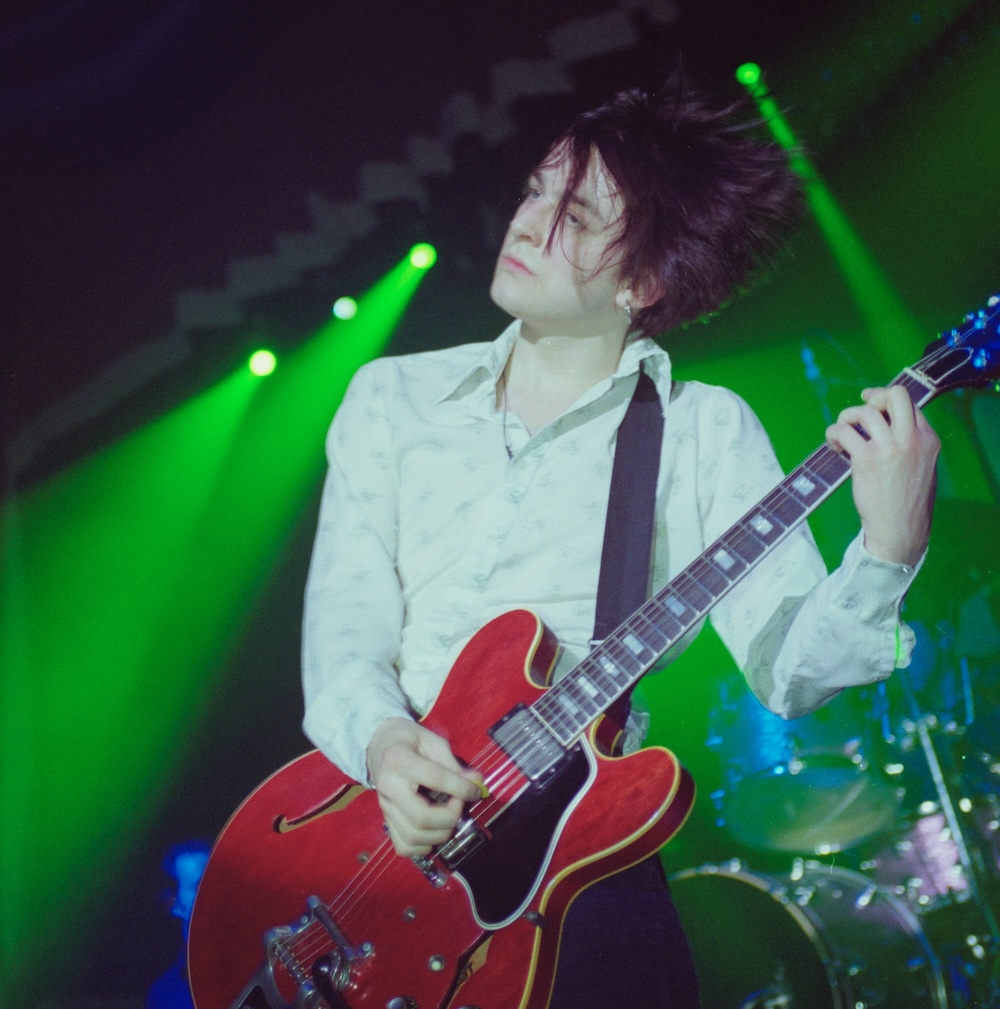
As wonderful as the opportunity was for Suede’s new teenage guitarist, his excitement at landing the gig was somewhat tempered by the fact that he would be destined to spend his first 18 months in the band replicating guitar parts onstage written by someone else. Understandably, when it came time for Suede to write and record their third album, Oakes was bursting with ideas, energy and enthusiasm.
“To be at Wessex Studios in Highbury, where some of my favourite music has been recorded, working on music of my own… that was far more of a ‘Wow’ moment than any gig we had done up to that point,” Oakes told Guitar World earlier this year. “I was still only just 18, and it was difficult to take in everything that was happening to me in 1994, but that recording session sticks in my head as the first time I realized the magnitude of the opportunity that had been offered to me.”
According to Oakes, the plan for Suede album three was to make a “much harder, more direct, more stompy, more swanky” record than Dog Man Star, which he reckoned was “all a bit dark, really.”
“We wanted a record so ‘pop’ that it could almost be a Greatest Hits,” Anderson told Select magazine.
“Part of the sound was dictated by the way Richard plays guitar,” bassist Mat Osman told Guitar magazine. “He’s got this really economical, direct style which fitted perfectly with Brett wanting to write in a more simple way. We wanted to make this sound like a debut album. This album is distilled Suede. And if you don’t like us, you’re going to fucking hate this!”
Released on July 29, 1996, Trash was chosen as the first single previewing the record. The previous month, during the 1996 UEFA European Football Championship, every day life in England was soundtracked by Three Lions, a nation-unifying football anthem written by comedians David Baddiel and Frank Skinner and Ian Broudie from The Lightning Seeds: Trash, meanwhile, was a celebration of outsiders, the misfits, freaks and deviants that the average English football hooligan would have happily beaten to a pulp.
“Oh maybe, maybe it’s the clothes we wear,” sang Anderson. “The tasteless bracelets and the dye in our hair… But we’re trash, you and me. We’re the litter on the breeze.”
“It’s managed to distil all the things I’ve been trying to say since I started writing songs in Suede,” Anderson told NME. “It’s the whole thing about looking at the stars from the gutter that I’ve always talked about. We’re trash, what people would call nobodies…
“I like the way it’s got a double meaning. It could be almost a history of people’s opinions about Suede, but at the same time it’s about just two lovers – me and someone else. I’ve got to say that I’m very proud of it.”
The single peaked at number three in the UK charts, and would become Suede’s best-selling single ever. It was a perfect taster for the album, titled Coming Up, which emerged on September 2, ’96, to largely positive reviews.
“Coming Up is their defiant reminder of what made Suede so special,” the Daily Telegraph commented.”If Dog Man Star was Diamond Dogs, then this is Suede’s Ziggy Stardust – extravagant, steeped in glam and unashamedly poppy.”
The album debuted at number one in the UK, and sold 300,000 copies within four months. Future singles Beautiful Ones, Saturday Night, Lazy and Filmstar would all follow Trash into the UK Top 10. Suede were emphatically back, and the lingering ghost of Bernard Butler had been firmly exorcised.
“He has a tendency, I think, to try and make me look small,” reflected Richard Oakes, who had been the object of much of Butler’s post-Suede disdain. “He’s probably jealous. When he hears Coming Up, he certainly will be.”
“You’re at your most creative in a band if you’ve got something to kick against and Coming Up was us doing that,” says Oakes today. “It was like, ‘No, we’re not done. Just you watch’.”
“I felt we had achieved exactly what we wanted to achieve with Coming Up,” Oakes tells Guitar World. “None of us had any idea it would be such a success, but we were so much on the same page during that period that it almost didn’t matter. Almost.“
Reflecting on how the commercial success of the album broadened Suede’s appeal far beyond their original ‘outsider’ fan base, keyboardist Neil Codling noted, “Melody is a way to burrow into people’s brains. You need an ear worm, and then you can corrupt people. And that was always part of what Brett was trying to do. He’s trying to poison the mainstream.”
One of Suede’s most vocal and high profile supporters, David Bowie, approved of their swaggering return, and predicted that it wouldn’t be long before Brett Anderson’s band would be firmly established at the forefront of British guitar rock.
“The poor things are bound to be an institution by the year 2000,” he said knowingly. Not for the first time in his life, his future-gazing would prove to uncannily accurate.