Blog
-
The Doors’ 1970 Live Recordings Surface on New Album
The Doors are releasing rare live recordings from 1970, capturing the raw energy of their most explosive tour stops across America. Continue reading… -
Parannoul Alter-Ego Huremic Shares New Record No Dancing Allowed
The anonymous, cult-beloved South Korean shoegaze auteur known as Parannoul has made a lot of music over the past few years, but he has been relatively quiet in 2026 — nothing since the one-off track “연말 다짐 (New Year’s Resolutions)” in early January. But the same artist also makes music under the alter-egos Huremic and Mydreamfever, and now he’s got a new Huremic record out in the world, following last year’s Seeking Darkness and the compilation track “3.”
The post Parannoul Alter-Ego Huremic Shares New Record <em>No Dancing Allowed</em> appeared first on Stereogum.
-
GDP Announces New Album Cross Off Matthew: Hear “Island In The Sky”
The New Jersey artist Matthew Miller has been releasing music under the name GDP for nearly two decades, but he was off the radar for quite a while. In the late 2000s and early 2010s, GDP found a lane for himself making skate-rap on the punk/emo/indie label Run For Cover, at a time when RFC was helping the emo revival pop off. But eventually, he turned his attention to other concerns, mostly related to film and photography.
The post GDP Announces New Album <em>Cross Off Matthew</em>: Hear “Island In The Sky” appeared first on Stereogum.
-
GracieHorse Announces New Album Breaking And Entering: Hear “5 Card Stud”
Here’s something you should know about the LA-based indie/country singer-songwriter known as GracieHorse: She is fully willing to dress up as the Hamburglar on her album cover. This isn’t news, exactly. You should’ve figured that out before reading this far down in a blog post. You have eyes. I’m just pointing it out to say that she deserves your respect before you even hear a note of her music.
The post GracieHorse Announces New Album <em>Breaking And Entering</em>: Hear “5 Card Stud” appeared first on Stereogum.
-
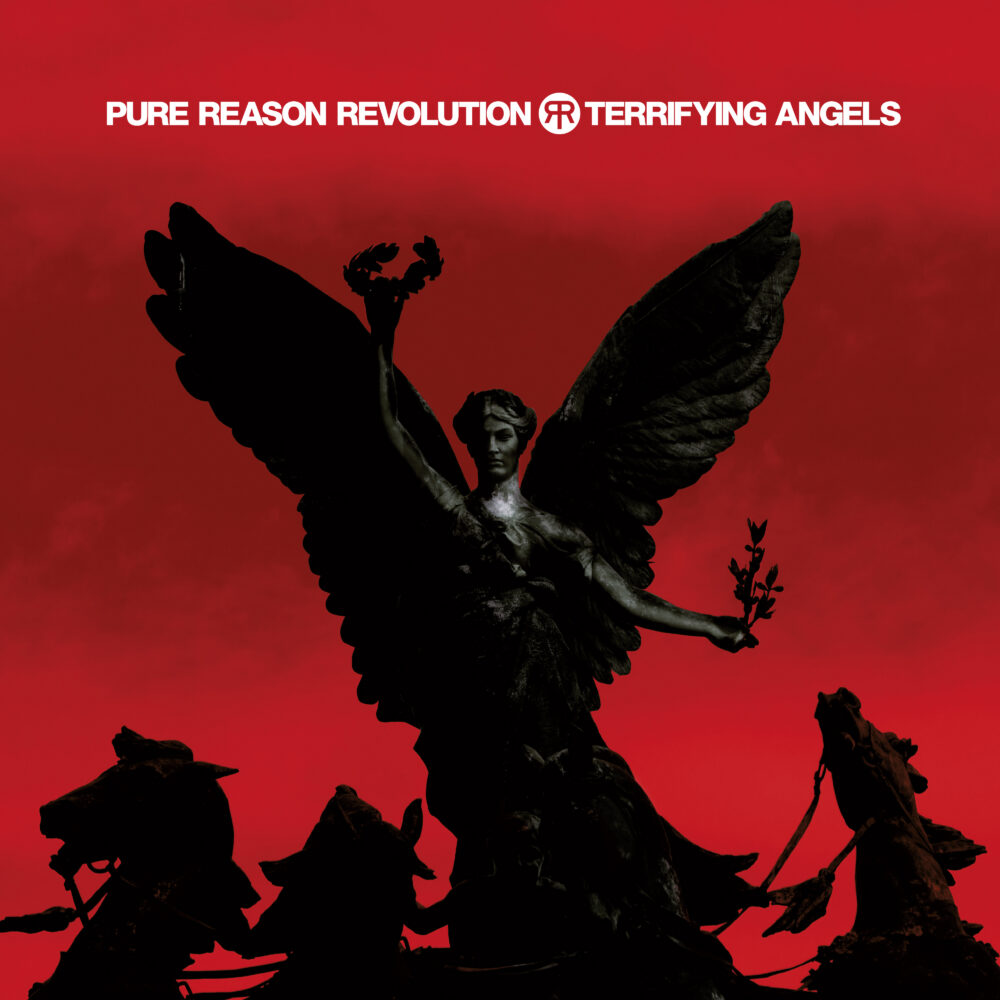
Pure Reason Revolution share song “Black-Arrow Acrobats” from the new album ‘Terrifying Angels’
Progressive alternative rockers Pure Reason Revolution return with their new album ‘Terrifying Angels’, their fourth since reemerging in 2019. The record will be released on September 25th, 2026, with the band set to embark on a UK headline tour in November 2026.
Now the band is pleased to reveal the second single from the album, titled ‘Black-Arrow Acrobats’, which features bass contributions from Mariusz Duda (Lunatic Soul, Riverside).
Band-leader Jon Courtney comments: “I had a lot of fun creating this track—it came together quickly and became a rollercoaster full of surprises. Lyrically, it explores escaping a consuming relationship where grief blurs reality and fantasy. It’s my favourite on the album, and Mariusz Duda’s exquisite bass performance makes it even more special.”
Following the somewhat gentler, moving themes of sorrow and transience guiding 2024’s ‘Coming up to Consciousness’, the new sound is dark and potent, full of savage riffs, ominous soundscapes, and thrashing, grungy layers – melded, of course, with the band’s signature transcendent harmonies. “The last record was more chill, so it just felt terribly natural to do something grittier, heavier and more aggressive,” Courtney explains.
The core trio of Jon Courtney, Annicke Shireen & Ravi Kesavaram are joined by a cast of collaborators for the album, featuring old friends and new partners alike. The eponymous song was born out of a jam session in Portland, Oregon, with founding bandmate Greg Jong, who also co-wrote “Rumination Ruin”. Meanwhile “Haywire Heart” and “Hold Your Wrath” – respectively the shortest and longest tracks in PRR’s discography – were both written alongside Paul Mullen, the alt-rock legend who fronted Losers and Yourcodenameis:milo. Finally, “Below Radiance” grew out of a section from a composition by Courtney’s mentee Kenny Fitzgerald.
The full track-listing is below:
1. Spin Like Fire 03:31
2. Black-Arrow Acrobats 08:38
3. Haywire Heart 02:42
4. Terrifying Angels 12:26
5. Rumination Ruin 04:25
6. Below Radiance 03:34
7. Hold Your Wrath 14:45Pre-order now here: https://purereasonrevolution.lnk.to/TerrifyingAngels-Album
The post Pure Reason Revolution share song “Black-Arrow Acrobats” from the new album ‘Terrifying Angels’ appeared first on The Prog Report.
-
DEMON CHRIST UNLEASHES “CURSE YOU ALL” AHEAD OF SECOND ALBUM SINS BURN BLACK – @thebeast
FOR IMMEDIATE RELEASE
DEMON CHRIST UNLEASHES “CURSE YOU ALL” AHEAD OF SECOND ALBUM SINS BURN BLACK
BLACKENED DEATHCORE ASSAULT ARRIVES HALLOWEEN 2026 VIA RAGEBREED RECORDS & EARACHE DIGITAL DISTRIBUTION
Demon Christ isn’t here to ask for permission.
Following the well-received release of the self-titled Demon Christ debut album in 2025, founder and vocalist Dave the Demon Christ Incognito is taking things even further into the darker and more brutal realms of blackened deathcore, death metal, and black metal with the band’s second full-length album, Sins Burn Black , arriving October 31, 2026 through Ragebreed Records with Earache Digital Distribution .
The first taste of the new album has already arrived in the form of “Curse You All,” which was released on July 31, 2026 . The single serves as the opening salvo for a record built around one simple philosophy: absolute sonic carnage with zero compromise.
Masterminded by Dave the Demon Christ Incognito , Demon Christ delivers a vicious collision of black metal darkness, death metal brutality, and deathcore punishment. With veteran musicians contributing to the attack, including Mike LePond of Symphony X on bass, along with live bassist [veteran loss of breath] , keyboardist and backing vocalist Shannon Red , the new album expands the Demon Christ sound while pushing its extreme-metal foundation even harder.
There is no polished-up, watered-down version of Demon Christ. No apologies. No concern for delicate sensibilities. This is music built for listeners who want their extreme metal loud, hostile, uncompromising, and unapologetically fucking heavy.
“Curse You All” sets the tone immediately, unleashing the kind of crushing intensity that makes it clear Sins Burn Black isn’t coming to play nice. The forthcoming album takes that attack even further, exploring the more brutal realms of blackened deathcore, death metal, and black metal while maintaining the relentless aggression that defines Demon Christ.
After establishing the band’s identity with the self-titled debut, Dave the Demon Christ Incognito returns with a second album that aims to go darker, heavier, and more extreme. Sins Burn Black isn’t simply a continuation of the Demon Christ story. It’s the next step in its evolution.
And this time, the curse comes with a bigger hammer.
Sins Burn Black arrives October 31, 2026 , bringing the second chapter of Demon Christ to life through Ragebreed Records and Earache Digital Distribution .
The curse has already begun.
DEMON CHRIST
Sins Burn Black
Release Date: October 31, 2026
Label: Ragebreed Records
Distribution: Earache Digital Distribution
Genre: Blackened Deathcore / Death Metal / Black Metal
“CURSE YOU ALL”
Single Released: July 31, 2026
LISTEN / FOLLOW DEMON CHRIST
Spotify / Streaming:
https://open.spotify.com/artist/7IeQi3gfYswWP8WSSJ4fES
Bandcamp:
https://demonchrist1.bandcamp.com/album/demon-christ
Instagram:
https://www.instagram.com/demonchristofficial/
Facebook:
https://www.facebook.com/share/1HSBcgQzPk/
DEMON CHRIST
Blackened deathcore. No compromise. No mercy.
-
The 30 Best Type O Negative Songs, Ranked

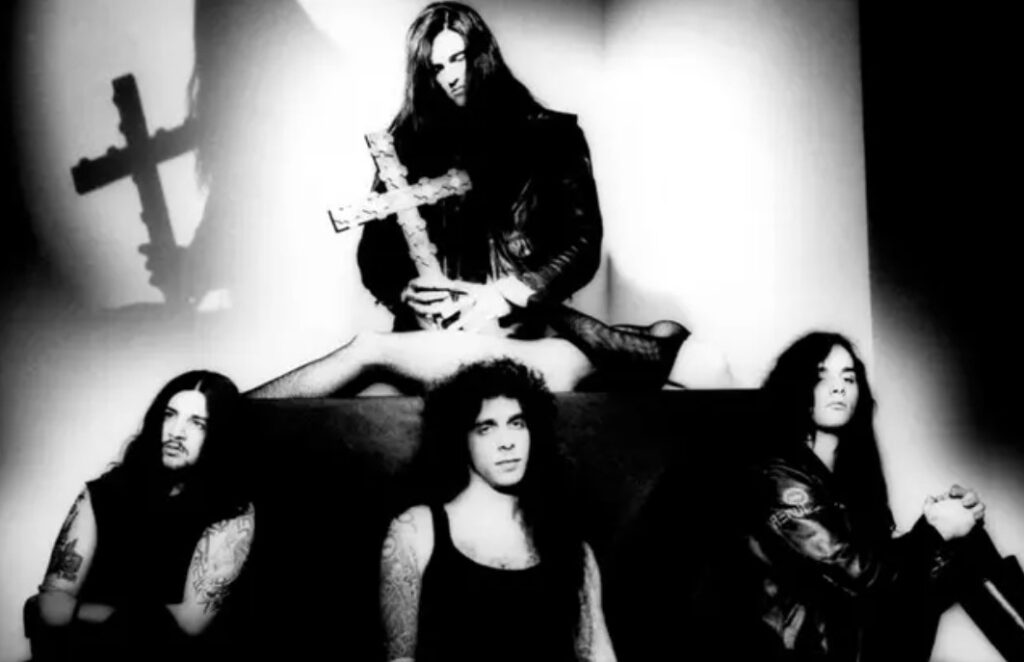
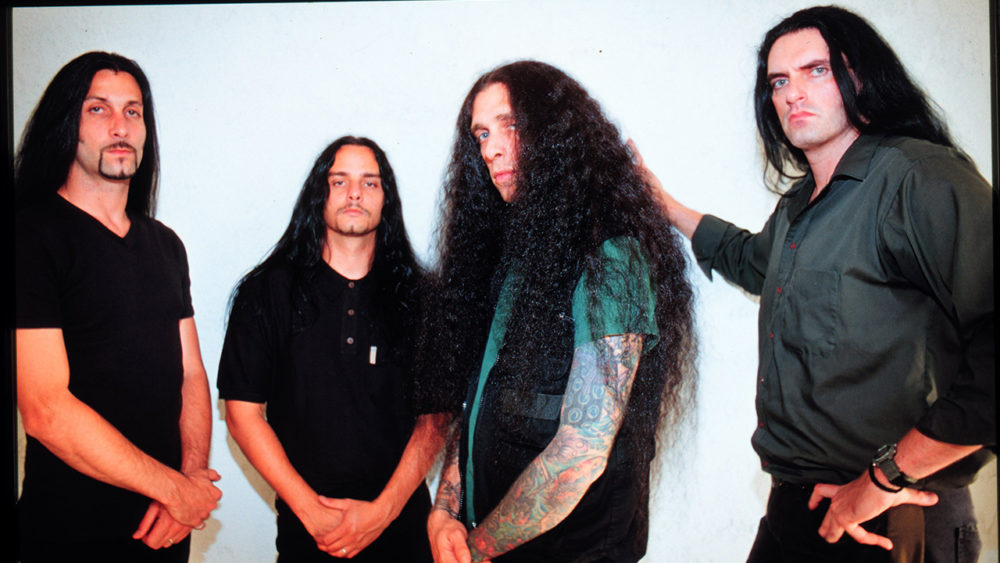
Type O Negative’s songs have done something almost no catalogue manages: they’ve grown. Sixteen years after Peter Steele’s death, the Brooklyn four-piece are bigger, more covered and more argued-over than they were when they were touring.
Seven albums, a run of three in the nineties that nobody has matched in the genre since, and a body of work that somehow contains both a ten-minute meditation on family death and a song written in a garbage truck. These are the thirty best Type O Negative songs, ranked — and the reasoning behind every one.
How This List Was Ranked
Not chart position. Type O barely had any — Bloody Kisses peaked at 166 on the Billboard 200 and went platinum anyway, which tells you everything about how this band actually worked.
Three things instead: songwriting, how much of the band’s identity a song carries, and whether it still lands cold in 2026. That last one is the real filter, and it’s why this list looks the way it does.
Type O were four things at once — a doom band, a goth band, a hardcore band and a pop band with a filthy sense of humour — and the best songs are the ones where all four are audible simultaneously.
30. Nettie (Life Is Killing Me, 2003)
Four minutes and forty-six seconds, and the most tender thing Peter Steele ever wrote.
“Nettie” is named after his mother. The lyrics identify her as Miss Red Hook of 1922, weeping silently for the pain of other people, keeping a tearful rosary every night — a victim, in his words, of the curse of empathy. He calls himself the son of an angel and admits he can’t believe she still loves him given what his shortcomings cost her.
There’s no irony anywhere in it. No punchline, no wink. Just a man in his forties writing about his mother without a single defense up.
And it sits on the same album as “Todd’s Ship Gods (Above All Things),” which is named after the shipyard his father Todd worked in. Two songs, two parents, one record — made while Steele was dealing with the illness and death of both.
29. Be My Druidess (October Rust, 1996)
Five minutes and twenty-six seconds, track four, and the moment October Rust announces what kind of album it’s going to be.
Pagan devotion played completely straight, with a chorus that is filthy and genuinely romantic in the same breath — which is a balance almost nobody else has ever managed. Steele’s fascination with nature and the old religions runs through the whole record, and this is where it arrives.
It also does the thing October Rust does better than any other Type O album: it sounds warm. On a record about autumn, that matters.
28. White Slavery (World Coming Down, 1999)
A song about addiction so unsparing it’s uncomfortable, from an album that dealt with almost nothing else.
Steele isn’t performing here. He’s describing something, and everyone listening knows it.
27. The Profit of Doom (Dead Again, 2007)
The lead single from the final album, with Steele as an apocalyptic preacher railing against a new moral code demanded by the media.
Heard now, knowing what came three years later, the whole thing acquires a weight it didn’t have at release. That’s not sentimentality — it’s just what the song does now.
26. In Praise of Bacchus (October Rust, 1996)
Seven and a half minutes of drunk, romantic, self-destructive splendour.
If October Rust is an autumn record, this is the moment the evening turns. One of Kenny Hickey’s best guitar performances on the album, buried in an album full of them.
25. Halloween in Heaven (Dead Again, 2007)
Four minutes and fifty seconds, and one of the strangest, warmest things on the final album.
Four minutes and fifty seconds, and it’s a tribute to Dimebag Darrell.
That context changes the whole song. Darrell Abbott was shot dead on stage in Columbus, Ohio in December 2004, and Steele’s response was to imagine an afterlife where the dead are having a better party than the living — the dead have that morbid beat, dancing on decaying feet, Halloween in Heaven and Christmas in Hell.
It features Tara Vanflower of Lycia on guest vocals.
It’s funny and genuinely moving at the same time, which was always this band’s hardest trick, and it’s the warmest thing on a very cold final album. Heard now, on the last record Peter Steele made, it lands differently again.
24. Pyretta Blaze (World Coming Down, 1999)
Six minutes and fifty-seven seconds, and one of the most atmospheric pieces on an album built almost entirely out of atmosphere.
It’s a slow burn in the most literal sense — Josh Silver’s keyboards doing the heavy lifting while the guitars circle underneath, and Steele delivering one of his most restrained vocals on a record where he mostly sounds like a man at the end of something.
A World Coming Down deep cut that longtime fans defend hard, and rightly.
23. Die with Me (October Rust, 1996)
Seven minutes of Steele at his most nakedly devotional. No irony, no punchline.
October Rust is often described as the accessible one, and tracks like this are why — but accessible here means emotionally direct rather than commercially calculated. Without question.
22. Life Is Killing Me (Life Is Killing Me, 2003)
The title track and the album’s thesis: a man cataloguing what’s wearing him down with the gallows humor that never left him.
Steele was blunt about where it came from — he described going through a midlife crisis at 41, watching his health go, people he loved dying, people he loved walking away, and a ten-year relationship ending. The album was originally going to be called The Dream Is Dead.
Life Is Killing Me is the most divisive album in the catalogue. This is one of the songs that justifies it.
21. Creepy Green Light (World Coming Down, 1999)
Josh Silver’s finest hour as a keyboard player, and one of the eeriest atmospheres the band ever built.
If you want the single best argument that Type O were a goth band rather than a metal band with goth trappings, it’s this.
20. Set Me on Fire (Bloody Kisses, 1993)
Three and a half minutes, in and out, no ceremony.
On an album where two songs run past ten minutes, this is the palate cleanser that proves the band could write short when they felt like it. They almost never felt like it.
And it’s catchy as hell.
19. Unsuccessfully Coping with the Natural Beauty of Infidelity (Slow, Deep and Hard, 1991)
Twelve and a half minutes, opening the debut album, structured in five movements.
Nobody starts a first record like this. It’s the sound of a band who’d come out of Brooklyn hardcore and decided the answer was to go slower and longer than anyone else would dare. Raw, ugly and genuinely difficult, and the foundation everything else was built on.
18. Red Water (Christmas Mourning) (October Rust, 1996)
This one requires context to hear properly.
Four members of Steele’s family died in the year leading up to this record, including his father — on Christmas morning. “Red Water” is what came out of that: a dirge with sleigh bells, laying a place at the table for people who aren’t coming.
It’s one of the saddest things in heavy music and it hides inside a Christmas song.
17. World Coming Down (World Coming Down, 1999)
The title track of the darkest album this band made, and the one that most clearly shows what the trilogy was building toward.
Where October Rust was autumn, World Coming Down is the winter after it — grief, addiction and collapse, arranged as beautifully as anything on the previous record.
16. IYDKMIGTHTKY (Gimme That) (Life Is Killing Me, 2003)
Six minutes and twenty seconds, and the best title in the entire catalogue.
The acronym stands for “If You Don’t Kill Me I’m Going To Have To Kill You” — which is, after “Gimme That,” the most repeated phrase in the song. Only Type O Negative would compress a threat that specific into eleven letters and then not explain it anywhere on the sleeve.
Underneath the joke it’s genuinely nasty: a grinding, insistent track about a relationship that’s stopped being survivable for either party. The humour is the delivery mechanism, not the point. It usually was.
15. Too Late: Frozen (Bloody Kisses, 1993)
Just under eight minutes of what most people mean when they say gothic metal.
Buried at track twelve on an album with two enormous openers, it’s the Bloody Kisses deep cut that longtime fans reach for first.
14. September Sun (Dead Again, 2007)
The last Type O Negative single released in Peter Steele’s lifetime.
It begins as a piano ballad and ends with a backwards voicemail, following a man named Peter through the wreckage of a ten-year relationship. Steele trades lead vocals with Kenny Hickey, and the song references October Rust both lyrically and musically.
Every song on Dead Again reads differently now. This one reads like a door closing.
13. Green Man (October Rust, 1996)
Steele’s paganism, his obsession with the seasons and his genuine love of the natural world, in one warm and enormous five-minute piece.
It’s the least cynical song this band ever recorded, which on an album this sardonic is a genuine surprise.
12. Summer Breeze (Bloody Kisses, 1993)
Seals and Crofts’ 1972 soft-rock standard, turned into something enormous and slightly sinister without changing a single lyric.
The joke — and it is a joke — is that they didn’t have to change anything. They just played it like Type O Negative and the darkness was already in there.
11. I Don’t Wanna Be Me (Life Is Killing Me, 2003)
The best-known song on the sixth album, and one of the band’s most direct.
It’s a self-loathing anthem you can shout along to, which is a very specific trick and one almost nobody else has ever pulled off.
Guitarist Kenny Hickey told Loaded Radio in 2023 that the song was a deliberate dare to Peter Steele to write a simple, short rock song instead of one of his usual “magnum opuses”.
10. Haunted (October Rust, 1996)
Ten minutes and seven seconds, closing out the album proper, and one of the most atmospheric things in the entire catalogue.
It opens on a synth note and Silver’s piano and then the band arrives like the floor giving way. Something close to doomgaze two decades before anyone used the word.
A lot of serious fans call this their favorite. They have a strong case.
It’s absolutely outstanding as a musical work.
9. Bloody Kisses (A Death in the Family) (Bloody Kisses, 1993)
Ten minutes and fifty-five seconds, and the emotional center of the album that made them.
It builds slowly, refuses to resolve where you expect, and earns every second of its length. Everything Type O would spend the next decade perfecting is already here.
8. My Girlfriend’s Girlfriend (October Rust, 1996)
Three minutes and forty-seven seconds — practically a haiku by this band’s standards — and the first single from October Rust, released on August 19, 1996.
It’s ludicrously catchy, extremely funny, and it works as an actual pop song. That’s the whole point. Type O Negative could write a two-verse radio single that just kicks. When they wanted to. Which as barely ever.
7. Everything Dies (World Coming Down, 1999)
Seven minutes and forty-three seconds about losing your father, your family and eventually everything, sung by a man who had recently lost several of them.
Nothing about it is theatrical. It’s the most honest thing Steele ever recorded, and it’s no accident that this was the song chosen as the album’s only single, released in November 1999 — it reached number 37 on the Mainstream Rock chart, and the video shows a family at dinner slowly fading away one by one.
World Coming Down was written after a series of deaths in Steele’s family. This is the song where he stops working around that and says it.
6. Wolf Moon (Including Zoanthropic Paranoia) (October Rust, 1996)
Six minutes and thirty-eight seconds, and the funniest, filthiest, most gleefully unrepentant song on the record.
The subject — lycanthropy as metaphor for a very specific act at a very specific time of the month — is exactly as tasteless as it sounds and exactly as brilliantly executed. Steele understood that shock only works when the song underneath is good enough to survive it.
Musically it’s one of the heaviest things on October Rust. That’s the trick.
5. Everyone I Love Is Dead (World Coming Down, 1999)
The song that most completely encapsulates what World Coming Down is.
The title is a joke and it isn’t. Steele wrote it in a period when the statement was very close to literally true for him, then set it to a riff you can nod your head to. That collision — devastating content, undeniable groove — is the band’s entire signature compressed into one track.
If someone asks what Type O Negative sound like, you can play this and stop.
4. Anesthesia (Life Is Killing Me, 2003)
Six minutes and forty-one seconds, and the finest thing on the sixth album, and one of the most quietly devastating songs Peter Steele ever wrote.
It’s about wanting to feel nothing, and it makes that desire sound almost reasonable. The arrangement is restrained by Type O standards — no ten-minute build, no theatrical crescendo — and it’s more affecting for it.
Twenty-three years on it’s become one of the songs newer fans arrive at first, and it deserves that. Life Is Killing Me spent years being written off as the awkward one. “Anesthesia” is a solid argument against that.
And it’s just a damn good song.
3. Christian Woman (Bloody Kisses, 1993)
Eight minutes and fifty-seven seconds, in three movements, and one of the two songs that took this band from the Brooklyn underground into the mainstream.
Steele wrote it about a real woman he’d been involved with. It’s blasphemous, genuinely erotic, structurally ambitious and — the part people forget — musically gorgeous. Josh Silver’s keyboards do half the work, giving the guitars room to move at a tempo most bands would find unusable.
The radio edit ran under four and a half minutes. The album version is the one that matters.
2. Black No. 1 (Little Miss Scare-All) (Bloody Kisses, 1993)
Eleven minutes and fourteen seconds. On an album. As a promotional single.
And here’s the story, told by Steele himself to Revolver: he wrote it in his head while driving a garbage truck, waiting three hours in line to dump forty cubic yards of human waste at the Hamilton Avenue Marine Transfer Station in Brooklyn.
That is the most Type O Negative fact in existence. The definitive goth anthem, the song that soundtracks every Halloween playlist in the western world, the one with the organ break and the “loving you was like loving the dead” line — written by a sanitation worker with time to kill.
It’s affectionate rather than mocking, which is why it survived. Steele is laughing with the girl in the song, and the band play it completely straight for eleven minutes.
Untouchable, and only kept off the top by one thing.
1. Love You to Death (October Rust, 1996)
Seven minutes and nine seconds, and the best song this band ever recorded.
Everything Type O Negative were is in it. The doom weight. The genuine romance, played without a shred of irony. Silver’s keyboards holding the whole thing in suspension. Hickey’s guitar arriving exactly when it should. Steele’s baritone at its most controlled — not the roar, not the whisper, the thing in between that nobody else had.
It was released as a single in November 1996 and it should have been enormous. What it became instead is something better: the song that people who love this band play for people who don’t, and the one that converts them.
Most bands with a catalogue this strong have a “best song” that’s really just their biggest song. This isn’t that. “Love You to Death” is genuinely their finest piece of writing, arranging and performing, and the fact that it’s also beautiful is what makes Type O Negative irreplaceable.
Nothing in gothic metal has touched it in thirty years.
The full list
1. Love You to Death — October Rust
2. Black No. 1 (Little Miss Scare-All) — Bloody Kisses
3. Christian Woman – Bloody Kisses
4. Anesthesia — Life Is Killing Me
5. Everyone I Love Is Dead — World Coming Down
6. Wolf Moon (Including Zoanthropic Paranoia) — October Rust
7. Everything Dies — World Coming Down
8. My Girlfriend’s Girlfriend — October Rust
9. Bloody Kisses (A Death in the Family) — Bloody Kisses
10. Haunted — October Rust
11. I Don’t Wanna Be Me — Life Is Killing Me
12. Summer Breeze — Bloody Kisses
13. Green Man — October Rust
14. September Sun — Dead Again
15. Too Late: Frozen — Bloody Kisses
16. IYDKMIGTHTKY (Gimme That) — Life Is Killing Me
17. World Coming Down — World Coming Down
18. Red Water (Christmas Mourning) — October Rust
19. Unsuccessfully Coping with the Natural Beauty of Infidelity — Slow, Deep and Hard
20. Set Me on Fire — Bloody Kisses
21. Creepy Green Light — World Coming Down
22. Life Is Killing Me — Life Is Killing Me
23. Die with Me — October Rust
24. Pyretta Blaze — World Coming Down
25. Halloween in Heaven — Dead Again
26. In Praise of Bacchus — October Rust
27. The Profit of Doom — Dead Again
28. White Slavery — World Coming Down
29. Be My Druidess — October Rust
30. Nettie — Life Is Killing MeThe seven albums, in order
Slow, Deep and Hard — June 11, 1991, Roadrunner
The Origin of the Feces — 1992, Roadrunner (released as a live album; it isn’t one)
Bloody Kisses — August 17, 1993, Roadrunner
October Rust — August 20, 1996, Roadrunner
World Coming Down — September 21, 1999, Roadrunner
Life Is Killing Me — June 17, 2003, Roadrunner
Dead Again — March 13, 2007, SPV/SteamhammerThe trilogy, and why it dominates this list
Look at where these songs come from. Bloody Kisses, October Rust and World Coming Down account for twenty-one of the thirty.
That isn’t laziness. It’s what happened.
Those three records came out in 1993, 1996 and 1999, in that order, and they document a complete emotional arc: the band arriving fully formed, the band at their most romantic and expansive, and then the band coming apart. Nothing in gothic metal before or since has managed a run like it.
Bloody Kisses was the first Roadrunner album certified gold — November 1995 — and went platinum in December 2000, despite peaking at only 166 on the Billboard 200. It was recorded in February and March 1993 at Systems Two in Brooklyn, produced by Steele and Silver, with cover artwork shot at Green-Wood Cemetery. It was also the last record with original drummer Sal Abruscato, who left in late 1993 to join labelmates Life of Agony.
October Rust arrived August 20, 1996, the first album crediting Johnny Kelly on drums — though the album itself uses programmed drums. It opens with “Bad Ground,” thirty-eight seconds of low-level buzzing designed to make listeners think they’d wired their speakers wrong, followed by the band cheerfully thanking you for buying it.
World Coming Down, released September 21, 1999, is where the humor stops. It’s an album about addiction, decay and losing people, written after a run of deaths in Steele’s family, and it’s the hardest of the three to put on. It reached number 39 on the Billboard 200 and number three in Germany. It’s also, for a certain kind of fan, the best.
For the record, the band’s highest US chart position came later — Dead Again debuted at number 27 on the Billboard 200 in 2007.
Our full ranking of every Type O Negative album goes deeper on all seven.
Why this band keeps getting bigger
Here’s the thing that makes Type O Negative genuinely unusual.
Most bands shrink after they stop. Type O have done the opposite. Since Peter Steele’s death on April 14, 2010 at the age of 48, the audience has grown every year — new listeners arriving through TikTok, through Halloween playlists, through the wider goth-rock revival, and through the simple fact that nothing has come along to replace them.
Part of it is that the songs were never really of their moment. They took Black Sabbath’s blueprint and ran it through the Beatles, and both of those reference points are permanent. Part of it is Steele himself — six foot seven, hilarious, self-loathing, and completely without a modern equivalent.
And part of it is that they never made a bad-faith record. Even the joke albums are committed. Even the covers are rebuilt from the ground up. That’s why they turn up in every serious conversation about the bands that shaped heavy music, and why a catalogue that stopped in 2007 is still finding people in 2026.
The Drab Four. Nobody’s come close.
TL;DR
- Best song: “Love You to Death” (October Rust, 1996) — everything the band was, in seven minutes and nine seconds.
- The two that broke them: “Christian Woman” and “Black No. 1 (Little Miss Scare-All),” both from Bloody Kisses, both credited with taking Type O into the mainstream.
- The best story: Peter Steele wrote “Black No. 1” in his head while driving a garbage truck, waiting three hours to dump forty cubic yards of waste in Brooklyn.
- The saddest: “Red Water (Christmas Mourning)” — written after four members of Steele’s family died in a single year, including his father on Christmas morning.
- Where the songs come from: 21 of the 30 are from Bloody Kisses, October Rust and World Coming Down — the 1993–1999 run that defines the band.
- The catalogue: seven studio albums between 1991 and 2007. Peter Steele died April 14, 2010, aged 48.
FAQ
What is the best Type O Negative song?
“Love You to Death,” from 1996’s October Rust. Released as a single in November 1996, it combines the band’s doom weight, genuine romantic sincerity, Josh Silver’s atmospheric keyboards and Peter Steele’s baritone at its most controlled. It’s widely regarded as the definitive Type O Negative track and the one most likely to convert a new listener.
What are Type O Negative’s most famous songs?
“Black No. 1 (Little Miss Scare-All)” and “Christian Woman,” both from 1993’s Bloody Kisses, are the two songs credited with taking the band into the mainstream. “Love You to Death,” “My Girlfriend’s Girlfriend” and their cover of Neil Young’s “Cinnamon Girl” — all from October Rust — are the other best-known tracks.
How did Peter Steele write “Black No. 1”?
He wrote it in his head while working as a New York City sanitation worker. Steele told Revolver he was waiting in line for three hours to dump forty cubic yards of human waste at the Hamilton Avenue Marine Transfer Station in Brooklyn when the song came to him. The album version runs eleven minutes and fourteen seconds.
How many albums did Type O Negative release?
Seven studio albums: Slow, Deep and Hard (1991), The Origin of the Feces (1992), Bloody Kisses (1993), October Rust (1996), World Coming Down (1999), Life Is Killing Me (2003) and Dead Again (2007). The Origin of the Feces was presented as a live album but was recorded in the studio with fake crowd noise.
What happened to Type O Negative?
Frontman, bassist and principal songwriter Peter Steele died on April 14, 2010, at the age of 48, bringing the band to an end. His death was initially reported as heart failure, but his estate later confirmed the cause as sepsis brought on by untreated diverticulitis. Guitarist Kenny Hickey, drummer Johnny Kelly, keyboardist Josh Silver and original drummer Sal Abruscato all survive him.
Thirty songs, seven albums, and a band who somehow got bigger after they stopped. Where did we get it wrong — and what’s missing? Tell us in the comments. And keep it locked on the Loaded Radio stream, home of Type O Tuesday — follow Loaded Radio for daily rock and metal news.
The post The 30 Best Type O Negative Songs, Ranked appeared first on Loaded Radio.
-
Font Announce New Album American Bully XL: Hear “Texas”
When we named Font a Band To Watch two years ago, we categorized their music as dance-punk, but that descriptor doesn’t fit their new song at all. “Texas” is the lead single from the Austin-founded band’s new album American Bully XL, the follow up to 2024’s Strange Burden. It’s a shimmering, stuttering reverie that reminds me a lot of Hovvdy, another group that got its start in Austin.
The post Font Announce New Album <em>American Bully XL</em>: Hear “Texas” appeared first on Stereogum.
-
Clinic Announce New Album Wild In The Streets: Hear “You And I”
Clinic have announced their 10th studio album Wild In The Streets. The Liverpool art punk band — which is now just Ade Blackburn and Jonathan Hartley — is teasing the followup to 2021’s Fantasy Island with the zany lead single “You And I” today.
The post Clinic Announce New Album <em>Wild In The Streets</em>: Hear “You And I” appeared first on Stereogum.
-
Fine Announces New Album Jazz Dreams: Hear “Everything In The Shade”
The conservatory-trained Copenhagen musician Fine Glindvad Jensen used to lead the electro-pop group CHINAH, and she has made music with peers like Erika de Casier, Astrid Sonne and Iceage’s Elias Rønnenfelt. She and Dean Blunt appear to be working together in the mysterious project known as the Crying Nudes, though that’s unconfirmed. On her own, she makes beautifully expansive music as just Fine, and she’s got a new album on the way.
The post Fine Announces New Album <em>Jazz Dreams</em>: Hear “Everything In The Shade” appeared first on Stereogum.