Blog
-
29 Big Rock + Metal Bands Who’ve Canceled Shows in 2026
Here are 29 rock and metal bands that have called off shows so far this year and the reason behind the cancellations. Continue reading… -
Album review : BLACK OAK ARKANSAS – When Electricity Came To Arkansas Vol 1 (5 CDs)
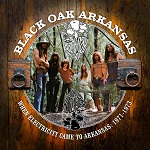 Cherry Red [Release date : 28.08.26] CD1 : Black Oak Arkansas (1971) + 2 bonus CD2 : Keep The Faith (1972) CD3 : If An Angel Came To See You, Would You Make Her Feel At Home? (1972) CD4 : … Continue reading
 The post Album review : BLACK OAK ARKANSAS – When Electricity Came To Arkansas Vol 1 (5 CDs) appeared first on Get Ready to ROCK!.
-
Absolute Darkness Interview
San Francisco Bay Area death/thrash force Absolute Darkness recently checked in with Metal Rules to discuss their sophomore full-length album, Witness to a Dying World […]
The post Absolute Darkness Interview appeared first on Metal-Rules.com.
-
“Canada’s Biggest Rap Festival” Loses 20% Of Its Lineup At The Last Minute
Toronto’s First Class Fest, a show that bills itself as “Canada’s biggest rap festival,” is set to start tomorrow, but it has lost one fifth of its lineup at the last minute. First Class is a relatively small operation, founded by two guys in their early twenties, and it’s set to start tomorrow at the Bowl at Sobey’s Stadium. They’ve been putting on shows since 2022, and this will be their first outdoor festival. The bill leans heavily into the chaotic, digitally distorted form of underground rap known as rage, and it looks like the planning has been just as chaotic as the music.
The post “Canada’s Biggest Rap Festival” Loses 20% Of Its Lineup At The Last Minute appeared first on Stereogum.
-
Retrospective: Iron Maiden – ‘A Matter Of Life And Death’
No comeback in metal was as welcome as Bruce Dickinson and Adrian Smith’s jubilant return to their rightful places in Iron Maiden back in 2000 with the release of the band’s triumphant twelfth album ‘Brave New World’. After the 90’s saw the band stumble and meander with the two, let’s face it, half-baked Blaze Bayley fronted albums, ‘Brave New World’ would see the heavy metal stalwarts embark on a successful and creative second chapter to match and even surpass their 80s heyday. ‘Brave New World’ was of course supported by a gigantic world tour, and the creative juices of this new era continued to flow with the release of 2003’s equally impressive ‘Dance Of Death’. Ignoring that album’s iffy “free CD-Rom” vibes cover art, inside lay some of the most varied creative choices of the band’s career thus far, including the band’s first fully acoustic track ‘Journeyman’ and a debut writing credit for longtime drummer Nikko McBrain on the propulsive and anthemic ‘New Frontier’. Compared to ‘Brave New World’, ‘Dance Of Death’ also veered a little further into the band’s proggier leanings, on tracks such as the brooding epic ‘Paschendale’ and the celebrated title track. It’s in these tracks that the seeds were sown for what would blossom on the band’s fourteenth release, ‘A Matter Of Life And Death’.
The subject of war has always been fertile ground for metal bands and Maiden themselves are no stranger to this, with many of their most well known tracks taking inspiration from historical events such as the Crimean War (‘The Trooper’), World War II (‘Where Eagles Dare’, ‘Aces High’) and the cold war (‘2 Minutes To Midnight’) but with ‘A Matter Of Life And Death’ the band would focus on these themes exclusively, resulting in an album that eschews the flag waving bombastic bluster of warfare and instead hones in on the grim human cost of war and the futility of combative violence itself.
A fertile writing period for the band, ‘A Matter Of Life And Death’ was recorded quickly too, with many of the first unmastered takes making the final cut. Indeed, the decision to not master the album was something the band felt aligned with the organic nature of the writing and recording process, an approach befitting the album’s subject matter. But whilst the production may have been a bit more back to basics in approach, the songwriting certainly wasn’t. It’s a long album (just over 70 minutes) but none of the tracks outstay their welcome, every song feels well developed, thought out and assembled. Every band member is locked in too, with Dickinson in particular laying down some of the most impassioned vocals of his career, particular on the balladic ‘Out Of The Shadows’, anthemic ‘These Colours Don’t Run’ and hard rocking epic ‘The Reincarnation Of Benjamin Breeg’. In the album’s heavier passages, the guitars feel crunchy and thick too,
With the exception of the short and sweet singalong opener ‘Different World’, this is an album entirely comprised of songs ranging from five to nine minutes long, tracks that build slowly and have a much more of a progressive feel to them. The longer, drawn out nature of these compositions only adds to the heavy nature of the album’s themes, with some of the tracks feeling almost claustrophobic in their gloom. ‘The Longest Day’ (named after the 1962 John Wayne WWII epic) paints an understandably bleak picture of the Normandy landings, as Dickinson, in the song’s menacing verses laments “The enemy coast dawning grey with scud/These wretched souls, puking, shaking fear/To take a bullet for who sent them here”. This darkness prevails on the disarmingly anthemic ‘For The Greater Good Of God’, a song which questions religions’ role in war, as Dickinson’s soldier character pleads “Tell me now what life is/Tell me now what love is”. The bleak tone is carried throughout the entire album, right until the final lines of epic closer ‘The Legacy’ where the track’s narrator, speaking of the orchestrators of war, concedes “Do you think that they care? They benefit from death and pain and despair”. Though not a concept album,’ A Matter Of Life And Death’ is as close as the band have ever come to making one, so interlinked are the tracks and subject matter. The album’s artwork too is similarly bleak, with the familiar face of Eddie facing the viewer, astride a tank, gun aloft as an army of skeleton soldiers stagger towards us amongst a burnt, war torn, leaden skied landscape.
In a recent interview, Nikko McBrain proclaimed ‘A Matter Of Life And Death’ to be his all time favourite Iron Maiden album (his drumming absolute shines throughout, bolstered by that unfussy production) and Bruce Dickinson has spoken nothing but fondly of it through the years. They chose to play it live in its entirety for a reason – these are songs the band believe in and are proud of. With fans, it still often remains somewhat of a polarising album, with its detractors finding the overall mood of the album too dour for their tastes especially in comparison to Maiden’s more tonally varied albums from the 1980s. What is without doubt however is that ‘A Matter Of Life And Death’ is a singular and standout album in an already teeming-with-quality back catalogue filled to the brim with classics. It’s the Iron Maiden album with the clearest vision and execution.
This is Maiden unfiltered, dark and focussed, a band nearly three decades into their career at the absolute peak of their songwriting powers.
ADAM FIRTH
-
Why Stevie Ray Vaughan Still Defines Blues Guitar 36 Years Later
36 years after Stevie Ray Vaughan’s death, blues guitar still exists partly in the world he created.
Listen to a young guitarist playing blues today and Vaughan’s influence is often impossible to miss. It might be the enormous Stratocaster tone, the aggressive attack, the heavy strings, the rapid-fire pentatonic runs or the way a player attacks a shuffle as though the guitar owes them money. Even guitarists who don’t consciously imitate Vaughan operate in a blues landscape that he helped reshape.
Vaughan wasn’t the first great blues guitarist, nor would he have ever claimed to be. His playing was deeply indebted to artists including Albert King, Jimi Hendrix, Buddy Guy, Freddie King, Otis Rush, Lonnie Mack and countless others. What made Vaughan extraordinary was what happened when those influences collided. He absorbed generations of blues guitar, added the volume and physicality of rock, and produced something immediately recognizable as his own.
More than three decades later, guitarists are still trying to figure out how he did it.
The Sound Was Massive
Vaughan’s tone has become one of the benchmarks by which electric blues guitar is measured.
On paper, some of the ingredients seem simple enough: a Fender Stratocaster, loud amplifiers, a Tube Screamer and heavy strings. That apparent simplicity has sent generations of guitarists down the rabbit hole of attempting to reproduce his sound.
Buy the Strat. Buy the Tube Screamer. Turn the amplifier up. Tune down half a step.
Still doesn’t sound like Stevie.
That’s because so much of Vaughan’s tone came from his hands. His picking attack could be ferocious. He struck strings with a physicality that gave even relatively simple phrases enormous weight. His left hand contributed huge bends and a wide, vocal vibrato that could make a single sustained note carry more emotional force than another guitarist’s entire run.
There was also a contradiction at the center of Vaughan’s sound. It was extremely powerful without becoming an indistinct wall of distortion. The notes retained clarity. You could hear the snap of the strings and the character of the Stratocaster even when the amplifiers were roaring.
That distinction matters.
Modern guitarists have access to virtually unlimited gain. A guitarist can create a huge sound at bedroom volume with a modeling amplifier, pedalboard or computer. Vaughan’s sound came from pushing equipment while still leaving enough room for the guitar itself to breathe.
Listen to the opening of “Pride and Joy.” The tone is thick, but the rhythmic details remain clear. Every muted string, accent and chord fragment contributes to the groove. The guitar sounds enormous because Vaughan is making it sound enormous, not because distortion is covering everything.
That remains one of the hardest lessons for guitarists to learn.
His Rhythm Playing Was as Important as His Solos
The mythology surrounding guitar heroes tends to focus on solos. Vaughan certainly supplied enough spectacular ones to keep guitar players occupied for several lifetimes.
But concentrating exclusively on his lead playing misses a major part of his brilliance.
Vaughan was a phenomenal rhythm guitarist.
“Pride and Joy” remains practically a rite of passage for blues guitarists because playing the notes isn’t the same thing as making the song swing. Vaughan combines bass movement, chord fragments, muted strings and lead fills into one continuous rhythmic engine. His guitar isn’t sitting on top of the rhythm section. It is part of the rhythm section.
That approach connects Vaughan directly to the blues musicians who influenced him. Great blues guitar has rarely been about waiting around for the solo. The guitarist has to make the song move.
Vaughan could do that with remarkable intensity.
On “Cold Shot,” he leaves space and allows the groove to do the work. On “Couldn’t Stand the Weather,” rhythm and lead blur together. His version of “Mary Had a Little Lamb” demonstrates how much personality he could put into a relatively straightforward groove.
This is one reason his music remains so educational for younger players. Learning a Vaughan solo might improve someone’s bends and pentatonic vocabulary. Learning to properly play the rhythm parts can improve almost everything else.
He Made the Pentatonic Scale Sound Limitless
Every beginning blues guitarist eventually encounters the minor pentatonic scale.
Then comes the dangerous realization that millions of guitarists know exactly the same five notes.
Vaughan demonstrated that vocabulary matters less than what a musician does with it.
He wasn’t inventing an entirely new harmonic language. Much of his playing was built from familiar blues vocabulary. You can trace phrases back through Albert King, Freddie King, Hendrix and others. Yet Vaughan’s phrasing made familiar ideas sound explosive.
His sense of timing was a major reason.
Vaughan could race through a flurry of notes and then suddenly stop. He could hang behind the beat, repeat a phrase, bend a note slightly sharp or attack a run with startling aggression. His solos often feel conversational because the phrases have shape. There are questions, answers, interruptions and exclamations.
“Texas Flood” is perhaps the ultimate example.
The song gives Vaughan enormous space, and he uses it without sounding like he is merely demonstrating technique. His bends cry. Quiet passages create tension before louder phrases arrive. Notes are repeated until their meaning changes. The solo develops instead of simply happening.
That’s the difference between vocabulary and language.
Thousands of guitarists can learn Vaughan’s licks note for note. Far fewer can reproduce the way he made those notes feel.
He Connected Hendrix to the Blues Tradition
Vaughan’s admiration for Jimi Hendrix was never hidden.
His recording of “Voodoo Child (Slight Return)” is the most obvious evidence, but Hendrix’s influence appears throughout Vaughan’s playing. There are chord embellishments, rhythmic ideas, feedback, aggressive Stratocaster sounds and moments when the distinction between rhythm and lead disappears entirely.
Yet Vaughan never sounded simply like a Hendrix imitator.
He pulled Hendrix’s innovations back through Texas blues and combined them with the influence of Albert King and others. The result created a bridge between blues and rock that younger guitarists could easily cross in either direction.
A rock fan could discover Vaughan through the intensity of “Scuttle Buttin’” or “Voodoo Child” and eventually find Albert King.
A blues fan could hear Vaughan’s version of “Little Wing” and be led toward Hendrix.
That ability to connect generations became one of Vaughan’s greatest contributions. His music wasn’t a museum exhibit preserving old blues traditions. It made those traditions feel immediate.
Texas Flood Arrived When Guitar Music Needed It
Context is important to understanding Vaughan’s impact.
When Texas Flood arrived in 1983, mainstream popular music did not exactly appear to be waiting for a Texas blues guitarist playing a battered Stratocaster.
Synthesizers and new wave had transformed the musical landscape. MTV was becoming increasingly important. The dominant sounds of the decade were changing rapidly.
Then Vaughan showed up sounding as though the previous 20 years of technological development were largely irrelevant.
Texas Flood didn’t need synthesizers or elaborate studio construction to make its point. Vaughan, bassist Tommy Shannon and drummer Chris Layton sounded like a band capable of tearing through a nightclub wall.
“Pride and Joy,” “Love Struck Baby,” “Rude Mood” and the title track introduced a guitarist who simultaneously sounded familiar and new.
The album helped make traditional electric blues feel commercially viable to a generation that hadn’t experienced the genre’s earlier eras firsthand. Vaughan wasn’t alone in keeping blues alive, of course, but his visibility was extraordinary.
He became something the blues desperately benefits from every generation: a gateway artist.
He Made Technique Serve Emotion
There is a temptation with Vaughan to talk about the physical difficulty of his playing.
The heavy strings. The enormous bends. The speed. The stamina. The aggressive attack.
All of that is impressive, but none of it explains why people are still listening.
Vaughan’s greatest performances aren’t memorable simply because they are difficult to play. They’re memorable because the technique communicates something.
“Tin Pan Alley (AKA Roughest Place in Town)” is devastating precisely because Vaughan doesn’t spend the entire song showing how fast he can play. The performance breathes. Space becomes part of the arrangement. When he attacks a note, it matters because he hasn’t filled every second preceding it.
“Riviera Paradise” reveals another side of his playing entirely. Its beauty comes from restraint, touch and melodic sensitivity.
Then there is “Lenny,” written for his wife, which strips away much of the aggression associated with Vaughan’s image and reveals an exceptionally lyrical guitarist.
Those performances complicate the caricature of Vaughan as nothing more than a loud Stratocaster player with heavy strings.
He had tremendous power.
More importantly, he knew when not to use it.
His Influence Became a Language of Its Own
Vaughan’s influence became so widespread that it eventually created a problem.
For years after his breakthrough, blues clubs became populated with guitarists using Stratocasters, Tube Screamers and Vaughan-inspired licks. Some copied the clothing. Others copied the equipment. Plenty copied the shuffle rhythms.
There is even a recognizable category of blues guitarist whose entire approach could essentially be described as post-SRV.
That level of imitation can obscure just how revolutionary the original was.
Vaughan himself was an obsessive student of his heroes, but he didn’t stop at imitation. He transformed those influences into an identity. That’s the part of his example that matters most.
The lesson isn’t that every blues guitarist should sound like Stevie Ray Vaughan.
The lesson is that a guitarist can study Albert King, Hendrix, Buddy Guy, Freddie King and dozens of others, then combine those lessons into something personal.
Ironically, truly following Vaughan’s example means eventually stopping trying to sound exactly like Vaughan.
Younger Guitarists Keep Finding Him
Vaughan died on August 27, 1990, following a helicopter crash after a concert at Alpine Valley Music Theatre in Wisconsin. He was 35.
That means an increasingly large percentage of his audience wasn’t alive while he was.
Yet his presence in guitar culture hasn’t disappeared.
YouTube changed the way musicians discover older artists. A teenager doesn’t need an older sibling, guitar teacher or record-store employee to hand them Texas Flood anymore. A performance can simply appear in a recommendation.
And Vaughan translates exceptionally well to video.
Seeing him play adds another dimension to the music. The physical attack becomes visible. His hands seem to wrestle with the instrument. Strings break. Sweat pours. The guitar hangs low. He sometimes appears completely consumed by what he’s playing.
The famous performances at Austin City Limits, El Mocambo and Montreux continue circulating because they don’t require historical context to be exciting.
You don’t need to know what blues rock was doing in 1983.
You just have to watch him play.
For young guitarists accustomed to polished online performances, Vaughan can also feel refreshingly dangerous. The music isn’t clinically perfect. It’s alive. Tempos breathe. Notes scrape. Strings buzz. The amplifier fights back.
That humanity may actually become more appealing as music production becomes increasingly precise.
The Gear Still Fascinates Guitarists
Few guitarists have inspired more gear obsession.
Vaughan’s battered Number One Stratocaster has become one of the most recognizable instruments in guitar history. His use of Fender amplifiers, Tube Screamers, heavy-gauge strings and Eb tuning has been analyzed endlessly.
Entire videos are devoted to recreating his tone.
Pedal companies continue selling equipment aimed at players chasing some variation of the Texas blues sound he popularized. Guitarists debate pickups, string gauges, amplifier combinations and Tube Screamer settings as though the correct mathematical formula might finally unlock “Texas Flood.”
It never quite does.
And perhaps that’s why the fascination continues.
The equipment gets someone close enough to realize how much of the remaining distance was Vaughan himself.
His Final Chapter Made the Story Even More Powerful
Vaughan’s later career adds another dimension to his legacy.
After years of substance abuse, he became sober and recorded In Step, released in 1989. The album contains some of his strongest work, including “Crossfire,” “Tightrope” and “Wall of Denial.”
There is maturity in the record without a loss of intensity.
Vaughan wasn’t an artist whose greatness existed only in his youth. He appeared to be entering another stage of his career, personally and musically.
That makes his death the following year particularly painful.
The question isn’t simply what else Vaughan might have recorded. It’s how he might have evolved.
Would he have moved further toward jazz? Returned deeper into traditional blues? Collaborated more extensively with other artists? Changed his guitar sound? Produced younger musicians?
We’ll never know.
But In Step suggests he wasn’t finished growing.
The Standard Remains
Calling Stevie Ray Vaughan one of the greatest blues guitarists is easy.
Explaining why his influence remains so powerful is more interesting.
It wasn’t one thing.
It was the tone, but the tone came from the hands.
It was the speed, but speed was only effective because he understood space.
It was the technique, but technique mattered because it communicated emotion.
It was the blues tradition, but Vaughan refused to treat tradition as something that couldn’t be changed.
And it was the influence of his heroes, transformed until the result unmistakably sounded like Stevie Ray Vaughan.
36 years after his death, guitarists still buy Stratocasters because of him. They still tune down to Eb. They still step on Tube Screamers. They still struggle through the rhythm part of “Pride and Joy.” They still attempt the bends in “Texas Flood.” They still discover “Lenny” and realize there was far more to Vaughan than sheer force.
Eventually, many of them discover Albert King, Freddie King, Buddy Guy, Hendrix, Lonnie Mack and the musicians who helped create Vaughan’s musical vocabulary.
That’s perhaps the greatest reason his legacy remains so important.
Stevie Ray Vaughan wasn’t the beginning of blues guitar, and he wasn’t the end of it.
He became one of its most important bridges.
And 36 years later, guitarists are still crossing it.
The post Why Stevie Ray Vaughan Still Defines Blues Guitar 36 Years Later appeared first on Blues Rock Review.
-
How Producer Andrew Watt Stood Up to Keith Richards
Ron Wood explains why fans no longer have to wait so long for new music – and confirms there’s more to come. Continue reading… -
Ben Poole Releases New Single ‘Time Has No Mercy’
Celebrated British guitarist and singer songwriter, Ben Poole, is pleased to announce his upbeat new single ‘Time Has No Mercy‘ released on Friday August 28th via Gypsy Soul Records. The single is available on all streaming platforms – here. ‘Time Has No Mercy‘ is the explosive third single from Poole’s highly anticipated new album ‘Post-Midnight […]
The post Ben Poole Releases New Single ‘Time Has No Mercy’ appeared first on ROCKPOSER DOT COM.
-
SHORES OF NULL Explores Solitude and Fate w/ “Son of the Tide” From New Album “Homesick” Out October 2026
Italian melodic death-doom Shores of Null return with “Son of the Tide,” the second single taken from their upcoming album “Homesick,” due out on October 16th, 2026 via Dusktone. Accompanied by a […]
The post SHORES OF NULL Explores Solitude and Fate w/ “Son of the Tide” From New Album “Homesick” Out October 2026 appeared first on Metal-Rules.com.