Blog

  • The Aesthetic of the Unfinished: Fragments, Ruins, and Romantic Incompleteness

    The Aesthetic of the Unfinished: Fragments, Ruins, and Romantic Incompleteness

    A ruined abbey rises from the mist. Ivy crawls across broken stone while empty windows stare into the fading light. Centuries have passed since prayers echoed through its halls, yet the structure remains strangely beautiful. In fact, many visitors find it more moving in its ruined state than they would if it stood perfectly restored.

    This fascination reveals something important about human nature.We are often drawn to an unfinished aesthetic. Fragmentary poems, abandoned buildings, incomplete symphonies, and unresolved stories possess a unique emotional power. Rather than frustrating the imagination, they invite it to participate. The missing pieces become part of the experience.

    The Romantic era transformed this attraction into an artistic philosophy. Writers, painters, and poets increasingly rejected perfect order in favor of ruins, fragments, and mysteries. They discovered that incompleteness could evoke emotions that finished works sometimes could not. Longing, melancholy, wonder, and curiosity all flourished in the spaces left open.

    The aesthetic of the unfinished remains influential today because it reflects a truth that extends far beyond art. Human experience itself is incomplete. Memories fade. Questions remain unanswered. Stories end before every mystery is solved. Perhaps that is why fragments often feel more honest than perfection.

    Romantic ruins surrounded by mist, broken arches, and the beauty of incompleteness.
    Romantic artists discovered that fragments and ruins often possess a beauty that perfection cannot achieve.

    Why Romanticism Fell in Love with Ruins

    During the eighteenth and nineteenth centuries, Romantic artists began challenging traditional ideas about beauty. Earlier artistic movements often celebrated balance, harmony, and perfection. Romanticism moved in a different direction. Instead of idealized order, artists became fascinated by emotion, imagination, and the passage of time.

    Ruins perfectly embodied these concerns. A crumbling monastery or abandoned castle carried visible traces of history. Visitors could see both what remained and what had been lost. The structure became a conversation between presence and absence.

    One of the most striking examples appears in the paintings of Caspar David Friedrich. His landscapes frequently depict ruined churches, weathered monuments, and lonely figures confronting vast natural environments. These scenes are not simply picturesque. They invite reflection on mortality, memory, and humanity’s place within a world far larger than itself.

    Friedrich’s The Abbey in the Oakwood remains one of the defining images of Romantic ruin. The shattered Gothic structure stands among leafless trees while figures move through the darkness below. Nothing dramatic happens within the painting. Yet viewers often experience a profound emotional response because the ruin suggests stories that can never be fully recovered.

    The missing pieces become part of the artwork’s meaning.


    The Sublime and the Beauty of Loss

    Romantic thinkers frequently described certain experiences as sublime. Unlike ordinary beauty, the sublime combines admiration with unease. Mountains, storms, darkness, and ruins inspire awe because they remind us of forces beyond human control.

    A ruined cathedral demonstrates this idea perfectly. The structure reflects extraordinary human achievement, yet its broken condition reveals that time eventually overcomes every creation. Viewers experience beauty and melancholy simultaneously.

    This emotional complexity explains why Romantic artists repeatedly returned to fragments and ruins. The unfinished object encourages contemplation. It reminds us that every story remains vulnerable to time, memory, and change.

    Perfection feels complete. A fragment continues speaking.


    Edgar Allan Poe and the Power of Incomplete Knowledge

    Few writers understood the emotional power of incompleteness better than Edgar Allan Poe. Although he rarely wrote about unfinished artworks directly, many of his greatest stories depend upon missing information, fragmented perspectives, and mysteries that remain only partially resolved.

    Modern readers often associate horror with revelation. We expect explanations. We want answers. Poe frequently worked in the opposite direction. Instead of solving every mystery, he allowed uncertainty to linger.

    Consider The Fall of the House of Usher. Readers never receive a complete explanation for the strange relationship between the decaying mansion and the psychological collapse of its inhabitants. The story presents clues, images, and unsettling possibilities, but certainty remains elusive.

    “While I gazed, this fissure rapidly widened.”

    The famous final image resolves the physical destruction of the house, yet many deeper questions remain unanswered. What exactly binds the family to the structure? How much of the narrative is psychological? How much is supernatural? Poe deliberately leaves these questions open.

    The result is powerful because uncertainty activates the reader’s imagination. Like a Romantic ruin, the story derives part of its beauty from what is missing.


    Why Unfinished Stories Stay With Us

    Most people assume satisfaction comes from resolution. Mysteries should be solved. Questions should be answered. Stories should end with clarity. Yet psychology suggests something surprising. Unfinished experiences often remain in memory longer than completed ones.

    This phenomenon helps explain why fragments can feel so emotionally powerful. An unfinished work continues demanding attention because the mind instinctively tries to complete what is missing. Rather than closing the experience, incompleteness keeps it alive.

    Artists have understood this principle for centuries, even before psychologists attempted to explain it scientifically. Romantic writers, Gothic novelists, and modern filmmakers repeatedly discovered that uncertainty often creates stronger emotional engagement than certainty.

    The unanswered question lingers. The incomplete image remains vivid. The fragment continues expanding within the imagination long after a finished work might have been forgotten.


    The Zeigarnik Effect

    In the twentieth century, psychologist Bluma Zeigarnik observed that people tend to remember unfinished tasks more easily than completed ones. This tendency later became known as the Zeigarnik Effect.

    Although the theory emerged from psychology rather than literature, it offers valuable insight into the enduring appeal of fragments and ruins. When something remains unresolved, the mind continues returning to it. We mentally revisit the missing pieces and search for connections that may not exist.

    A completed puzzle requires no further effort. A missing piece transforms the puzzle into a question. Human beings are naturally drawn toward questions.

    This principle helps explain why abandoned buildings, unfinished novels, and unresolved mysteries often feel strangely compelling. Their incompleteness invites participation. Viewers and readers become collaborators rather than passive observers.


    Poe’s Fragmented Narrators

    Edgar Allan Poe repeatedly exploited this psychological tendency. His narrators rarely possess complete knowledge. Instead, they present fragmented perspectives shaped by obsession, fear, guilt, or emotional instability.

    The reader must assemble meaning from incomplete evidence. Important details remain uncertain. Motivations are sometimes ambiguous. Reality itself often becomes difficult to trust.

    This approach distinguishes Poe from many writers who carefully explain every mystery. His stories frequently derive their power from what remains unknown.

    Consider The Tell-Tale Heart. The narrator insists upon his sanity while simultaneously describing increasingly irrational behavior. Readers receive only one perspective, yet that perspective is fundamentally unreliable.

    “You fancy me mad. Madmen know nothing.”

    The statement attempts to establish credibility, but it produces the opposite effect. Each new detail deepens uncertainty. Readers become trapped between what the narrator claims and what the evidence suggests.

    The story remains memorable because it never fully resolves that tension. We understand the crime. We understand the guilt. Yet questions regarding perception and reality continue haunting the narrative.


    The Horror of Missing Information

    Poe recognized that fear often grows strongest when information is incomplete. Once every mystery receives a clear explanation, uncertainty disappears. The imagination loses space to operate.

    This principle appears throughout Gothic literature. Hidden rooms remain more unsettling before they are opened. Strange sounds are more disturbing before their source is identified. A half-revealed truth often feels more powerful than a fully explained one.

    The unfinished therefore becomes a creative tool. By withholding complete knowledge, authors encourage readers to participate actively in the story. Personal fears, memories, and expectations begin filling the gaps.

    The fragment becomes a mirror reflecting the imagination itself.


    Frankenstein and the Fear of Incomplete Creation

    Mary Shelley’s Frankenstein offers another perspective on incompleteness. Unlike Romantic ruins or Poe’s fragmented mysteries, the novel explores the consequences of creating something that can never truly be finished.

    Victor Frankenstein imagines that scientific achievement will grant him mastery over life. Once the creature awakens, however, he discovers that creation does not end when the experiment succeeds. The work continues evolving beyond his control.

    The creature itself embodies incompleteness. Constructed from fragments of different bodies, it exists between categories. Human yet excluded from humanity. Alive yet disconnected from ordinary life. Familiar yet profoundly unsettling.

    “I had selected his features as beautiful. Beautiful! Great God!”

    Shelley’s irony is devastating. Victor believes he can assemble perfection from fragments. Instead, he creates something that forces him to confront the limits of control and understanding.

    The novel resonates because it transforms incompleteness into a source of existential anxiety. Some things remain unfinished not because they are broken but because human beings themselves are incomplete. Knowledge has limits. Ambition has consequences. Creation always involves uncertainty.


    Fragments as Invitations

    Romantic ruins, Poe’s mysteries, and Shelley’s creature all reveal the same underlying truth. The unfinished object possesses emotional power because it invites participation.

    A completed work provides answers. A fragment creates possibilities. Readers imagine missing chapters. Visitors reconstruct vanished buildings. Audiences continue debating mysteries that were never fully explained.

    This process transforms incompleteness from a flaw into a creative strength. The missing pieces become part of the experience rather than evidence of failure.

    The unfinished survives because it leaves room for imagination to continue the story.


    Why We Still Love Ruins and Abandoned Places

    The Romantic fascination with incompleteness never disappeared. Modern audiences remain captivated by abandoned buildings, forgotten amusement parks, empty hospitals, and decaying mansions. Photographers travel across continents to document places slowly being reclaimed by nature. Entire communities explore urban ruins through books, films, and online archives.

    At first glance, this attraction may seem unusual. Why seek out places marked by decline rather than preservation? The answer lies partly in the emotional qualities these locations possess. Ruins reveal time in a visible form. Layers of history remain present within cracked walls, broken windows, and weathered surfaces.

    Unlike newly constructed environments, abandoned places feel connected to memory. Visitors sense that stories remain embedded within the landscape. The details may be unknown, yet traces of human experience persist.

    This reaction is remarkably similar to the emotions Romantic artists experienced when confronting ruined abbeys and castles. The setting becomes powerful not because of what remains intact but because of what has been lost.

    Absence acquires its own presence.


    The Mystery of What Came Before

    A perfectly restored building presents a complete narrative. An abandoned structure does something different. It encourages speculation. Who lived here? Why was the place abandoned? What events unfolded within these walls?

    Human beings are natural storytellers. When information is missing, imagination begins filling the gaps. This tendency explains why fragments often remain more memorable than complete explanations.

    The unfinished object becomes collaborative. Rather than delivering a fixed meaning, it invites interpretation. Each visitor contributes something personal to the experience.

    That openness helps explain why ruins continue inspiring artists, filmmakers, writers, and musicians today.


    Wabi-Sabi and the Beauty of Imperfection

    Although Romanticism developed in Europe, the appreciation of incompleteness appears in many cultural traditions. One of the most fascinating examples is the Japanese aesthetic philosophy known as Wabi-Sabi.

    Wabi-Sabi values impermanence, imperfection, and transience. Rather than pursuing flawless surfaces, it encourages appreciation for objects shaped by age, weather, and use. Cracks, fading colors, and signs of wear become sources of beauty rather than defects.

    The philosophy differs from Gothic Romanticism in important ways. Wabi-Sabi is generally quieter and more contemplative. Gothic aesthetics often emphasize mystery, melancholy, and emotional intensity. Yet both traditions arrive at a similar conclusion.

    Perfection is not the only form of beauty.

    An unfinished object can communicate truths that flawless surfaces sometimes conceal. Age, change, and vulnerability become part of the artistic experience rather than problems requiring correction.


    The Unfinished in Modern Culture

    Contemporary storytelling continues demonstrating the power of incompleteness. Some of the most discussed novels, films, and television series are remembered precisely because they leave certain questions unresolved.

    Audiences debate interpretations for years after a story ends. The conversation survives because uncertainty remains. Complete explanations often close discussion. Ambiguity keeps it alive.

    This principle extends beyond entertainment. Personal memories operate in a similar way. Few people possess perfectly complete recollections of the past. Important experiences remain fragmented. Details disappear. Meanings evolve over time.

    The unfinished therefore feels familiar because human life itself rarely reaches perfect resolution. Relationships end unexpectedly. Ambitions remain unrealized. Questions persist long after answers become impossible.

    Art that embraces incompleteness often feels authentic because it mirrors that reality.


    Why Fragments Feel Human

    Perfect objects can be admired. Fragments invite empathy.

    A ruined cathedral reveals the passage of centuries. An unfinished manuscript preserves traces of a creative struggle. A partially remembered story reflects the limitations of memory itself.

    These objects feel human because they carry evidence of time, uncertainty, and change. Their imperfections remind us that creation is rarely straightforward. Every life contains unfinished chapters.

    The fragment survives not despite its incompleteness but because of it.


    The Beauty of What Remains Unfinished

    From Romantic ruins and Gothic landscapes to Poe’s mysteries and Shelley’s fragmented creation, artists have repeatedly discovered that incompleteness possesses extraordinary emotional power.

    A finished work provides closure. A fragment creates possibility. Missing pieces encourage imagination. Unanswered questions inspire reflection. The unfinished object continues evolving within the mind long after the experience ends.

    Perhaps that is why ruined abbeys remain more haunting than restored ones. Perhaps that is why Poe’s unresolved mysteries continue captivating readers. Perhaps that is why abandoned places, incomplete stories, and weathered artifacts still inspire fascination.

    They remind us that perfection is not always the goal of art.

    Sometimes the most meaningful experiences emerge from what remains incomplete.

    Like a Gothic ruin standing beneath the moonlight, the fragment continues speaking long after certainty has disappeared.


    Wear the Darkness

    If Gothic literature, Romantic ruins, Edgar Allan Poe, and the beauty of mystery inspire you, explore the Edgar Allan Poets store. Discover apparel and artwork created for lovers of imagination, melancholy, and the shadows between certainty and wonder.


    Edgar Allan Poe Gothic apparel and noir-inspired fashion from the Edgar Allan Poets store


    Join the Noir Newsletter

    Receive Gothic literature, dark culture, Romantic art, noir psychology, and Edgar Allan Poe analysis directly in your inbox.


    Enter the Atmosphere

    Continue your journey through Gothic moods, Romantic melancholy, and dark artistic inspiration with the official Edgar Allan Poets playlist.


    Frequently Asked Questions

    Why are ruins considered beautiful?

    Ruins combine history, memory, and visible signs of time. They remind us of impermanence while allowing the imagination to reconstruct what has been lost.

    What is the Zeigarnik Effect?

    The Zeigarnik Effect is a psychological phenomenon suggesting that people tend to remember unfinished tasks and unresolved experiences more easily than completed ones.

    How did Edgar Allan Poe use incompleteness in his stories?

    Poe often relied on fragmented narrators, missing information, and unresolved mysteries to engage the imagination and create psychological tension.

    What is Wabi-Sabi?

    Wabi-Sabi is a Japanese aesthetic philosophy that values imperfection, impermanence, and the beauty found in aging and incomplete objects.

    Why do unfinished works feel emotionally powerful?

    Incomplete works invite participation from the audience. The imagination becomes involved in filling gaps, creating possibilities, and exploring unresolved questions.

    The post The Aesthetic of the Unfinished: Fragments, Ruins, and Romantic Incompleteness appeared first on Edgar Allan Poets – Noir Rock Band.

  • ECHOES OF A DYING WORLD Release New Single and Video “Mathematical Design”

    Belgian melodic death metal band Echoes of a Dying World have released their new single and video, “Mathematical Design.” It is the third and final preview of the band’s forthcoming conceptual EP, “Revelations,” which will arrive independently on August 28, 2026. While the previous songs explored inherited trauma, restrictive systems and psychological collapse, “Mathematical Design” […]

    Source

  • DISCARDED Release New Thall Single “Flourish||Forsaken”

    DISCARDED Release New Thall Single "Flourish||Forsaken"

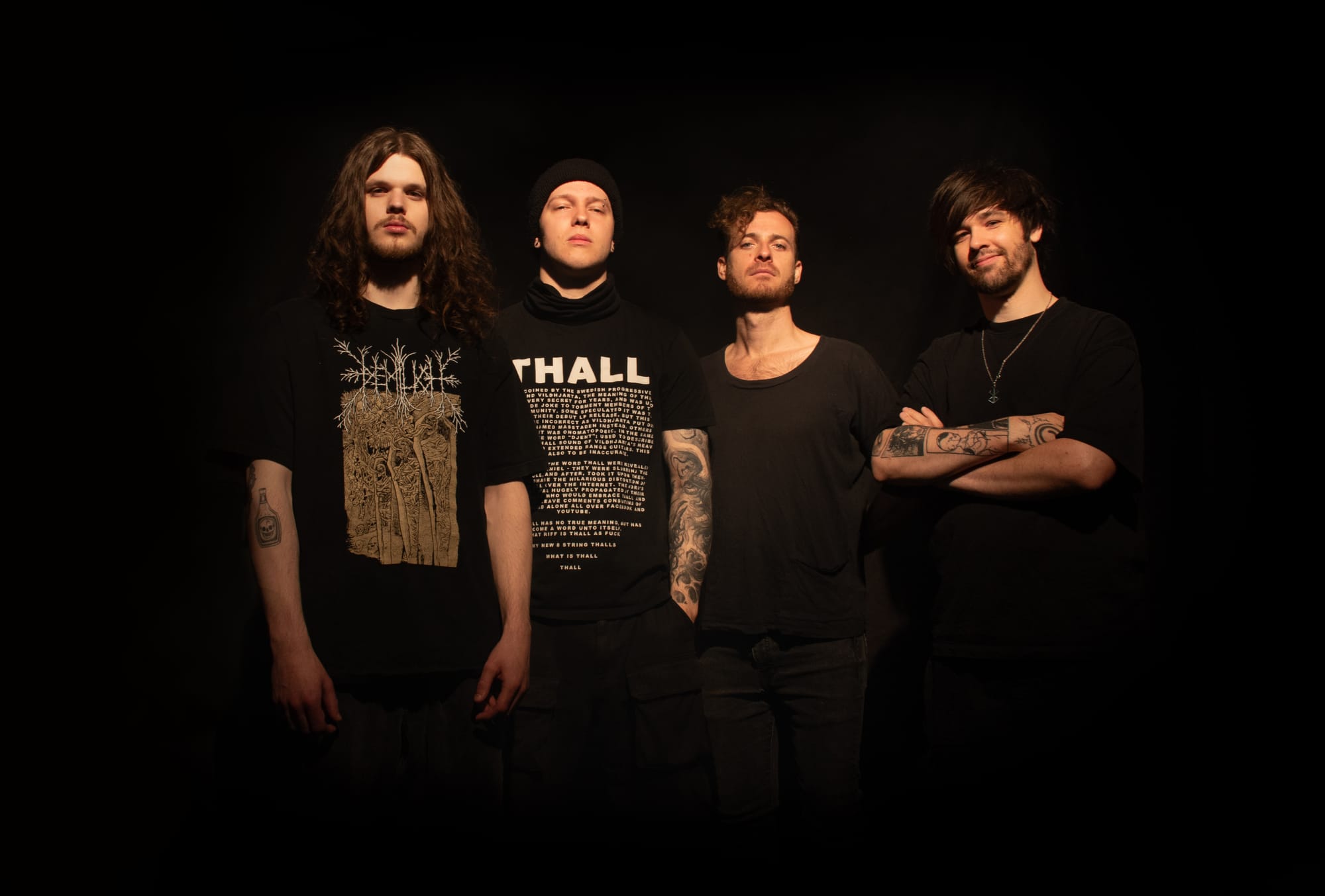
    Dutch Thall quartet, Discarded, have just released their newest single "Flourish||Forsaken" on July 30th. The band is made up of Andy Meijer (vocals), Liam Rolink (guitar), Nikki Son (Guitar), and Bas Gijzen (Drums).

    On the new single, the band states:

    "Flourish || Forsaken displays our growth post-EP, and the direction we as DISCARDED want to take. The track itself is a progressive approach to thall with elements of deathcore, infused with a strong emotionality. We're all struggling with humanity's effects on the natural world, and Flourish || Forsaken gives space to those emotions. We will continue to push the boundaries of intensity, aggression, and depth simultaneously." - Discarded

    Now, if you are new to Thall (we actually have a whole article breaking it down), the basic idea is that Thall is an extreme metal subgenre that focuses on building and distorting melodies, progressive instrumentals, off-timing, and polyrhythms, and typically has an off-putting sound. Thall was a term originally coined by Swedish metal act Vildhjarta but has now become a term for a whole subgenre of metal.

    Discarded introduces their new song with gentle ambience and reverbed clean guitar before suddenly bursting into down-tuned thall guitar riffage and explosive low growls. Taking inspiration from acts like Mirar and Vildhjarta as well as blackened deathcore, Discarded continues to showcase wildly fast guitar riffs and overall progressive instrumentals that set the tone. Screeching pinch harmonics, bright leads, and deep guitar bends create a dramatic and crushingly heavy sound that excellently captures the atmosphere of thall music.

    At about 4 minutes in, "Flourish || Forsaken" fades into a bridge with atmospheric guitar and evolving pads that create a very ambient and vibey soundscape as drums build back into full intensity, and speeding double bass drumming introduces galloping tempos and rapid tremolo guitar. Discarded builds into a brutally intense breakdown as rabid screams and slowed guitar chugging create a blend of deathcore and thall, as the breakdown features extreme heaviness while keeping the distorted melodies characteristic of thall music. Eventually, the song fades out with clean guitar and cinematic orchestral strings.

    At just over 7 minutes, Discarded does an excellent job of capturing the essence of thall with a blend of deathcore's intensity and thall's progressiveness and off-putting melodies. The band's talent and passion for thall music like Vildhjart is clear in their music and makes it enjoyable. Overall, their production is excellent, especially for a band that started just last year; I'm very impressed.

    You can stream "Flourish||Forsaken" available on all platforms now (there is even an instrumental version too!).


    Find Them Here: Spotify | Instagram


    Thanks for reading!

  • Finsterforst – Still Review

    Home to cuckoo clocks, namesake gateaux,1 and Bollenhüte, Germany’s Schwarzwald (Black Forest) has functioned as folklore fodder for centuries. Ever since dropping debut EP Wiege der Finsternis, Finsterforst has mined their homeland for inspiration, and after five albums they’re Still at it. Though only three years removed from 2023’s EP Jenseits, Still is Finsterforst’s first proper album in seven years.2 If this is your Finsterfirst time experiencing the band’s wares, Finsterforst revels in long-form folk compositions that conjure the stateliness and beauty of nature, and on Still these Germaniacs deliver another generous portion of real-deal, certified folk magic. After so much time walking through the woods, does Still forge a better path, or has Finsterforst lost their way?

    Fans of Finsterforst’s recent work should be pleased with Still, as the distinctly Deutsch niche they’ve carved out persists with a twist of noble melancholy. To mein ears, Still plays like folk/black metal garnished with Neue Deutsche Härte accents as they merge seismic riffs and sustained synths with atmospheric textures, cinematic orchestrations, and a staggering tonal depth. Early Finsterforst leaned heavily into folksy fun, where jaunty accordion leads and spirited bass punches draw comparisons to Korpiklaani and Turisas. As Finsterforst evolved, song lengths ballooned, and they pushed further into realms of mood and emotional swells. While vestiges of their early sound remain, Finsterforst now hews much closer to the likes of Moonsorrow, although instead of basking in the wintry waters of Scandinavian paganism, this German septet reveres the temperate charms of an enchanted wood.

    From its outset, Still conjures the ethereal beauty of nature and merges it with crushing might and overwhelming pathos. Opener “Obduktion” kicks off with an airy lead before dropping the hammer with meticulously crafted riffs and synth accents that remind me of Rammstein and Eisbrecher. Yet Still doesn’t dramatically shift Finsterforst’s songwriting towards Neue Deutsche Härte—this facet has been a part of their sound for years. Rather, Finsterforst adopts a less-is-moar philosophy that makes the parallels stand out more starkly. For instance, “Stille Nacht” begins with a riff that recalls Rammstein’s “Mein Teil,” driving momentum with thick ‘n’ beefy muscle. Both “Knie Nieder” and “Herbstwanderung” expertly blend the heavy with the tender, and “Fels” glistens with acoustic guitar underpinning vocalist Olli Berlin’s mesmerizing vocals. And it’s here that Finsterforst unfetters their most potent weapon. Berlin’s vocals give me goosebumps each playthrough, and his impassioned barks and sonorous cleans proffer varied deliveries throughout Still. Yet more than that, they supply the perfect counterpoint to Finsterforst’s soundscape as the outfit maneuvers between impassioned discharges and reverb-saturated refrains supported by gorgeous choral elements and brassy orchestrations. Still captures Finsterforst at their most subtle and stripped down, where laying their arrangements bare exposes naked splendor.

    Despite the extreme runtime of Still, Finsterforst retools their approach to make it more accessible. In his review of Mach Dich Frei, El Cuervo identified the record’s length as cumbersome taken all at once, even if the individual tracks succeeded. On Still, the songs boast more palatable lengths than LPs past, and here only final original track, “Leere” overstays its welcome at twenty-four minutes.3 The two covers at the end, Immortal’s “Beyond the North Waves” and Pink Floyd’s “Another Brick in the Wall, Pt. II” commendably adapt versions of the songs to Finsterforst’s own style, yet push the runtime an extra fourteen minutes that otherwise would have delivered the band’s most succinct album to date. More positively, the production has improved since Mach Dich Frei and Zerfall, and even though the DR score only suggests a modest improvement, Still sounds better than any of the band’s other recent output.

    In a month with few highlights, Finsterforst’s Still shines as a welcome bright spot. Dynamic songwriting, masterful command of tension, and inspired performances litter the album. Finsterforst addresses past offenses by adding depth to the mix and demonstrating more economical songwriting song-by-song, even though Still’s overall length perpetuates Finsterforst’s reputation for bloat. Regardless, I often find myself lost in Still’s woods without caring about how long the walk is, as the sights along the way are unequivocally worth the stroll.


    Rating: Very Good
    DR: 6 | Format Reviewed: 320 kbps mp3
    Label: AOP Records
    Websites: Website | Bandcamp | Facebook
    Releases Worldwide: July 31st, 2026

    The post Finsterforst – Still Review appeared first on Angry Metal Guy.

  • Mastiff and Lagrimas Join the Damnation 2026 Line-up

    Mastiff and Lagrimas Join the Damnation 2026 Line-up

    US melodic crust outfit LAGRIMAS and UK sludge heavyweights MASTIFF will make their Damnation debuts at this year’s, soon to be sold out, festival.

    The duo join a line up stacked with the likes of Cult of Luna, Satyricon, Igorrr, Carcass, Health, Crowbar, Triptykon and Wolves In The Throne Room, at BEC Arena, Manchester on Saturday and Sunday, November 7 and 8.

    Organiser Gavin McInally said: “With Saturday already sold out and fewer than 800 weekend tickets left, this is the big push to get this year’s Damnation sold out as fuck.

    “It’s an absolute pleasure to have the stunning Lagrimas over from Los Angeles for what is going to be a flurry of energy and chaos for their set.

    “While Mastiff’s long-awaited Damnation appearance is also going to be one that will live long in the memory. There’s few riffs that will shake our PA like the one in Repulse when it comes back, but slower.”

    He added: “There’s two bands still to come to complete the line-up but let’s welcome them to an already sold out event by grabbing your instalment ticket before they come off sale at 11pm tonight.”

    For all the latest news, reviews, interviews across the heavy metal spectrum follow THE RAZORS’S EDGE on facebook, twitter and instagram.

    The post Mastiff and Lagrimas Join the Damnation 2026 Line-up appeared first on The Razor's Edge.

  • Best New Metal Songs This Week: Tony Iommi Releases His First Solo Single In 21 Years, And Between The Buried And Me Cover Smashing Pumpkins

    Best-new-metal-songs-july-31-2026

    The best new metal songs this week come from Tony Iommi, Five Finger Death Punch, Between The Buried And Me, Silvertomb, Miss May I and President. Iommi’s “World Alone” is the first single from From The Dark, his first solo album in 21 years, out October 23 on BMG.

    Five Finger Death Punch dropped “Nails In The Coffin” alongside their tenth album, Legacy, which arrived digitally today. Between The Buried And Me covered The Smashing Pumpkins’ “JellyBelly” for a Sumerian tribute album that Billy Corgan personally titled. Miss May I’s “Hand Me A Halo” previews No Place For Me on October 2, President’s “dark heaven” previews Blood Of Your Empire on September 4, and Silvertomb’s “No Way To Live” is their first new music in seven years.

    🎧 STREAM THE METAL BREAKDOWN DAILY NOW:

    On today’s Metal Breakdown Daily, Scott Penfold runs the tape on the heaviest week of new music this summer — Iommi back from the dark, Five Finger Death Punch closing the book on twenty years, and a prog metal band getting Billy Corgan’s signature on a Mellon Collie deep cut. Download the free Loaded Radio App on Apple iOS and Google Play and take the show with you.

    That was a week.

    Six tracks worth your time, and the range on them is absurd — a founding father of the entire genre, a band celebrating twenty years at the top, a prog outfit playing dress-up in 1995 alternative, two records aimed squarely at the fall, and a comeback nobody was sure would happen.

    Grab a coffee. Here’s what landed.

    Tony Iommi — “World Alone”

    Twenty-one years. That’s how long it’s been since Fused.

    “World Alone” premiered Wednesday at a streaming event in Birmingham, staged a stone’s throw from the Black Sabbath Bridge, and it’s the first single from Iommi’s third solo album, From The Dark, out October 23 via BMG. Eight tracks. Co-produced with longtime collaborator Mike Exeter.

    It is not what most people expected. Everybody assumed slow and funereal. Instead “World Alone” moves — down-tuned riffs stacked on top of each other, wah-drenched solos, an actual tempo, and Jorn Lande howling over the top of it like Ronnie James Dio never left the building. Which is not a coincidence. Iommi first clocked Lande at the Dio tribute at High Voltage in 2010 and never forgot it. Lande sings on all eight tracks and co-wrote every one.

    Becky Baldwin plays bass. Karl Brazil is on drums. And Iommi’s own summary of the record was about as unpretentious as it gets: they enjoyed making it, they’re not out to prove anything, and it rocks.

    That’s the first new Iommi music since Black Sabbath’s farewell show and Ozzy’s death last year. Given everything that man has been through in eighteen months, “World Alone” landing this confident is the story of the week.

    There’s a limited 7-inch of it coming September 4, backed with an instrumental version. Track of the week, no contest.

    Five Finger Death Punch — “Nails In The Coffin”

    Legacy is out. Today. Twenty years, ten albums.

    The digital version of Five Finger Death Punch’s tenth studio record landed this morning through Better Noise, with CD, vinyl and cassette following September 18. It arrives on the back of “Eye Of The Storm,” which gave them their eighteenth consecutive number one on Billboard’s Mainstream Rock chart — their own record, in a chart that’s been running for 45 years.

    “Nails In The Coffin” dropped with the album, and it’s the one that tells you what this record is actually about.

    Zoltan Bathory laid out his own read on it, noting that Ivan Moody deliberately never explains his lyrics because he doesn’t want to take the interpretation away from fans. But Bathory’s take on this one: <cite index=”47-1″>”burying the things that tried to bury us.”</cite> Every write-off, every prediction they wouldn’t last, every disaster that was supposed to be the end. Twenty years on, they’re the ones holding the hammer.

    Say what you want about this band — and plenty of people do — that’s an earned victory lap. You don’t fake eighteen straight number ones.

    Between The Buried And Me — “JellyBelly” (The Smashing Pumpkins cover)

    This is the most fun thing to come out this week, and it shouldn’t work as well as it does.

    BTBAM have covered “JellyBelly,” the Mellon Collie And The Infinite Sadness track that sits right after “Tonight, Tonight” and immediately kicks the door in. It’s from Sending Hearts To All My Dearies – A Tribute To The Smashing Pumpkins, out digitally August 14 via Sumerian, with vinyl following October 16.

    Here’s the detail everyone’s glossing over: Billy Corgan signed off on this compilation and personally came up with the title, which is lifted from the lyrics of “Mayonaise.” That’s not a label cash-grab with a rubber-stamp quote. That’s Corgan actually engaged.

    And “JellyBelly” is the correct pick for this band. It was always the heaviest, most metal-adjacent cut on Mellon Collie — Corgan liked it enough that it was briefly in the running to be the album’s lead single. Tommy Rogers and company don’t reinvent it. They just lean into what was already there and let the abrasion breathe.

    The rest of the tracklist is genuinely wild too: Tame Impala on “Hummer,” Carpenter Brut on “Cherub Rock,” Nita Strauss on “1979,” Palaye Royale on “Bullet With Butterfly Wings,” Alice Glass on “Drown.”

    Silvertomb — “No Way To Live”

    Seven years. Worth saying twice.

    Silvertomb — Kenny Hickey and Johnny Kelly of Type O Negative, plus Joe James of Agnostic Front, Hank Hell of Sheer Terror and Aaron Joos on guitar and keys — are back with their first new music since 2019’s Edge Of Existence. “No Way To Live” is the first single from The Interpretation Of Nightmares, out Friday, November 13 on Steamhammer.

    They chose to lead with one of the album’s faster tracks, deliberately set against the slower, heavier material around it. Lyrically it’s rejection and pain, which lands differently once you know what the gap was about: the pandemic killed a planned Monster Magnet tour and froze the band, and Hickey has said publicly that he also had a drinking problem to deal with between 2020 and 2024.

    Both of these guys have sat down with us more than once — Hickey told Loaded Radio exclusively that a Type O Negative live album was in the mixing stage, and that tribute conversations had finally started. If you want the Type O deep dive, we’ve also got every album ranked worst to best.

    Good to hear that voice again.

    Miss May I — “Hand Me A Halo”

    The Ohio quartet are three singles deep into No Place For Me, out October 2 via Solid State — their eighth album, their first for the label, and their first full-length since 2022’s Curse Of Existence.

    “Hand Me A Halo” is track three, and it follows “Sanctuary” with the same directing team, Garrett Drake and Josh Hart. Levi Benton has been unusually open about the whole record, and on this one he described it as being about losing your sense of self and the intrusive thoughts that come with it: <cite index=”64-1″>”confusion and loss of identity through the changing seasons of life.”</cite>

    Musically it’s the Miss May I formula, sharpened — technical riffing, hardcore grooves, a chorus that refuses to leave. But there’s a rawness in the lyric that the band’s never really let sit this exposed before. Nineteen years in and Benton is writing like someone who’s stopped performing toughness.

    Current lineup: Benton on vocals, Jerod Boyd on drums, Ryan Neff on bass, Elisha Mullins on guitar.

    President — “dark heaven”

    And finally, the masked ones.

    President — nobody knows who’s under there, and at this point the anonymity has stopped being a gimmick and started being the whole architecture — released “dark heaven” this week ahead of their debut album Blood Of Your Empire, out September 4 via King Of Terrors/Atlantic.

    It’s the fifth single from the record after “Angel Wings,” “DOOM LOOP,” “Mercy” and “Dionysus,” and it’s the most anthemic thing they’ve put out. Huge hooks, dramatic dynamics, a rock-pop-electronica blend that shouldn’t sit comfortably next to the rest of this list and somehow does.

    The subject matter is the album’s whole thesis: faith and what gets done in its name. President described it as a reflection on the contradictions of faith — how something meant to unite people gets used to justify division, and <cite index=”53-1″>”the way greed can wear the mask of righteousness.”</cite> Their framing is that it isn’t an attack on belief, it’s a search for something real underneath the noise.

    The video is the part that got people talking. They took fans into a church and filmed their reactions hearing the song for the first time. Bold. Also very on-brand for a band whose album art is a Delacroix battle painting.

    Blood Of Your Empire runs ten tracks, all written and produced by the band themselves.

    And That’s The Week

    Six songs, three generations, and not one of them sounds like the others.

    If you’re catching up on what else has landed lately, our previous new metal songs roundup is still worth a scroll, and the fall release calendar is stacking up fast — Anthrax breaking a decade of silence and Mastodon’s Marrow Deep are both in the queue.

    All six of these are in rotation on the Loaded Radio stream this weekend. Crank them.

    TL;DR

    • Tony Iommi — “World Alone” — first single from From The Dark (October 23, BMG), his first solo album in 21 years. Jorn Lande on vocals, Becky Baldwin on bass, Karl Brazil on drums.
    • Five Finger Death Punch — “Nails In The Coffin” — from Legacy, out digitally today via Better Noise; physical September 18. Their tenth album and 20th anniversary.
    • Between The Buried And Me — “JellyBelly” — Smashing Pumpkins cover from Sending Hearts To All My Dearies, out digitally August 14 via Sumerian, vinyl October 16. Billy Corgan titled the compilation himself.
    • Silvertomb — “No Way To Live” — first single from The Interpretation Of Nightmares (November 13, Steamhammer). First new music in seven years.
    • Miss May I — “Hand Me A Halo” — from No Place For Me (October 2, Solid State), their eighth album.
    • President — “dark heaven” — from debut album Blood Of Your Empire (September 4, King Of Terrors/Atlantic).

    FAQ

    What are the best new metal songs this week?

    Tony Iommi’s “World Alone,” Five Finger Death Punch’s “Nails In The Coffin,” Between The Buried And Me’s cover of “JellyBelly,” Silvertomb’s “No Way To Live,” Miss May I’s “Hand Me A Halo” and President’s “dark heaven.”

    Is Tony Iommi releasing a new solo album?

    Yes. From The Dark arrives October 23, 2026 via BMG. It’s his third solo album and his first since 2005’s Fused — a 21-year gap. Jorn Lande sings on all eight tracks and co-wrote every song.

    When did Five Finger Death Punch’s Legacy come out?

    The digital version arrived July 31, 2026 via Better Noise Music. CD, vinyl and cassette editions follow on September 18. It’s the band’s tenth studio album and lands on their 20th anniversary.

    What Smashing Pumpkins song did Between The Buried And Me cover?

    “JellyBelly,” from 1995’s Mellon Collie And The Infinite Sadness. It appears on Sending Hearts To All My Dearies – A Tribute To The Smashing Pumpkins, out digitally August 14 via Sumerian Records with vinyl on October 16.

    Did Billy Corgan approve the Smashing Pumpkins tribute album?

    Yes. Corgan endorsed the compilation and personally chose the title, which comes from the lyrics of “Mayonaise” off 1993’s Siamese Dream.

    When is the new Miss May I album out?

    No Place For Me arrives October 2, 2026 via Solid State Records. It’s their eighth studio album and their first full-length since 2022’s Curse Of Existence.

    Who is the band President?

    An anonymous, masked British alternative metal act signed to Atlantic. Their debut album Blood Of Your Empire is out September 4, 2026 and follows their 2025 EP King Of Terrors. The members’ identities have not been revealed.

    When is the new Silvertomb album out?

    The Interpretation Of Nightmares arrives Friday, November 13, 2026 through Steamhammer. It’s the band’s first record since 2019.

    Six tracks, three generations, and one legend proving he’s still got it. Which one’s going straight into your rotation? Let us know in the comments.

    Follow Loaded Radio for daily rock and metal news

    The post Best New Metal Songs This Week: Tony Iommi Releases His First Solo Single In 21 Years, And Between The Buried And Me Cover Smashing Pumpkins appeared first on Loaded Radio.

  • Wolf Alice – “Hammond Song” (The Roches Cover Feat. Sunflower Bean‘s Julia Cumming & Bria Salmena)

    When Wolf Alice announced The Clearing (B Sides), a companion/expanded edition of last year’s The Clearing, my eyes shot immediately to the cover of the Roches’ immortal “Hammond Song” they recorded with Bria Salmena and Sunflower Bean’s Julia Cumming. That recording is out today.

    The post Wolf Alice – “Hammond Song” (The Roches Cover Feat. Sunflower Bean‘s Julia Cumming & Bria Salmena) appeared first on Stereogum.

  • Live Review: Offal Fest 4 – Sunday

    Live Review: Offal Fest 4 – Sunday

    26th July 2026
    Words: Dan Barnes

    It’s a noon start for Milton Keynes mob, Repulsed, and an impressive crowd consider some folk won’t have left Rebellion earlier than 4am. Formed but a few years ago, the trio have managed to amass a couple of EPs of their hybrid death/ grind/ hardcore. Regardless of the early hour, Repulsed is taking this opportunity to tear Offal Fest a new one. Blending cacophonous blasts with bouncing grooves and big, pounding rhythms, there’s heads uncontrollably bobbing everywhere you look. At times, Dan Newstead’s drumming takes on an industrial texture and machine-like coldness; but that gets brought back with the heart-warming Sliced, Poked, Shocked, Choked, Wrapped in Barbed Wire and Electrocuted. That one’s about killing paedophiles, apparently.

    Limerick City’s one-man noise-grind outfit, Lymphoedema, is a very popular addition to the bill and draws a sizable crowd. Balaclava’d and using a laptop, the set begins with the jump-rope mantra from A Nightmare on Elm Street, before combining electronic beats with harsh blasts. Limerick City Gorenoise is a tribute to his hometown, utilising an industrial drum sound and urban vibes. Samples from Beavis & Butthead, a cover (of sorts) of Limp Bizkit’s Break Stuff and Shark Tooth – Decapitation, which is more in line with the project’s Hip-Hop roots. Technical issues mean we lose most of this song, but the smoke-hazed 4 Gram Blunt$ is a high (no pun intended) BMP cybergrind and the set ends with 3 as-yet untitled tunes.

    Italian duo, Gorge, hit the stage minus a rhythm section, with Edoardo Nicoloso and Roberto Sava sharing guitar and vocal duties. Theirs’ is a very listenable sound, old school death metal with big and brutal elements. Chugging, almost Slayer riffs lead into a slow, yet technical barrage, big breakdowns and punishing, mid-paced aggression.

    Scotland’s Laceration returns Offal Fest to the standard band set up, albeit a trio, and continue the reformation started in 2024. Uncompromising attitude and a Dying Fetus delivery is all that is needed to demonstrate the band’s dedication to the brutal. Man-mountain guitarist and frontman, Hamish Maguire talks of the strangeness of returning to songs he wrote as an angst-ridden teen, but the power and precision is still ever-present. Mention of mental health and the need to communicate with others receives a very positive reception, as does the new song premiered this afternoon. The only full-length from the band is Severing the Divine Iniquity from 2013, so hopefully new material is close at hand. Time does not seem to have robbed Laceration of the ferocious heart or abrasive approach to music, which certainly bodes well for whatever comes next.

    French modernists, Darkall Slaves, bring a contemporary style to their crushing take on death metal, mixing heavy, blasting chugs, with cosmic breakdowns and two-steppin’ rhythms; unusual for a rancid death metal show, they even manage some bluesy grooves, which are very much at odds with the quarrelsome overall style of the band. Focusing a Malignancy energy, and a Gallic flare for the progressive, into the visceral subject matter of gore, torture, suffering and death, appears to have hit the perfect note with the Offal Fest faithful, who spin pits and slam the whole way through.

    Far-eastern Suffocation-inspired duo, Fecundation have a huge sound for a band performing without a bassist. The level of technicality reached by drummer Temma Takahata, and guitarist/ vocalist, Chuck Jenga – both of Butcher ABC – is truly impressive. There’s minimal interaction between band and crowd, instead the music does the talking. Vicious and edgy, the set switches pace at will, firing along all guns blazing one moment, before adopting an angular momentum and dissonant approach. Death grind becomes old school death metal and the set just flies by.

    Muscling in on the Italian horror theme before headliners Fulci arrive, comes Twitch of the Death Nerve and sees Toms Carter and Bradfield back on stage after the triumphant set with Infected Disarray on Friday. When you’re named after one of the genre’s more notorious films you need to be showing some violence and savagery; as luck would have it, they have that is abundance, along with grooves, samples and slams aplenty. Of Rutting Beasts and Drifting Herds comes from the debut record and is still a monstrous barrage of skipping rhythms, that belies speed, settling for intensity instead. There’s even a couple of new tunes from a forthcoming release of some description, both quite capable of forming their very own circle pits.

    Denmark’s Guttural Slug draw a huge crowd for this first return to town following the triumphant April show with Party Cannon and Internal Bleeding. Sadly, those damned gremlins have other ideas for today’s set and, what should have been a crowning triumph, is truncated; though certainly not lacking in intensity. Vocalist, Alexander Kristensen, is making the frontman position his own and stomps around the Boundary stage like a man on a mission. “Manchester never disappoints” he states as slam hits after slam in one of the most unrelenting assaults of the whole weekend. Circumstances are such that we only get half-a-dozen tunes, Suspended from a Single Strand of Sanity and Ulcers in the Flesh of Thought from the new EP and, of course, a massive slice of Megalodon. Paranormal Evisceration, Hacksaw Surgery, Eye of the Cyclops and Isolated Insanity are compressed into the shortened time, along with the energy they bring, meaning limited though the Slug’s set was, it was both exhausting and exhilarating.

    Prague slammers Epicardiectomy really do have their work cut out for them, difficult following the Slug at the best of times, but when the Danes are in this mood, it’s a task of Herculean proportions. Yet they managed it through their slower, brutal attack, Stan Pozharnitsky’s bass holding at all in check, acting as the stabilising element between drums and guitar. New record Dismal Landscapes of Voluptuous Pustular Cadaverosis is locked and loaded, ready for its late August release and, on this form, Epicardiectomy will most certainly be in the mix at the end of the year for 2026’s most brutal album.

    Regurgitation‘s second set of the weekend was the equal of the first, as you would expect.

    And so, in no time at all, it’s Fulci turn to take the stage, meaning that, somehow, it’s been three days since we got here. For the first time this weekend, the video screens flanking the stage are used for something other than band logos, with Fulci’s cinematic atmospherics being enhanced by accompanying visuals. The early Tropical Sun material snaps and snarls like the Zombie Flesh Eaters that inspired it: Eye Full of Maggots growls, Matul Tribal Cult lumbers as awkwardly as the living dead themselves, nasty and hypnotic; Opening the Gates of Hell’s Among the Walking Dead is as unstoppable as a relentless zombie horde. A couple of year ago, the Italians took on the 1982 Giallo classic, The New York Ripper, for their most recent record, Duck Face Killings, and the material from that record shows a more modern, colder, sound, reflecting a move from the zombie-infested jungles to the far more dangerous city streets. Rotten Apple, Vile Butchery and Sadistic Murder wear arguably more civilised clothes, but try as he might, vocalist, Fiore Stravino, cannot but sound as unhinged as Andrea Occhipinti’s movie maniac.

    And so, Offal Fest 4’s curtain is brought down in the most alarming style, and the weekend’s revellers are sent out on to the streets of Manchester with images of urban slaughter seared into their brains.

    In all seriousness, Offal Fest is a blast of a weekend and the Boundary is the perfect venue to host it: great sound, enough space to be comfortable, but intimate enough to create a strong atmosphere throughout. There was not a single weak – or even close to being weak – band on the bill, but festival highlights for me were Scordatura, Butcher ABC, Immortal Suffering and, despite the technical difficulties, Guttural Slug.

    Props for Regurgitated for stepping into the void left at short notice by Devourment, but genuinely, every band played their part in making this an absolute pleasure of a festival to attend.

    Early announcements for 2027 more than suggest Offal Fest 5 will be a heck of an event. It’s just great to see the extreme music scene being so well represented and supported.

    See you all next year!

    For all the latest news, reviews, interviews across the heavy metal spectrum follow THE RAZORS’S EDGE on facebook, twitter and instagram.

    The post Live Review: Offal Fest 4 – Sunday appeared first on The Razor's Edge.

  • Live Review: Offal Fest 4 – Saturday

    Live Review: Offal Fest 4 – Saturday

    25th July 2026
    Words: Dan Barnes

    The world wakes up on Saturday morning to the tragic news that Sick of It All’s Lou Koller had lost his battle with cancer and passed away overnight. I think it’s only fitting that I pay my respects with a Built to Last t-shirt: Rest in Peace, Lou.

    First band on stage at the stroke of noon is Battle of the Slams winners, War Bastard, who might be playing early but still illicit some pit killing antics. It’s the biggest crowd and biggest stage of the band’s career so far and they mix their set with old tracks and new tunes, which certainly suggest a distinct development in their songwriting and composition.

    You know a band is nasty when they threaten their crowd with drum lessons from Lars Ulrich, yet Disgracing is unrepentant as they blend their brutal low-end carnage with some classic sounding metal riffs. It’s the last show for their own drummer, Jake Gamble, as he looks to streamline his time with Capital Punishment, Embryectomy, Pulsate and .357 Homicide, and others no doubt by the time this article reaches the interwebs. The band themselves hit the stage in a relentless mood and get more gnarly as they go on; grooving deathgrind and bullying slams demonstrate Disgracing might be on early, but they’re ready to stand toe-to-toe with the big boys on the bill.

    Belfast’s Strangle Wire bring a touch of the old school death metal to the Boundary, that isn’t without its ability to become savage at a moment’s notice. The Shaped by Human Frailty record from 2022 provides the bulk of the set: from the twisting riffs of Learned Wretchedness and the blasts of Psychology of the Sick – dedicated to anyone who has had to work a terrible job to do something they love – Strangle Wire’s mid-paced riffs come with plenty of breakdowns. The Human Tensile Experiment slows things down some, with a distinctly old-time vibe; suggestions that a new album is in the works comes with the new track, Grave Functional Disturbances. They end the set with a series of unreleased tunes, further promising new product is imminent.

    Italian quintet, Inverecund, also hit the stage with a host of new tunes from a forthcoming demo; their choppy guitar and mid-paced chugging give off a big-band, almost soundtrack, vibe. Another band rooted in the old school traditionalism upon which they deliver pig squeals and blasts seemingly at will. There’s little movement from the members, just a heads-down approach and the incorporation of progressive elements woven through several songs. Vocalist, Michele Sassano – who’d be back later with Unbirth – makes an impassioned plea to support local bands and buy merchandise from smaller artists as it helps them financially, something that strikes a chord with the gathered mass, judging by the cheer of agreement coming from the front of the stage. A cover of Inveracity’s Visions of Coming Apocalypse is greeted like an old friend, ensuring that even the two dressed today as monks are able to find redemption in the mass of swirling bodies.

    Swiss trio, Kakothanasy, go about their business with the efficiency and precision of one of their country’s clocks. From an edgy, slow beginning, through the fast and the furious mid-section, with earworm breakdowns and effortless tempo switches, to solid walls of abrasive noise, this three-piece go about the task of wrecking Manchester. Last year’s Metagonism record was as rampant as its insane song titles would suggest, and the band bring that verve with them for all to see.

    Greek bassless trio Embryectomy, are so quick to use the services of ex-Disgracing drummer, Jake, that I imagine his socks are still sweat soaked from the set a couple of hours earlier. It’s slow and slamming and seemingly exactly how the pit wants them to be. Kindergarten Shootout is well received. Vocalist Kyriakos Destounis grunts and squeals his way through the set as guitarist, Marinos Tountas, does the melody, for what it is, which is heavy, chugging riffs and monstrous breakdowns. There’s even a new tune, the band’s first original material in years, which sees Kyriakos donning a Jason-style hockey mask and, if possible, sounding slower and heavier than before; there’s even some urban beats in there too. Split EP track, Abandoned Baby Mincing, gets down and so very dirty, ‘cause who doesn’t love such subject matter? Not Offal Fest, that’s for sure.

    It’s a change of pace for Tokyo grind terrors, Butcher ABC, whose sole full-length album, North of Hell is nearing its tenth anniversary, but have enough splits and EPs to more than stack a setlist with all manner of raging. The unique selling point of this Japanese quartet is that bassist and vocalist, Butcher Taka performs in a gasmask with a microphone permanently lodged in it. The first crowd surfer of the day is inspired by the growls, two-steppin’ rhythms and confrontational breakdowns. Combining massive walls of noise with classic-era guitars, Butcher assuage the grind-lust of the pit with a short, but frenzied, performance that seems to draw to a close far too soon. Wholly at odds with the rest of the set, the band close out with a slow and doomy number that finds Butcher ABC jamming out the conclusion and the pit at its most laidback of the entire weekend.

    Having even less time to switch between bands, Unbirth’s vocalist, Michele Sassano, ears will have barely stopped ringing from the Inverecund set when it’s time to take the stage again. More in keeping with old school brutality than his other band, Michele has the ability to spread his vocal muscles and show his range, as the band have dalliances with the melodic. There seems to be a new record in the offing and Unbirth is keen to show off their wares; stomping and chomping, cosmos-considering riffs rub shoulders with the snarling and traditional. There’s a moment when bassist – and fellow Inverecund member – Luca Marmi’s playing veers briefly into a punk vibe, and the intimation of Wrathchild is later replicated by a distinctly Maiden-esque progressive touch.

    Fresh off the UK leg of the Isles of Suffering tour, with fellow festival attractions, Butcher ABC and Fecundation, New York legends, Immortal Suffering, make a compelling case to be Offal Fest 2026’s Band of the Weekend. Contemporaries of the mighty Internal Bleeding, IS hit the stage with the title tune of 2023’s Extreme Torture, firing up a circle pit almost instantly. S.T.F.U.C. – or Shut the Fuck Up, Cunt – is as abrasive as the acronym it represents; Frenzied Hallucinations stomps as Nothing Left bristles and slams. Everything about this performance is pedal pressed to the floor and reckless abandon being the order of the day. Murder/ Suicide could almost be the manta of the set; Sacred Descender emerges from the band’s deep dark past, existing since the Eternal Damnation demo in 1995, and newbie, Homicidal Rage, evokes the pit to start getting feisty. It’s Wall of Death time for Intestinal Strangulation and a closing Corpse, from the 1997 split with Insatanity. An absolute masterclass of how to reinvigorate a crowd before a headliner.

    In the mode of Bloodstock and Wacken, Offal Fest make an early announcement for the booked bands ready to take to the stage next year. Names include homegrown talent, Visions of Disfigurement, Pulsate and Ensufferment, Japan’s Viscera Infest and Taiwan’s Fatuous Rump; Devourment have also been confirmed to be making an appearance after the visa issue stopped them and Condemned is promising a full performance of Desecrate the Vile for its twentieth anniversary. Needless to say, this initial announcement went down very well.

    Kudos to Ohio’s Regurgitation who stepped up to fill the Devourment-shaped hole at the top of Offal Fest’s bill tonight, while still co-headlining tomorrow night as planned. Their one and only full-length might be closing in on its thirtieth anniversary, but Offal Fest is the first time the band have stepped foot on a UK stage, and Manchester is ever-so keen to hear Tales of Necrophilia in the flesh, so to speak. Blasts and chugs exist cordially side-by-side on Out of the Womb (Into the Cauldron) and Repulsive Genital Disfigurement; Seeds of the Sanguine slams, Acid Enema spirals through its devastating solo. After the album finale of Fetal Suffocation, Regurgitation switch into the newest song on their roster with Sexhumation, the blasting Razorblade Catheter from the Clitoraldectomy EP, and a closing cover of Black Sabbath’s Into the Void. Stepping into the breach and making a debut appearance, Regurgitation opens their UK account in some style.

    For those with energy left to burn, the organisers have laid on even more extremity over at the Rebellion Bar, with the Blasting After (Party) Midnight show, featuring Cerebral Enema, Horse Bastard and Operation Cunt Destroyer, scheduled to go on until the sun started to rise. Now, the spirit may have been willing, but I’m at an age when weak flesh wins every time, and it’s already way passed my bedtime, so I leave this one to others, get a good night’s sleep and arrive back at the Boundary as fresh as a fifty-six-year-old daisy for another musical pummelling.

    For all the latest news, reviews, interviews across the heavy metal spectrum follow THE RAZORS’S EDGE on facebook, twitter and instagram.

    The post Live Review: Offal Fest 4 – Saturday appeared first on The Razor's Edge.