The rhythm and pace of “Inside Out” hooks you right away. It possesses a peculiar essence that made me think of shadows moving through a city. This groove captures attention from the first beat. As Sean’s vocals enter, they add a unique twist, infusing a psychedelic quality with darker undertones. The track has an entrancing rhythm that encourages focus on the lyrics.
The lyrics are dreamlike, often oscillating between philosophical and poetic themes. They sometimes evoke the vision of legendary artists like David Bowie. The construction of this song is meticulous, reflecting a kaleidoscopic nature that envelops the listener. The melodic line in the chorus becomes particularly striking and expansive, supported by a generous use of reverb that enhances its spaciousness.
Dynamically, this song is flawless. At around 2:25, the arrangement simplifies, leaving only the guitar to carry the chord progression. This catchy sequence is reminiscent of the memorable hooks found in “Seven Nation Army” by The White Stripes. Overall, “Inside Out” presents a beautifully psychedelic and alternative sound that I recommend to everyone.
Inside Out – Sound and Atmosphere
Sean MacLeod skillfully balances elements of rock and psychedelia throughout the track. His stylistic choices create an atmosphere that is introspective and adventurous. The fusion of different musical influences contributes to the distinct character of the song.
The vocal delivery is notable; it possesses an ethereal quality that perfectly complements the instrumental backdrop. MacLeod’s use of layering enhances the richness of each phrase, allowing the listener to delve deep into the emotional weight of the words. The song encourages exploration and evokes curiosity through its lyrical depth.
Every aspect of “Inside Out” feels deliberate. The transitions between sections are seamless, making for an engaging listening experience. It is a testament to MacLeod’s attention to detail in crafting a piece that resonates on multiple levels. The ebb and flow in dynamics provide a sense of journey, moving from intimate verses to expansive choruses with ease.
Inside Out – Performance and Production
The balance between the dark nuances and bright melodies creates an interesting contrast. This approach seems to reflect the complexities of life, mirroring feelings of uncertainty and hope. The song effectively captures these dichotomies, allowing listeners to find their own interpretations.
MacLeod excels in creating a piece that feels innovative and nostalgic. Drawing on influences from rock and psychedelia, “Inside Out” stands out in its genre. It’s a song that invites repeated listening, with layers that gradually reveal themselves over time.
Through its hypnotic rhythm and immersive lyrics, MacLeod successfully transports us into his artistic world. This single is a multi-faceted experience that encourages reflection. I wholeheartedly recommend “Inside Out” to anyone seeking a refreshing listen.
Truly, Sean MacLeod’s artistry shines brightly in this single, making it a worthwhile addition to any playlist. It embodies the spirit of exploration, creativity, and reflection, marking it as an essential exploration in contemporary music today.
Rarely has a rock song deceived its audience so successfully as Pearl Jam’s Alive. To the casual fan, thrilled by the stadium-rock riff and radio-tooled chorus hook upon its release in July 1991, this was a feel-good anthem with no strings attached. But to those in on the secret – not least the Seattle band’s frontman and lyric-writer Eddie Vedder – Alive was a defiant shout from the murkiest emotional depths, exorcising poisonous demons of childhood. “It was a work of fiction based on reality,” Vedder once explained. “In some ways, that song was a way to get it out.”
The music for Alive, originally titled Dollar Short, pre-dated Pearl Jam themselves: the song had already been played live at a show in Portland, Oregon by the band’s future lineup in their early group Mother Love Bone, but the band never got round to recording it. Guitarist Stone Gossard recalled that “it was exactly the same arrangement, but [singer] Andy Wood had a completely different set of lyrics”.
When Andy passed away, we hadn’t done anything with that song,” Gossard recalled in 2013. “It stayed in my pile of demos. I liked the way it had this nice minor/major shift in it.”
Gossard mailed the demo to Vedder in San Diego, who took a darker tack while surfing in the foggy swells off Pacific Beach. “It all came together as a piece, just in the water,” he recalls. “I didn’t catch any waves that day, but, well, one – the big one.”
If Alive’s chorus sounded euphoric and defiant, its verses were more troubled, Vedder chronicling a deceived child who is informed that ‘what you thought was your daddy was nothin’ but a…’, and that furthermore, ‘while you were sittin’ home alone at age thirteen, your real daddy was dying’.
Vedder knew of what he sang: he too had been unknowingly raised by a stepfather, discovering years later that his real parent had succumbed to multiple sclerosis.
“I think I would have just wanted to know if he loved me, and how much,” the singer reflected. “By the time adolescence came along, I didn’t really trust any adults.”
Shortly after Alive was released as Pearl Jam’s debut single, the band stopped by RKCNDY, an intimate all-ages venue in Seattle, to shoot the now-iconic black-and-white video for the song. Directed by Josh Taft, a longtime friend of Gossard’s who later worked on the videos for Even Flow and Oceans, it showed the band playing live rather than lip-syncing, a trick that captured the wildness of the band’s early shows. It also featured an early glimpse of what would become a familiar Vedder pose, with the singer hanging upside down from the lighting rig.
“We were seeing our friends make videos, like Soundgarden and Alice in Chains, and it seemed absolutely ridiculous to be spending so much money,” said guitarist Jeff Ament. “One video could be as much as an entire recording budget. We went to Josh and said, ‘We don’t want to spend more than twenty thousand dollars,’ and he said he could do it.
“We wanted the music to be live, so it was a little bit more representative of what it was like to be at one of our shows. Lip-synced videos had run their course, from our perspective. That way, if it failed, we didn’t break the bank on it, and the record company wouldn’t drop us for blowing three-quarters of a million dollars on two videos.”
MTV loved the clip, even though the subject matter was hardly mass-market, but the band’s thundering musical backdrop ensured Alive went overground, cracking the Top 20 in the US and UK. Hearteningly, as the song became a benchmark of early-’90s alt-rock, Vedder found catharsis in its performances.
“A couple of years later, we’re playing for larger and larger audiences, and responding to this chorus that I, you’d never thought,” he told VH1’s Storytellers. “You know, folks jumping down in the aisles, using their body to express themselves, belting down, singing along ‘I’m still alive’ en masse.
“So every night, when I look out on this sea of people, reacting on their own positive interpretation, it was really incredible. The audience changed the meaning of these words. When they’re singing ‘I’m still alive,’ it’s like they’re celebrating. And here’s the thing: when they changed the meaning of those words, they lifted the curse.”
Hailing from Karlskoga, Sweden, Allt formed in 2020. After releasing a handful of singles and EPs, the band made a strong first impression with their 2024 debut album, From the New World. Two years later, Ataraxia marks the next chapter in the band’s evolution. Their sophomore effort features nine songs and, with a runtime of just 31 minutes,… Continue Reading →
Words and pictures by Ali Williams There are bands you go to see because you remember who you were when you first heard them, and there are bands you go to see because they still deserve the petrol money, the babysitter negotiations, the mildly cursed parking situation. You Am I sit firmly in the second […]
For all his pomp and circumstance, Bob Catley has never been a stranger to the concept of unplugged album, as MAGNUM’s effectively proved a quarter-century ago. Now that this ensemble ceased to exist in the wake of ‘s untimely passing, … Continue reading →
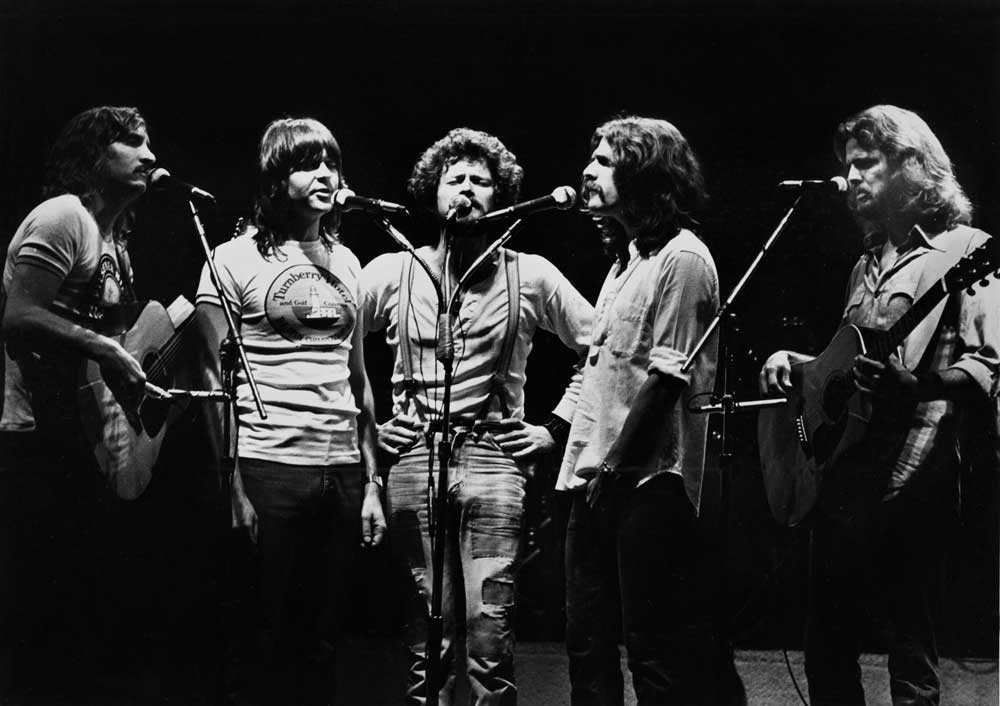
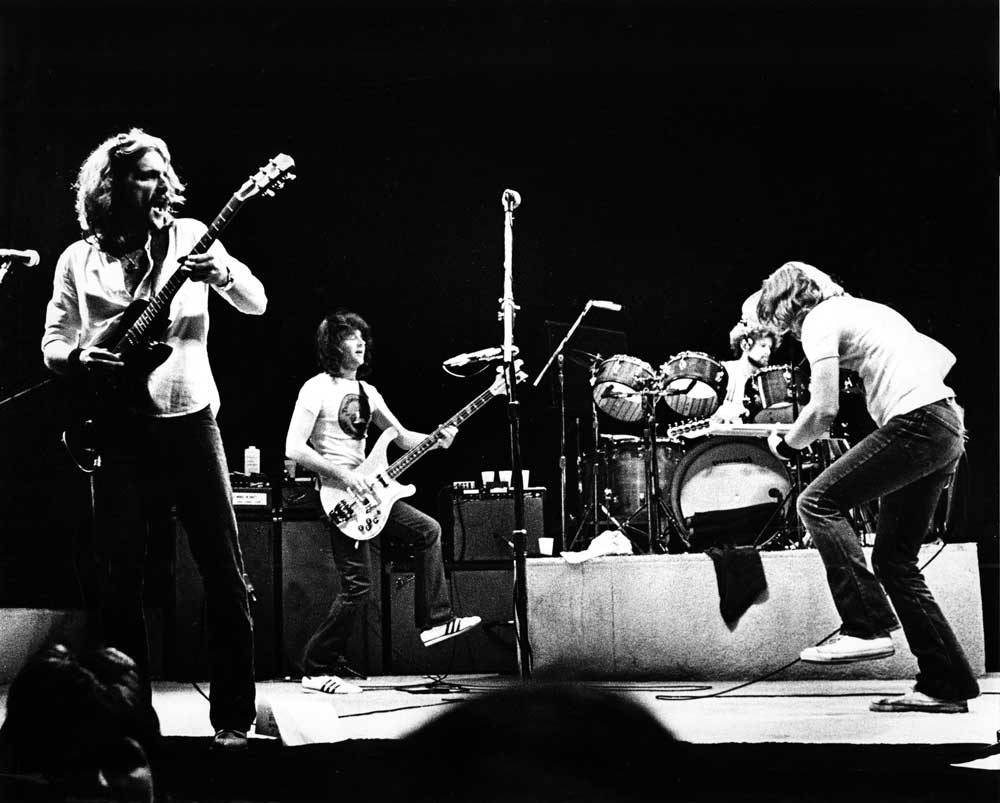
By late 1976, the American Dream was beginning to fray at the seams, and the Eagles were on hand to document the dishevelment. Having established themselves with four albums of breezy country-rock, Don Henley, Glenn Frey and co. exchanged Laurel Canyon vibes for a sound that was darker, sleeker, and infinitely more cynical.
The result was Hotel California, a lavishly produced monument to 1970s decadence, paranoia, and the ugly side of fame. With new recruit Joe Walsh’s guitar giving the band a sharper edge, it remains a masterpiece of stadium-sized storytelling. Here’s our track-by-track breakdown.
Hotel California
Take evocative lines stuffed full of images (‘mirrors on the ceiling’, ‘the Mercedes bends’); a ‘Mexican reggae’ rhythm, the immortal Bm-F#-A-E-D-G-Em-F# chord sequence, the guitar duel to end all guitar duels, and a glimpse inside a place where you are trapped eternally, and you have history in the making.
Asked what it’s actually about, Henley mused: “[These are] the same themes that run through all of our work: loss of innocence, the cost of naiveté, the perils of fame, of excess; exploration of the dark underbelly of the American dream, idealism realised and idealism thwarted, illusion versus reality, the difficulties of balancing loving relationships and work, trying to square the conflicting relationship between business and art; the corruption in politics, the fading away of the sixties dream of ‘peace, love and understanding’.”
Pretty much what you thought, right?
New Kid In Town
After the epic dimensions of Hotel California and its six-plus minutes of decayed magnificence, some downtime is required, and New Kid In Town is that. As mellow as Peaceful Easy Feeling and as warm as Tequila Sunrise, it takes your pulse down to manageable levels.
A JD Souther co-write, this track was released as this album’s first single and topped the Billboard Hot 100 chart. The public had been yearning for one of their heroes’ mellower hits for some time, and with New Kid In Town they got one, no matter what its theme was. It’s still a precision-engineered song of great beauty.
Life In The Fast Lane
Supposedly based on something Frey said to his drug dealer while powering along the freeway in a highly tuned car, Life In The Fast Lane represents the other side of the Eagles – the take-no-prisoners buccaneers of rock’n’roll who lived life at a frenetic pace. The finger-twisting guitar riff that Walsh busts out at the beginning says it all.
As Henley remembered: “I said: ‘What in the hell is that? We’ve got to figure out some way to make a song out of that!’ But we really couldn’t sing over that riff, so Glenn came up with the idea of what is a traditional blues or R&B staple – the ‘one chord’ song.”
That makes the song sound simple, but it’s actually far from simple. The Henley/Meisner rhythm section delivered a slinky performance here. As Henley noted succinctly: “It was a real bitch for me to learn how to do that syncopated bass-drum part and sing the melody at the same time.”
Wasted Time
A superior Henley/Frey collaboration, with the former emoting like there’s no tomorrow through the introspective lyrics, Wasted Time laments the end of a relationship in effective terms. Musically, it’s a nicely arranged and dynamic ballad led by piano and strings, plus the occasional well-judged bass guitar thud. Lyrically, Henley uses second-person to address someone for whom the years have passed and finds themselves (presumably ‘herself’) alone unexpectedly.
The singer also raises the question of whether the time invested in the doomed relationship was time poorly spent, a thought that’s left unresolved as the song marches majestically to its end: ‘So you can get on with your search, baby, and I can get on with mine / Maybe someday we will find that it wasn’t really wasted time.’ As a slightly hopeful conclusion, it’s a different tack to the apocalyptic finale of Hotel California – and also a way to end side one of the vinyl album that isn’t entirely bleak.
(Image credit: Gijsbert Hanekroot/Redferns)
Wasted Time (Reprise)
Just 83 seconds long, this slight revisit of Wasted Time is a cinematic strings version of that wonderful melody, and positioned in an interesting spot on the LP. Jim Ed Norman, later the head of Warner Brothers, was a renowned string arranger and did sterling work on this little piece, both revisiting the previous track and providing a between-sides continuity that had a real function in the pre-CD era.
Still, an option would have been to place this track at the end of side two, after The Last Resort, in doing so echoing the slick reprise that completes the Desperado album. Knowing the Eagles, this option was almost certainly discussed, but in fact this little slice of soundtrack-alike melodrama sits perfectly ahead of Victim Of Love – perhaps because that song begins with a single guitar-chord stab, in stark contrast to the movie-house whimsy of this slick bit of orchestration.
Victim Of Love
For those familiar with AC/DC’s Back In Black (who isn’t?) – not as far-fetched a comparison as you might think, and released only three and a half years after Hotel California – the intro of Victim Of Love might ring a bell. It’s a chugging slab of heaviness, and if we’re honest a little plodding across its four minutes.
While Henley’s questioning lyrics with ‘What kind of love have you got?’ raise an interesting point, the song never strays far from its original premise. It’s not exactly a clunker– there isn’t a bad song on this remarkable album. However, it doesn’t come close to matching – musically, lyrically or otherwise – anything on side one, even though its wailing guitar solos give it a bit of much-needed atmosphere.
(Image credit: Gijsbert Hanekroot/Redferns)
Pretty Maids All In A Row
After a slow, 30-second intro, this lugubrious piano ballad is sung by Walsh in his distinctive nasal twang. Co-written by the musician Joe Vitale, it’s a decent, if glacially slow, paean to nostalgia. ‘Why do we give up our hearts to the past, and why must we grow up so fast?’ Walsh asks, in a sentiment that would resonate with even more listeners if the song itself were a touch more dynamic.
It fades at a shade under four minutes with the Eagles’ trademark close-harmony ‘Ooh’s, leaving us with the impression that true love tends not to flourish long in the world of Hotel California. Still, if it’s an economical song arrangement that focuses on thoughtful spaces that you’re after, look no further. Pretty Maids All In A Row is an example of less definitely being more.
Try And Love Again
Written and sung by Meisner, this tale of a love affair centres on heartbreak (‘The thoughts will linger on of the lady and her song… it might take years to see through all these tears’) but resolves to a form of optimism (‘I really wanna know, would I lose or win, if I try and love again?’). It’s a pleasant stroll through shimmering guitar chords, aided by Meisner’s own melodic, Motown-style bass line, and chiming textures that walk us to the close.
If that description sounds a little bland, that’s intentional. Hotel California is very much an album of two sides – side one is all fire and venom, side two is adequate but pales slightly in comparison to the early big hitters. None of that affected the astonishing quality of tracks one to four, or indeed the album’s staggering commercial performance, fortunately, and we’d be the first to admit that a weak Eagles song is still stronger than many others’ best.
The Last Resort
Side two of Hotel California redeems itself – to an extent – with the earworm melody that Henley deploys throughout this slowly blossoming final track, as well as the ambitious build, the dramatic dropout in the mid-section and the return to glory of the final three minutes. Producer Szymczyk and his engineering team, as well as strings arranger Norman, ultimately delivered a strong finish here, with the bigger themes of the album implied in its full-leaded, sombre outro.
What’s Henley singing about, though? Judging by the lines: ‘We satisfy our endless needs, and justify our bloody deeds/In the name of destiny, and in the name of God’, he has serious concerns on his mind – ecological, religious and socio-political. It’s the most accomplished bit of songwriting on side two by some way, and proof that for a songwriting task that requires talent and effort, Henley is rarely equalled.

 If you love this music: Discover More
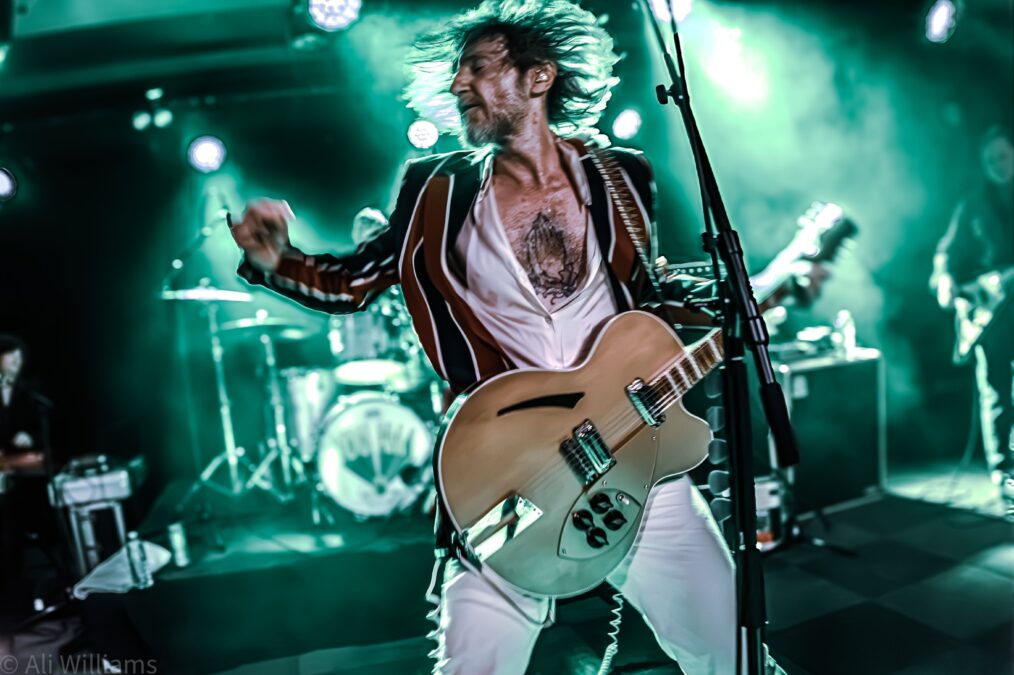 Words and pictures by Ali Williams There are bands you go to see because you remember who you were when you first heard them, and there are bands you go to see because they still deserve the petrol money, the babysitter negotiations, the mildly cursed parking situation. You Am I sit firmly in the second […]