On April 21, 2025, Cancer Bats woke to the sound of jets. They were staying at a hotel next to Indianapolis airport after a sweaty show at the city’s Black Circle Brewing Company. They were just four days into a 26-date tour and everything was going great. Well, it was until the band walked outside and saw a large empty space where their van and trailer had been parked just hours before.
The Canadian hardcore band – vocalist Liam Cormier, bassist Jaye R. Schwarzer, drummer Mike Peters and their new guitarist Jackson Landry – had become used to rolling with the punches on the road, but this theft was a sucker punch and a half. The airport hotel was supposed to be safer than downtown.
“It’s almost par for the course,” Liam shrugs now. “You deal with little things: a smashed van window, a stolen bag, or getting your laptops and passports taken. It sucks, but you figure it out. Twenty years into the game, though, this was the biggest one. A big part of the vibe we’ve cultivated is that there’s no point in freaking out. That’s just the Zen of touring. You can be miserable, or you can laugh it off.”
Police quickly recovered their van, but it was in a shocking state: a smashed window, catalytic converter cut out, and the ignition was, in a word, fucked. Their trailer had been emptied, too.
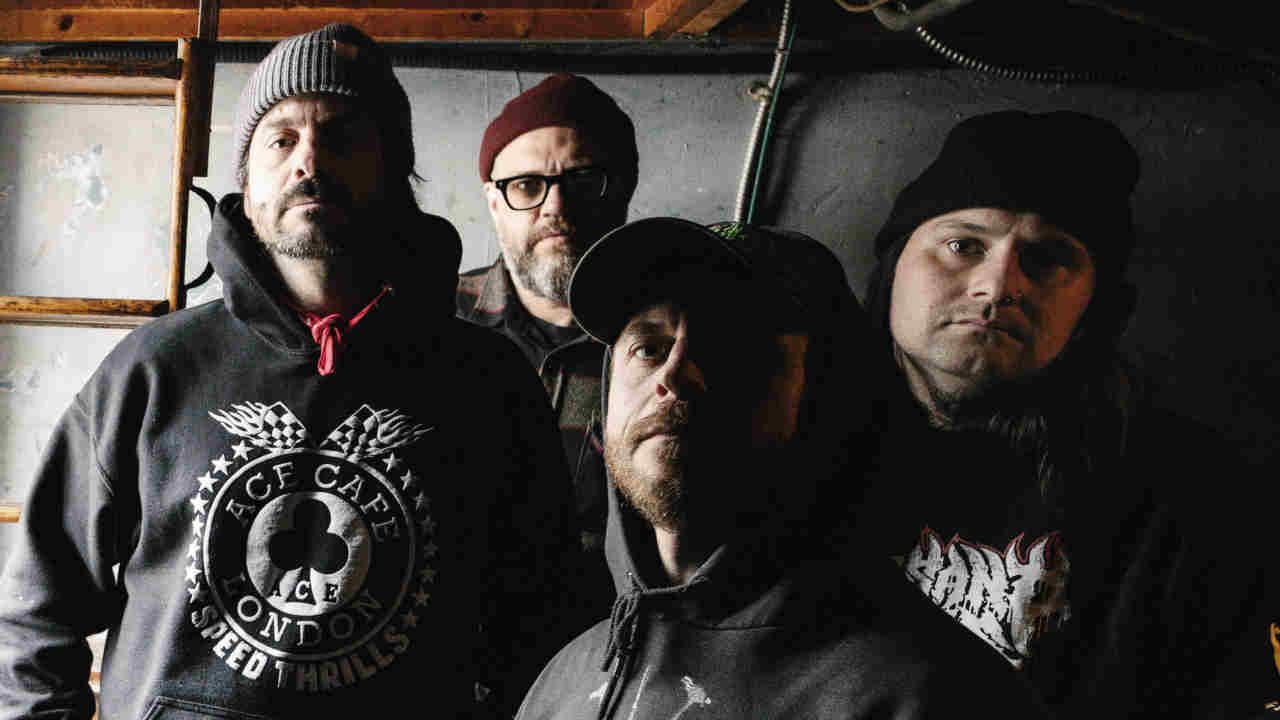
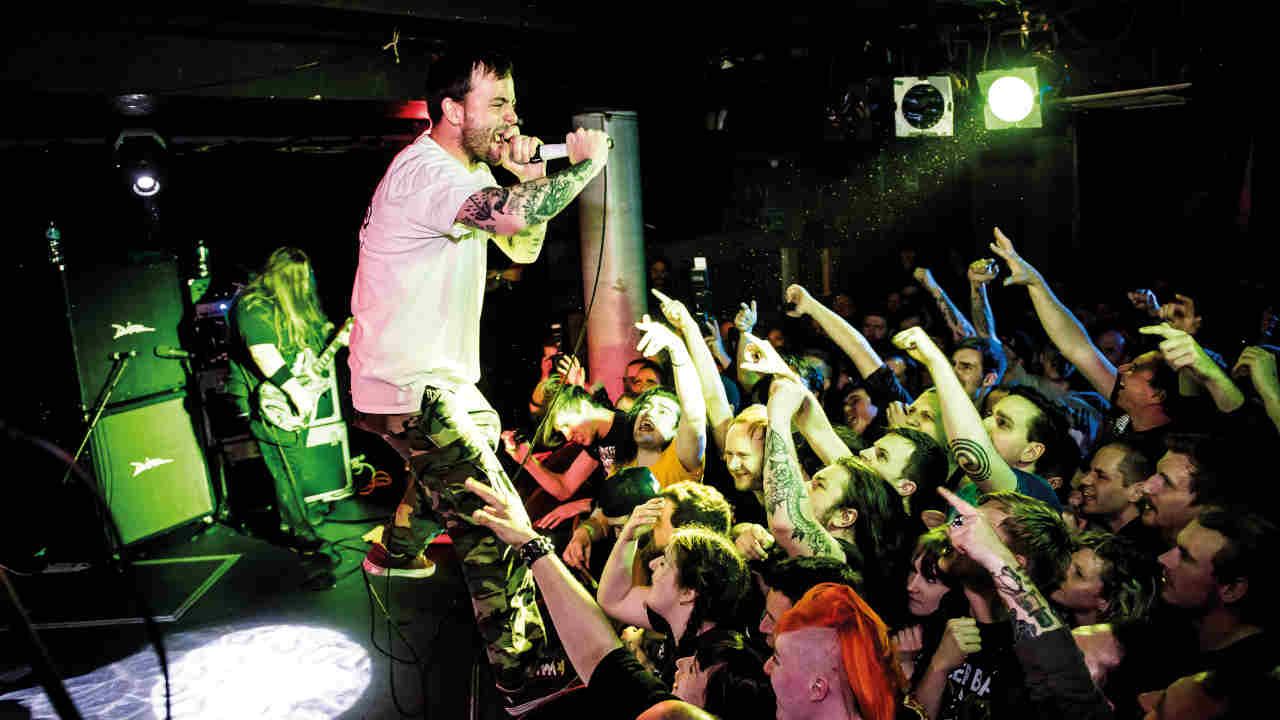
Cancer Bats in 2026: Liam Cormier, front (Image credit: Press)
Luckily, things began to fall back into place as quickly as they’d fallen apart. A friend of Jackson’s was in the city working with the Cadillac racing pit crew, who offered to repair their van. Then another friend who worked for a musical equipment distributor in the state stepped in to assist. Within 24 hours, the band’s GoFundMe seeking help to replace tour essentials had reached its target.
“Bands like Billy Talent and Alexisonfire reached out and sent us money, too,” smiles Liam. “We got new merch made, drove to the next show, and showed up ready to play. Seeing so many people come through with that much love and support made us realise we couldn’t stop.”
Back in their early days, the band looked to Henry Rollins’ Black Flag-era journal Get In The Van as a bible-cum-life manual. But where the Californian punk trailblazers originally managed a decade on the road, something has compelled Cancer Bats to keep going hard after two.
Cancer Bats in 2026 (Image credit: Press)
Liam Cormier is full of beans. Powered by pizza slices, veggie kebabs and strong coffee, he exudes the demeanour of a punk rock party machine, despite being sober for 25 years.He attributes his clean-living lifestyle to finding his tribe when he was 21 during an extended visit to Kitchener–Waterloo, twin cities 65 miles west of Toronto.
“I just needed a change and I had met all these kids who were straight edge,” he explains. “I’d already done lots of partying and I really liked the idea of something you held yourself to forever. I wasn’t going to smoke cigarettes and I wasn’t going to drink anymore. That wasn’t the direction I wanted to go in. Everyone was super-positive and really into music. I wanted to be part of that.”
During his stay, he’d watch bands such as Buried Inside and Miles Between Us, as well as immersing himself in the skateboarding and BMX scene. He mixed with a ton of creative people – zine writers, photographers, artists. Six months later, he returned home, inspired by his visit.
He initially began playing drums for a power-violence band and would sell demos from his backpack at DIY shows. It was around this time he caught a band called At The Mercy Of Inspiration, who played what he describes as “black metal, but with emo lyrics”. He befriended their guitarist, Scott Middleton, and the pair eventually started working on ideas for a band of their own.
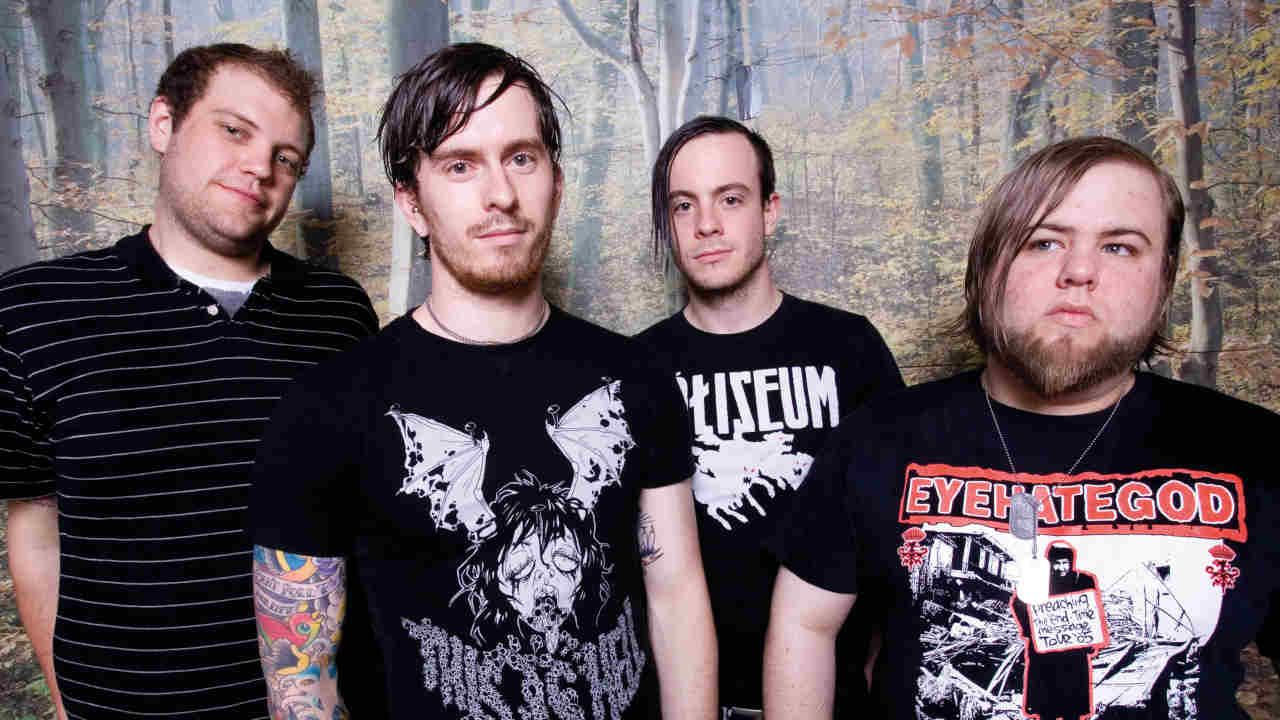
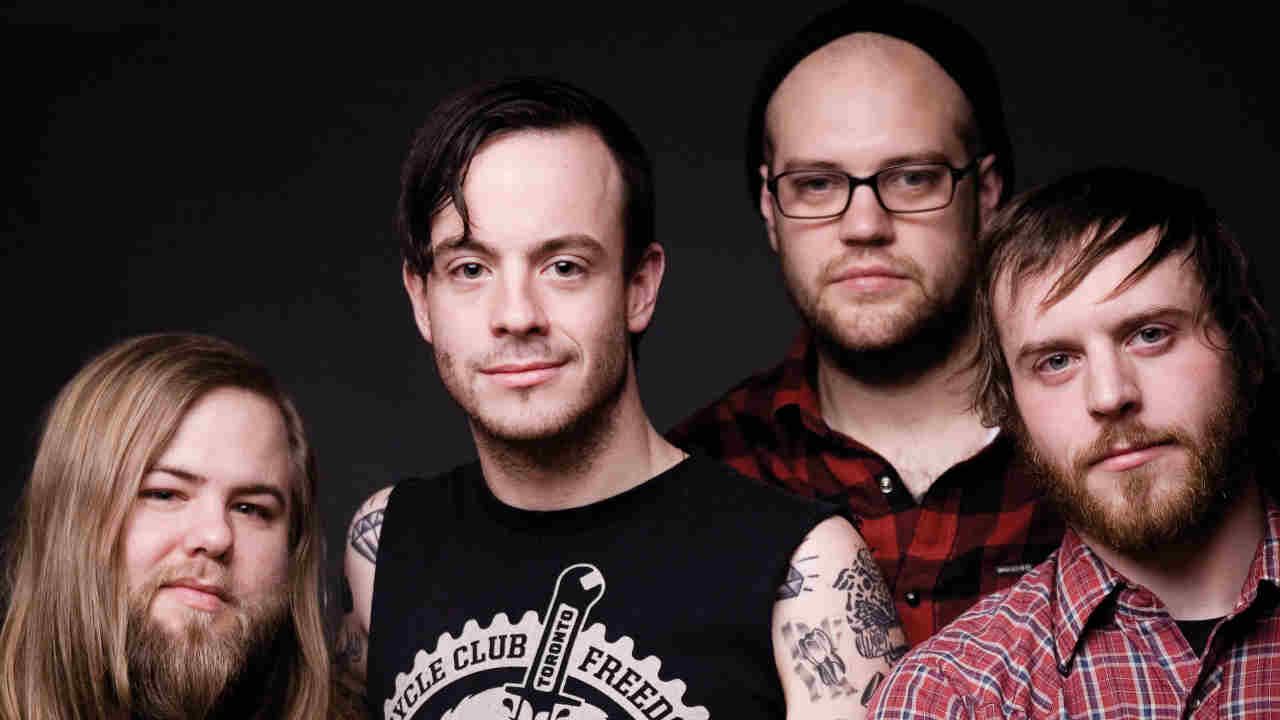
With Liam moving on from drums, the duo decided their band would sound like, or at least have the energy of, bands like Misfits, Black Flag, Refused, Led Zeppelin, Down and Entombed. Maybe someone mentioned cult hardcore outfit Zao. Either way, the influences were all mixed into a sludgy, punk metal soup. Christening themselves Cancer Bats, they expanded into a four-piece, joined by bassist Andrew McCracken and drummer Mike Peters in time for their 2006 debut, Birthing The Giant, and played whenever and wherever they could.
“Toronto had such an awesome scene,” remembers Liam. “In the suburbs, people would rent out pool halls or literally anywhere with floor space. People would find places and figure out how to put a show on. We played lots of those and, as much as you’d play in the city, it felt like the hardcore scene was built in the suburbs with the kids.”
Fellow Canadian bands Alexisonfire, Billy Talent and Comeback Kid offered them a leg up early on, inviting the band to join them on tour across the country. Scott had a van, and, through sheer thriftiness, they’d always have enough petrol to get to the first gig.
“There were always lots of bands who didn’t have their shit together and couldn’t drop everything to go out for two weeks across the country,” explains Liam. “We could, and that was a big motivation for us. We learned a lot.”
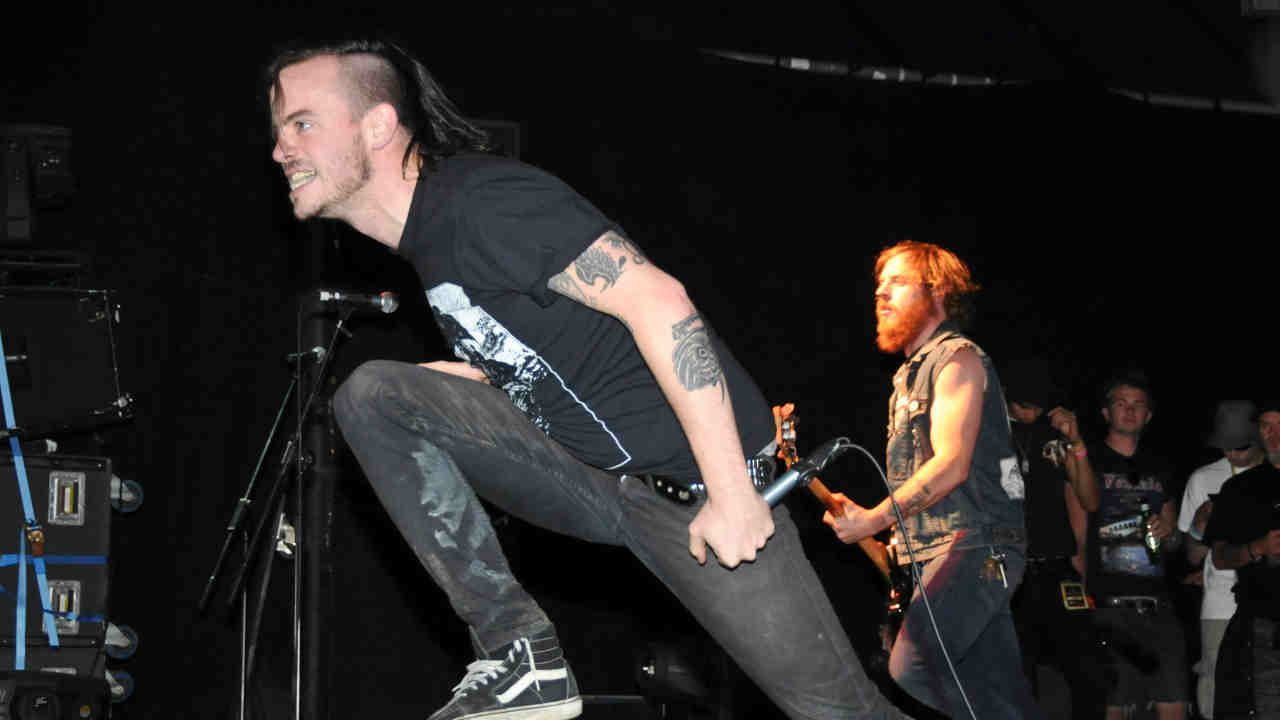
Cancer Bats onstage in London in 2008 (Image credit: Andy Sheppard/Redferns)
When they weren’t on tour, Liam would think of ways to promote the band, even if it meant stuffing envelopes and waiting in line at the post office to send them.
“I was living as cheaply as possible so I could work on the band,” he admits. “Even before the Birthing The Giant record came out, I went to our record label [Distort Entertainment] every single day and asked them what I could do. I was keen to figure it all out because I really wanted this to be my life.”
Andrew eventually left to focus on his graphic design business. Enter Jaye, a kind man with ‘MAJOR RAGER’ tattooed on his hands, who possesses an utterly terrifying presence onstage. Their work ethic became even more relentless. Get in the van? They were already in it, mate.
“We were all 24 or 25 and I felt like we had to make up for lost time,” says Liam. “We had zero back-up plan and definitely had no money. We learned a lot the more we toured and just had to hustle. Later on, we’d realise these bands from California had their parents investing in the band. I like that we had to carve it all out on our own.”
That hustle paid off. After touring the absolute arse off their 2008 album, Hail Destroyer, the idea to throw a Beastie Boys cover into their set during a sweltering Japanese festival gave Cancer Bats a bigger boost than they ever dared imagine.
Their souped-up cover of Sabotage was released as an EP, then later included on their 2010 album, Bears, Mayors, Scraps and Bones. It became something of a secret weapon for the band, particularly during festival sets. Releasing a fun promo video before a run of cross-Canada hockey arena shows with Billy Talent did nothing to harm their momentum either.
The following year, Cancer Bats received an offer to play at the UK’s Sonisphere festival. They were asked if they’d consider performing a second set in the party tent after that night’s headliners had finished. The only stipulation was that it had to be covers of songs by one band. It was a no-brainer.
“Black Sabbath!” says Liam.
(Image credit: Press)
They were billed as Bat Sabbath, the first time they performed under that alter ego. “We assumed that everyone would know it was us, but the rumour mill started and people began saying it was going to be the Foo Fighters. The tent was packed.”
The set was a riot. Sometime between the band leaving the UK and touching down in Toronto, the footage went viral. Upon landing, their phones began to vibrate with offers for more Bat Sabbath shows.
Their profile began to grow on their own merits, too. Their fourth album, 2012’s Dead Set On Living, was bolder and more confident. They launched the album with six sweaty club shows in one day around London, plotted in the shape of a pentagram. Perhaps bands whose names began with a ‘B’, with a release titled Sabotage in their back catalogue, were proving to be a lucky omen.
“We had to meet all these expectations and it felt like Sabotage pushed us to be a bigger band,” says Liam. “It felt like a perfect storm and it was so much fun.”
Around a decade ago, Cancer Bats left Distort and signed with major label BMG. Much like The Dillinger Escape Plan a few years previously, they founded their own imprint (Noise Church, later Bat Skull Records) and kept control of their DIY operation. Crucially, it afforded them time to take a break from touring and learn to be “real people”, before working with Slipknot producer Ross Robinson on their 2015 album, Searching For Zero.
“Nu metal is just part of his story,” says Liam of Ross. “When I hear his name, I immediately think of Norma Jean, Glassjaw and The Blood Brothers. After speaking with him on the phone, I thought his vibe was awesome.”
On the label’s advice, the band spent three weeks at the producer’s Venice Beach studio, recording their parts live rather than working to a sterile click track. In the vocal booth, Liam channelled his inner Ozzy and sang some actual melodies on album number five. All eyes were on the clock – their budget did not allow for fucking about, even if they were close to the beach.
“Ross told us it was the shortest time he’s ever worked on an album,” explains Liam. “We realised it could have been so different if we could have written the record with him. We learned so much.”
Onstage at the Camden Underworld in 2018 (Image credit: Will Ireland)
While their partnership failed to yield commercial success, it was a positive experience for the band, who co-produced their follow-up with Winnipeg studio owner John Paul Peters. The Spark That Moves was nominated for Metal/Hard Music Album of the Year at the 2019 Juno Awards, the Canadian equivalent of the BRITs, but ultimately lost out to prog metal legends Voivod for The Wake.
As with every other band on the planet, the pandemic impacted Cancer Bats. Founding guitarist Scott Middleton opted to leave at the end of 2021, his place eventually taken by Jackson Landry, who quit his construction job to join the band (they recorded 2022’s Psychic Jailbreak as a three-piece, with bassist Jaye Schwarzer pulling double duty).
Four years later comes Give Me Dirt, their eighth album. Despite the bumpy roads they’ve had to navigate in recent years, they sound just as hungry as the 20-somethings who hustled their way around the Toronto DIY scene with a backpack full of cassettes. Perhaps it’s the addition of 29-year-old Jackson, who, aged nine, received his first guitar and a copy of Birthing The Giant as a gift for doing well at school. It’s a full-circle moment that is not lost on Liam, who is technically old enough to be Jackson’s dad.
“It’s funny that he grew up learning to play guitar to our first album,” Liam laughs. “He wrote one particular riff for Give Me Dirt and we said it reminded us of old Bats, and he said, ‘Yeah, back when you were kicking ass!’”
The line-up may be as solid as a breeze block wall once again, but by Christ, Cancer Bats seem to enjoy not making things easy for themselves. Nowadays, the band are spread across three different provinces: Manitoba, Ontario and Nova Scotia. If you load up on Tim Hortons coffee, poutine and whatever else Canadians eat, and drive due west from Liam’s home in Halifax on the Atlantic coast, it would take 36 hours of continuous driving to get to Mike’s house in rural Winnipeg. There’s no popping over for a rehearsal. It’s a mission to do absolutely anything at all.
Yet, somehow, they make it work. They have to make it work. Liam, now 46, has invested literally half of his life into Cancer Bats and can’t imagine ever stopping.
“I still have the same fire,” says Liam. “I feel thankful that I have this weird energy that hasn’t vanished, and I’m stoked I still get to do this.”
RISE opens “Talking To Your Ghost Again” on a soaring high note, surrounded by vocal harmonies that bring an elegant touch of the ’80s into the room. There is something uplifting about this entrance, and when the guitar solo arrives over the driving bass and drums, the song quickly gathers momentum. Beneath that energy, however, lies a story that hits close to the heart.
As the verse begins, the voice starts weaving a conversation with someone who can no longer answer. The band lost their singer in 2022 after a battle with cancer, and that absence gives these lyrics a particular weight. Losing a friend changes the way you look at life. Things you once considered urgent suddenly seem insignificant, while an ordinary memory can stop you in your tracks.
Sam Kinley, aka stayMellow, delivers a solid and inspired performance on bass and vocals. His singing carries the emotion with sincerity, allowing the words to reach you without forcing their meaning. Meanwhile, his bass keeps the song moving with purpose, locking into Alex Mahoney’s drums to create an insistent rhythmic foundation.
Talking To Your Ghost Again – Sound and Atmosphere
Paul Kinley’s keyboards and backing vocals give the arrangement room to breathe. I particularly like how the keyboard parts expand the space around the melody, suggesting something beyond the physical world. For a song about speaking to the ghost of a friend, that sense of distance feels appropriate: the music seems to reach toward someone just beyond our grasp.
Brian Petch’s guitar brings melodic expression and energy, finding its place naturally among the keys and vocal harmonies. The guitar and bass complement each other well, giving the arrangement both movement and breadth. Every musician contributes to the momentum while leaving enough space for the story to remain at the center.
The refined production and the relationship between keyboards, guitars, and vocals occasionally remind me of Genesis. There is that same pleasure in an arrangement where accessible melodies coexist with thoughtful instrumental details. RISE use those qualities to give a deeply personal subject a sound that feels expansive and alive.
Talking To Your Ghost Again – Performance and Production
What struck me most is the energy running through a song about such a painful loss. The rhythm keeps pushing forward, even as the lyrics look back. That combination feels true to grief: life continues, but the people we have lost remain present in our thoughts, our habits, and the conversations we still imagine having with them.
The production gives each instrument a clear role. The drums provide drive, the bass adds weight and movement, and the keyboards open up the atmosphere. Above them, the guitar lines and vocal harmonies bring a melodic warmth that makes the song easy to return to, even when its subject brings difficult memories to the surface.
RISE once again demonstrates their ability to write quality music with something meaningful behind it. “Talking To Your Ghost Again” is an emotionally important song, performed with conviction and arranged with care. It leaves you thinking about the friends you still carry with you—and the things you wish you could tell them.
Eternal Mourning Drums are beating my steps Review
An eerie arpeggio opens “Drums are beating my steps,” pulling you into a nocturnal atmosphere that wraps around you like London fog. Somewhere in the distance, a pad hovers like a voice you cannot quite locate. Eternal Mourning creates a sense of unease before a single word arrives.
Then the vocal enters, soaked in reverb. There is something almost prophetic about its timbre, as if an oracle were speaking to you through the darkness. The delivery holds your attention without needing to raise its voice. You lean closer, trying to understand whether this presence has come to guide you or disturb your sleep.
The song recalls those sleepless hours when every doubt becomes louder. The room stays quiet, but your mind gives shape to its own demons. Fear and uncertainty creep in, and even familiar surroundings begin to feel strange. Eternal Mourning captures that sensation with an atmosphere that is unsettling and strangely inviting.
Drums are beating my steps – Sound and Atmosphere
A nostalgic quality runs beneath the gothic mood. The arpeggio has a delicate, lingering character, while the distant pads blur the edges of the arrangement. It feels like remembering a place you once knew, only to discover that something about it has changed.
What I particularly appreciate is the space in the production. Rhythm, guitars, and pads each have room to breathe. The arrangement leaves enough open air for your imagination to wander, and those empty spaces become part of the tension. You find yourself listening to the echoes as closely as the notes.
The rhythmic pulse keeps the track moving, while the voice seems to float above it. That combination gives the music a hypnotic pull. You follow the beat, but your thoughts drift toward whatever waits beyond the reach of the light.
Drums are beating my steps – Performance and Production
The vocal treatment plays a central role here. Its reverberation extends the phrases into the surrounding space, allowing them to mingle with the pads. At moments, it becomes difficult to tell where the human presence ends and the atmosphere begins. That ambiguity suits the song beautifully.
Eternal Mourning shows a good instinct for restraint. The production gives each sound enough weight to make an impression without crowding the song. A guitar figure, a distant texture, an echo hanging in the air: these details build a world that feels intimate and mysterious.
“Drums are beating my steps” stayed with me for its ability to reach somewhere personal through atmosphere alone. There is darkness here, but also a fragile beauty that makes you want to return. I recommend it to anyone drawn to gothic moods, nocturnal listening, and artists willing to experiment with space and sound. Put on your headphones and let the fog close in.
There are more ways to listen to music today than ever before. You can stream an album on your phone, download it to your computer, buy it on CD, or spend considerably more money on a vinyl edition that requires its own playback equipment. And with so many options available, it’s hardly surprising that we’ve found more things to argue about, especially which one sounds better.
Vinyl enthusiasts swear by its warmth, digital audio supporters point to its technical accuracy, and streaming listeners are happy having millions of songs available at the touch of a button. Everyone has their reasons, but there’s a lot more to this discussion than personal preference.
The technology behind each format affects how music sounds, how much we spend on it, and how we interact with it. Then there’s the financial side of things, which becomes particularly interesting when we consider how much of our money actually reaches the musicians.
So, let’s examine how we got here, what the science tells us about sound quality, and whether the way we choose to listen to music makes as much of a difference as we think.
How Did We Get Here?
There was a time when hearing a particular musical performance again required someone to perform it again. Written music could preserve a composition, but the actual sound of a performance disappeared once it was over. And if you happened to enjoy a concert by Franz Liszt, you couldn’t exactly stuff him into a suitcase and take him home to perform whenever you wanted. Apart from the obvious size problem, that would have been extremely illegal.
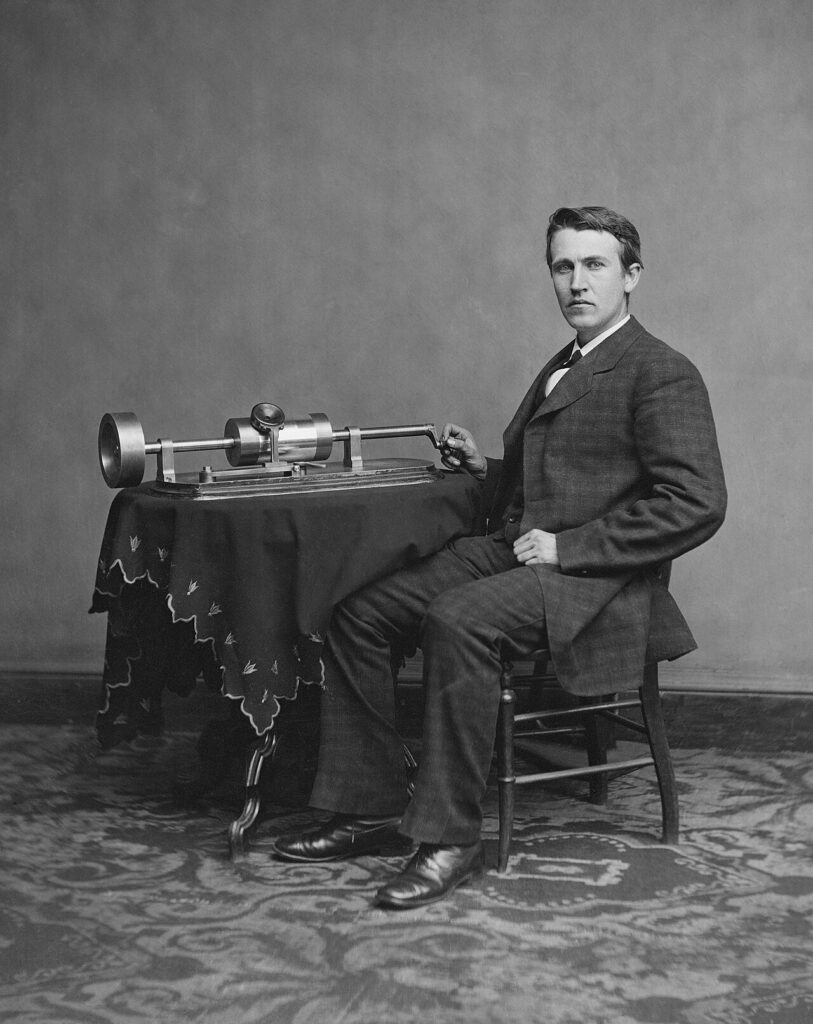
Fortunately, the first step toward solving this problem arrived in 1857, and it had nothing to do with larger suitcases or more forgiving laws. French inventor Édouard-Léon Scott de Martinville developed the phonautograph, a machine capable of tracing sound vibrations onto a surface. It couldn’t play those sounds back, but it demonstrated that sound could be physically recorded. In 1877, Thomas Edison, who had a much shorter name, was able to take the next major step with the phonograph, which could both record and reproduce sound.
Over the following decades, recording technology developed from cylinders to flat discs, eventually establishing the record industry we know today. Early shellac records were fragile, noisy, and could only hold a few minutes of music per side. Still, being able to purchase a performance and play it at home was an extraordinary development. For the first time, people could build personal collections of recordings and enjoy their favorite performances without needing the musicians in the room.
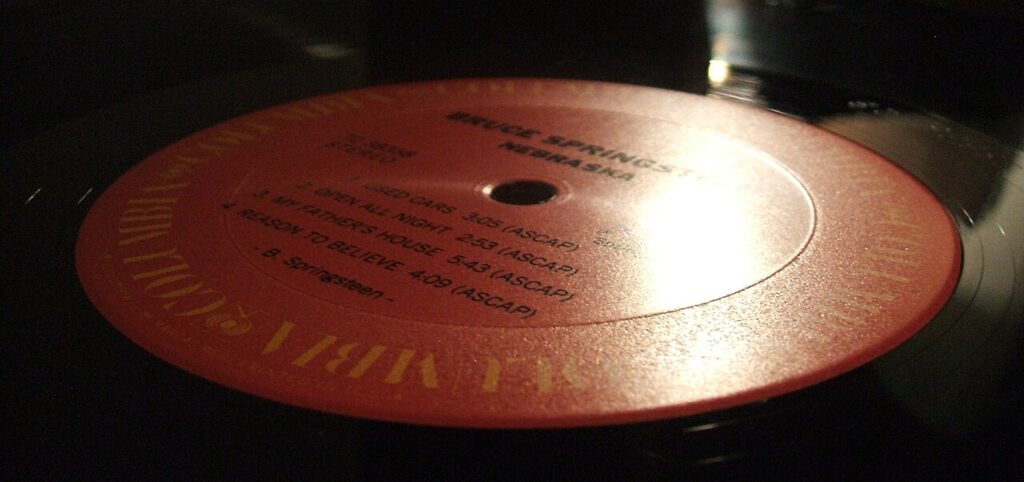
Things became considerably more interesting in 1948, when Columbia Records introduced the modern 33⅓ RPM long-playing record, better known as the LP. These records could hold approximately 20 minutes or more of music on each side. That might not sound like much today, but compared to earlier discs, the “P” was indeed “L”. Although albums already existed as collections of recordings, the LP made it possible to fit longer compositions and several songs (Dream Theater would disagree) onto a single record. Musicians could now organize their work into longer, more continuous listening experiences, helping establish the album as we know it today.
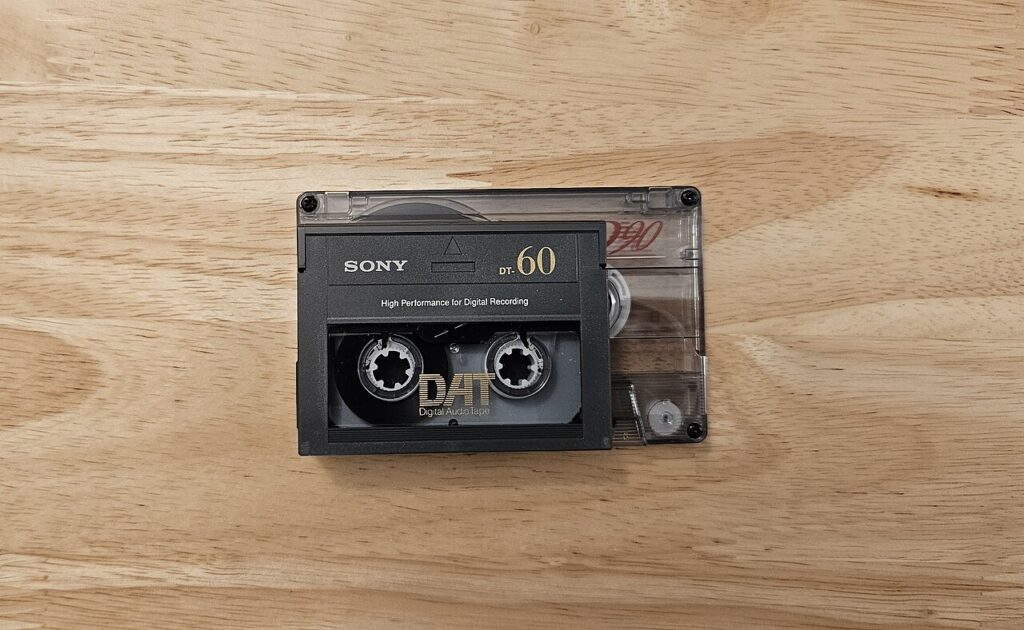
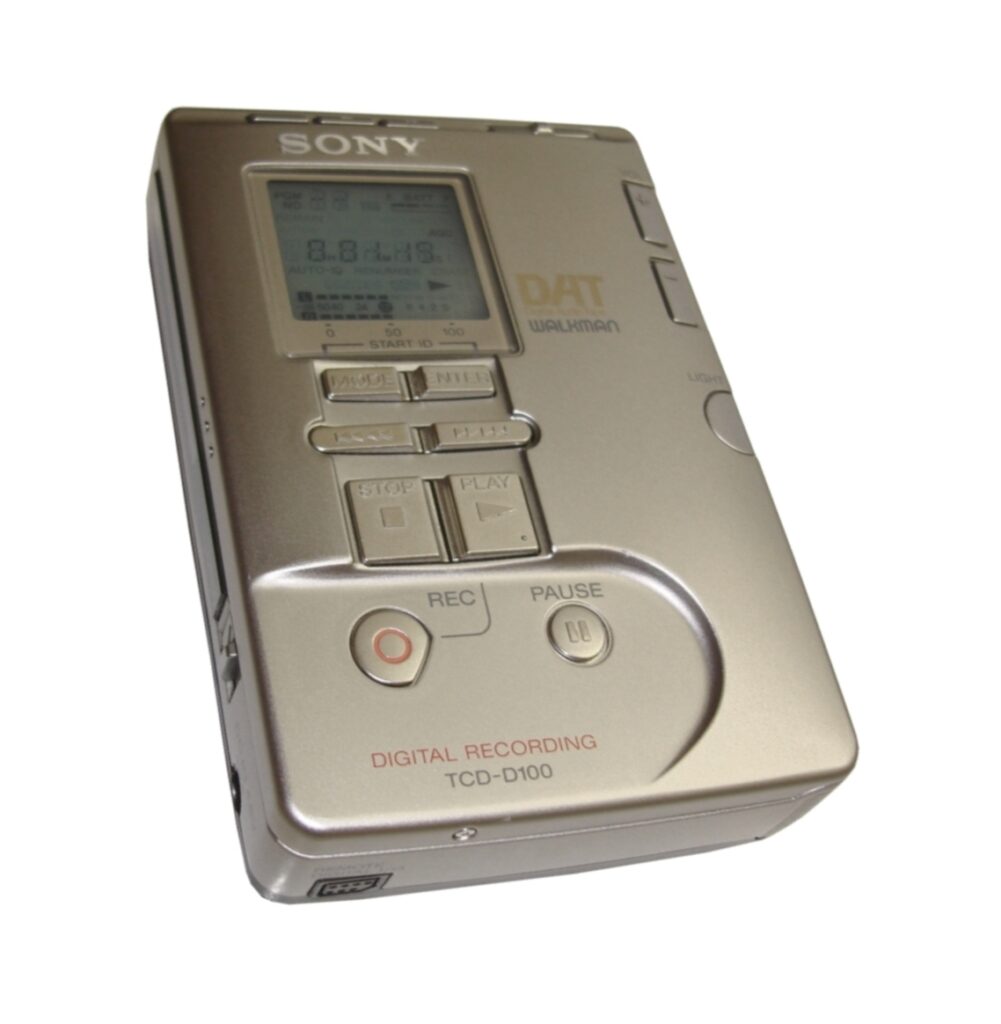
The cassette brought another important change. Introduced by Philips in 1963, it made recordings smaller, portable, and easier for people to make themselves. You could record something from the radio, copy music from another tape, or put together a collection of your favorite songs. When Sony launched the Walkman in 1979, music became much more personal. You could take your favorite albums outside without carrying a large radio or stereo. People no longer needed to sit in front of their home audio systems to enjoy their music.
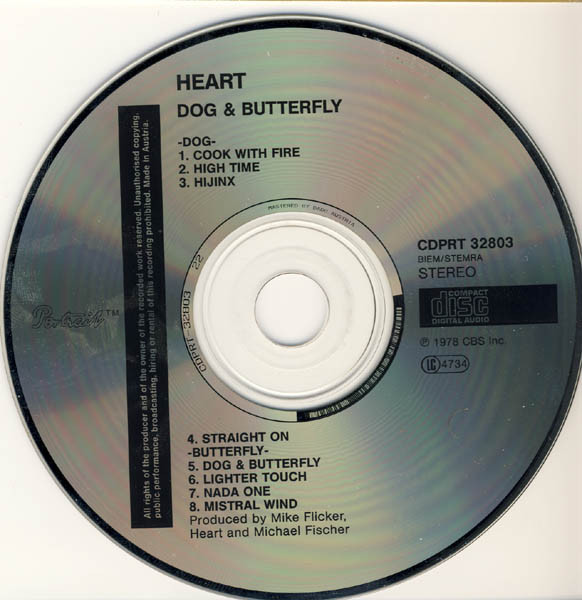
In 1982, the compact disc introduced a new approach to home listening. Developed by Sony and Philips, CDs stored audio digitally and allowed listeners to enjoy recordings without the surface crackle of vinyl or the hiss commonly associated with cassettes. They were also convenient to navigate, and ordinary playback didn’t gradually wear down the recording. By the 1990s, CDs had become the dominant format in many markets, and digital audio was well on its way to replacing analog recordings in everyday listening.
From left to right: Thomas Edison with his early phonograph, a vinyl LP, a cassette, a walkman, Heart’s “Dog & Butterfly” CD album
But the next major change would make the transition from vinyl to CD look relatively modest.
For more than a century, the recorded music industry had largely revolved around selling physical copies of music. If you wanted an album, you went out and bought it. Then personal computers became common, the internet expanded, and suddenly the music didn’t need the physical object anymore. MP3 compression made songs small enough to store and transfer without taking up enormous amounts of space, and the internet gave people a way to exchange those files across the world.
When Napster appeared in 1999, file sharing exploded, creating a massive challenge for an industry built around controlling the distribution of recordings. Whatever people thought about the legality of downloading copyrighted music, there was no denying that the way listeners obtained music was changing dramatically. The arrival of the iPod in 2001 made personal digital collections even more practical, allowing people to carry hundreds or thousands of songs in their pockets.
And just when buying and downloading digital music seemed like the future, streaming came along and changed the arrangement again. Listeners no longer needed to purchase individual albums, download files, or maintain large local libraries. For a monthly subscription, they could access an enormous catalog of music whenever they wanted.
The numbers show just how far this transformation has gone. According to the IFPI Global Music Report 2026, streaming accounted for 69.6% of worldwide recorded music revenue in 2025, with approximately 837 million users of paid subscription accounts.
But here’s something interesting. While streaming continues to dominate the industry, physical formats are growing too. Vinyl revenue increased by 13.7% in 2025, marking its nineteenth consecutive year of growth. Even CDs recorded an increase in global revenue.
For all the technological improvements we’ve made, people clearly haven’t lost interest in owning music.
Analog and Digital: What’s the Actual Difference?
Before deciding which format sounds better, we need to understand how these recordings work. Fortunately, the basic science is fairly straightforward.
Sound begins with vibrations. When a guitar string moves, it disturbs the surrounding air, creating pressure waves that travel to our ears. The same thing happens when someone sings or strikes a drum. Recording technology captures information about those vibrations so they can be reproduced later.
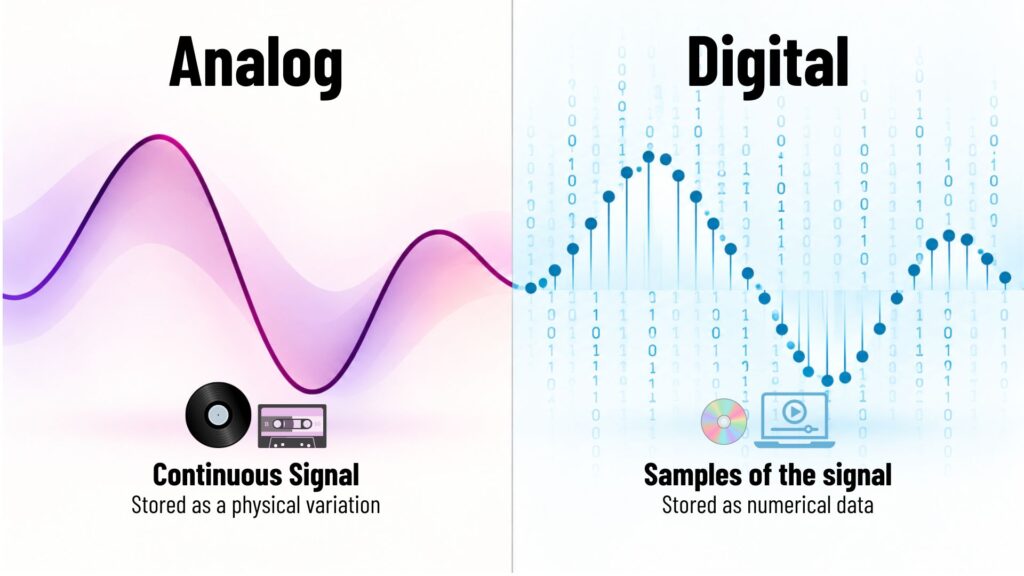
Analog recording represents sound through continuously changing physical properties. On vinyl, the audio signal is represented by variations in a groove. As the record spins, a stylus follows those variations, and the cartridge converts the movement into an electrical signal that can eventually be reproduced through speakers.
Cassettes work differently, using magnetic tape to store the signal, but the principle is similar. Both formats preserve a continuously varying representation of sound.
Digital recording, meanwhile, converts the audio signal into numbers. It measures the signal at regular intervals, recording those measurements as digital information.
This is where terms like sampling rate and bit depth join the conversation.
Sampling rate describes how frequently the signal is measured. Standard CD audio uses 44.1 kHz, meaning 44,100 measurements are taken every second for each audio channel. Bit depth describes how much information is used for each measurement. The higher the bit depth, the greater the range between very quiet and very loud sounds that can be recorded without introducing digital noise.
CDs use 16-bit audio, providing a theoretical dynamic range of approximately 96 decibels. Combined with the 44.1 kHz sampling rate, this is enough to reproduce the generally accepted range of human hearing with excellent accuracy.
During playback, the equipment converts those numbers back into a continuous electrical signal, which the speakers turn into sound.
Some people imagine digital audio as a collection of disconnected pieces, with our brains somehow filling the gaps between them. That’s not how properly reconstructed digital audio works. The sampling process is designed to preserve the information needed to reproduce frequencies within a defined range.
Analog and digital recording therefore approach the same task differently. One stores a continuously varying physical representation of sound, while the other stores numerical information that can be converted back into a continuous signal.
Neither method guarantees a better listening experience, but digital recording has significant technical advantages when it comes to avoiding noise, distortion, and deterioration during ordinary playback.
Lossless, MP3, and High-Resolution Audio: Can We Hear the Difference?
Not all digital audio files preserve the same amount of information, and the differences between them can affect what we hear.
The simplest type is uncompressed audio, commonly stored in WAV or AIFF files. These formats can preserve the original digital audio data without reducing its size through compression. They’re useful in recording studios and audio production, but they take up considerably more storage space than compressed files.
Lossless compression achieves something clever. Formats such as FLAC and ALAC reduce file size while preserving all the original digital information. When the file is decoded, the exact audio data is recovered.
This is why FLAC is popular among people who maintain digital music collections. It can provide the same audio information as an uncompressed recording while occupying less space.
Then we have lossy compression, used by MP3, AAC, and Ogg Vorbis. These formats reduce file sizes further by permanently removing information that is considered less likely to be heard.
The process relies partly on how human hearing works. For example, a very loud sound can make nearby quieter sounds difficult to distinguish. Audio compression algorithms use these characteristics to determine what information can be removed with the least noticeable effect.
At lower bitrates, the difference can become obvious. Cymbals might sound unnatural, high frequencies can develop unpleasant artifacts, and complicated musical passages may lose definition.
However, modern lossy audio can sound remarkably good at higher bitrates. Depending on the recording, equipment, and listener, the difference between a well-encoded MP3 or AAC file and its lossless equivalent may be extremely difficult to hear.
This matters particularly with recordings containing many overlapping sounds. In our beloved metal, rapid drumming, distorted guitars, bass, vocals, and orchestral arrangements can all occupy a relatively busy frequency range. Poor encoding may struggle with such material, although a high-quality lossy file can still reproduce it very convincingly.
How Good Is Your Audio?
Comparing quality, file size, and common listening platforms.
Format / Bitrate
Quality
3-Minute Song
Where You’ll Find It
WAV / AIFF 16-bit / 44.1 kHz
Lossless
~32 MB
Bandcamp downloads, studio files
FLAC / ALAC 16-bit / 44.1 kHz
Lossless
~16–23 MB
Bandcamp, Apple Music Lossless, Spotify Premium Lossless*
Hi-Res FLAC / ALAC 24-bit / 96 kHz
Hi-Res Lossless
~40–80 MB
Apple Music Hi-Res, Tidal (where available)
MP3 / Ogg / AAC 320 kbps equivalent
Very High
~7.2 MB
Bandcamp MP3 320, Spotify Premium Very High*
AAC / Opus 256 kbps
Very High
~5.8 MB
YouTube Music Premium High, Apple AAC purchases
MP3 192 kbps
Good
~4.3 MB
Older MP3 libraries, personal downloads
MP3 / Ogg / AAC 160 kbps equivalent
Good
~3.6 MB
Spotify Free High, Spotify Premium High*
MP3 / AAC 128 kbps
Fair
~2.9 MB
Older MP3 files, YouTube Music Normal
MP3 / Ogg / AAC 96 kbps equivalent
Low
~2.2 MB
Spotify Normal quality setting*
Notes: Sizes estimate a three-minute stereo song. Lossless sizes vary with the music; lossy sizes assume constant bitrate. Higher bitrate generally helps within the same codec, but AAC, MP3, and Ogg/Opus are not directly comparable by bitrate alone. Quality labels are approximate listening assessments, not measured scores. *Spotify uses AAC, Ogg Vorbis or FLAC depending on platform and settings, not MP3. Lossless requires an eligible Premium plan and may vary by market.
What About Streaming Services?
Streaming services used to differ considerably in the maximum audio quality they offered, but the gap has narrowed.
Apple Music provides lossless audio using ALAC, supporting resolutions up to 24-bit/192 kHz for compatible recordings. Tidal offers high-resolution FLAC at similar specifications, while Spotify introduced lossless streaming in September 2025, supporting up to 24-bit/44.1 kHz for eligible Premium users.
Deezer also expanded its lossless offering in October 2026, introducing high-resolution FLAC support up to 24-bit/192 kHz for compatible tracks and eligible subscribers. Other services, including regional platforms such as Anghami, have their own catalogs, features, and audio delivery options.
But higher specifications don’t necessarily mean we’ll hear better music.
A 24-bit recording offers greater potential dynamic range than 16-bit audio, which is especially useful during recording and production. Higher sampling rates also have practical applications in professional audio work. For a finished album, though, standard CD quality can already reproduce the human hearing range accurately.
An album available at 24-bit/192 kHz isn’t automatically going to sound better than the same recording at 16-bit/44.1 kHz.
And we haven’t even considered playback equipment yet.
Most ordinary Bluetooth headphone connections use lossy audio transmission. Even when the original recording is lossless, the wireless connection may introduce another compression stage. The headphones themselves, their frequency response, and the listening environment can also make much larger differences than the file format.
There’s little point obsessing over extremely high sampling rates while ignoring the speakers or headphones actually producing the sound.
More importantly, none of these formats can correct problems that were already present in the recording, which brings us to one of the most misunderstood aspects of sound quality.
Why Does Vinyl Sound Different?
Vinyl has developed an almost mythical reputation among music lovers. You’ll often hear that it sounds warmer, fuller, or more natural than digital audio.
And while some people really do hear and prefer those differences, we need to separate what the format actually does from what we enjoy hearing.
Playing a vinyl record involves a physical interaction between a stylus and a groove. This process can introduce harmonic distortion, background noise, and changes in frequency response. Depending on the equipment and recording, some of those characteristics can contribute to what listeners describe as warmth.
But warmth isn’t a measurement of accuracy. It’s a description of how someone perceives the sound.
Vinyl also has several technical limitations. Records can produce clicks and crackles, dust and damage can affect playback, and distortion tends to become more difficult to control near the center of a disc. A poorly adjusted turntable or damaged stylus can create additional problems and potentially damage the record itself.
The equipment matters enormously. A properly maintained turntable with a good cartridge can produce excellent results, while a cheap all-in-one record player may struggle to reproduce the same album accurately.
There’s also a misconception that vinyl recordings must be entirely analog. Many modern records are produced from digital recordings and digital masters. The finished disc is an analog medium, but that doesn’t mean the music was recorded and processed without digital technology.
So why do some vinyl editions sound noticeably better than their CD or streaming versions?
The answer may have more to do with how the recording was prepared.
The Loudness War: When Louder Doesn’t Mean Better
Before an album reaches listeners, it goes through a process called mastering. This is where the final audio is prepared for distribution, with decisions involving volume, frequency balance, dynamics, and other characteristics.
One of the biggest controversies in modern audio production has been the loudness war.
For years, parts of the music industry competed to make recordings sound louder than competing releases. Engineers increasingly used dynamic range compression and limiting to raise the average volume of recordings, reducing the difference between their quietest and loudest moments.
There’s an important distinction here. Dynamic range compression is not the same thing as MP3 compression. The former changes the level differences within the audio itself, while the latter reduces the amount of digital information required to store it.
When used appropriately, dynamic range compression is a useful production tool. But excessive processing can reduce musical dynamics and introduce audible distortion.
Metal has experienced some particularly famous examples.
When Metallica released Death Magnetic in 2008, the album received widespread criticism for its aggressive loudness and distortion. Fans and audio engineers noticed that the CD sounded significantly more compressed than alternative audio associated with the Guitar Hero video game. The controversy became a widely discussed example of the loudness war, although drummer Lars Ulrich defended the album’s sound.
Rush encountered a similar problem with their 2002 album Vapor Trails. The original release was criticized for its harsh and heavily compressed sound, and the band eventually revisited it. In 2013, they released Vapor Trails Remixed, with a new mix by David Bottrill. Guitarist Alex Lifeson acknowledged that the original mastering had been pushed too hard, causing distortion and excessive compression.
These cases demonstrate something important. The quality of the final recording can make a considerable difference, regardless of the format used to distribute it.
Vinyl sometimes receives a different master because of the physical limitations involved in cutting a record. Excessive levels and certain frequency characteristics can cause playback problems, so engineers may make adjustments specifically for vinyl.
In some cases, those decisions result in a version with greater dynamic contrast than the digital release. However, vinyl doesn’t automatically provide better mastering, and there is nothing preventing a digital album from being produced with the same attention to dynamics.
When someone prefers the vinyl edition of an album, they might be hearing a different mastering approach rather than an inherent superiority of analog sound.
It’s also worth remembering that volume alone can influence our impressions. When comparing two recordings, the louder version can initially appear more powerful or detailed, even when the quieter version is technically better preserved.
The fairest comparison therefore requires matching playback levels and, ideally, using recordings derived from the same master.
But of course, plenty of vinyl collectors couldn’t give two damns about everything we just discussed. For them, it’s about owning something they love. The large album artwork, the gatefold sleeves, the colored pressings, the limited editions, and the satisfaction of having a physical collection of their favorite music. Some records even become valuable collectors’ items over time. And let’s be honest, vinyl records are gorgeous. You don’t need an argument about sound quality to justify wanting one.
CDs and Cassettes: Have We Been Too Quick to Dismiss Them?
With vinyl receiving so much attention, CDs sometimes feel like the forgotten format. Which is interesting, because CDs remain one of the most practical ways to own music in excellent audio quality.
A standard CD can reproduce its stored digital information without the mechanical noise and speed inconsistencies associated with analog playback. It also doesn’t require an expensive audiophile player to achieve accurate digital reading under normal conditions.
Provided the disc and player are functioning correctly, even relatively inexpensive equipment can deliver excellent results.
CDs are compact, easy to store, and frequently available at reasonable prices, particularly on the secondhand market. They may lack the visual appeal of a large vinyl sleeve, but they often include booklets, lyrics, credits, and artwork.
Cassettes are more complicated.
Magnetic tape introduces its own limitations, including background hiss, possible frequency loss, and small speed variations known as wow and flutter. Tape quality and equipment condition can make a substantial difference, while older players may require belt replacements, cleaning, and mechanical maintenance.
High-quality cassette decks can produce surprisingly good recordings, but the format generally cannot match the technical fidelity of a CD.
Its modern appeal has more to do with collecting, nostalgia, and the physical connection people associate with tapes. For independent bands, cassettes can also provide an interesting physical release option, particularly for smaller runs.
And just like with vinyl, there’s nothing wrong with preferring a format for those reasons. Not every music-related purchase needs to be justified by a scientific argument about sound quality.
What Does It Actually Cost to Listen to Music?
Let’s leave audio specifications aside for a moment and look at something much easier to measure: money.
Streaming has an obvious financial advantage, especially for people who constantly discover new music.
As an example, Spotify’s standard individual Premium subscription in the United States was listed at $12.99 per month in October 2026. That’s approximately $156 per year, or $780 over five years, assuming the price remains unchanged.
For that amount, listeners receive access to an enormous music catalog. Someone who listens to hundreds of different albums each year would have difficulty purchasing all of them for anything close to that price.
Of course, subscription prices vary by country, and free advertising-supported listening is also available on some platforms.
Physical collecting is a completely different financial commitment.
Take Epica’s Aspiral as an example. At the time of checking, Rough Trade listed the standard CD at $16.99 and a gold-and-red double-vinyl edition at $42.99. Those are different physical editions, and prices vary between retailers, but the comparison illustrates how quickly the cost of collecting vinyl can increase.
Then there’s the equipment. An entry-level turntable from an established manufacturer, such as Audio-Technica’s AT-LP60X, can cost around $180 to $220 in US retail listings, before considering the speakers or other components required for playback.
If you purchased ten vinyl albums averaging $30 each, you’d already have spent $300 on records alone. Add a $200 turntable, and you’re at $500 before purchasing speakers, replacing a stylus, or maintaining the collection.
CDs can be considerably cheaper. A secondhand CD collection might cost only a fraction of what the same albums would cost on new vinyl, and an existing compatible DVD player, stereo system, or computer drive may be sufficient for playback.
Cassettes can also be affordable to purchase, but finding reliable equipment and maintaining it may introduce additional expenses.
Digital downloads offer another possibility. Buying ten albums at $10 each costs $100, with no need to purchase separate media-playing equipment if you already have a compatible computer or phone.
These comparisons also have limitations. A physical album is a purchase that can remain in your collection for years, while a streaming subscription is an ongoing payment for access. A record can also have resale or collectible value, although there’s no guarantee it will maintain or increase its price.
That difference between purchasing something and paying to access it becomes increasingly important over time.
10 Albums. One Month. How Much?
Estimated costs in US dollars, excluding playback equipment.
Streaming
$12.99
Downloads
$100
CDs
$169.90
Vinyl
$429.90
Illustrative prices: streaming $12.99/month, downloads $10 per album, CDs $16.99 per album, vinyl $42.99 per album. Streaming provides access to the albums rather than ownership. Taxes, shipping and equipment are excluded.
Are We Buying Music or Renting Access to It?
When you buy a CD or vinyl record, you own that physical copy. You can keep it, lend it, sell it, or play it whenever you have compatible equipment.
A subscription works differently.
Streaming services provide access to music under their licensing agreements. If you stop paying for a subscription, you generally lose access to its paid features and catalog. Songs and albums can also disappear when licensing arrangements change.
And downloading an album through a streaming service for offline playback doesn’t give you an independently usable copy. Those downloads generally remain connected to your subscription and the platform’s software.
Purchasing digital music can be different.
Platforms such as Bandcamp allow listeners to download DRM-free audio files. These can be stored on a computer, backed up, and played through compatible software without requiring an active subscription.
Of course, buying a digital file doesn’t transfer the copyright or give someone permission to distribute it freely. But it does provide a level of practical control that subscription-based streaming doesn’t offer.
Physical ownership comes with its own responsibilities. Records can become scratched, CDs can be damaged, cassettes can deteriorate, and collections require storage space. Digital files are easier to duplicate for personal backup, but they also need to be maintained if we don’t want to lose them.
The difference is that an owned copy doesn’t disappear simply because a streaming platform changes its catalog.
For people who care about keeping their favorite recordings available over the long term, that’s worth considering.
And How Much of Our Money Reaches the Musicians?
We’ve established what these different formats cost listeners. Now comes the other side of the discussion.
How much of that money actually goes to the people making the music?
This is where streaming becomes particularly controversial, and unfortunately, the numbers commonly shared online don’t tell the whole story.
You’ll frequently see claims that Spotify pays a specific number of dollars per stream, usually a fraction of a cent. The problem is that streaming services generally don’t operate with a universal fixed payment for every play.
Spotify uses a system known as streamshare. Revenue allocated to recording royalties is distributed to rights holders based on the proportion of eligible streams their recordings receive within particular markets.
The amount associated with an individual stream can vary depending on the market, subscription revenue, advertising revenue, and other factors.
And even when royalties are generated, the money doesn’t necessarily go directly to the musician. Labels, distributors, publishers, and other rights holders may be involved, depending on the contracts and ownership arrangements.
For independent musicians with smaller audiences, this creates a difficult situation. An album might reach listeners around the world without generating enough streaming revenue to cover a meaningful portion of its production expenses.
There’s another important detail that directly affects smaller artists.
In April 2024, Spotify introduced an eligibility requirement for recording royalties. Under its policy, a track must reach at least 1,000 streams during the preceding twelve months, along with a minimum number of unique listeners, to qualify for the recording royalty pool.
This doesn’t mean a band automatically gets paid when a song reaches exactly 1,000 plays. The policy determines when the track becomes eligible for recording royalties, and previous months’ streams aren’t paid retroactively. Songwriting and publishing royalties are not subject to this particular threshold.
Spotify argues that the policy redirects amounts that often wouldn’t reach artists because of withdrawal minimums and banking fees toward recordings that generate more activity.
But it also means that a small band whose songs remain below the threshold won’t generate Spotify recording royalties from those streams. And while Spotify argues that these amounts are too small to matter individually, it’s difficult to defend a system that decides some musicians aren’t worth paying because they haven’t attracted enough listeners yet. Their music is still available on the platform, people are still listening to it, and those streams still contribute to the service’s overall offering. Spotify isn’t keeping the unpaid royalties for itself, but redistributing them to tracks that already have more listeners. That’s a questionable way to support emerging artists, especially when building an audience is already difficult enough. For underground musicians trying to establish an audience, that’s a significant part of the conversation.
What About Bandcamp and Direct Purchases?
Bandcamp operates differently because listeners can purchase music directly.
According to its published fee structure, Bandcamp generally takes 15% of digital sales, reduced to 10% after an artist reaches the applicable sales threshold. Physical sales carry a 10% platform fee, while payment processing fees are additional.
The platform reports that approximately 80% to 85% of a purchase typically goes to the artist or label.
Let’s put that into perspective.
If an independent band sells a digital album for $10, approximately $8 might reach the seller after the usual platform and processing fees. Selling 100 copies would therefore generate around $800 in receipts after those fees, before accounting for any other expenses, taxes, or contractual arrangements.
That’s a concrete amount of money connected to a relatively small number of dedicated supporters.
It’s tempting to compare that figure with a particular number of Spotify streams, but doing so would require assumptions about royalty rates, markets, and ownership that vary between artists.
The more useful observation is that direct purchases generate revenue differently from streaming. Rather than relying on a share of a larger royalty pool, an artist or label receives the proceeds of an individual sale after applicable deductions.
Streaming vs. Buying: What Reaches the Band?
Estimated revenue to the artist or rights holder before further contractual deductions.
Spotify
1,000 eligible song streams
$3.00
Bandcamp
One $10 digital album purchase
$8.00
Approximately 2,667 Spotify streams are needed to generate the same revenue as one $10 Bandcamp digital purchase.
Estimates based on Duetti’s 2024 independent-catalog Spotify average ($3 per 1,000 streams) and Bandcamp’s 15% digital fee plus approximately 5% payment processing. Spotify streams must be royalty-eligible. This compares different listening and purchasing actions on the same dollar scale, not equal consumer spending. Figures represent revenue to rights holders or sellers, not guaranteed personal income for musicians. Actual amounts vary.
Physical merchandise works differently again.
Selling a vinyl record, CD, cassette, or shirt at a concert can provide valuable revenue, but the full selling price isn’t profit. Manufacturing, packaging, shipping, venue arrangements, and other costs all need to be considered.
A small band might spend a considerable amount producing vinyl records before selling a single copy. If demand is lower than expected, the remaining inventory represents money that hasn’t been recovered.
Meanwhile, streaming can provide something direct sales may struggle to achieve: exposure to listeners who would never have discovered or purchased the music otherwise.
Someone might encounter a band through a playlist, become interested in its music, and eventually purchase an album or attend a concert.
So streaming and direct sales don’t necessarily need to compete. They can serve different purposes within a band’s career.
For fans who want to support their favorite musicians financially, purchasing music and merchandise through channels where the artist retains a substantial share can make a meaningful difference. The exact benefit still depends on who owns and sells the work.
Does the Format Change How We Listen?
There’s one more aspect of music consumption that has little to do with audio specifications or money.
Our listening habits have changed alongside the technology.
Streaming makes discovering music incredibly easy. We can move between bands, explore unfamiliar genres, listen to recommendations, and find albums that might once have been difficult or expensive to obtain.
For anyone interested in underground rock and metal, that access is particularly valuable. A band playing in a small venue on another continent can release a song and reach international listeners without needing its recordings to appear in local music stores.
But convenience can also change how we approach an album.
When an enormous catalog is available at all times, moving to another song requires almost no effort. We can skip introductions, abandon albums after two tracks, and allow recommendation systems to decide what plays next.
Physical formats introduce a little more involvement.
Playing a vinyl record means taking it out of its sleeve, placing it on the turntable, and eventually turning it over. CDs are easier to navigate, but you’re still choosing a particular album from your collection. Even cassettes require some patience when moving between tracks.
These differences may encourage some listeners to spend more time with an album, but they don’t guarantee anything.
A person listening through Spotify can pay close attention to every note, while someone else might play a vinyl record without giving it a second thought.
There’s no reason to assume that owning a turntable automatically makes someone a more dedicated music fan.
Still, physical releases offer experiences that digital platforms don’t fully reproduce.
Large artwork, lyric booklets, production credits, packaging, and special editions can add value to an album as an object. Collectors may also associate particular records with concerts, personal memories, or important moments in their lives.
That experience is separate from sound quality, and it’s perfectly reasonable for someone to value it.
The same applies to digital collections. A carefully organized library of purchased albums can be just as meaningful to someone who has spent years discovering and collecting music.
Ultimately, the format may influence our habits, but the attention we give to music remains our own decision.
So, Which One Is Actually Better?
After going through the science, history, costs, and financial implications, there’s no reasonable way to declare one format superior in every respect.
If we’re talking about technical accuracy, CDs and properly delivered lossless digital recordings have clear advantages over analog formats. They can reproduce audio without many of the mechanical limitations, background noise, and deterioration associated with physical grooves and magnetic tape.
If convenience is the priority, streaming is difficult to beat. The ability to explore an enormous catalog without purchasing individual albums has completely changed how accessible music can be.
Vinyl offers a different sound character and a physical collecting experience that many listeners enjoy. CDs provide excellent digital audio at often reasonable prices, while cassettes retain their appeal as portable and collectible objects.
Direct digital purchases give listeners the option to keep their own files, while buying music and merchandise can provide important revenue for musicians.
Which Format Does What Best?
A quick comparison of strengths, not a scientific ranking.
Format
Fidelity
Ease
Ownership
Collecting
Streaming
High
High
None
Low
Digital Files
High
High
High
Low
CD
High
Medium
High
Medium
Vinyl
Medium
Low
High
High
Cassette
Low
Medium
High
Medium
Fidelity reflects technical potential rather than mastering or playback equipment. The other categories are editorial assessments based on convenience, ownership, and collectibility.
But the most interesting thing about all these options is that the benefits don’t always come together.
The format that reproduces a recording most accurately isn’t necessarily the one someone enjoys using most. The cheapest way to discover music isn’t necessarily the best way to own it. And the most convenient way to listen doesn’t always provide the most direct financial support to the musicians involved.
We can enjoy an album through streaming, purchase it digitally because we want to keep it, and buy a physical edition because we love the music or want to support the band. Each decision has a different purpose.
What matters is understanding those differences. Personally, I use streaming to discover new music. When I find an album I like, I buy a digital copy, preferably through Bandcamp if it’s available there. And if I really love the album, I’ll buy it on CD too, especially if there’s a collectible edition with interesting artwork or packaging. That way, I get the convenience of streaming, own the music I care about, and support the musicians whose work I enjoy.
While technology has given us more ways to listen to music than ever before, it hasn’t made the questions of sound quality, ownership, affordability, and artist compensation disappear. It has simply given us more choices to make.
What about you?
How do you enjoy your music? Do you have a preferred format or platform? What is the most valuable item in your vinyl or CD collection? Tell us in the comments.
Komaframe takes us into a dark, uncertain future with “Overthinking.” The crunchy guitar and distorted bass create a gritty, almost industrial atmosphere, while an insistent groove keeps pushing forward. There is something unsettling about this music, but once you enter its world, you want to see where it takes you.
Synths emerge through the distortion like strange lights appearing beyond an abandoned factory. These sounds brought to mind the sinister atmosphere of John Carpenter’s films from the ’80s. You feel that something is waiting around the corner, and the music keeps you there, curious and slightly on edge.
The groove works particularly well. It has the confidence and weight needed to hold the track together while the other instruments explore more unpredictable territory. The guitar scratches, the bass growls, and the synths open passages into somewhere colder and more mysterious.
Overthinking – Sound and Atmosphere
Although “Overthinking” is instrumental, I never felt that a voice was missing. Komaframe develops the composition with well-judged harmonic and melodic variations, giving your imagination enough space to build its own movie.
At times, the music becomes dreamy, almost suspended. Then the darker textures return, and that brief sense of escape gives way to anticipation. The heavily distorted sounds increase the tension, making even the quieter passages feel as though something could happen at any moment.
I pictured scenes somewhere between “Mad Max” and “Blade Runner”: deserted roads, concrete buildings, and artificial lights cutting through the darkness. A future where you cannot quite tell what awaits you, yet you keep moving toward it. The contrast between the steady groove and the uneasy atmosphere makes that feeling especially effective.
Overthinking – Performance and Production
Komaframe clearly knows what this music should communicate. The arrangement moves coherently between its different moods, and the transitions give the track direction without making it predictable. There is room to breathe, but the underlying tension never completely disappears.
What impressed me most was the taste in the choice of sounds. The rough guitar, distorted low end, and sinister synths belong together. Their textures give the song character, and the balance between them lets you appreciate the details without losing the physical impact of the groove.
“Overthinking” is a pleasure to listen to precisely because its world feels so uneasy. Komaframe gives us a dark instrumental with a clear vision, an engaging rhythm, and enough cinematic atmosphere to keep the images running through your head after the music stops.
Music by Jeremy Scenes from a Well Worn Path (Side Three) Review
The album opens with a lovely guitar riff in “No Price on Earth,” a song that entertains with its cocktail rhythm. It feels fresh and energizing while being refined and intense. This lively introduction sets a high expectation for the tracks that follow.
Next is the beautiful folk ballad “I Don’t Know,” featuring guitar and cello. This composition opens the heart and evokes strong feelings of nostalgia. The introspective lyrics wrap around the listener, inspiring introspection and reflection. Such emotional depth enhances the experience.
Following this, “Economic Possibilities for Our Grandchildren” presents a satirical take on our contemporary world. The sharp lyrics critique the legacy we might leave for future generations. Its sly rhythm engages the listener, making it a memorable track. The juxtaposition of light-hearted instrumentation with serious themes creates a fascinating dynamic.
Scenes from a Well Worn Path (Side Three) – Sound and Atmosphere
The album then transitions into the intense ballad “How Much Is Enough.” This track delves into existential questions, its somber tone compelling listeners to ponder their own desires and thresholds. The emotional delivery of the lyrics resonates deeply, drawing the audience into its reflective nature.
“Market Square” brings a refreshing change of pace. The melodic guitar vibes inspire imagery of leisurely mornings as life unfolds around us. It provokes thought and nostalgia, reminiscent of the music of well-known bands. The song captures the essence of observing the world with a sense of wonder and introspection.
The album concludes with “The Letter,” a piece that stands out due to its visionary and mysterious qualities. My favorite on this album. The nearly hypnotic, ritualistic melody engages the listener on a profound level. Its captivating composition may be the highlight of the album, offering an interesting exploration of melodic lines.
Scenes from a Well Worn Path (Side Three) – Performance and Production
Overall, “Scenes from a Well Worn Path (Side Three)” showcases the artist’s creative vision. Each song contributes to a rich tapestry of sound and sentiment, revealing themes of nostalgia, introspection, and social commentary.
This fantastic album is highly recommended to all, as it illustrates the depth and creativity of this artist. The balance between lighter and deeper themes maintains interest throughout.
One notable aspect here is the seamless transitions between various musical styles and themes. The artist has crafted an album that flows naturally while maintaining distinct identities for each song. It is impressive how emotional depth is conveyed without overwhelming the listener.
Listeners will find themselves returning to this album for its layers and nuances. “Scenes from a Well Worn Path (Side Three)” is surely one of the standout creations in contemporary music.
Facebook [Release date 02.10.26] God bless the 90′s. Grunge. Groove. ’70′s rock throwbacks. Rock reborn from hair metal. And bands with names like Black Water Redemption… Now THIS band know how to bring all that together, the swagger, the riffs, the … Continue reading →
When the digital Ozzy was announced, Jack said his father “would be into” it. He and his mother Sharon later stressed that it was not the ghoulish cash grab that some fans had branded it, saying instead that it was about ensuring the Black Sabbath icon would be remembered.
Now in a new interview for Great Company With Jamie Laing, Jack insists the digital version of his dad won’t be used for anything tacky like selling cell phones and admits his naivety was to blame for the backlash.
Jack, 40, says: “The backlash, it was my own fault. We’d just kind of figured this thing out, that we were gonna do it, and I guess I wasn’t properly armed with the way to properly explain what it was.
“And I think people thought that next thing it’s gonna be Ozzy Osbourne selling cell phones. No.”
He adds that they family wanted get out in front of the rapidly growing artificial intelligence landscape by making sure they retained the rights to Ozzy’s digital IP (intellectual property).
“A lot of people are doing this now,” he says. “Creating the AI model and creating the digital fingerprint of whoever – whether it’s my father or Bob Marley’s people are doing it, and Michael Jackson’s team are doing it.
“By kind of creating this digital fingerprint, you ultimately will own the digital IP and image of that person. And so as to what it can be used for now, yeah, there’s a handful of things.
“But down the road, it’s where things are going. It’s no different than saying, ‘I wanna own my images of my father. I wanna own his intellectual property,’
“It’s just another avenue. And the fact that AI is what it is, it’s not going anywhere, it’s not changing. It was our choice to go, ‘Hey, we should be out in front of this, and we should not be on the back foot with having this kind of new pillar of entertainment properly locked down.'”
The digital Ozzy plan sees the family teaming up with Hyperreal for the project they are calling The Enduring Legacy of a Rock Icon and His Family: Ozzy Osbourne and The Osbournes.
Deko Entertainment [Release date 30.10.26] Oh my lordy, a rock opera concept album! By Alice Cooper! Are we back to the ’70′s?! Listening to this ! feel like I should eating fondue while wearing a tank top. So, some background … Continue reading →
The Black Sabbath – and of course before that briefly Jethro Tull – guitarist comes back with his first solo album for a couple of decades or so. Now, I must admit that Sabbath never particularly floated my boat. And that I bought From the Dark mainly out of curiosity and as such I can […]

 If you love this music: