Since launching a solo career five years ago after a quarter-century as a guitar slinger extraordinaire, Lorne Behrman has truly seized the day. If Heaven Didn’t Hurt (out today on the illustrious Spaghetty Town Records) is already his fourth release and his third full-length recording. The album finds him further refining an artistic vision that is undeniably unique in the punk universe. While still very much punk rock in spirit, If Heaven Didn’t Hurt is about as far removed as you can get from the trashy three-chord rock ‘n’ roll that Behrman is largely known for. Building on the promise of 2024’s excellent Blue Love, this 10-song set is as much about a vibe as it is about a sound. It finds Behrman evoking the feel of 1970s cinematic New York and excelling as a storyteller, poet, and chronicler of the human condition. On these songs, he transports us into a world inhabited by characters whose stories are in many ways intertwined with his own: haunted souls reckoning with being chronically misunderstood and deeply disappointed in the hand that life has dealt them. So much of life is about persisting through the dark patches and emerging resilient if not triumphant. For me, this album really speaks to that.
After four releases, Behrman has fully grown into his signature sound: a half-spoken, half-sung, effortlessly cool vocal delivery; an honest, soul-searching lyrical approach; and a musical style that is as warm & melodic as it is cool & modern. Working with one of the best music producers in the business, Matt Chiaravalle, and a superb cast of musicians (Howard Alper on drums, Matthew Jacob Dougherty on bass, Rob Clores on keyboards, Danielle McCullough on backing vocals, and the legendary Uptown Horns), Behrman had everything he needed in place to really go for it and make the record he envisioned in his head. I would describe If Heaven Didn’t Hurt as a really chill, easy-like-Sunday-morning kind of record. These songs don’t try to hammer you over the head; they build atmosphere and warmly invite you in. “They Won’t Take Us Alive,” a bona fide anthem, forms the most direct line to Behrman’s punk roots. Elsewhere, the powerful & profound “Ain’t It Funny” is a moody rocker meets infectious R & B jam. “Take a Little More Time” and “Bitter Town Blues” are smooth and jazzy. “Pink Cocaine” is primo hipster disco that couldn’t be any more New York if it tried. “Every Motherfucker She Sees” is funky blue-eyed soul and a real standout. Closing track “After the Ramblin’ Is Done” is Behrman’s finest ballad yet — a stunning, ethereal number that brings a gentle but deeply felt finality to an absolutely tremendous album.
A semi-autobiographical rock album of linked song-stories inspired by the heyday of big screen New York is certainly the kind of thing I’d be into. When Lorne Behrman arrived as a solo artist back in 2021, it was as if he had found an instant identity as a singer and songwriter. He has never needed to search for his place in the underground music scene. What he has done is build on his style. If his previous releases weren’t for you, If Heaven Didn’t Hurt won’t be either. But if you liked his first two albums, you’re going to love this one — an even better version of those prior efforts. I love songwriters who aspire to make art, and this album is absolutely a work of art. It’s sophisticated and thoughtful as it spins relatable tales of desperation and redemption. Yet it never comes off as pretentious or bloated (even the longest tracks barely cross three-and-a-half minutes). This is a soulful, deeply human record. All of that stellar production and amazing musicianship are there strictly to serve the songs, and it’s Behrman’s words and voice that remain front and center. This is not some sideman cosplaying as a lead artist. This is one of the most exceptional songwriters in our world doing what he was always meant to do. He’s on one heck of a creative roll, and we are fortunate to be privy to it.
Mark Hoppus has revealed that he recorded vocals for a Linkin Park song that nobody has heard.
Whilst chatting during a Q&A with Linkin Park following a premiere of their new film ‘UNSHATTER’, Mark states that he was invited down to the studio by the band, and he laid down some vocals on a song that he is surprised didn’t see the light of day.
He states, “The reason that I was there that day was because Mike invited me to come down and check out some new songs, and also to sing on one of the songs potentially for the new album. Just want to ask you, what the fuck? I’m not on the record. What the fuck happened with my vocal takes?”
Then Mike Shinoda replies, saying, “You were greater than the song.”
He adds that one day the both of them will be “crushing” and that will allow the collaboration to possibly come to full fruition.
I have always found thrash to be one of the more interesting case studies in heavy metal because thrash in its purest form experienced one of the more spectacular near deaths following a notably scorching peak through 1987 and scooching into 1988. That death was largely self-inflicted to boot, centered mostly on the movers and shakers finding some peculiar need to “grow out of” thrash’s ambition for unbridled ferocity to prove there was an intelligence and (gasp) elegance behind all that furious lashing and bashing. If like me you grew up alongside the movement, perhaps you also recall interview after interview that featured a myriad of puffy-sneakered Rapunzels in baked leather jackets making claims along the lines of “People think we’re just brainless thrashers, but we’re not.” Um, yes, you are. Embrace it with the rest of us, you gloriously stupid idiots. Being young and dumb is part of the human program.
Couple that with the impossible to resist carrot that was a smidgeon of consideration from a handful of major labels offering fancy tours and legit careers only to the most mature party animals with the clearest potential for mega church-levels of devotees and you suddenly have dimwits like Rick Rubin sticking his sandaled piggies in the doorway. “Hey, thrasher, need a guru to soundscape your way to Gucci sunglasses?”
Release date: December 1, 1987. Label: Steamhammer Records.
Bottom line: Thrash—particularly Stateside, seemingly—got washed on a gentle cycle and tumble-dried with fabric softener, resulting in a slew of later-era albums from one-time heavy hitters that seemed unnecessarily… nerfy. “Dad thrash,” in modern parlance (no, it is not just “thrash made in the ‘80s”), which is far more derogatory than, say, dad jokes or dad bods because no one really wants to think about ponched elders with wispy pates being associated with an offshoot once responsible for gutters like Hell Awaits, Pleasure to Kill and Darkness Descends.
Thankfully, not everyone drank the Kool-Aid, as evidenced by the rise of crossover, death / thrash and, apposite to the subject at hand, tech thrash. Crossover felt inevitable, given that thrash and hardcore both held similar objectives to unlock unbridled hostility, and death / thrash represented the next logical step before Earache, Peaceville, Roadrunner, etc. shattered skulls with the next level of extremity and a new wave of death metal giants.
Tech thrash, however—now THIS was how you dragged thrash from its cave-dwelling roots and tacked some level of sharp sophistication to the blueprint. The offshoot flew in on the wings of Texas futurists Watchtower and their mindblowingly forward-thinking 1985 debut, Energetic Disassembly, and it pushed to further limits inside 1987 on the heels of prime movers such as Nasty Savage (Indulgence, February 1), Mekong Delta (Mekong Delta, February 21), Coroner (R.I.P., June 1), Vendetta (Go and Live… Stay and Die, September), plus a smattering of others even deeper in the underground.
For their part, Destruction had quite an interesting launch to 1987. The band made a big enough splash with their debut EP and two subsequent full-lengths to land a number of significant tours, but just as things really got cooking in late ‘86, founding member / pummeler Tommy “Sandman” Senmann saw the writing on the wall (pending military duties and an itch to find a profession beyond drumming) and made the difficult decision to lay his sticks to rest. Following a brief fill-in period with Sodom’s Witchhunter (R.I.P.) behind the kit to help with touring, the band ushered in Oliver “Olly” Kaiser as a permanent replacement (previously a jazz and funk drummer… say whaaa?), along with a second guitarist in Henry Wilkens to strengthen their live sound and reinforce Destruction’s decision to move in a more technical direction. Boom: Out wriggled the Mad Butcher EP in March of ’87, showcasing a far more complex framework that lifted the band well beyond graveyard promo photos and any ties to the proto-black metal movement.
Release from Agony, the band’s third full-length and Destruction’s first as a quartet, followed Mad Butcher nine months later in December of ‘87 via Steamhammer in Europe, but it didn’t hit the States until May of 1988 through the utterly bizarre Profile Records, a hip hop label that dabbled in crossover via a connection to NY’s Cro-Mags and their walloper debut, Age of Quarrel. I remain confused as to exactly how Destruction managed to find their way to join groups such as the Cro-Mags, Leeway, Run DMC, and Poor Righteous Teachers (great early ‘90s hip hop group), but I’m guessing it would’ve been fun to be a fly on the wall when the Profile execs first laid eyes on Joachim Luetke artwork for this release.
And about that artwork…
Suffice to say, it’s understandable that there’s really very little middle ground as far as reactions to this cover art are concerned. Is it the most awful image you could imagine hitting a cover in the ‘80s? Yeah. Yeah, maybe just a bit. Most of us were already familiar with horrific and strange metal imagery, thanks in part to Celtic Frost’s connection to H.R. Giger, but Luetke’s vision (designed by a fellow named Guido Glöckler) was just… next level strange. Comprehensive oddness aside, even four decades later I still find myself lost as to why the creature: 1) is missing a finger on the left hand, 2) Doesn’t have eyelids, and 3) Has such a terrible skin problem around that ruined nose. In short, the cover still creeps me the fuck out, but there’s no question that it did the job of catching eyes, and it definitely managed to match the overall oddness of the record to boot. Bottom line: Regardless of which end of the love or hate spectrum you happen(ed) to fall, it’s fair to say Luetke’s artwork here is ICONIC.
Musically, as mentioned, Release from Agony vaulted the band into the tech thrash age before any of us even knew to call this sort of thing ‘tech thrash’. Was it as technically proficient as what was to come a year later and as we rolled into the early ‘90s? Well, there was a good bit of competition, for certain: Blind Illusion (The Sane Asylum, 1988), Sieges Even (Lifecycle, 1988), Deathrow (Deception Ignored, 1989), Forbidden (Twisted Into Form, 1990), Believer (Sanity Obscure, 1990), Dark Angel (Time Does Not Heal, 1991), Depressive Age (First Depression, 1992), just to name a handful. Let’s just say that bands interested in the technical end of metal generally enjoy pushing things to the next level, so let’s just go ahead and state that Release from Agony did a remarkable job of doing much of the early heavy lifting, particularly for those looking for guitar mentors. The riffing top to bottom here is sharp, complex and just sort of… EVERYWHERE, but it still manages to maintain an oily rawness that comes across like a beat-to-hell Mecha bleeding grease but still demolishing everything in its path.
Not to take away from the power Tommy provided on the band’s early works, but newcomer Olly and his more elaborate approach to augmenting the overall punch clearly had an immediate impact. And Harry’s added presence absolutely upped the ‘tangled energy’ quota that helped make the full ride feel just as demented as the album’s cover. What I appreciate the most about Release from Agony, though—something a song like “Dissatisfied Existence” etches in steel early on—is how absolutely ALIEN the record sounds, even four decades later. (Especially four decades later? Like, how is that possible, given all that’s happened since.) That tangled energy has a lot to do with it, making many of the songs sound a bit like Metroid Zoomers skittering inside your ears, but it’s really long-time bassist / front-man Marcel “Schmier” Schirmer’s batshit vocals that push things all the way to Mars. To me, his crackpot rasp and all those piercing howls barely register as human at times, and “Dissatisfied Existence” in particular makes wonder if he mistakenly channeled the experimental years of John Coltrane. (IT COULD HAPPEN.)
Even with its turn toward more complex waters, though, the album remains unmistakably welded to that classic Teutonic sound, as evidenced by a song like “Sign of Fear,” which drifts from the speakers like Sodom’s Persecution Mania after somehow managing to squeak by in an AP Calculus class. Harry’s classical chops on the Grandpa’s Guitars gets some elbow room early on, painting a bit of prettiness over the nuclear fallout, followed by a long stretch of doomy atmosphere that eventually goes fully unhinged at the song’s crucial midpoint. Then, rather suddenly, things jumps into a much happier disposition, as the perennial presence of guitarist Mike Sifringer delivers a joyous and long lead before things return to a quirkiness that’s punctuated by Schmier’s deranged wail of “sIGN… of… fe-AAAHHH!!”
And if you were mostly there to thrash your ass off, which most of us were, Release from Agony was a willing supplier in that realm as well. Again, this was technical thrash before we knew to call it tech thrash, so there were plenty of moments throughout the album’s beautifully succinct 37 minutes where Destruction just ripped in a rather straightforward manner as if everyone’s lives depended on it. “Survive to Die,” for example, a tight and belligerent closer stacked to the rafters with thrash’s predilection for moshing force. But even here, Destruction put a period on the end of the adventure in a peculiar and notably Monty Python manner by allowing a song concerning the triviality of life drift off with a cheeky and very brief cover of Glenn Miller’s “In the Mood.”
Destruction toured untiringly with Release from Agony in their back pockets, hitting Europe and the U.S. countless times alongside all the greats of an era that prefaced the death metal explosion of the early ‘90s. Sometime in late ’89, though, the band sort of… self-destructioned, firing Schmier amidst the recording of Cracked Brain, an album that featured Poltergeist frontman André Grieder behind the mic. As it happens, some consider Cracked Brain to be the true pinnacle of Destruction’s tech thrash face, but I’ve always felt it was a bit uneven and lacking that requisite ‘eccentricity’ that makes Release from Agony really stand out. Plus, it has one of the worst covers I’ve ever heard on a metal record—The Knack’s “My Sharona”—and for some bloody reason it’s placed smack-dab in the middle of the record (the end of side A), which fully derails all momentum.
So, yeah, give me Release from Agony over Cracked Brain any day of the week. And if I’m honest, which I very usually am, I would take this record over anything Destruction has released to date. Sure, I appreciate the band’s early works, particularly the Sentence of Death EP, but Release from Agony hits that truly sweet spot where dexterity, foresight and peculiarity collide in a beautifully loud eruption of tech thrash magnificence, landing the record that highly coveted ‘timeless’ badge that ensures it will never be buried by time and dust.
Howard Jones is an English singer-songwriter, keyboardist, and composer who became one of the most recognizable figures of the 1980s synth-pop movement. Born in Southampton in 1955, he spent part of his childhood in Wales and Canada before returning to Britain and developing a solo act built around synthesizers, drum machines, and mime artist Jed Hoile. His debut single, “New Song,” arrived in 1983 and quickly established him as both a distinctive electronic musician and an unusually optimistic lyricist. “What Is Love?” followed soon afterward and confirmed that his breakthrough was no accident. Jones released Human’s Lib in 1984 and
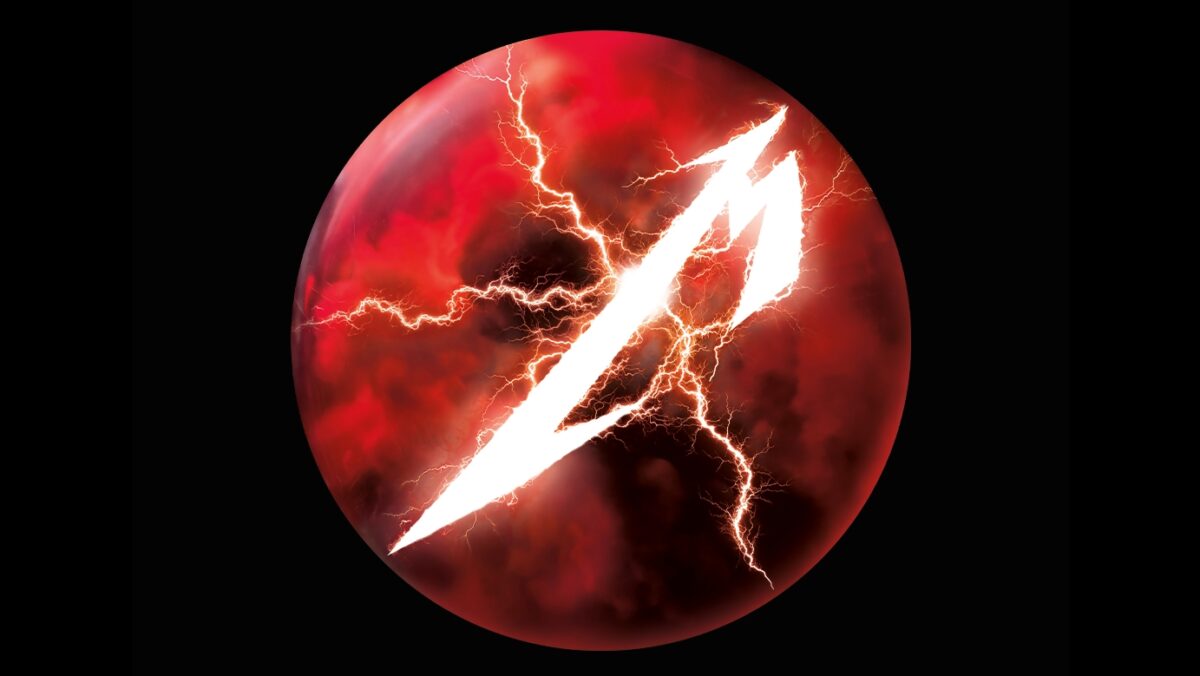
Metallica are set to take over the Las Vegas Sphere from next weekend with ‘Life Burns Faster’, and they have now revealed some of the extra events that will be going on around them.
‘Life Burns Faster’, will take place on October 01 and 03, 15 and 17, 22 and 24, and 29 and 31, and will align with the ‘No Repeat Weekends’ of their M72 World Tour, meaning no song will be repeated over the two nights of each Thursday and Saturday performance.
So that means you’ll be getting all of the band’s biggest, boldest and best tracks from across their 40-year career, matched with the incredible scope and stature of the infrastructure within Sphere, made up of audience-wrapping LED displays, immersive sound and multi-sensory 4D technology. It’s going to be on a completely different level to anything you have ever seen a metal band do.
And the band are going all in on the fan experience throughout Las Vegas.
First up, the Life Burns Faster Experience, made up of a pop-up shop and fan experience will be open at The Summit Showroom and The Venetian Resort.
Then on select Fridays, The Black Box will be open, showing off memorabilia, interactive exhibits and exclusive merch.
Then on the first two Fridays, ‘The Art of Squindo’ will take place, serving as a live discussion and Q&A with the band’s longtime collaborator.
There will then also be a Metallica takeover on SiriusXM, with hosts Spider Dan and Stefan Chirazi broadcasting in front of a live audience.
And at the Eight Lounge, there will be a Blackened x Drew Estate cigar meet and greet with Rob Dietrich, and a Blackened happy hour at Davidoff of Geneva Cigar Bar.
If that wasn’t enough, there will be a Red Cross blood donation experience at Fashion Show, where memorabilia will be available to view for anyone who donates.
Chrysalis Records are proud to present the latest in the acclaimed UFO reissue series: the classic 1982 album ‘Mechanix’. Reissued on stunning 3LP tri-fold sleeve 180gm vinyl and 2CD Digipak formats on December 4th, 2026, the album now sounds more dynamic and detailed than ever, thanks to new remastering from the original tape transfers at […]
Belgium grindcore purveyors Leng Tch’e are back with a brand new single, “Hammered Into Collapse”, their first new material since 2017 record Razorgrind. This new track was produced by Lander Cluyse at Hearse Studio, Heule, Belgium. Mixed by Taylor Young at The Pit Recording Studio, Sunland-Tujunga, CA and mastered by Brad Boatright at Audiosiege, Portland, OR. Read more…
Set to release their sophomore album ‘Black Static‘ on October 23rd, 2026, Canadian hard‑rock/metal quartet Boneyard is unleashing their next single, ‘Compass Points To War‘, a high‑stakes, pirate‑battle anthem powered by explosive riffs, soaring female vocals, and the band’s trademark fusion of melody and grit. The track arrives alongside a dark, high‑intensity performance video crafted […]
Germans Knife have disclosed details and first single in connection with their new full-length announcement. Entitled Into Your Nightmare, it was produced, mixed and mastered by Martin Buchwalter at Studio Gernhart. Cover artwork was created by Timbul Cayhono. Official release date: December 18, 2026. Read more…


 For their part, Destruction had quite an interesting launch to 1987. The band made a big enough splash with their debut EP and two subsequent full-lengths to land a number of significant tours, but just as things really got cooking in late ‘86, founding member / pummeler Tommy “Sandman” Senmann saw the writing on the wall (pending military duties and an itch to find a profession beyond drumming) and made the difficult decision to lay his sticks to rest. Following a brief fill-in period with Sodom’s Witchhunter (R.I.P.) behind the kit to help with touring, the band ushered in Oliver “Olly” Kaiser as a permanent replacement (previously a jazz and funk drummer… say whaaa?), along with a second guitarist in Henry Wilkens to strengthen their live sound and reinforce Destruction’s decision to move in a more technical direction. Boom: Out wriggled the Mad Butcher EP in March of ’87, showcasing a far more complex framework that lifted the band well beyond graveyard promo photos and any ties to the proto-black metal movement.
 Suffice to say, it’s understandable that there’s really very little middle ground as far as reactions to this cover art are concerned. Is it the most awful image you could imagine hitting a cover in the ‘80s? Yeah. Yeah, maybe just a bit. Most of us were already familiar with horrific and strange metal imagery, thanks in part to Celtic Frost’s connection to H.R. Giger, but Luetke’s vision (designed by a fellow named Guido Glöckler) was just… next level strange. Comprehensive oddness aside, even four decades later I still find myself lost as to why the creature: 1) is missing a finger on the left hand, 2) Doesn’t have eyelids, and 3) Has such a terrible skin problem around that ruined nose. In short, the cover still creeps me the fuck out, but there’s no question that it did the job of catching eyes, and it definitely managed to match the overall oddness of the record to boot. Bottom line: Regardless of which end of the love or hate spectrum you happen(ed) to fall, it’s fair to say Luetke’s artwork here is ICONIC.
 Not to take away from the power Tommy provided on the band’s early works, but newcomer Olly and his more elaborate approach to augmenting the overall punch clearly had an immediate impact. And Harry’s added presence absolutely upped the ‘tangled energy’ quota that helped make the full ride feel just as demented as the album’s cover. What I appreciate the most about Release from Agony, though—something a song like “Dissatisfied Existence” etches in steel early on—is how absolutely ALIEN the record sounds, even four decades later. (Especially four decades later? Like, how is that possible, given all that’s happened since.) That tangled energy has a lot to do with it, making many of the songs sound a bit like
  Destruction toured untiringly with Release from Agony in their back pockets, hitting Europe and the U.S. countless times alongside all the greats of an era that prefaced the death metal explosion of the early ‘90s. Sometime in late ’89, though, the band sort of… self-destructioned, firing Schmier amidst the recording of Cracked Brain, an album that featured Poltergeist frontman André Grieder behind the mic. As it happens, some consider Cracked Brain to be the true pinnacle of Destruction’s tech thrash face, but I’ve always felt it was a bit uneven and lacking that requisite ‘eccentricity’ that makes Release from Agony really stand out. Plus, it has one of the worst covers I’ve ever heard on a metal record—The Knack’s “My Sharona”—and for some bloody reason it’s placed smack-dab in the middle of the record (the end of side A), which fully derails all momentum.