Blog
-
Madball To Release New Album “Not Your Kingdom” In July; Shares New Music Video “Rebel Kids”
NYHC kings Madball remain one of the few legacy acts capable of seamlessly bridging the gap between the old-school era and the modern heavy music landscape. To say hardcore is in the band’s DNA is an understatement – it is their lifeblood. On their tenth studio album, "Not Your Kingdom" which will be released on July 24th via Nuclear Blast, the ban… Read More/Discuss on Metal Underground.com -
See the Stones Get Digitally De-Aged in Their New Music Video
It also features the actress Odessa A'zion. Continue reading… -
Salem Share Surprise New Album Red Dragon To Coincide With Supreme Drop
Today Supreme officially drops their spring collection in collaboration with the Michigan witch house duo Salem, which includes a pair of grippy hospital socks. The team-up makes sense — music aside, “hip yet mentally disturbed” is kind of a key component of Salem’s whole thing. Anyway, now Jack Donoghue and John Holland have a whole…
The post Salem Share Surprise New Album <em>Red Dragon</em> To Coincide With Supreme Drop appeared first on Stereogum.
-
My Chemical Romance announce deluxe edition reissue of Danger Days: The True Lives of the Fabulous Killjoys, with nine bonus recordings
My Chemical Romance’s final album is getting a deluxe edition makeover -
Bloodhunter – Reveal Cover Of Annihilator’s ‘Human Insecticide’
One month prior the release of their Sons Of The Abandoned record, Spaniards Bloodhunter now stream the newest single – the cover of Annihilator track “Human Insecticide”.
Read more… -
SAMANTHA FISH Shares Smoldering New Single “Don’t Say It” Featuring THE MCCRARY SISTERS
Following her eighth triumphant appearance at the New Orleans Jazz & Heritage Festival, acclaimed guitarist and songwriter Samantha Fish has released “Don’t Say It,” the latest single from her forthcoming live album, Paper Doll Live, due Friday June 12th via Rounder Records.
Fish’s first official live album, Paper Doll Live captures the electrifying stage presence that has made her one of the most compelling performers in modern blues and roots music. Recorded at the historic Bijou Theatre, the album documents a band firing on all cylinders in front of a packed crowd, elevated by the soaring harmonies of Nashville gospel legends The McCrary Sisters.
“‘Don’t Say It’ is one of those songs that builds gradually — a slow-burn reveal where one person is fighting for the validity of a relationship while the other is emotionally checked out,” says Fish. “It was incredible having the McCrary Sisters on this track. They weave in and out of the harmonies and add so much heart and depth.”
The two-time GRAMMY nominee has built her reputation the old-school way: onstage, with a live show critics have called “wild, raunchy… an absolute must-see” (Louder Than War) and praised for its “savage guitar work and commanding stage presence” (Blues Rock Review). Paper Doll Live captures that energy in full force — raw, immediate, and impossible to fake.
From towering performances of “Lose You” and “Sweet Southern Sounds” to a blistering rendition of the MC5’s “Kick Out the Jams,” the album highlights a band fully immersed in the moment — unfiltered, ferocious, and deeply connected to its audience.
“There’s a fire that comes across in live performance that doesn’t always translate in studio albums,” Fish says. “The stage lays all of that bare.”
Emerging from Kansas City’s blues lineage and shaped by influences ranging from Prince and Leonard Cohen to the legends of Mississippi Hill Country blues, Fish has spent her career turning live performance into both proving ground and catharsis. From cold-calling bars as a teenager to headlining international festivals, she has forged a live show that balances grit, vulnerability, and explosive musicianship.
“If Paper Doll was a declaration of artistic power,” Fish says, “Paper Doll Live is the sound of that power unleashed.”
With Paper Doll Live, Samantha Fish delivers more than a concert recording — she captures the visceral connection that has made her one of the most celebrated live performers in contemporary roots music today.
Tour Dates and Ticket Information Available Here:
5.14 Marion, IL Marion – Cultural & Civic Center
5.16 Welch, MN – Treasure Island Casino**
5.17 Des Plaines, IL – The Des Plaines Theatre
5.19 Warrendale, PA – Jergel’s Rhythm Grille
5.20 State College, PA – The State Theatre
5.21 Troy, NY – Troy Savings Bank Music Hall
5.22 Ledyard, CT – Foxwoods Resort Casino **
5.23 Beverly, MA – The Cabot
5.24 Nashua, NH – Nashua Center for the Arts
5.27 Patchogue, NJ – Patchogue Theatre
5.28 Syracuse, NY – Westcott Theater
5.29 Lebanon, NH – Levanon Opera House
5.30 Augusta, NJ – Michael Arnone’s Crawfish Fest
5.31 Buffalo, NY – Babeville
6.19 Grolloo, Netherlands – Holland Intl Blues Festival
6.20 Dortmund, Germany – Musiktheater Piano
6.21 Chiari, Italy – Istituto Salesiaino “San Bernadino”
6.23 Loceri, Italy – Parco Urbano
6.25 Rubigen, Switzerland – Muhle Hunziken
6.27 Vienne, France – Jazz a Vienne
6.28 Erlangen, Germany – E-Werk Kino
6.30 Mannheim, Germany – 7er-Club
7.01 Aschaffenburg, Germany – Colos-Saal
7.02 Hamburg, Germany – Fabrik
7.04 Helsinki – Puisto Blues
7.07 Warszawa, Poland – Klub Hydrozagadka
7.08 Gdynia, PL – Podeorko Art
9.18-19 Telluride, CO – Telluride Blues & Brews Fest
10.31 West Hollywood, CA – Whisky A Go Go*****w/Christone “Kingfish” Ingram
***w/Jesse Dayton
The post SAMANTHA FISH Shares Smoldering New Single “Don’t Say It” Featuring THE MCCRARY SISTERS appeared first on Sonic Perspectives.
-
Breaking Benjamin Release New Single “Something Wicked”
HARD ROCK GIANTS BREAKING BENJAMIN
RELEASE NEW SINGLE “SOMETHING WICKED” SIGNALING THE NEXT CHAPTER FOR THE BAND
PERFORMED LIVE THIS PAST WEEKEND TO MASSIVE CROWN AT WELCOME TO ROCKVILLE
CATCH BREAKING BENJAMIN ON THE ROAD THIS FALL WITH SUPPORT FROM CHEVELLE, STARSET AND KAMI KEHOE
Hard rock giants Breaking Benjamin are back with a brooding and haunting new single, “Something Wicked”, signaling the latest chapter for the band and the tease of a forthcoming full-length album. Marked by their signature blend of atmospheric tension, thunderous instrumentation, and raw emotional weight, the track finds the band pushing deeper into their darker sonic territory while staying rooted in the sound that has defined them for years. Debuted live for the first time this past weekend at Welcome to Rockville, “Something Wicked” builds from a simmering, introspective opening into a powerful, anthemic crescendo, showcasing frontman Benjamin Burnley’s unmistakable vocals as they shift between vulnerable restraint and explosive intensity.
Breaking Benjamin adds “Something Wicked is a quick look into our influences both musically and thematically. We challenged ourselves especially hard on this record and on this song. We pushed every boundary we’ve previously had as far as it will go, then pushed a little more. Something Wicked was the result.”
Upon releasing their first single in five years back in 2024, “Awaken” quickly shot to #1 on the Rock Digital Songs charts and landed in the Top 20 on multiple additional Billboard charts including Hot Hard Rock Songs, Digital Song Sales, Hot Alternative Songs and Hard Rock Songs. The single has also since surpassed 117M streams globally.
Breaking Benjamin are no strangers to the upper echelons of the rock charts. Since bursting onto the scene with 2002’s Saturate, the band has amassed an impressive string of mainstream rock radio hits, with ten songs hitting #1, numerous platinum and multi-platinum songs and albums, 8.5 billion combined streams worldwide and a social imprint of over 6.5 million, a true testament to the band’s global influence and loyal fan base.
Breaking Benjamin’s studio album, EMBER debuted at #3 on the Billboard Top 200 and marked the multi-platinum band’s fourth Top 5 debut on the Billboard Top 200, following 2015’s #1 debut for DARK BEFORE DAWN (Gold), 2009’s DEAR AGONY (Platinum) at #4 and 2006’s PHOBIA (Platinum) at #2. EMBER spun off two #1 hits at Active Rock Radio with “Red Cold River” and “Torn in Two.” AURORA and EMBER charted Top 10 across numerous countries worldwide and topped #1 charts across multiple genres, including Top Alternative Albums, Top Rock Albums, Top Hard Rock Albums and Top Digital Albums.
The massive US Fall tour is kicking off in Camden, New Jersey on September 2 before wrapping up the shows in Bristow, Virginia in late October featuring support from Chevelle, Starset and Kami Kehoe. For ticket details, visit: https://www.breakingbenjamin.
com/#tour Breaking Benjamin is Benjamin Burnley (vocals), Aaron Bruch (bass/backing vocals), Keith Wallen (guitar/backing vocals), and Jasen Rauch (guitar).
The post Breaking Benjamin Release New Single “Something Wicked” appeared first on Mayhem Music Magazine.
-
THIN LIZZY’s Self-Titled Debut Turns Deluxe
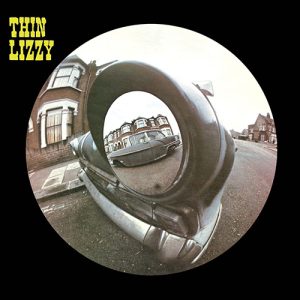
Some artists arrange their reissues chronologically; others try to adhere to anniversary schedules; for THIN LIZZY, it’s been all over the place. Not counting the extravaganza, the band began presenting their albums in deluxe editions with in 2023 before jumping … Continue reading
The post THIN LIZZY’s Self-Titled Debut Turns Deluxe appeared first on DMME.net.
-
HELLRIPPER Premiere Exclusive Zeke Covers EP via the Decibel Flexi Series!
Scottish speed/black metal merchant James McBain dropped his latest Hellripper album, Coronach back in March and it’s already one of our favorite releases of 2026. And if you’re anything like us, you can’t get enough of his Bathory-meets-Midnight approach to the genres. Well, you’re in luck because the Decibel Flexi Series is brining you even more Hellripper in the form of a pair of Zeke covers as an exclusive new single!
So stream Hellripper’s take on “Let’s Get Drugs” and “Mainline” below and then make sure to snag your copy of the June issue of Decibel, which includes this exclusive piece of floppy vinyl.You don’t have much time before this offer is shot, so don’t blow it!
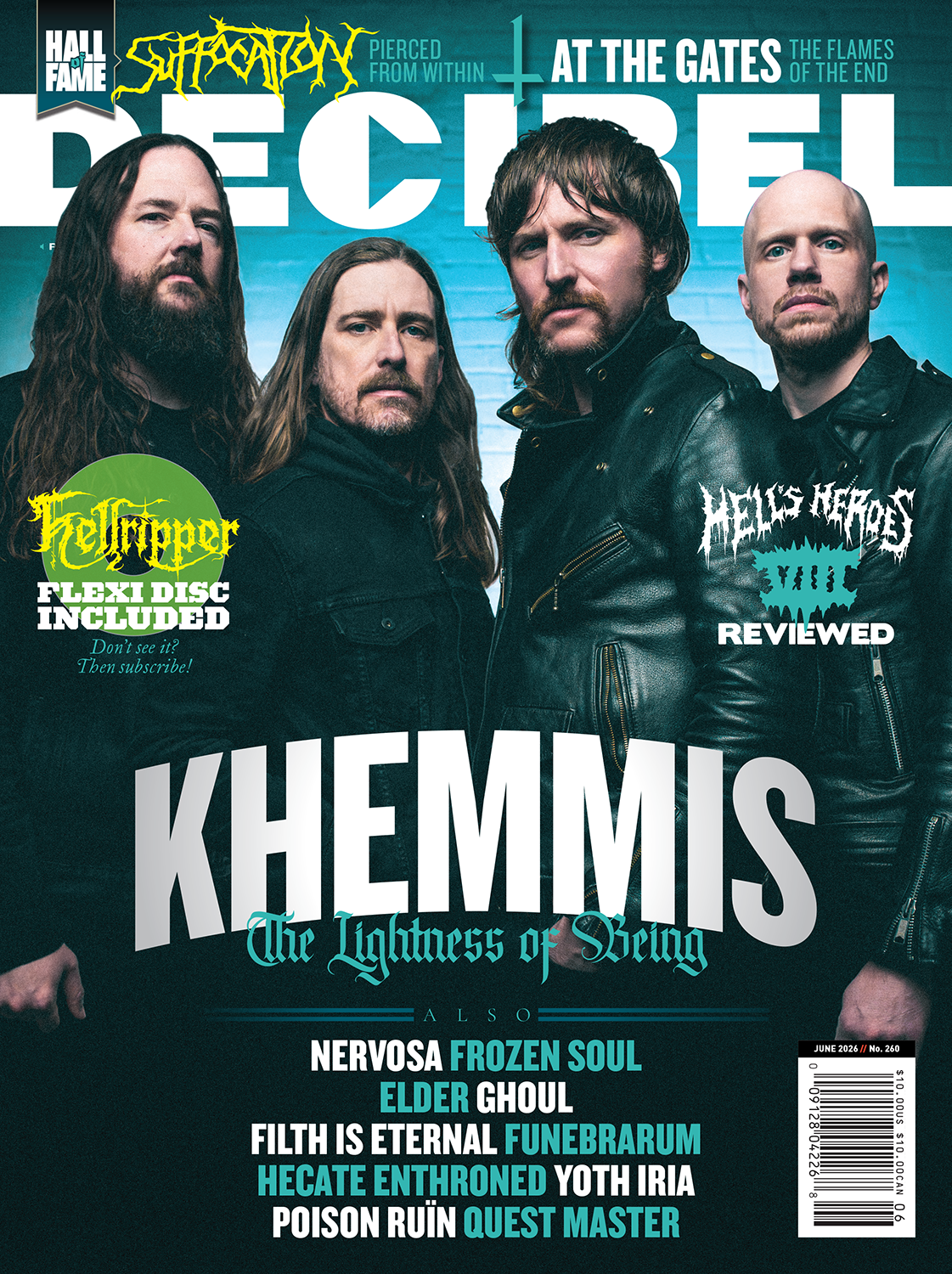
The post HELLRIPPER Premiere Exclusive Zeke Covers EP via the Decibel Flexi Series! appeared first on Decibel Magazine.
-
Madball Debut “Rebel Kids” Video, New Album “Not Your Kingdom” Due Out In July
The return of hardcore royalty.
The post Madball Debut “Rebel Kids” Video, New Album “Not Your Kingdom” Due Out In July appeared first on Theprp.com.