Posted on September 25th 2026, 9:14am
Blog
-
Reviews: Pure Reason Revolution, Emma Ruth Rundle, Noctule, Mount Slatra (Matt Bladen)
Pure Reason Revolution – Terrifying Angels (InsideOut Music)
In a move that may shock other bands into some sort of work, Terrifying Angels is the fourth studio album since they “reformed” in 2019.
There’s been a lot of line up shuffling in that time, though PRR has always been a collaborative affair, the keystone to it all is band founder Jon Courtney, who takes vocals, guitar, bass, keys, percussion and production, with this record mixed/mastered by Bruce Soord of The Pineapple Thief. He still writes and records with co-founder Greg Jong (guitar), the synergy between them still as electrifying as on those early records.
Courtney is joined by vocalist Annike Shireen and drummer Ravi Kesavaram as the core trio on this record, but because of what PRR is there’s co-writes and influences from.jam sessions with Paul Mullen of Losers and Yourcodenameis:milo and Kenny Fitzgerald as well as special bass performances from Mariusz Duda (Lunatic Soul) and Kristoffer Gildenlöw (Kayak).
With all that out of the way we can focus on the record itself and Terrifying Angels takes things down a heavier route, harking back to The Dark Third, their debut record but also instilling the insistent electronics of their two pre hiatus albums. The album was written in response to the lighter style of Coming Up To Consciousness, as if to do away with any beauty with savagery.
The floaty atmospheres disappear immediately with Spin Like Fire, an electro-rock banger where Royal Blood and Kasabian are the influences, big drums, harmony vocals and fuzzy riffs with the electronic twitches, begin this new record with the right grit and riffage, instilling the idea that Terrifying Angels is going to be darker and more brooding.
From here Black-Arrow Acrobats puts breakbeat drums, harmonic clean guitars by way of Radiohead as Mariusz Duda brings his signature bass virtuosity throughout, the heavier side building into some of the more ominous Steven Wilson song craft, where they journey though a distinct journey with this epic run time, flipping between soundscapes like the titular acrobat.
The duality between the vocals is such a historically key feature of the PRR sound and once again Jon and Annike’s interplay is brilliant, from the grunting rock of Haywire Heart which leads into another epic, the Title Track which is a cinematic dreamscape the floats through 12 minutes with a slightly haunting melody and those ghostly vocals.
Then the pace is pushed again by Rumination Ruin which is another fuzzy electro rocker, where they can let their hair down but it segues into Below Radiance, a full electronic offering that would fit well on a dark synth record, little oscillations and blips that pulaste behind everything,s etting the scene for the closer Hold Your Wrath.
Over 14 minutes of exactly what Pure Reason Revolution do shifting styles, beautiful harmonies, an electronic intensity that permeates through everything and clashes between ambience and heavy riffs, concluding this new record from PRR with the progressive prowess they excel at.
With Terrifying Angels, Pure Reason Revolution bring back their intensity and create a wonderous cacophony of electronic alt rock noise! 9/10
Emma Ruth Rundle – These Killing Times (Errant Child)
We’re all going to die, and it’s all our fault, if we don’t change and do something about it.
This basically sums up the themes behind the sixth album from avant garde artist Emma Ruth Rundle, while it’s also a plea for change, for intervention to save us from ourselves. Written as she watched another climate disaster take hold of the planet, Rundle decided to make a record of hope, of faith in humanity, that we would eventually see sense and do something for good.
This atmosphere of hope is cultivated with opening track Powerless, a flash of 90’s alt rock, which like the rest of this record feels like lost tracks from the likes of Tori Amos, Fiona Apple, PJ Harvey, The Cranberries and even Jeff Buckley and Nirvana. Rundle working with producer Sonny Diperri (My Bloody Valentine, Trent Reznor, These New Puritans) to capture the sound of that decades “anti-patriarchal feminist rage” which made it’s way into the deepest recesses of Emma’s brain in her younger years.
The impact of these songs comes from Rundle using a full band for this record, unlike on her previous release where it was just voice, piano, guitar and introspection and while Don’t Delay Heaven still feel stripped back to just those components there’s more instrumentation present from the long time collaboraters. Making the record feel like a community all with the same goal, the very heart of what this album is about, that “the needs of the many, always outweigh the needs of the few” (thanks to Mr Spock) and we can achieve anything, but only together.
From Jess Gowrie’s deft and thunderous drumming, Troy Zeiglers undulating basslines as the main recording trio, it’s the addition of guests such as Nick Reinhart (Tera Melos) and Gina Gleason’s (Baroness) guitar prowess, Marissa Nadler, Lukas Frank (Storefront Church) and Amelia Baker (Cinder Well) choirs and Patrick Shiroishi’s insane saxophone that all bring that sonic power that can be felt on this record. It needs this sonic density as These Killing Times is a record with something to say and it wants you to listen, to go out and do something about environmental destruction, late stage capitalism, right wing nationalism and the many other threats posed to our existence.
While the record lingers in these harrowing, dark passageways it also offers an embrace, a reason to forget, if not for just a moment and experience collective beauty, as Humans Kindness moves into Oceans Of Time, this yearning, this love is felt warmly and helps you know that through These Killing Times, we can get better, together. 9/10
Noctule – Extinguish Thy Flame (Self-Released)
What started as a side project away from her main band Svalbard, Noctule is now the sole musical output of Serena Cherry. The second album from her black/melo-death project is inspired by the videogame Elden Ring, a game that is so intense, immersive and difficult, she credits with saving her life when going through a particularly heavy period of mental illness.
Written, recorded and performed by Serena alone, the album is a tribute not only to the video game, which Cherry fell in love with but ultimately it’s about how that album gave her the perseverance to overcome her demons, and also rekindle her love of writing, but her own writing, with no interference from elsewhere just performing exactly how she wanted to.
It’s the unflinching difficulty and almost masochistic pursuit of failure that is experienced again and again in Elden Ring that is reflected in this record, building your character (in game and outside) as you play, this record is just as cinematic and uncompromising as it’s inspiration.
Metal and video games have always made good bedfellows and with Noctule the combination proves to be utterly majestic, the best bits of black metal and melodeath, cherry picked (if you will) to merge brilliantly and create this brilliant second record. From the screaming melodeath solos (Lord Of Blood), to the black metal blasts (Lament Of The Omen King), atmospheric passages (O’Death) and the range of vocal screams Extinguish Thy Flame acts a musical catharsis and reclamation of self for Serena Cherry.
With tracks such as Goddess Of Rot proving particularly intense. Having taken two years to finish Extinguish Thy Flame is the epitome of what Noctule is about, life affirming extreme metal delivered with incredible skill. 9/10
Mount Slatra – Fit For The Dead (Witches Brew Records)
We covered the EP from Midlands Thrashers Mount Slatra in September of last year, noting that they showed a lot of skill and promise that is often lacking in thrash. A year later they arrive with their debut album Fit For The Dead, a longer more intense slice of thrash metal that will have old heads and new fans wanting to let loose and run in a circle, but try to stifle yourself as there a lot going on with this record.
Intro piece out of the way 5×5 kicks off the record with the intensity of a band such as Testament, it’s old school but technical, the inspiration of Megadeth also strong on the opener. After this we get into Fit For The Dead nodding to Slayer, as Cryptocracy builds in the same way early Metallica did, so we have three of the Big Four covered for sure.
The education these musicians have received has really paid off on this debut as Mount Slatra have a maturity that few bands achieve on their debut, their proficiency on the shifting Age Of Industry and the dynamics that come through every track here is very impressive, the thrash getting more melodic with closing track Radio Mercy which features Hannah Law on vocals.
The foursome of vocalist Ryan Darling, guitarist George North, drummer Ben Alexander and bassist Aaron Watkins all hail from the Midlands and are all alumni of music colleges in that area, as Connor Yarrington engineered and Matthew Jones mixed/mastered, Mount Slatra are a band who really showcase how fertile the grassroots scene is for musicians in The Midlands by how much care and skill has gone into this record.
Mount Slatra are destined for bigger stages, this debut is proof. 8/10 -
SHOGUN MOJO Unveil New Song ‘Under The Gun’
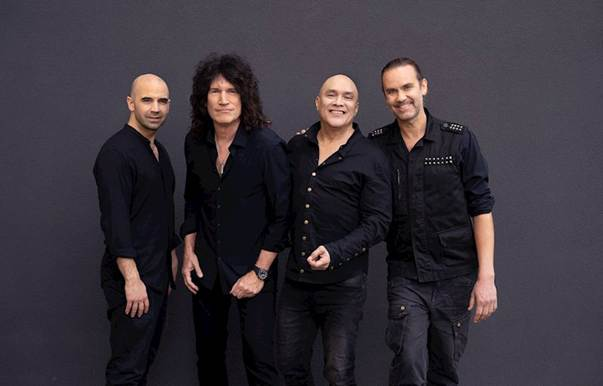 SHOGUN MOJO, an exciting new collaboration between legendary KISS guitarist Tommy Thayer and acclaimed singer-songwriter Dan Reed of Dan Reed Network fame, debut on Frontiers Music Srl with a self-titled album, set for release on October 30, 2026. The band is also thrilled to unveil the first single, Under The Gun, along with an official […]
 -
Ben Poole Releases ‘Runaway Souls’ Single & Music Video Feat. Elles Bailey
Today, celebrated British guitarist and singer songwriter, Ben Poole, is pleased to announce the release of his new album ‘Post-Midnight Behaviour‘. The album is released worldwide by Gypsy Soul Records and is available on CD and vinyl here, and digital here. To celebrate the album release, Ben has released the lead single ‘Runaway Souls‘ featuring […]
The post Ben Poole Releases ‘Runaway Souls’ Single & Music Video Feat. Elles Bailey appeared first on ROCKPOSER DOT COM.
-
HEAVY AUDIO MAG #72 – The Week In Metal
 Listen to the best in new, heavy music every week with HEAVY‘s new weekly HEAVY AUDIO MAG, featuring music from our weekly cover artist plus new premieres, hit predictions, and killer tracks we just know you want to listen to from bands featured over both digimags and some just because we want to put them […]
 -
7 Crazy Behind-the-Scenes Moments That Happened During Live Concerts
Live concerts may look tightly controlled, but thousands of fans, stage equipment, pyrotechnics, musicians, dancers, video screens, and security teams create countless chances for something to go wrong.
Careful rehearsals can prepare performers for missed cues or technical problems.
Nobody can fully prepare for a bass guitar falling onto someone’s head, an audience member cartwheeling onto a stage, or a fog machine filling multiple businesses with smoke.
Some incidents are funny. Others are painful, dangerous, or so strange that they sound invented.
Some of the most shocking incidents in rock history involve onstage accidents that nearly turned fatal, proving how quickly a concert can become dangerous.
Here are seven live-performance moments that turned an ordinary show into something far less predictable.
7. Nirvana’s Bass Guitar Comes Crashing Down
View this post on InstagramNirvana’s performance at the 1992 MTV Video Music Awards included one of the band’s most memorable onstage accidents.
Krist Novoselic had a habit of throwing his bass guitar into the air and catching it. During that performance, he tried the trick again, launching the instrument high above his head.
Stage lighting made tracking the bass difficult. Novoselic lost sight of it as it came back down.
Instead of landing safely in his hands, the instrument struck him directly in the head.
Anyone watching could immediately see that something had gone badly wrong. Novoselic stumbled away after taking the hit, turning what had been a familiar stage trick into a painful lesson about gravity.
Fortunately, he did not suffer a serious injury. Unexpected stage injuries can turn serious in seconds, which is why training such as Coast2Coast First Aid Courses in Guelph can be valuable for people responsible for emergency response at live events.
Accidentally getting hit by your own instrument is strange enough. Britney Spears faced something even harder to predict when an actual audience member entered her performance area.
6. A Fan Cartwheels Onto Britney Spears’ Stage
Britney Spears was performing during her Las Vegas residency in 2017 when an audience member unexpectedly reached the stage.
Making his entrance even stranger, he reportedly came onto the stage with a cartwheel.
Security personnel quickly moved toward him as dancers and guards positioned themselves around Spears. A polished pop production suddenly became a security emergency unfolding in front of the audience.
Removing the intruder was not simple.
During the confrontation, he reportedly threw one security officer over his shoulder. Additional guards eventually restrained him and escorted him away.
Several minutes of confusion followed before the situation was brought under control.
Concert security often works best when audiences barely notice it. Incidents like this show how quickly guards can become central to keeping a live performance safe.
Human interference caused the chaos during Spears’ show. At another performance, a single production button caused an even bigger problem.
5. A Fog Machine That Evacuated an Entire Bar
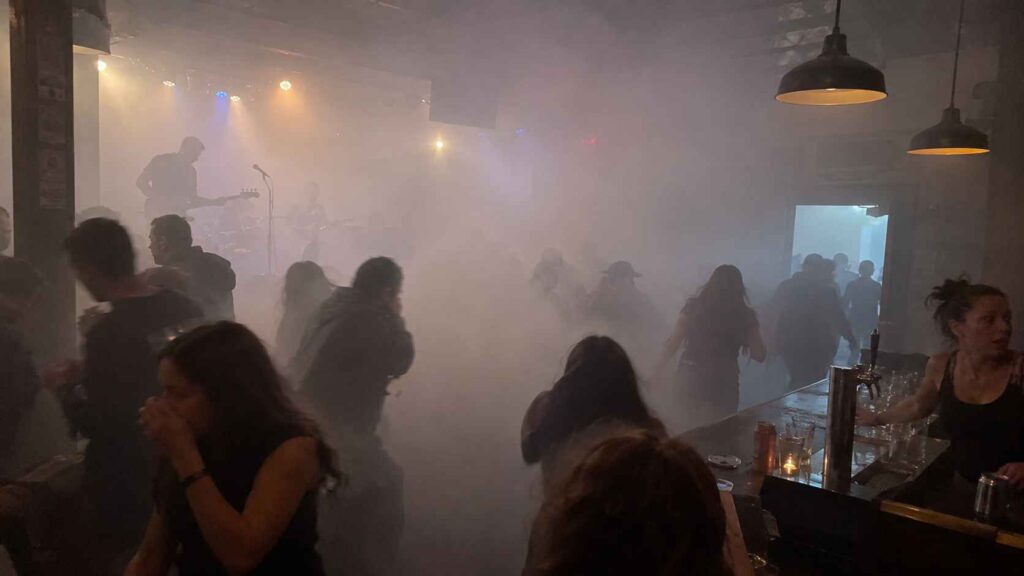
Excessive fog from a stage machine fills a bar, forcing concertgoers to evacuate. One Michigan musician recalled a show in which a borrowed fog machine was supposed to add a little atmosphere during an encore.
Instructions sounded simple. Activate it for around eight to ten seconds.
Nothing seemed to happen immediately after the button was pressed.
Assuming the machine had not activated properly, the operator continued holding the control.
Fog eventually arrived, only in far greater quantities than anyone expected.
Smoke became so thick that musicians and audience members could barely see one another. What started as a small stage effect quickly became a building-wide problem.
Conditions reportedly became serious enough for the fire department to respond. Evacuation followed, affecting both the bar and a neighboring restaurant.
Few production errors escalate quite that dramatically.
One moment involved no visible fog. Seconds later, visibility had effectively disappeared and firefighters were dealing with the aftermath.
Equipment caused trouble there. An intoxicated audience member created a far stranger problem during a St. Patrick’s Day performance.
4. A Concertgoer Actually Bites the Viola Player
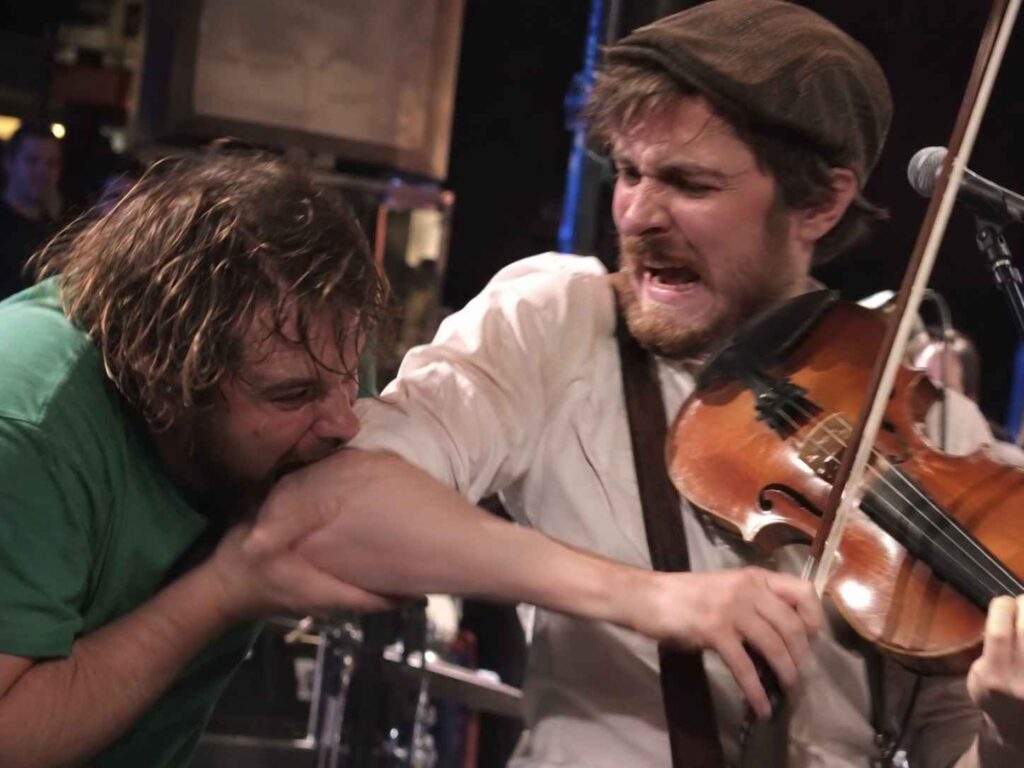
An intoxicated concertgoer reportedly bit a viola player during a St. Patrick’s Day performance near Michigan State University. Musicians have plenty of reasons to worry about unruly crowds.
Someone spilling a drink near equipment is believable. A person grabbing a microphone is possible. Someone attempting to climb onto the stage is hardly unheard of.
Getting bitten is much harder to anticipate.
During a St. Patrick’s Day performance near Michigan State University, members of Belfast Gin noticed an apparently intoxicated man spending an unusual amount of time near their viola player.
Eventually, he climbed onto the stage.
Instead of dancing, shouting into a microphone, or trying to interact with the band in some more predictable way, he bit the viola player on the arm.
According to the musician who later recalled the incident, the bite did not break the skin.
Security removed the man before the situation escalated further.
Performers can rehearse songs, emergency procedures, equipment changes, and stage movements. Preparing for a random bite probably does not make many pre-show checklists.
Physical interference was not required for the next mishap. One incorrect visual cue was enough to completely change the mood of a Billie Eilish performance.
3. Billie Eilish’s Emotional Song Gets Interrupted by a Car
@matthewandy We were all getting ready to shed a tear and then the back drop suddenly started showing race cars and shit #billieeilish #happierthanever #happierthaneverworldtour #billie #sydneyaustralia #billieeilishsydney ♬ original sound – Matthew Andy Billie Eilish was performing in Sydney in 2022 when a quiet moment took an unexpectedly funny turn.
She was singing “when the party’s over,” a restrained song usually supported by carefully timed lighting and visuals.
Blue imagery was reportedly supposed to accompany the performance.
Suddenly, flashing orange visuals appeared instead.
Moments later, a video featuring a moving automobile appeared on the massive screen behind her.
Nothing about the clip seemed to match the mood of the song.
Eilish noticed the mistake, laughed, and kept performing rather than stopping the show.
Audience members noticed it too. Clips of the production error quickly became perfect material for online jokes and edits.
Modern arena shows rely on enormous networks of lighting cues, graphics, screens, cameras, sound systems, and playback equipment. One incorrect command can instantly turn an emotional performance into an accidental comedy bit.
Technical errors can be embarrassing. However, musicians injured on stage sometimes face much more serious consequences, as Dave Grohl demonstrated during a Foo Fighters show in Sweden.
2. Dave Grohl Breaks His Leg and Comes Back to Finish the Concert
Dave Grohl suffered a serious injury during a Foo Fighters concert in Sweden after falling off the stage early in the performance.
Impact caused major damage.
Grohl dislocated his foot and fractured his leg.
Most concerts would have ended immediately after an injury like that. Grohl instead told the audience that he intended to return.
Medical treatment followed while the show was temporarily interrupted.
Later, Grohl came back onto the stage and continued performing while a medical professional helped stabilize his injured leg.
Sitting down became necessary, but leaving the concert unfinished apparently was not part of his plan.
Crowd members who had initially watched a potentially show-ending accident instead saw the frontman return and continue playing despite a fractured leg.
Few live-show improvisations require adapting to an injury that severe.
Still, one famous television performance managed to involve an even more dangerous combination of music, explosives, and miscalculation.
1. Keith Moon Packs His Drum Kit With Explosives
View this post on InstagramKeith Moon already had a reputation for unpredictable behavior when The Who appeared on The Smothers Brothers Comedy Hour in 1967.
A destructive finale was planned.
Moon reportedly loaded his drum kit with flash powder so it could explode during the closing moments of the performance.
Using pyrotechnics was intentional. Using such a large amount was where things became much more extreme.
Significantly more explosive material than usual was reportedly packed into the setup.
Detonation produced a blast powerful enough to overwhelm television cameras and shock people standing nearby.
Pete Townshend was positioned close to the explosion when it happened, adding another layer of danger to an already aggressive stunt.
Unlike a mistimed video cue or a failed instrument toss, the explosion was not caused entirely by accident. A planned special effect simply escalated far past what anyone would normally expect during a television music performance.
Few concert stories capture live-show unpredictability better.
Why Live Performances Can Go Completely Off Script
Concert audiences usually see the polished result of weeks or months of planning.
Backstage, dozens of moving parts have to work at exactly the right time.
Lighting teams need correct cues. Video operators need correct files. Security teams need control of access points. Musicians need equipment to behave properly. Special effects need strict timing. Audience members need to stay where they are supposed to be.
Failure in just one area can transform an ordinary performance within seconds.
Perfect performances can be impressive.
Accidents, mistakes, improvisations, and completely bizarre interruptions are often the moments people keep talking about years later.
-
Vanshing Point Return With Brand New Track
Six years since Melbourne melodic metal greats Vanishing Point last graced us with an album, the band has released new music at last.
Bring Me the Night is the first taste of the band’s seventh album, a long-gestated effort that will arrive on November 20.
Eremition is available for pre-order now from this link.
-
Breed 77 Share Wish You Well Ahead Of First Album In 13 Years

Breed 77 have shared Wish You Well, a new single from their forthcoming album VII, due on 13 November 2026. The track marks the band’s first new single in almost two years and arrives ahead of a UK tour in November.
Built around a riff from guitarist Danny Felice, Wish You Well brings together the flamenco guitar touches and Heavy Metal drive that have long been part of Breed 77’s sound. Frontman Paul Isola says the song is about holding on to relationships despite differences of opinion. “Don’t lose friends over differences,” he says, adding that people need to talk their views through.
“Our latest cut from our new album, VII, is an eclectic affair,” Paul Isola told us. “Exotic and emotive, Wish You Well is a celebration of the chaos, the thousands of differing opinions and points of view, some of these held by people close to you.
“It’s alright if we don’t see eye to eye on some issues. Throughout life, people change, and their views change. I guess the message of the song is a somewhat sarcastic ‘Even though I think you’re wrong, I wish you well…’
“You know? Don’t lose friends over differences. In this crazy world we live in, EVERYONE has crazy ideas/views, but we need to talk them through.
“Wish You Well is a bit of a trip for its relatively short three minutes and change runtime. We take you on quite a journey. It floats, it kicks, it’s grungy, there’s a bit of flamenco in there. We’re not pulling any punches. It is full-on Breed.”
VII is Breed 77’s first album in 13 years. Isola says the record was made over a year and a half across three countries, with the band using the extended writing and recording period to develop the songs. The 11-track album includes the previously released End Of The Line, Outside and Just Act Like You Know.
Breed 77 – VII Tracklist
- End Of The Line
- Outside
- We Were Young
- I Should’ve Let You Know
- Got Me Wrong
- Two Worlds Apart
- I See Red
- Wish You Well
- Don’t Give Me Up
- Just Act Like You Know
- Perdido (Lost)
Breed 77 will tour the UK in November, with King Kraken supporting the first four headline shows and Silo joining the final four. The band also supports Soil in Bradford and Margate. The Manchester date falls on the album’s release day. BRee 77 will support Soil on their show at Dreamland, Margate, on 15 November.
November
Wish You Well is released on 25 September. VII follows on 13 November with pre-order available from breed-77.ffm.to/vii.
The post Breed 77 Share Wish You Well Ahead Of First Album In 13 Years first appeared on MetalTalk – Heavy Metal News, Reviews and Interviews. -
Listening Now : Solid Copy – Thanks for Asking


Solid Copy’s Thanks for Asking explores self doubt and the uncomfortable gap between how we feel and how we present ourselves. The track combines lush indie rock textures with dream pop atmosphere, building gradually through shimmering guitars, layered vocals and a steady rhythm section. There is a strong sense of movement in the arrangement, with the quieter passages creating space for the song’s more vulnerable moments before the guitars swell into something fuller and more emotionally charged. Solid Copy approach introspection without making it feel overly heavy, allowing the melodies to retain a warmth that balances the darker thoughts underneath. The result is a song about confronting the less comfortable parts of ourselves rather than trying to hide them, finding a strange kind of beauty in that honesty. Thanks for Asking feels both intimate and expansive, turning an inward conversation into a beautifully textured indie rock track.
Sometimes honesty starts with admitting that things are not fine.
Connect:
-
Orbital Gate Premiere New Single & Music Video “Liquefying Organic Matter” – Enterprise Earth Guest
Cary, Illinois-based slamming brutal death metal unit Orbital Gate premiere a new single and music video by the name of "Liquefying Organic Matter", taken from their upcoming new album "Engineering His Planetary Dominion", which will be out in stores November 06, 2026. Enterprise Earth guest on that particular track. The upcoming new full-le… Read More/Discuss on Metal Underground.com