Blog

  • DS Book Review: Resident Punk – How I Smoke, Drank, and Stumbled My Way Through the ’70s Punk Scene (and Beyond) by Legs McNeil with Crispin Kott

    Legs McNeil – who along with Gillian McCain co-wrote what many consider the original punk bible, Please Kill Me: The Uncensored Oral History of Punk – gets even more personal with his newly published memoir, Resident Punk: How I Smoked, Drank, and Stumbled My Way Through the ’70’s Punk Scene (and Beyond) with Crispin Kott.

    I will say upfront there is much about McNeil’s story that I will not spoil. It’s too fun not to let readers discover for themselves.

    It’s an engaging memoir which will likely spark moments of nostalgia for those there and open the world to those who weren’t.

    McNeil starts the memoir at NYC punk rock’s ground zero, the now-shuttered CBGB.  While I have never been to that institution, my sister has seen the later-stage Ramones there.

    But alas, when crashing with my NYC-based siblings, I often visit the Joe Strummer mural. The East Village I see is the sanitized version, with a Starbucks being the first thing visible coming out of the train station. I was a kid growing up on Long Island in the era of most of this book, so it was a blast to take this journey through punk’s heyday on the Lower East Side.

    McNeil quickly detours to describe his years growing up in “my least favorite place,” Cheshire, CT, with his friends John Holmstom and Ged Dunn. McNeil vividly the agony of growing up in the CT suburbs as he recalls a teacher calling him by his birth name (It is among the interesting bits I won’t spoil for the reader), dealing with his severe dyslexia, and enduring corrective surgery to shorten his right femur.  After losing his father at just three months old, McNeil, his brother, and sister were raised by his now-single mom. His desire to escape hit him at an early age and only grew as the years went on.

    His one obsession at the time was reptiles, and he became so well known for that he earned the nickname The Swamp Rat, which was shortened to Rat. Seems McNeil was not fond of that nickname, as it reminded him of Ratso Rizzo (Dustin Hoffman’s down-and-out character in the Best Picture Oscar winner Midnight Cowboy).

    But he did manage to have a few adventurous moments —too many to describe and too good to spoil here- before finally finding his way to NYC. At 19, he and his friends Holmstron and Dunn created the seminal PUNK magazine. The magazine chronicled the burgeoning punk scene in NYC. McNeil’s official title at the publication was “Resident Punk.”

    McNeil became good friends with many legends in making, including Joey Ramone, whom he calls his best friend. McNeil vividly sets the gritty atmosphere as he describes the struggles and successes of co-creating PUNK. 

    McNeil admits to being a bit of an asshole, a view apparently shared by many others. He also recounts his many sexual exploits with beautiful women, yet it does not come off as braggy or crass, Just a matter of fact for a handsome young man.

    McNeil was a bit of a chaos agent, and it seems he was not altogether impressed by some of the established superstars of those days. He shares his resentment of one in particular who stole an important album from McNeil.

    Along the way, he also befriends two of the most acclaimed and legendary American writers, and makes us a bit forlorn that we were not able to partake in the conversations but glad we get to “listen” in. He also dates a future music and cultural icon and dabbles in international conflict journalism as a respite from all things punk.

    Resident Punk..is funny, insightful, and a hell of a fun read. It’s also very compelling and satisfies a need to feel on the ground in the East Village, meet icons before they became icons. Including McNeil himself. Lace up your Docs, enjoy the ride.
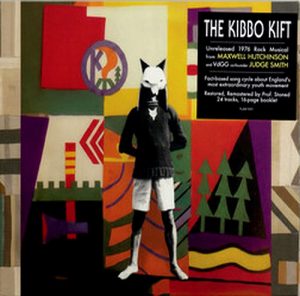
  • MAXWELL HUTCHINSON & JUDGE SMITH – The Kibbo Kift

    MAXWELL HUTCHINSON & JUDGE SMITH – The Kibbo Kift

    Think Like A Key 2026 Plucked from obscurity and brought alive, an utterly entertaining history lesson from young mavens of theatrical rock. There are many manners in which ‘s conceptualism has been manifested over the last six decades, but if … Continue reading →

    The post MAXWELL HUTCHINSON & JUDGE SMITH – The Kibbo Kift appeared first on DMME.net.

  • Enslaved share “Tales of Trees,” announce 2027 European tour

    New album ‘Mið’ drops October 30 through Nuclear Blast Records

    Source

  • “Mental Wormholes in the Night” — Soft Riot Channels Strange Transmissions in His Surreal Video for “Ghostwriter”

    Mental wormholes in the night

    Strange ideas give a familiar fright

    Some phantom power pulling you back

    And onto a completely different track

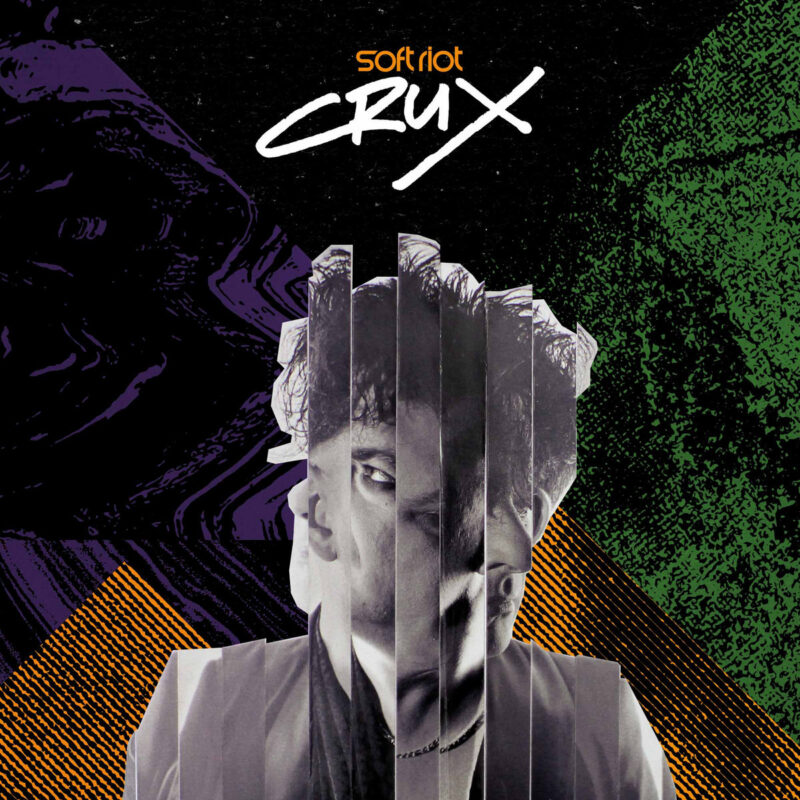
    Jack Duckworth has spent years making Soft Riot records that seem to know exactly how ridiculous modern life is, then politely invite the machines responsible over for dinner. On his latest LP, Crux, out now through Possession Records and Minimalkombinat, that dinner appears to have taken a turn. Somebody has started transmitting instructions through the walls, and Duckworth is sitting there with a synthesizer trying to determine whether the voice belongs to inspiration, paranoia, technology, or some unseen bastard who has been rewriting his lines while he sleeps.

    Ghostwriter sets the idea in motion with a Motorik beat, clipped electronics, and Duckworth’s sprechstimme delivered with the disciplinary authority of someone reading factory regulations during an evacuation. There is something of Nitzer Ebb and Suicide in the chant, Fad Gadget in the nervous intelligence, and Skinny Puppy in the sense that electronic equipment might eventually develop opinions about its owner. Elsewhere, the stylish severity of Japan, Bill Nelson’s eccentric futurism, Simple Minds before stadiums swallowed them, and late-period Wire all seem to inhabit the same crooked apartment building. Prince lurks somewhere downstairs, idly wondering why everybody is dressed so seriously.

    The song concerns creation becoming possession. Ideas appear without explanation, strange mental tunnels open after dark, and ordinary thought gets interrupted by transmissions whose sender remains unknown. Duckworth turns writer’s intuition into supernatural interference: inspiration as somebody else grabbing the steering wheel.

    His video makes that concept gloriously physical. Forget the standard musician-stares-meaningfully-at-camera routine. Duckworth does that, but becomes part of a universe of  printed graphics, hand animation, projected textures, surreal juxtapositions, and visual jokes that recall Dada photomontage, Saul Bass title sequences, and the wonderfully deranged graphic vocabulary of 80s television. Everything looks cut, pasted, shoved sideways, photographed again, and allowed to misbehave.

    All animations were made physically, with printed graphics manipulated by hand, while projector imagery was filmed again to produce the backgrounds and textures. Duckworth handled the graphics and editing, with assistance from Leyre Mann Vadillo. That analogue process becomes part of the argument:

    “This allowed me not only to get off the computer for most of the creation of this video, but also opened up the doors really wide for collaboration with other people in a far more intuitive and inclusive way,” says Duckworth. “This allowed the usage of computer software to be basic and minimal, mainly keying out backgrounds, levels, colourising and layering of the animated footage. As I feel the world of what I recognize as an underground music scene and community keeps getting more absorbed into the world of statistics, data and marketing that is more in line with late-stage capitalism, it was important for me to focus on things in the real world like working with other people, meeting new ones, connecting with people, traveling and performing live.

    The digital world today is planned, created, and orchestrated by the corporations that build it — a far cry from the more utopian possibilities the internet held when I first got acquainted with it in the 90s. The physical world, however, is something that we still don’t know the purpose of yet, despite thousands of years of humans trying to speculate why it exists. Ultimately, the digital world we’ve created can’t exist without the physical world it sits in — not the other way around.”

    Watch the video for Ghostwriter below:

    With Ghostwriter Jack Duckworth has made a song about invisible influence while creating its visual counterpart with scissors, paper, projectors, hands, and other people. In an era increasingly obsessed with converting creativity into metrics, his forthcoming album Crux finds Soft Riot asking a useful question: when an idea suddenly appears inside your head, who exactly handed it to you?

    Listen to Ghostwriter below and order Crux here.

    Follow Soft Riot:

    The post “Mental Wormholes in the Night” — Soft Riot Channels Strange Transmissions in His Surreal Video for “Ghostwriter” appeared first on Post-Punk.com.

  • High On Fire Schedule New U.S. Shows Into 2027

    Halloween and New Year’s Day shows included.

    The post High On Fire Schedule New U.S. Shows Into 2027 appeared first on Theprp.com.

  • High on Fire announce fall and winter U.S. shows

    Including stops in Philadelphia, Brooklyn, Portland and Seattle

    Source