We Came As Romans have released “where did you go? O”, a reimagined version of the track from their 2025 album All Is Beautiful… Because We’re Doomed, now in collaboration with Headwreck.
Speaking on the collaboration, We Came As Romans vocalist Dave Stephens shares: “We became friends with Headwreck while touring together in Australia, and we’ve been fans of their music for a while now. What we appreciate about them is their approach to making music and the sense of fun that comes through in everything they do. There’s a great personality to their sound and the way they carry themselves both on and off stage, which made them a perfect fit for ‘where did you go.’ We were excited to hear their take on the song and give them room to bring that part of themselves to it.”
Within Circularity, four brand new songs explore the space between death and rebirth. “When Everything Is Still”, “Dead Silent” featuring Make Them Suffer, “Born From Nothing” and “Speak To Exist” now appear at the front of the tracklist, forming the passage between the closing “Because We’re Doomed” and “All Is Beautiful…” within the original album’s circular structure. Each collaborator on the six reimagined tracks was invited to rework the song in question, taking the collection far beyond the usual ‘guest features’. The result is a collection of companion songs to the originals that feature a brand-new chorus on “b2tm O” courtesy of Bury Tomorrow and flamenco guitar on “culture wound O” which has also now been recorded completely in Spanish, following Dave Stephens becoming fluent so he could communicate with his wife’s Colombian family.
Across its new passage and reimagined collaborations, All Is Beautiful… Because We’re Doomed: Circularity creates a further phase in album’s cycle that the listener must travel through. Death creates stillness. Stillness creates clarity. Clarity creates choice. From that choice, life becomes possible again.
We Came As Romans will spend the fall on the road across North America, including dates with Wage War, Varials, Cane Hill, and The Funeral Portrait, and in 2027, will be hitting the Emo’s Not Dead Cruise. Tickets and current information are available here.
Maybe it’s me, but it seems like way longer than three years since Insomnium dropped Anno 1696 on us. With the odd feeling I’ve gone without new material from these lords of Finnish sadboi doom for so long, and with the impending descent into winter just around the corner, Netherworlds is landing at the perfect time. For their 10th album, Insomnium promised an expanded sonic palette. I’ve heard that many a time from established bands only to end up being served the same soup and nuts as always. So what does Netherworlds actually offer on the morose menu? Well, the classic Insomnium sound and style is intact, but the band pushes their established sound into a few new spaces as promised, and brings along a few dear friends to help them pull it all off. Are you intrigued yet? If not, look at that awesome cover art!
After a dramatic and table-setting intro, the classic Insomnium arrives with “Shadowlands,” and all the things you love about the band are brightly displayed. It’s that dead puppy under the Christmas tree mood you expect from Finnish melodoom, with plenty of weepy harmonies and twinkling keyboards. Niilo Sevänen’s hoarse death croaks are as solid as ever, and he’s supported by effective clean vocals that play well against his rasping during the big, emotive chorus. There’s even a trace of Omnium Gatherum in the guitar work to add color. That Omnium Gatherum influence bleeds into follow-up “Remembrance,” and it actually adds to the flavor. This one strikes the ideal balance between aggression and dour mood, almost approaching hard rock at points without losing the frowning funerariums. The big stuff arrives with album centerpiece “The Hour Grows Late,” where Insomnium go all in on embellishing their sound in interesting ways. It starts soft and moody as most Insomsongs do, but it ramps up into an aggressive piece that keeps shifting and evolving from hard to soft, folky and back. Blackened trems rise and fall along the way, and then there’s this big melodic swell as powerful clean vocals erupt that sound just like Tomi Joutsen of Amorphis. That’s because it fucking is Tomi! Soon you’re treated to extra raw death vocals that feel way outside Niilo’s comfort zone. These are delivered by fellow AmorphisER Tomi Koivusaari himself, giving the song a Tales of the Thousand Lakes vibe. From there, things go wonky as keyboards erupt with crazy 70s prog insanity with sound effects from 70s Sci-Fi cinema. That’s because Tomi also brought along Santeri Kallio to man the keys. It’s a brilliant mess and essentially a new Finnish national anthem.
After the wild ride Insomnium take you through with their Amorpfriends, they opt to recalibrate your brain with urgent, no-BS burner “Arch in the Sky,” which I loved at first exposure. This may be the only Insomnium tune to ever grace my lifting and cardio playlists because it’s hot fire, and when Niilo roars “I will never die alone,” you feel it deep in your girded loins. The album runs from strength to strength, with every track hitting home and delivering a high-quality dose of Findoom. Closer “Journey’s End” is an ultra-moody cut that toys with a kind of light funeral doom, and there are fleeting moments here that feel like they belong on Warning’s immortal Watching from a Distance. That’s something you didn’t see coming, right? At just under 54 minutes, there’s no song here I can really take issue with, and there’s a shocking absence of bloat as well. The runtime glides by and the material keeps you invested throughout.
Insomnium have been a known quantity for some time, and the members all know how to mine the melodoom genre for all it’s worth. While Niilo will never be my favorite death vocalist, he suits the material and is as solid as ever. The three-pronged guitar attack by Ville-Petri Friman, Markus Vanhala, and new slinger Tomy Laisto do their job well and litter the album with haunting harmonies and downtrodden trills, but they never forget to smash bones with aggressive riffs when the time comes. Swallow the Sun’s Aleksi Munter is on board to provide keyboard expertise, making this even more of a finished product of Finland. Talent resides in every corner, but it’s the extra impactful songcraft that takes Netherlands to a level above Anno 1696, which I also loved plenty.
Netherworlds is the best Insomnium album since Winter’s Gate, and it even rivals that great work. I expected something good here, since this band is reliable as 10-year-old hobo wine, but I wasn’t expecting it to hit this hard and this consistently. Insomnium defy time, tides, and trends once more, and this time they dropped a potential Album o’ the Year. Visit Netherworlds and bring a friend (or fiend).
Loudwire was on the "purple carpet" at the premiere of the 'Ozzy & Black Sabbath: Back to the Beginning' film premieres at the Orpheum Theatre in Los Angeles. Continue reading…
Despite his fear of flying, there was a particular moment that convinced Travis Barker to fly to England for Black Sabbath's final show last year. Continue reading…
The best goth rock songs were made in a sixteen-year window, from 1979 to 1995, by a handful of bands who mostly refused the word ‘goth’ while inventing everything it means. This is the classic era ranked: thirteen songs, counted down from 13 to 1, with the players on each, the year, the label and the story behind the record. The number one was cut in a single take in a small studio in Northamptonshire, runs more than nine minutes, never charted, and is still the first song anyone names. The argument is over the twelve below it.
The ground rules. One song per artist, singles or album tracks, released between 1979 and 1995. That cut-off is deliberate: the modern era, from Type O Negative’s successors through to today, has its own ranked list, and the two shouldn’t fight. The criteria are the usual ones, songwriting, influence, replay value and how completely the track commits to its own atmosphere, with one addition that only applies here: does it still work in a dark room at one in the morning? Every song below does.
A word about the word. Goth rock came out of post-punk in London around 1979, got its name from critics and a club (the Batcave, 1982), and was disowned by nearly every band on this list at the time. That matters because the genre was defined by its songs, not its manifesto. Joy Division never called themselves goth; neither did The Cure; Peter Steele called Type O Negative a lot of things, none of them printable. The music decided. Here’s what it decided.
13. Concrete Blonde – Bloodletting (The Vampire Song) (1990)
The Los Angeles band who turned an Anne Rice obsession into the best vampire song of the decade, on the album that also gave them their only hit.
Bloodletting, the album, came out on I.R.S. in May 1990, and the title track is Johnette Napolitano’s New Orleans record: she’d been reading Anne Rice, she’d been in the city, and the song is a slow, humid walk through both. Napolitano sang and played bass, James Mankey played guitar, and Paul Thompson, formerly of Roxy Music, played drums. Chris Tsangarides, who’d produced Thin Lizzy and would go on to Judas Priest’s Painkiller the same year, produced.
The same album had ‘Joey’, which reached the Billboard top twenty and is the song most people know them for. ‘Bloodletting’ is the one goths know them for. It’s thirteenth because Concrete Blonde were visitors to the genre rather than residents, an alt-rock band who made one perfect goth record and moved on, and because on a list this strong, a perfect visit still comes in behind the bands who lived there. The chorus is as good as anything above it.
12. The Mission – Deliverance (1990)
Two refugees from the Sisters Of Mercy and the biggest, most unashamedly anthemic song of goth’s stadium phase.
Wayne Hussey and Craig Adams left the Sisters Of Mercy in 1985 and formed The Mission the next year; by 1990 they were filling arenas with a sound the Sisters would never have allowed themselves. ‘Deliverance’ opened Carved In Sand, released in February 1990 on Mercury, produced by Tim Palmer, with Simon Hinkler on guitar and Mick Brown on drums. It reached the UK top thirty and it was built to be sung back at them.
It’s twelfth because it’s the least ‘goth’ thing here in the strict sense, a big-hearted rock song in a black coat, and because the album it opens is The Mission’s best and this is only the second-best song on it (‘Butterfly On A Wheel’ is the other). What it has is scale. If the genre’s reputation is for whispering in corners, ‘Deliverance’ is the proof that it could fill a room, and that the man Andrew Eldritch fell out with could write a hook he’d never admit to wanting.
11. Killing Joke – Love Like Blood (1985)
The post-punk band everyone from Metallica to Nine Inch Nails stole from, with the one single where they let the melody win.
Killing Joke were never a goth band and never claimed to be, but ‘Love Like Blood’ spent the late eighties on every goth dance floor in Britain, and it earns its place. It came out in January 1985 ahead of the Night Time album, on E.G. Records, produced by Chris Kimsey, who’d engineered the Rolling Stones. Jaz Coleman sang, Geordie Walker played the guitar part that the whole song hangs on, Paul Raven played bass and Paul Ferguson drummed. It reached the UK top twenty, their biggest single.
It’s eleventh because the band were passing through the genre’s territory on the way to somewhere heavier; Metallica would cover ‘The Wait’ two years later and the industrial scene would spend the nineties copying them. But the song is a masterclass in restraint from a band not known for it: Walker’s chiming guitar, Coleman singing instead of shouting, and a chorus that still sounds like a threat delivered gently. Walker died in November 2023. This is the track to play for him.
10. Tones On Tail – Go! (1984)
Half of Bauhaus, a drum machine, and the one song on this list you can dance to without irony.
Daniel Ash and Kevin Haskins were in Bauhaus when Ash started Tones On Tail as a side project in 1982, with Glenn Campling on bass; when Bauhaus split in 1983, it became the main job. ‘Go!’ came out as a single on Beggars Banquet in 1984, the same year as the Pop album, and it’s a different animal from the mothership: a bass pulse, a rattle of percussion, Ash yelping ‘ya ya ya’ over the top, and a groove that owes more to the dance floor than the graveyard.
It’s tenth because it’s a one-off, a brilliant one, from a project that only made one album before Ash and Haskins moved on to Love And Rockets. But ‘Go!’ never left the clubs; it turned up on the Grosse Pointe Blank soundtrack in 1997 and still gets dropped at goth nights as the song that lets the room breathe. Not every goth classic has to be miserable. This one proves it in three and a half minutes.
9. Type O Negative – Black No. 1 (Little Miss Scare-All) (1993)
The song that dragged goth into metal, and the funniest thing anyone ever wrote about a goth girl, sung by a man who was in love with one.
Bloody Kisses came out on Roadrunner in August 1993, and ‘Black No. 1’ is its centrepiece: eleven minutes on the album, cut to a radio edit and a video that got Type O Negative onto MTV. Peter Steele wrote it about a girlfriend who dyed her hair with Black No. 1, the hair colour, and spent her life in costume: ‘loving you was like loving the dead’. Kenny Hickey played guitar, Josh Silver keyboards, Sal Abruscato drums, and Steele sang it in the lowest voice on this list by some distance.
It’s ninth because it’s the only song here that is really a metal song, Sabbath riffs under Beatles harmonies under a Brooklyn sense of humour, and because the list is goth rock, not goth metal, which has its own catalogue. But it’s the bridge between the two, the reason Bloody Kisses became Roadrunner’s first gold record, and the reason the album lands on every list of records to play in October. Steele died in 2010. The facts of his life are stranger than the song.
8. Echo & The Bunnymen – The Killing Moon (1984)
Ian McCulloch says it’s the greatest song ever written. He’s wrong, but he’s not far off, and the chords came from a David Bowie record played backwards.
‘The Killing Moon’ was released in January 1984 on Korova, ahead of the Ocean Rain album, and reached the UK top ten. Ian McCulloch has said for forty years that the chord sequence came to him from playing Bowie’s ‘Space Oddity’ backwards, that the lyric arrived in his sleep, and that it is the best song ever written. Will Sergeant’s guitar, Les Pattinson’s bass and Pete de Freitas’s drums do the rest; the strings are real, recorded in Paris. De Freitas died in a motorcycle accident in 1989.
It’s eighth because Echo & The Bunnymen were a Liverpool psychedelic band who wandered into the goth canon through one song, and because a generation found it through the opening of Donnie Darko in 2001 rather than through the scene. Neither of those is a mark against the song. ‘Fate, up against your will’ is as close as the genre ever came to a hymn, and the key change into the chorus is the single most dramatic moment on this list. McCulloch’s claim is wrong. The song is not.
7. Fields Of The Nephilim – Moonchild (1988)
Five men from Stevenage covered in flour, dressed as cowboys, singing about Aleister Crowley, and somehow one of the most serious bands goth ever produced.
Fields Of The Nephilim arrived in the mid-eighties looking like extras from a spaghetti western who’d been left in a dusty attic, and sounding like nobody else: Carl McCoy’s voice, somewhere between a growl and a sermon, over Peter Yates and Paul Wright’s guitars, Tony Pettitt’s bass and Nod Wright’s drums. ‘Moonchild’, named for the Crowley novel, was released in May 1988 on Situation Two, ahead of The Nephilim album, produced by Bill Buchanan, and reached the UK top thirty.
It’s seventh because the Nephilim were a cult, in the admiring sense, and their best songs reward people who already believe; ‘Moonchild’ is the one that converts. The slow build, the drop into the chorus, McCoy intoning the title like a summons: this is goth at its most occult and most committed, with none of the irony the English bands above it kept in reserve. The band fell apart in 1991 and McCoy has carried the name since. The song hasn’t aged a day.
6. The Cult – She Sells Sanctuary (1985)
The guitar riff every goth band wanted and only Billy Duffy got, on the song that took the genre to the top of the charts without apologizing.
‘She Sells Sanctuary’ came out in May 1985 on Beggars Banquet, ahead of the Love album, produced by Steve Brown, and reached the UK top fifteen. Ian Astbury had come from Southern Death Cult and Death Cult, each name shedding a word, and Billy Duffy had come from Theatre Of Hate; the riff he wrote here, that chiming, endlessly circling figure, is the most recognisable guitar part in goth rock. Nigel Preston played drums on the single, was sacked soon after, and Mark Brzezicki of Big Country played on the rest of the album.
It’s sixth because The Cult were already leaving, a goth band becoming a hard rock band in real time, and within two years they’d be making Electric with Rick Rubin and sounding like AC/DC. ‘She Sells Sanctuary’ is the last moment before the turn, and it’s a joyful one: a goth song you can hear in a football stadium. Astbury’s ‘the world drags me down’ is sung like a man who doesn’t believe it. That’s the trick. The song has stayed on radio for forty years because of it.
5. Ministry – (Every Day Is) Halloween (1984)
Before the metal, before the industrial noise, Al Jourgensen wrote the goth club anthem he spent thirty years trying to disown. He finally gave in.
Ministry in 1984 were a Chicago synth-pop act on Wax Trax!, and ‘(Every Day Is) Halloween’ was a twelve-inch single, written and produced by Al Jourgensen, built on a drum machine, a bassline and a lyric about being stared at for how you look: ‘I live with snakes and lizards and other things that go bump in the night’. It never charted. It never needed to. It became the song that goth clubs on both sides of the Atlantic closed with, and it still is.
It’s fifth because it’s the most honest song on the list about what the subculture actually felt like from the inside, and because Jourgensen hated it for decades, calling the whole era a mistake, before re-recording it in 2025 for The Squirrely Years Revisited, his return to the songs he’d buried. Ministry are now heading toward their final album, and the fact that he went back for this one says what the fans always knew. The man who made The Mind Is A Terrible Thing To Taste wrote a goth anthem first. It outlived his embarrassment.
4. Joy Division – Love Will Tear Us Apart (1980)
Released a month after Ian Curtis died, with the title that would be carved on his memorial stone. The song goth rock is built on, by a band who never used the word.
Joy Division recorded ‘Love Will Tear Us Apart’ in March 1980 with Martin Hannett producing; Ian Curtis took his own life on May 18; the single came out on Factory in June and reached the UK top fifteen. The title was Curtis’s answer to Captain & Tennille’s ‘Love Will Keep Us Together’, and the lyric is about his marriage coming apart. Bernard Sumner’s synth line, Peter Hook’s high bass melody and Stephen Morris’s drumming are the sound every band on this list grew up on. His widow had the title engraved on his memorial stone at Macclesfield.
It’s fourth because Joy Division were post-punk, the thing goth came out of, rather than goth itself, and because the song is so completely its own that ranking it against anything feels wrong. But every band above and below it on this list would tell you it belongs here, and it does: the melancholy, the distance in the voice, the beauty in the bleakness. The surviving three became New Order and made dance music. The song stayed where they left it.
3. The Sisters Of Mercy – Lucretia My Reflection (1988)
Andrew Eldritch, a drum machine named Doktor Avalanche, and the song where goth’s most sardonic frontman let the bass carry him into the arena.
Floodland came out on Merciful Release in November 1987, after the Sisters’ first lineup had walked out to form The Mission, and ‘Lucretia My Reflection’ was its third single in June 1988, reaching the UK top twenty. Eldritch made the record with Patricia Morrison on bass and the Doktor Avalanche drum machine, and this is the track built on her: that bass figure runs the whole song, under Eldritch’s murmur and a chorus that sounds like a parade. The title nods to Lucrezia Borgia; the lyric is about power, and about the band he’d just lost.
It’s third because the Sisters Of Mercy are, with Bauhaus, the band that defined the genre’s sound, look and attitude, and because ‘Lucretia’ is their most complete song: it has the menace of the early singles and the scale of Floodland without the bombast Jim Steinman brought to ‘This Corrosion’. Eldritch has refused to call the band goth for forty years and hasn’t released an album since 1990. The songs do his arguing for him. This one wins every time.
2. The Cure – A Forest (1980)
Robert Smith’s first hit, built on a bass line, a drum pattern and a guitar sound that every goth band for twenty years would borrow. Nobody gave it back.
‘A Forest’ was released in April 1980 on Fiction, from the Seventeen Seconds album, produced by Mike Hedges with Smith, and was The Cure’s first UK chart single, scraping into the top forty. The lineup was Smith, Simon Gallup on bass, Lol Tolhurst on drums and Matthieu Hartley on keyboards, and it’s Gallup’s bass and Tolhurst’s metronome drumming that build the song: a six-minute walk into the trees after a girl who isn’t there, with Smith’s guitar flickering through the gaps.
It’s second because this is the sound. Not Bauhaus’s theatre, not the Sisters’ swagger, but the cold, spacious, echoing minimalism that became goth’s default setting, arrived at here in one song by a band who’d been a scrappy pop trio a year earlier. Smith has spent his career denying the label and his band’s last album went to number one in Britain in 2024 sounding like this. The man who wrote the genre’s template hasn’t been able to leave it. Nobody who heard ‘A Forest’ first ever could.
1. Bauhaus – Bela Lugosi’s Dead (1979)
Nine and a half minutes, one take, a studio in Wellingborough, and the song that invented goth rock before the word existed. It never charted. It never had to.
Bauhaus recorded ‘Bela Lugosi’s Dead’ in January 1979 at Beck Studios in Wellingborough, Northamptonshire, six weeks after forming, in a single take; it came out on Small Wonder in August 1979, all nine minutes and thirty-six seconds of it, as their debut single. Peter Murphy sang, Daniel Ash played the guitar, David J wrote the lyric and played bass, and Kevin Haskins played the dub-reggae drum pattern that opens it. It never made the main UK chart. It sat on the independent chart for years.
It’s first because everything else on this list is downstream of it. The bass that never resolves, the guitar that scratches and howls instead of playing chords, the frontman as undead cabaret, the horror-film subject treated with total seriousness: goth rock’s whole vocabulary is in this one song, four months before Joy Division released Unknown Pleasures. Then Tony Scott put Bauhaus performing it over the opening of The Hunger in 1983, with Catherine Deneuve and David Bowie hunting in a nightclub, and it became the genre’s calling card forever. Undead, undead, undead. Still.
Where Goth Went Next
The classic era ended when goth stopped being a rock subculture and became a set of ideas that every heavier genre borrowed. That story has its own list.
By 1995 the first wave was done. The Sisters had stopped recording, Bauhaus had split and reformed, The Cure were a stadium act, and Type O Negative had shown that the sound could be bolted onto metal and sell. What followed is a different map: Marilyn Manson taking the theatre to arenas, with a catalogue worth ranking on its own, HIM and the Finnish ‘love metal’ scene, Paradise Lost and My Dying Bride building goth metal in the north of England, and a second generation of American bands who grew up on ‘Black No. 1’.
That second era, 1995 to now, is ranked in the companion list linked at the top of this page. Type O Negative’s own catalogue, which straddles both, gets a songs list and an albums list of its own. Start here, then go there. The dark room is bigger than it looks.
The Full Ranking
13. Concrete Blonde – Bloodletting (The Vampire Song) (1990) 12. The Mission – Deliverance (1990) 11. Killing Joke – Love Like Blood (1985) 10. Tones On Tail – Go! (1984) 9. Type O Negative – Black No. 1 (Little Miss Scare-All) (1993) 8. Echo & The Bunnymen – The Killing Moon (1984) 7. Fields Of The Nephilim – Moonchild (1988) 6. The Cult – She Sells Sanctuary (1985) 5. Ministry – (Every Day Is) Halloween (1984) 4. Joy Division – Love Will Tear Us Apart (1980) 3. The Sisters Of Mercy – Lucretia My Reflection (1988) 2. The Cure – A Forest (1980) 1. Bauhaus – Bela Lugosi’s Dead (1979)
TL;DR
Thirteen goth rock songs from the classic era, 1979 to 1995, ranked 13 to 1, one song per artist, with the players, the year and the label on every entry.
The bottom half is the visitors and the outliers: Concrete Blonde, The Mission, Killing Joke, Tones On Tail, Type O Negative, Echo & The Bunnymen and Fields Of The Nephilim.
The Cult and Ministry sit sixth and fifth as the songs that took goth into stadiums and onto club floors; Joy Division’s ‘Love Will Tear Us Apart’ is fourth as the song the genre was built on.
The top three are the bands who defined the sound: the Sisters Of Mercy’s ‘Lucretia My Reflection’, The Cure’s ‘A Forest’, and a 1979 debut single recorded in one take that never charted.
The modern era, 1995 to now, has its own ranked list on Loaded Radio; the two pages are meant to be read together.
FAQ
What is the best goth rock song of all time?
Bauhaus’s ‘Bela Lugosi’s Dead’ (1979) tops this list and most others. It was recorded in a single take, runs nine and a half minutes, never reached the main UK chart, and contains the entire vocabulary of the genre: the dub bass, the scraping guitar, the horror-film theatre and Peter Murphy’s vocal. The Cure’s ‘A Forest’ (1980) is the usual alternative.
What was the first goth rock song?
‘Bela Lugosi’s Dead’ is usually named as the first, released in August 1979, though Joy Division, Siouxsie And The Banshees and The Cure were all making the music goth came from in 1978 and 1979. The word ‘goth’ was attached by critics and by the Batcave club in London in 1982, after most of these bands had already recorded their defining songs.
Is Type O Negative goth rock or goth metal?
Both. ‘Black No. 1’ (1993) is written as a goth rock song, about a girl who dyes her hair and lives in costume, and played as a metal song, with Black Sabbath riffs and Peter Steele’s bass-baritone. It’s the bridge between the two genres, which is why it appears on this list and why Type O Negative anchor most goth metal lists as well.
Why is Joy Division on a goth rock list?
Because goth rock came out of post-punk, and Joy Division are the band every goth act of the eighties learned from: the melancholy, the distance in Ian Curtis’s voice, the space in the arrangements. ‘Love Will Tear Us Apart’ (1980) was released a month after Curtis’s death and its title is carved on his memorial stone. The band never used the word ‘goth’; neither did most of the bands on this list.
What goth rock songs came after 1995?
That era has its own ranked list on Loaded Radio, covering 1995 to the present: the goth metal of Paradise Lost and HIM, the arena theatre of Marilyn Manson, and the American bands who grew up on Type O Negative. This list stops at 1995 so the two don’t overlap.
Where would you move a song? Tell us in the comments, and follow Loaded Radio for the modern-era list, the goth metal albums and the rest of the dark catalogue ranked.
Only a shadow, only a shadow, only a shadow
But she looks like you
Heartbreak has a peculiar way of making an unreliable eyewitness out of an otherwise sensible person. A stranger becomes a former lover, an empty street offers evidence of a reunion, and suddenly you are wandering outside in pursuit of someone who has already made their position quite clear. The Cleaners From Venus gave that miserable little predicament an improbably lovely guitar hook on Only a Shadow, a song whose romantic unease has been finding fresh company since 1982.
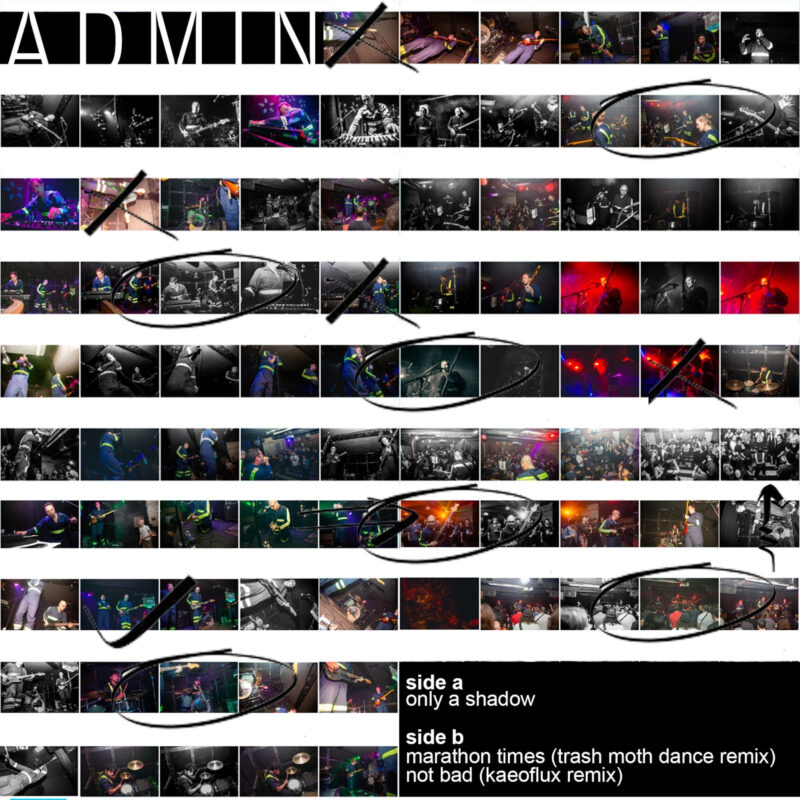
Brooklyn post-punk outfit ADMIN now joins that company with a faithful, dreamier rendition of the song, released October 15, 2026, via PaperCup Music. It accompanies two new versions of their own material: Marathon Times (Trash Moth Remix), reworked by guitarist Amelia Hazen, and Not Bad (KaeoFLUX Remix), courtesy of producer Ryan Casey.
The original appeared on Midnight Cleaners, the Cleaners’ third cassette album, released in December 1982. Formed by Martin Newell and drummer Lol Elliott, the English group pursued homemade pop with the resourcefulness of people who had little patience for the machinery of the record business. Their early recordings circulated through independently distributed tapes, carrying elaborate melodies and eccentric ideas well beyond the rooms in which they were recorded. By Midnight Cleaners, Newell was working largely alone, bringing drum machines and additional synthesizers into his four-track recordings.
Only a Shadow distills that approach into a remarkably immediate song. Its bright, repeating guitar figure, steady beat, and slightly remote vocal give the melody an inviting surface, while the words introduce rejection, nervousness, and the suspicion that every passing resemblance might be something more. The tune has the economy of classic British pop and the unsettled temperament of post-punk, with the modest recording lending the whole encounter a private, faintly uncanny quality. Later covers by MGMT and Small Black, alongside Captured Tracks’ 2012 reissues of the early Cleaners albums, chart its passage from cassette culture into the repertoire of subsequent generations.
ADMIN brings a brighter finish and a little more air to the song, placing greater emphasis on the bassline’s supple groove. Above it, the familiar guitar hook takes on a softer, dreamier resonance, its notes ringing out with an almost weightless ease. There is something of French coldwave’s more romantic sensibility in the treatment, as though Little Nemo had taken the song into their rehearsal room. That added spaciousness gives the melody room to bloom around the rhythm, making the yearning feel a little more exposed. The arrangement remains close to the original, with the affection audible in how carefully ADMIN preserve its proportions.
For the band, the song also marks the beginning of their own musical relationship:
“This collection of singles is really about momentum. We kinda love the idea of just continuing on with different lenses and angles in the wave of the last EP cycle. Our cover of Only A Shadow is also actually the very first song that we all started playing as a full band and in hind sight it kinda represents so much of the creative alchemy we try to encapsulate. We had about 30 extra minutes of time in the studio during the Mirrored Construct sessions, so we just ran it live a couple times and that’s what ended up on the record. We didn’t really reinterpret it either, it’s more of an homage to the original being such an incredible song.”
That same impulse to keep a productive session going extends to the accompanying remixes, which revisit material from Systems, their 2025 debut EP, and this year’s Mirrored Construct. KaeoFLUX takes on Not Bad from the former, bringing an outside producer’s perspective to the band’s catalogue. Marathon Times, meanwhile, receives its overhaul from inside the group, with Hazen working under her Trash Moth name. Frontman Ian Jacobs explains how both versions came together:
“The remixes are also something that came to us through catching a solid wave of momentum. My friend KaeoFLUX (Ryan Casey) who is an incredible producer and also one of the masterminds over at Samples From Mars was able to put together a remix of Not Bad from our first EP and his sonic palette and imagination absolutely nailed it. And then the remix of Marathon Times that Amelia (ADMIN, guitarist) did was absolute magic. She actually played it for us, unknowingly, on our last little tour and I think we were all just blown away with what she created and wanted everyone we know to hear it too. Kind of awesome to find out you have a top notch remix producer in the band.”
Hazen’s Marathon Times remix replaces the original’s measured restraint with more forceful percussion, insistent synthesizers, and a groove that gives its tension somewhere physical to go. The combination suggests New Order’s balance of melody and motion, Boy Harsher’s charged intimacy, and the darker club instincts of Depeche Mode. Its energy comes through a carefully reduced arrangement, with each element contributing to the track’s forward movement. The idea began with a practical adjustment made for the original music video.
“I first had the impulse to make a remix of Marathon Times when we used a 2x sped-up version of the original song to accomplish the music video’s slo-mo effect.” says Hazen. “While that version was kind of manic, it made me think that the original had a lot of untapped energy to offer. Every sound I selected from drums to bass to atmospheric effects had to be something that was able to carry that energy; I applied the practice that less is more, and after building it up across a few concepts, made myself cut out anything that wasn’t serving the song.”
Watch the original video for Marathon Times below:
ADMIN’s mix of angular guitars, layered synthesizers, and driving rhythms has already taken them onto stages with of Montreal, Pure Adult, and ISTA. Alongside Jacobs on vocals, synthesizers, and sampler, and Hazen on guitar and vocals, the group features Arif on bass and Piyal on drums.
Only a Shadow / Marathon Times (Remix) / Not Bad (Remix)is out now via PaperCup Music. Listen below:
 Maybe it’s me, but it seems like way longer than three years since Insomnium dropped Anno 1696 on us. With the odd feeling I’ve gone without new material from these lords of Finnish sadboi doom for so long, and with the impending descent into winter just around the corner, Netherworlds is landing at the perfect time. For their 10th album, Insomnium promised an expanded sonic palette. I’ve heard that many a time from established bands only to end up being served the same soup and nuts as always. So what does Netherworlds actually offer on the morose menu? Well, the classic Insomnium sound and style is intact, but the band pushes their established sound into a few new spaces as promised, and brings along a few dear friends to help them pull it all off. Are you intrigued yet? If not, look at that awesome cover art!