US death doomers Derkéta revealed the death of guitarist Trisha Muszynski, who passed away at the age of 44, five years after being diagnosed with breast cancer. The musician, formerly of Metacide, had joined the lineup in 2013 as a live bassist before taking on the role of permanent guitarist in 2019. Read more…
The decision to release the standalone track put Crahan in a “difficult” position when he was coming up with his vision for the video, as they band have not yet finalised the design of their masks or outfits for the new album cycle.
In the behind the scenes clip, which can be viewed below, Crahan says: “This one was difficult because we definitely wanted to do the band – it feels so right to do the band.
“But it’s too early to make masks and outfits and be sure of that stuff. And I definitely don’t want to regurgitate old stuff because Slipknot doesn’t do that.
“It’s my job to make sure that we don’t repeat ourselves.”
Crahan took the decision not to feature the band in the promo and instead went for a creepy, dream-like vibe that flows around the journey of a character played by actor Jackson White.
Clown adds: “So, this is all supposed to be a little confusing and a little bewildering, because there’s so much more that’s going to be focused in the future.
“I just let the song be the song and I thought I’d let the video be the video and people will connect them when they want to.”
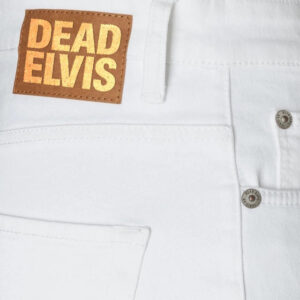
White Jeans Humble Bragger by Dead Elvis comes charging in with a noisy, scrappy rock energy that never takes itself too seriously. Guitars crash into a punchy rhythm section while the vocals bring plenty of attitude, sarcasm and theatrical swagger, giving the track a distinctly unruly personality. Beneath the chaos, there is a strong pop instinct at work, with the arrangement built around hooks that land hard without smoothing away the rough edges. The song takes aim at the kind of loudmouth personality who cannot resist turning every conversation into a performance, and the music matches that character with its own exaggerated sense of fun. Dead Elvis clearly understand the value of keeping things messy, immediate and entertaining, letting the riffs, drums and vocals collide rather than settling into something too tidy. A lively debut with plenty of noise, humour and rock and roll attitude.
This is my 51st article for MetalTalk, and I have been the site’s unofficial stoner/doom writer for the last four years. I am also 62 and still listen to Styx, Supertramp, The Eagles, and other “uncool” bands religiously and without irony. With my East Indian background and my job as a math educator, I like to give off the vibe that I am a clichéd Boomer whose understanding of rock music is passive.
Important to note, while I often watch old videos of these kinds of bands in their prime, I would rather have 17th-century dental procedures performed on me than see any current incarnation of these bands on tour. The energy is synthetic, relying too much on light show/visuals – you are not Pink Floyd – and the fullness of arena/stadium crowds.
The elephant in the room? After a few songs/moments, it is boring. It is safe rock ‘n’ roll marketed as edgy/rebellious. My generation and the previous one gave birth to some of the best music ever created. Now they are subjecting themselves to the death rattle of these bands, just to cling on to any residue of those memories.
A weekend with ‘Bernie’ would be more lively.
So, while I do listen to the sappiest of ’70s rock, my interest in it in a live form in 2026 is minus 273 degrees Celsius. Absolute zero. Forget the profanity. Absolute fucking zero. There is not even a hint of contradiction here. The reason I fell into the stoner rock/doom rabbit hole over 30 years ago was that I was lured by the indestructible energy of rock ‘n’ roll.
It is pretty simple, folks. Go where the energy is, and it is not at a Guns N’ Roses show. This is where you go to lose energy. The energy is in venues and festivals that are showcasing the newest generation of stoner/doom.
Rock ‘n’ roll is measured by energy and not by anything fucking else. Currently, it is being co-opted by many of the same bands that gave it that initial energy. Paging Mr Shakespeare.
Some more context for this article. I have written scholarly books in both ‘heavy’ mathematics and heavy music. However, I would probably bite through my lip if you started throwing the word ‘expert’ around with either of these leisure pursuits/excursions.
Curiosity is inversely proportional to ego. If you devote time to standing around admiring what you have done, you are basically fucked. You are going to create echo and ego chambers of self-absorption vs self-reflection.
Eddie Trunk is the consummate jackass for that title. My 85-year-old mother knows more about 21st-century rock music, and she read my book.
There are tons of people who deserve credit for me being directed to the deepest parts of this scene over the last 30 years. Sure, I am curious as hell, but come on. You need other obsessed folks to reinforce your musical journey and exploration.
I think if I ever had tried to be ‘cool’, to jettison the commercial music of my youth for only focusing on underground stoner/doom, I, ironically, probably would not have found the stuff I did. And I would not enjoy it as much if I did not know that, after listening to something like Italy’s Ufomammut, Breakfast In America could comfort and soothe my pummeled ears.
This is just a modest slice of my musical whiplash that I have imposed on myself for over half my life. These lyrics from the 1994 song Nothing by Son Of Otis, which are reprised over a dozen times with pummeling force, sum it up all too well:
“I live my life different way”
The music I have been discovering for the last four decades is a gift given to me from the universe of personal choices and personal connections. One of those choices is that I could not give a fuck what people think of the music I listen to and/or write about.
So, let me ‘pay it forward’ with 50 of what have been the most important albums from this scene that were released after 1999. A collection that not only illuminates my underground journey, but also comments on the musical, chronological, and geographic diversity of our beloved community.
The best part of this list is that it could have easily expanded to 250, and so many others could have created different lists. Our community is expanding at a velocity that I simply cannot keep up with anymore. Luckily there are tons of Debbie Lees in our community who can. But what I can offer, which I believe not too many people can, is a look back at a treasured past that many people missed and need to discover/rediscover.
But to start, we only need to go back a few months.
50. MOTHERTOMB – DYING TO LIVE (2026)
I knew a recent album was going to be slotted here. But this album is so emotionally piercing that I had to review it for my 50th article. The band is symbolic of the birth of new talent and the quality of debut albums in this scene. Capturing the emotional and infinite magnitude of the life-death cycle in forty minutes on your first album is magically unique.
49. KIND – CLOSE ENCOUNTERS OF THE THIRD KIND (2024)
An album that integrates ’90s angst, gritty hooks, and some timely revving of the muscle car engine for some welcomed desert acceleration. So many moments of all these elements coming together to create one masterpiece album.
48. ATP – FULTON HILL (2004)
The creative peak of this band that expanded its sound into some psych terrain without losing any of the Southern sludge that made the band such a favourite in the early days of the scene. The final song, Struggling For Balance, is the South’s response to Zeppelin’s Kashmir.
47. CLEEN – EXCURSIONS (2024)
One of the most cohesive debut albums in the scene in terms of narrative/song structure. The whole album feels whole and connected right from the get-go. Pushes musical boundaries with timely insertions of melody/groove that could be lifted off an ’80s dance floor. That said, the riff in Sultane Of Sand is gigantic, gritty, and gnarly.
46. DIXIE WITCH – INTO THE SUN (2003)
A gold standard for introducing Southern attitude into the stoner scene. Trinidad’s vocals soar throughout, and the urgency to their delivery never dissipates. It was one of the gold standards for Southern stoner back in the day.
45. FIVE HORSE JOHNSON – FAT BLACK PUSSYCAT (2000)
One of the early bands that emphasised heavy blues but still grooved with stoned-out bliss. The song Sermons In The Yard is a bloody banger, with the harmonica action making you want to drink moonshine until you go blind.
44. BLUE HERON – EMULATIONS (2025)
Opens with a cover of Fudge Tunnel’s Grey and never looks back in forging thick slabs of sound with well-timed moments of melody, screams, and smears of blues/psych. Think Clutch driving a bulldozer through the desert at night.
43. PSYCHLONA – PAOLO VERDE (2022)
This album drips deep into the mind with its trippy vocals and the well-crafted ebb and flow of the songs. It’s heavy psychedelia, strutting guitars, and confident songwriting. An easy access point for music fans not familiar with this genre.
42. SOLACE – 13 (2003)
A band that was rightfully mythologised for their live shows. Nobody would dare take the stage after them. This album is a glorious mess of stoner, doom, punk, and trippy guitars. Their cover of Forever My Queen has been the gold standard ever since.
41. LAMONT – THUNDER BOOGIE (2002)
Unpretentious and trashy as fuck. If you aren’t breaking shit up by the time One White Line is finished, your music tastes are not as unsanitary as you would like to believe.
40. KAL-EL – DARK MAJESTY (2021)
Few albums and their opening songs have lifted me off the ground like this Norway quintet. The one-two punch of Temple and Spiral are the booster rockets to lift the doom-psych heaviness into the heavens and beyond. While all their albums have this magic, this album, released during the pandemic, hit a deep nerve of adoration.
39. VOLUME – JOY OF NAVIGATION (2024)
Rightfully rereleased for a generation that might have missed this critical album. It just oozes the core fuzz, garage, and psych that so much of the scene has been built upon. It simply does not get more honest in getting to the core history of this music.
38. HIGH DESERT QUEEN – PALM READER (2024)
If Soundgarden would have veered into more stoner/desert territory around 1994, you would have birthed this album. The comparison is not lightly made. This includes the GOAT vocals of Chris Cornell. The whole band moves in sync in pushing this gritty narrative of ’90s alt giants driving through the “high desert”. As good as this album is, live is where this description blasts off.
37. SHADOW OF JUPITER – BONES (2025)
It only took their sophomore release to concoct a magical cocktail of blues, psych, and melodic doom that had this album an early candidate for AOTY. The myriad of influences are both subtle and in your face, swinging wildly between the decades from which they are passionately mined.
36. SPACESLUG – LEMANIS (2020)
If you want to feel like you are boarding the final spaceship that is leaving a doomed planet and need a soundtrack for the celestial departure of no return, this album is it. Heavy and moody is the vivid soundscape that is carved here.
56. NASHVILLE PUSSY – UP THE DOSAGE (2014)
Truthfully, I could have easily inserted any of my three favourite albums from this band whose notorious vice-filled rock ‘n’ roll of Bon Scott-era AC/DC with the stench of booze and sweat has left a permanent imprint on 21st-century rock ‘n’ roll. But I went with this one only for one of the most truthful songs about.
34. BABY WOODROSE – CHASING RAINBOWS (2007)
This Danish band permanently camped out in the sounds of the late ’60s garage and psych right from their first release. It’s permanently the Summer of Love 1967 with a slight pop/punk delivery.
33. ELECTRIC CITIZEN – SATEEN (2014)
Female vocals in this scene have always gotten my attention, as I am attracted to that energy which is trying to add wild feminine spirit to stoner riffs and grooves. This album just oozes attitude, charisma, and charm for ’70s hangouts in basements and parking lots.
32. LOW ORBIT – CRATER CREATOR (2024)
Crushing space rock that balances psychedelic nods with heavy riffs. The perfect album to play for meteors crashing on distant planets. The album cover speaks the truth. New album crashing later this year!
31. SASQUATCH – FEVER FANTASY (2022)
Honestly, get a die and roll it. Whatever number shows up from 1 to 6 is a Sasquatch album that is guaranteed to be filled with ass-kickin’ rock ‘n’ roll, fusing Soundgarden hooks with plenty of desert inspiration. Their live shows are legendary.
30. KADAVAR – ABRA KADAVAR (2013)
This album is deliriously filthy, like it was dragged through the detritus of historic music festivals of the late ’60s and early ’70s. The riffs and attitude feel like they are the product of such residue. You just want to listen to this album in The Black Forest with these Berlin dudes. Mushrooms are optional.
29. VILLAGERS OF IOANNINA CITY – AGE OF AQUARIUS (2019)
Greece, one of the oldest civilisations, has been throwing their hat in the rock ‘n’ roll ring since the early/late ’60s with bands like Socrates Drank The Conium. Yes, I feel bad for leaving 1000mods off this list. This album not only cements the contribution of this Mediterranean country in the scene, but the Pink Floydesque moments with traditional Greek instruments/arrangements make the album feel ancient and wise. Age of Aquarius is also my soon-to-be-added 13th chapter to my book Sonic Seducer.
28. SOLARIZED – NEANDERTHAL HIGHWAY (1999)
One of the bands that made me set the starting date for this article to 1999. The impression when I first heard this album in 1999, courtesy of Man’s Ruin, was like my brain getting hit with a heavy narcotic. The dirty and funky grooves that run amok on this album sounded like the gates of heaven to my ears back then and still do.
26. MILLIGRAM – THIS IS CLASS WAR (2002)
We are getting into that part of the list that if you do not hail these albums, your ‘membership’ to the stoner/doom scene will be revoked. Okay. Many of you might not have heard of this Boston underground band, but go listen to this album. This is the music of bar brawls and alleyway fights. Punk as fuck, but there is plenty of desert sand in those clenched fists.
25. SAMSARA BLUES EXPERIMENT – LONG DISTANCE TRIP (2010)
Another German treasure that sadly disbanded in 2020. But the legacy they left behind is one that cannot be denied by any serious fan of the music. The blues infusion was deep, and it merged with the psychedelic trips as a co-pilot, not a passenger. This album hits you to the bone.
24. JOSIAH – NO TIME (2007)
Unbelievable authenticity for the hazy riffs and melodies of the ’70s. Grand Funk Railroad, Uriah Heep, and Black Sabbath influence aplenty here. But the way this UK band forged them into their own sound is why their music is elevated in the scene for me.
23. 500 FT. OF PIPE – DOPE DEAL (2001)
If Fu Manchu revved up their ’90s catalogue to some serious RPMs with heavy Blue Cheer nods, you would have this Detroit outfit. This album throttles up from the start. There is no gearing down. Prepared to get blown away.
22. WO FAT – THE BLACK CODE (2012)
Wo Fat deals from the same deck of uncanny consistency as Sasquatch. And so, picking which one of their seven studio albums to insert here was not easy. But I went with this one. It just commands this majesty with its uncompromising fusion of psych and Southern badass.
21. YURI GAGARIN – YURI GAGARIN (2013)
Yuri Gagarin was the first astronaut in space. And as such, it makes sense that this instrumental band from Sweden has always been the go-to in this genre for all things spacey and transcending. Put on headphones, and, as the liner notes in Welcome To Sky Valley command, listen without distraction. As spiritual and heavy it can get, folks.
Imagine Bon Scott vocals fronting a punk Lynyrd Skynyrd, whose only mission is to play bars, drink dangerously, and fight like they are fans of the Millwall soccer club from the ’80s. This was the only album they put out. Frankly, they probably had no more energy to do any more.
19. THE GLASSPACK – POWDERKEG (2002)
A runaway freight train of Stooges cool and Southern charm. Was fortunate to have seen them way back in the day. Explosive is the best way to describe them and, of course, this album.
18. NATAS – CIUDAD DE BRAHMAN (1999)
Just as vital as Kyuss in expanding on the desert sound with their South American flair. Heavily underrated and perhaps even forgotten, given their masterclass discography. This is as good a place as any to fully dive into the band.
17. BLUES PILLS – BLUES PILLS (2014)
One of the best debut albums from this century. Coming out party for the band and their Swedish lead singer and its heart and soul, Erin Larsson. The guitar work on this album is, quite frankly, astonishing, especially considering Dorrian Sorriaux was only 16 at the time. I debated between writing about this and their stellar, more pop-driven 2024’s Birthday.
16. RUBY THE HATCHET – FEAR IS A CRUEL MASTER (2022)
Jillian Taylor is a force of nature. Stevie Nicks-like vocals with early Vince Neil stage physicality. However, there is an incredible group of players who can create a sound that is both retro and modern. Drummer Owen Stewart released his own debut album that incorporates some of the ’70s vibe, groove, and aura that haunts some of the songs on this album.
15. KING BUFFALO – ACHERON (2021)
One of those rare bands in the scene in which they sound like nobody else. Sure, it is easy to mine for the psych and trippy influences, but the band, as subtly intimated, is bigger than the sum of their parts. I like to think of it as music for the deepest parts of when you are sleeping, dreamy, heavy, and seductive. You almost could start anywhere, but I would start here.
14. NEBULA – ATOMIC RITUAL (2003)
On 27 May 2004, my 40th birthday, I left for Youngstown, Ohio, to go to my first multi-day festival in the wonderful dive bar Nyabinghi. One of the CDs I played, about an hour from my final destination, was this one. When the second song So It Goes came on, it was one of my favourite music moments in life while driving. Considering my life changed forever that weekend, it made sense my road trip music was just as overwhelming and spiritually awakening.
13. FU MANCHU – CALIFORNIA CROSSING (2004)
No surprise that the band that helped birth Nebula in the late ’90s is on this list. Gone was some of the heavy fuzz, but in its place was some refreshing melody and hooks. The signature Fu sound was still there, but there was this bounce and accessibility that gave this album lasting endearment for me.
12. WINDHAND – ETERNAL RETURN (2019)
I went back and forth between a few albums from this band of romantic doom. In the end, I had to go with this one. It simply is beautiful, breathtaking, and brutal all at the same time. Dorthia Cottrell is the vocal siren that leads the journey through this heavy and enchanting landscape.
11. BLACK RAINBOWS – HAWKDOPE (2015)
The Italian giants who eventually started their own label (Heavy Psych) literally make music that succinctly describes their music. But if you want to get more wordy, and I do, this album showcases that the psychedelia can be heavy with guitars blasting or not. Every song feels like it is part of a whole transcending experience of mind, body, and soul. Easily one of the most important bands on the planet right now.
10. MONSTER MAGNET – MINDFUCKER (2024)
For me, the most important band ever in this whole scene. Nobody in the history of music has ever penned lyrics like Dave Wyndorf. And he can talk about a year like 1973 with vivid detail because he went to shows like Sabbath, Bowie, and Roxy Music. This album has teeth and more fuck you garage/punk than bands many years younger. Monster Magnet will forever remain ahead of their time.
9. 7ZUMA7 – DEEP INSIDE (1999)
Superfan and one of the matriarchs of the scene, Debbie Lee, wrote a great review of this album recently for her first blog for Ripple Music, which rereleased this vinyl in 2026. I still have my Man’s Ruins CD, albeit heavily scratched from repeated play. Few bands have made as exciting and lasting music as this Dutch band. They hit gold when they fused glitter, glam, and grit to make their unique sound. Only band in this scene to take on a disco cover, Donna Summer’s Hot Stuff. All their live performances were like T. Rex on steroids.
8. MONOLORD – NO COMFORT (2019)
This Swedish outfit has become one of the best bands in the scene. Slowly bleeding out more melody and well-crafted vocals with each album. But this album, ever since I heard it, seeped deep into my soul. The lyrics, the atmosphere, and the heaviness just tattooed my listening experience. The guitar outro in Last Leaf is one of the best of all time. I have shed a tear or two with just that. Emotionally crushing and restorative at the same time.
7. COLOUR HAZE – COLOUR HAZE (2004)
I want to think they are The Beatles of our scene. Supremely talented and influential. When the first time I heard Mountain from this album, I kid you not, but I wanted to cry when the song’s heavy riff comes back at the end. The whole album is a classic testimonial and calling card for what the best of the stoner/doom scene can and will always offer.
6. UFOMAMMUT – IDOLUM (2008)
You do not listen to this Italian trio. You feel them. Your skin, bones, and nerves are all affected by this often punishing doom. The experience is like hot yoga for your musical soul. You are exhausted, but you know you are healthier for the experience.
5. LOWRIDER – REFRACTIONS (2020)
Twenty years after their first release, they only managed to release a second album that dominated so many people’s AOTY. One of the great stories in the scene, and the album, Ode To Ganymede made me weep inside for its keyboard parts, instantly conjuring up all things Jon Lord and Deep Purple.
4. DOZER – THROUGH THE EYES OF HEATHENS (2006)
I could have slotted few other Dozer albums here. That is how consistently stellar these Swedish lads have been since the late ’90s. But I chose this one because ‘older’ bands might not have as much energy and creativity left in the musical tank. The mileage often catches up. Not Dozer. This album shows a band still peaking and demonstrating with no uncertainty that the Dozer sound will always be relevant and transcending.
3. DOMKRAFT – SONIC MOONS (2023)
No band causes a warm numbing sensation of the body, mind, and soul with their hypnotic and transcending doom like this trio from Sweden. There is just this alchemy of guitar, bass, and vocals that creates a tsunami of sound that both overwhelms and soothes. This album is the band at their peak, flush with songs that rip you apart physically and emotionally. By the end, your soul has been awakened to a level of heaviness that is nothing short of spiritual.
2. THROTTLEROD – EASTBOUND AND DOWN (2000)
In my opinion, one of the greatest debut albums in rock music. Sounds and feels like a runaway train of Southern badass and Motörhead attitude that is only stopping for stolen liquor and bar brawls. This album will eternally offer ‘Hold My Beer’ for those that profess to rock out with their balls out. Simply the gold standard for unvarnished, unapologetic and unrelenting rock ‘n’ roll this century.
1. HIGH ON FIRE – SURROUNDED BY THIEVES (2002)
A piece of art that transcends its genre. It meanders with menacing energy of battles that only Tolkien could imagine. You simply cannot enter this scene without listening to open wounds and scars of this War Metal album. Every song feels like a battle cry from Middle Earth. It will remain timeless for its raw brutality and rite of passage for all those who enter and have entered this underground scene.
Sydney-based duo Resonator is built on years of deep friendship and an unwavering drive to make music that truly connects. After exploring various musical paths, the duo has locked into a unified creative vision that directly reflects their lived experiences, their sharp perspective on the music industry, and the emotional truths driving their sound. Everything they touch is anchored by a commitment to absolute honesty—stripping away corporate fluff, breaking free from industry noise, and letting raw, unfiltered songwriting speak for itself.
Their new song Back Again features lots different dynamics. A uptempo verse with calm but punchy vocals (great sound), a super catchy chorus (it will get stuck in your head) and a very intense finale with some guitar solo as well. I love this one. Give it a go by clicking on the Spotify player below and follow Resonator if you like what you hear.
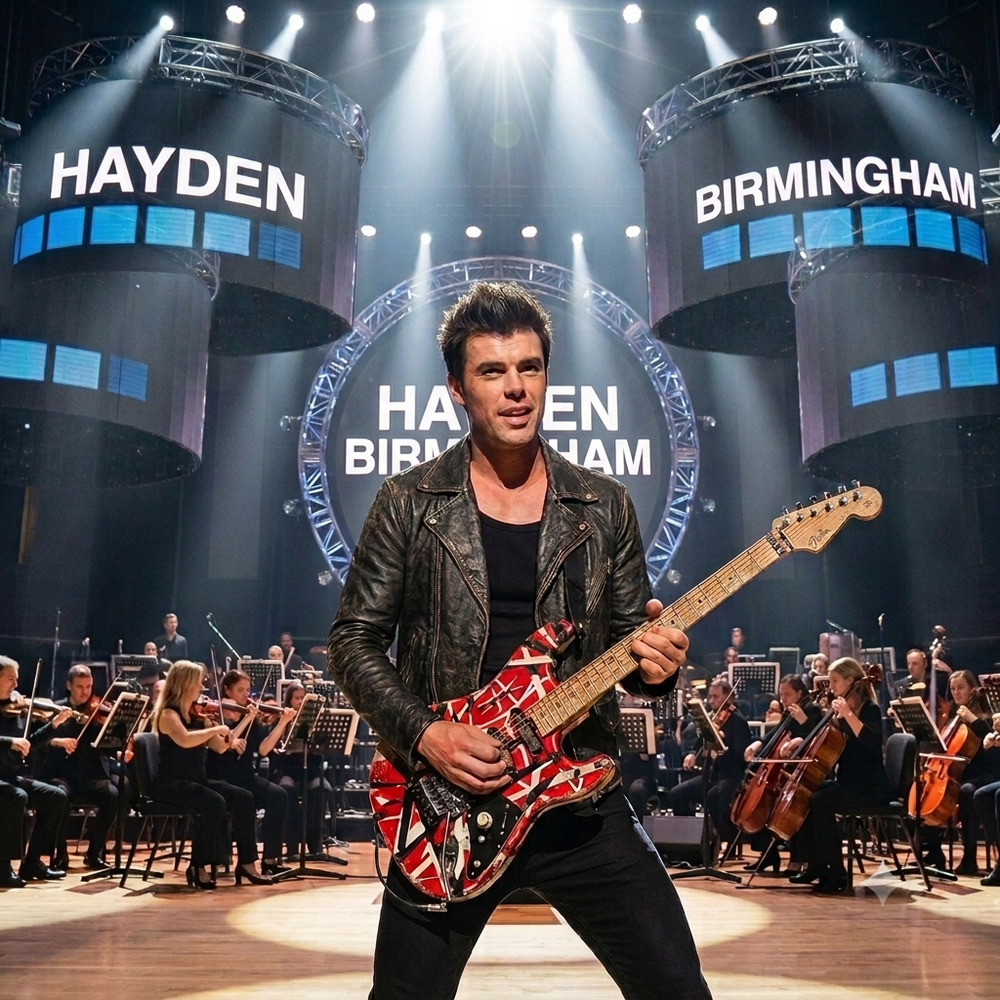
Australian instrumental guitarist Hayden Birmingham delivers an unapologetic storm of blues-metal swagger, high-octane hard rock, and technical shredding. Fusing blistering lead work and intricate solos with heavy, riff-driven grooves, Birmingham’s sound channels classic rock heavyweights with sheer guitar virtuosity and satirical glory.
After releasing a couple of singles like “Getcha Pull” and “A Day Late, And A Dollar Short”it’s time now for his debut album. Rude Mood comprises of 12 songs for 36 minutes of music.
The album opens with a relaxed, Western feel on “If I didn’t have Bad Luck, I had no luck at all,” setting up a great entry point for the two energetic and punchy singles that follow, which recall Ritchie Sambora in both mood and guitar style. “Spilt Milk Under The Bridge” brings Joe Satriani to mind and will instantly get your foot tapping, while “Chilli Bomb” delivers a similar vibe paired with very cool basslines and riffs reminiscent of Use Your Illusion-era Slash. Bringing a distinct change of mood, “Miura & Manolete” introduces stunning Spanish-inspired guitar work.
Among the other standout tracks, “Act in Haste, Repent at Leisure” features incredible solos, “Angry Mama” hits with a bluesy groove, “Barracudalou” shines through its tight rhythm section, and the atmospheric “Lullabies for A Broken Fretboard” closes the record in much the same mood as it began.
Overall, Rude Mood is a eclectic album with a top-tier performance and an amazing production quality as well. Every song has something genuine to say while staying straight to the point, a rare and welcome quality in an instrumental record.
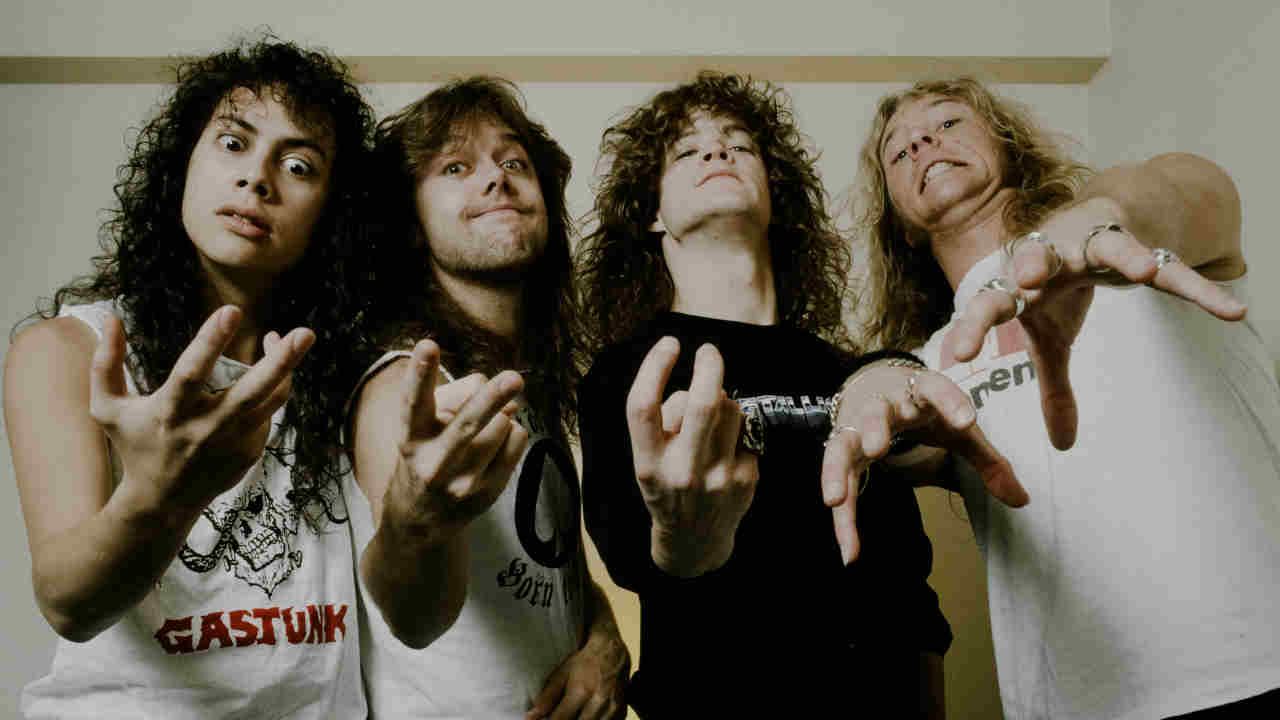
Given that he generally avoids the spotlight, there’s an awful lot of love and respect for Jason Newsted. He was the young, bass-playing hopeful from Flotsam And Jetsam who found himself in the enviable yet daunting position of filling the shoes of Cliff Burton, Metallica’s legendary bassist, who passed away in 1986. With such a weight of responsibility upon him, it says much about Jason that he went on to become such an integral and beloved part of the Metallica family, helping to turn them into the biggest metal band of all time.
Yet Jason’s boundless energy and commitment to the band took a physical toll, leading him to quit Metallica in 2001 (he admits now that was partly due to a dependency on painkillers, which he finally kicked in 2010). Since then he has led a nomadic existence, playing with everyone from Ozzy Osbourne to Voivod and fronting his own solo project, Newsted, as well as starting an art career that’s been remarkably successful.
And he’s stepped away from the public glare to work at his own Chophouse studio with a revolving door of musicians. But whatever he does or chooses not to do in the future, Jason Newsted’s status as an icon is cemented. In 2022, he sat down with Metal Hammer to for an extensive look back over his career.
How did you first get into bass – was it your first choice of instrument?
I got my first guitar when I was nine. I never really figured out the chords, the tuning, but I sat in my room and I wrote songs, even back then. My mom still has some of that stuff stored away somewhere! Imagine that. As far as working out the bass parts… 12 years old, junior high school, ensemble band, I was playing saxophone.
A guy named Andrew Buckley brought [Kiss album] Dressed To Kill into the band room, and just looking at that front cover, Paul Stanley on tip toes and Gene Simmons in his clogs, that’s when everything fucking changed. I took it home and played it over and over as many times as I could before I had to return it.
I wanted to be Gene Simmons, obviously, he’s the biggest character, he’s the superhero, he’s the most attractive thing to a 12-year-old kid, right? So, I go to my little Sears Catalogue classical guitar, and it’s got three pegs on either side of the neck.
I manage to take the middle pegs off from the neck and I get three strings at the top and one down the middle, and I just tune up to sound like the bass on Kiss and go from there. That guitar still sits in my father’s house. I still go in there and play Am I Evil? on it!
Tell us about your time in Flotsam And Jetsam
“I ended up in Phoenix [with my band at the time], got myself into two different jobs, daytime and evening. February 1982, there is an ad on the wall of this place in Phoenix from Kelly Smith talking about Rush and Iron Maiden, and looking for a bass player.
I borrowed someone’s car and put my bass rig in the back, drove the 15-20 miles up the road and set up in Kelly’s dad’s office, rocked out for a little bit. We messed around, got some other guys in and changed names and stuff, and after a year of pissing about we decided to form Dogz. Flotsam rose up from all of that.
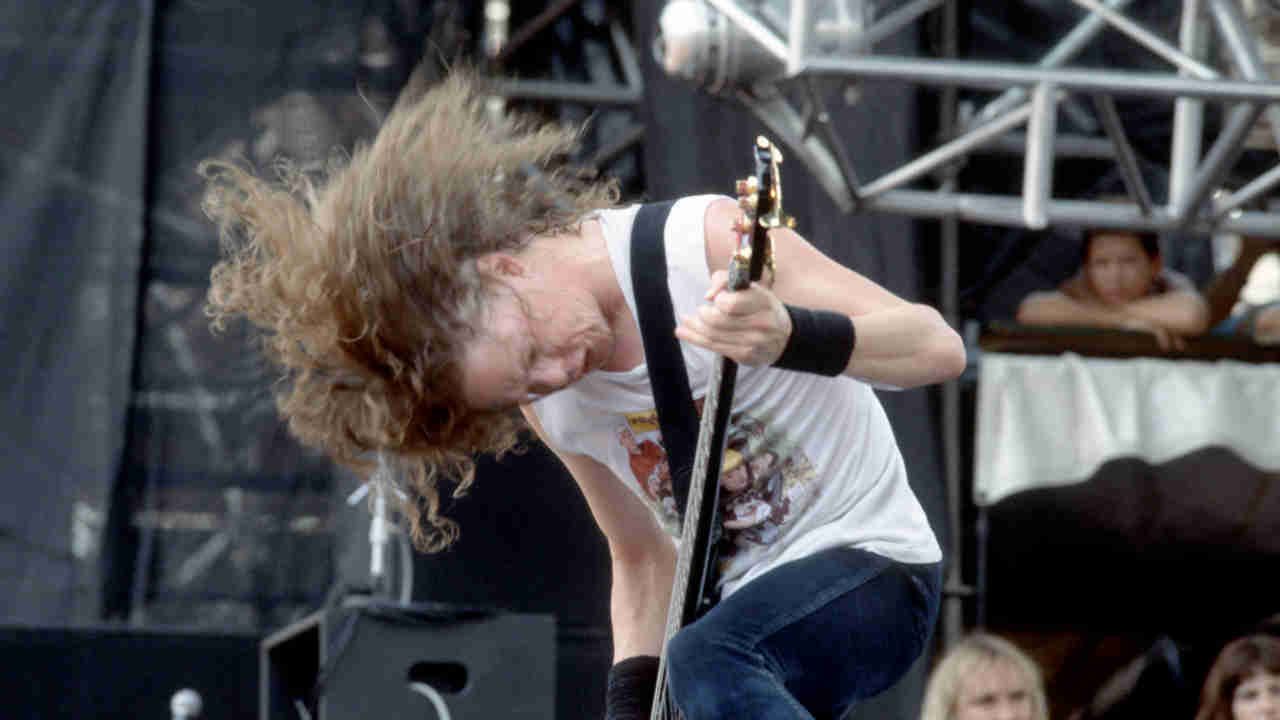
Jason Newsted in 1989 (Image credit: Paul Read/Getty Images)
How do you look back on the first Flotsam And Jetsam album, 1986’s Doomsday For The Deceiver?
“Pridefully and respectfully. I just wish we’d have paid a little more attention to getting the intonation on them Flying Vs… haha! The fucking Arizona weather, you go outside and it’s 40 degrees hotter, and you’re going ‘Clunk-clonk.’ But we made our mark.
“We were setting ourselves up for speed metal, thrash metal, whatever you want to call it – all of our influences were the same. That’s how it came from the desert. Anthrax, that’s how it came from New York; COC, that’s how it came from there [North Carolina]; Texas, Watchtower. For us it was Motörhead, Iron Maiden… those were the ones that made up our shit. So when you wake up and it’s 110 degrees in the morning, you might go a little faster, you get a little sweatier! You figure it out.”
How were you feeling going in to audition for Metallica?
“Honoured to begin with – they were heroes and quite a bit above us at the time. So just to be amongst them was very special to begin with, but because of how I was raised, I was prepared for every goddamn thing. That’s how we did it in Flotsam, and so I went in totally prepared and confident. I got a 6.30am flight from Phoenix, they let me up in this complex and the fog is rolling over and the sun is coming up and I’m like, ‘Holy shit, I’m in San Francisco!’
“Few hours go by and I’m just there, practise, practise, practise the whole time, got my sandwiches with me. The guys finally show up about 10 and I’ve been there since 7.30. A guy comes up to me and says that I’m going to be in there last, and asks if I want a bottle of water. I’m like, ‘A bottle of water? Wow! These guys have got some money!’ I lived in Arizona, three dollars an hour, if you can get water, you get water, doesn’t matter where from. So bottled water? Fuck, we’re living, man! I finally, at the end of the day, go in, and James has had, I don’t know, between 10 and 16 beers.
“They’re still fucking self-medicating, grief-stricken [after Cliff’s death], running from this process that they know they have to be forced into. So already the ground is shaky, I’ve been awake for two days because I’ve been thinking about this moment. I’ve written the set that they played with Ozzy in Tuscon, I hand it to James and go, ‘Name one [song for me to play].
“He names one and we play it, play another and another, bam bam bam! We go outside and grab a drink and something to eat and they’re asking me questions about my experience: how long had I been playing, how many gigs had I done, how long had I been in Flotsam… their managers were already booking things in, making plans, and you have to have that schedule free.
“I told them that it wouldn’t affect me and that any time they needed me, I’d be there. I flew home that night and Lars called me the next day and told me to come back and learn these [new] songs, so I went back about 30 hours later.”
Metallica in 1986, just after Jason Newsted (second right) joined the band (Image credit: Koh Hasebe/Shinko Music/Getty Images)
Cliff’s parents were there when you found out you got the job, right?
“That evening, it was the third day that I played with the boys, I think I stayed overnight in San Francisco for the first time, and you gotta remember that I had lived in a tin shed with no toilet and no bathroom in Arizona and now I’m staying at the Miyako Hotel.
“That third night, they had the ‘elders’ come in for their blessing. So, Torben Ulrich, The Burtons, a couple of the crew guys, people that had been there from the get-go, I’m not sure if there was a couple of the other families there. We got through about six tunes: Master…, Fade To Black, …Bell Tolls, the masterpieces! So I am just composing myself for a second, putting my bass down, turning off Cliff’s amp – I’m playing fucking Cliff’s amp, dude! Jan [Burton] comes walking in the room by herself, and she grabs me and gets my attention.
“She says, ‘Great job, son’, and I’m like ‘Oh, fuck!’ She embraced me and it seemed like it was quite a while, and she said, ‘You’re the one, you must be the one. Please be safe, we love you’ and she gave me a kiss. That was 35 years ago and I’ll never, ever forget it.”
What was it like stepping onstage as a member of Metallica for the very first time?
“I was nervously excited, anxious mostly. I did not have any lack of confidence in myself – I knew that I knew the songs, and I knew that I had the energy, which was required a lot back in those days to play in Metallica. It was very physical and very athletic, and I had that. But one thing I do remember – I’m not sure if I’ve ever told this story – I used to have these two pinky rings, custom-made skull things. One had a diamond in the eye and one had a ruby in the eye.
“I only kept one on, because you can’t play [with two] – I even have to wear my wedding ring around my neck because I can’t be smacking my strings with it. So, we’re on the way down and I couldn’t get the ring off. My girlfriend at the time was going down with me and she’s trying, and I’ve got one of our stage-hand guys who is showing me to the stage and he’s helping, but we can’t get that fucking ring off! I’m ripping, dude, because I’m all jacked up and I’ve been playing so much that my hands are swollen and the ring is just fucking with me! I gotta get this off, dude!
“I finally just rip it off and all this flesh comes with it – crunch. So that first time going on stage with Metallica, [I was] nervous enough already, but that ring added a little something else.”
How did you feel hearing the first mix of …And Justice For All? And how do you feel about the …And Justice For Jason remixes of the album people have been doing in the last few years?
“I love people’s enthusiasm, their determination, their love and their appreciation. If the Justice album had been mixed like a regular record, we wouldn’t be talking about it to this day. But because that isn’t the case – and I don’t necessarily think that’s that big a deal – we’re still talking about it all these years later.
“I don’t even think they realised, in their drunken stupor, what they were doing, but they made the best garage band album ever. Black Keys, White Stripes, whatever power duo, garage rock stuff you wanna mention, James and Lars were the original garage rock duo, as far as that goes. They always made the records that way, from [1983 demo cassette] No Life ’Til Leather, it was Lars and James, guitar and drums. On the original cassette, in Lars’ handwriting, in ink pen, on the label [it reads] ‘Turn bass down on stereo.’ On No Life ’Til Leather! It’s just been that way their entire lives. They made Kill ’Em All that way, Ride… that way, Master Of Puppets that way… all those two guys in a room, over and over, and you’re gonna argue with the most successful of all time…?
“Back then, I was fucking livid, are you kidding me? I was ready for throats, man. Because I thought I did a good job. But, up until it got to Metallica, I had only ever played one take on the bass. In Flotsam I wrote the song on bass and the guitar player covered the part I wrote. I never knew any other way, until I met Bob Rock, and then I could see how he made the bass its own thing. I didn’t know what the bass player did until about 15 years ago!”
Did you feel like you had an ally in Bob Rock when you were recording the Black Album?
“I don’t think I ever earned his respect like he had for James and Lars – because of what they had achieved, and they were writing the cheques – but I think he was firing on all cylinders.
“I wanted to get his respect, to show him I knew what I was doing. I brought in a tenth of my bass collection, ‘Hey, let’s try this one or this one,’ sort of showing off a little, because you get told that this is the way to be a proper musician, where actually it’s the opposite. He knew that one bass was malleable and we could get every sound out of it. I started messing with multi-string; he supported me in the way of tough love. He already had five or six kids, and none of us had any kids at that point; he was just adding to his brood. We were just kids, man!”
Metallica’s Jason Newsted onstage with Metallica in 1988 (Image credit: Michael Ochs Archives/Getty Images)
Did any of you guys realise you were sitting on something special back then, when the record was being made?
“I’m going to go back to Sad But True, because that’s my highlight of the whole project, because of the weight. I struggled with Nothing Else Matters; I knew it made the hairs on the back of my neck stand up – it was undeniable – but I was kinda scared of it, to be honest, because I still wanted ‘CRUNCH!’
Sandman I thought was kinda corny, honestly. The beautiful thing was that we all sat in the room together and played it out; 70 takes of Nothing Else Matters. After a while, you’re too close to it. ‘How much more delicate can I make it?’
“It’s crazy I’ve just realised this: our softest song ever took down the biggest walls to allow our hardest songs ever to penetrate the world. When it was No. 1 in 35 countries in one week, and seven of those countries we hadn’t even been to yet? Dude, that doesn’t happen to a band who go ‘Die! Die!’ most of the time.”
Let’s talk about the Load period. How aware were you of the controversy surrounding you cutting your hair?
“People are so finickity. I very honestly never gave it one thought. I cut my hair in 1992, they didn’t do it till 1996. You know what else is really funny? We start getting to go to more and more countries, and as the borders get a little squirlier, those guys all still have their shaggy [hair]. My hair was nice, sometimes slick… like a cop! And I just cruise right though customs, and those fuckers are looking left and right, James is getting pulled – Lars would get pulled a lot. I walk on through and see my buddy and he’s got my spliff, and I’m like ‘click’ and away we go.
“So after a while they see this and, I dunno, I started dating models and Playboy girls, and they’re going, ‘What the fuck?!’ So you see the hair going back and back!”
You had the reputation as being the most metal one in the band at that time as well…
“My record collection was built in those years and it’s fucking beautiful, man. And one by one I would invite those musicians up to play with me. Once I built the Chophouse in 1992, it opened me up so much to so many musicians. I would have jam sessions with the guys in Machine Head and Exodus. Sometimes we’d jump away from metal and into other styles, to see if we could play those styles with the same ‘crank’ as we used in metal. The Sepultura guys became really good friends and they would come down.
“I was just still so hungry to learn about all different styles of music, people who invent their own instruments and sing in different languages, and if I pour as much of this good stuff in, then what’s it gonna pull out of me? I still have that to this day. It was important to me to keep the metal in Metallica.”
Tell us about the IR8 stuff with Devin Townsend. That’s where the problems with Metallica started, right?
“This was the very origins. I had just established the Chophouse in ’92, and by ’94 we had all the gear. Devin came down at the age of about 22 and was an absolute fucking maniac… dude, an hour-and-a-half of sleep a day for a whole week! And every time he would pick up a guitar you get, ‘Widdle widdle widdle,’ and you’re like, ‘Dude, where in the hell did that come from?! Now play it backwards!’ It was the first real project we took time to track in the Chophouse. It’s just drums and bass, Devin doing some mad guitar solo over the top, I go in and scream the vocal – done. Raw production, but an incredible accomplishment, because I always wanted my own studio.
“The guys got wind of it and Lars said, ‘You gotta come up to the house.’ I didn’t really know what it was for, so I take my bass and go up there: ‘What’s up, guys?’ ‘Dude, you know you’re in Metallica now, don’t you? You can’t just be making music and sending out tapes to whatever fucker with whichever fucker. You do understand that, right?’ ‘Oh!’ I didn’t realise at all! I didn’t know about the politics; I was just sharing some metal with my friends! I pretty much broke down on that day in front of Lars and James. I was like, ‘I’m sorry, it won’t happen again!’ And that was the first time.”
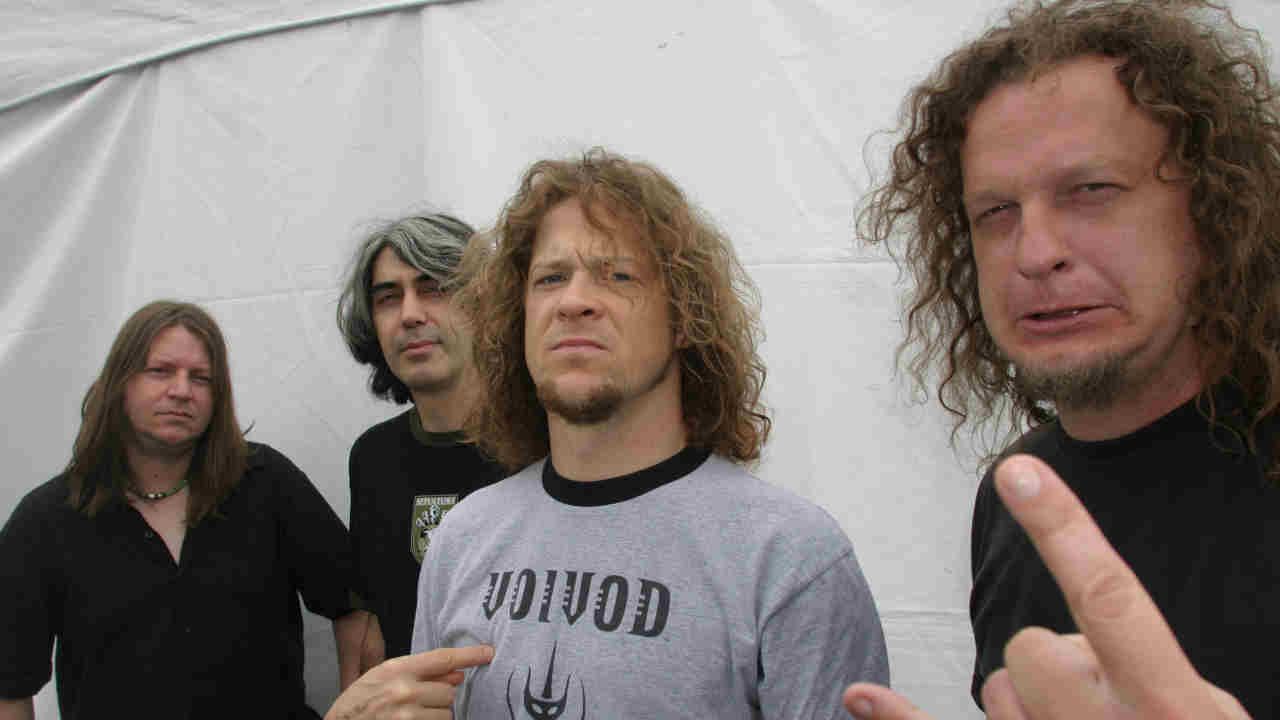
Jason Newsted with Voivod in 2003 (Image credit: Bill Tompkins/Getty Images)
You admitted to us that you didn’t feel satisfied by being in Metallica at that time. Do you remember that quote?
“I’m proud of myself! That’s perfect! Absolutely, that is what is still real for me, and I think it was throughout the 90s. After the Black Album tour we had some money, but it was a totally different direction for me. I liked playing the songs and I could raise myself up for the people to play the songs for them. But Enter Sandman for the 1,000th time… it kinda wears on you.
“I wanted to be that person who I knew myself to be on and offstage with Metallica. When they saw me, they knew they were getting everything, every fucking ounce of sweat left on that stage. The reason they were getting that, and the way I was able to do that, was because of the wacky music that I was playing offstage with my friends.”
Do you feel that Echobrain was overshadowed by you leaving Metallica around that time?
“Certainly, there was already a bunch of cards stacked against it because of that negativity. It was just the project that I had happened to take most seriously; it was never meant to be that I left a big band for that project. So it was a bummer that all of that was on them.
“I wish I could have taken it further, but it was not the catalyst that sent me away from Metallica. The thing that set me away from Metallica is what I call ‘the perpetual dis’. No matter how hard I worked, there was still disrespect. Not the hazing that I got from the first six months of my career, but the general disrespect that I got, dismissiveness. The dis and dis, I call it.
“It stemmed from, as a collective and as individuals, [the fact] they had never managed to deal with their grief from Cliff when he died. This kind of shit, it manifests itself in young men’s minds, young millionaires’ minds. Spoilt, spoilt, spoilt millionaires’ minds, and I include myself in that… it would be hard to get your head around that. So it was much more a personal thing. I needed to rest; they refused to give me the time to rest; I had to leave to get that rest.”
Ozzy compared you to Geezer, when you played with him in 2003…
“Hard to fathom as well. I liked Red Bull a lot when I came in, so I was bouncing off the walls. I was 40 when I started playing with Ozzy, but he thought I was 26! His comment was, ‘You remind me of a young Geezer!’ and Black Sabbath had already recorded all of their albums by the time Geezer was 40! But, he was like, ‘Whoa! Who is that kid?’ I think that’s kinda why he said it. When I was trying to learn, he was one of the earliest influences on me. So, whenever I create bass parts, it’s always going to have a little bit of Geezer in it.”
Did you start getting into creating art when you first had your shoulder injury?
“Yeah, my first surgery was 2004, and I had to find some place to put my energy, and I only had one arm. It was quite a fucked-up period of my life, actually; I was highly addicted to the pain medicine. I had three shoulder surgeries and a knee surgery, and just kinda broke down. The way that I played and lived my life finally took its toll on me. So I had quite a few tests and things over the years in my brain, and had little strokes and stuff. People don’t realise the physicality of it.
“I was trying to say to the guys in Metallica, ‘I need a minute, please, I need a minute, I’m on these pills…’ and they weren’t going to give me that minute. So I said very simply, ‘If you guys can’t give me that time then I need to step away.’ And the rest is history. Why would you keep giving yourself strokes?”
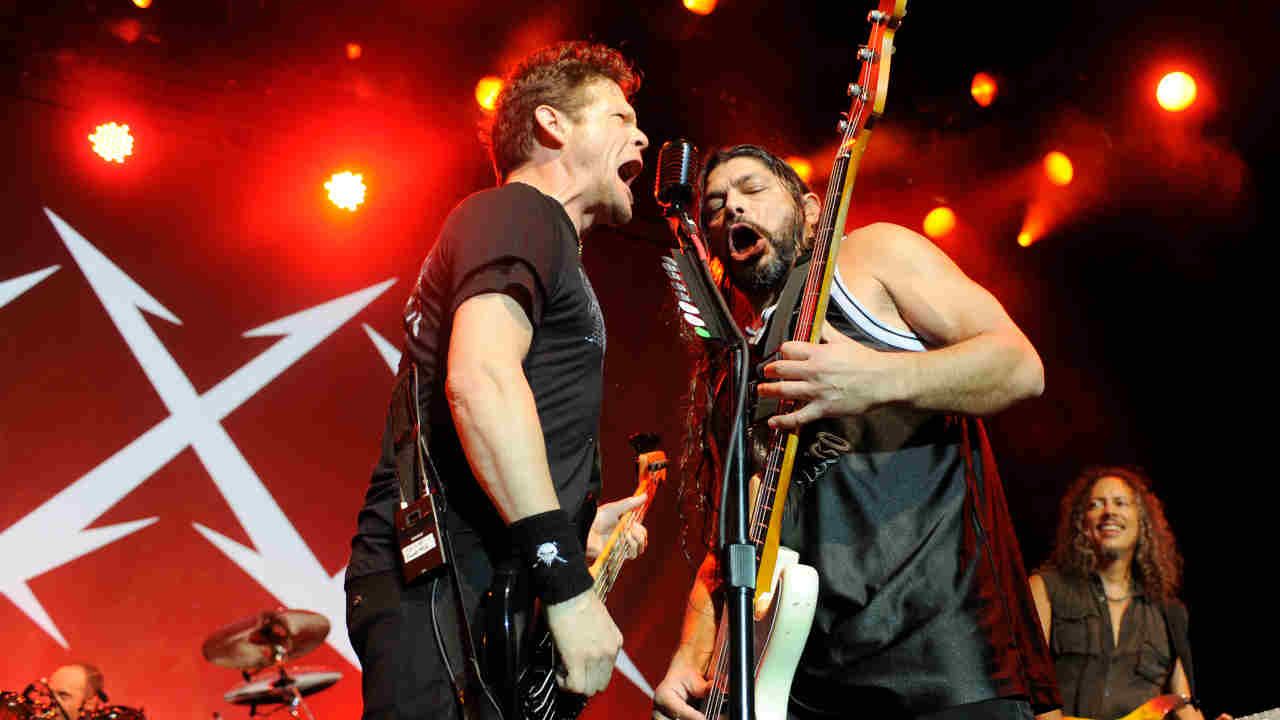
Jason Newsted onstage with Metallica in 2011 (Image credit: Tim Mosenfelder/Getty Images)
When was the last time you listened to a Metallica album that came out after you left the band?
“Never. I heard the one where they made the video in prison [St. Anger]. I heard one song with my dad while we were riding in the car in Michigan, because the radio is still pretty wed to Metallica, and it went on for fucking ever. It was eight minutes on the radio, and I went, ‘What the fuck are they doing?’ No disrespect, but I didn’t get it. It was maybe harking back to the longer songs and the aggression and the tempo. And that stuff takes a lot of energy to play, and with James going up and down the fretboard like that, no one can touch it. I have a lot of respect for that thing, but I am quite a distance away from that type of music now.
“I still like my heavy songs, but I sing for real now. I play the bass right up high, sing those backing vocals way up high. I still love Sepultura and stuff… but it really isn’t the way that I used to. I’d be happy to join them to do that stuff if they wanted me to. I still talk to Lars a fair bit, and I send him my stuff and he’s always super-supportive. I really appreciate it, and I respect his opinion. If he called me and asked if I wanted to throw down, I’d say yes, but I’m not sure if I’d say yes to anyone else.”
Originally published in Metal Hammer issue 361 (April 2022)
Words by Belinda Quick Photos by Justin White “Trials, temptations, disappointments – all these are helps instead of hindrances, if one uses them rightly. They not only test the fibre of character, but strengthen it. Every trial endured and weathered in the right spirit makes a soul nobler and stronger than it was before” – […]
Sean talk to another of the many superb New Blood bands to grace the stage at Bloodstock 2026! Imbrium: official | facebook | instagram | spotify | youtube
Mother of Millions are a Greek progressive metal band and this is their fifth album. 2024’s Magna Mater was a fantastic record, so the enigmatically titled T has a lot to live up to. Mother of Millions haven’t just reproduced that sterling record though, as T offers something that’s clearly Mother of Millions, but also has a … Continue reading “Mother of Millions – T (Review)”



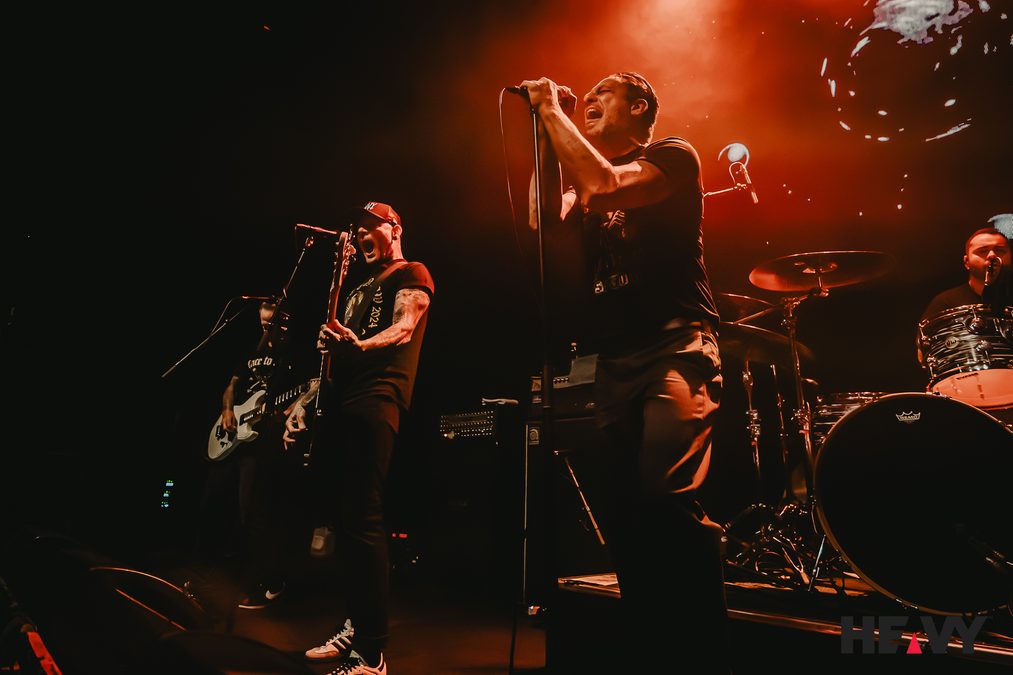 Words by Belinda Quick Photos by Justin White “Trials, temptations, disappointments – all these are helps instead of hindrances, if one uses them rightly. They not only test the fibre of character, but strengthen it. Every trial endured and weathered in the right spirit makes a soul nobler and stronger than it was before” – […]