Blog

  • Analog Art Meets Death Metal and Jazz in FALSIMONIAN’s “Judgment”

    A modular synthesizer and a custom video rig turn FALSIMONIAN’s new single “Judgment” into a visual performance of its own. The US–Mexico melodic death metal quartet worked with South Carolina audio-visual artist Brian Pinke, known as pinkenoise, on the visualizer for their most experimental track to date, combining death metal, progressive metal and jazz. “Judgment” […]

    Source

  • “As much as this isn’t the end, I see the end… I was asking, ‘Do I want to be in this band any more?”: The meaning of Coheed And Cambria’s The Father Of Make Believe

    Coheed And Cambria are reaching the end of their epic, 12-album Amory Wars concept with The Father Of Make Believe. With mainman Claudio Sanchez in a precarious position as he contemplates his future, it’s the band’s most out-there album yet – equal parts a sci-fi prog epic and personal tome of uncertainty.

    While some bands’ vision for a concept record would stretches across a double album, that would barely scratch the surface for Coheed And Cambria. Founder, lead songwriter and tireless creative Claudio Sanchez mapped out an intergalactic odyssey with the intention of spreading it across 12 full-length releases. Save for the much-needed respite of 2015’s The Color Before The Sun – which temporarily unshackled the group from the chains of such a lofty concept – it’s driven the band’s existence for nearly a quarter of a century.

    The 10th album in the band’s Amory Wars series, Vaxis – Act III: The Father Of Make Believe, finds the final straight in sight. Naturally, that’s led to some pensive self-reflection for Sanchez. “We’re now at the third part of this five-part thing, and I can almost see the end,” he says. “But what will my life be like without it?”

    Set in another galaxy, he describes The Amory Wars as the tale of “a fucked-up dysfunctional family in space.” But really, such high fantasy provides him with a mask to be vulnerable without baring all. “I had a really hard time putting myself at the forefront of the songs,” he admits. “That’s why I created The Amory Wars. I grew up on Emory Drive in a small town outside of New York City; the characters Coheed and Cambria very much resemble my parents. I play a character in the story.

    “Every life is nuanced, right? I grew up in a chemically dependent household. My dad was a functioning addict, so that’s where the dragonfly [a key creature within the story] came from – it resembles a syringe. The father turns into a monster, and the mother is a shield to protect the children.

    “I never wanted to villainize the people I was singing about; but I needed to write music to feel good. This is a therapeutic thing for me. When I got older and became a father, I started making peace with things. It’s my life – I should be able to speak about it. I had a great upbringing despite the dysfunction. I thought it was fantastic to take moments in my life and make them these grandiose paintings of moments in time that I had experienced one way, but maybe the audience can experience in another.”

    The band’s lyrics, as well as a series of novels and comic books, are the vehicles for his confessional storytelling, which has always been tailored to welcome new listeners with each album. Fans rooted deep into the lore will hear character themes and sonic nuggets oscillate through their discography; but for those who just want music to digest and enjoy, the band’s mix of emotional post-hardcore and very nerdy prog has proven a winner.

    “Early on, I attempted to try to inject concept jargon into songs, and I didn’t really love that,” Sanchez says. “It felt a little forced. I wanted it to be a surprise that there was a bigger concept. It’s more suggestive than necessary.”

    As he dove deeper into the chaotic narrative arc, the music became more ambitious. “I feel like we’ve constructed the freedom to do whatever it is we choose to do,” he says. “That’s always something that I’ve strived for. I never wanted there to be restrictions. But then there’s the question of, ‘Did I imprison myself in the concept?’”

    Unsurprisingly, he answers this question in musical form with So It Goes, the final song on the new record. “It’s a phrase from Kurt Vonnegut’s Slaughterhouse-Five, which only gets mentioned in conjunction with something dying. I was very much influenced by that. Some of those stories have really inspired some of the motives in The Amory Wars – one being the character of Billy Pilgrim being unstuck in time and being able to see everything at once.

    “And so for me, as much as this isn’t the end, I see the end. I don’t know if that end is finite, or if it’s a metamorphosis into something that isn’t a prison, but there is a way to move on to something else.”

    To get to that answer, first he had to make sense of the lyrics that passed through his lips. “A big theme in Coheed records is identity and mortality. And the older I get, those themes become louder. I understood what conceptually was supposed to happen with the story, but initially I was writing without the rules of the story.

    When I write I like to cover a lot of ground; I think that might make Coheed a hard pill to swallow

    “I found a very personal theme of questioning who I am and where I would be if I’d made different decisions along the way. When I was listening to the material, it was like going through some sort of midlife crisis. I was asking, ‘Do I want to be in Coheed And Cambria any more? Do I want to try a different avenue of creativity?’ That theme made a lot of sense for me, being at the centre point of this pentalogy.”

    As ever, Coheed’s latest batch of songs are highly fantastical, but it doesn’t take much to understand the meanings. “Goodbye, Sunshine is about saying goodbye to a thing that is really important to you. But it’s followed by Searching For Tomorrow, which is about looking for a better existence past that,” he explains. “There’s a real duality to the record.”

    Having found meaning in his subconscious writing, Sanchez returned to Paris, where the initial concept for The Amory Wars was created. He recalls that, in 1998, the city was “another world” to the young, impressionable musician, having previously only travelled as far as New Jersey, his neighbouring state. He spent 10 days in the French capital, exploring, writing, reconnecting with Coheed And Cambria’s roots.

    “Paris will always be important to me,” he reflects. “Every once in a while, I’ll return there and see if I’m inspired by anything. Some of The Afterman story [2012/13] was written there. This time I went on a writing retreat, and I wrote Meri Of Mercy and Blind Side Sonny there. They almost act as the binding of the album.

    “They’re right in the middle and they’re extremely different. One is very pretty and airy – something about the textures in Meri Of Mercy reminded me of my grandfather passing, and maybe somewhere in the afterlife being reunited with the wife he’d lost for 40 years. Blind Side Sonny is aggressive and gritty.

    I like trying to find instruments and textures that aren’t obvious; they sit in the background and really paint a picture

    “When I write music I like to cover a lot of ground, and I think that sometimes might make Coheed a hard pill to swallow. It really doesn’t fall into one category, but it resembles my personality. There are moments when I can be open and soft, and moments when I can be aggressive. It’s important to showcase both sides. Again, this is therapy.”

    Amid his self-wrangling, Sanchez has greatly expanded Coheed’s musical spectrum on The Father Of Make Believe. He points to album opener Yesterday’s Lost. “It’s a very conscious effort to reintroduce The Afterman’s theme, and it’s very [folk singer] Iron & Wine-y. There was an instrument in the background, called the Therevox, which emulates an old French analogue synthesiser; I used a little bit of that to create some otherworldliness.”

    It’s not the only oddball instrument that makes its way onto the record. “I’ve got stuff everywhere! When I was doing The Flood, I needed something that sounded like water, so I used a waterphone [a strange, spiralling instrument that looks like it should be in a modern art gallery]. You fill it with water and bow it. It sounds alien. I like trying to find instruments and textures that aren’t obvious; they sit in the background and really paint a picture.

    “I also used a box instrument called an apprehension engine. It’s something that Mark Korven [composer for the Robert Eggers horror films The Lighthouse and The Witch] made. It’s a scary instrument!”

    They’re vehicles to push Coheed’s sound as far as possible. “For me, there isn’t any other contemporary music that moves quite like Coheed does,” he says. “There’s a lot of peaks and valleys, and I feel that’s something a lot of music lacks – the complexity of movement and vibes. I feel we cover a lot of ground in a very creative and interesting way.”

    As much as I’m questioning my identity and myself inside Coheed And Cambria, we are stronger together

    The Flood helps support that claim: it’s part of the thrilling, near-20-minute, four-part masterwork The Continuum, which closes out the record. “Going over those questions of growth and identity, I felt the song really amplified that,” Sanchez explains. “Mr Nobody is a very self-deprecating acceptance of ‘You’ll forever be known as nothing.’ That’s the hyper side of the spectrum.

    “Part two, The Flood, was almost like a rebirth. It reminded me of a horrible acid trip when I was a teenager – I saw my life flash by in these still pictures, to the point where I found myself as an orb of energy, like it was the nucleus of my id or my ego. And then I was abruptly awakened from it. I think I was out of my mind on a couch somewhere and somebody was afraid I was dying.

    “Then we get to Tethered Together, which, as much as I’m questioning my identity and myself inside Coheed And Cambria, we are stronger together – and that feels like the climax of the story. Whereas So It Goes becomes the resolve; regardless of everything, we still move on. That’s why I thought conceptually the four movements really worked together – they give closure to this record.

    “I feel a personal connection to all Coheed records,” he adds. “But this one resonates differently.”
  • Shorter Songs Meet a 21-Minute Finale on HAXPROCESS’s New Album

    HAXPROCESS are tightening their progressive death metal songwriting while leaving room for their longest excursion on the new record. Due on December 4, 2026, via Transcending Obscurity Records, Endlessly Flowing Cascades of Grief pairs songs averaging around five minutes with the closing “A Cascade of Grief,” which stretches beyond the 21-minute mark. The album follows […]

    Source

  • Escape from Earth Leads to “Exomia” on CELESTIAL SCOURGE’s Second Album

    Leaving Earth is only the beginning of humanity’s troubles on CELESTIAL SCOURGE’s forthcoming second album, Exomia. Due on November 20, 2026, via Time To Kill Records, the record follows an evacuation through hostile space towards a planet that proves far less deserted than it first appears. The Norwegian death metal band introduce that journey with […]

    Source

  • 4 Big Rock Acts Hit as New Music Festival Gets Canceled Before Its First Year

    The festival won’t be able to enjoy its debut year, but organizers aren’t giving up yet. They have plans for the future.

    The post 4 Big Rock Acts Hit as New Music Festival Gets Canceled Before Its First Year appeared first on Audio Ink Radio.

  • OBRIJ Explore Life Transformed by War on “In the Era of Ruins”

    With two members serving in Ukraine’s armed forces, OBRIJ approach the subject of wartime transformation from personal experience. The Uzhhorod death metal band will release “In the Era of Ruins” (“Sered Doby Ruin” / “Серед доби руїн”) on September 24, 2026, through Neformat Family and Robustfellow. The single examines how Russia’s full-scale invasion has forced […]

    Source

  • HEAVY AUDIO MAG #71 – The Week In Metal

    Listen to the best in new, heavy music every week with HEAVY‘s new weekly HEAVY AUDIO MAG, featuring music from our weekly cover artist plus new premieres, hit predictions, and killer tracks we just know you want to listen to from bands featured over both digimags and some just because we want to put them […]
  • Cocteau Twins and Dreamlike Darkness

    Cocteau Twins and Dreamlike Darkness

    Some bands write songs. The Cocteau Twins created worlds. Their music feels suspended between dream and reality, beauty and melancholy, clarity and mystery. Listening to a Cocteau Twins record often feels less like hearing a collection of songs and more like stepping into an atmosphere that cannot be fully explained.

    This quality helped make the Scottish trio one of the most distinctive acts to emerge from the post-punk era. While many of their contemporaries embraced sharp rhythms, political tension, or aggressive minimalism, the Cocteau Twins moved in the opposite direction. They pursued emotion over explanation.

    Through Elizabeth Fraser’s extraordinary voice, Robin Guthrie’s shimmering guitar textures, and Simon Raymonde’s bass, they created music that felt simultaneously intimate and distant, comforting and unsettling. Although the band is often associated with dream pop and ethereal wave, their enduring appeal comes from something deeper. Their music captures many of the qualities that have long defined Gothic art: mystery, emotional ambiguity, beauty touched by darkness, and a fascination with experiences that resist rational interpretation.

    More than three decades after their most celebrated recordings, the Cocteau Twins remain one of the most influential and enigmatic groups in alternative music.


    Cocteau Twins and Dreamlike Darkness
    Cocteau Twins and Dreamlike Darkness

    A Different Path Through Post-Punk

    When the Cocteau Twins emerged in the early 1980s, alternative music was undergoing rapid transformation.

    The first wave of punk had fractured into countless directions. Some bands pursued experimentation, others embraced darker themes, and many explored the emotional possibilities of post-punk.

    The Cocteau Twins shared this atmosphere but rarely sounded like their peers.

    Their 1982 debut album Garlands carried traces of Gothic rock and post-punk, yet even these early recordings hinted at something unusual. The music emphasized texture as much as melody. Atmosphere became as important as structure.

    As the decade progressed, the band moved further away from conventional rock frameworks. Their songs became increasingly immersive, replacing sharp edges with layers of sound that seemed to drift and shimmer.

    This evolution helped establish a musical language that would later influence dream pop, shoegaze, and countless atmospheric artists.

    Yet the Cocteau Twins never felt entirely connected to any single genre.

    Their music occupied a space of its own.


    Elizabeth Fraser and the Voice Beyond Language

    At the center of the Cocteau Twins’ appeal stands Elizabeth Fraser.

    Few singers in modern music possess a voice as instantly recognizable. Her performances move effortlessly between fragility and intensity, often conveying profound emotion without relying on straightforward lyrical communication.

    This is one of the reasons the band’s music feels so dreamlike.

    Fraser frequently treated words as sound as much as language. Rather than emphasizing narrative clarity, she focused on rhythm, texture, emotion, and vocal expression.

    Listeners often struggle to understand every word, yet they rarely struggle to feel what the music communicates.

    This approach separates the Cocteau Twins from most popular music.

    Songs are usually built around messages. Fraser often built songs around emotional states.

    Her voice becomes another instrument within the arrangement, creating sensations that feel closer to dreams, memories, or fleeting impressions than conventional storytelling.

    The result is a form of musical ambiguity that remains one of the band’s defining characteristics.


    Robin Guthrie and the Architecture of Atmosphere

    If Fraser provided the emotional mystery, Robin Guthrie created the environment in which that mystery could exist.

    His guitar work transformed the instrument into something almost orchestral.

    Through extensive use of effects, layered textures, and unconventional production techniques, Guthrie built sonic landscapes that seemed to float between reality and imagination.

    Traditional rock guitar often emphasizes riffs and rhythmic drive. Guthrie approached the instrument differently. His playing focused on atmosphere, resonance, and emotional color.

    This approach helped define the band’s signature sound.

    The guitar rarely dominates the listener. Instead, it surrounds them.

    Combined with Fraser’s voice, these textures create the sensation of entering an unfamiliar yet strangely beautiful space.

    This balance between beauty and uncertainty would become central to the Cocteau Twins’ artistic identity.


    Why the Music Feels Dreamlike

    Many artists create atmospheric music, but few achieve the dreamlike quality associated with the Cocteau Twins.

    Part of the explanation lies in the band’s refusal to provide complete certainty.

    Dreams rarely follow logical rules. Images appear without explanation. Emotions emerge before meaning. Familiar things become strange, while strange things feel oddly familiar.

    The Cocteau Twins often create a similar experience.

    Their music prioritizes feeling over interpretation. Listeners are encouraged to inhabit the atmosphere rather than decode it.

    This ambiguity helps explain why the band’s work continues attracting devoted audiences decades after its release.

    The songs do not offer fixed meanings.

    They create emotional spaces that listeners can inhabit and reinterpret throughout their lives.


    Treasure and the Birth of a Dream World

    The Cocteau Twins’ breakthrough arrived with Treasure in 1984.

    While earlier recordings hinted at the band’s potential, Treasure fully established the sound that would define their reputation. The album feels suspended outside ordinary reality, replacing the harsher edges of post-punk with an atmosphere of beauty, mystery, and emotional ambiguity.

    Songs such as Lorelei and Pandora (For Cindy) demonstrate the group’s ability to create music that feels simultaneously ancient and modern. Fraser’s voice drifts through the arrangements like a presence rather than a narrator, while Guthrie’s guitars shimmer beneath her performances.

    The album’s fascination with mythic imagery and dreamlike moods also strengthened its connection to Gothic aesthetics.

    Rather than telling stories directly, the music evokes the sensation of wandering through a landscape shaped by memory, desire, and imagination.

    This approach would become one of the defining characteristics of the Cocteau Twins’ work.


    Victorialand and the Art of Atmosphere

    If Treasure introduced listeners to the Cocteau Twins’ dream world, Victorialand pushed that vision even further.

    Released in 1986, the album is remarkable for its delicate atmosphere. Much of the music seems to float weightlessly, creating an experience that feels closer to drifting through a dream than listening to a traditional rock record.

    The arrangements are intentionally sparse compared to some of the band’s other releases. This space allows Fraser’s voice to occupy the foreground while preserving the sense of mystery that defines the group’s identity.

    Tracks such as Lazy Calm and Fluffy Tufts demonstrate how effectively the band could communicate emotion without relying on conventional narrative structures.

    The album’s beauty often feels fragile, as though it could disappear at any moment.

    That quality gives Victorialand a uniquely haunting atmosphere and explains why many listeners consider it one of the most immersive recordings in the Cocteau Twins’ catalog.


    Heaven or Las Vegas and Emotional Clarity

    For many listeners, Heaven or Las Vegas remains the definitive Cocteau Twins album.

    Released in 1990, it preserved the band’s dreamlike qualities while introducing a greater sense of warmth and accessibility.

    The title track, Heaven or Las Vegas, captures this balance perfectly. Fraser’s performance remains mysterious, yet the emotional impact feels immediate and unmistakable. The song radiates joy, vulnerability, and wonder without sacrificing the ambiguity that defines the band’s work.

    Other tracks such as Cherry-Coloured Funk and Iceblink Luck reveal a group operating at the height of its creative powers.

    The melodies are more direct than on earlier albums, but the atmosphere remains intact. Listeners are still invited into a world where emotion takes precedence over explanation.

    This combination helps explain why Heaven or Las Vegas continues attracting new audiences decades after its release.

    The album demonstrates that mystery and accessibility do not need to be opposites.


    Why the Lyrics Remain Elusive

    One of the most persistent myths surrounding the Cocteau Twins is that Elizabeth Fraser sang nonsense words.

    The reality is more complex.

    Fraser often wrote lyrics, but she rarely treated language as the primary focus of a song. Meaning emerged through sound, emotion, and vocal expression rather than direct explanation.

    This approach frustrates some listeners while captivating others.

    For many fans, the ambiguity is precisely what makes the music so powerful. The songs leave room for personal interpretation. Rather than dictating a single meaning, they invite listeners to bring their own experiences into the music.

    This quality mirrors the appeal of Gothic literature.

    The most memorable Gothic works rarely explain everything. They preserve uncertainty, allowing mystery to remain part of the experience.

    The Cocteau Twins achieve something similar through sound.


    Emotion Beyond Explanation

    The enduring appeal of the Cocteau Twins comes from their ability to communicate feelings that resist ordinary language.

    Many artists describe emotions.

    The Cocteau Twins often seem to place listeners directly inside them.

    Whether through the mythic beauty of Treasure, the fragile atmosphere of Victorialand, or the luminous intimacy of Heaven or Las Vegas, the band’s greatest recordings create emotional experiences that remain difficult to define but impossible to forget.

    This ability to transform feeling into atmosphere is one of the reasons their music continues resonating across generations.

    The songs rarely provide clear answers.

    Instead, they create spaces where listeners can encounter their own memories, dreams, and emotions.


    Gothic Beauty and Emotional Ambiguity

    Although the Cocteau Twins are rarely classified as a Gothic rock band in the traditional sense, their music shares many of the qualities that have defined Gothic art for centuries.

    Their songs are filled with beauty touched by uncertainty. Joy and melancholy often coexist within the same composition. Light never completely eliminates shadow.

    This emotional ambiguity is central to the band’s appeal.

    Much Gothic literature explores experiences that resist simple interpretation. Edgar Allan Poe, Nathaniel Hawthorne, and the Symbolist poets understood that mystery often possesses greater emotional power than certainty.

    The Cocteau Twins embrace a similar philosophy.

    Their music rarely explains itself completely. Instead, it creates an atmosphere where longing, desire, memory, beauty, and loss exist simultaneously.

    This balance between revelation and concealment gives their work a distinctly Gothic character.


    The Vaughan Oliver Connection

    The Cocteau Twins’ dreamlike world extended beyond music.

    Much of the band’s visual identity was shaped by Vaughan Oliver, the legendary designer whose work for 4AD Records became almost as influential as the music itself.

    Oliver rejected straightforward visual communication in much the same way the Cocteau Twins rejected conventional lyrical storytelling.

    His album covers favored abstraction, fragmented imagery, unusual typography, and visual ambiguity. Rather than explaining the music, they deepened its mystery.

    Albums such as Treasure, Victorialand, and Heaven or Las Vegas arrived wrapped in artwork that felt dreamlike, surreal, and emotionally suggestive.

    The relationship between sound and image created a complete artistic universe.

    Listeners did not simply hear the Cocteau Twins. They entered a carefully constructed aesthetic experience where music and visual art reinforced one another.


    The Birth of Dream Pop

    The influence of the Cocteau Twins can be heard throughout modern alternative music.

    Many of the characteristics associated with dream pop were either defined or popularized through their work: atmospheric production, immersive textures, emotional ambiguity, and an emphasis on mood over narrative.

    Artists such as Beach House, Slowdive, M83, and countless others have drawn inspiration from elements the Cocteau Twins helped establish.

    Yet their impact extends beyond any single genre.

    The band’s approach demonstrated that music could communicate powerfully without relying on traditional storytelling. Emotion itself could become the primary subject.

    This idea influenced musicians across alternative, electronic, ambient, and experimental music.

    The result is a legacy that continues expanding long after the group’s final recordings.


    Why the Music Still Feels Timeless

    Many recordings become inseparable from the era that produced them.

    The Cocteau Twins have largely avoided this fate.

    Part of the reason lies in their refusal to follow trends. Their music was never built around contemporary fashions, political commentary, or cultural references that might eventually feel dated.

    Instead, the band focused on emotional experiences that remain universally recognizable.

    Love, longing, wonder, vulnerability, memory, and desire continue to resonate regardless of generation.

    The dreamlike nature of the music also contributes to its longevity.

    Dreams rarely belong to a specific historical moment. They exist outside ordinary time.

    The Cocteau Twins create a similar sensation, allowing their songs to feel strangely detached from the decades in which they were recorded.


    Cocteau Twins and Dreamlike Darkness

    The enduring fascination of the Cocteau Twins comes from their ability to transform emotion into atmosphere.

    Through Elizabeth Fraser’s extraordinary voice, Robin Guthrie’s immersive guitar textures, and the visual world created around their music, they built an artistic language unlike any other.

    Their songs inhabit a space between clarity and mystery, beauty and melancholy, dream and reality.

    That space is where their Gothic power resides.

    Like the finest Gothic literature, the Cocteau Twins understand that some experiences lose their magic when fully explained. Mystery can reveal truths that certainty cannot.

    More than forty years after their emergence, their music continues inviting listeners into a world where emotion matters more than interpretation and atmosphere becomes a form of storytelling.

    The result is a body of work that remains as haunting, beautiful, and enigmatic as ever.


    Wear the Darkness

    If Cocteau Twins and Dreamlike Darkness resonates with your love of Gothic music, atmospheric art, and dark beauty, explore the Edgar Allan Poets store. Our designs celebrate the aesthetics of mystery, melancholy, literature, and the imagination.


    Edgar Allan Poe Gothic apparel and noir-inspired fashion from the Edgar Allan Poets store


    Join the Noir Newsletter

    Receive more essays exploring Gothic music, dark aesthetics, noir psychology, literature, and the artists who continue shaping the imagination.


    Frequently Asked Questions

    What genre are the Cocteau Twins?

    The Cocteau Twins are most commonly associated with dream pop and ethereal wave, though their music also incorporates elements of post-punk and atmospheric alternative rock.

    Why are Elizabeth Fraser’s vocals so distinctive?

    Fraser often prioritized emotion, texture, and sound over straightforward lyrical communication, creating a vocal style that feels dreamlike and deeply expressive.

    What is the Cocteau Twins’ most famous album?

    Many listeners consider Heaven or Las Vegas their most celebrated album, though Treasure and Victorialand are also highly influential.

    How did Vaughan Oliver influence the Cocteau Twins?

    Oliver created much of the visual identity associated with the band and 4AD Records, using abstract and dreamlike artwork that complemented the music’s atmosphere.

    Why do the Cocteau Twins still influence modern music?

    Their innovative approach to atmosphere, emotion, and sound helped shape dream pop and continues inspiring artists seeking to create immersive musical experiences.


    The post Cocteau Twins and Dreamlike Darkness appeared first on Edgar Allan Poets – Noir Rock Band.

  • “They take this plastic mesh, heat it to a volcanic magma temperature and slap it on my face. I thought I was going to have a baby! I went nuts!”: Megadeth’s Dave Mustaine was riding high until he was diagnosed with cancer. This is what happened next

    Dave Mustaine endured many tough times in the long months between being diagnosed with throat cancer in February 2019 and being declared cancer-free the following October. There was the emotional pain of breaking the news to his family and friends. There was the physical toll the radiotherapy and chemotherapy treatment he endured took on him. But one of the worst things of all was the mask.

    Cancer patients who have to undergo radiation treatment on their head and neck, as the Megadeth frontman did, have to wear a thermoplastic radiation mask – a mesh-like construct that holds the patient’s head rigidly in place while it’s bombarded with pinpoint radiation that destroys the cancerous cells. Dave had been warned by his radiologist that fitting the mask would be uncomfortable, but he didn’t realise just how bad it would be.

    “They said they were going to have to put this plastic mesh over my head because I could not move, not even one millimetre,” he recalls today. “I said, ‘OK’ and didn’t think anything of it. But what they do is take this plastic, heat it to a volcanic fucking magma temperature and slap it on my face. I thought I was going to have a baby! I went nuts!”

    It took three different attempts in all to fit the mask, and only then with the aid of a little Valium to calm Dave’s nerves.

    The mask appears on the cover of his new book, In My Darkest Hour, which charts his diagnosis, recovery and slow return to health. Where Dave’s 2010 autobiography, Mustaine: A Heavy Metal Memoir, was a wild, all-guns-blazing ride through his mercurial life, In My Darkest Hour is more focused, reflective and ultimately moving. It captures the dread and doubt that he went through, and the emotional and physical toll it took on both him and his family. But it also shines a light on his resilience and, ultimately, the sense of relief and hope that came with his all-clear.

    “I met a lot of people that had cancer, and a lot of them seemed really hopeless,” he says. “That was pretty much what prompted me to do it, because I wanted to share the hope that was there for me at the end.”

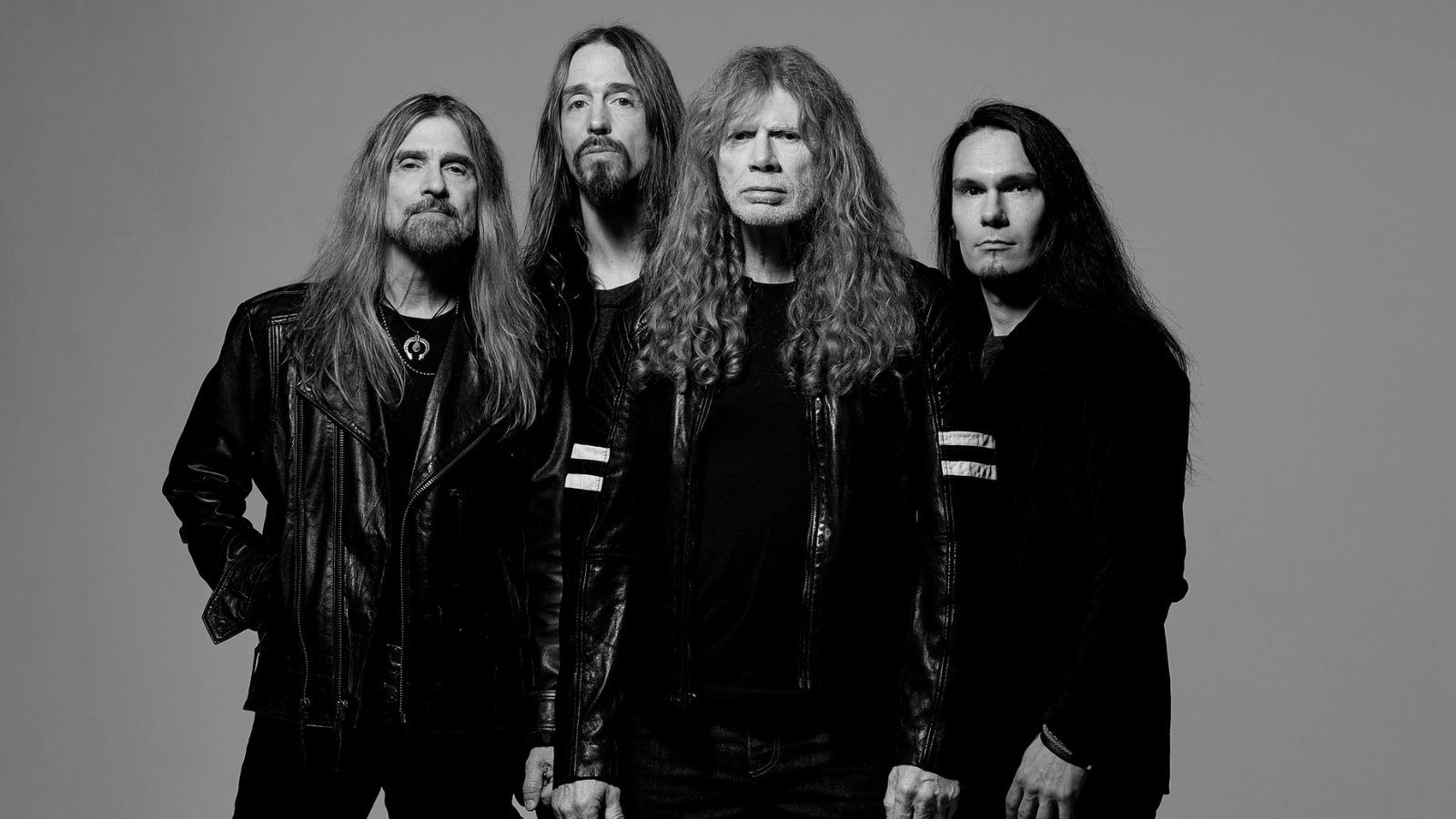
    Megadeth posing for a photograph in 2025

    Megadeth’s in 2025 (Image credit: Megadeth)

    He found out he had cancer during a visit to an oral surgeon in early 2019. He had been suffering from an indefinable ache in his jaw – not quite toothache, but similar. In the book, he relates how the surgeon broke the news to him: “He stands over me, hands folded across his chest and takes a deep breath. ‘Well, looks like you’ve got the Big C.’”

    Recalling that moment and the subsequent journey while he was writing the book wasn’t as painful as it could have been.

    “Mostly, it was cathartic,” he says. “There were times, of course, after the chemo and the radiation, where I’d be so exhausted that I fell asleep. And they’d have students poking me in the neck with needles over and over trying to find my lymph glands, which made my wife lose her mind. But I knew every inch of the journey, so I knew how dark it got.”

    In My Darkest Hour isn’t just Dave’s own recollections of the time. It also features input from people who were in his orbit during this period, from his wife, Pam, and children Justis and Electra, to the singer’s radiologist, Dr Anthony Cmelak (who contributed lyrics for the Megadeth song Dogs Of Chernobyl, from 2022’s The Sick, The Dying… And The Dead!) and even his jiu jitsu teacher. These were the people that helped get him through the ordeal.

    “I’ve always needed a lot of help in this world, and I’m not afraid to ask for it,” says Dave. “Family, faith, even my martial arts training – they all helped a lot.”

    Dave made his diagnosis public in June 2019. There was never any intention to keep quiet about it.

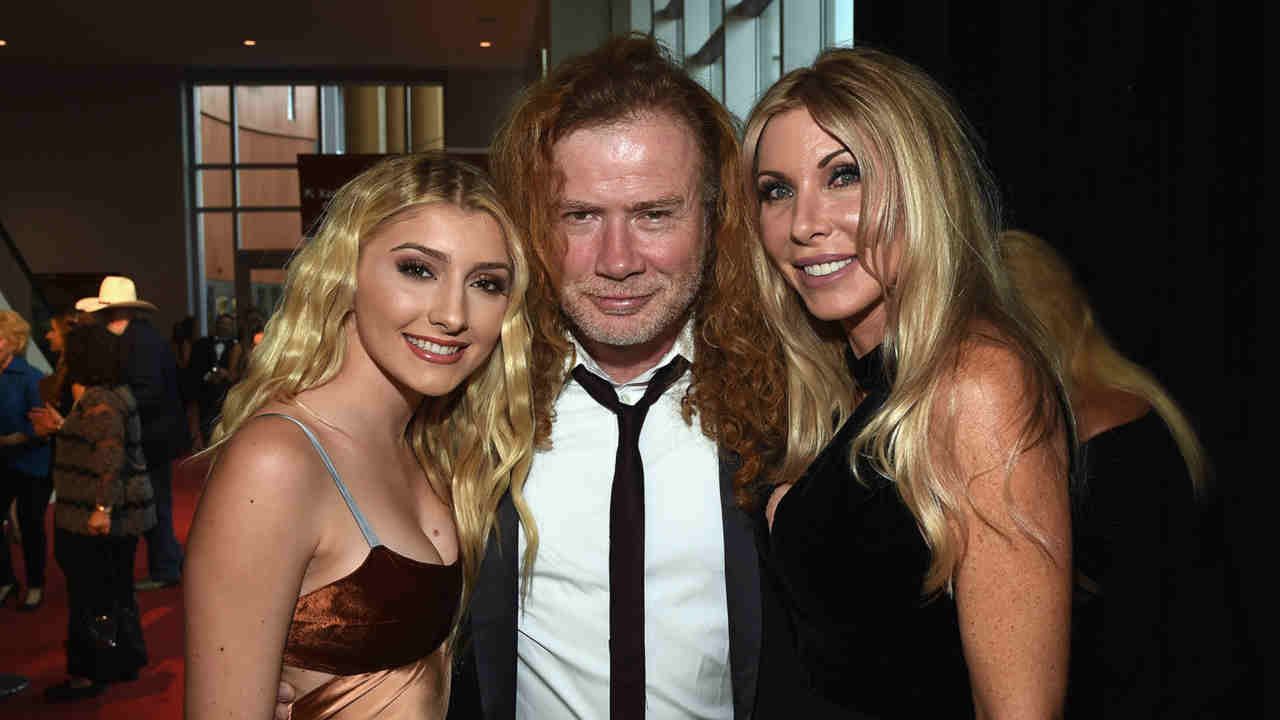
    Megadeth‘s Dave Mustaine with his daughter Elektra and wife Pam in 2016

    Dave Mustaine with his daughter Elektra and wife Pam in 2016 (Image credit: Rick Diamond/Getty Images)

    “I’ve always been pretty open with people,” he says. “There are a lot of people who have prayed for me over the years. The reason I didn’t keep it quiet was to let the people who are my support system know, because I’m the dude who has needed prayer his whole life.”

    After the news broke, he received messages of support from several famous friends and fellow musicians. Among them were Ozzy and Sharon Osbourne and, more surprisingly, James Hetfield, the man who had fired him from Metallica back in 1983.

    “It wasn’t any more significant than the other people who gave their support to me,” he says of the notable names who reached out. “I’ve always looked at that stuff like one beggar giving another beggar a crust of bread. But I appreciate it, because I know how our time is measured out, and to take the time to stop and do something like that means a lot.”

    One person who did offer some useful advice was Bruce Dickinson. The Iron Maiden frontman had gone through treatment for throat cancer a few years earlier. Bruce passed on his own experiences of what to expect, and also gave
    Dave one simple but invaluable piece of advice: “Surround yourself with good people… make sure you’re spending time with people who are upbeat and positive.” Or, as the Megadeth man writes in the book: “Stay away from assholes.”

    “Bruce had some fantastic stuff to say as a cancer survivor,” says Dave today. “There’s a big difference between someone saying ‘You’re in my thoughts and prayers’, versus somebody who goes into detail about his treatment and tells you about the outcome. I needed hope, and he gave me it.”

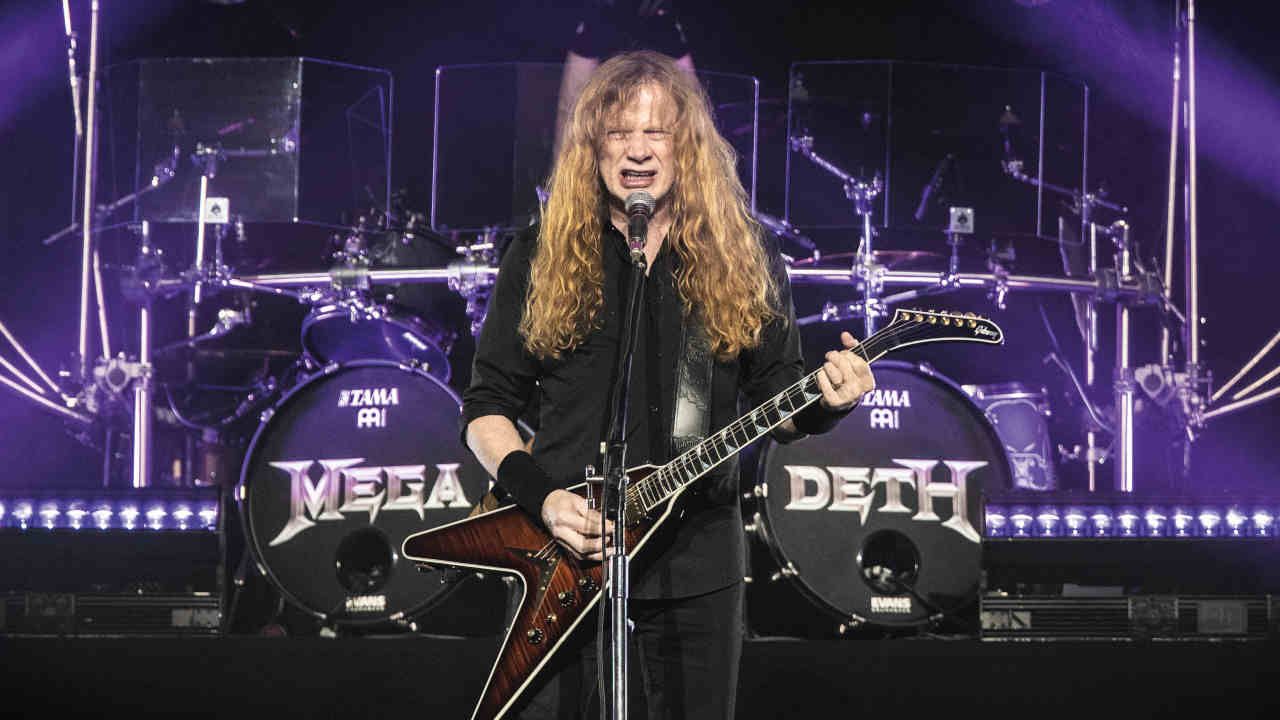
    Megadeth‘s Dave Mustaine performing onstage

    (Image credit: Katja Ogrin)

    Unsurprisingly, the treatment itself was tough: first the radiation, then the chemotherapy.

    “I absolutely hated getting up in the morning to go for treatment, but I knew I wouldn’t do it by myself,” he says. “So I hired a person to come into my room, whether I was asleep or not, get me up, make me get dressed, put me in the car, take me to my appointment, bring me home, and pour me back into bed.”

    Dave had planned to start work on the follow-up to 2016’s Dystopia just before he received the news about his cancer. It’s a measure of his endurance – or maybe his stubbornness – that he elected to carry on working on new music throughout his treatment.

    “There were all the stigmas that come along with it [the cancer diagnosis],” he says. “When I wanted to keep doing the record while I was going through treatment, I know there was doubt about how good it would have been:
    ‘How can a guy make a record when he’s going through cancer treatment?’

    “I only had two days where I was too sick to work and couldn’t go to the studio,” he continues, his voice edged with defiance even now. “The studio was built in a house right next to where I live, so I’d go out my garage door, get into our little four-wheeler, drive through the field, pull up next door, walk through the door, and there was our studio.”

    Finishing the new album would ultimately be held up even further by an altogether different illness in the form of the pandemic. The Sick, The Dying… And The Dead! – a title he insists had nothing to do with his own sickness – was eventually released on September 2, 2022, giving Megadeth their eighth US Top 10 album.

    If he’d wanted to end the band there, it would have been the perfect valediction. Instead, they returned to the studio to make a follow-up, 2026’s self-titled Megadeth. And that’s when Dave announced that it would be his band’s last album, and that they were embarking on a farewell tour.

    Today, he says his decision was down to a hand condition named Dupuytren’s contracture – aka ‘Viking Hand’ – that prevents him from playing guitar to the level he wants.

    “It’s a tendon in the centre of my left hand that has nodules on it,” he explains. “That whole area itches, burns and hurts. Whenever I play, that extra activity just makes it worse. My goal is to play until I can’t.”

    He’s considering surgery. “But even then, it’s a 50-50 chance whether it turns out good or bad. I don’t want to have someone cut my hand open and have it turn out worse forever. I know what I’ve got right now, so I’m going to put it to work and use it as much as I can. We have a beautiful tour lined up for the next couple of years, and there’s a lot of other Megadeth-oriented stuff we’re still going to do once playing is out of the picture.”

    There are at least a couple of songs left over from sessions from the most recent album. One is called Bloodlust, the other Farewell My Love.

    “I thought there was a third one called ‘When Robots Rule’,” he says, “But I might be mixing things up. That’s another byproduct of chemo and radiation called ‘chemo brain’, where you have a really hard time remembering things.”

    There are definitely a bunch of older unfinished songs kicking around. Will he revisit them? Maybe, though they wouldn’t be his priority if he does get his playing hand fixed.

    “If I could play old songs,” he says, “why wouldn’t I want to focus on new songs instead?”

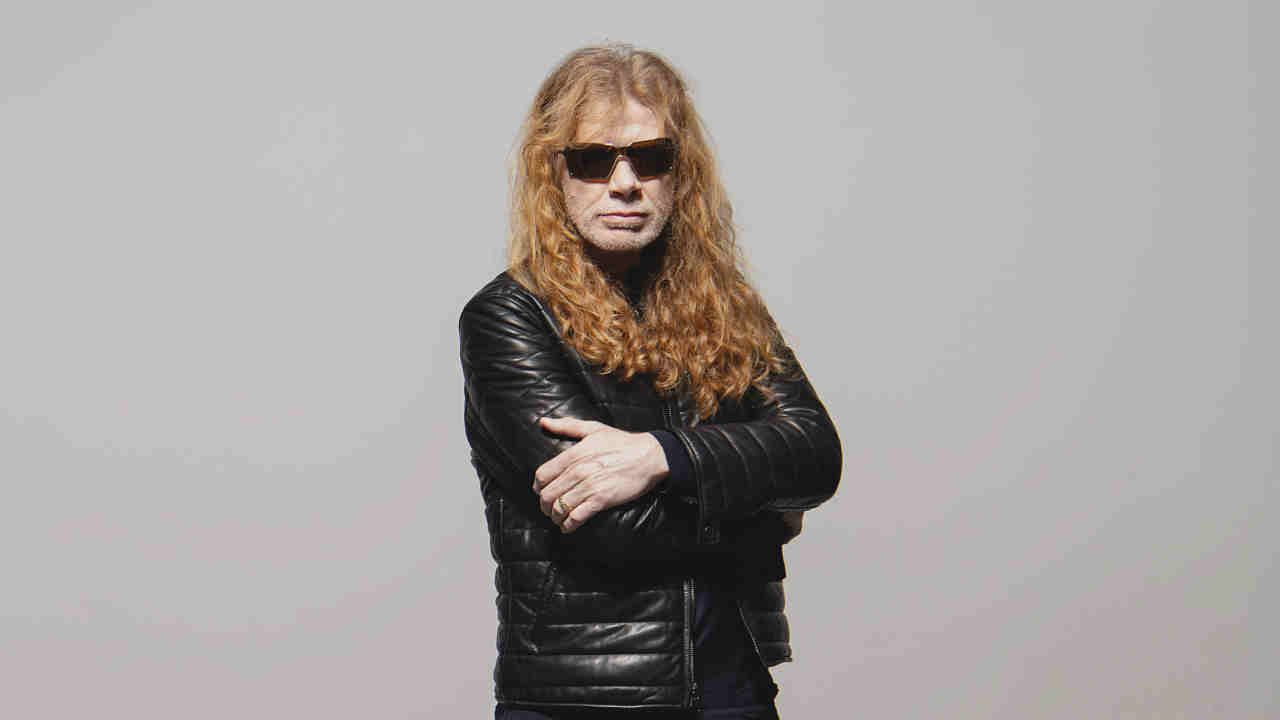
    Megadeth‘s Dave Mustaine posing for a photograph in 2026

    (Image credit: Ross Halfin/Press)

    There’s a funny moment in the new book where Dave relates that James Hetfield once jokingly said his former bandmate must have “a horseshoe stuffed up my ass”. How else could he have cheated death so many times other than pure luck?

    “Well, maybe the horseshoe had fallen out, or maybe it had rusted over and poisoned my system,” writes Dave, thinking back to the moments after his initial diagnosis.

    It’s incorrect to say the frontman cheated death once more – that does a disservice to the medical team that treated him and the people who supported him throughout that period. Still, surely it made him view mortality differently?Apparently not.

    “I died once back in ’92 when we were going through some really terrible times [with drugs] and everybody was doing all kinds of hardcore stuff,” he says. “I still know death is final. I still have pain and grief for the friends I’ve lost. The only way that this could change me is just giving me experience in something that other people may not have faced and are terrified by.”

    He empathises with anyone who is going through what he went through, though any advice he can offer comes with a quiet caveat.

    “The thing I need to be careful with is that there’s not always a happy ending,” he says. “Some people wait too long, or some people don’t follow medical direction. The smartest thing I could say to anybody is: be honest with yourself. You have to know that you need help, and help comes in many forms. And then I would say: be nice to your family, because you’re going to notice when you need them.”

    He laughs, and there’s a flash of the Mustaine of legend. “’Cos they’re going to have a hard time helping you if you’re a dick.”

    In My Darkest Hour is published on September 24 via Constable

  • EVIL INVADERS Confront the Rat Race in New “Dreamstate” Video

    Sleepless nights, constant multitasking and the feeling of moving through life without being fully present drive EVIL INVADERS’ new standalone single, “Dreamstate (Single Version).” Their first new music since 2022’s Shattering Reflection arrives with a cinematic video conceived by Jens De Vos of Panda Productions. The Belgian thrash and heavy metal band use the song […]

    Source