
 If you love this music:
Slayer’s Reign In Blood is one of metal’s all-time Hall Of Fame Albums. Released in the United States on October 7, 1986, it was darker, colder and more malicious than anything that had come before, including Metallica’s equally monumental Master Of Puppets, which arrived earlier that year. Its scalpel-cold sonics and diabolically depraved lyrics set a new bar for how far metal could go – and it remains there to this day. Forty years on, here are 40 facts that every self-respecting metal fan should know about this black-hearted masterpiece.

1 One of the most malevolent albums ever made was partly written in a bedroom in Kerry King’s parents’ house. The guitarist was still living at home with his folks when he was writing the songs for Reign In Blood, and would hunker down with a cassette recorder to capture his ideas – including Piece By Piece, the first song he wrote for the album.
2 Guitarist Jeff Hanneman wrote his Reign In Blood songs using a drum machine. “He started recording his own demos complete with the basic drum pattern, guitar riffs, some arrangements,” Dave Lombardo, the actual human drummer who played on the finished album, later recalled. “And then he would present us with cassettes. It was awesome, because it gave us a clear picture of where he was going.”
3 Rick Rubin is often credited as Reign In Blood’s producer, which isn’t strictly accurate. He’s officially the album’s co-producer, along with the band themselves.
4 The majority of the music for Reign In Blood was written and demoed before the band met Rick Rubin. The original instrumental demo version came in between 33 and 34 minutes – five or six minutes longer than the finished record.
5 Rick Rubin grew up listening to punk rock, before pivoting towards hip hop and founding Def Jam Records. He hadn’t heard of Slayer until a friend who worked at MTV took him to see them play New York club The Ritz on September 27, 1985. “Megadeth played before them, and [another band] before that,” recalled Rick, who poached the band from their original label, Metal Blade, making them Def Jam’s first non-hip hop signing. “I don’t recall much of anything that night before Slayer. They totally annihilated.”
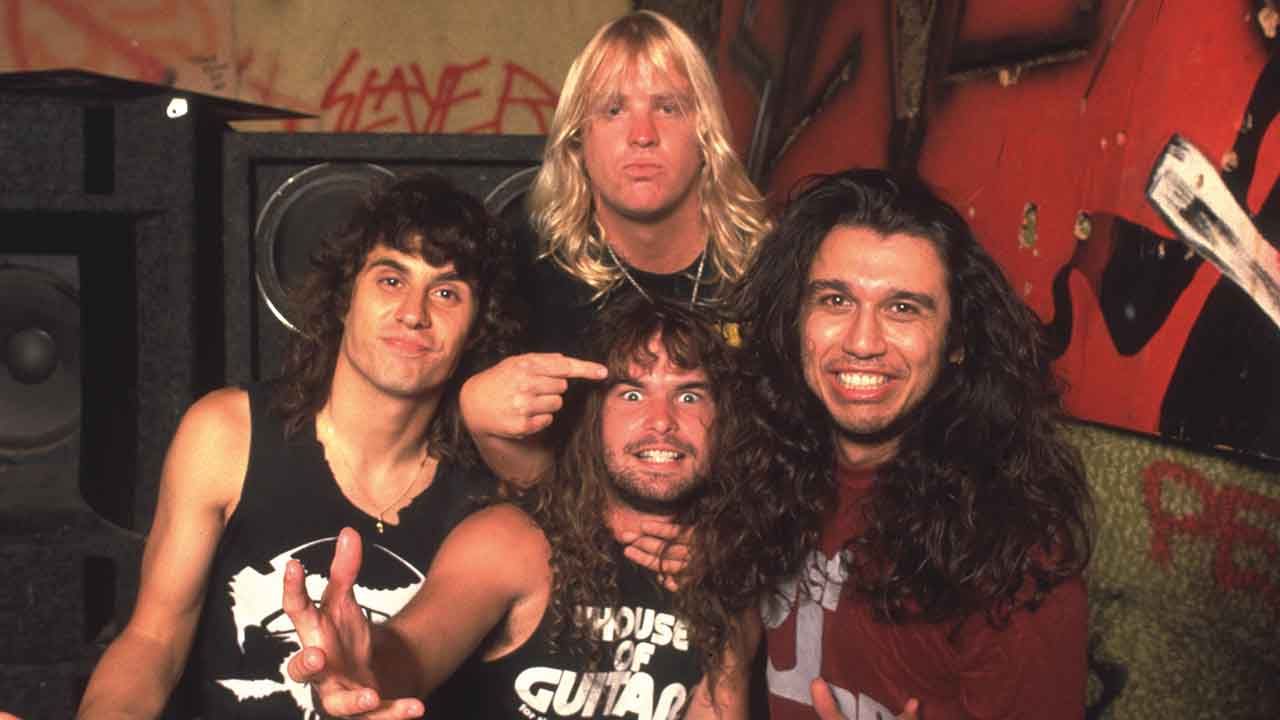
6 Reign In Blood was recorded at LA’s Hit City West studio on West Pico Boulevard. Run by Reign In Blood engineer Andy Wallace, the studio’s previous clients included Mötley Crüe, soul star Bobby Womack and Mike Love of The Beach Boys.
7 Rick played Andy Wallace an unspecified Metallica album to highlight what he thought was wrong with typical metal production. “If the music you’re playing is fast and the sounds are big, there’s not enough space for those big sounds to happen next to each other,” the producer said in 2024. “There’s no punctuation; it becomes a blur.”
8 Reign In Blood was the first time Slayer could afford to record during the daytime. Kerry told Guitar World in 2011 that the band tracked 1983’s Show No Mercy and 1985’s Hell Awaits from “10 at night to 6 in the morning, just because that’s when we could get the time cheapest”.
9 Opening track Angel Of Death features one of the greatest screams ever committed to tape, courtesy of Tom Araya. “Jeff was like, ‘We need something here, do a scream,’” the vocalist told Metal Hammer. “I said, ‘What kind of scream?’ They couldn’t really explain it, so I’m like, ‘OK…’, and I did this scream. When we listened back, I went, ‘OK, I know what to do, let’s do it again.’ We did it a couple more times, three or four times in total, but we were like, ‘Forget it, we got what we wanted with the second one.’”
10 The Altar Of Sacrifice riff was written for an abandoned Show No Mercy-era track called Ice Titan. Kerry later dismissed Ice Titan as “a bunch of teenage gibberish”, but a live version from 1983 surfaced on the band’s 2003 box set, Soundtrack To The Apocalypse.
11 The album’s closing song, Raining Blood, was a collaboration between guitarists Kerry and Jeff. The concept came from a dream Jeff had, then Kerry finished the lyrics under supreme time pressure. He was still writing lines while the other members were in the studio, recording their parts for the song.
12 The songs weren’t supposed to be as fast as they ended up. According to Dave Lombardo, the band sped up as they recorded new takes. “It takes you a couple takes to get to that point where the music is extraordinary,” he remembered. “Then you reach that peak. After that, you’re just exhausted.”
13 Despite the velocity of the music, no illegal drugs were consumed in the studio. Instead, Rick Rubin would ply Dave Lombardo with candy and Gatorade to keep his energy levels up. “What else were we fuelled by? Nothing. I didn’t even drink yet. It wasn’t a party,” Kerry told Hammer.
14 When the band recorded the album and shaved off those five or six minutes from the demo version, Rick had to reassure Tom that 28 minutes was an acceptable length for an album. “His only reply was that it had 10 songs, verses, choruses and leads, and that’s what constituted an album,” Tom told Hammer. “He didn’t have any issue with it.”
15 The finished album was so short that the original cassette release featured the whole thing on both sides. “Hour-long records seem to be the trend these days,” Kerry told Decibel. “You listen and it’s like, ‘You could lose this part, you could cut this song completely and make a much more intense record.’”
16 Super-producer Ross Robinson cites Reign In Blood’s second track, Piece By Piece, as proof of the album’s brilliance. “So you’ve got one of the greatest metal songs ever in Angel Of Death, right?” he tells Metal Hammer. “Then it continues – the next song is just as good! It’s the real sign that you’re not gonna be able to stop without listening to this whole fucking record. People put their best first or whatever, but having a second track that can slam just as hard is incredible.”
17 The fastest song on Reign In Blood is Necrophobic, which comes in at 248bpm. Our condolences to your neck.
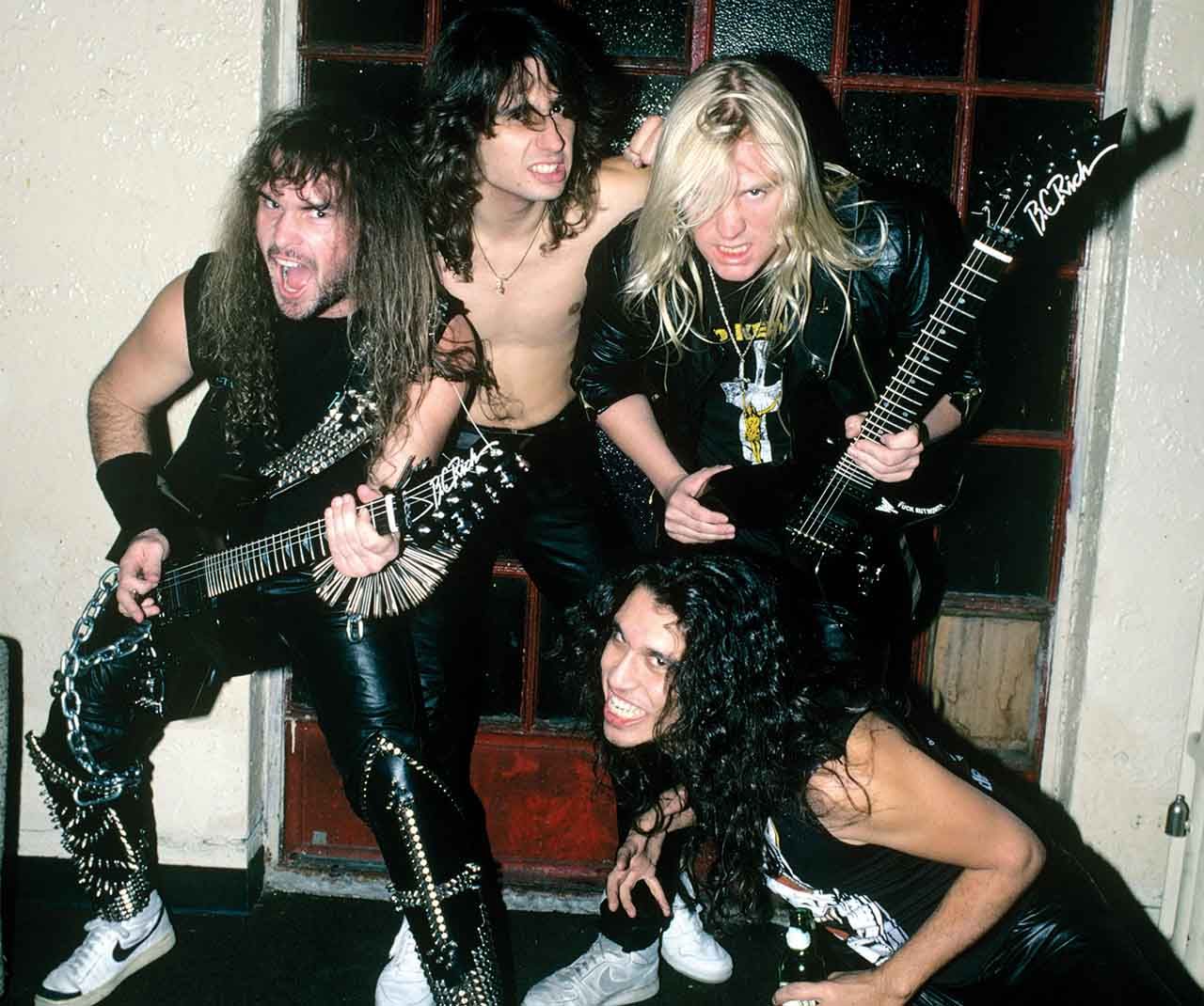
18 Necrophobic was the source of simmering beef between Slayer and Napalm Death after the latter’s bassist, Shane Embury, boasted that Napalm were faster than Slayer’s speediest song. “I said some things in the media that I regret, to be honest,” Shane tells Hammer. “I’m sure I said something along the lines of, ‘We’d never slow down like Slayer,’ which is absolute bullshit because we did! But Kerry King’s forgiven me, I think.”
19 Dave Lombardo’s favourite Reign In Blood song? The penultimate track, Postmortem. “That piece is just monstrous,” he told Metal Hammer. “Postmortem into Raining Blood! It’s epic how it flows from one song to the other.”
20 The controversial album cover was painted by US artist Larry Carroll, who had previously contributed illustrations to the New York Times and The Village Voice. Larry deliberately used “banal” colours to make the image off-putting, though he did add several subtly provocative elements, including a pair of giant erections and a dismembered penis. Contrary to popular belief, the demon carrying the chair wasn’t based on Prince Charles, though there is a resemblance.
21According to Larry Carroll, the band initially disliked the image. “But then someone in the band showedit to their mother, and their mother thought it was disgusting, so they knew they were onto something,” he told journalist D.X. Ferris.
22 No one knows where the original Reign In Blood painting is today. Larry Carroll gave the piece to a fan who seemed to genuinely want it, only for them to subsequently sell it. Larry called the person a “schmuck”, and who can blame him?
23 Angel Of Death proved a major flashpoint for the record. Al Teller and Walter Yetnikoff – respective heads of Def Jam’s distributor Columbia and its parent company CBS – were both Jewish and objected to the song’s lyrics. There were business concerns too: “My shareholders are all Jewish!” Yetnikoff reportedly proclaimed. He refused to distribute the record.
24 The situation could have been averted if Slayer had simply removed Angel Of Death from the album, as CBS demanded they do. “We were never, ever tempted to do that,” Tom told Hammer. “We felt we hadn’t done anything wrong. They said, ‘Take that song off the album.’ Rick said, ‘No.’ And he went and found someone else to release it.”
25 Jeff Hanneman always protested that Angel Of Death wasn’t a glorification of Nazi physician Josef Mengele and the atrocities at the Auschwitz concentration camp. Not everyone agreed with him. “I’m reading the lyrics and my first impression is like, yes, it 100% is,” Linkin Park’s Mike Shinoda told Noisey in 2018. “I’m not a fan of that at all.” He likes the music, though.
26 Reign In Blood was finally released on October 7, 1986 in the US. However, the controversy meant that Def Jam struggled to find a European distributor, meaning it wasn’t actually released in the UK until six months after it dropped Stateside.
27 By the time Reign In Blood was released in Europe, Dave Lombardo had quit and rejoined the band. He initially left in December 1986, at the end of the first leg of the US tour in support of W.A.S.P. “I had been going on tour and I was coming back with no money to pay my basic bills. I was like, ‘Fuck this, man,’” Dave later revealed to Hammer.
28 One of the people who tried out to replace Dave was future Megadeth drummer Nick Menza. “As I recall, he didn’t have the dedication,” said Kerry King.
29 The man who did succeed Dave was Tony ‘TJ’ Scaglione of New Jersey thrashers Whiplash. “I was only 18 years old at the time, so it was a bit overwhelming,” he said. His time in Slayer was brief, lasting just 25 shows. By April 1987, Rick Rubin had persuaded Dave to return to the band. “We swept whatever was under the rug and carried on,” said the sticksman.
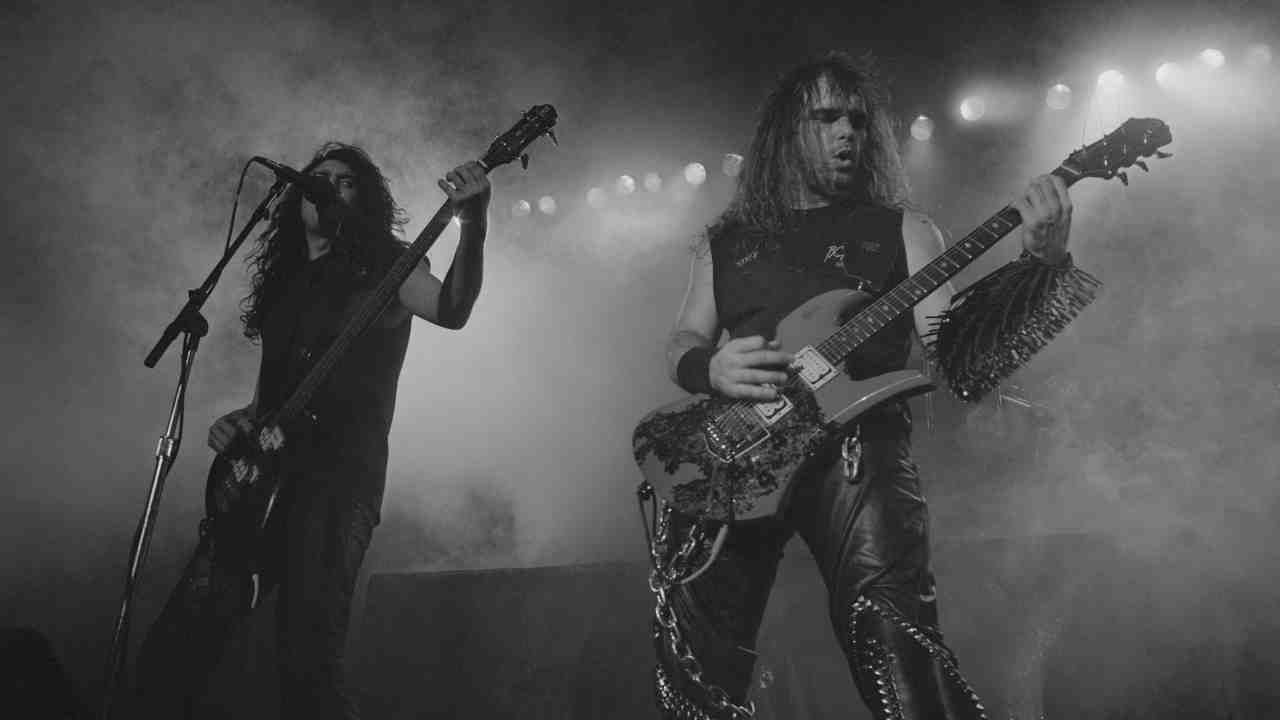
30 Dave’s reunion with the band, in April 1987, wasn’t tension-free. The drummer insisted his wife joined them on the tour bus and the couple got their own dressing room – something that rest of the band weren’t overjoyed about. Kerry, for one, wasn’t sure whether the drummer’s return would be permanent. It was… at least until Dave left again in 1992.
31 Despite being on a successful hip hop label, and playing the solo on Def Jam labelmates Beastie Boys’ 1986 single No Sleep Till Brooklyn, Kerry was sniffy about the genre. “Was I a fan of hip hop? I wasn’t, no,” he said bluntly.
32 The feeling wasn’t necessarily mutual. Several hip hop acts sampled tracks from Reign In Blood, including Public Enemy, who used the riff from Angel Of Death in their 1988 track She Watch Channel Zero?!. “Slayer, that was like the dark side,” said Hank Shocklee of Public Enemy’s production team The Bomb Squad. “They were enigmas.”
33 Other rap artists to sample Reign In Blood songs include crunk king Lil Jon (Raining Blood on 2004’s Stop Fuckin Wit Me), Ill Bill (Raining Blood on 2007’s Awaiting The Hour) and Fat Nick and Lil Peep (uh, Raining Blood on 2016’s Oh It’s Lit).
34 Speaking of Ill Bill, the New York rapper was the only other musical act Reign In Blood artist Larry Carroll painted a cover for. He painted the cover for 2008’s The Hour Of Reprisal, whose title was a Raining Blood lyric. The album also featured a song called U.B.S. (Unauthorized Biography Of Slayer).
35 One of the most remarkable cover versions of a Reign In Blood song was Tori Amos’s near-unrecognisable take on Raining Blood from her 2001 album Strange Little Girls. “Covering that was a message for the patriarchy, especially back in 2001,” she told Classic Rock earlier this year. “My concern for women then, and now, was having so few freedoms, so few rights, and being controlled by a type of poisonous state. When I heard Raining Blood I had a vision of this huge vagina in the sky that was dripping blood everywhere, like the elements were rising up to combat this force of malevolent, patriarchal force. [Slayer] sent me a fabulous box of t-shirts for that, they were so lovely about it.”
36 The first time Angel Of Death appeared in a film was in 1990s’s Gremlins 2: The New Batch. The song soundtracks a scene where the malevolent Mohawk Gremlin turns into a spider after chugging back a weird chemical drink.
37 Angel Of Death also appeared in 2002’s Jackass: The Movie, and Jackass star Steve-O used Raining Blood as his entrance music during his comedy tours. “As the tune broke, I’d start smashing [Budweiser] cans on my head until they broke and then I’d spray beer all over the crowd,” he told Hammer in 2019.
38 Reign In Blood helped shape one of the most iconic albums of the 1990s. Kurt Cobain picked Andy Wallace to mix Nirvana’s mega-breakthrough, Nevermind. “I didn’t know it at the time, but I later read that the thing that interested Kurt Cobain was me mixing the Reign In Blood album,” Andy later said.
39 If there’s one song Tom Araya would have taken off the album, it’s Epidemic. “That was the one, at the time it was really great and cool, but when you sit back and look at all the lyrics on the album, that’s the one that I could live without,” he told Hammer.
40 Like most right-minded people, Tom rates Reign In Blood as Slayer’s greatest album. Asked why it’s so celebrated, he told Hammer: “Maybe it was because at the time that record came out, everybody was doing really slow stuff. Maybe the controversy. Maybe the fact that we came out on a rap label. Maybe that it was only 28 minutes – nobody felt short-changed. I can’t answer that.”
Additional Sources: Slayer’s Reign In Blood by D.X. Ferris (33 1/3)