
The 1990s were supposed to be the decade metal died. Grunge arrived, glam collapsed overnight, and the industry decided that guitars with distortion and hair past the shoulders were finished. What actually happened is that metal went underground, got angrier, and came back out having invented groove metal, nu-metal, industrial metal and the most extreme music the genre had produced to that point. These are the thirteen bands who did it.
Nobody planned any of this. The decade has no unifying sound and no scene that connects the bands on this list — a Brazilian thrash band, a Florida death metal outfit, a masked nine-piece from Iowa and a horror-punk act from New York have essentially nothing in common except a ten-year window.
That’s the point. The 90s didn’t have a sound. It had a survival instinct.
How this list was made
Four things, weighed against each other.
Influence. How many bands exist differently because this one existed. Weighted heaviest, because the decade’s whole story is what got built.
Decade impact. What they actually did in the 90s — not before, not after. A band with one enormous 90s record can outrank a band with a long career and a quiet decade.
Innovation. Whether they made something that didn’t exist before they made it.
Endurance. Whether the records still work now, thirty-odd years on.
Those criteria pull hard against each other, and where they conflict is where this list gets contentious. A few of the absences are explained properly further down, because some very obvious names aren’t here and the reasons matter.
The legacy of the 80s: from glam to grit
As the decade opened, the excesses of 80s glam were collapsing and the appetite had shifted to something heavier and more honest. The thrash titans — Slayer, Megadeth, Anthrax — had laid the groundwork with speed and socio-political fury.
It was Metallica who bridged thrash and the mainstream with the Black Album in 1991, and its commercial scale proved metal could still dominate even as a new sound rose out of Seattle. We’ve ranked their whole catalogue here, and the Black Album sits second on it.

Grunge’s impact, and metal’s response
Nirvana and Pearl Jam didn’t kill metal. They changed what it had to do to survive.
Some bands absorbed grunge’s emotional weight and made something new out of it — Alice In Chains and Deftones both belong in that category. Others went the opposite way and doubled down on brutality until the mainstream stopped being a consideration at all. Pantera chose that, and it worked so completely that the entire decade bent around it.
The subgenres the 90s built
While the charts looked elsewhere, four entire genres were being invented underground.
Groove metal. Pantera led it with the Southern-fried, chugging riffs of Cowboys from Hell and Vulgar Display of Power, and it became the blueprint for a decade of bands.
Death metal. Florida exploded — Cannibal Corpse, Morbid Angel, Death — with ultra-fast tempos, guttural vocals and a level of extremity nobody had attempted.
Black metal. The Scandinavian scene brought a raw, lo-fi aesthetic and an ideology that made death metal look tame.
Nu-metal. The back half of the decade fused heavy riffs with hip-hop and electronics, and brought an entirely new audience into a genre that had been told it was finished.
Loaded Radio Recommends – 13 Metal Albums from the 90s That Prove Grunge Didn’t Win
Number 13 – Machine Head

Oakland’s Machine Head arrived in 1994 with a record that sounded like thrash had been handed a hydraulic press.
Burn My Eyes fused thrash aggression with a groove heavy enough to move a room, and it became the biggest-selling debut in Roadrunner’s history at the time. Robb Flynn had come out of Vio-lence with a clear idea of what he wanted, and the result was a record that arrived fully formed.
What makes it a cornerstone is how much of the following decade you can hear in it. Every band who tried to weld technical riffing to a groove in the mid-90s was working from this template, whether they’d admit it or not.
Number 12 – Deftones

Hailing from Sacramento, California, Deftones emerged as sonic pioneers, challenging the boundaries of heavy music with their captivating There’s an argument that Deftones don’t belong on a metal list at all, and it’s the wrong argument.
The Sacramento band spent the 90s building something nobody else was attempting — metal, shoegaze, grunge and alternative rock folded into each other until the seams disappeared. Around the Fur in 1997 is where it clicked: crushing heaviness underneath genuinely beautiful melodies, and Chino Moreno moving between a whisper and a scream inside a single bar.
They got filed as nu-metal because of when they arrived. They’ve outlived every band they were filed alongside, and the reason is right here — they were the only ones in that wave interested in atmosphere.
Number 11 – Korn

Bakersfield in 1994, and nothing sounded like it.
Korn‘s self-titled debut did something genuinely rare: it created a genre rather than joining one. Down-tuned seven-strings, a bass played like a percussion instrument, hip-hop rhythms underneath metal riffs, and Jonathan Davis singing about things nobody in this music had been willing to say out loud.
It was a commercial slow burn and a cultural detonation. Within four years, nu-metal was the biggest thing in heavy music and every major label had signed three bands trying to be this one.
Whatever you think of what followed, the debut is the source and it still sounds uncomfortable.
Number 10 – Fear Factory

Los Angeles, 1995, and Fear Factory made the album that taught metal what to do with a machine.
Demanufacture is the landmark — a record about man versus technology that sounds exactly like its subject. Raymond Herrera‘s drumming is so precise it was regularly mistaken for programming, Burton C. Bell alternated clean singing with roars in a way that became the template for a hundred bands, and the industrial elements weren’t decoration on top of metal, they were structural.
Nine Inch Nails made industrial rock palatable. Fear Factory made industrial metal heavy, and everything from Rammstein’s precision to modern djent’s mechanical feel runs back through it.
Number 9 – Sepultura

Belo Horizonte, and the most fearless reinvention any metal band attempted in the decade.
Sepultura could have kept making thrash records and been fine. Instead Chaos A.D. in 1993 slowed everything down, brought in tribal percussion and Brazilian rhythms, and stripped the songs back to something primal — and then Roots in 1996 went considerably further, recording with the Xavante people in the Mato Grosso.
It split their audience and it changed the genre. Nu-metal’s rhythmic approach, the entire idea that metal could absorb music from outside its own tradition — both start here.
Max Cavalera left in 1996 and the band never fully recovered from it, which is its own argument. What they did between 1993 and 1996 stands regardless.
Number 8 – Black Sabbath
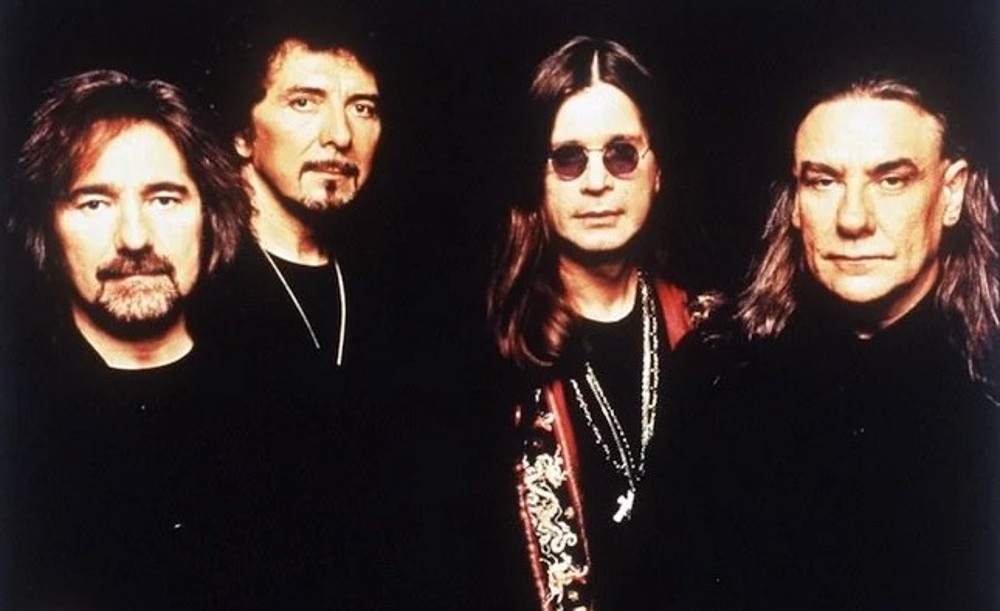
An odd inclusion on a 90s list, and a defensible one.
The band that invented all of this spent most of the decade in disarray — Dehumanizer in 1992 reunited them with Ronnie James Dio and is genuinely strong, and then it fell apart again almost immediately.
What earns the placement is 1997. The original four — Ozzy Osbourne, Tony Iommi, Geezer Butler and Bill Ward — reunited for the first time in nearly twenty years, and the timing mattered enormously. Metal had spent a decade being told it was over. Sabbath coming back, to genuine mainstream attention, reminded a very large audience where all of it came from.
The Reunion live album went platinum. In a decade about survival, the godfathers showing up and being welcomed was its own kind of statement.
Number 7 – Dream Theater

Formed on Long Island, New York, by three musicians who’d met at Berklee and left within a year, Dream Theater spent the 90s proving that virtuosity hadn’t died with the 80s.
Images and Words in 1992 is the record that built progressive metal as a modern genre. “Pull Me Under” became an unlikely radio hit, which nobody involved expected from a song in irregular time signatures, and the album’s success created a commercial space for technical music that simply hadn’t existed.
Every prog-metal band that followed — Opeth’s heavier turns, Between the Buried and Me, half of what djent became — is downstream of this. They made complexity a selling point at exactly the moment the industry was rewarding simplicity.
Number 6 – Cannibal Corpse

Buffalo, New York, and the band who made extremity into a career.
Cannibal Corpse spent the 90s being banned, protested and named in legislatures, and it did nothing except make them bigger. Tomb of the Mutilated in 1992 is the landmark — relentless tempos, Chris Barnes‘ guttural vocals, and lyrics designed to be unprintable.
What gets missed is how good the band actually is underneath the controversy. The riffing is intricate, the arrangements are tighter than the genre required, and they’ve now outlasted virtually everyone who tried to have them banned.
They’re also the biggest-selling death metal band in history, which is a strange sentence about a band whose entire output is about dismemberment.
Number 5 – Tool

Los Angeles, and a band who refused every rule about how this was supposed to work.
Tool gave no interviews worth the name, made videos that showed no faces, wrote songs in time signatures nobody could dance to, and got enormous anyway. Ænima in 1996 is the decade’s most quietly influential metal record — progressive, psychedelic, heavy, and structured more like a piece of composition than a collection of songs.
Maynard James Keenan made a virtue of withholding himself, which in a decade obsessed with authenticity was its own kind of provocation. Danny Carey‘s drumming reset expectations for what the instrument could do in this music.
They also made patience a commercial strategy, and it’s still working thirty years later.
Number 4 – Slipknot

One album in the 90s. It was enough.
Slipknot‘s self-titled debut arrived in June 1999 out of Des Moines, Iowa, and it functioned less like a record than an event. Nine members. Masks and boiler suits. Three percussionists. A DJ. A level of onstage chaos that made everything around it look polite.
The reason it’s this high on a decade list with a single album to its name is what happened next — that record is the pivot point between 90s nu-metal and everything heavy music became in the 2000s. It went platinum without radio support, and it created the template for a generation of bands who understood that presentation was part of the music.
There’s a fair argument that one album shouldn’t outrank bands with three. There’s a better one that says this album did more in seven months than most bands manage in a decade.
Check This Out – SLIPKNOT MEMBERS: The Definitive 2026 Roster and Status Breakdown
Number 3 – White Zombie

New York City, and the most underrated band of the decade.
White Zombie spent the 90s doing something nobody else managed — making genuinely heavy music that was also enormous fun. La Sexorcisto: Devil Music Vol. 1 in 1992 went double platinum on the back of “Thunder Kiss ’65,” and Astro-Creep: 2000 in 1995 is the better record: industrial-tinged groove metal stitched together with B-movie samples and horror imagery.
Rob Zombie understood something most of his contemporaries didn’t. The visual side wasn’t a gimmick attached to the band; it was the band. The look, the samples, the artwork and the riffs were a single thing, and it’s the reason White Zombie broke into MTV rotation while heavier acts never got near it.
They split in 1998, at the top, which is why they get talked about less than they deserve.
Number 2 – Death
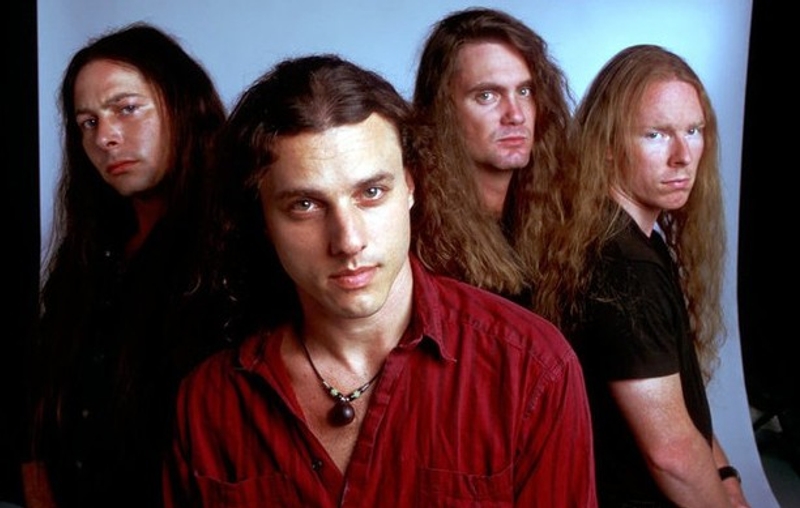
Florida, and the most important band on this list that most people have never heard.
Death started the decade as a brutal death metal band and finished it having invented technical death metal and progressive death metal more or less single-handedly. Human in 1991 is the turn — the songs got complex, the musicianship got extraordinary, and Chuck Schuldiner‘s writing started reaching for something the genre hadn’t attempted.
Then Individual Thought Patterns, Symbolic and The Sound of Perseverance, each further out than the last. Schuldiner used the band as a revolving door for the best players he could find, which is why the Death discography reads like a who’s who of extreme metal musicianship.
He died in 2001, at 34. Opeth, Cynic, Between the Buried and Me, Gojira and virtually all modern technical death metal exist in the space he opened, and he never saw any of it.
Number 1 – Pantera

There was never any real doubt.
Pantera entered the 90s having spent the 80s as a glam band nobody outside Texas cared about, and then released Cowboys from Hell in 1990 and became something else entirely. Vulgar Display of Power in 1992 is the decade’s defining metal album, and Far Beyond Driven debuted at number one on the Billboard 200 in 1994 — a genuinely extreme record at the top of the American chart, which had never happened and hasn’t since.
Dimebag Darrell rewrote what a metal guitarist was supposed to sound like: the squeals, the tone, the riffs that sat somewhere between thrash and Southern rock and belonged to neither. Phil Anselmo turned the vocal into pure physical threat. Vinnie Paul and Rex Brown made the whole thing swing, which is the part everyone forgets.
And they did it without compromising once. No ballad, no crossover single, no concession to the decade’s mood. In the years metal was declared dead, the heaviest band in America was selling millions of records.
Dimebag was murdered on stage in 2004. Vinnie Paul died in 2018. The catalogue is untouchable and the ranking of it is here.
Every band, ranked
Where are Metallica and Megadeth?
The question everyone’s going to ask, so here’s the straight answer.
They’re not here because the criteria at the top are weighted toward what a band built during the decade, not how many records it sold in it — and both Metallica and Megadeth spent the 90s consolidating rather than inventing.
Metallica released the best-selling metal album of the decade in 1991 and it’s an extraordinary record. But the Black Album is the endpoint of the 80s thrash project rather than the start of anything — and Load and Reload took them somewhere the rest of the genre pointedly declined to follow. Enormous decade, minimal influence on what came next. Our full ranking is here.
Megadeth‘s 90s run is the strongest four-album stretch of their career — Rust in Peace, Countdown to Extinction, Youthanasia, Cryptic Writings. It’s also, deliberately, refinement rather than reinvention. Rust in Peace is a 1990 album that belongs to the 80s. The whole catalogue is ranked here.
Alice In Chains are the hardest omission to defend, and the reason is a technicality — they got filed as grunge and this is a metal list. Dirt is heavier than several albums by bands who made the cut.
Also absent, and each with a case: Slayer, whose 90s was strong but whose decade of impact was the one before. Rage Against the Machine, who invented something enormous and aren’t really a metal band. Type O Negative, Marilyn Manson, Nine Inch Nails, Faith No More, At the Gates, In Flames, Emperor, Meshuggah and Opeth — several of whom have a better claim than one or two bands on the list.
Thirteen was never going to be enough for a decade this crowded.
Where this ranking will start arguments
Slipknot at four with one album is the obvious one. A single 1999 release outranking bands with three or four 90s records looks indefensible on paper. The case is that the album is the hinge between two eras of heavy music, and influence is the heaviest-weighted criterion.
Black Sabbath at eight on a 90s list will read as sentiment. It partly is. Dehumanizer is genuinely good and the 1997 reunion mattered more to the genre’s morale than anything else that happened that year.
Death at two, above White Zombie and Slipknot, will look high to anyone who came to metal through the mainstream and exactly right to anyone who didn’t. Chuck Schuldiner invented two subgenres in eight years.
Dream Theater at seven on a metal list will annoy people who think prog isn’t metal. Images and Words got a song in odd time signatures onto the radio in 1992, which is its own kind of heavy.
More of this in the full Loaded Radio rankings archive.
TL;DR
- Thirteen bands ranked by what they built during the 1990s, judged on influence, decade impact, innovation and endurance.
- Number one: Pantera. Vulgar Display of Power is the decade’s defining metal album, and Far Beyond Driven put a genuinely extreme record at number one on the Billboard 200 in 1994.
- Number two: Death. Chuck Schuldiner invented technical and progressive death metal more or less single-handedly, and died at 34 without seeing what grew out of it.
- The decade built four genres: groove metal, nu-metal, industrial metal and modern death metal, plus the Scandinavian black metal scene.
- Metallica and Megadeth aren’t on the list, because the criteria reward what a band built rather than what it sold — and both spent the 90s consolidating rather than inventing.
- Grunge didn’t kill metal. It pushed it underground, where it got angrier and considerably more inventive.
FAQ
What are the most influential 90s metal bands?
Pantera, Death, White Zombie, Slipknot, Tool, Cannibal Corpse, Dream Theater, Black Sabbath, Sepultura, Fear Factory, Korn, Deftones and Machine Head. Each is ranked here by what they built during the decade — influence, innovation and impact — rather than by record sales.
Why isn’t Metallica on this list?
Because the criteria weight what a band built during the decade over what it sold. The Black Album is the best-selling metal record of the 90s and an extraordinary album, but it functions as the endpoint of 80s thrash rather than the start of something new, and Load and Reload took the band somewhere the genre declined to follow.
What subgenres of heavy metal were popular in the 90s?
Groove metal, nu-metal, industrial metal and progressive metal all emerged or peaked in the decade, while death metal and black metal grew enormously in the underground. The 90s produced more distinct metal subgenres than any other decade.
How did grunge affect heavy metal?
It challenged metal’s commercial position but didn’t end it. Some bands absorbed grunge’s emotional weight — Deftones and Alice In Chains among them — while others, Pantera chief among them, responded by becoming heavier and abandoning the mainstream entirely.
Who pioneered nu-metal?
Korn, with their 1994 self-titled debut, which combined down-tuned seven-string guitars, hip-hop rhythms and deeply personal lyrics into something that didn’t previously exist. Deftones and Slipknot were the other major architects in the second half of the decade.
Thirteen bands, four new genres, and no Metallica. Have we got that badly wrong, or does influence really beat sales? Settle it in the comments. And keep it locked on the Loaded Radio stream — follow Loaded Radio for daily rock and metal news.
The post 90s Metal Bands: The 13 Most Influential, And Why Grunge Didn’t Kill Them appeared first on Loaded Radio.



 With the definitive Anthrax ranking done and dusted (I mean my ranking), I finally get my ape ears on the entirety of their 12th album, Cursum Perficio (Latin for “I finish the journey”). It’s been a long wait for something new from the band too, since For All Kings came out over 10 years ago in what now seems like an entirely different world. In the span of time that’s passed since then, both Slayer and Megadeth closed up shop, the world suffered a pandemic that forever changed the way societies function, and Metallica dropped an album that nobody really loved as they too likely headed toward a final exit. For all intents and purposes, that makes Anthrax the last band standing from the Big Four. How many expected this outcome back when Thrax was dropping duds like We’ve Come for You All and Vol. 8? I certainly wouldn’t have bet on them in a survivor pool, but here we are. Looking back, the smart money probably should have been on the little band from Queens, since For All Kings smoked anything the Big Four members released in ages. But can Anthrax pull another rabbit out of their magic hat so late in their career? Based on that wild cover art, they seem to be telegraphing that rabbits will be forthcoming. With the same lineup as last time, let’s hope they can still make the fur fly.