On its self-titled debut album, Bristol-based Pocket tears through eight songs of raw, energetic, and totally excellent pop-punk. This one-sided 12″ is an absolute thriller for anyone who enjoys pop-punk that leans to the punk side but doesn’t skimp on hooks. Thom Weeks, Kathryn Woods, Andrew Horne, and Brian Scally are all established players in the UK indie/punk scene. As Pocket, they come together to deliver a perfect mix of melody and aggression. All these tunes hit hard and are carried off with urgency and feeling. Even when the band ventures into noisy indie rock territory, the songs are still crackling and brimming with energy. And at a lean eight tracks, this is the quintessential all-killer, no-filler affair. This is a record that you can’t help but crank super-loudly as you shout along and pump your fist. From start to finish, you can truly feel the passion that went into these songs. Since this is technically half of a vinyl record, I don’t know whether to call it an LP or an EP. But it’s one of the most exciting records I’ve heard this year, and you know I’ve heard a lot. Get it from Specialist Subject Records!
You have to love a band with a baseball-themed name releasing an EP called Preseason just in time for the postseason! I’m still salty about the Phillies’ early playoff exit, but I sure dig this record. The Shortstops are from Louisville, Kentucky, and they don’t write songs about baseball. But it’s possible that they play baseball and certain that they like baseball. The band cites Matthew Sweet, Weezer, and Jeff Rosenstock as influences, so that gives you some idea where these guys are coming from. They’re broadly a power pop band — but not the kind that wants to be The Beatles. I’m feeling some serious ’90s indie/alternative rock energy on the endearingly dorky “Absurd.” “Caroline” and “Betsy” are giving jangly, mushmouthed early REM vibes. What really won me over is that the song lyrics are interesting and creative. “Absurd” is about this dude who’s into this girl who clearly, obviously thinks he’s a loser — and so, of course, that makes him all that more obsessed with her and all the more convinced in his chances. “Ford Pinto” crafts the ultimate metaphor for a relationship that you ought to know is destined for disaster. “California” seems to be your typical romanticized road trip pop song, but then it takes a very sudden dark turn. “Mockingbird” comes off like the pop-punk song Edgar Allan Poe might have written. There are also a couple of more conventional love songs to bring it all home. This is a charming little EP that shows exactly the sort of range you’d want from a bunch of Shortstops.
This week’s Kenny Hickey interview on The Loaded Radio Podcast is the whole conversation, not the six minutes you’ve already seen. The Type O Negative guitarist has three bands’ worth of news in him right now: a live album that’s almost mixed and an unreleased Peter Steele song that will come out; a Silvertomb record, the first in seven years, arriving in November; and Sun Don’t Shine, the band he and Johnny Kelly built with Crowbar’s Kirk Windstein and Todd Strange, with a debut album already out. He gets to all of it. Then he gets to the stories we didn’t put on video.
Hit play below. If you’d rather read first, here’s what’s on the tape.
Listen on the free Loaded Radio app for Apple iOS and Google Play, or on Apple Podcasts, Spotify and wherever you get podcasts. Every episode of The Loaded Radio Podcast is here.
Type O Negative: The Live Album, ‘Prometheus’ And The Rest
The Type O Negative portion is the news half of the episode, and most of it has already traveled: the live album is nearly edited, Mike Marciano is mixing it, and the target is the first quarter of 2027.
Hickey lays it out plainly. ‘I’m almost done editing everything,’ he says, and the tapes are going to Marciano, ‘who was the original mixer for Type O Negative’. The band sent him ‘Love You To Death’ as a trial run and liked what came back. The reason you won’t hear it this year is pressing plants: ‘You’ve got to put in for the vinyl, and making the vinyl takes months.’ When Loaded Radio first broke the live album there was no mixer and no window. Now there are both. The title is still his to keep.
Then ‘Prometheus’, the Peter Steele song Johnny Kelly found on a cassette and told us about earlier this year. Hickey loves it and doesn’t remember playing on it. ‘We’re going to release it at some point, some format, on whatever reissues we do.’ From there the conversation moves through October Rust at 30, Josh Silver (still a paramedic, still off limits, by his own request), the reunion ‘nudges’ that keep arriving without money attached, and World Coming Down, the record Hickey calls ‘one of the most honest ones’.
That last stretch is the part we put on video, with Hickey explaining what Peter Steele was carrying when the band made it. The Type O Negative update, in full, is here. On the podcast you get it in context, with the questions and the pauses, and then you get everything that came after.
LIVE & LOUD: Stream the World’s Hardest Radio Station 24/7
Silvertomb: ‘The Interpretation Of Nightmares’, November 13
Silvertomb’s second album is out November 13 on Steamhammer, seven years after Edge Of Existence, and this is Hickey’s first long conversation about it.
The lineup is the one that’s been there since the start: Hickey on vocals and guitar, Johnny Kelly on drums, Joe James of Agnostic Front on guitar, Hank Hell of Sheer Terror on bass, and Aaron Joos on guitar, keys and vocals. Eight songs, from ‘Brain Matter / No God’ to ‘When Will You Learn?’, with ‘No Way To Live’ as the first single and ‘Graves In The Sky’ the second, a song Hickey wrote on acoustic guitar and piano rather than electric. Everything we know about the record, including the full tracklist, is already on the site.
What the album page can’t tell you is what the seven years were. Silvertomb had a tour with Monster Magnet booked before the pandemic that never happened, and the band went quiet for the better part of four years. Hickey is asked what the gap was, what changed when the five of them got back in a room, and why a man with two other bands in motion came back to this one first. He’s also asked the question every Type O fan asks about Silvertomb, which is how much of Brooklyn is allowed in, and whether ‘Graves In The Sky’ is the closest he’s come to answering it.
Sun Don’t Shine: Hickey, Windstein, Kelly And Strange
Sun Don’t Shine is the band that used to be called Eye Am: Kenny Hickey and Johnny Kelly from Type O Negative, Kirk Windstein and Todd Strange from Crowbar and Down. The debut album, From Birth To Death, is out now on Corpse Paint Records.
On paper it’s a Brooklyn-meets-New Orleans sludge summit. On record it’s broader than that, with Hickey singing more than he’s been asked to sing since Seventh Void and Windstein’s riffs sitting under actual melodies. The singles tell the story in order: ‘Coming Down’, ‘Dreams Always Die With The Sun’, ‘Cryptomnesia’, ‘The Promise Song’, then ‘In The End’, the one that convinced the label. Duane Simoneaux produced it with Vinnie LaBella of Exhorder co-producing, which is as New Orleans as a credits list gets.
Hickey is asked the practical question: with Silvertomb in November and the Type O live album in the new year, which of his three bands gets 2027. His answer is a scheduling problem most musicians would kill for.
The Stories We Kept Off Video
The back half of the tape is where Hickey stops giving updates and starts telling stories, and we’ve kept most of it for the podcast on purpose.
Without spoiling it: there’s a conversation about which Type O Negative albums he’d put at the top and the bottom, and why Life Is Killing Me sits where it does for him, which you can set against where the fans put them. There’s the reason Type O Negative wouldn’t play new songs live before a record came out, which is a Peter Steele story as much as a band policy. There’s Pantera and Dimebag, Seventh Void, and the thread that runs from those years to Sun Don’t Shine. And there are a couple of people from the band’s early days whose names don’t usually come up in these interviews.
Some of that will be a second video in a few days. All of it is on the episode now. If you want the Peter Steele context before you press play, thirteen things about Peter is the quickest way in.
Kenny Hickey On The Loaded Radio Podcast
This is Hickey’s second visit to the show this year, and has had many over the years.
In May, Kenny and Johnny Kelly came on together and first mentioned the cassette, the October Rust anniversary and the possibility of tribute shows with guest singers. Five months on, the cassette has a title, the live album has a mixer and both of his other bands have records. Put the two episodes back to back and you can hear a year happen.
New episodes of The Loaded Radio Podcast land every week on the free Loaded Radio app for Apple iOS and Google Play, Apple Podcasts, Spotify and everywhere else. If this one’s your first, start with the Johnny Kelly episode next; the two conversations answer each other.
TL;DR
The full Kenny Hickey interview is on The Loaded Radio Podcast now: Type O Negative, Silvertomb and Sun Don’t Shine, plus the stories the video left out.
Type O Negative: the live album is nearly edited, Mike Marciano is mixing it, target first quarter of 2027; ‘Prometheus’ will be released ‘at some point, some format’; Josh Silver stays private; reunion nudges keep coming, none with money.
Silvertomb’s The Interpretation Of Nightmares is out November 13 on Steamhammer, the first album in seven years; singles ‘No Way To Live’ and ‘Graves In The Sky’.
Sun Don’t Shine (Hickey, Johnny Kelly, Kirk Windstein, Todd Strange) have their debut From Birth To Death out now on Corpse Paint Records.
Listen on the free Loaded Radio app, Apple Podcasts, Spotify and all podcast platforms.
FAQ
Where can I listen to the Kenny Hickey interview on The Loaded Radio Podcast?
Right here, with the player above, and on the free Loaded Radio app for Apple iOS and Google Play, Apple Podcasts, Spotify and every other podcast platform. The Type O Negative segment is also available as a video on Loaded Radio’s YouTube channel; the podcast is the complete conversation.
What does Kenny Hickey say about the Type O Negative live album?
That the editing is almost finished, that Mike Marciano, who mixed the band’s studio records, is mixing it, and that the band is aiming for the first quarter of 2027, with vinyl manufacturing the reason for the wait. The title has not been announced.
When is the new Silvertomb album out?
The Interpretation Of Nightmares is released November 13, 2026 on Steamhammer. It’s Silvertomb’s second album and the first since Edge Of Existence in 2019. The lineup is Kenny Hickey, Johnny Kelly, Joe James, Hank Hell and Aaron Joos.
Who is in Sun Don’t Shine?
Kenny Hickey (vocals, guitar) and Johnny Kelly (drums) of Type O Negative, with Kirk Windstein (guitar) and Todd Strange (bass) of Crowbar and Down. The band was previously called Eye Am. Their debut album, From Birth To Death, is out now on Corpse Paint Records.
Is Type O Negative getting back together?
Not currently. Hickey says the band has received ‘nudges’ about reunion appearances but no offers with money attached, and that keyboardist Josh Silver prefers to stay out of band matters publicly.
Which part of the episode hit you hardest? Tell us in the comments, and follow Loaded Radio for the second Kenny Hickey video later this week and the live album title the moment it’s announced.
Kerry King’s solo debut was always going to be measured against Slayer’s legacy. Released in 2024, From Hell I Rise carried the guitarist’s musical vision forward with familiar riffs, anti-religious venom and a seasoned line-up. Its reception was mixed: some welcomed songs that kept the Slayer sound alive, while others found the album too predictable […]
STONEWIELDER: MARK WEEKS DISCUSSES THE PERSONAL STORY BEHIND “THE NEEDLE,” DOOM METAL ROOTS, AND THE POWER OF HEAVY RIFFS
The Stonewielder guitarist and vocalist joins Zach Moonshine on The Zach Moonshine Show to talk songwriting, musical influences, guitar gear, and the band’s upcoming appearance at Delta Doomfest.
Some metal songs are written to tell stories about fictional worlds filled with demons, sorcery, and supernatural horrors. Others draw their darkness directly from real life. For Stonewielder, the latter approach is becoming an important part of the band’s identity.
During a recent appearance on The Zach Moonshine Show with Metal Devastation Radio, Stonewielder guitarist and vocalist Mark Weeks joined Zach Moonshine for a conversation about the band’s latest single, “The Needle,” the personal experiences that inspired it, the band’s musical evolution, and the gear behind its crushing sound.
The conversation covered everything from Black Sabbath and old-school thrash to solid-state amplifiers, underrated guitar pedals, and the band’s upcoming performance at Delta Doomfest. But at the heart of it all was a discussion about turning real-world pain into heavy music.
“THE NEEDLE”: A PERSONAL STORY WITH A DARK MESSAGE
Zach opened the conversation by praising Stonewielder’s latest single, “The Needle,” describing it as a brutally heavy track with a dark atmosphere.
Mark agreed that the song stands out among the band’s material, calling it his favorite song Stonewielder has released so far.
The track also carries a deeply personal meaning.
Mark explained that the song was inspired by his brother, who struggled with heroin addiction for years before ultimately losing his life to it. With his brother’s birthday approaching, Mark found himself reflecting on that loss and decided it was time to turn those feelings into music.
Rather than simply writing lyrics about addiction, he wanted the song to tell a story through its musical progression.
The opening represents the period leading up to the central struggle. As the song develops, an eerie passage before the main solo represents the moment the character gives in. The solo itself represents the resulting euphoria, followed by a transition reflecting the trauma experienced by those left behind.
The outro solo represents the final journey into the unknown, leaving listeners to interpret what happens after death according to their own beliefs.
It’s a heavy concept in every sense of the word.
Mark acknowledged that his brother’s death happened years ago, but completing the song finally gave him a way to express something he’d carried for a long time.
Zach offered his condolences and pointed out how powerful it can be when musicians transform difficult experiences into art.
Sometimes, the heaviest music comes from places far beyond distortion pedals and down-tuned guitars.
REAL-WORLD HORROR INSTEAD OF FANTASY
The story behind “The Needle” also reflects the direction Mark wants to take with his songwriting.
He explained that the band has been discussing a lyrical approach centered on real-world pain and darkness. While Mark appreciates fantasy-driven metal and has nothing against songs about wizards, witches, and demons, he believes stories rooted in recognizable human experiences can connect with listeners in a different way.
Everyone has experienced pain, loss, betrayal, or some form of darkness. Those shared experiences can give a song an emotional weight that reaches beyond genre.
Stonewielder previously explored similar territory with “Burning Fire,” a song about someone discovering their lover’s infidelity and responding with murder.
These aren’t necessarily comfortable subjects, but they’re stories built around recognizable human emotions and the darker possibilities of human behavior.
For Stonewielder, that realism provides a foundation for songwriting that feels personal without requiring listeners to share the exact experiences that inspired it.
The result is music that doesn’t just hit hard sonically. It gives listeners something to think about after the final note fades.
FROM GLAM ROCK AND COUNTRY TO BLACK SABBATH AND THRASH METAL
Every musician has an origin story, and Mark’s musical upbringing took a few different turns before he found his place in the heavier end of the spectrum.
Growing up, he heard a mixture of glam rock, pop, and classic country. His mother played bands such as Cinderella, along with artists like Boy George, while his father listened to old-school country musicians, including Waylon Jennings.
At first, that was simply what music sounded like to him.
Then he met a schoolmate who introduced him to AC/DC, sharing albums such as Dirty Deeds Done Dirt Cheap and Highway to Hell .
That introduction opened the door to something heavier.
When Mark heard Black Sabbath’s Sabbath Bloody Sabbath , he knew he had discovered something different. From there, his listening habits moved into thrash metal in the late 1980s, followed by death metal and some grind.
Despite exploring those heavier styles, certain influences remained constant.
Mark specifically mentioned Black Sabbath and the older Corrosion of Conformity material from before Pepper Keenan took over vocals as lasting influences.
That combination of heavy riffs, groove, and aggression makes sense when listening to Stonewielder. The band’s sound isn’t just about making everything as fast or extreme as possible. There’s a deliberate weight to the riffs, giving the music room to breathe while still delivering plenty of punishment.
As Zach pointed out during the interview, that groove is one of the things that makes Stonewielder’s music so easy to get into. It’s the kind of heavy music that makes you want to crank the volume, move your head, and throw a fist in the air.
Some things never go out of style. A killer riff is one of them.
THE GUITARS, AMPS, AND PEDALS BEHIND THE SOUND
Naturally, the conversation eventually moved into gear territory.
Mark described himself as something of an amplifier addict, and his collection reflects a musician who enjoys experimenting with different equipment to find the right sound.
Among his guitars are a Heritage H-150, an Explorer, and a Kiesel. His amplifier lineup has included several classic designs, and he explained that he likes running two amplifiers simultaneously.
The idea is straightforward: one amp provides more of the sludgy low end, while the other delivers a tighter sound. Combining the two allows him to get the weight and definition he wants.
His current setup has also involved a Peavey-style solid-state approach through an Orange Super Crush, which has become a serious option rather than merely an emergency backup. Mark mentioned that he recently blew up his Friedman Jake E. Lee amplifier during a show, making the backup situation a little more interesting.
When Zach asked about the Super Crush, Mark made it clear that he believes the amplifier is capable of far more than its price might suggest.
He explained that some of his expensive equipment is simply stuff he couldn’t afford when he was younger. Now that he owns it, he enjoys using it, but he doesn’t believe players need expensive gear to achieve a great sound.
In fact, he said someone could use the Super Crush as their main amplifier and be perfectly happy with the results.
One experience helped convince him of that. Stonewielder had opened for The Obsessed, and Mark noticed that Lionel used a Super Crush as a backup for his Soldano amplifier.
That was enough to make Mark take the amp seriously.
As Zach pointed out, solid-state amplifiers have often suffered from a bad reputation, partly because many guitarists started out with inexpensive practice amps that didn’t sound particularly good. That early experience can leave players assuming every solid-state amplifier is going to sound the same.
But modern equipment has given musicians plenty of reasons to reconsider those old assumptions.
Mark’s approach is refreshingly practical: use what sounds good, experiment with your equipment, and don’t assume an expensive price tag automatically means a better tone.
THE METAL ZONE GETS ITS DUE
The pedal discussion was just as entertaining.
Mark explained that when he uses fuzz pedals, he often treats them more like boosts than devices intended to create a completely fuzzy sound. He prefers using them to add a little character to an already crunchy amplifier.
For the recordings, he used a Desert Doom Masochist pedal extensively, alongside a variety of classic amplifiers.
His current pedal choices include a Boss HM-2, a Boss Metal Zone, an SD-1, and the Weed Metal pedal from Desert Doom.
That brought Zach and Mark to a subject that should be familiar to plenty of guitar players: the Boss Metal Zone.
Zach enthusiastically defended the often-maligned pedal, explaining that he likes using his as a clean boost in front of his Marshall amplifier.
Mark agreed with the approach, noting that the Metal Zone can add warmth to the mids, smooth out the sound, and bring harmonics to life.
The pedal has developed a reputation over the years, but plenty of guitarists have discovered that it can deliver excellent results when used in the right setup.
Mark also clarified that he owns the blacked-out standard Metal Zone rather than the Waza version, although his HM-2 is the Waza edition.
For speakers, Mark mentioned a Marshall JCM900 cabinet loaded with G12T-75 speakers. He likes how those speakers cut through a mix, helping his guitar sound remain prominent.
It’s the sort of gear conversation that proves there’s no single magic ingredient behind a great metal tone. It’s about knowing your equipment, understanding what each piece contributes, and putting everything together in a way that serves the music.
WHERE THE NAME STONEWIELDER COMES FROM
The band’s name has a connection to one of doom metal’s legendary acts.
When Zach asked where Stonewielder came from, Mark revealed that it was inspired by Candlemass and their classic song “Black Stone Wielder.”
He considered using the full phrase but decided that doing so would make the reference too obvious. Instead, he shortened it to Stonewielder.
Before forming the band, Mark had played in a group called Spellcrap, which explored a more melodic thrash and death metal direction. When he began working on this project, he wanted a new name that reflected the different musical territory he was entering.
The Candlemass inspiration provided the answer.
Mark even developed a humorous alternative explanation for people who asked about the name. Since stone means rock and the band plays rock music, they were simply wielding the stone.
It’s a suitably ridiculous explanation, but it works. Sometimes a band name needs a little mystery, and sometimes it’s just fun to mess with people.
Either way, the name fits a band drawing from the traditions of doom, sludge, and heavy riff-driven metal.
FROM YOUTUBE GEAR DEMOS TO A FULL-FLEDGED BAND
Stonewielder’s story also has an interesting connection to Mark’s other musical project.
Outside the band, he runs The Distortion Principle, a YouTube channel focused on gear demonstrations, particularly pedals suited to doom and stoner rock.
Mark has been making videos for approximately five to seven years and has built the channel to around 6,000 subscribers.
Interestingly, he explained that the channel helped bring Stonewielder into existence.
He would record short snippets of music for his videos, and viewers kept asking whether he had full versions of the songs available.
Eventually, the requests became difficult to ignore.
Rather than continuing to release isolated snippets, he decided it was time to put a band together.
That decision helped turn those musical ideas into the project listeners know today.
It’s a good example of how one creative outlet can lead to another. What started as gear demonstrations and short musical experiments eventually became the foundation for a band with its own identity, original material, and growing schedule of live performances.
STONEWIELDER GEARING UP FOR DELTA DOOMFEST
The interview also looked ahead to Stonewielder’s upcoming appearance at Delta Doomfest in Memphis.
Mark admitted that the festival’s lineup was intimidating in the best possible way, with a collection of bands ready to bring their own brand of heaviness to the stage.
Among the acts he mentioned were Red Sun, Sermon, Pond Digger, Burnt Witch, Ruin God, and Acromancer.
He also gave a shout-out to Acromancer for stepping in and filling a spot on the bill.
Mark praised organizer James for the amount of work that had gone into putting the event together. He encouraged anyone still considering attending to get off the fence and make the trip, predicting a great show.
Stonewielder planned to perform “The Needle” and debut another new song during the festival.
That second new track would give fans an opportunity to hear fresh material live for the first time.
The band has been keeping busy with shows and songwriting, and Mark revealed that they already have three new songs that need to be recorded. With the first EP essentially completed, the band is already looking toward its next release.
For a group that continues to develop its sound while maintaining a steady live schedule, there appears to be plenty on the horizon.
NEW MERCHANDISE SUPPORT AND WHERE TO FIND THE BAND
Mark also shared some recent news about Stonewielder’s merchandise.
Blackjack Metal Gear Shop has begun sponsoring the band and is stocking Stonewielder CDs, shirts, and other merchandise. Mark expressed his appreciation for the support and said the shop would be helping the band in additional ways.
It’s another important step for an independent band working to build its audience and get its music into the hands of listeners.
Fans can find Stonewielder through its social media channels, Bandcamp, Spotify, iTunes, and other major streaming platforms.
Listeners interested in Mark’s gear demonstrations can also check out The Distortion Principle on YouTube, where he discusses equipment and occasionally talks about Stonewielder.
Supporting independent bands means more than streaming a song once and moving on. Buying merchandise, attending shows, and spreading the word all help keep underground music moving forward.
KEEPING IT HEAVY AND KEEPING IT REAL
The conversation with Mark Weeks offered a look at the different elements that make Stonewielder an interesting band to watch.
There’s the doom and sludge influence, the deep groove, the old-school metal roots, and the enthusiasm for experimenting with guitar gear. But there’s also a more personal side to the songwriting, particularly on “The Needle,” where a family tragedy became the inspiration for a song exploring addiction, loss, and the emotional aftermath of death.
Stonewielder isn’t trying to reinvent the entire metal universe. The band is taking familiar heavy foundations and using them to tell stories that matter to its members.
That combination of crushing riffs and real-world subject matter gives the music a human element beneath all the distortion.
With new songs in development, live shows on the calendar, and another track ready to make its debut onstage, Stonewielder has plenty of work ahead.
And if Mark’s enthusiasm for the music is any indication, he’s nowhere near finished turning up the amps.
Watch for Stonewielder, check out “The Needle,” and support the bands keeping the underground alive.
LISTEN TO THE FULL INTERVIEW
Hear Mark Weeks discuss the story behind “The Needle,” Stonewielder’s influences, guitar gear, the band’s name, and what’s coming next on The Zach Moonshine Show with Metal Devastation Radio.
Follow Stonewielder: Find the band on social media, Bandcamp, Spotify, and other streaming platforms.
Check out The Distortion Principle: Mark’s YouTube channel featuring gear demos and equipment discussions for doom and stoner rock fans.
Keep it loud. Keep it heavy. Support the underground.
Full Track List:
Battle Of The Bands Top Six Winners:
1 – Trivan – CROWNED WITH DREAD AND POWER 2 – Soul Of Sheol – Paradise Is Not For Us 3 – Voidmaker – Of Digital Creation 4 – Solitary Sanity – Andromeda 5 – Andres Arcentales – ALIVE 6 – Klammteufel – Klammteufel
The Zach Moonshine Intro
7 – Tommy Stewart’s Dyerwulf – My Politics Are My Own 8 – Power Trip – Precinct 3/Scavenger 9 – Down – The Myth/Blood Oath
Stonewielder – Interview featuring The Needle/Burning Fire
10 – Orange Goblin – Demon Blues 11 – Rwake – With Stardust Flowers (Live) 12 – Ghost Pipe – Wanderer 13 – Welcome Eternity – Reach The Dawn 14 – Zeal & Ardor – Devil Is Fine X Carpenter Brut 15 – Smoulder – Cathedral Of The Trees 16 – CARCERAL – Disobedience 17 – Witches Of God – Chasing Coffins/Where Dreams Go To Die 18 – Jumpscare – Call Of The Wild 19 – HELLUCINATION – An-Ode-to-Entropy 20 – Lordian – Dust Gospel 21 – Clutch – Binge and Purge 22 – Cursed In Eternity – Ashen Sky 23 – Candlemass – Well of Souls/Solitude (Live) 24 – Postluven – Abraxas 25 – Everything Dies – As I Wither 26 – Mercyful Fate – Come To The Sabbath/Black Funeral (live)
Full show streaming now on Mixcloud:
Check out the interview on YouTube, Spotify, Apple:
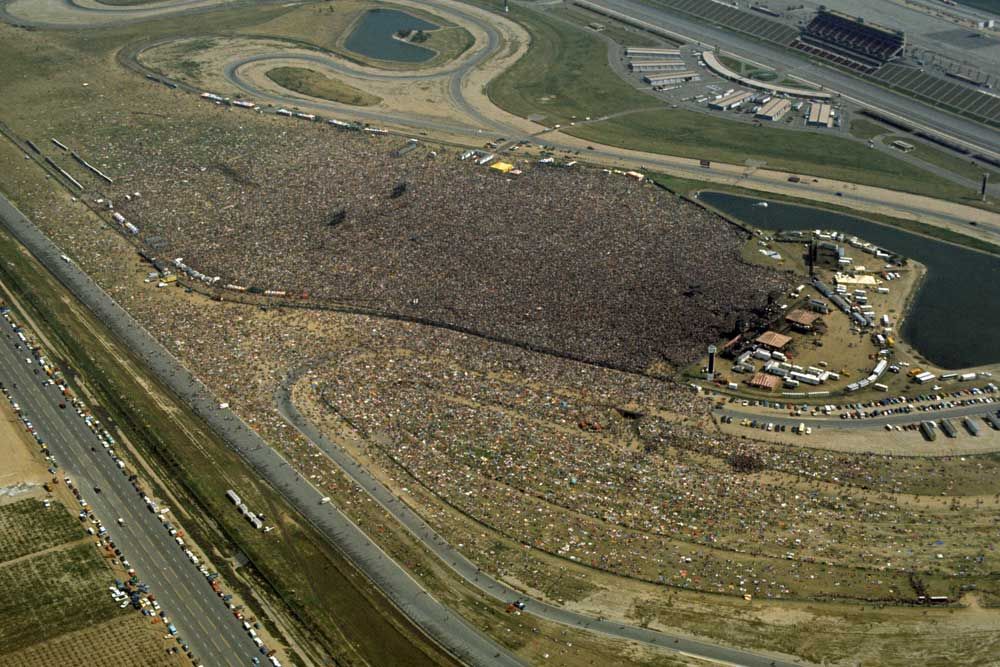
California had been truly rocked – and not in a good way – by the tragic events that occurred at the Altamont Free Concert in 1969. Five years later, the rock world was ready to try again with a brand new festival of high-voltage music. Over 250,000 people descended upon the Ontario Motor Speedway in Ontario, California on April 6, 1974 to attend what had been billed simply as the California Jam.
Boasting an eight-band line-up – Rare Earth, Earth, Wind & Fire, Eagles, Seals & Crofts, Black Oak Arkansas, Black Sabbath, Deep Purple Mk III and headliners Emerson, Lake & Palmer – the first of the two California Jams would prove to be a mammoth affair.
The genesis of the festival was an unusual one. The giant American TV network ABC had a long-running show called In Concert, a programme which captured bands of the day live on stage. It was a groundbreaking idea, since the show was simultaneously broadcast live on FM radio.
One thing led to another, and the executives at ABC turned to In Concert producer Don E Branker and suggested that they would like to host a rock’n’roll festival in California and broadcast it. Branker had had experience in promoting rock shows (primarily on the East coast of the US), and he thought that the Ontario Speedway, located about 50 miles outside of Los Angeles, might prove the perfect location to resurrect the Californian rock festival.
Along with his fellow co-producers Lenny Stogel (who died in an aeroplane accident in 1979) and Sandy Feldman, Branker started to investigate the feasibility of a festival at the speedway.
“We went out to Ontario,” Branker told DJ Mike Stark earlier this year. “And we told them that we wanted to put on a music show. The truth of the matter is that we didn’t say the word ‘festival’, since that was a dirty word after Altamont and Woodstock. And we told them that we wanted to put on acts like the Jackson 5 and the Osmonds, and that it would only be that kinda show.”
The subterfuge worked, and ABC and the producers were granted the requisite permits to arrange the “music show”.
“We then went back three weeks later and told them, ‘Well, we couldn’t get those acts, but we have got Deep Purple, Black Sabbath and Emerson Lake & Palmer,” laughed Branker. “Luckily the police chief out there had never heard of them and he said ‘OK, that sounds fine.’ Later on, he learned that Deep Purple and Black Sabbath were blacklisted, that they were kinda rebellious.”
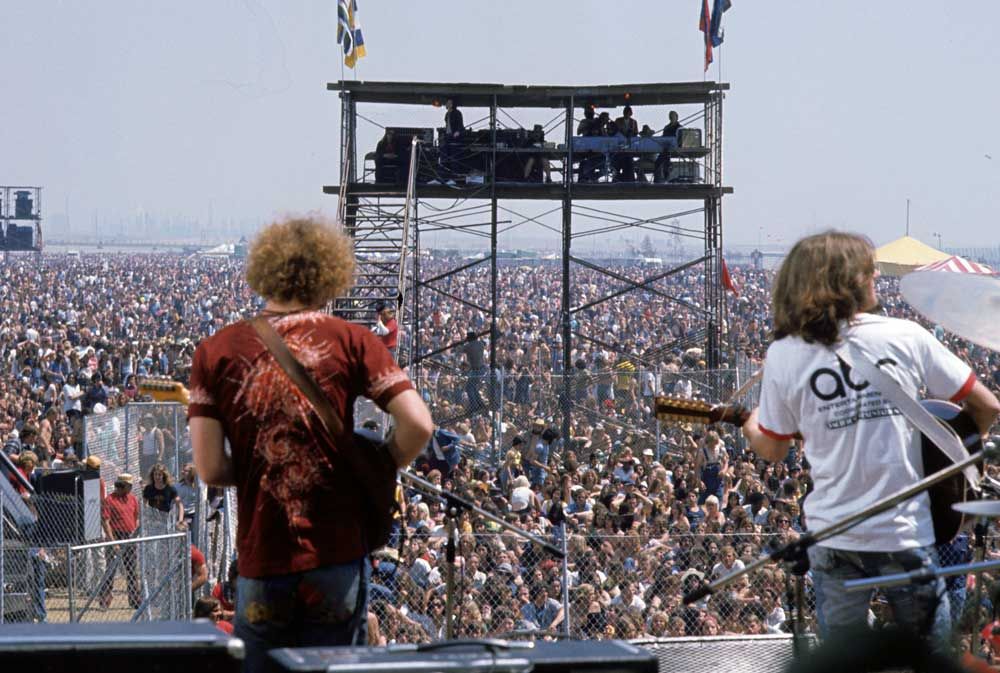
The crowd at the first California Jam, 1974 (Image credit: ABC Photo Archives/Disney General Entertainment Content via Getty Images)
It was too late though, the permits were issued and the show went ahead as planned. Thankfully, the police chief’s fears were unwarranted and the day passed peacefully. Crowd control was something that was foremost in the promoter’s mind, as Lenny Stogel recalled shortly before his death. “When I knew I was putting on a show for 200,000 young people, I didn’t want anything popping off unexpected. I wanted to be in total control and know exactly what was happening that moment and what would be happening in the next few hours. Two hundred thousand kids was a big responsibility. I used to get a funny feeling in my stomach whenever I thought about it. I had to be in control – for the preservation of my sanity.”
But that didn’t mean that the first Jam was uneventful. And despite Stogel wanting to be in control, that didn’t mean there weren’t gatecrashers.
The first notable happening – for a rock show at least – was that opening act Rare Earth actually took to the stage 15 minutes ahead of schedule at 9.45am.
Emerson Lake & Palmer may have been the headline band, but it was a newly invigorated Deep Purple who were the scene stealers of the day. The official attendance figure of California Jam was 250,000 but “there were maybe 350,000 or 400,000 people there altogether. The fences came down and they all rushed in,” recalls Glenn Hughes, who joined Purple as bassist/vocalist in 1973. “The California Jam was really, really huge. It was a great moment for us.”
As it was their brainchild, major portions of the California Jam were broadcast live on America’s ABC TV channel. The network took a gamble on rock and managed to get four special programmes out of it. Purple’s performance was truly sensational, and clearly won ABC ratings points.
“It went a bit too far,” remembers David Coverdale, who was plucked from obscurity to become Purple’s vocalist for the Burn album.
“There was too much explosive. It looks great, I agree, but Ritchie got burned. Thankfully it was nothing too serious.”
It did look impressive though, and unequivocally made them band of the day. Footage from Purple’s performance has subsequently been released on DVD. “I love playing in front of a lot of people,” says Hughes. “You can see that from the DVD footage. I was ready for that. I was born to play the California Jam.”
“When I saw the DVD I realised I learned shitloads from that performance,” added Coverdale. “It helped set me on my way with Whitesnake.”
There was also something very unusual about Coverdale’s performance that day. Not in terms of his singing, but rather what he had in his pocket.
“I remember having a million-dollar cheque in the arse pocket of my jeans when we headlined the California Jam. Because I was on camera the whole time I thought that was the safest place to keep it. It was a lot of money in those days.”
Bernie Leadon (left) and Don Felder onstage with Eagles (Image credit: ABC Photo Archives/Disney General Entertainment Content via Getty Images)
The day was split very deliberately into two halves; the first four bands on the bill were mellower, almost pop-based groups. And as the day progressed, the heavier and louder the music got.
In the first batch of four, you may have noticed that there was a small band that went by the name of Eagles. In 1974, they were little more than a fledgling group, and the California Jam would be one of the very few performances when the soft rock band would play with Jackson Browne on keyboards.
It took the organisers three weeks of preparation for California Jam – the Ontario Speedway was a virtually empty swathe of land. Everything had to be brought in especially for the event. Power, water, staging, the whole lot. Given the hi-tech nature of the show – and the fact that it was being done especially for broadcast, many considerations were made that have since become the template for large festival dates.
Realising that an idle crowd is a potentially dangerous crowd, the organisers needed a method by which the transition between bands on stage was as quick and seamless as possible. As part of a ground-breaking idea, sections of the stage were mounted on railway tracks, enabling portions of it to be moved into position with ease (and in super quick time). In fact, turnaround time between bands throughout the day had been kept to about ten minutes. All was going swimmingly until Sabbath came off the stage after their amazing performance.
“English acts are very competitive,” explained Don Branker. “It goes back to the days when they used to play the same clubs, and Sabbath and Purple always had a rivalry because they were both at the beginning of heavy metal.”
Deep Purple had decided that they didn’t want to go on stage until after darkness had fallen, as they had a few surprises for the promoter. Namely, they had pyrotechnics ready to go. And they couldn’t stick the idea of being upstaged by Ozzy Osbourne and his band of doom merchants.
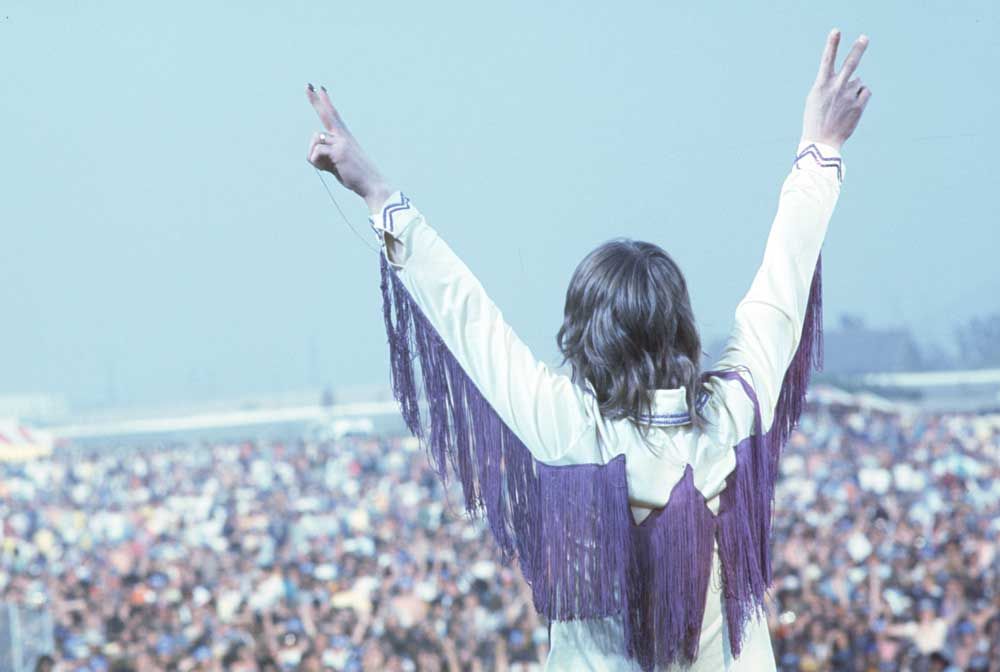
Ozzy Osbourne salutes the crowd at the 1974 California Jam (Image credit: ABC Photo Archives/Disney General Entertainment Content via Getty Images)
With California Jam being a success – it was the largest-grossing concert to date – the most natural idea was to organise a follow-up. And on March 18, 1978, the largest sound system that had ever been built for a festival was cranked up and ready to go.
Using a similar formula to its predecessor, California Jam II revolved around a nine-band bill. This time around it was the turn of Ted Nugent, Aerosmith, Heart, Foreigner, Dave Mason, Bob Welch – with special guests Stevie Nicks and Mick Fleetwood, Frank Marino & Mahogany Rush and Rubicon.
It looked great on paper, but there was one thing beyond the promoters’ control that threatened to mar the second Cali Jam – an uncustomary glitch in the glorious California sunshine. For three consecutive weekends prior to the Jam, Southern California had been struck with rain. Lots and lots of rain. And as any veteran of British festivals will confirm, rain can have a nasty habit of spoiling even the greatest of events. However, once again the gods were on the side of rock’n’roll, and for that single Saturday in a rainy year, the clouds kept their peace.
The staging was configured so that while one band was playing, another could be prepared to minimise the time between band switchovers. Once again, the organisers reckoned on about a quarter of a million people in attendance at the gig. Officially at least. The bands, however, thought otherwise.
“It was just huge,” Heart’s Ann Wilson recalled in 1989. “There must have been about 350,000 people there. It was like standing in the middle of a small city. I’d never seen anything like it.”
In terms of catching the public’s imagination, the bill for California Jam II was perfect, as Branker told Stark. “We were real lucky,” he explained. “The top four acts on that show were Aerosmith, Ted Nugent, Foreigner and Heart. We booked the show in December and by the time the show came round, four of the top five albums in the nation were Foreigner’s first album, Heart’s first album, Nugent’s Cat Scratch Fever album and Draw The Line from Aerosmith, so we really lucked into that being so hot at the time.”
Luck may have had something to do with it, but there can be no denying that both California Jams were examples of how a huge outdoor rock festival could (and should) be run. And the artists agreed.
“I’m lost for words. The kids blow my mind. It was like an ocean of people out there,” Ozzy told a radio interviewer after Sabbath came off stage at the first Jam. “When people’s arms went up in the air… I’m just knocked out by it all. If only every open-air rock show could go half as good as this. This is where it’s at, y’know…”
This is the world we live in: there’s always one asshole. There’s always one person who’s holding the world back from peace or equality or common human decency and universal respect. On Friday, that one asshole existed at the Sex Pistols gig, featuring Frank Carter, at Denver, CO’s Ogden Theatre, who had a problem with a women-centric mosh pit.
New Zealand heavy metal veterans FORSAKEN AGE have released “Holy War, Holy Hell”, the second and final single from their forthcoming album, Blackened Steel. Accompanied by an official music video, the song reveals another facet of the Auckland quartet’s evolving sound ahead of the record’s 11 November 2026 release. Following the previously unveiled “War Machine”, […]
Over a decade ago, The Dead Daisies burst onto the music scene. Their mission, to create some good old fashioned 70’s style rock, gather some of the finest musicians in the world, and have a great time keeping rock music alive. As a powerhouse rock band celebrated for their soulful, blues-infused sound and dazzling performances […]


 LIVE & LOUD: Stream the World’s Hardest Radio Station 24/7

 Over a decade ago, The Dead Daisies burst onto the music scene. Their mission, to create some good old fashioned 70’s style rock, gather some of the finest musicians in the world, and have a great time keeping rock music alive. As a powerhouse rock band celebrated for their soulful, blues-infused sound and dazzling performances […]