“I wanted to give it a proper burial at sea, as it were,” says John Mitchell, aka Lonely Robot. An Ending is the sixth and final album from his conceptual outlet.
When the release was announced he noted: “I wanted to close the circle of the Lonely Robot universe and bring back some of the elements that inspired the initial writing process. I hope fans find this to be a fitting epilogue to the most creative decade of my life.”
Launched in 2015, the project tells the story of an explorer traversing the vastness of space, reflecting on the meaning of life. It was planned as a trilogy when InsideOutMusic offered Mitchell a record deal.
“We got to the end of that cycle, I was on a bit of a roll, and I wanted to keep writing,” Mitchell tells Prog. “I did another two – but in my mind, it was always a sequence of three for some bizarre reason. Don’t ask me why! This brings closure to the whole thing. I’m pleased that I’ve got it to a place where I’ve put it to bed on my own terms.”
Mitchell has no regrets about drawing the curtain on Lonely Robot, observing that “the only guarantee in life is the impermanence of things.”
Unlike its predecessors, An Ending will be released by White Knight Records. “I’ve been with InsideOutMusic since 2003, but they’ve had a bit of a reshuffle in recent years,” says Mitchell.
“Quite a few of my former label pals – including myself and Frost* – have fallen by the wayside. But I’m not sad about the ending of this chapter in my musical life. Turning 50 was a big thing for me. You think, ‘Well, I’m on the wrong side of 50 now; it’s all downhill!’
“But since that happened, I’ve joined Asia and seen more of the world in the last couple of years than I had before. There are things to look forward to. This is the first record with a different team around me, and that’s exciting. So I’m not sad about that in the slightest.”
Making sure that Mitchell is kept nice and busy, Asia are set to return with their own new album, Indigo, which is released via Frontiers Music on November 6.
It’s their first studio release for 12 years, following on from 2014’s Gravitas, and it’s the first word from the band’s latest incarnation of Mitchell, longtime keyboard player Geoff Downes, Planet X drummer Virgil Donati and bassist-singer Harry Whitley.
“The album was really a joy to make,” Downes recently told Prog. “I forged a close writing relationship with Harry, and I felt how great was to be working with someone who had very similar musical influences and taste once again.
“I feel that this is one of our best albums to date. The songs are deep in musicality, with a powerful and original performance, dynamic and strong lyrical undertones – it’s an album that hopefully our fans will widely appreciate and support our cause to put Asia back on the map.”
Downes said of lead track The Traveller (Into The Light): “It’s a high-power energy piece, with a few elements of prog trickery, but retaining the accessible chorus block, which was always a signature of Asia’s music.
“Virgil’s dynamic and innovative drum parts drive the piece along, while John’s soaring guitars keep the momentum. It’s a song of great optimism, mainly about looking forward to the future.”
Indigo was produced by Downes and the band, with mixing and mastering handled by Mitchell himself – which goes to show you really can’t keep a good man down.
Personnel: Bettie Floyd – vocals Adam Sanders – vocals Joey Grimaldi – guitar Ryan Metroka – drums Dave Hale – bass Salem Belladonna – keys, cello
Producer: Joey Grimaldi Release Date: September 18, 2026 Record Label: Eclipse Records
Setting the Scene
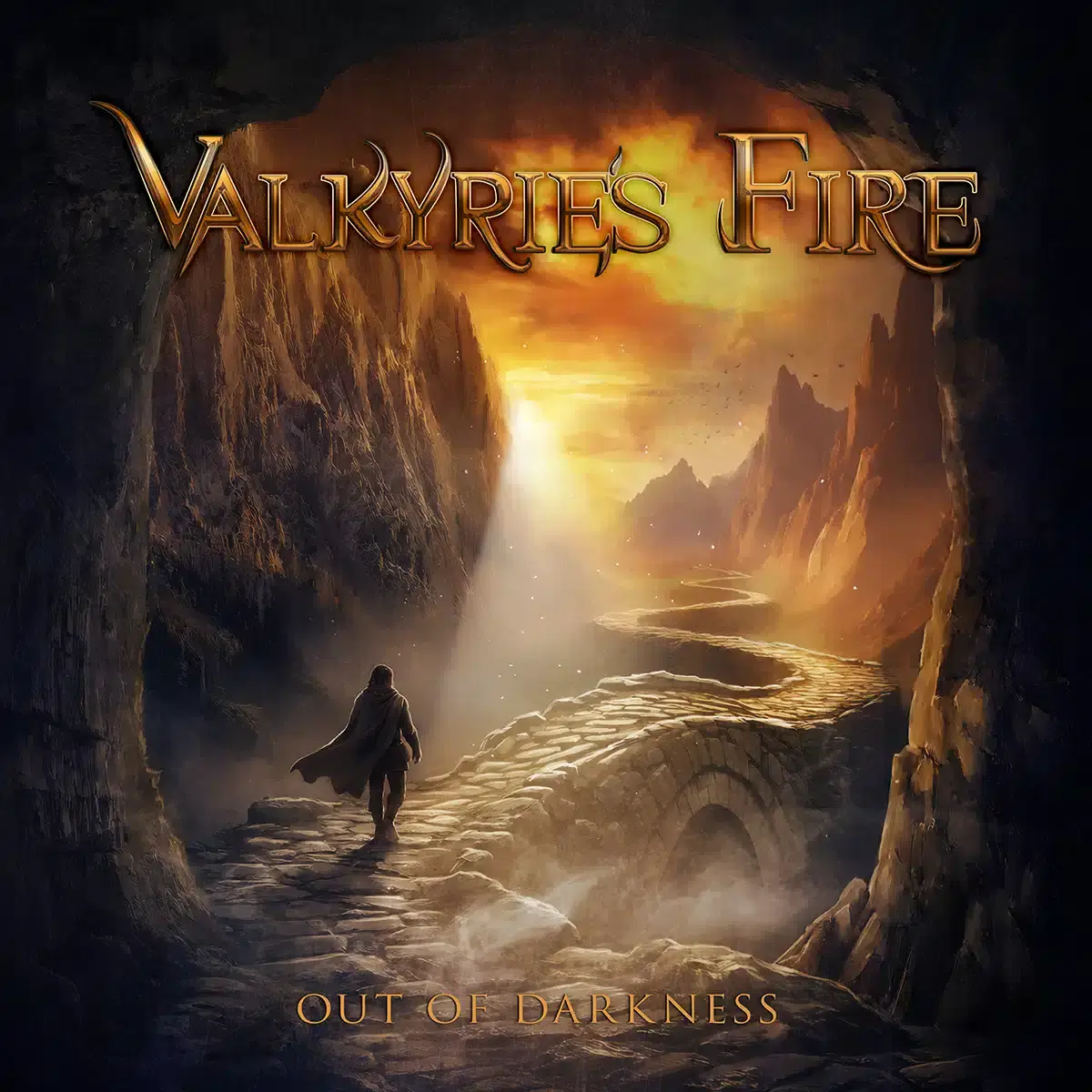
I am loving 2026 in music! So many old-timers returning, and so many debuts that feel like they’re the start of something huge. Here’s another one, this time a symphonic metal masterpiece. Valkyrie’s Fire are a symphonic metal band from Nashville, Tennessee, who just released their debut album, Out of Darkness. The 13-track album marks the beginning of what could be a very interesting chapter for the band.
First Impression
Out of Darkness hits like a huge debut from a band that already knows exactly what they are capable of. A 13-track album can easily become exhausting, especially when you consider the length of some of these tracks. However, the pacing, production, and way the vocals are spread across the record keep the momentum going from start to finish. It has the heavy orchestration and variety you would expect from top-tier symphonic metal, and the music sounds far more experienced than you might expect from a debut album.
Similar Sounds
If you’re into any of these artists, this album should be on your radar.
Visions of AtlantisTemperanceAd InfinitumDragony
The Artwork
The album’s artwork, designed by Jan Yrlund, shows a lonely figure stepping out of a dark cave and facing a winding mountain path with a huge, fiery sunrise in the distance. It takes the title Out of Darkness pretty literally, but the contrast between the pitch-black cave and the bright golden light works really well. It also fits the music, which moves from heavy and darker moments into huge, anthemic power metal sections.
Track on Repeat
“Shattered”
After a song like “Burning Sky,” you might expect the next track to slow things down and simply keep the album moving. Instead, “Shattered” is one of the biggest surprises on the record for me. It starts at a calmer pace, but quickly shows that there is much more to it than that. The symphonic parts are huge, the guitars sound great, and there is plenty going on musically without making the song feel crowded. Both vocalists get their moments to shine, before the song ends with Bettie’s softer, almost serenading vocals. For me, it is easily one of the standout moments on the entire album.
In-depth Notes
Musical Shape 🎸
The guitars and orchestrations on Out of Darkness work together beautifully, with the band moving between huge orchestral openings and driving metal riffs in songs like “Valkyrie’s Fire” and “Nocturne.” The faster guitar leads in “Evermore,” “Cascade,” and “Skylark” add another side to the album, while “I See The Angels Fly” and “Bone and Thorn” show that the band can slow things down just as well. Both are beautifully written ballads and could easily work as singles on their own. The orchestrations are especially impressive on “Shattered,” where they take total command of the song, while the ten-minute closer “I Will Rise Again” uses them to build its longer sections and bring the album toward its conclusion. All of this comes through clearly in the production, which gives the guitars, drums, vocals, and orchestral parts enough room to be heard without making the arrangements feel cluttered.
Vocal Performance 🎤
The vocals of Bettie and Adam are a huge part of what makes Out of Darkness work so well. Their voices complement each other beautifully, especially in the big choruses of songs like “Evermore” and the ballad “Bone and Thorn.” Bettie gets to take the lead on “Cascade,” where her voice has a very distinct character that goes far beyond just hitting high notes. She also takes a much softer approach at the end of “Shattered,” closing the song with calm, almost serenading vocals. The harsher vocals also come in at the right moments, adding more weight when the songs need it. Mikael Sehlin’s appearance on “Burning Sky” is another great example of this. Sehlin may be a big name, but he is not simply there as a big name brought in for marketing. His particular vocal approach is exactly what the song needs at that point in the album, creating a great contrast with the operatic vocals and giving the track a heavier edge. That heavier side returns later in “I Will Rise Again,” giving the epic closer an extra impact.
Themes and Concepts 💭
The album tackles resilience, vengeance, and rebirth, with cosmic imagery and fire running through its themes. These ideas go beyond the lyrics, with the music itself carrying much of the emotional weight. The sweeping orchestrations and heavy arrangements help take the listener from deep grief to defiant triumph, giving the album’s themes a clear musical progression.
Final Verdict
★★★★★★★★★★
If aliens visit Earth and ask me what symphonic power metal is, I’m showing them this album. Valkyrie’s Fire have created a masterpiece with Out of Darkness, perfectly balancing brilliant orchestrations, beautiful guitar work, and iconic vocals.
Mood Meter
%
Intensity
%
Melancholy
%
Darkness
%
Emotional
%
Serenity
%
Energy
%
Romance
%
Joyfulness
Perfect For…
Emotional Struggle – escape emotions through some heavy tunes Nature– unplugged from the world, plugged into the universe Working – listen to while working to focus your energy Creating Art – perfect to enhance your creativty
Learn how to pray for the pleasure of having nothing
Here for you, so choose me, use me, lose me, until I die
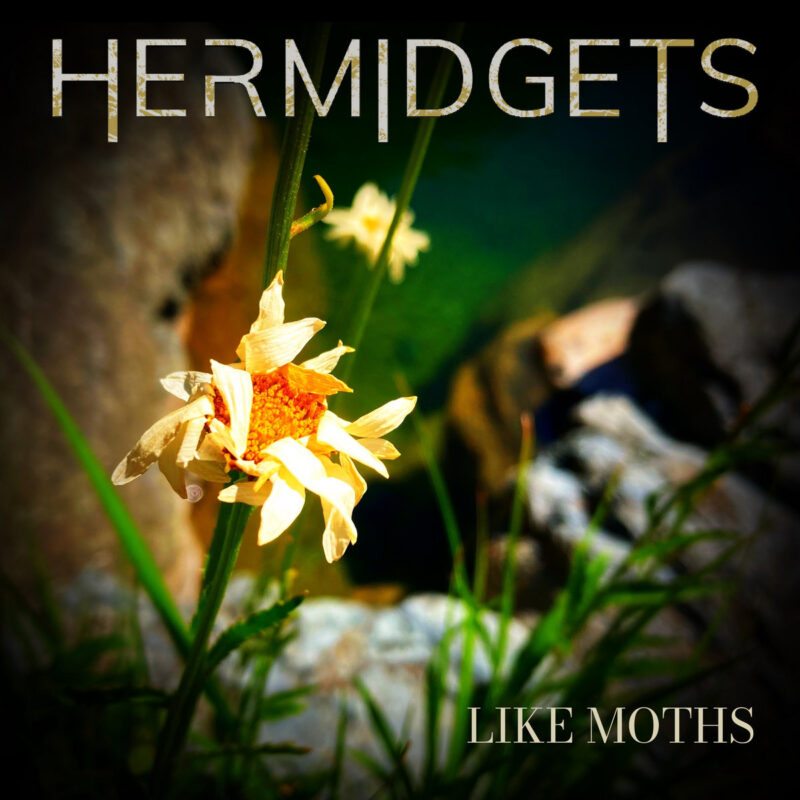
Love can make a person remarkably inventive about the terms of their own disappearance. Give everything away, call it devotion, and eventually even the damage starts looking like proof that something extraordinary is happening. On Like Moths, Italian dark synthpop project Hermidgets follows that reasoning to its terrible conclusion, with two people drawn into a relationship whose destructive potential has become part of its appeal. The single accompanies a disturbing new video and offers the fourth preview of a third album expected in early 2027.
A deep, bass-heavy opening gives way to rhythmic, buzzing synthesizers, with Hermidgets’ baritone entering low and assured as the bassline and percussion settle into a thoroughly danceable groove. That persistent synth melody keeps everything moving, its abrasive edge making the tune all the more satisfying. There is something of Fad Gadget in the electronics, a trace of Brendan Perry in the voice’s sonorous gravity, and the immediate appeal of a late-1980s club hit in the way the parts fit together. The singing lends the song its weight; the rhythm makes carrying it feel almost indecently easy.
The chorus lands hard on “She grants me a loaded gun,” then leaves room for the synth line to take over, its bright, wiry melody carrying a little of the peculiar magic of an old eight-bit machine. That instrumental turn is a hook in its own right, drawing the ear straight toward “I will never be the same without your deadly grace.” Hermidgets has written one of his best songs yet, catching the listener between the pleasure of an exceptionally good refrain and the awful bargain being sung.
The lyrics make surrender sound increasingly devotional. “Learn how to pray for the pleasure of having nothing” imagines a point at which the loss of identity, possessions, and boundaries becomes something actively sought. The repeated invitation to be chosen, used, and discarded gives that desire an unsettling clarity. Both people remain caught in the attraction, feeding a bond they understand may consume them. By the time the moths appear, the fire has become the destination, and the promise of being wanted has swallowed any concern about what might survive.
The video gives that disappearance a physical form. Shot in stark black and white against a dark background, it confines our attention to Hermidgets’ head, bare shoulders, and hands as white modeling clay obscures and distorts his features. Palms press against the face; fingers pull the material into ridges and folds; the mouth opens through a surface that seems continually on the verge of closing over it. The face becomes a succession of unstable sculptures, with black pigment introducing another disturbance late in the performance. At moments, the effort of singing seems to be the only thing keeping a recognizable person visible beneath the mass.
There is a strong resemblance to Frank Tovey’s shaving-cream performances as Fad Gadget, where a familiar substance smeared across the body became an instrument of grotesque theatre. Hermidgets’ stated inspiration is French artist Olivier de Sagazan, whose transformations of the face and body provide a more direct point of reference for the clay and contorted gestures. The video concept developed independently of the song, making their eventual correspondence especially apt: the figure physically works at his own erasure while the lyrics describe an equally willing dissolution. It also extends Hermidgets’ longstanding commitment to anonymity, allowing the face to occupy the entire frame while withholding the usual reassurance of a recognizable artist.
Watch the video for Like Moths below:
Hermidgets is an Italian electronic project built on years of experience in the studio and onstage, with songwriting, performance, and self-produced visuals bound together by a deliberately anonymous identity. Distorted synthpop, darkwave, and intimate songwriting form the basis of the work, while the decision to keep personal biography at a distance gives listeners room to establish their own relationship with it.
The debut album, The Mire, appeared in November 2020, introducing songs including This Is Over and Nothing’s Perfect. A Flaw and Perks followed in 2021, eventually joining Meaninglessness and We Tend to Disappear on the June 2024 mini-album NIHIL. For that record, Hermidgets worked with a deliberately limited setup of two analog synthesizers, drum samples, and voice, using those restrictions to concentrate the arrangements and their emotional force.
The next album began to take shape publicly with Fall Apart in July 2025, followed by Sundown that December and Could I Be Better in March 2026, the latter revisiting Could Be Better from the debut. Like Moths continues that sequence with some of the project’s most immediate songwriting and most confrontational imagery.
Like Moths was mixed by Matteo Sandri and mastered by Giovanni Versari. The single is out now, with Hermidgets’ third album expected in early 2027.
Listen to Like Moths below and order the single here.
Sue Foley will release a new holiday album, Alone (Together) A Holiday Companion, a blues-focused collection that explores both the loneliness and connection that can come with the holiday season.
Rooted in Texas blues with elements of jazz, the eight-song album takes a subdued approach to holiday music, combining Foley’s electric guitar work with laid-back rhythms and a mix of original songs, seasonal material and blues covers.
The album follows Foley’s GRAMMY-nominated One Guitar Woman and puts her electric guitar back at the forefront. Rather than focusing exclusively on traditional Christmas songs, Alone (Together) A Holiday Companion includes material designed to work beyond the holiday season.
“I made this album for people who find the holidays difficult, especially those who are spending them alone,” Foley explains. “It’s meant to be a companion, to bring a little comfort and connection at a time of year that can be hard for a lot of people. For anyone spending the holidays alone, this is for you.”
The album’s first single is Foley’s interpretation of AC/DC’s “Ride On,” originally released on the band’s 1976 album Dirty Deeds Done Dirt Cheap. Foley takes the Bon Scott-era song back toward its blues roots with a more relaxed arrangement.
As Foley describes it, “‘Ride On’ is classic Bon Scott era AC/DC, but at its heart it’s straight-up blues. We wanted to take that raw, blues-rock edge of the original and pull it back toward something more like Jimmy Reed: lowdown, hypnotic and laid-back. It felt completely natural to me. It’s a great blues song.”
Along with “Ride On,” the album features Foley originals “‘Tis the Season,” “Just Another Day” and “Jingle Blues (Cha-Cha).” The track listing also includes “Merry Christmas Darling,” “Christmas Blues,” “Santa Claus Do You Ever Get the Blues?” and “I’ll Take Care of You.”
TRACK LISTING
Merry Christmas Darling – 5:32
‘Tis the Season – 3:57
Christmas Blues – 2:52
Just Another Day – 7:13
Santa Claus Do You Ever Get the Blues? – 4:34
Jingle Blues (Cha-Cha) – 4:28
I’ll Take Care of You – 6:14
Ride On – 4:47
The vinyl edition places tracks 1-4 on Side A and tracks 5-8 on Side B.
“This one was difficult because we definitely wanted to do the band. It feels so right to do the band. It’s too early to make masks and outfits and be sure of that stuff. “
Σtella!!!! The Greek indie/pop artist Σtella returned this week with a new single for Sub Pop, co-produced by the tasteful and well-traveled Rodaidh McDonald. “Belinda” is a beautiful piece of work, carefully crafted but heartfelt, with lots of smart production choices to accentuate the music’s power. Rafael Cohen of !!!, who worked on Σtella’s 2025 album Adagio, also contributes here.
Six solo albums into a career that also includes numerous collaborations, her work as a member of Red Sparowes, Marriages and more, Emma Ruth Rundle has amassed one of the most impressive back catalogues of any current musician.
These Killing Times is another beguiling set of songs that run the gamut from dark to delicate, crushing to sombre, and feel far more dynamic than the raw minimalism of 2021’s Engine Of Hell. This may partially be due to the subject matter, with Emma looking more broadly at the current state of the world, rather than reflecting on her own personal journey.
Opener Powerless muses on her fears and disdain of those who govern us and is gorgeously melodic, but the deep, distorted guitars that underpin Emma’s voice are pure post-metal nirvana. It’s a strong start, but the bar is quickly raised with the sublime God’s Picture. Her woozy, breathy vocals crack with emotion and, perfectly paired in tandem with Patrick Shiroishi’s deep, sighing sax, are reminiscent of Little Earthquakes-era Tori Amos. It’s quite brilliant.
It’s then followed by the gothic leanings of Anvil, which very much sounds like Chelsea Wolfe during her more acoustic Birth Of Violence period, and the 90s grunge stylings of the wonderful Catherine Wheel. The album really reaches its apex, though, with the eight-minute-plus Human Kindness. A song that pulls you into a swirling pit of gruelling, psychedelic riffs and soaring, sun-kissed melodies, its transitions are a form of musical magic that only the likes of Alice in Chains at their best can usually pull off, but this is worthy of the comparison.
These Killing Times is a brilliantly paced album, full of dynamically interesting turns of tempo and changes in feel, with Emma’s voice the greatest weapon, always lilting and soaring in the most unexpected ways. Another masterpiece from one of modern music’s most essential voices.
These Killing Times is out now via Errant Child. Emma Ruth Rundle tours the UK from April 5 2027.
On the cotton candy sky
Written every moment of life
For all eternity
Wonder why we are even alive
Some records come from a scene, some from a city, and some seem to come from that ugly five-minute interval after you have stared at your phone too long and suddenly hate civilization. Faded Flowers, the latest album from Turkish Darkwave duo Ductape, belongs to the third category. It looks around at modern life: crowded rooms, digital selves, obedient routines, private disintegration, and finds a species that has become astonishingly good at maintaining appearances while quietly running itself into the ground.
Çağla Güleray and Furkan Güleray formed Ductape in 2019 in Istanbul, where their mix of post-punk, darkwave, Turkish and English lyrics quickly carried them well beyond the usual underground boundaries. Four albums and two EPs later, they have relocated their creative base to France. Geography changes; the unease travels well.
On Faded Flowers, that unease has acquired a larger target.
The title gives you the central image without turning it into homework: people as flowers left too long beneath bad light, drained by repetition, expectation, isolation, and the exhausting business of becoming whatever the surrounding machinery finds acceptable. You can hear that pressure everywhere. The basslines have the cold discipline of public transport at six in the morning. Synthesizers cut through with little sympathy. Furkan’s guitar keeps finding ways to sound agitated without becoming decorative, sometimes stalking around Çağla’s voice, sometimes answering it, sometimes scraping at the walls.
Çağla’s magnificent voice remains the great destabilizing force in Ductape. She can sound detached enough to frighten you, then suddenly let some exposed nerve show through before the song has time to make a ceremony of it. There is very little comfort in that delivery, which suits an album concerned with the absurdity of living among millions of people and still feeling marooned.
That particular contradiction runs all through Faded Flowers. Everyone is visible now. Everyone is reachable. Everyone is encouraged to construct a public version of themselves, polish it, post it, improve it, defend it, sell it, then wake up tomorrow and do the same miserable maintenance all over again. Somewhere along the line, identity became administrative labour.
Ductape sounds thoroughly fed up with the arrangement.
The album keeps circling the false authorities people submit to without necessarily believing in them: social roles, digital identities, manufactured ideals, systems of power, inherited expectations, all those little invisible rules that become oppressive mostly because nobody remembers agreeing to them. There is anger in these songs, but also exhaustion, and the exhaustion may be more interesting. Rage still assumes you have energy to spare.
Fine considers one dubious convenience of hitting bottom: at least you can stop pretending the view is lovely. The album’s first single follows a collapse through pain and disorientation toward an unexpected sense of ownership, as Çağla finds a place for herself inside the very circumstances that have undone her. A steady bassline and luminous synthesizers carry her weary composure, giving that uneasy acceptance room to develop. There is something wonderfully suspect about feeling comfortable down there, and the song lets the suspicion sit beside the relief. Within an album preoccupied with keeping up appearances, surrendering the performance becomes its own small freedom.
The accompanying black-and-white video turns that process into a homemade alchemical experiment. Filmed at Misuc in Ankara, it casts the duo as silent-film experimenters collecting ingredients and tending a potion among curious specimens. Ductape handled the direction, styling, and production, with camera work by Mert Yalçın and editing by Çağla Güleray. Its antique laboratory makes an apt workshop for two people attempting to assemble another version of themselves.
Standout track Obscure moves with a bassline so blunt and heavy it seems capable of carrying the song by itself, while Furkan Güleray’s distorted guitar keeps worrying at the edges, leaving abrasions rather than decoration. Synths hang overhead with an icy, almost antiseptic quality, giving the music the uneasy stillness of a room where something unpleasant has already been said. Çağla Güleray sings in English, her low register remarkably composed as she picks through disillusionment without dressing it up for sympathy. That restraint makes the words hit harder. Stolen light, dead idols, resentment calcified through repetition, the dull vacancy that follows years of believing in something that eventually reveals itself as another instrument of control: Obscure gathers these ideas until the song begins to feel less like despair than the slow recognition of how thoroughly faith can be exploited. There is damage here, certainly, but also the uncomfortable clarity that comes when the old explanations have finally stopped working.
Its Berlin performance video brings that severity onto the stage. Directed by Altay Erlik, with cinematography by Emrah Celik and laser animation by Peter Isachenko, the clip concentrates on the duo’s physical presence, giving the song’s accusations the directness of an encounter across a crowded room.
On Gölgesiz, the effort of continuing becomes almost physical. Sung in Turkish, the album’s second single carries accumulated sorrow through persistent drums and guitar figures that seem caught in the same argument with themselves. Çağla keeps her delivery measured, making fatigue audible through the weight she gives each phrase. The rhythm maintains its appointment with the next bar while the person inside it struggles to find a reason to follow. That uneasy relationship between bodily momentum and emotional depletion gives the song its force, extending the album’s concern with lives organised around obligations that have outlasted their meaning.
Made during Ductape’s Latin American tour, the monochrome DIY video places Çağla against expanses of water and open space, her figure often reduced to a silhouette. Visual distortions make her outline appear unstable, as though even occupying a body has become difficult work. The images give the song’s isolation a scale that the surrounding emptiness only enlarges.
Faded Flowers gains its pull from the sense that decay is something social as much as personal. The individual breaks down because the surrounding structure is already cracked. The city keeps moving. The screen keeps glowing. The machine keeps asking for another password. Somewhere inside all that, a person still has to decide who they are. Ductape leave that question open, with the bass still moving underneath it.
Listen to Faded Flowers below and order the album here.
To celebrate the album release, Ductape have announced headline shows and festival dates across Europe well into 2027.
Tour Dates
2026
September 25 — Karlsruhe, Germany — Die Stadtmitte