It’s a great week for long-running, reliable practitioners, with the latest from thrash-metal royalty, death-doom aristocrats, retro-rock kings, and keepers of the atmospheric black metal flames!
Check it out!
—
Anthrax – Cursum Perficio
Anthrax has always been adept at taking their signature attitude and power from Spreading the Disease and Among the Living, breaking their own stylistic boundaries, and molding it all for a new era. By their very nature — a guitarist with a penchant for New York hardcore, a singer with an epic heavy metal voice, and so on — Anthrax plays and sounds like an ensemble act that somehow all comes together. Cursum Perficio is notably a 2020s-sounding record, with the now-ubiquitous production style that fills everything out right up to the edge of peaking. And this greatly benefits the band, allowing songs like “My Victory,” “It’s For the Kids” and “The Edge of Perfection” to land with maximum impact. Speaking of “The Edge of Perfection” has a distinct Shadows Fall feel to it, which makes me wonder if guitarist Jonathan Donais had something to do with it. Those looking for some classic ‘thrax vibes should look to the record’s back half for thrashers like “NYC 93” and “T.O.M.B.”
Concept-driven cavernous death metal. According to the band, the EP is based on the following idea:
“Continuing where their “Ts’ono’ot” EP ended, its story unfolds around a cenote of impossible dimensions whose cosmic call draws the lost and uncertain toward self-sacrifice. Four civilizations rise along its edge, each developing its own rites, hierarchies and monuments to transform the abyss’s fatal summons into a foundation for collective existence.”
Epic, expansive, evocative black metal from the Netherlands. I’ve been a fan of Fluisteraars since 2020’s Bloem and this album definitely promises to be a mainstay for me this winter. In fact, it has some of the best 10-minute-plus compositions since Paysage d’Hiver‘s masterpiece Im Wald.
Fans of Sweden’s Runemagick should know what to expect at this point in terms of quality death-doom. That said, Nicklas has added a shamanic vibe to this record that lets it stand apart from the rest of the project’s earlier output. Still, you’re here for big riffs. And you shall have them!
I’ve always had a soft spot for Uncle Acid and the Deadbeats, although on paper they’re not exactly my thing. When it comes to reawakening the spirit of the past, the late-1960s/early 70s usually isn’t my first choice. But good songwriting, catchy choruses, and spooky vocals effects are always enough to push me over the edge. Put this on your spooky season playlist when you have friends over who don’t like death metal.
Few objects appear more ordinary than a clock. It hangs quietly on a wall, stands in a tower, or rests upon a mantelpiece. Most of the time it fades into the background, measuring hours with mechanical precision. Yet in Gothic literature, the clock rarely feels ordinary.
Its ticking becomes oppressive, and its chimes interrupt moments of comfort. Its hands move with unsettling certainty toward an outcome nobody can avoid. The Gothic imagination transformed the clock into something far more powerful than a timekeeping device.
It became a visible reminder of mortality, a symbol of memory’s fragility, and a warning that time continues moving forward regardless of human desire. Unlike ghosts or monsters, the clock does not need supernatural power to inspire fear. Its terror comes from telling the truth. Every second passes only once, and every life moves toward an ending. Every memory slowly recedes into the past. The Gothic clock transforms these uncomfortable realities into a physical presence that characters cannot ignore.
The Gothic Clock: Time, Decay, and Memory
Why Clocks Became Gothic Symbols
The Gothic tradition has always been fascinated by forces that operate beyond human control.
Death, fate, decay, memory, and the passage of time appear repeatedly throughout Gothic literature because they confront individuals with limits they cannot overcome.
The clock provides a perfect symbol for these concerns.
Unlike storms or supernatural apparitions, a clock is entirely ordinary. Its familiarity makes its symbolism more unsettling. Every person encounters clocks daily. Every person lives under their authority.
A clock measures something invisible.
Time itself cannot be touched, seen, or stopped. Yet the movement of hands across a dial transforms this abstract concept into a visible reality.
The Gothic imagination recognized the psychological power of that transformation.
The clock became a constant reminder that life is finite and that every moment inevitably disappears into the past.
From Medieval Towers to Gothic Literature
Long before clocks became literary symbols, they occupied a prominent place in the physical landscape of Europe.
Tower clocks dominated city skylines, marking the hours for entire communities. Their bells regulated daily life and announced the passing of time with unavoidable authority.
These structures carried symbolic significance beyond their practical purpose.
The ringing bell reminded listeners that time was constantly moving forward. Religious traditions often connected this awareness to mortality, judgment, and the fleeting nature of earthly existence.
As Gothic literature emerged during the eighteenth and nineteenth centuries, writers inherited these cultural associations.
The clock already carried centuries of symbolic weight.
Authors simply transformed it into a literary device capable of expressing anxiety, suspense, and existential fear.
Poe’s Ebony Clock and the Sound of Mortality
No clock in Gothic literature is more famous than the ebony clock in Edgar Allan Poe’s The Masque of the Red Death.
Prince Prospero and his guests attempt to isolate themselves from a deadly plague through wealth, entertainment, and distraction. Inside the abbey, music fills the rooms and extravagant celebrations continue without interruption.
Only one thing repeatedly breaks the illusion.
The ebony clock.
Whenever it strikes the hour, conversation stops. Musicians fall silent. Dancers freeze. For a brief moment, everyone becomes aware of something they have been trying desperately to forget.
Time is passing.
Death is approaching.
No amount of wealth, beauty, or pleasure can prevent either reality.
“And the life of the ebony clock went out with that of the last of the gay.”
— Edgar Allan Poe, The Masque of the Red Death
The clock’s final silence coincides with the destruction of the masquerade itself. Throughout the story, Poe transforms a familiar object into a relentless reminder of mortality.
The ebony clock does not cause death.
It merely measures the distance remaining before death arrives.
The Clock and the Fear of Inevitability
What makes the Gothic clock so unsettling is its connection to inevitability.
Many Gothic threats can potentially be escaped. Characters may flee haunted houses, defeat villains, or survive supernatural encounters.
Time offers no such possibility.
The clock continues moving regardless of hope, courage, intelligence, or desire.
This makes it one of the most powerful symbols in Gothic literature. The clock represents a force that cannot be negotiated with or defeated.
Its steady rhythm reminds characters that every attempt to resist mortality ultimately fails.
The Gothic clock therefore becomes more than a symbol of passing hours.
It becomes a symbol of human limitation itself.
Poe’s Pendulum and the Terror of Measured Time
If the ebony clock in The Masque of the Red Death symbolizes mortality, the pendulum in The Pit and the Pendulum transforms time into a direct instrument of terror.
The protagonist is not simply threatened by death. He is forced to watch it approach.
The descending blade creates one of the most psychologically disturbing images in Gothic literature because it combines physical danger with the relentless measurement of time.
Every swing narrows the distance between life and death.
Unlike a sudden attack, the pendulum allows no escape from anticipation. The victim remains conscious of every passing moment, fully aware of what is coming.
Poe understood that anticipation often creates more fear than the event itself.
The pendulum becomes a kind of living clock. Each movement marks another step toward an outcome that appears unavoidable.
In this way, Poe transforms time itself into the source of horror.
Why Ticking Clocks Create Anxiety
The psychological power of clocks comes from their constant presence.
A clock rarely demands attention. Instead, it operates quietly in the background, measuring moments whether people acknowledge it or not.
This subtle persistence can become deeply unsettling.
A ticking clock reminds listeners that time is passing continuously. Each sound marks a moment that can never be recovered.
During periods of uncertainty, grief, fear, or anticipation, this awareness often becomes amplified.
The ordinary ticking suddenly feels oppressive.
Writers and filmmakers have repeatedly used clocks to create tension because audiences instinctively understand this experience. The sound transforms an invisible process into something impossible to ignore.
Every tick becomes a reminder that change is occurring, whether anyone is prepared for it or not.
Freud and the Uncanny Clock
The Gothic clock becomes even more powerful when viewed through Sigmund Freud’s concept of the uncanny.
Freud described the uncanny as the unsettling feeling that emerges when something familiar suddenly appears strange or threatening.
“The uncanny is that class of the frightening which leads back to what is known of old and long familiar.”
— Sigmund Freud, The Uncanny
Few objects fit this definition better than a clock.
It is one of the most familiar objects in daily life. Yet Gothic literature repeatedly transforms it into a source of dread.
The clock remains unchanged physically. What changes is our awareness of what it represents.
Its ticking becomes a reminder of mortality, and its chimes suggest approaching endings. Its movement reflects processes that cannot be stopped.
The familiar object suddenly reveals a disturbing meaning that was always present beneath the surface.
This transformation lies at the heart of the Gothic imagination.
The Clock as a Keeper of Memory
The Gothic clock is not only associated with death.
It also functions as a symbol of memory.
Every clock records absence indirectly. Its movement reminds observers that moments have passed and can never be repeated exactly as they were.
This relationship between time and memory gives the clock a melancholy quality that appears frequently throughout Gothic culture.
Old clocks often appear in abandoned mansions, forgotten estates, and decaying houses because they suggest lives that once filled those spaces.
The clock continues measuring time even after the people connected to those memories have disappeared.
In this sense, the Gothic clock becomes a witness.
It survives long enough to observe generations come and go, preserving the silent evidence of time’s passage.
Miss Havisham and the Stopped Clock
One of the most memorable examples of clock symbolism in Victorian literature appears in Charles Dickens’ Great Expectations.
After being abandoned on her wedding day, Miss Havisham stops every clock in her house at the exact moment she received the devastating news. Decades later, the clocks remain frozen. She still wears her decaying wedding dress, and the house itself appears trapped in a single moment of emotional trauma.
The stopped clocks symbolize more than grief. They represent a refusal to allow time to move forward.
Miss Havisham attempts to preserve the past indefinitely, but the result is not preservation. It is decay. The wedding feast rots, the house deteriorates, and memory becomes a prison.
Few literary images capture the Gothic relationship between time, memory, and loss more powerfully than a room filled with clocks that never move.
Time, Memory, and Decay
The deepest symbolism of the Gothic clock emerges from the connection between time, memory, and decay.
Time creates memories, but it also erodes them.
The same force that allows experiences to accumulate eventually carries them further into the past. Buildings deteriorate. Objects age. Relationships end. Lives disappear.
The clock stands at the center of this paradox.
It measures both preservation and loss.
Every tick records another moment of existence while simultaneously moving that moment beyond recovery.
This dual role helps explain why clocks became such enduring Gothic symbols. They embody one of humanity’s most profound anxieties: the desire to hold on to what time inevitably takes away.
The Gothic clock therefore represents more than mortality alone.
It represents the fragile relationship between remembrance and forgetting.
The Gothic Clock in Haunted Houses
Old clocks appear so frequently in Gothic settings that they have become part of the genre’s visual language.
Grandfather clocks stand in abandoned hallways. Mantel clocks gather dust in forgotten rooms. Tower clocks loom above decaying estates.
These objects do more than establish atmosphere.
They reinforce the relationship between place and time that lies at the heart of Gothic fiction.
Haunted houses are rarely frightening because of architecture alone. They become unsettling because they preserve traces of the past. Every room suggests former inhabitants, forgotten events, and memories that refuse to disappear.
The clock becomes a perfect companion to these themes.
It reminds readers that time has passed through the building, leaving evidence behind in the form of decay, absence, and lingering memory.
Even when a clock has stopped, its symbolism remains active.
A motionless clock suggests interrupted lives, unfinished stories, and moments frozen beyond recovery.
When Time Stops in Gothic Fiction
The Gothic imagination is often fascinated by characters who attempt to resist the passage of time.
Unlike ordinary clocks, which measure change, Gothic narratives frequently present spaces where time appears frozen. These environments preserve memories, grief, and unfinished emotions long after the original events have passed.
Yet Gothic literature repeatedly suggests that time cannot truly be halted. Efforts to preserve the past often result in decay rather than permanence.
The stopped clock therefore becomes one of the genre’s most powerful symbols. It represents the human desire to escape change while simultaneously revealing the impossibility of doing so.
Why Old Clocks Feel Haunted
Few objects inspire Gothic unease as effectively as an antique clock.
Part of this reaction comes from age itself. An old clock often survives far longer than the people who once owned it.
Generations may come and go while the mechanism continues marking the hours.
This longevity creates an unusual emotional effect.
The clock begins to feel like a witness to forgotten lives. It appears connected to stories that have vanished from living memory.
Gothic fiction repeatedly draws upon this sensation.
The antique clock suggests continuity between past and present. It occupies both worlds simultaneously, existing in the current moment while carrying visible traces of history.
This ability to connect different eras helps explain why clocks remain such effective Gothic symbols.
They embody the persistence of time itself.
Why the Gothic Clock Endures
Many Gothic symbols depend upon specific historical periods or cultural traditions.
The clock remains relevant because the concerns it represents are universal.
Every generation confronts mortality. Every individual experiences memory, loss, change, and the passage of time.
The clock gives visible form to these experiences.
It transforms an abstract force into a physical object that can be heard, seen, and felt.
Whether appearing in Poe’s fiction, haunted mansions, Gothic films, or contemporary dark aesthetics, the clock continues expressing the same essential truth.
Time moves forward regardless of human wishes.
The past cannot be recovered completely.
Every moment eventually becomes memory.
The Gothic Clock: Time, Decay, and Memory
The Gothic clock fascinates us because it transforms time into a visible presence.
Through Poe’s ebony clock, the descending pendulum, haunted mansions, and antique timepieces, Gothic literature repeatedly uses clocks to explore mortality, memory, and inevitable change.
Unlike monsters or supernatural forces, the clock derives its power from reality.
Its message is simple and unavoidable.
Time passes.
Memories fade.
Everything changes.
The Gothic imagination recognizes the emotional weight of these truths and gives them a physical form through one of the most familiar objects in human experience.
That is why the Gothic clock continues to endure.
It reminds us that every tick is both a measurement of time and a reminder of its value.
Wear the Darkness
If The Gothic Clock: Time, Decay, and Memory resonates with your fascination for Gothic symbolism, Edgar Allan Poe, and the mysteries of time, explore the Edgar Allan Poets store. Our designs celebrate the darker side of imagination, memory, and literature.
Join the Noir Newsletter
Receive more essays exploring Gothic literature, symbolism, noir psychology, dark aesthetics, and the timeless themes that continue shaping the imagination.
Frequently Asked Questions
Why are clocks important in Gothic literature?
Clocks symbolize mortality, memory, decay, and the unstoppable passage of time, making them powerful Gothic symbols.
What does the ebony clock represent in The Masque of the Red Death?
Poe’s ebony clock symbolizes mortality and the inevitability of death, repeatedly interrupting the illusion of safety created by Prince Prospero’s masquerade.
Why do ticking clocks create suspense?
Ticking clocks make the passage of time audible, increasing awareness of anticipation, uncertainty, and approaching outcomes.
What is the connection between clocks and memory?
Clocks remind us that moments pass irretrievably into the past, linking them to memory, nostalgia, and loss.
Why do old clocks appear in haunted houses?
Old clocks suggest continuity between past and present, making them ideal symbols for stories concerned with history, memory, and lingering traces of former lives.
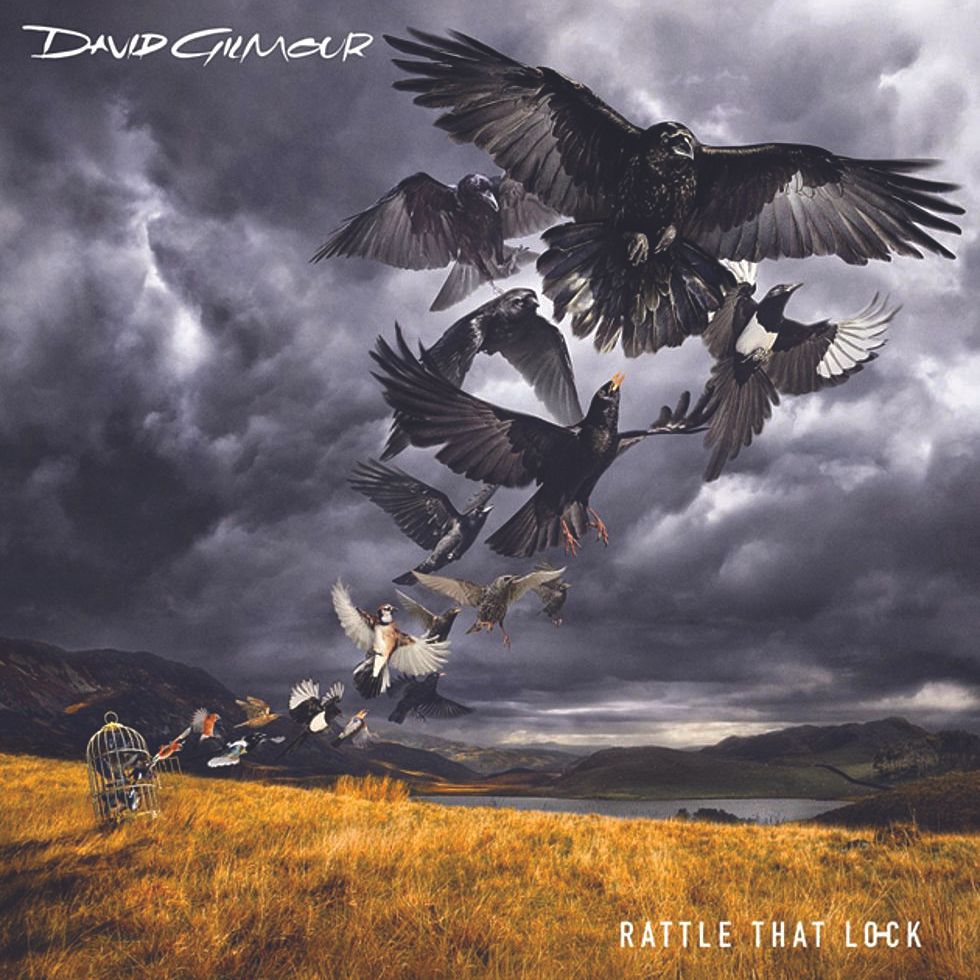
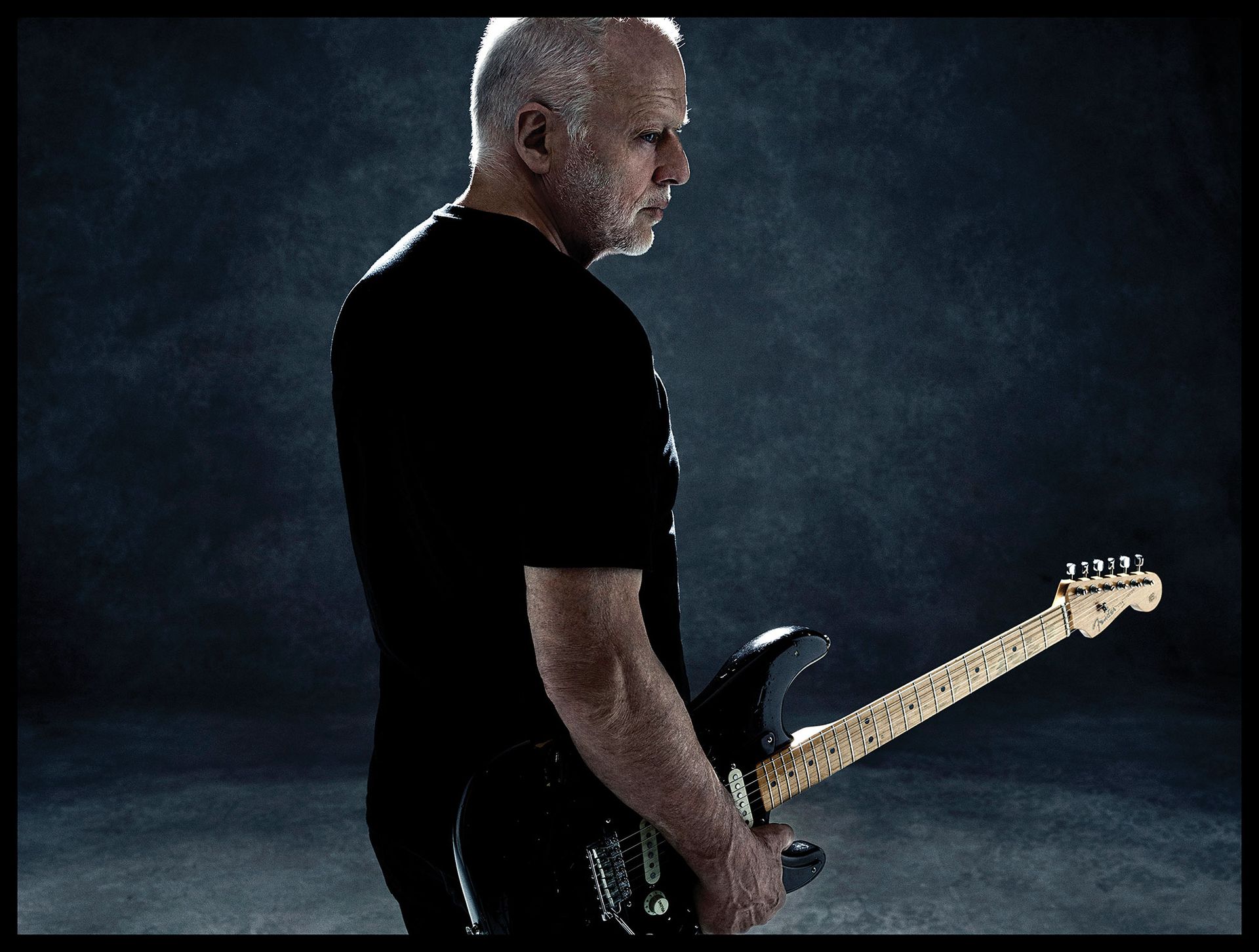
In 2015 David Gilmour released fourth solo album Rattle That Lock. A continuation of his creative partnership with wife Polly Samson, it used the “day in a life” concept to explore the present and the future. And although the past was naturally represented, Gilmour didn’t want to talk about Floyd or Roger Waters – which is where Prog started the conversation.
Before we begin, I’ve been told not to ask you any questions about Pink Floyd. Why is that so important?
Because I’m sick and tired of it. I’ve been asked every question about that band there possibly is – at least twice. And that makes me feel like a hamster on a wheel. It’s going on forever and it just becomes boring after a while. Plus, I don’t want to live in the past – I want to live in the very moment I’m in, and I want to enjoy that to the fullest. So I’m here to talk about a new album and a new tour, but not about my relationship with Roger or what we created in 1975 or anything like that. Pink Floyd was great, but it’s over, it’s done. Life goes on. And some people don’t realise or they are simply ignoring it. So, I need to ask them to be respectful to my views and wishes. And I do.
You’re also insisting on being called David instead of Dave. Why does that bother you?
It’s the same thing, basically. I’m a 69-year-old man who has had a long and fruitful career, and I want to be treated with some decency and respect. I mean, it’s okay if my closest friends call me Dave or if my wife does. In fact, she can call me anything she pleases! But not someone in the press who hardly knows me and vice versa. So it’s David, I’m afraid.
We’re talking on your houseboat studio, Astoria, but you recorded most of the new LP Rattle That Lock at your home studio in Brighton.
The one in Brighton is more of a recording space. It doesn’t have a mixing desk, but it’s hardwired in such a way that it makes it very easy for one person – that’s me – to work it all. So I work without an engineer. I work entirely on my own most of the time when I’m getting started on these things. I can record a guitar with a mic on an amp, and [engineer] Andy Jackson will make it sound great later.
This studio with the full flying faders desk is great for mixing. We did two Pink Floyd albums in this room; this is where A Momentary Lapse Of Reason and The Division Bellwere made.
Rattle That Lock is about a day in the life, and it starts with a song called 5 A.M. – is that when you get up and go straight to work?
No, I don’t often get up and start recording then. But I did record the birds singing at the beginning at five in the morning, because I often wake up then, especially at this time of year when there’s a touch of light in the sky. It’s lovely to sit and look out of the window and feel that moment of the dawn.
(Image credit: David Gilmour)
The album’s mantra is “carpe diem” – seize the day. Is this you trying to make the most of life? Are you scared you’re running out of time?
I think you should try to make as much out of life as you can, and that’s the theme that’s found its way into this record. Polly has verbalised and lyricised it in a beautiful way.
She’s your official lyricist, isn’t she?
She is; she’s been writing lyrics for and with me for 20-something years now. She’s finding her feet much better now, and is less constrained in trying to imagine what I’m thinking and what I’m feeling. She’s more liberated to put her own thoughts into it, and if her thoughts are strong and cogent, great. When I sing them, they’ll sound like they’re my thoughts. We’re turning into a better team.
England is more of a police state where the government is cracking down. The world is tightening up again. I don’t like it
So you’re happy with every influence? Using whatever fits your songs?
Yeah. I don’t like narrowing my vision. I like all influences to be there.
If you look at the album as a “day in the life” thing, it’s quite a full day, isn’t it? There are lots of things going on in these 10 songs.
You can think about how shitty it must be for a soldier in Afghanistan to not know whether the people who surround him are friends or enemies, and the consequences of that. So that can be a five-minute moment in your day; and then you can spend another five minutes of your day thinking about Rick Wright and the fact that he’s died and you no longer have the musical partnership you used to have. You can spend a minute or two thinking about your parents or a minute or two thinking about your children and your hopes for them. There’s plenty of room in a day.
Even for some jingles you recorded at a French train station? The title track begins with a French train operator’s announcement jingle, recorded at Aix-En-Provence station.
That’s right, yes. To remind you of how nice a trip through France on the train can be.
(Image credit: Kevin Westenberg)
I thought you’d be more of a plane enthusiast, flying over the country?
Polly doesn’t like aeroplanes very much, and I love the Eurostar and the French TGV trains. We take trains whenever we can. It’s not really slower. We took a train back from Spain once. It took, I think, eight hours from the Spanish border to our house in England. By plane, it’s an hour to the airport, two hours to check in, an hour-and-a-half flight, an hour to get your bags, an hour to get home. It would have taken six or seven hours. So much simpler and easier on the train.
Would you be interested in composing music for Heathrow or Paddington, then?
No, no, no. That jingle is a speciality of this guy who wrote that piece. It’s the only jingle I can think of, having been in airports in England, Germany, France, Italy, Spain, and in train stations in all those countries too. Most of the jingles come on to say to you: “Listen. There’s going to be an announcement…” Most of them ain’t very good. And this one is good. It’s got a tune, it’s got syncopation. It’s quite clever to say as much as that with four notes.
This is not really a career any more. It’s a bit part-time. I’ve had my career. I have other responsibilities
There are some heavy emotional themes on Rattle That Lock, like war and the loss of a friend. What do you make of the 21st century, with us being quite close to another Cold War?
We had a moment, the build-up to 1989 where things were getting lighter, where the Berlin Wall came down and we thought the world was moving into a better place. Then there were massacres all over Eastern Europe, where people were no longer held down by a dictatorship and their liberation allowed all sorts of bad feelings to come out and create all sorts of shit. In the intervening years we’ve got things like ISIS and all sorts of other stuff going on. In England, it’s like more of a police state where the government is cracking down on protest. The world is tightening up again, and I don’t like it. Polly’s lyrics on Rattle That Lock are encouraging people to make their feelings known – don’t let the bastards beat you down.
Were the days of your youth, the 60s and 70s, more liberal then? Or is that just a myth?
Some things have got immeasurably better since those days. The homosexuality laws and attitudes towards homosexuality have changed radically. Also, women in the workplace and feminism has come on fantastically. It’s not finished with. None of these things are done, but some you can look and see real progress. But the world is a slow mover. Things go forward, things go back. We think progress is being made but it’s painfully slow, and at the moment it feels like more things are shutting down than are opening up.
Have we built our own cage, with the help of technology? Have we become prisoners in some way?
I think you’re right. Technology is moving at a speed the human mind can’t catch up with. I won’t be around, but I suspect in 30 years’ time, people will look back at this moment and say, “God, it was so confused.” And I think there will be solutions to many of the problems we have. I hope so. But they’re not going to happen as quickly as we wish they would.
You’ve described the upcoming Rattle That Lock tour as an “old man’s tour.”
The “old man’s tour” is a silly expression that popped out. Sometimes you say things and think, “Maybe I could have put that better.” The tour I’m doing is fairly gentle – it’s 10 dates this year. We may do some dates next year, but it’s not 100 per cent decided. We’ll see how it goes; see how I enjoy them. This career of mine is not really a career any more. It’s a bit part-time. I’ve had my career. I have other responsibilities, and I really don’t want to slog around the planet playing thousands of gigs. I’m not made that way.
I always scratched my vinyl and cat hairs would get on the LPs. I loved it when CDs came along
Hence leaving that to the Stones? They need it; I don’t think Keith Richards could ever slow down.
What motivations drive other people is entirely up to them, and I’m thrilled the Stones keep getting out there and doing it. The equivalent for me would be to get out there with Roger and Nick and do it – and, ah, I’m sorry, I don’t have any desire to go in that direction.
Will you play some Pink Floyd songs on this tour, though?
Yeah, of course. I’ve had a long and fruitful career, some of it with Roger, a lot of it with Nick, and I’m very, very happy about that career. The unhappy moments are less than five per cent, and the 95 per cent is nothing but joy and satisfaction and pleasure in each other’s company. But shit happens, things break down. Fine. It’s all part of the tapestry of life.
Do you follow what’s going on in music these days?
No, not really.
Why is that? When did you lose interest?
I’m as interested as I’ve ever been in making music, writing, performing. But I’m not so interested in that searching process that I was happy to spend 23 hours a day doing for years. Now I let other people do that and they occasionally play me something that turns me on. But I’d buy the new Bob Dylan, the new Leonard Cohen and the new Neil Young record. Probably a new Joni Mitchell record if she made one.
What do you think about streaming and Apple Music and their plan not to pay artists royalties during their three-month trial period?
I’m with Taylor Swift [who opposed Apple’s policy, forcing them to back down]. I think she’s dead right. Why should they get three months free when what they’re doing is research and development? This is what I was talking about before – we’ll look back on this from the future and see how this conundrum pans out. I have no idea.
A lot of young people today seem to think it’s fine we should get music and films for nothing. I don’t agree. People put in years of hard work and expect to get paid something. And if it’s pinched, it doesn’t do any good, and it doesn’t encourage young people. It might prevent talented young people from being heard.
Yet there’s been an increase of vinyl sales lately, which is an interesting development.
I’m very happy that people like vinyl. But I was never like that. I always scratched my vinyl and cat hairs would get on the LPs. I loved it when CDs came along.
For a full vision, you need proper artwork, don’t you? On Rattle That Lock, you’ve gone for a picture of crows leaving a cage.
Corvids, yes. Various types of crows flying out of a gilded cage.
Which is a metaphor for liberation and freedom?
All that sort of stuff, yeah. It’s jolly, isn’t it?
(written by Islander) Once again, and for the third time since mid-June, we’re connecting you to the powerful music and words of the Texas-based black metal band Haintgrove. The first occasion concerned the project’s debut single, “Starless Passage“, which served as the opening chapter to a larger concept centered on the experiences of enslaved Africans […]
Doro Pesch is not slowing down. The German metal icon has a new one on the way: Wild At Heart – Special Release (Tour Edition), landing Dec. 11, right as her Magic Winter tour kicks off.
Leading the charge is “Rock You 2 Death,” the record’s first single, backed by a video shot in Sweden and stitched together with live footage from Wacken Open Air.
Pesch breaks down the track: “”Rock You 2 Death” is a great sing-along anthem, very much in the style of “We Are The Metal Heads” and “Raise Your Fist In The Air”. This song is also going to go off live!”
Nine tracks deep, the special release runs the gamut from anthemic rockers to full-throttle metal to the occasional heartstring-tugger, closing things out with a live rendition of the Doro staple “Touch of Evil,” featuring former Arch Enemy frontwoman Alissa White-Gluz.
On the songwriting side, Pesch kept things fresh: “The new tracks on Wild At Heart are all songs close to my heart; many of them were written in the past few weeks. I wanted to have brand-new songs ready for the upcoming tour that would really ignite both on the album and live.”
Judging by the lineup, the winter tour crowds are in for a treat. Pesch adds: “This special release really packs a punch. I can immediately add two or three new bangers to the setlist that are sure to be a hit with the fans!”
The Wild At Heart – Special Release (Tour Edition) drops via Doro‘s own imprint, Rare Diamonds Production, through Edel, and comes loaded with format options: a digipack with reversible cover, shaped vinyl, picture vinyl, colored vinyl, a box set, digital, and — for the collectors — a liquid-filled vinyl packed with dark red glitter.
This isn’t Pesch‘s first special-release rodeo. Last fall she put out Warriors Of The Sea through the same Rare Diamonds Production/Edel setup, also available in a limited liquid-filled vinyl pressing alongside CD digipak and picture disc formats.
The whole Wild At Heart concept traces back to two sold-out “Metal Queen Metal Cruises” in late May and early June 2025, plus a third cruise in June 2026 — enough demand from fans to justify another round of music.
The title track itself started life as a cruise-specific anthem before turning into a festival favorite over the summer. The rest of the tracklist was hand-picked by Pesch around “Warriors” and “Cruise” themes, mixing rare studio cuts with live tracks pulled from her sold-out 2024/2025 tour run.
Pesch‘s résumé speaks for itself. In March 2025, she picked up a lifetime achievement award back in her old hometown of Düsseldorf, handed to her by Klaus Meine, frontman of Scorpions. It capped off a career that kicked off in the 1980s fronting Warlock, where she broke into a heavy metal scene that had little room for women at the time. These days she’s sold more than ten million albums and played over 3,500 shows across 60 countries — numbers that put her among the most successful female rock artists ever.
Her last full studio outing, Conqueress – Forever Strong And Proud, came out via Nuclear Blast back in October 2023.
Norwegian extreme progressive metal act Extol have released a brand-new single, called “Disintegrate”. The track is taken from their upcoming comeback album, Aura Of Decay, which is set for release on November 6th via Solid State Records. Read more…
Metallica and the Red Cross will unite on a pop-up blood donation center coinciding with Metallica's Las Vegas Sphere run this fall and into 2027. Continue reading…
Junior year tends to make or break a band. No one expects too much from freshmen, but Professor Druhm1 recognized potential in doomsters Early Moods, awarding their self-titled debut (2022) an enthusiastic B+. We didn’t cover it, but the band’s follow-up fell victim to the dreaded sophomore slump, albeit modestly. A Sinner’s Past (2024) continued proving Early Moods to be attentive students of classic doom and NWOBHM, but at 50 minutes, mistakes quantity for quality. Returning from summer vacation, this LA quintet excitedly arrives on campus with their third full-length, Ready for the Grave. As their new headmaster, I’m hoping Early Moods will crack the books and return to (or even exceed) their marks from freshman year. Subsequently, I urge them to avoid excessive extracurriculars, as well as temptation by those extra extracurriculars (down by the bushes outside campus).
Influenced as they are by the classics, Early Moods do not come off as plagiarists. Guitarists Oscar Hernandez and Eddie Andrade channel Black Sabbathand Trouble in their proclivity for huge riffs and wah-wah’d solos, while the likes of Iron Maiden and Diamond Head show up by way of epic harmonies and middle-gear chuggery. The eponymous opener perfectly exemplifies the band’s mixing of doom and NWOBHM. “Ready for the Grave” kicks off with a simple, snakey, and slow riff that quickly turns into a driving force. Early Moods are not in want of riffs, as demonstrated by the dark, doomy goodness littered throughout “Inquisition” (an album highlight). Rhythm section Elix Felciano (bass) and Chris Flores (drums) are no slouches, invigorating these songs via changes in time signature and tempo (“The Prowler,” “When Light Fades”). Above it all are the charming cords of Alberto Alcaraz, which quiver, drawl, and boom, to much delight. His is a perfect doom vocal for me: sentimental without feeling schmaltzy. Presented through well-balanced, warm production, Ready for the Grave sounds of the late-70s/early 80s, but none of its obvious influences ever completely take over. Undoubtedly, Early Moods posses their own voice.
Ready for the Grave stands as high-quality work for its satisfyingly subtle songwriting. Early Moods primarily stick to the time-tested verse-chorus-bridge formula, though this shouldn’t suggest monotony. Indeed, the songs feel like features for different facets of the band, whether it’s the indelible riffing (“Inquisition”), pulsating grooves (“Thy Eternal Grief”), or spooky synths (“The Prowler”).2 Small choices, too, end up paying larger dividends than expected. Ending with a third verse, for example (“Ready for the Grave”), or fading out on an appropriately titled song (“When Light Fades”), all suggest a band paying careful attention to detail. At 7 tracks in 41 minutes, Ready for the Grave returns to a winning formula. Coupling the shorter track count of A Sinner’s Past with the overall brevity of the debut, Early Moods play to their strengths, offering listeners well-crafted tunes that breathe.
Alright, it’s time to break out the red pen. My first criticism concerns pacing. Ready for the Grave kicks the door in with two fantastic cuts (“Ready for the Grave,” “Inquisition”), but it takes a small but noticeable dip afterwards. The album turns to a solid change of pace with a pseudo-ballad for song three (“Thy Eternal Grief”), but Ready for the Grave never quite reaches the heights of its opening duo. “Thy Eternal Grief” brings up a second, minor knock, concerning the vocals. As discussed, Alcaraz generally kills it, but there are moments when his voice feels strained, or where he could make sparse sections more colorful by exploring his range (“When Light Fades”). And finally, some bolts could be tightened, despite my general enthusiasm for the songwriting. Some riff vampings here (“Ready for the Grave”) and abrupt endings there (“Her Wicked Spells”) call for minor, local revisions.
All told, I am pleased to report that Early Moods are more than back on track in their junior year. Ready for the Grave vastly improves upon its overlong predecessor, and it ever-so-slightly supersedes the band’s promising debut. It’s a record that’s both catchy and spacious, with distinguishing elements that make it rise above simple nostalgia. Fans of doom and NWOBHM especially owe it to themselves to become familiar with these promising pupils, if they haven’t already. Next time around, I don’t foresee Early Moods catching Senioritis—in fact, they seem poised to pass through Gates of Greatness, in due time.
Rating: 3.5/5.0 DR: 5 | Format Reviewed: 320 kbps mp3 Label: RidingEasy Records Websites: Instagram | Facebook Releases Worldwide: September 18th, 2026


 Junior year tends to make or break a band. No one expects too much from freshmen, but