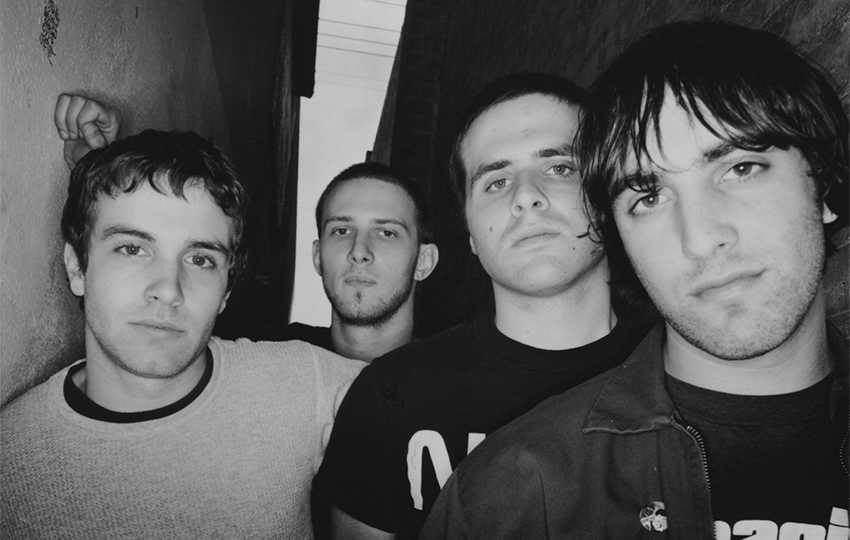
Founded by multi-instrumentalists Nicolò and Federico Vese, Italian progressive metal duo Asymmetric Universe has carved out a distinct space in the modern instrumental scene with a sound that seamlessly blends the aggressive intensity of metal with the rich harmonies and improvisational spirit of jazz fusion.
One year on from the release of their most recent studio album ‘A Memory And What Came After’, the band is pleased to release a deluxe digital version featuring 3 reimaginings of select tracks.
Federico comments: “In the latest year we had the chance of playing it live in some live shows and connecting with so many people both at the shows and online, all of this thanks to this record. We are so happy to celebrate the first anniversary of our debut album releasing a new version of some selected songs. As artists we are always evolving and it felt natural to give a new interpretation of some of the album music, enhancing some of the characteristics of the original versions or completely changing the aesthetic while still retaining the same vibes and feelings. Maybe you will listen to the original versions in a different way after having listened to the new ones!”
Asymmetric Universe will play with Temic & Kingcrow on the 15th October at Slaughter Club in Milan, Italy.
The band’s latest full-length reflects a refined vision and deeper maturity. “We have grown a lot since, both as artists and as human beings,” says Federico. “We always liked to blend genres… and we believe that now we have reached a clear vision of the balance of these genres.”
Earlier work often fused genres section-by-section, but now, with more confidence, the duo began each track with hybrid intentions, resulting in a more cohesive and expressive sound. “All the different arrangements and melodies are working together towards the same goal: convey the message and feeling that was at the base of each song,” Federico adds.
Their latest work features saxophone prominently, a decision inspired in part by a BILMURI live show. “We always loved adding trumpets and saxophones… In this album we changed the balance with these instruments again, focusing on saxophone as we felt it was fitting perfectly with the vibe of the album,” says Federico.
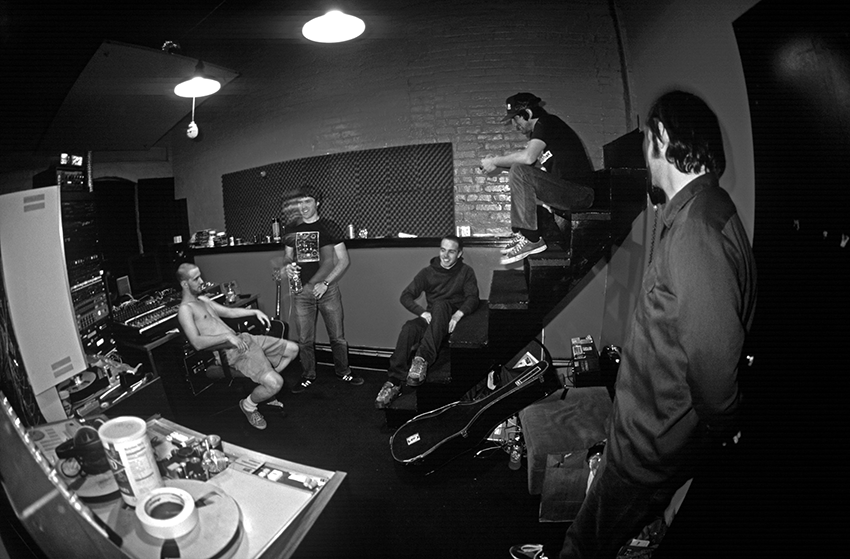
The album was mixed by Sebastian Sendon, with Adam “Nolly” Getgood also providing assistance with drum recording, which took place in the UK at Middle Farm Studios.
The full track-listing for the deluxe edition is as follows:
1.Coquelicot (feat. Richard Henshall of Haken) 2.Fair Enough 3.Don’t Go Too Early 4.Reaction – Overthrow (feat. Jared Yee of Sungazer) 5.Reaction – Thirst For Stars 6.Feather On A Glass 7.Dancing Through Contradictions 8.Opaco 9.Those Who Stay 10.Coquelicot – A Distorted Memory 11.Reaction – An Imperfect Memory 12.Recovery – A Starless Memory
It is with great sadness that Melodic Revolution Records announces the passing of U.S. composer and multi-instrumentalist Robert Svilpa, who sadly passed away Wednesday morning September 16th at AdventHealth Hospital in Orlando.
Four years ago, we proudly announced the signing of Robert to Melodic Revolution Records. Over the years, we had the privilege of watching his music, creativity, and passion continue to touch the lives of those around him. Robert was far more than a talented musician. He was a devoted husband and father, a custom guitar builder, a creative spirit, and a friend to many.
His loss is deeply felt by everyone who knew him, and especially by those who had the opportunity to work with him and experience his incredible talent and generosity.
According to a statement shared by Robert’s son, Thomas:
“On Monday morning 9/14/26, Robert went into cardiac arrest while driving home with his childhood boat from where we had it stored. At the time, he was with Gabriel Misura, and Gabe was able to save the both of them from veering off into traffic, as well as call 911 and give CPR for 8 minutes while the ambulance arrived.
All I ask is that if you are reading this, to send all of your love to Luciana Svilpa, his wife, as well as my brothers, and his sister and mother.”
Robert fought for his life following the incident, but sadly, he passed away Wednesday morning.
Our deepest condolences go out to Robert’s wife, his children, his extended family, his friends, fellow musicians, and everyone whose life he touched.
There are some people whose presence leaves a lasting impression, and Robert was one of those people. His music, his craftsmanship, his friendship, and the memories he created will continue to live on through the people who knew and loved him.
From all of us at Melodic Revolution Records, we extend our heartfelt condolences to the Svilpa family during this incredibly difficult time.
Rest in peace, Robert. Your music and your memory will not be forgotten.
Eastworld Records [Release date : 18.09.26] Twenty-five years after Stuart Adamson’s passing, the band has re-emerged as Big Country Redux, delivering Eastworld, a 10-track collection that bridges decades of unfulfilled musical history. At the heart of this project is Bruce … Continue reading →
Decibel Books is proud to announce the publication of Deconstructing Towers: The Story of Hydra Head Records. Forged from an uncompromising vision and bound only by handshakes, Hydra Head Records’ trailblazing, nuanced aesthetic redefined what was possible for an extreme music label. Founded by future Isis frontman and Neurosis guitarist/vocalist Aaron Turner, Hydra Head rose around Boston’s metal and hardcore scenes of the mid-’90s, proceeding to shroud genre-defining records of the era in artistically fearless artwork and packaging. Within a decade, the label relocated to Los Angeles where the lights were brighter, but the descent came from much greater heights.
At over 500 pages (in addition to a 32-page color section), including countless rare and previously unpublished images, and featuring exclusive stunning new cover art from Turner himself, Deconstructing Towers illustrates the once untold history of one of extreme music’s most influential and revolutionary record labels. Fans can pre-order their copy now. Books have an expected ship date of early December.
Deconstructing Towers: The Story of Hydra Head Records, authored by longtime music journalist and Great Falls bassist Shane Mehling, chronicles Turner’s nearly two-decade journey running Hydra Head through detailed accounts from the label’s artists, his former bandmates and ex-employees who played pivotal roles in its incomparable history.
“Hydra Head Records was a complicated, gratifying, frustrating and ultimately life-changing enterprise to be a part of,” says Aaron Turner. “Central to its existence was a dedication to musical freedom and creative integrity, coupled with a focus on fostering friendships through collaboration. Though the label fell short of those lofty intentions from time to time (and to be frank was a downright mess in certain departments), I like to think that the heart was always in the right place—and that what came out of the label left a lasting and positive impression within the underground realm it occupied.
“I am grateful to Mr. Mehling for diving headlong into the detritus left in the wake of Hydra Head’s existence, to all the folks who took the time to talk with him about it, and who made it what is was in the first place: a sprawling, ungovernable, ferocious and (hopefully) endearing beast.”
For an exclusive preview of Deconstructing Towers, fans can read the first excerpt below, which takes readers back to the early 2000s as a major label bidding war for Hydra Head’s homegrown heroes Cave In was underway on the strength their breakthrough album Jupiter.
——————
Cave In – Antenna (HH666-70) Part 1 The Loudest Pretty That it Can be
“Don’t ever think for a minute that signing to a major label is a vacation, by any means. The four of us have never been worked harder in our lives—but it’s something that we were all well aware of diving into the whole thing. Hopefully our band metabolism can keep us a few steps ahead of it all…” —2003 Cave In bio, written by Steve Brodsky.
(l-r) Caleb Scofield, JR Conners, Adam McGrath, Steve Brodsky. Photo by Marina Chavez
Spin magazine’s “Year in Music” issue for 2000 features Eminem on the cover, dressed like a Droog from AClockwork Orange. He’s Artist of the Year; Radiohead christened Band of the Year, having released the then-confounding Kid A only a couple of months earlier.
Inside there’s a review of Limp Bizkit’s Chocolate Starfish and the Hot Dog Flavored Water, an article about John Lennon by Elliott Smith, an AT&T ad selling a new technology called “2-way text messaging,” a ton of stuff about Napster and, with slightly more magazine real estate than fellow “New Artist” Sigur Rós, a profile of Cave In.
“Indie rock’s answer to metal?” it asks before describing the band as making “a tuneful, rhythm-minded bombast that abandons grindcore’s fuzzy shitstorms but holds on to its power.” It proclaims that Cave In is for “emo fans with a secret yearning to bang their heads but are scared off by mainstream metal’s stoopidity [sic, obviously].”
“That was weird,” Cave In guitarist/vocalist Steve Brodsky says. “It was a formal photo shoot for a one-page thing. We were like, ‘All right, that’s some validation that we can show to our parents. Hey, we’re in this glossy magazine that you’ve probably heard of.’ And locally, things felt different, too.
“I think the Boston rock scene really embraced us,” he continues. “Looking back, I can see how it would be interesting that here’s a hardcore band that cut their teeth in the suburbs and had the energy of a punk and hardcore band in that transition to Jupiter where we were playing hard and loud, but also very melodic. I just don’t think a lot of people in Boston had really seen anything like that. It was cool, and we just thought, ‘Where is this all going?’”
Before Spin, there was a big write-up in alt weekly The Boston Phoenix with a couple photos (one where drummer JR Conners is apparently voguing) and, like with Spin, compares the band to Radiohead, referring to “Innuendo and Out the Other” as the band’s “Subterranean Homesick Alien,” a track off 1997’s momentous OK Computer.
Chris Rucker hosted an early ’00s hardcore/metalcore/indie show called New England Product, which spun regional bands on famous alternative state WFNX—the station that worldwide debuted Nirvana’s Nevermind from start to finish.
“Jupiter was a landmark record,” he says. “It was impactful in Boston, New England, the East Coast. It was massive. They were front-page news here for sure, the outlier above and beyond anybody else or anything else that was going on with Hydra Head. And the media types, the guys at WFNX or The Boston Phoenix [owned by the same company], the managers, the booking agents, we all thought they were gonna rise to the top with a bullet.”
“Promoters in Boston were wanting and willing to take a chance on our band,” Brodsky says. “They would book us at the Middle East upstairs, which a year or two before that, it wasn’t even on our map of what we wanted to do. And all of a sudden, a promoter was willing to throw us on a bill with Jets to Brazil. Rainier Maria was another band, and that seemed to work really well. We were branching out a little bit into these other worlds, and it felt cool, and we felt accepted, but also, we’re still the harder-hitting band. Our roots are in hardcore, and we wanted to play hard. And even if it sounds pretty, we want it to be, like, the loudest pretty that it can be.”
The band was especially nervous when they got a chance to play shows with Neurosis.
Guitarist Adam McGrath remembers thinking, “‘Oh, shit, we’re not really playing the old stuff anymore. Are we going to be heavy enough? Is this going to be accepted enough?’ We played ‘In the Stream of Commerce,’ and I’m like, ‘Is this going to be okay for the Neurosis crowd? But again, it was accepted in that world. And Neurosis seemed to be into what we were doing as well, which kind of gave us a lot of confidence, because they were like grown men compared to what we were. We were kids showing up, and I mean, it was a scary sound check, just standing alone in the room. So I was very intimidated by them. But it seemed to work in all these different realms, with Jets to Brazil and Neurosis. It seemed just to work.”
———————————————————
Aaron Turner remembers a meeting he and label manager Mark Thompson had with Caleb Scofield, bassist for Cave In. After the success of Jupiter, they were now the biggest band on the label. They were all sitting on the back porch of the Hydra Head office in Mission Hill, still based out of Turner’s bedroom, and Scofield had shown up to talk business.
“He was airing a grievance about something,” Turner says. “We didn’t have the records in press as regularly as we should have, or didn’t have the records available to them in high enough quantities for touring purposes. And it was like one of the first confrontations we’d ever had with the band, where they directly were like, ‘Hey, you guys, we feel like you’re dropping the ball.’ And we’re saying, ‘Oh yeah, shit, okay,’ and this whole time we’re talking, I’m rolling a huge joint and smoking it.
“I remember Caleb looking at me, and I didn’t interpret the look correctly at the time. But in retrospect, it was very clear to me. It meant, ‘Dude, can you not smoke weed for like five minutes so we can talk about how our band would like to have some records to sell on tour?’”
It’s not just one thing about this story, but really the whole scene that Turner reflects on when he thinks about Cave In’s move away from Hydra Head.
Cave In during the demo sessions for songs that would appear on ‘Antenna,’ May 20, 2001. Photo by Jason Hellmann.
“This is not to disparage any of our efforts,” Turner says, “because I think we were doing the best we could on Cave In’s behalf, but we definitely fucked up some stuff. And we knew there was a lot happening for them, and we were probably not equipped to deal with it beyond the level they had already reached. Maybe a year after Jupiter came out was the kind of ceiling for us in terms of our capabilities, and they definitely needed something else.”
“I never remember it being a question whether or not we would stay on Hydra Head,” Conners says. “I felt like we were gonna be on there until, you know, whenever.”
“Jade Tree reached out and talked to us a bit,” McGrath says of the somewhat bigger but still indie label. “And Mark was definitely not keen on us talking to them, but he also said, ‘They’re a good label, but I also think that they couldn’t do any more for you than we already could do. If Cave In wanted to leave Hydra Head, I just want it to be for a place where we couldn’t do what that label could do for you guys, whatever label you end up on.’ And Jade Tree didn’t feel like a step up to him.”
People offering those steps up, though, started calling, some of them legit and others just lying oddballs.
“There was definitely some characters that came out of the woodwork,” McGrath recalls. “I’m not gonna mention any names, but different people that are lawyers or managers saying, like, ‘I manage this guy,’ or, ‘I was a lawyer for this guy, and I can show your band to these people,’ and things like that.
“We were very naive to it,” he continues. “We didn’t realize how weird the music industry is with all these different characters who—some of them are actually who they say they are—and some of them are just snake oil salesmen.”
“I think a lot of people were excited about Cave In,” Turner says, “and a lot of people saw an opportunity with Cave In to further their own careers or to participate in furthering Cave In’s career.”
Jessica Hopper, hired to run PR for Jupiter and doing so successfully for Hydra Head, introduced the band to Brigitte Wright, who would go on to be their manager. She managed Rage Against the Machine and worked with Wu-Tang Clan, and that’s when the major labels came calling.
“Most of the labels were trying to circumnavigate us because no major wants to pay another label to pick up a band,” Turner says. “And as far as they were concerned, in many instances, we were like a bug on their windshield more than any kind of asset to their agenda.”
“We put a degree of trust in Brigitte,” Brodsky says. “There was an interesting list of musical heads in the world that she had been a part of directly or indirectly. And we weren’t thinking #1 hit song or #1 album. It was more like, ‘how can we do what we’ve been doing but more efficiently. Play with bigger bands that would embrace Cave In and their audiences as well.’ And we were just trying to be strategic and figure out, like, ‘How can we make this work in a major label setting? Like, can it actually work?’ There was the idea of taking a step further in the independent world. Maybe not Jade Tree, but Epitaph was a label we were looking at or thinking about. So it wasn’t just strictly major label. It was the whole spectrum of what is a potential step up or forward.”
But that didn’t mean they were going to turn down a little wining and dining from the suits.
“We were open to hearing what they had to say,” McGrath recalls. “But it also seemed like such a foreign experience, especially when we started talking to A&R people, and they would bring us to record stores and be like, ‘Buy whatever you want,’ or, ‘We’re gonna bring you out to dinner and eat whatever you want.’ It just, like, you know, kid-in-a-candy-store type of shit. It was insane.”
Conners remembers Brian McTernan, who had recorded Jupiter and had his own major label trials with Miltown [HH666-09; 27], had given them a warning: ‘Be careful who you work with and how they’re dealing with you.’
“I think they didn’t take the label meetings very seriously,” McTernan says. “I think early on they were just like, ‘This is a joke. These people are just gonna spend money on us, and fuck ‘em.’ And I think they ended up going with people that really had no concept of who they really were or the world that they were coming from.”
Conners feels like they were mindful of the “shady and sketchy shit that happens,” he says. “We kept in the back of our minds collectively that we’re still an independent punk or hardcore band. I feel like we went into it with the mindset of let’s be careful about what we’re doing and who we’re talking to. I don’t think it was deer-in-the-headlights. But we were definitely naive.”
Cave In had kept writing and was already playing a new one called “Day Trader” on their first tour supporting Jupiter.
“And ‘Seafrost’ was an early one, too,” Brodsky says. “We played CMJ [New Music Seminar], which was a big deal, and found ourselves in [Washington] D.C. with some time to kill, and Brian [McTernan] was just like, ‘Hey, if you got any new songs, let’s just record them.’ And these early versions of ‘Day Trader’ and ‘Seafrost’ ended up becoming the demo that we were showing A&R people, like, ‘Hey, here’s a sneak preview of where Cave In’s going.’ ‘Day Trader’ was a song that really stuck out to Bruce Flohr, who was A&R for RCA. He was very into that song and saw a lot of potential with that. It’s funny to think back, though, because ‘Day Trader’ didn’t even end up going on the record.”
There’s a little foreshadowing for how the band’s major label experience would end up, but Cave In signed with RCA in April of 2001, less than a year after Jupiter was released. The contract stipulated that Hydra Head would have the option to handle the vinyl and certain other releases, including a pre-album EP.
“I was bummed that Cave In was going to be leaving, but the band seemed to have the potential to ascend far beyond our world,” Turner says. “And I wanted that for them. I would have liked for them to be massively popular. This is the kind of thing that should be happening for them. I also wanted to be included in the sense that I felt like we’d put a lot of work into building them up to some degree. And I was hoping it could be like a Sub Pop/Nirvana-type situation, where maybe we could have some hand in it, which we did with Antenna. We did the vinyl for it. And they hired me as the designer for that record, which I was excited about. Sub Pop benefited from having Nirvana blow up, and that essentially allowed them to become a more stable, long-term entity. And we hoped, kind of all along, that that might happen for Cave In or another band, where we’d have one fucking massive record or two or a catalog from a band that would allow us to perpetuate the rest of the stuff that we were doing.
“We thought that was a realistic possibility,” Turner continues. “We certainly weren’t banking on that. But even when our label was doing well, we were always scrambling to fucking figure out how to pay for the records that were in press, not just because running a small label was difficult, but because we were also mismanaging it in quite a number of ways. There’s also the possibility that we could have gotten a shit ton of money one way or another and ended up totally blowing it. But there was that fantasy for us. We were like, ‘Oh shit, if Cave In blows up and they’re like the next Foo Fighters and we’ve got their back catalog, that’s going to be great for us and the rest of our roster, because we’ll be able not to have to scrape so much, and maybe be able to function on a more legit level.
“And this was in the wake of OK Computer, which in some ways I thought of as a sort of model for what might happen for Cave In, where it was like, this very new-sounding form of pop music with a very luminous and creative edge to it that was not apparent with a lot of other bands of that size. And to a lesser extent, bands like A Perfect Circle, who Cave In opened for a couple of times. I remember thinking this is a time when it seems there is a wide audience who might be receptive to this kind of very creative, almost proggy, sort of psychedelic pop. I was convinced they were gonna be fucking huge.”
Pre-orderDeconstructing Towers: The Story of Hydra Head Records exclusively from Decibel Books here.
Uncle Acid & The Deadbeats – Shapes Of Midnight (Killer Candy Records)
Cambridge occult rockers Uncle Acid & The Deadbeats emerge from their imaginary Italian thriller soundtrack with a new album of guitar focussed ghoulish proto doom.
Their last record Nell’ Ora Blu, saw them embrace the stylistic choices made by Giallo, Argento and Mario Bava, as they brought the synth driven style of Goblin to their own conceptual record. It probably took a lot by suprise as these influences of course have always been there in the ‘Evil Beatles’ music of Kevin Starrs, but on Nell’ Ora Blu it took over in glorious macarbe technicolour for their ‘audio film’.
With seventh album Shapes Of Midnight, the band still drive a conceptual route, this time it’s the modern world and The Masque Of The Red Death by Edgar Allen Poe that are the touchstones, but now the guitars have returned for some hook laden, pop forward, fuzz drenched riffage, all caught live and impatiently over three days in Abbey Road by Chris Bolster.
He along with the band wanted it to sound like it had been recorded in 1968 just as the Fab Four broke up, using era appropriate equipment Shapes Of Midnight has that authentic hiss of the compression needed for vinyl releases, never trying to enter the loudness war, but capture authenticity an the returned intensity as guitars and organs duel on House By The Grave.
It does feel right for the guitars to return here, for me Uncle Acid are all about these retro riffs from a parallel world where The Beatles got into voodoo rather than transcendental meditation, meaning everything that came after was just a little twisted. Be it the glam scene (Don’t Let Control You), NWOBHM (Shapes Of Midnight) or Thin Lizzy on I Won’t Sleep (’til You’re Gone).
Don’t worry though as Psycho On The Loose and When Evil Wakes tell you that Black Sabbath were still the same even in this universe. That’s the sum Shapes Of Midnight as it’s always been for Uncle Acid, Sabbath Worship and Beatle Worship hand in hand with the supernatural weirdness amplified through analogue amps, still spooky, still great, long live Uncle Acid. 9/10
The Fierce & The Dead – Regional Theatre (Spencer Park Music)
Dont worry there’s no touring version of Shakespeare featuring and all semi-pro cast here.
No Regional Theatre is the fifth studio album from London psychadelic post rockers The Fierce And The Dead, having started out as an instrumental band, since their last album, they now feature vocals from bassist/producer Kevin Feazy.
Opening up a whole new audience to their sprawling, multigenre hopping style of dystopian post rock that exudes a kind of forced joy that comes from years at the grindstone. The band is the outlet, the way for a group of outsiders to come together and create weird music.
TFAD cite bands such as avantgarde heroes like Faith No More or the Flaming Lips, heavy desert riffers like Kyuss or QOTSA and shimmering post rockera like Slowdive or Oceansize as influences and you can pick out each if these on Regional Theatre.
From the off-kilter stomp of Mr Homme and co on Shake Hands & Exit and the Hey Nightmare through the dreamscapes of Somehow, there’s more of a shift towards the alternative rock/noise on album five, though it’s mushed in there with the experimental approach of TFATD that rarely leaves a genre alone.
Psychadelic indie jangling and shoegaze gets more potent with this album as well, the addition of Tom Hunt on keys, percussion and backing vocals bringing Somehow the 90’s hypnotics of The Charlatans or the psych indie piano of Super Furry Animals on Superbia, the vocal harmonies of this record build on their introduction from the last.
Beneath that though still beats the heart of band who spent a long time speaking without words the guitar playing of Steve Cleaton and Matt Stevens, melds these genre shifts with dynamism and distinction. Putting distortion into Dream Sequence and post-punk drive into Thrash, the basslines of Feazey throbbing furiously here and rumble while drumming of Stuart Marshall is broad and spacious, bringing the power of Mastodon to Hypernormalisation.
Regional Theatre dives into the experimental sound of The Fierce & The Dead, from their post rock beginnings, they took a leap with vocals last time and with album five, the band have expanded sonically once more, making another amazing record from this innovative band. 9/10
Kai Hansen – Born With A Hammer (earMusic)
Born With A Hammer is the first solo record from Kai Hansen since reforming with Helloween and taking the world by storm once again in the “Pumpkins United” format.
If you’re entering with the expectation of Helloween or Gamma Ray, or the German speed metal that Hansen has been an originator of then I suggest going somewhere else as this record is ten tracks that wouldn’t fit in any of his other projects.
From the pop punk meets country meets reggae of Welcome To Life, the pulsating Europop of Don’t Care and the industrial thump of Wait And See, there’s a lot of genre deviation here linked by Hansen’s gritty sneering vocals. The vocals as well become more diverse than they have before.
Recorded with Eike Freese on guitar, Alexander Dietz (Heaven Shall Burn) on bass, drummer Dan Wilding (Carcass) and guitarist Tim Hansen (Induction), these younger members of the band have clearly inspired Hansen to flex his creative muscle away from what you may expect.
Going full Savatage balladry on the Title Track, Triple Trouble coming from the likes of Van Halen/Mr Big however there is a few tracks you may feel more at home with as End Of The Road brings the melodic drive of Gamma Ray, and Invaders is a homage to B-Movie sci fi, all wrapping up Born With A Hammer more traditionally.
It’s an odd album but then with the power metal flexed with Helloween, Kai Hansen’s solo stuff can be more experimental, it may come as shock to some though. 6/10 Dead Sea Apes – Psychic Tension (Cardinal Fuzz/Feeding Tube Records)
Some instrumental noise now from Dead Sea Apes, and album called Psychic Tension was never going to be an easy listen and this Manchester based trio revel in making a sonic attack that blends the fringes of rock music together.
There’s psychedelic flights, noise walls, repeating krautrock rhythms, dub, Japanese psych and even jazz, thrown in a blender and blared out of your speakers to help you find catharsis from the constant attack on our eyes, ears, ideologies.
Politically motivated, musically intense Dead Sea Apes aren’t here for fun and frolics, this is squealing riffs, hypnotic bottom end and a constant motion that keeps you locked in while listening.
Continuing where their last album left off, Brett Savage (guitars), Jack Toker (bass/guitars) and Chris Hardman (drums), use their decades of experience in heavy and experimental bands to fill this record and their TEN previous records with the kind of music not many other bands are doing.
Captured with a live-in-the-studio insistence, the record has a brilliant flow to it from the slow burn Damn Your Eyes to the build and release of Deathless, Dead Sea Apes are an interesting prospect as a band and while they sail away from the mainstream there’s some great stuff here for the musically adventurous. 7/10
Everyone loves Ratboys, including their esteemed indie rock peers. The tuneful, big-hearted Chicago quartet continued their streak of amazing albums with this year’s Singin’ To An Empty Chair, an album that backs some of Julia Steiner’s most vulnerable lyrics yet with dynamic arrangements that suggest a band in full command of its powers.
Dirty Honey will release their third full-length album, Catch My Butterfly, on 15 January. The announcement arrives with the first two singles, Lights Out and Butterfly.
Produced by John Feldmann, whose credits include Yungblud, blink-182 and Korn, Catch My Butterfly finds Marc LaBelle on vocals, John Notto on guitar and Justin Smolian on bass expanding the band’s sound while retaining the grit and energy that have driven their rise.
“I’m very proud of our perseverance,” LaBelle said. “Any band has to really survive to make a third record. We’ve made mistakes in the studio, gotten over past regrets, lived more and become better songwriters. All of those things snowballed into Catch My Butterfly.”
Smolian added, “Catch My Butterfly shows the width of what we can do as musicians and songwriters. We’re no one-trick pony.”
Lights Out And Butterfly
Lights Out opens the record with open chords, delay-soaked staccato guitar, a driving bass line and a steady beat before turning into a heavier rush of riffs. Notto described it as the album’s first “banger” and said the finished solo was already present on the demo.
By contrast, Butterfly leans into the band’s soulful side with acoustic guitar and strings. LaBelle wrote the song from the perspective of a family living with addiction and the fear of not knowing whether a loved one is safe.
“There are addiction issues in my family,” LaBelle said. “I tried to write from a different perspective – either that of a father to an addicted child or the family member of an addict. In this scenario, you’re so overcome with worry about whether or not your loved one is alive or dead at any given moment.”
The two songs offer contrasting introductions to what the band describe as their most dynamic album to date. Pre-orders are available from orcd.co/dhcatchmybutterfly.
Catch My Butterfly Tracklist
Lights Out
If It’s Over
Numb
Wanderlust
Good For You
Butterfly
Good Times Gone
American Lies
Poison
Sweeter
No Way Out
New Blood
Lullaby
I Should’ve Known
Marc LaBelle: “I think we bring the heat live, and we can deliver live.” Photo: Steve Ritchie/MetalTalk
About Dirty Honey
Dirty Honey made history with When I’m Gone, the first song by an unsigned artist to reach No. 1 on the Billboard Mainstream Rock chart. The Los Angeles band released their self-titled debut in 2021, followed by Can’t Find The Brakes in 2023. The latter reached No. 2 on the Billboard Top Hard Rock Albums chart.
The trio have toured with Guns N’ Roses and The Black Crowes while also selling out their own headline runs. A new version of When I’m Gone later appeared in the 2025 film A Minecraft Movie.
King Kraken have released Shadows Fall, their third single of 2026, together with an official video. Inspired by found-footage horror and, in particular, The Blair Witch Project, the song follows a journey into the woods that grows darker and more threatening with every step. The band deliberately reversed the expected structure, placing more melody in the verses before driving into a gritty, aggressive chorus.
A sharp opening riff launches a track designed to offer no respite. As King Kraken put it, Shadows Fall “grabs you by the neck and drags you around as opposed to holding your hand.”
The single was recorded at Longwave Studios in Cardiff. Romesh Dodangoda mixed and mastered the track and engineered it with Tom Cory. Pre-orders and more details can be found at https://distrokid.com/hyperfollow/kingkraken/shadows-fall.
King Kraken Tour Dates
9 October – Reddog 1, The Patriot, Crumlin
31 October – Maesteg Harlequins RFC
3 November – Exchange, Bristol, supporting Breed 77
4 November – Waterfront Studio, Norwich, supporting Breed 77
5 November – Beta, Nottingham, supporting Breed 77
7 November – Live Rooms, Chester, supporting Breed 77
Released in November 1989, Slip Of The Tongue was the eagerly awaited follow-up to Whitesnake, an album that saw David Coverdale and Co. at the top of the rock world. The final part of the trilogy of exquisite reissued vinyl albums by Craft Recordings, this was an album that received mixed reviews in the press, but one that I loved, and it would send me Germany-bound to witness the Whitesnake phenomenon live.
Given that Slide It In had laid the groundwork for the Whitesnake album, which hit gold status almost as soon as it was released and would be five times platinum by the end of 1987, there was an element of pressure from Geffen to get the next album out in a timely manner.
Whitesnake – Slip Of The Tongue returns on stunning vinyl through Craft Recordings on 18 September 2026.
There was another roster change, with Vivian Campbell out and Adrian Vandenberg writing with Coverdale. The band decamped to Granny’s House in Nevada to write and rehearse. Ten songs, all in the key of A, had been written, and once again the recording difficulties raised their ugly head.
Vandenberg would come down with carpal tunnel syndrome in both wrists, and John Kalodner would give David a list of the only three guitar players who he thought Coverdale could use.
Steve Vai, who had partnered up wonderfully with David Lee Roth, was on board. Central to his style was building the guitars up from scratch, so Adrian’s parts were removed and Vai went to work.
The album’s title track would open the new vinyl, and I was hooked. Producer Keith Olsen and John Kalodner may have thought Vai was not a great fit, but this was a great track and one that worked so well live. Flashy drums, a wonderful break in the middle section, and Coverdale’s voice sounding on fire, for me, the phrasing and licks that Vai threw in were just magical.
Chrap An’ Nasty had cowbell-driven Hair Metal all over it. The typical Coverdale lyrical theme was there, and the spot that we could all join in made things right in the world.
Fool For Your Loving was the next track, reinvigorated from Ready An’ Willing. A good version, for me, but Kalodner would say that he thought it was not a hit record, and he was probably right.
The up-tempo ballad Now You’re Gone followed. The track would nudge gently into the charts, but certainly not to the smash level of the previous album’s singles. Kalodner would say later that the album was not developed enough, and he considered it a mistake that he let the album come out as it was. There were financial pressures and commercial pressures dictating things, too.
Kittens Got Claws would close Side One, and Wings Of The Storm open Side Two, two tracks that even back in ’89 would pass me by.
The Deeper The Love was the most successful single from the album, hitting number 35 in the UK. Memories of this track at the time were positive, but I loved the version on Starkers In Tokyo more.
The album epic was Judgement Day. To this day, the drums opening from Tommy Aldridge is cemented in my memory. This was one track that led to our trip to Germany to see Whitesnake live. A bloody long coach trip, two of our crew failed to make the coach in London, having fallen asleep in Pizza Hut after too many beers.
But what a trip. The Vandenberg/Vai axis live was spectacular. Coverdale was on fire, and Rudy Sarzo was godlike with his bass. Live, Judgement Day was unbelievable and a massive highlight of a magnificent set. The memories….
Closing the album was Slow Poke Music, one I never really cared for and Sailing Ships, which would take on a new life on Starkers In Tokyo.
Slip Of The Tongue would hit number ten in both the UK and US album charts, and Whitesnake would triumph at Donington in 1990. This was at a time when there was a changing of the guard. Guns N’ Roses were one of the Geffen champions. Whitesnake would release their Greatest Hits album in 1994, tour and then be dropped by the label.
It is interesting to revisit Slip Of The Tongue and, indeed, Whitesnake and Slide It In in this new reissue. On pristine, brand-new vinyl, these were three wonderful albums of their time, and it has been a joy to revisit them.
It is a shame the Coverdale/Sykes writing partnership did not continue, and you do wonder how different Slip Of The Tongue would have been driven by these two, or even with a Kaldodner-inspired reworking. We will never know.
Slide It In, Whitesnake and Slip Of The Tongue return to vinyl in their original US 1-LP configuration, alongside the wide release on standard black vinyl and exclusive colour pressings. Released on 18 September 2026, visit craftrecordings.com/whitesnake-lps to pre-order all three albums.
Slip of the Tongue Track Listing
Side A
Slip of the Tongue Cheap an’ Nasty Fool for Your Loving Now You’re Gone Kittens Got Claws
Side B
Wings of the Storm The Deeper the Love Judgment Day Slow Poke Music Sailing Ships