Melodic black metal purveyors Ferndal have set December 5, 2026 as the official release date of their next long player entitled Asuras. Comprised of 6 tracks, it was recorded by Markus Stock at Klangschmiede Studio E in Mellrichstadt, Germany. For a preview, give a listen to the first single-title track.
Read more…
Blog
-
Pyogenesis – Unveil Video For ‘Sing As If’ Single
Pyogenesis have premiered a Peter Tokay-directed music video for their recently released new single, “Sing As If”.
Read more… -
PHOTOS – See How Your Favorite Rockers Dressed for Halloween
See who wore what for the spookiest of holidays, Halloween, in 2026. Continue reading… -
‘A Féreg Pusztulása’: VÉR premiere the title track from their debut album
Budapest death metallers VÉR have unveiled ‘A Féreg Pusztulása’, the second track revealed from their forthcoming debut album of the same name. The song is premiering through No Clean Singing, ahead of the album’s release on 3 December 2026 via Me Saco Un Ojo Records. Hear ‘A Féreg Pusztulása’ at No Clean Singing The eight-track […] -
Top 10 The New Seekers Songs Of All Time
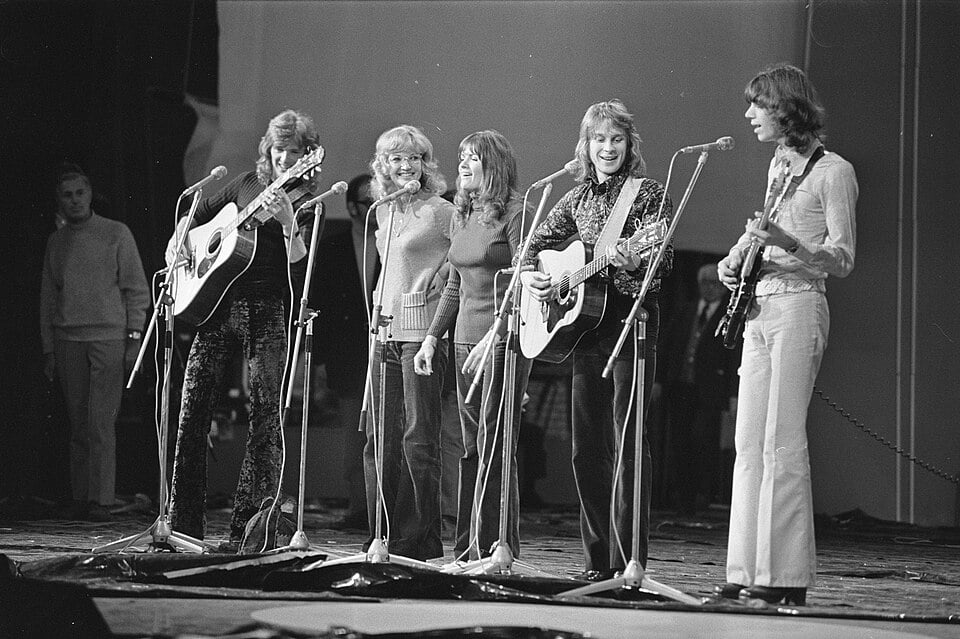
The New Seekers were one of the most successful vocal pop groups of the early 1970s, bringing together rich harmonies, memorable melodies, and a sound that appealed to listeners on both sides of the Atlantic. The group was formed in 1969 by Keith Potger, a member of the original Australian group the Seekers. Although the two groups shared a connection through Potger, the New Seekers developed their own identity and recorded a completely different series of hit singles. The New Seekers’ most successful lineup featured Eve Graham, Lyn Paul, Marty Kristian, Peter Doyle, and Paul Layton. Their breakthrough came with
The post Top 10 The New Seekers Songs Of All Time appeared first on ClassicRockHistory.com.
-
Grief and uncertainty shape FOUL BODY AUTOPSY’s Between The Worlds We Made
Tom Reynolds’ solo melodic death metal project FOUL BODY AUTOPSY will independently release its new two-track EP, Between The Worlds We Made, on 27 November 2026. The record will be available on limited edition vinyl and digitally. Following the historical themes of The Discovery Of Witches, Reynolds turns towards a more personal subject: the immediate […] -
A PERFECT CIRCLE’S BILLY HOWERDEL Partners With Analogr For November Auction Gear Used On Various Recordings & Tours
A Perfect Circle’s Billy Howerdel has partnered with ANALOGr for an exclusive auction featuring instruments, recording equipment, and other artifacts that stretch across Howerdel and A Perfect Circle’s history.
More than 120 pieces of gear, memorabilia, and rare collectibles will be available via the auction, with bidding beginning Nov. 8 and ending on Nov. 16. A preview, including photos and video pieces with Howerdel, is available now via Analogr website.
Items available include:
- “Youth Number Three (Beautiful Losers)” original painting by Steven R. Gilmore – The oil painting was featured on the interior of Mer de Noms
- Yamaha AES 1500 Guitar – Primarily used in the studio, the guitar was used on “The Noose,” “Vanishing,” and extensively throughout Thirteenth Step. Has also been used occasionally for live performances.
- Fender Tone Master Head and Cabinet – Purchased following A Perfect Circle’s first tour in support of Mer de Noms. Has been used exclusively in the studio from Thirteenth Step onward.
- Apogee Model PS 1000 – Producer Alan Moulder convinced Howerdel to purchase this, which was used extensively on Mer de Noms.
- Gibson Goldtone GA-15RV Amp – From Thirteenth Step onward, Howerdel used this amp in the studio with a bit of touring use. Has been modified by producer Dave Friedman.
Billy Howerdel has been a driving force in alternative rock since the late 1990s. His atmospheric guitar work, layered arrangements, and meticulous production style became a defining element of the band’s sound, shaping landmark releases like Mer de Noms and Thirteenth Step, and leaving a lasting impact on modern rock.
Beyond A Perfect Circle, Howerdel has established himself as a multifaceted artist, from his early work as a guitar tech for acts like Nine Inch Nails and the Smashing Pumpkins to his solo project, Ashes Divide, and his recent solo album. His deep understanding of tone, texture, and atmosphere is reflected in the items featured in this collection, many of which were used in influential recordings and unforgettable live performances.
From studio-used guitars and outboard gear to rare memorabilia, each piece in this ArtistFirst Collection carries a story rooted in innovation, craftsmanship, and the pursuit of sonic depth.
For additional information, and to preview the auction, visit Analogr website.
Billy Howerdel discusses the upcoming auction in a video.
The post A PERFECT CIRCLE’S BILLY HOWERDEL Partners With Analogr For November Auction Gear Used On Various Recordings & Tours appeared first on Sonic Perspectives.
-
16 Legendary ’70s Rock Drummers, Ranked From Great to Godlike
The 1970s were the decade the drummer stopped being the guy at the back. Rock got louder, longer and more ambitious, and the people behind the kit became stars in their own right, with 20-minute solos, gongs, tubular bells and kits that got bigger with every tour.
This ranking is based on what each drummer played in the ’70s: how much they changed the instrument, how well the records hold up and how many drummers they inspired. Some were technical wizards, some were pure feel, and a few were both. Seven of the 16 are no longer with us, but you can still hear every one of them on records rock fans play today.
Here are the 16 greatest rock drummers of the ’70s, ranked, with the one track from the decade that shows each of them at his best.
1. John Bonham (Led Zeppelin)

John Bonham on stage with Led Zeppelin in the 1970s. Photo: Dina Regine, CC BY-SA 2.0, via Flickr (cropped) No drummer has been copied, sampled and argued about more than John Bonham. He joined Led Zeppelin in 1968 on Robert Plant’s recommendation, and over the next decade he made the drums sound bigger than anyone thought possible. His bass-drum triplets on “Good Times Bad Times” still baffle drummers, and his live solo on “Moby Dick” could run past 20 minutes.
The drums on “When the Levee Breaks” were recorded in the stairwell of Headley Grange, a country house in England, with microphones hung high above the kit. That huge sound became one of the most sampled drum beats in history. In 2016, Rolling Stone named Bonham the greatest drummer of all time.
Bonham died on September 25, 1980, at age 32. That December, Led Zeppelin announced they could not continue without him.
Essential ’70s track: “When the Levee Breaks” (1971)
2. Keith Moon (The Who)

Keith Moon drumming with The Who at Winterland, San Francisco, in March 1976. Photo: wbaiv, CC BY-SA 2.0, via Flickr (cropped) Keith Moon didn’t keep time so much as attack it. Instead of a steady beat, he played rolls and crashes almost everywhere, driving The Who like a lead instrument. It shouldn’t have worked, but on “Won’t Get Fooled Again,” “Baba O’Riley” and all of Quadrophenia, it’s impossible to imagine anyone else playing those parts.
He was just as wild off the stage. Moon became rock’s most famous hotel wrecker, and in 1967 he packed his bass drum with explosives on The Smothers Brothers Comedy Hour, setting off an explosion far bigger than anyone expected.
Moon died on September 7, 1978, at 32, three weeks after The Who released Who Are You.
Essential ’70s track: “Won’t Get Fooled Again” (1971)
3. Neil Peart (Rush)

Neil Peart on the big screen during his drum solo at a 2011 Rush concert. Photo: ArtBrom, CC BY-SA 2.0, via Flickr (cropped) Neil Peart joined Rush in the summer of 1974, replacing original drummer John Rutsey just two weeks before the band’s first US tour. He quickly became far more than the new guy. Peart also took over as the band’s lyricist, and his bandmates and fans called him “The Professor.”
Through the ’70s his kit kept growing, adding tubular bells, temple blocks, wind chimes and orchestral percussion for epics like 2112 and “Xanadu.” Yet every part was carefully composed and played with almost mechanical precision, which is why drummers still learn his fills note for note.
Peart retired from touring after Rush’s R40 tour in 2015, which seemed to end the band. He died on January 7, 2020, at age 67. In 2026, Geddy Lee and Alex Lifeson returned with the Fifty Something tour in his honor, with Anika Nilles on drums.
Essential ’70s track: “La Villa Strangiato” (1978)
4. Ian Paice (Deep Purple)

Ian Paice, the only member to play in every Deep Purple lineup. Photo: Stephan Birlouez, CC BY-SA 2.0, via Flickr (cropped) Ian Paice is the one constant in Deep Purple. He has played in every lineup since the band formed in 1968, through more than a dozen personnel changes and more than five decades of records and tours.
In the ’70s, Paice gave Deep Purple its swing. He brought a jazz drummer’s touch to hard rock, with lightning-fast one-handed rolls and a groove that made heavy songs like “Highway Star” and “Smoke on the Water” move. His playing on “Burn” is still a test piece for rock drummers, and his solo on the live album Made in Japan (1972) is a masterclass.
Outside Purple, he has played with Whitesnake, Gary Moore and Paul McCartney. In June 2016, a minor stroke forced him to miss a Deep Purple show for the first time since 1968. He was back behind the kit within weeks.
Essential ’70s track: “Burn” (1974)
5. Bill Ward (Black Sabbath)

Bill Ward of Black Sabbath in 1973. Photo: Premier, public domain, via Wikimedia Commons (cropped) Heavy metal’s first great drummer was really a jazz fan. Bill Ward grew up on big-band drummers, and he brought that swing into Black Sabbath. Listen to the fills on “War Pigs” or “Supernaut” and you hear a drummer playing around the riff instead of just pounding along with it.
Ward and Tony Iommi had already played together in a Birmingham band called Mythology before they formed Sabbath with Ozzy Osbourne and Geezer Butler. His loose, rolling feel is a big reason those early albums sound heavy without ever sounding stiff.
Ward left the band in 1980, and a contract dispute later kept him off Sabbath’s 2013 comeback album and farewell tour. But on July 5, 2025, at the “Back to the Beginning” show in Birmingham, Ward played with the original four one last time, less than three weeks before Ozzy died.
Essential ’70s track: “War Pigs” (1970)
6. Bill Bruford (Yes, King Crimson)

Bill Bruford (right) with King Crimson bandmates David Cross and Robert Fripp in a 1974 press photo. Photo: Atlantic Records, public domain, via Wikimedia Commons (cropped) Bill Bruford co-founded Yes in 1968 and played on the albums that made them stars, including Fragile and Close to the Edge. Then, in 1972, just as Yes was taking off, he walked away to join King Crimson, a band with far less money and far more risk. That move tells you everything about him.
With Crimson he played on Larks’ Tongues in Aspic and Red, mixing rock power with jazz and odd time signatures. He also toured with Genesis in 1976, after Phil Collins moved up to lead vocals, and formed U.K. and his own band, Bruford, before the decade was out. His crisp, cracking snare is one of the most recognizable sounds in progressive rock.
Bruford retired from public performance in 2009 and went back to school, earning a PhD in music from the University of Surrey in 2016. He was inducted into the Rock and Roll Hall of Fame with Yes in 2017, and in 2024 he came out of retirement to play live with the jazz group Pete Roth Trio.
Essential ’70s track: “Roundabout” (1971)
7. Stewart Copeland (The Police)

Stewart Copeland, the Police’s drummer, on stage. Photo: spisharam, CC BY 2.0, via Flickr (cropped) Stewart Copeland arrived late in the decade, but nobody else on this list sounds like him. The son of a CIA officer, he spent much of his childhood in Beirut, played in the prog band Curved Air and then formed The Police in 1977. His drumming mixed punk energy with reggae: tight hi-hats, off-beat accents and splashing cymbals.
That sound is all over Outlandos d’Amour (1978) and Reggatta de Blanc (1979). On “Walking on the Moon” and “Message in a Bottle,” Copeland plays around the beat instead of on it, and the songs seem to float. His hi-hat work is still one of the hardest styles in rock to copy.
The Police fought constantly and stopped at their peak in the mid-’80s, and Copeland became a film composer, earning a Golden Globe nomination for Rumble Fish. The band reunited in 2007 for a world tour that was one of the highest-grossing of its decade.
Essential ’70s track: “Message in a Bottle” (1979)
8. Phil Collins (Genesis)

Phil Collins on stage with Genesis in Strasbourg in October 1981. Photo: Philippe Roos, CC BY-SA 2.0, via Flickr (cropped) Before the solo hits, Phil Collins was one of the best drummers in progressive rock. He had been a child actor, playing the Artful Dodger in a London production of Oliver!, before answering an ad in Melody Maker and winning Genesis’s drum audition in 1970.
On albums like Selling England by the Pound and A Trick of the Tail, Collins played complex prog parts with a light, jazzy touch, and he spent his spare time in the fusion band Brand X. When Peter Gabriel left in 1975, the drummer stepped up to the microphone and became Genesis’s lead singer, while still playing drums in the studio and trading parts with a touring drummer on stage.
Years of drumming took a toll. A neck injury and nerve damage left him barely able to hold a stick, and his son Nic took over the drums for Genesis’s final tour in 2021 and 2022.
Essential ’70s track: “Los Endos” (1976)
9. Charlie Watts (The Rolling Stones)

Charlie Watts playing with his side band The ABC & D of Boogie Woogie in 2010. Photo: Poiseon Bild & Text, CC BY 2.0, via Flickr (cropped) Charlie Watts had no interest in drum solos, and that was the point. A jazz lover who joined the Rolling Stones in 1963, he gave the band its swing: relaxed, a hair behind the beat and impossible to fake. Listen closely and you’ll catch his signature quirk, lifting his right hand off the hi-hat every time he hits the snare.
The ’70s were the Stones’ peak, with Sticky Fingers and Exile on Main St. back to back, and Watts held all of it together. He was also the calmest man in rock. According to Keith Richards, the one time he lost it was in 1984, when Mick Jagger called his hotel room at about five in the morning asking for “my drummer.” Watts put on a suit, went downstairs and punched him. Jagger has denied it happened.
Watts died in August 2021 at age 80. Two songs he recorded before his death appear on the Stones’ 2023 album Hackney Diamonds.
Essential ’70s track: “Can’t You Hear Me Knocking” (1971)
10. Roger Taylor (Queen)

Roger Taylor (left) singing with Jeff Beck in 2013. Photo: Mark Kent, CC BY-SA 2.0, via Flickr (cropped) Roger Taylor gave Queen two things no other band had: big, crisp drums and a voice that could reach the highest notes in the room. Many of the soaring high parts on “Bohemian Rhapsody” are his.
He met Brian May in a band called Smile, which Freddie Mercury followed as a fan before joining them in what became Queen. Taylor’s drumming in the ’70s was punchy and melodic, built for stadiums, and he wrote songs too. Legend has it he locked himself in a cupboard until his bandmates agreed to put his “I’m in Love with My Car” on the B-side of “Bohemian Rhapsody,” a placement that earned him a fortune in royalties.
Taylor later wrote the hits “Radio Ga Ga” and “A Kind of Magic,” and he and May have kept Queen on the road with singer Adam Lambert since 2012.
Essential ’70s track: “I’m in Love with My Car” (1975)
11. Cozy Powell (Rainbow)

Cozy Powell (center) with his band Cozy Powell’s Hammer in the mid-1970s. Photo: EMI, public domain, via Wikimedia Commons (cropped) Cozy Powell was one of the hardest-hitting drummers in rock, and one of the few to score a hit single under his own name. Born Colin Flooks, he took his nickname from jazz drummer Cozy Cole, played with the Jeff Beck Group in the early ’70s and reached No. 3 in the UK in early 1974 with “Dance with the Devil,” a drum-led instrumental.
From 1975 to 1980 he powered Ritchie Blackmore’s Rainbow, first alongside singer Ronnie James Dio, and his thundering drums on Rising helped lay the groundwork for the heavy metal that followed. Generations of metal drummers have named him as an influence.
After Rainbow he seemed to join every big name in hard rock, including the Michael Schenker Group, Whitesnake, Emerson, Lake & Powell, Black Sabbath and Brian May’s solo band. Powell died on April 5, 1998, at age 50.
Essential ’70s track: “Stargazer” (1976)
12. Alan White (Yes)

Alan White playing with Yes in Asunción, Paraguay, in 2010. Photo: Leticia Chamorro, CC BY 2.0, via Flickr (cropped) Alan White’s résumé was remarkable before he ever joined Yes. In 1969 John Lennon asked him to play with the Plastic Ono Band, and he went on to drum on Lennon’s “Instant Karma!” and Imagine, and on George Harrison’s All Things Must Pass.
When Bill Bruford left Yes in July 1972, White got the call and had just three days to learn the band’s complicated material before opening a US tour in Dallas. He passed that test and never left. White brought a heavier, rock-solid feel to albums like Relayer and Going for the One, and later to the band’s biggest hit, “Owner of a Lonely Heart.”
He stayed with Yes for 50 years, until his death in May 2022 at age 72. He was inducted into the Rock and Roll Hall of Fame with the band in 2017.
Essential ’70s track: “Instant Karma!” with John Lennon (1970)
13. Phil “Philthy Animal” Taylor (Motörhead)

Phil “Philthy Animal” Taylor on drums with Motörhead in 1982. Photo: Andrew King, CC BY-SA 2.0, via Wikimedia Commons (cropped) Phil Taylor joined Motörhead in 1975, and with Lemmy Kilmister and “Fast” Eddie Clarke he formed the band’s classic lineup. Hardly anyone called him Phil. As “Philthy Animal,” he played fast, loud and loose, the perfect engine for a band that sounded like a speeding truck.
His biggest contribution came almost by accident. Messing around on a new kit with two bass drums, Taylor started the pounding double-kick pattern that opens “Overkill,” and Lemmy and Clarke told him not to stop. That beat became a blueprint for thrash. Metallica’s Lars Ulrich has credited Taylor as the drummer who introduced him to double bass.
Taylor also played on Ace of Spades and the UK No. 1 live album No Sleep ’til Hammersmith before leaving in 1984, then returned from 1987 to 1992. He died in November 2015 at age 61. Lemmy died just seven weeks later.
Essential ’70s track: “Overkill” (1979)
14. Albert Bouchard (Blue Öyster Cult)

Albert Bouchard (center, mustache) with Eric Bloom and Buck Dharma in Blue Öyster Cult’s 1977 publicity photo. Photo: Eric Meola, Columbia Records, public domain, via Wikimedia Commons (cropped) Albert Bouchard co-founded the band that became Blue Öyster Cult in 1967 and drummed on its classic albums through Fire of Unknown Origin (1981). He was also one of its key writers, co-writing fan favorites like “Cities on Flame with Rock and Roll,” “Astronomy” and “Career of Evil,” the last with lyrics by Patti Smith.
His playing was tight and to the point, with a heaviness that helped make BÖC one of America’s first heavy metal bands. And according to Bouchard, he played the most famous percussion part in rock comedy history: the cowbell on “(Don’t Fear) The Reaper,” added at producer David Lucas’s request. In 2000, a Saturday Night Live sketch with Christopher Walken and Will Ferrell turned it into the “More cowbell!” catchphrase.
Bouchard was fired in 1981, but he kept making music in the BÖC spirit. He’s the most underrated drummer on this list, and the name you may know least, but you’ve almost certainly heard him.
Essential ’70s track: “(Don’t Fear) The Reaper” (1976)
15. Carl Palmer (Emerson, Lake & Palmer)

Carl Palmer, Emerson, Lake & Palmer’s drummer, behind his kit in 2014. Photo: PSParrot, CC BY 2.0, via Flickr (cropped) Carl Palmer was just 20 when Keith Emerson called. He had already drummed with The Crazy World of Arthur Brown and Atomic Rooster, and in 1970 he joined Emerson and former King Crimson singer Greg Lake in Emerson, Lake & Palmer. The trio’s second concert ever was at the 1970 Isle of Wight Festival.
ELP were prog’s most extravagant band, and Palmer kept up with every bit of it, hammering through the shifting time signatures of Tarkus and Brain Salad Surgery with a classical player’s precision. In 1973 he and engraver Paul Ravn designed a stainless steel drum kit, built by the British Steel Company and engraved with woodland scenes. It became the centerpiece of ELP’s stage.
Palmer joined the supergroup Asia in 1981. Emerson and Lake both died in 2016, and Palmer, the last surviving member, now tours An Evening With Emerson, Lake & Palmer, playing live alongside his bandmates on video screens. In July 2026 he played ELP music with the BBC Concert Orchestra at the first-ever Prog Rock Prom at the Royal Albert Hall. At 76, he has UK dates booked for February 2027.
Essential ’70s track: “Tarkus” (1971)
16. Peter Criss (KISS)

Peter Criss (left) with Gene Simmons and Paul Stanley at a Kennedy Center Honors reception in December 2025. Photo: Freddie Everett, U.S. Department of State, public domain, via Flickr (cropped) In August 1972, a Brooklyn drummer placed a classified ad in Rolling Stone looking for an original band. Gene Simmons and Paul Stanley answered it, and Peter Criss became the first musician to join the group that turned into KISS.
Behind the Catman makeup, Criss gave KISS’s ’70s records more swing than their stomping image suggested, and he sang lead on “Black Diamond” and “Hard Luck Woman.” His biggest moment wasn’t even a drum part. “Beth,” the ballad he sang and shares a writing credit on, reached No. 7 on the Billboard Hot 100 in 1976, still KISS’s highest-charting US single. Simmons and Stanley have since disputed how much of it he wrote, and Criss has pushed back.
Criss left KISS in 1980, returned for the 1996 reunion and left for the last time in 2004. He was inducted into the Rock and Roll Hall of Fame with the band in 2014, and in December 2025 he received a Kennedy Center Honor alongside Simmons and Stanley. Twelve days later he released Peter Criss, his first solo album since 2007. “I’m still singing like a bird,” he told Billboard.
Essential ’70s track: “Black Diamond” (1974)
The post 16 Legendary ’70s Rock Drummers, Ranked From Great to Godlike appeared first on Metal Shout.
-
Agalloch Stream Updated Track From Their Newly Remixed And Remastered Version Of “Marrow Of The Spirit”
Along with some bonus material.
The post Agalloch Stream Updated Track From Their Newly Remixed And Remastered Version Of “Marrow Of The Spirit” appeared first on Theprp.com.
-
Video Interview: Hamish of Vukovi (Men’s Health Awareness Month)
This November, we’re shining a spotlight on Men’s Health Awareness Month, breaking down stigmas, opening up conversations and reminding men that it’s okay not to be okay. In this special interview for Moshville Times, Weezy sits down with Hamish from Scottish alternative rock band Vukovi to talk about men’s mental health, the importance of speaking … Continue reading Video Interview: Hamish of Vukovi (Men’s Health Awareness Month)


