Blog

  • Dead on a Sunday drop off Wednesday 13 tour dates due to medical reasons

    With the band confirming that vocal rest is necessary before returning to the road

    Source

  • Review JOHN COFFEY “Not Alone”

    Even if you’ve never heard a John Coffey song, chances are you’ve seen the video of their singer catching a flying beer cup at Pinkpop 2015. The clip went viral and turned that moment into a piece of festival history. But John Coffey are much more than a band with a frontman who happens to… Continue Reading →
  • How Talking Heads made it big despite themselves, with an ideology that’s undeniably prog

    Declaring edgy post-punk funkers Talking Heads to be prog might seem like a bridge too far. But much of their work was truly progressive for those speed-addled times – not forgetting the input into their work by Brian Eno, Adrian Belew and Robert Fripp. In 2012 (long before the band members put their 80s differences behind them) Prog explored the question: how prog were Talking Heads?

    “The most popular contemporary avant-garde group in America” is how Time Out described Talking Heads in 1980. In a way they were the Radiohead – named after a 1986 song by the band – of their day; their experimental sound and edgy, arty ideas attracting a huge audience.

    Progressive? They certainly made astonishing progress, creatively advancing between albums, especially the three they recorded with producer-catalyst Brian Eno. In fact, so giant were the leaps they made that Simon Reynolds, in his 2005 book on the post-punk era Rip It Up And Start Again, was moved to compare them to The Fab Four.

    “The trilogy of records Eno and Talking Heads made together recalls the runaway evolution of The Beatles across Rubber Soul, Revolver and Sgt Pepper’s,” he wrote of More Songs About Buildings And Food (1978), Fear Of Music (1979) and Remain In Light (1980). These were albums that variously featured, alongside the erstwhile Roxy Music chrome dome, Bowie/Zappa guitarist Adrian Belew, world music pioneer Jon Hassell and King Crimson majordomo Robert Fripp.

    Talking Heads have had numerous appellations ascribed to them, from new wave and dance-rock to art disco and brainiac pop – but how about progressive funk? It seems to suit the cerebral nature of their highly rhythmic music.

    “‘Progressive funk’?” muses Chris Frantz, co-writer of many of Talking Heads’ best-known tracks including Psycho Killer and Life During Wartime, and drummer from their inception in 1975 after his previous band with singer David Byrne, The Artistics – formed when the pair were at the Rhode Island School of Design – ran out of steam. “That’s not bad.”

    “They used synthesizers and all kinds of new technology,” says Belew, who appeared on the Heads’ fourth album, and spent a year in their touring line-up. “But were they prog? When I think of the term ‘progressive’ I think of epic things like Yes and King Crimson. ‘Progressive’ to me means something ahead of its time, moving forward… so in that sense, sure.”

    Frantz remembers prog’s golden age. He was at art school in 1971, where two records dominated student dorm stereos: Neil Young’s Heart Of Gold and Yes’ Roundabout. “You’d walk down the hallway and hear one and then walk a bit further and hear the other,” he laughs.

    He acknowledges the prowess of the prog musicians. “I have a great deal of respect for those guys and their musical chops,” he says. He doesn’t believe, however, that Talking Heads were in the same league in terms of pyrotechnical ability.

    “I would say the most musically accomplished member was Jerry Harrison. He was a great keyboardist and guitarist. David was an excellent rhythm guitarist and Tina a wonderful bassist. As for me, I’m a pretty good backbeat player, but if you asked me to do a drum solo I might just give you the stink eye.”

    Whatever their shortcomings on their chosen instruments, there’s no doubt that the four players, when they got together in the studio with Eno, made for an awesome, inventive unit. Frantz has grown used to receiving accolades on behalf of this highly influential outfit, one that has become synonymous with dark, intense dance music that isn’t necessarily designed to be danced to. “People on Facebook tell me every day the music changed or saved their life,” he says. “I never tire of it.”

    The first time most people heard Talking Heads was 1977, when the funk noir four – Byrne, Frantz, his girlfriend and later wife Weymouth plus former Jonathan Richman’s Modern Lovers member Harrison – emerged out of New York’s CBGB scene. To say that they stood out next to their peers – the burgeoning New York punk/new wave milieu that included the Ramones, Suicide, Television, Blondie, the Patti Smith Group and Richard Hell’s Voidoids – would be to do understatement a disservice.

    We were inspired by Roxy Music. We didn’t have the funny outfits, though. When I see those pictures of Paul Thompson in that leopard skin suit, and Eno…

    Chris Frantz

    Musically, as evidenced by their 1977 debut album – titled, with typical neatness, Talking Heads: 77 – theirs was a clipped, bright but weird pop that suggested a warped mix of African rhythms and bubblegum melodies with the spikiness of punk. Lyrically, too, this was virgin territory: songs that seemed to celebrate conformity and ran counter to rock’s usual credo of rebellion and degeneracy. Talking Heads looked and sounded clean-cut.

    “We were inspired by Roxy Music,” admits Frantz of their formative sartorial period. “We didn’t have the funny outfits, though. When I see those pictures of Paul Thompson in that leopard skin suit, and Eno… Eno was really out there.”

    Talking Heads were the diametric opposite of Roxy’s retro-futurist amalgam of styles. Frantz explains how the Heads came up with their defiantly simple preppy early look.
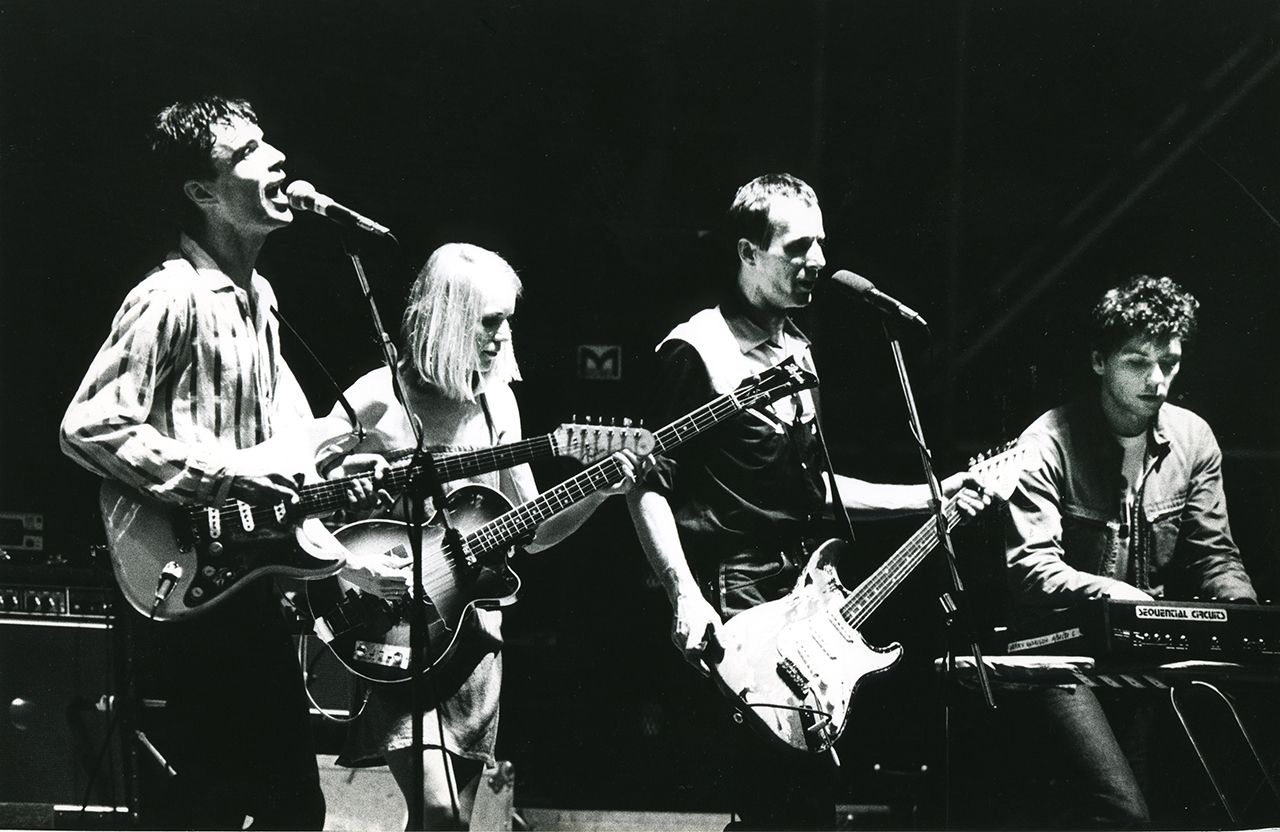
    Talking Heads with Adrian Belew in 1980

    (Image credit: Getty Images)

    “I always say it was the clothes our moms gave us for Christmas,” he laughs. “When we arrived in New York, The New York Dolls were still going and there were a lot of people in bands wearing platform shoes and satin trousers. We thought: ‘We can’t dress like that, we’ll look and feel ridiculous.’ So we decided to go with button-down shirts or Lacoste polo shirts. That seemed to work really well for us.”

    They might have looked like the most unprepossessing students, but there was an intensity to their frontman that lent the band a so-normal-they’re-disturbing air and made Psycho Killer, their most famous song, seem virtually autobiographical. Or, as David Byrne himself put it in an interview in 1992: “Looking at old videos of us, it’s like three normal kids backing up this maniac.”

    We came from a place where ideas and conceptualisation were almost more important than craftsmanship

    Tina Weymouth

    Even in an era that threw up Johnny Rotten and Sid Vicious, Byrne was unusual, appearing to teeter on that fine line between genius and madness. Discussing it today, Weymouth says: “People would ask: ‘Is David Byrne a genius or a moron?’ I wanted to nip that ‘moron’ bit in the bud, so it was better to say ‘genius’. The truth is somewhere in between.”

    Looking back, she says: “We had fun making those Talking Heads records – they were rarefied times.” She doesn’t accept the brainiac tag, asserting: “our music was emotionally profound.” She adds: “People say we were clever, and it’s funny – it’s also quite mistaken! Compared to Stephen Hawking we’re just midgets. Imagine if we had A Hawking Heads – that would be something.”

    Yet she concedes that Talking Heads were big on ideas. “We’d been to art school – not that we were effete snobs – but we came from a place where ideas and conceptualisation were almost more important than craftsmanship.” The band’s experimental approach saw them make, she decides: “science fiction funk.

    “Everything we did was texturally entirely different,” she asserts, “because we had this interesting mix of people: Chris came from the steel town of Pittsburgh and understood that raw black American sound. Then there were myself, David and Jerry who had been exposed to a lot of European classical music. So when you combine the African-American rhythms with that European melody you get Talking Heads.”

    That would have been very destructive for the band. You couldn’t replace David Byrne, and I wouldn’t have wanted to

    Adrian Belew

    Their sci-fi funk process involved Eno’s use of “oblique strategies,” including the random chance cards he had brought to bear on the sessions that produced Bowie’s Berlin trilogy. “They were fun,” recalls Frantz. “One said: ‘When in doubt, be quiet.’”

    The Fear Of Music sessions involved a different kind of oblique strategy: Eno and crew sat in a truck outside Weymouth and Frantz’s loft while cables ran upstairs to where the band performed the songs. Was that weird?

    “No, it worked out just fine,” says Frantz, who enjoyed making a record that soon became synonymous with paranoid punk-funk: from its terse song titles (Mind, Air, Paper, Animals, Drugs) to its jittery rhythms, it brought to mind Anthony Perkins circa Psycho down at Studio 54. “We had a good time – a good time being paranoid.”

    For the follow-up, arguably their finest foray into (out of this) world music, the band accommodated extra musicians such as keyboardist Bernie Worrell and Belew. Although Frantz talks up those Remain In Light sessions now, at the time there were rumours of dissent in the ranks as the other three found themselves increasingly treated like Byrne’s backing band.

    Did Belew, an outsider, detect animosity? “Not in the studio, because Chris and Tina weren’t there when I played my parts,” he replies. It was on tour later that he was “privy to the in-fighting and questions as to who should be credited for what.”

    “I just tried to remain neutral and have fun,” he says, “which it was, a lot of the time.”

    David had plans outside Talking Heads and he wasn’t keeping us abreast of what they were

    Chris Frantz

    Weymouth recalls “some temper tantrums” as relations broke down. “David had a lot of those when he got to be a star,” she reveals. “Fame overwhelmed him.” But then, as she admits: “It wasn’t a sane time in our lives.”

    Is it true that Weymouth asked Belew to replace Byrne? “Yes,” says the guitarist. “Chris and Tina raised the question. But that would have been very destructive for the band. You couldn’t replace David, and I wouldn’t have wanted to. It came out of Tina’s anxiety.”
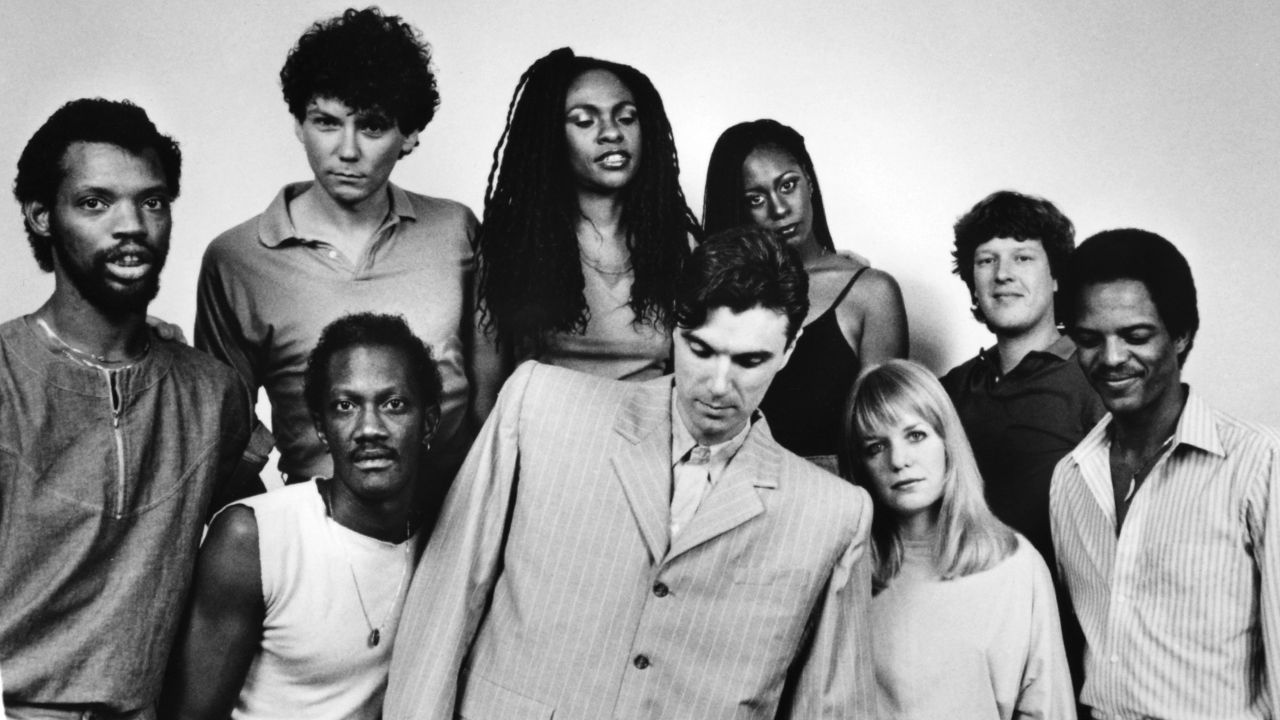
    Talking Heads

    (Image credit: Getty Images)

    There wouldn’t be another Heads album until 1983’s Speaking In Tongues, and thereafter only two more: 1985’s Little Creatures and 1988’s Naked (that is, unless you count 1986’s pseudo-soundtrack True Stories as an official Talking Heads release). They all saw a scaling back in terms of ambition and experimentation, but they did make the band more popular than ever as songs such as Road To Nowhere and Burning Down The House made them early stars of MTV.

    They also saw Byrne and the rest become increasingly estranged from each other as it became apparent that he intended to go solo. “Was there tension?” wonders Frantz. “Only because David had plans outside Talking Heads and he wasn’t keeping us abreast of what they were.”

    One sensed mutual antipathy seeing the four together onstage to receive that Hall of Fame induction in 2002. Have they spoken since? “Barely,” says Frantz. “I would be happy to sit down and talk to David, but he’s not a social guy. His preferred method of communication is email.” It’s a shame, he says, because they started out as such great friends. “We did pretty much everything together, but as the band became more popular David grew more distant.”

    Is it all Eno’s fault? “No,” he replies. “It’s just one of those things. We had a wonderful chemistry, but nothing lasts.”

    Adds Weymouth: “We just have to be glad there was no loss of life – nobody was killed in the creation of a Talking Heads record.”

  • Sergiy Bolotny Ukrainian Caprice No.4 Sycamore &Burlesque Review

    Sergiy Bolotny Ukrainian Caprice No.4 Sycamore &Burlesque Review

    The single “Ukrainian Caprice No. 4 Sycamore & Burlesque” by Sergiy Bolotny evokes sublime imagery, reminiscent of a snowy meadow dusted like powdered sugar on a cake. From the very first notes, the music envelops the listener in an intense and nostalgic melody. As the piece progresses, it transforms, infusing playful energy that dances delicately within the air. The violin embodies the graceful essence of a swallow resting on a sycamore tree before fluttering away and circling back.

    Sergiy Bolotny Ukrainian Caprice No.4 Sycamore &Burlesque

    The contrast between the steadfast sycamore and the movement of life around it creates a profound moment captured in sound. This moment feels alive, leaving an imprint on the heart. Bolotny masterfully communicates deep emotions through his violin, showcasing his skill as a virtuoso. His command over the instrument allows him to present a wide range of tonal colors, illustrating a pastoral scene that unfolds with each note.

    Melodic passages flow into quicker, more dynamic sequences. Imagining this scene while closing one’s eyes reveals a rich tapestry of sensations. The recording quality is remarkable, allowing listeners to feel the space around the music. Such clarity enhances the experience, immersing the audience in the atmosphere.

    Ukrainian Caprice No.4 Sycamore &Burlesque – Sound and Atmosphere

    Bolotny’s ability to convey a bucolic charm through his playing is sublime. The nuances he introduces breathe life into the composition, reflecting nature’s tranquility and vibrant energy. Each element of the performance comes together beautifully, creating a cohesive narrative that resonates deeply.

    This single is not only an artistic endeavor but a celebration of musical mastery. Bolotny stands out as a musician who elevates traditional forms, pushing boundaries while remaining respectful of their origins. His approach to this work reveals a sophisticated understanding of composition and emotional expression, making the performance deeply engaging.

    Throughout the piece, the violin’s voice shifts from tenderly melodic to brisk and spirited, mirroring the natural elements it seeks to portray. The swells of music evoke images of dynamic landscapes, where stillness coexists with activity. This feeling of coexistence creates a rich sensory experience, drawing listeners into a moment of reflection.

    Ukrainian Caprice No.4 Sycamore &Burlesque – Performance and Production

    Sergiy Bolotny’s single is a bridge to an enchanting world, one that offers not just auditory pleasure but also a visual narrative. The music invites listeners to explore their thoughts and emotions while grounding them in the beauty of nature. Each technical flourish adds depth, making the musical experience feel expansive and intimate.

    As the work reaches its conclusion, listeners are left with a sense of fulfillment and peace. The delicate balance of light and shadow in the music reflects the nuances of life. Bolotny successfully encapsulates these themes, leaving an emotional imprint that resonates long after the final note fades away.

    “Ukrainian Caprice No. 4 Sycamore & Burlesque” is an extraordinary piece that exemplifies Sergiy Bolotny’s musical genius. It invites listeners into a rich auditory experience that engages the senses and touches the heart. Such artistry is a rare gift, deserving of recognition and appreciation.


    Sublime

    🔥 If you love this music: Discover More


    Find Sergiy Bolotny here:
    Spotify | Instagram

    The post Sergiy Bolotny Ukrainian Caprice No.4 Sycamore &Burlesque Review appeared first on Edgar Allan Poets – Noir Rock Band.

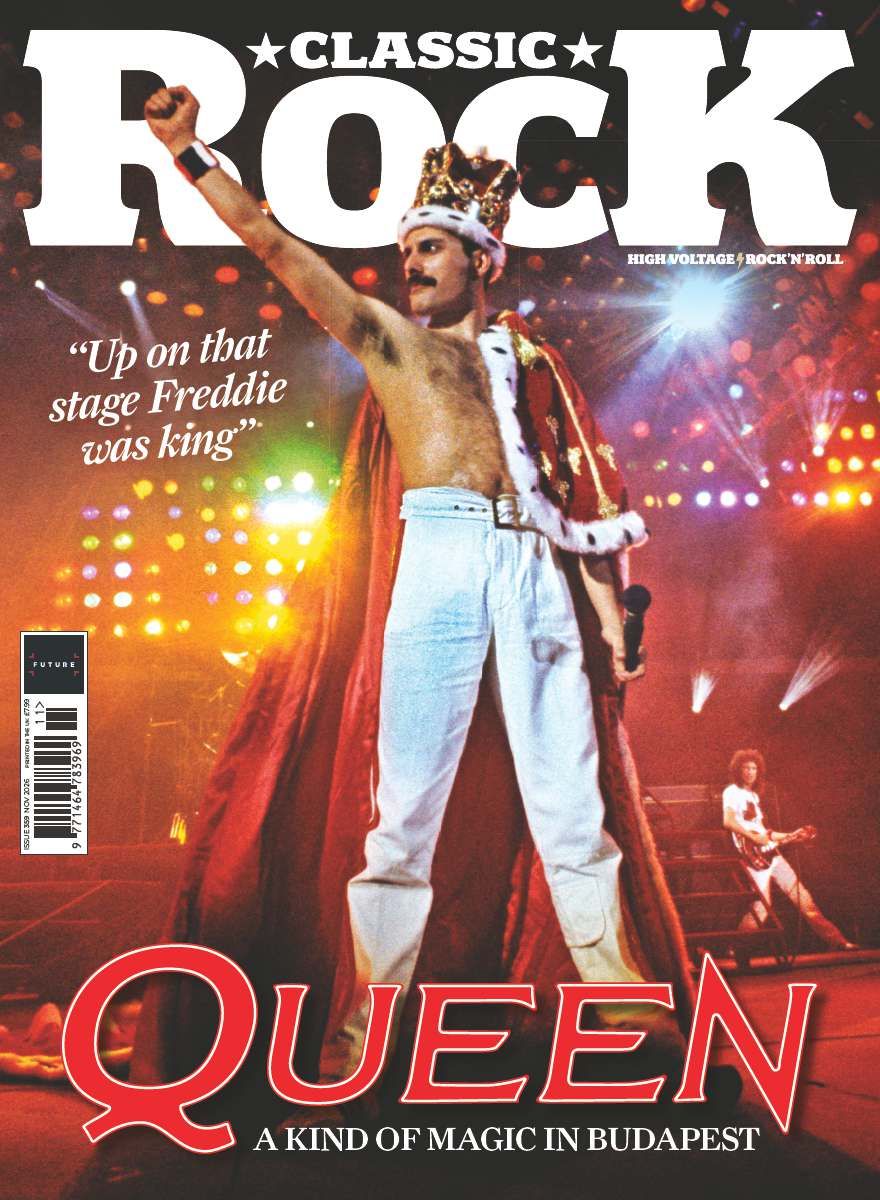
  • Brian May and Roger Taylor on Freddie Mercury’s Last Stand – only in the new issue of Classic Rock

    One thing that I have noticed, both in life and every issue of Classic Rock, is that I’m always bemoaning the passage of time. Where has it gone?! Where does it go?! Turns out the summer of 1986 was 40 years ago which, quite frankly, I’m finding hard to believe.

    In 1986, the Berlin Wall was still a thing, and the Cold War was in full flight. It was against this backdrop that Queen defied the odds and took their Magic tour behind the Iron Curtain to Hungary. As Brian May and Roger Taylor tell us in this issue, they always tried to play places people told them they shouldn’t play. Despite considerable obstacles involved in making it happen, the gig was a resounding success and, happily for us, recorded for posterity. Now, 40 years later, it’s getting a 21st-century makeover with a new film showing Queen (and Freddie Mercury) in all their majesty.

    We’ve a jam-packed issue this month (as ever), including brand new interviews with Greta Van Fleet, Rick Wakeman, Manic Street Preachers, Pearl Jam, Little Angels, The Temperance Movement and loads more.

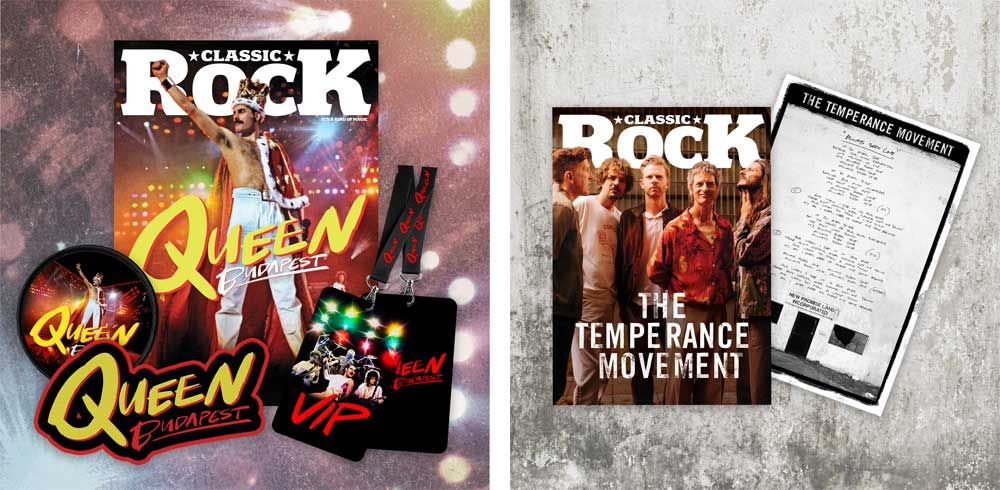
    There’s more: this issue is also a Premium Issue featuring an official Queen double-sided movie poster, sticker sheet, vintage gig poster and art card! (for all subscribers, UK retail and online orders only).

    We’ve also produced two bundle editions to celebrate this month’s magazine. The limited edition Queen x Classic Rock Bundle contains the magazine with a bespoke cover, two exclusive Queen patches and a ‘VIP’ Lanyard, while The Temperance Movement x Classic Rock Bundle features the magazine (with a different bespoke cover, of course) and a signed lyric sheet for the band’s recent single Always Been Love.

    The covers of Classic Rock's Queen and Temperance Movement bundle editions

    Get them before they’re gone, because once they’re gone, they’re gone for good!

    Sian Llewellyn signature

    Alt

    Features

    Queen
    How they pulled off a groundbreaking trip behind the Iron Curtain for their last-ever filmed gig with Freddie Mercury.

    Greta Van Fleet
    We talk to Josh Kiszka about the band’s new album, Palace For The People, and how it feels to “carry the torch” for rock.

    Manic Street Preachers
    A look at the making of The Holy Bible, the painful howl of an album that defied the Britpop scene upon its release in 1994.

    Dolly Parton
    What can we say about the late country queen that hasn’t been said elsewhere? We take a look at her most important songs.

    Anthrax
    Ten years since their last album, Scott Ian looks back on the band’s history – and introduces new record Cursum Perficio.

    Pearl Jam
    Bassist Jeff Ament gives us a peek into PJ’s formative years through his personal camera lens.

    The Temperance Movement
    After a long – and frankly rather worrying – break, the band have stepped back into the limelight, stronger than ever.

    Little Angels
    They had a No.1 album, hit singles, limousines, fame… and empty bank accounts. Thirty years on, Little Angels open up about surviving the 90s music machine and why their story isn’t over yet.

    The cover of Classic Rock 359, featuring Freddie Mercury

    Regulars

    The Dirt
    Rick Wakeman goes to Mars. Arise, Sir Alex Van Halen. The Journey drama continues. Welcome back Bobbie Dazzle and Theory Of A Deadman. Say hello to Villagers Of Ioannina City and Dan Byrne. Say goodbye to Tim Curry, Derry Brownson.

    The Stories Behind The Songs: Bobby ‘Boris’ Pickett & The Crypt-Kickers
    How an actor’s Boris Karloff impression turned into a Halloween hit.

    Q&A: Dave Hill
    Slade’s guitarist on the band’s early days, being the reason Kiss got together, his debut solo album, blanking Springsteen and more.

    Six Things You Need To Know About… Hannah Wicklund
    She was involved in music early, and fame followed quickly; as a woman in rock she faced many hurdles; she had death threats; she does things her way.

    Ever Meet Lemmy? Tom Morello
    Gene Simmons gave his son his famous Axe bass; Nuno Bettencourt is one of his guitar heroes; he had a fright playing with Springsteen; and yes, he did meet Lemmy. He’s RATM guitarist and much more, Tom Morello, and these are just some of the people he’s met on the rock’n’roll highway.

    Reviews
    New albums from Tony Iommi, Greta Van Fleet, Francis Rossi, Ann Wilson, Tom Morello, The Temperance Movement and more. Reissues from The Beatles, Manic Street Preachers, Genesis, Small Faces, The Cramps, Yes and more. DVDs, films and books on Alice Cooper, Nicko McBrain, Fleetwood Mac, Linkin Park and more. Live reviews of Bon Jovi, The Black Keys, Jack White, Elton John and more.

    Lives
    We preview tours by Blaze Bayley, The Mission and Walter Trout. Plus gig listings – who’s playing where and when.

    The Soundtrack Of My Life: Ian McCulloch
    Echo & The Bunnymen’s frontman picks his records, artists and gigs of lasting significance.

    Alt

    * Copies of the new issue of Classic Rock can be purchased online from Magazines Direct

    * Classic Rock is on sale in the UK in shops such as supermarkets and newsagents.

    * In North America, Classic Rock is available in branches of Barnes & Noble and Books-A-Million, although new issues do not go on sale until a couple of weeks after they’re published in the UK.

    * An easy option is to go digital. You can subscribe digitally from just £20.99 for six months. Individual issues and subscriptions are also from the Apple Store, Zinio, Readly, Press Reader and Pocketmags.

    * Save money by buying a physical subscription. UK and overseas subscriptions are available.

  • Dobr._Man Moře Review

    Dobr._Man Moře Review

    From the start, “Moře” engages listeners with an energetic guitar riff that captivates right away. The intense guitar chords blend with a somewhat tribal rhythm from the drums. As the vocals enter, they showcase a truly interesting timbre, capturing attention right away. The composition spans various genres, oscillating between rock and hints of rap in the verses. This layering creates a dynamic listening experience.

    Dobr._Man Moře

    When the chorus arrives, the song explodes into a full-on hard rock experience. This transition elevates the energy, pulling listeners further into the track’s infectious drive. The hard rock vibes are emphasized by the raw and powerful vocals. One can easily draw parallels between Dobr._Man’s style and that of bands like Limp Bizkit and System of a Down. Both comparisons highlight the heavy instrumentation and the energetic delivery present throughout.

    Accompanying the single is a visually appealing video. It captures the band performing on a beach and in a grassy field, reinforcing the lively energy of the song. The cinematography effectively showcases the passion and commitment of the musicians. Each member contributes to the overall atmosphere, creating a sense of camaraderie. Their enthusiasm is palpable, making the performance even more engaging for viewers.

    Moře – Sound and Atmosphere

    The dynamic interchange between genres allows the song to connect with a wide audience. Rock fans will appreciate the powerful instrumentation, while those who enjoy rap elements will find pleasure in the rhythmic verses. Dobr._Man manages to marry these influences, creating a distinct sound that feels both fresh and nostalgic.

    As “Moře” progresses, the song maintains its intensity, pushing forward with relentless energy. This consistency keeps listeners invested throughout. Each section adds a layer, building on the previous one without losing momentum. The chorus serves as a high point, inviting listeners to shout along. It’s an anthem that begs for concert singalongs.

    Moře – Performance and Production

    With a unique sound that combines various elements, “Moře” stands out in today’s musical landscape. The band has crafted an intense and powerful track that speaks to the heart and soul of rock music.

    “Moře” is an invitation into the vibrant world of Dobr._Man’s music. It combines a strong visual performance with audio excellence, resulting in a memorable experience. Fans of rock and those who appreciate innovative sounds should definitely check this out. The journey through this track is one worth taking.

    “Moře” is a powerful addition to the band’s repertoire, showcasing their talent and creativity. It’s a song that demands attention, and rightly so, thanks to its infectious energy and memorable composition.


    Energetic

    🔥 If you love this music: Discover More


    Find Dobr._Man here:
    Spotify | Instagram

    For fans of:

    Limp Bizkit • System of a Down


    The post Dobr._Man Moře Review appeared first on Edgar Allan Poets – Noir Rock Band.

  • SnakeOil The Wild Side Review

    SnakeOil The Wild Side Review

    This beautiful album opens with a distinctive guitar sound in “Would You Believe Me If I Told Ya?” The track evokes vibes reminiscent of the artist Beck. It showcases the artist’s creativity through its sly and intense presentation. The song captivates with its clever lyrics and engaging melody, hooking listeners in from the very first note.

    SnakeOil The Wild Side

    “Sleeping & Nothingness” is a track that embraces a psychedelic essence. This song parallels the style of groups like Grant Lee Buffalo. The slightly out-of-tune guitar adds a unique texture, heightening the dreamlike atmosphere. The artist’s willingness to experiment shines through, presenting a singular sound that stands.

    “Matchstick” is another notable track. It brings forth a retro vibe that is characteristic of the artist’s style. The alternative rock influences are evident here, and the song features an impressive vocal interpretation. The blend of modernity with nostalgic elements showcases the artist’s ability to bridge different musical eras.

    The Wild Side – Sound and Atmosphere

    “Babylon” emerges as a standout, enveloping the listener like a serpent. The fantastic melody makes this one of the album’s highlights. Its structure flows seamlessly, creating an enchanting experience. The intricate layering of guitar riffs supports a harmonious interplay of sounds, further enhancing its appeal.

    “Amber & Hazel” introduces a guitar sound that feels like it originates from another dimension. The track exists in a suspended limbo, offering a whimsical exploration into the artist’s imaginative world. The ethereal quality allows listeners to drift away and become fully immersed in the experience.

    The album culminates with “Acid Rain,” a song that is sinister and intense. The artist penned this piece while reading Edgar Allan Poe’s “The Cask of Amontillado.” It successfully channels the eerie vibes typical of Poe’s work. Within this track is a nostalgic romanticism that tantalizingly hides a secret, drawing listeners deeper into its narrative.

    The Wild Side – Performance and Production

    This artist brings forth remarkable creativity throughout “The Wild Side.” Each song offers a distinct experience, showcasing a vision that is innovative and reflective. The seamless blend of experimental sounds and lyrical depth ensures that this album remains engaging from start to finish.

    Listeners are encouraged to dive into the intricate layers and explore the emotional landscapes the artist paints. There’s a blend of familiarity and uniqueness that speaks to a wide audience. The art reflects a well-crafted approach that merges poetic expression with musical inventiveness.

    “The Wild Side” is an impressive showcase of artistic spirit. It’s a journey that explores various musical styles while remaining cohesive in its vision. Fans of experimental genres or those who appreciate deep lyrical content will find much to admire here. The album resonates with creativity, and it is undoubtedly worth a listen.


    Unique

    🔥 If you love this music: Discover More


    Find SnakeOil here:
    Spotify | Instagram

    For fans of:

    Beck • Grant Lee Buffalo


    The post SnakeOil The Wild Side Review appeared first on Edgar Allan Poets – Noir Rock Band.

  • Oscar antidepresivos Review

    Oscar antidepresivos Review

    From the very first track, “Intro,” it is evident that Oscar is a visionary artist. He explores his emotions through experimentation. The guitar work is intense and acidic, anchored in high frequencies. The avant-garde vocals create a sense of frenzy and engagement.

    Oscar antidepresivos

    Following “Intro,” the title track “Antidepresivos” delves deeper into Oscar’s musical identity. The lyrics are pressing, instilling a sense of anxiety within the listener. This track blends alternative rap and rock elements. The keyboard pads expand the overall sound, adding depth to the composition. The fusion of genres here reflects Oscar’s innovative approach.

    Next is “El Tiempo y su Paso.” This song begins with a nearly desolate feeling, driven by a nostalgic guitar riff. As the vocals enter, the track takes on a more introspective and melodic direction. The sound transports listeners into a thoughtful state. The progression from desolation to introspection showcases Oscar’s range as a songwriter.

    antidepresivos – Sound and Atmosphere

    One standout track is “Manifiesto (En Todas las Cosas).” This piece introduces female backing vocals, enriching the overall texture of the song. The vocal line returns to a rapid and demanding rap style, while the arrangements lean heavily towards alternative rock. The instrumentals envelop the listener, creating a distinctive atmosphere that truly engages.

    “Antidepresivos II” is another remarkable track. It opens with an organ, establishing a richly epic atmosphere. Oscar clearly loves experimenting with different instruments. This song reinforces his desire to cultivate an expansive sound that resonates throughout the album.

    Closing the album is “Sueño de Vida,” an atmospheric composition. This track evokes a somewhat dystopian ambiance. “Sueño de Vida” leaves a lasting impression, rounding off an album filled with exploration and depth.

    antidepresivos – Performance and Production

    “Antidepresivos” is a fascinating album that is highly recommended. Oscar’s vision and commitment to his craft shine through. Each track offers something unique, creating a cohesive experience for the listener. His experimentation with sounds and styles invites listeners into a world that is creatively rich.

    In this project, Oscar skillfully balances emotion and experimentation. He navigates through genres with ease, unearthing profound thoughts and feelings. The album invites reflection while simultaneously energizing the audience. It speaks to a modern context, capturing the complexities of life.

    Listeners will appreciate the raw energy present in many of the tracks. The steady increase in intensity across songs keeps the audience engaged. Oscar’s ability to convey urgency through his lyrics is fantastic.

    “Antidepresivos” clearly establishes Oscar as a forward-thinking artist. His willingness to explore various musical landscapes adds to the album’s richness. Each composition contributes to a larger narrative about emotion and experience. This album will likely find a diverse audience among music lovers.


    Intense

    🔥 If you love this music: Discover More


    Find Oscar here:
    Spotify | Instagram

    The post Oscar antidepresivos Review appeared first on Edgar Allan Poets – Noir Rock Band.

  • Vote for Rock’s Spookiest Album Cover: 32 Famous Artists Compete

    AC/DC, Alice Cooper, the Rolling Stones and Van Halen compete for your vote. Continue reading…
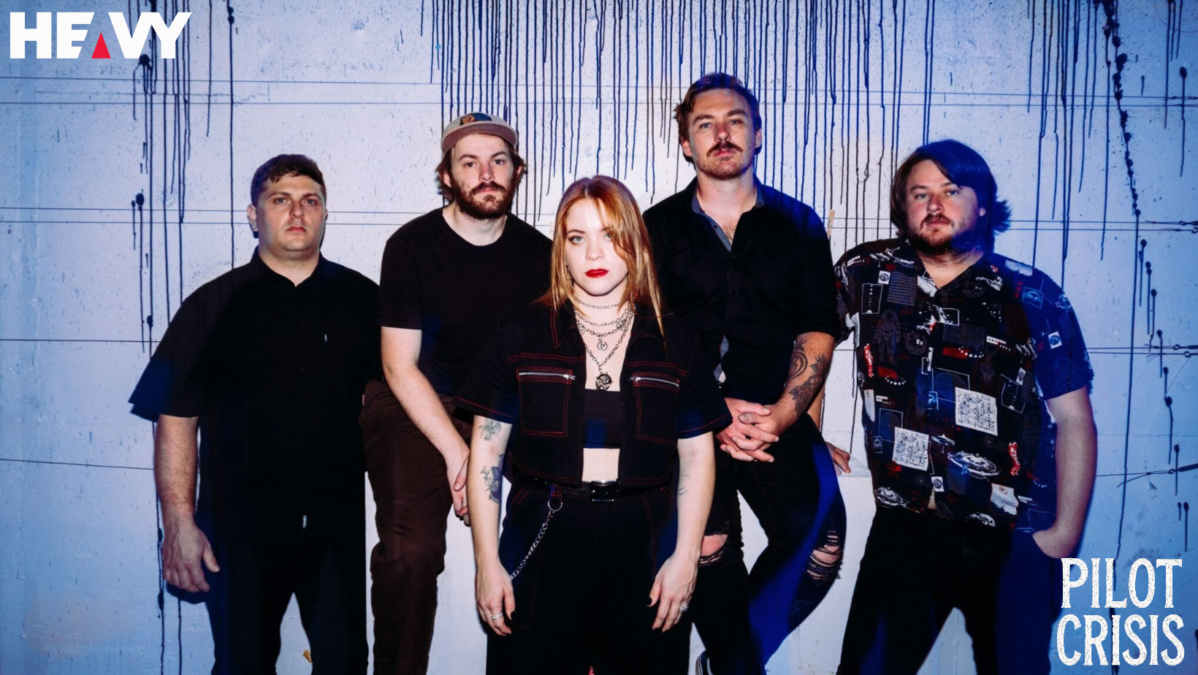
  • Crisis… What Crisis? Introducing PILOT CRISIS

    Brisbane alternative rock outfit Pilot Crisis are carving out their own path, blending a wide range of influences with a sound that’s as unpredictable as the ups and downs of figuring life out. Their latest single, Dreams in Disguise, explores the darker side of chasing fulfillment, where ambition, addiction and ego can leave you trapped […]