Blog

  • THOMAS MILLER’S LAZARUS EFFECT: Former Symphony X Bassist’s New Project Drops “Closer To The Sun” Single – Intense Debut Album Nears October 30th Release On Sensory Records

    photos by Danny Sanchez

    Stream THOMAS MILLER’S LAZARUS EFFECT’s “Closer To The Sun” HERE.

    As THOMAS MILLER’S LAZARUS EFFECT, the new venture from former founding Symphony X bassist Thomas Miller, prepares to release its eponymous debut through Sensory Records in October, the label presents the album’s second single, “Closer To The Sun.”

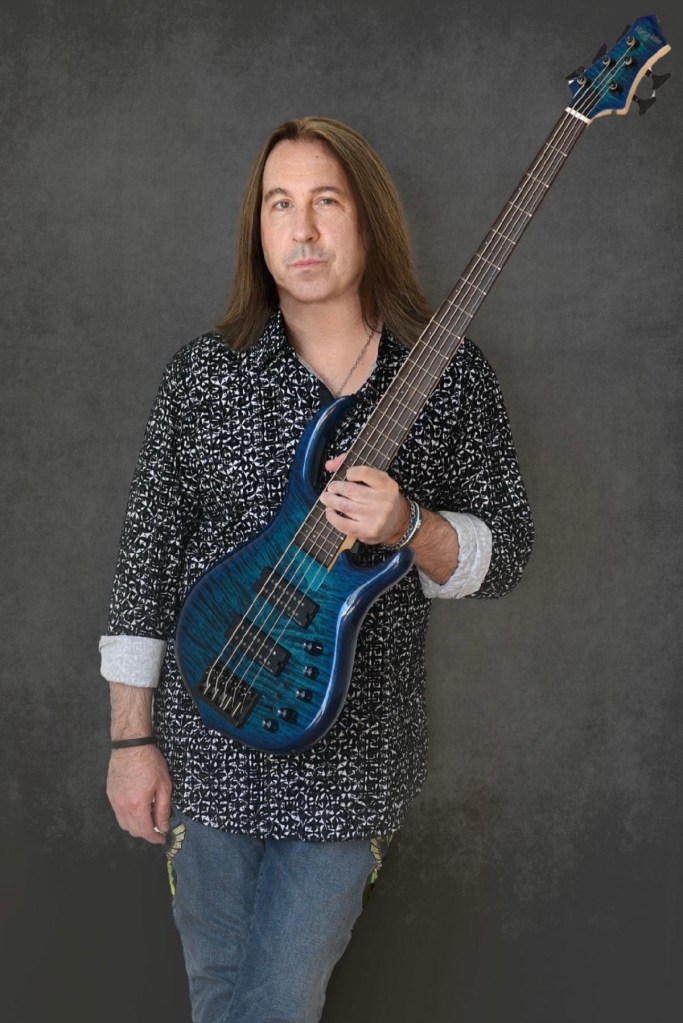
    Thomas Miller started his music career in central New Jersey and played in numerous cover and original bands influenced by progressive bands from the 1970s and 1980s. In 1986, he met Michael Romeo, a local progressive and classically influenced guitarist, with whom he then recorded and played in several bands. In 1994, they formed Symphony X and recruited the rest of the band members to complete the lineup and sign with Japanese record label, Zero Records.

    After international critical acclaim for their albums Symphony X, Damnation Game, The Divine Wings Of Tragedy, Twilight In Olympus, and A Prelude To The New Millenium, they did various tour dates in Japan, Europe, and NYC. Shortly afterwards, due to personal issues, Thomas stepped away from the band.

    Continually writing and recording on various projects and honing his writing skills, Miller collaborated on a recording project with vocalist Hollywood How Portney in 2017, and after interactions with fans over the years and realizing his chemistry with How, he decided to start writing for a new project, which would become THOMAS MILLER’S LAZARUS EFFECT.

    Two former Symphony X bandmates, guitarist Michael Romeo and keyboardist Michael Pinnella, would also lend their talents to the project, and Eric Rachel – producer of Symphony X’s first six albums as well as Black Sabbath, The Black Dahlia Murder and countless others, was enlisted to mix and master the album, which is completed with art and design by Rodrigo Gudiña.
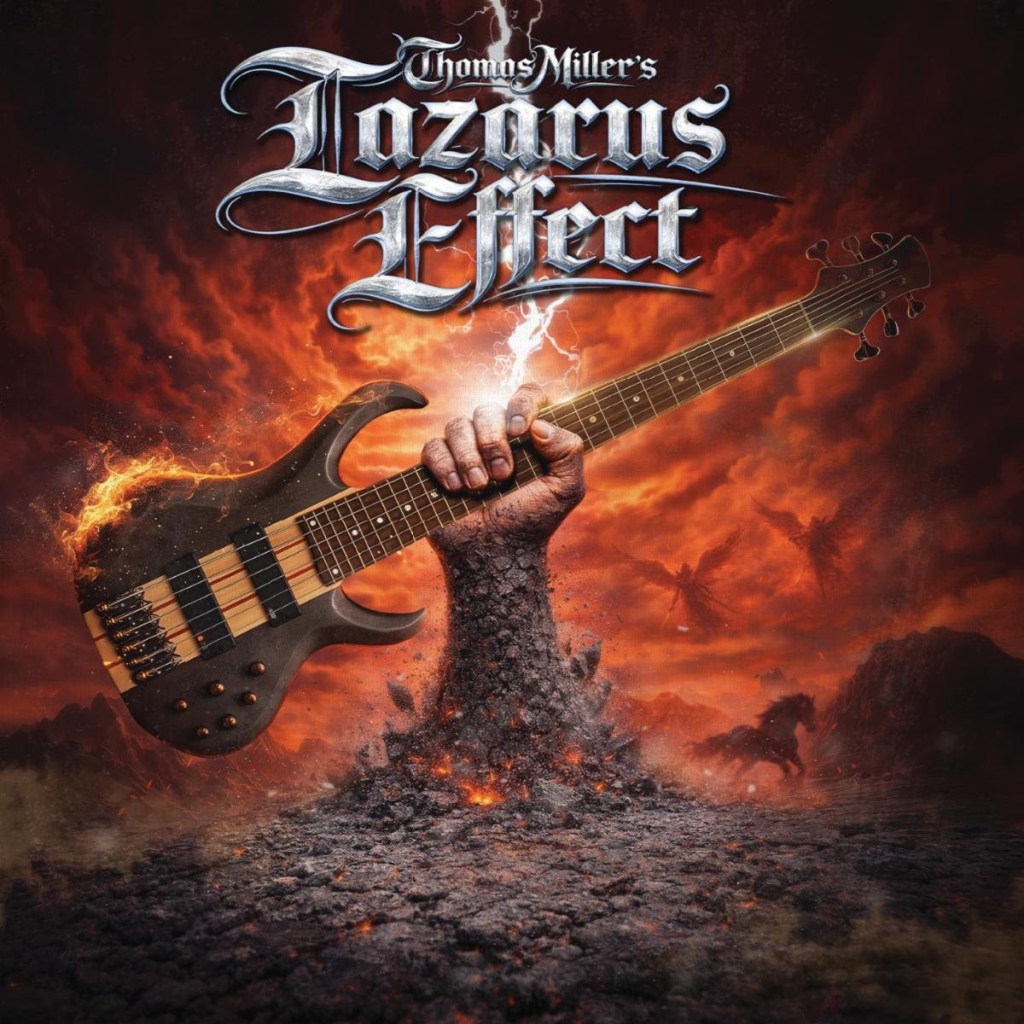
    The result is an epic, forty-nine-minute progressive metal opus, inspired by majestic themes and various musical overtones. Fans of Symphony X, Dream Theater, Circus Maximus, Redemption, Kamelot, and other grand progressive metal acts should immediately check out THOMAS MILLER’S LAZARUS EFFECT.

    Miller delves, “‘Closer To The Sun’ takes a more progressive direction than the first single, ‘When Darkness Falls.’ This song represents the combination of mythological lyrics, middle eastern tonalities and aggressive guitar and bass rhythms. I also liked the idea of acoustic guitar and violin to add another layer to the musical atmosphere, setting the story line as a buildup to the main rhythmic themes.”

    THOMAS MILLER’S LAZARUS EFFECT’s “Closer To The Sun” is now playing on Bandcamp HERE and YouTube HERE.

    Sensory Records will release Thomas Miller’s Lazarus Effect on CD, LP, and digital platforms on October 30th. Preorders are live at the label webstore HERE and on Bandcamp, the standard audio HERE and the 24-bit hi-res HERE.

    Stand by a new video and more on the album to drop over the coming weeks.

    https://www.instagram.com/lazaruseffectofficial

    Source: EARSPLIT PR

  • “Feel All Your Frequencies” — Primitive Heart Revisits a Love That Unravels Time in Video for “Slingshot”

    Feel all your frequencies
    I want to crawl into you
    Take time with my fantasies
    I want to be there with you

    Memory is a curious ghost, because what it haunts is not merely the past, but the self we became in another person’s presence. We say we miss them, yet often we mourn the particular music they drew from us: the laughter, courage, tenderness, or strangeness that seemed effortless beside them. But memory, when clung to, begins to melt time itself. Like Dalí’s clocks, the hours lose their shape, and yesterday spills into today until remembrance becomes obsession, even madness. We mistake the echo for a living voice. Yet what we were with them was never theirs alone. It remains within us, waiting to be heard again.

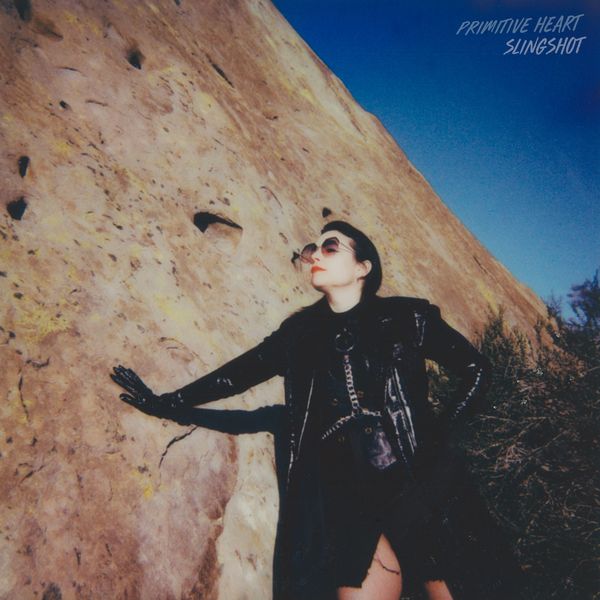
    Primitive Heart’s Slingshot begins from a tender idea: the charge of another person who loosens the bolts on your personality and brings some reckless, ecstatic version of you to the surface. Dani Mari sings with a languid directness, her airy voice gliding across atmospheric synthesizers while the spacious arrangement leaves every phrase exposed. There is a dream-pop softness here alongside restrained synth-pop and darker, filmic textures that should feel familiar to listeners of Chromatics, Chrystabell, Still Corners, and Drab Majesty.

    Beneath that elegant surface, however, desire has the safety catch off: somebody crashes into your life, scrambles the furniture in your head, and suddenly touch, fantasy, danger, and devotion all share the same address. The song is about the bittersweet yearning for complete proximity, body and mind, surrendering to the kind of attraction that makes ordinary inhibitions seem briefly irrelevant and love begin to resemble a beautiful, temporary insanity.

    Beneath the heady romance sits an even darker question: what happens when the beloved one disappears, but the version of yourself they awakened remains lodged in memory?

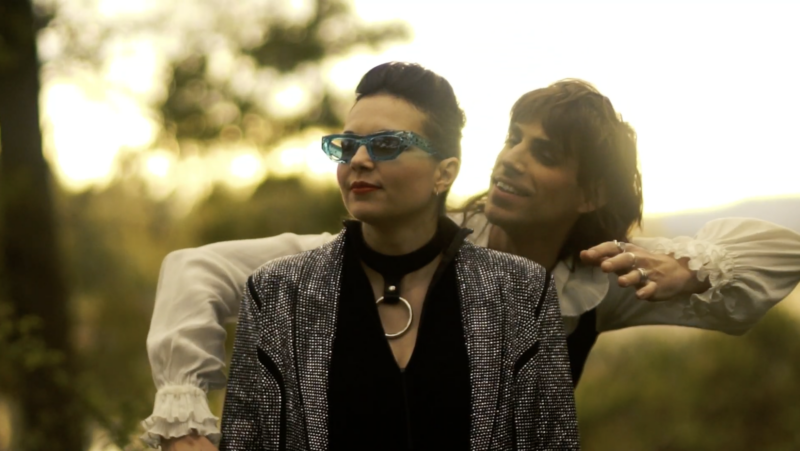
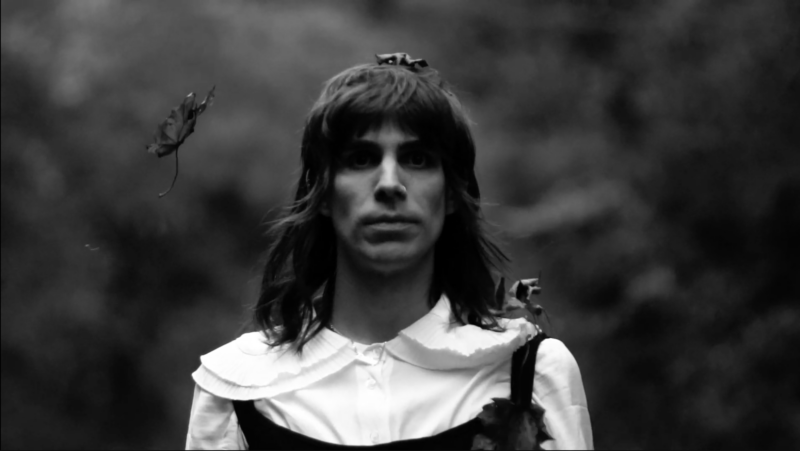
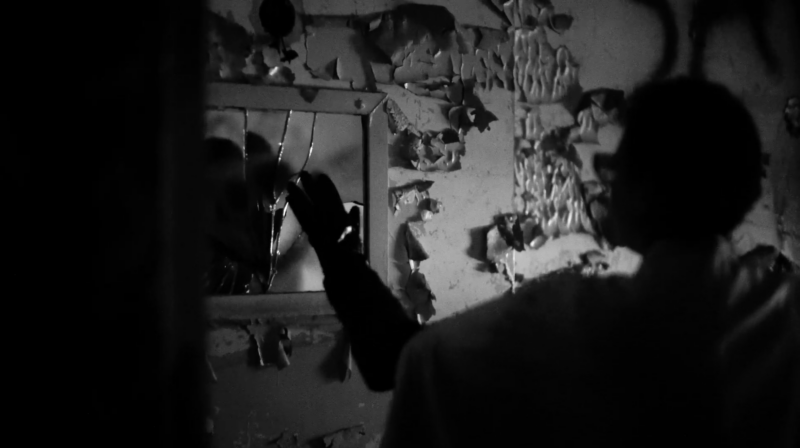
    Director Alice Teeple takes that question into psychological territory. In the clip, Dani Mari moves through the picturesque Catskills and an abandoned former mental institution, while Matthew Deegan, who also styled the video, appears as an androgynous, mischievous presence beyond reach. Their connection is expressed through distance as much as movement. They wander, dance, cross paths, and seem to occupy different realities, as though memory has placed them inside the same room without granting them the same moment.

    The slow motion gives Slingshot the quality of a recollection stretched beyond its natural dimensions. A creek, a corridor, a broken window, a wall covered in graffiti: each location begins to feel less like a fixed place than part of a mind trying to preserve an experience after its emotional context has vanished. Dani’s composure gives the images an unnerving calm, while Deegan’s playful movements introduce instability around the edges.

    There are traces of David Lynch and Maya Deren in the way identity and space become unreliable, along with touches of The Twilight Zone and Kafka. The chorus, I wanna get crazy with you, becomes a plea directed toward memory itself. She misses another person, but she also seems to miss the freer, stranger self that existed in their company.

    “The abandoned asylum immediately came to mind as the right setting, placing her alone in this desolate world, cut off from that energy, yet still possessed of an unnerving sense of peace,” says Teeple. “Matthew was the perfect choice to introduce this kind of playful androgynous chaos, and this presence plays beautifully against Dani’s stoicism.”

    Deegan was brought in for their experience as a costume designer working across ballet, opera, theatre, and music. Their approach blends the ornate with the unsettling, drawing from Victorian and Edwardian silhouettes, Japanese fashion, and the codes of queer fetish culture. That sensibility becomes essential to the video’s visual language. Their clothing gives the Puckish figure the appearance of someone who might belong to another century, another fantasy, or another version of Dani’s own consciousness. The styling on both characters never settles neatly into a single period, which makes Deegan feel less like an ordinary companion than a memory being reconstructed according to emotion.

    By the closing moments, Slingshot feels suspended between desire and fixation, with Dani moving through spaces where love, recollection, and madness have begun to share the same architecture.

    Watch Slingshot, out now via GrindEthos, below:

    Primitive Heart’s sophomore album, Colours, was co-produced by Rosana Cabán (Psychic Twin), with remixes by Jorja Chalmers and Chasms. Across the record, Dani Mari places her airy voice against restrained electronics and emotionally precise songwriting.

    Pre-save Slingshot on your choice of streaming service here.

    Follow Primitive Heart:


    Photo: Alice Teeple
    Photo: Alice Teeple
    Photo: Alice Teeple

    The post “Feel All Your Frequencies” — Primitive Heart Revisits a Love That Unravels Time in Video for “Slingshot” appeared first on Post-Punk.com.

  • Danish Post-Punk Artist In Atlas Gives the Devil on Her Shoulder a Say in “Tears, Poison, Desire”

    There’s a kind of idiotic joy in doing the thing you know might end with blood on your shirt, a phone call at 3 a.m., or somebody asking what in God’s name you were thinking. Maybe that’s the point. Responsibility has its virtues, sure, but it has lousy rhythm. Danger gives stupidity a backbeat. You leap, you laugh, you watch the floor come up fast, and afterward you stand there amid the wreckage with a shrug that says maybe it was worth it, maybe it wasn’t, and maybe asking the question ruins half the fun anyway. Consequences are tomorrow’s problem.

    Bad decisions have always needed better music.

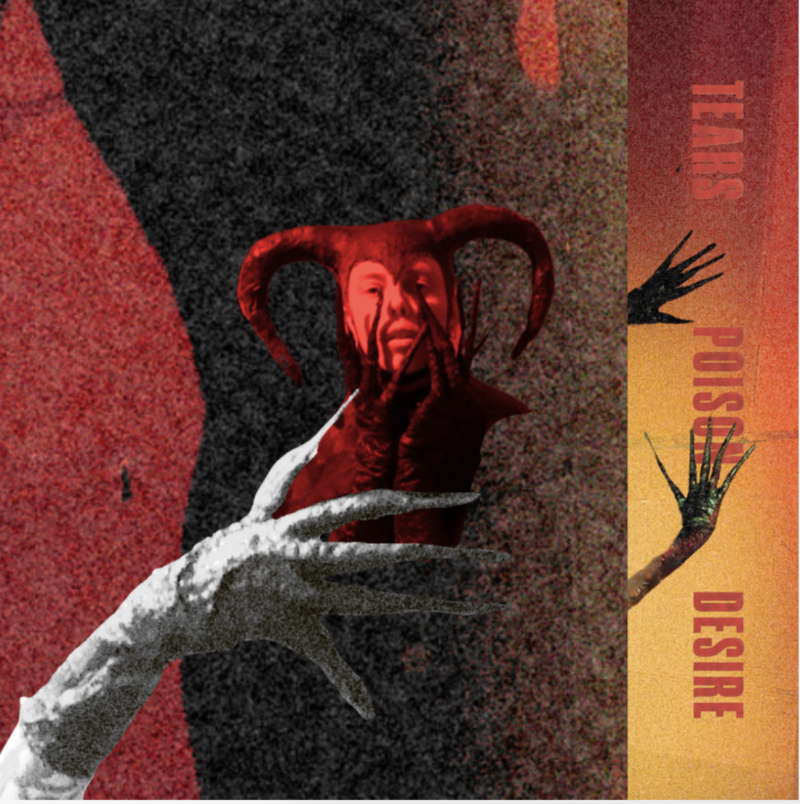
    Nobody ever ruined their life because the bassline was too sensible, and Copenhagen-born artist In Atlas seems to understand that civilization periodically requires somebody to hand the evening over to the little red bastard sitting on your shoulder. Tears, Poison, Desire, the first single from her forthcoming Hyperreal LP, out November 5 through Detriti Records, concerns that exquisite stretch of time when every warning sign has become decorative.

    You can hear Lizzy Mercier Descloux in its crooked dance-floor instincts, Lene Lovich and Suburban Lawns in its elastic theatricality, and a buzzing chaos reminiscent of Tuxedomoon, DAF, and Frustration, lurking around the song’s machinery. The beat keeps things moving while the voice plays around its edges, cool one second, knowingly absurd the next. Dark disco becomes less a genre designation than an excuse to behave badly under flattering dancefloor lights.

    And why shouldn’t it? Half the supposed wisdom of adulthood consists of learning exactly which pleasures you’re expected to decline, usually because somebody older already enjoyed them first and left you the cleanup bill.

    “Let’s say its about coming apart in the desire for some sort of liberation, or maybe its about having fun, or maybe about having a kind of fun you don’t really want to have, being spurred on by that little red guy on your shoulder,” says the artist. “Playing with fire, then playing with the embers, then playing with gasoline.”

    Now that is a philosophy worth dancing to.

    The important word may be “gasoline,” because fire is charming enough when it belongs to candles and cigarettes; eventually somebody discovers what happens when you pour something stupid onto it. Desire works similarly. So does freedom. Push either far enough and you may find yourself staring at the remains the next morning, unable to decide whether you have learned anything or merely acquired a better story.

    Listen to Tears, Poison, Desire below, or via streaming here.

    That ambivalence runs through the upcoming Hyperreal, an album concerned with escapism and private worlds meeting an uncooperative reality. In Atlas, also one half of Greek/Danish duo V.V.I.A. alongside Venus Volcanism, seems drawn to the ecstatic and ridiculous point where pleasure starts growing teeth.

    Perhaps consequences deserve respect. They are very punctual. But while Tears, Poison, Desire is blaring, tomorrow can stand outside and knock.

    Follow In Atlas:

    The post Danish Post-Punk Artist In Atlas Gives the Devil on Her Shoulder a Say in “Tears, Poison, Desire” appeared first on Post-Punk.com.

  • Gig Review: Gaerea / Conjurer – Slay, Glasgow (14th September 2026)

    A gig that I had been looking forward to since it was announced, but then it rolls around, it’s Monday, it’s wet and miserable, and you start to think, “Maybe I could give this one a miss…” Boy, I’m glad I didn’t. Although this gig has been in the diary for months, I had fully … Continue reading Gig Review: Gaerea / Conjurer – Slay, Glasgow (14th September 2026)
  • The Cumberland River Project 16 Review

    The Cumberland River Project 16 Review

    The song opens with a vibrant energy reminiscent of ZZ Top. As the vocals enter, the atmosphere shifts into a distinctly Nashville vibe. The deep and intense voice draws listeners in, making the lyrics resonate powerfully. This track elevates one’s mood instantly, blending elements of Nashville country with rock influences. The combination makes it notably engaging.

    The Cumberland River Project 16

    The production is outstanding and showcases the talent behind the project. Frank Renfordt emerges as a remarkable songwriter and architect of the song, demonstrating an impressive ability to assemble a team of professionals for a cohesive final product. The meticulous attention to detail in the production further enhances the listening experience.

    “16” reflects a collaboration between Frank Renfordt and American songwriter Mick Logsdon. Their partnership results in a song rich in musicality and lyrical depth. The arrangement combines traditional country elements with a modern rock twist, making it accessible to a broader audience. Easton Driver’s vocals elevate the overall performance, providing a strong emotional anchor throughout the track.

    16 – Sound and Atmosphere

    The clever wordplay invites listeners to connect on a deeper level, stirring emotions while keeping the energy upbeat. Every line is crafted to invite audience participation, ensuring it remains memorable long after the song ends.

    The production quality cannot be overstated. Experts from various backgrounds contribute to the richness of the song. Each instrumental layer offers something unique, from rhythmic guitar riffs to solid drumming patterns. This sophisticated approach to arranging instruments highlights the collaborative spirit of the musicians involved.

    16 – Performance and Production

    Easton Driver’s delivery of the lyrics is dynamic. His deep voice carries an emotional weight, effectively conveying the theme of the song. It feels as though Driver invites the audience to join him in this musical journey. His performance is a key aspect, solidifying the song’s impact on listeners.

    The guitar sections are biting and melodic, drawing inspiration from rock traditions. Meanwhile, the rhythm section provides a strong foundation, ensuring the track moves forward with momentum.

    The fusion of genres creates a unique identity, distinguishing it from typical country songs. The incorporation of rock elements adds a layer of excitement, making it appealing to fans outside the genre.

    “16” emerges as a well-crafted piece, showcasing impressive collaboration among talented musicians.  The Cumberland River Project offers listeners an experience .

    The song stands out with its energetic vibe and rich production. It balances catchy melodies with strong storytelling and emotional vocal delivery. It deserves a place in your playlist.


    Energetic

    🔥 If you love this music: Discover More


    Find The Cumberland River Project here:
    Spotify | Instagram

    For fans of:

    ZZ Top


    The post The Cumberland River Project 16 Review appeared first on Edgar Allan Poets – Noir Rock Band.

  • HANOI ROCKS Announce “The Complete Collection 1981–1984” Box Set – Including All Five Original Studio Albums Plus Rare B& Previously Unreleased Material

    Hanoi Rocks have announced The Complete Collection 1981–1984, a deluxe compilation of the Finnish rock legends’ influential first five studio albums, due Nov. 13 via BMG. The six-LP and six-CD box set covers the band’s entire original run: Bangkok Shocks, Saigon Shakes, Hanoi Rocks (1981), Oriental Beat (in the 2022 “The Re(al)mix” version), Self Destruction Blues (1982), Back To Mystery City (1983) and Two Steps From The Move (1984), plus a bonus album of rarities titled Motorvatin’!!!.

    Motorvatin’!!! features songs from rare BBC live sessions as well as previously unreleased demos, including “The Beating Gets Faster (I Know You),” “Sailing Down The Tears” and “Rebels On The Run.” The physical version of the set also includes a 36-page photobook featuring many previously unseen and rare photographs, as well as studio album art cards from the band’s legendary initial run.

    Said Michael Monroe: “The new Hanoi Rocks box set includes all the albums by the original band, including the ‘Oriental Beat’ 40th-anniversary release ‘The Re(al)mix’, which came out in 2022. There’s also a special extra bonus LP of rarities with even some previously unreleased tracks. The artwork has been put together nicely, and it has a vast amount of great, rare, and some never-before-seen photos.

    “If someone is not familiar with Hanoi Rocks, this is a fantastic opportunity to get to know the band’s unique material. I recommend this box set to everybody!!”

    Pre-order the box set here.

    Hanoi Rocks were formed in 1979 in Helsinki by Michael Monroe and were the first Finnish band to chart in the U.K. The band’s fusion of punk rock energy with classic glam rock ‘n’ roll — driven by Monroe’s charismatic presence, guitarists Nasty Suicide and Andy McCoy, bassist Sami Yaffa and drummer Gyp Casino (later replaced by Nicholas “Razzle” Dingley) — proved hard for the world to disregard.

    Tragedy struck in December 1984 when Razzle died in a car accident while Hanoi Rocks were on their first U.S. tour, on the verge of an international breakthrough with Two Steps From The Move, their first major label album. The band dissolved in 1985. Their legacy lived on as a pivotal influence on the glam metal era — cited by Guns N’ Roses, Faster Pussycat, Skid Row and Poison among others — and the band reunited in the early 2000s until 2009. In 2022, the original lineup reunited once more to celebrate Monroe’s 60th birthday at the Helsinki Ice Hall.

    The post HANOI ROCKS Announce “The Complete Collection 1981–1984” Box Set – Including All Five Original Studio Albums Plus Rare B& Previously Unreleased Material appeared first on Sonic Perspectives.

  • Tom Minor What a Little Moonlight Could Do Review

    Tom Minor What a Little Moonlight Could Do Review

    This song possesses an immediate theatrical quality, showcasing the distinctive vision of this artist. He masterfully engages listeners from the very beginning. The track opens enveloped in a rich atmosphere that evokes the essence of nighttime. This creates a tone that feels intimate and reflective.

    Tom Minor What a Little Moonlight Could Do

    What truly stands out about this song is its duality. It addresses matters that can hardly be simplified, compelling the listener to confront them as they exist. Yet, underlying this challenge is an enduring sense of hope for a new beginning. This balance between complexity and optimism adds depth to the composition.

    As with his previous work, the song is marked by refinement. It features a truly unique musical arrangement that elevates one’s spirits. The melodies are beautifully crafted, encouraging listeners to immerse themselves fully. Simultaneously, the lyrics maintain a sophisticated quality that avoids clichés. The artist consistently delivers messages that provoke thought and resonate deeply.

    What a Little Moonlight Could Do – Sound and Atmosphere

    Lyrically, the song delves into themes of struggle and resilience. It eloquently expresses the notion that while life presents formidable challenges, there is always a path toward renewal. This sentiment resonates universally, making the song relatable to a wide audience.

    Musically, the arrangement is a highlight. It is refreshing and intricate, reflecting the artist’s commitment to his craft. The instrumentation complements the vocals perfectly, creating a lush auditory experience.

    Listeners may find themselves drawn into the narrative conveyed through the lyrics. The storytelling aspect of the song is compelling, prompting reflection on personal experiences. This connection enhances the listener’s experience, inviting them to become part of the story.

    What a Little Moonlight Could Do – Performance and Production

    The song’s production quality deserves special mention. The balance between vocals and instrumentation is skillful, allowing them to shine without overshadowing each other.

    By the conclusion, the song has taken listeners on a journey. It leaves them with a sense of satisfaction, as if they have shared in something meaningful. The hopes for renewal expressed in the lyrics remain powerful, ensuring that listeners walk away inspired.

    For those seeking a mixture of complex themes and uplifting melodies, this song is a perfect choice. “What a Little Moonlight Could Do” is a beautifully crafted piece that deserves attention. Its combination of rich musicality and thought-provoking lyrics showcases the artist’s evolving style.


    Sublime

    🔥 If you love this music: Discover More


    Find Tom Minor here:
    Spotify | Instagram

    The post Tom Minor What a Little Moonlight Could Do Review appeared first on Edgar Allan Poets – Noir Rock Band.

  • A beginner’s guide to stoner metal

    With its roots stretching right back to the earliest days of heavy metal, stoner metal is often seen as one of the metal subgenres closest in spirit to the source of the entire genre. Be it the legendary generator parties that sparked the desert rock boom of the early 90s, Britain’s own prolific stoner/doom crossovers or Scandinavia’s groove-laden contributions to the scene, one thing is clear: there’s more to stoner than a shared love for the devil’s lettuce.

    These days you can find entire festivals dedicated to stoner – Desertfest and Heavy Psych Sounds fest, to name two – and bands around the world united in the love for 70s style heavy metal and hard rock. But these five records represent the game-changing moments in the development of the haziest of metal’s sub-genres.

    Metal Hammer line break

    Black Sabbath – Master Of Reality (1972)

    As with much else in heavy metal, stoner can trace its roots right back to Black Sabbath. Sabbath’s love for the green was well established by the time the band recorded their third record Master Of Reality in 1972, and the Brummies pinned their colour(s) to the mast with the subtle-as-a-sledgehammer opening track Sweet Leaf.

    The rest of Master Of Reality plays out like a blueprint for generations of stoner bands to come: thick, grooving riffs, tight, winding beats and instrumental jams mixing together to offer a groovier counterpoint to the doom and gloom of Sabbath’s first two records, birthing an entirely new subgenre in the process.

    Sleep – Sleep’s Holy Mountain (1992)

    Although stoner metal found its roots in 70s British acts like Sabbath, Deep Purple and Led Zeppelin, it wasn’t until the 90s in the US that the genre truly started to take off in any serious way. Slightly removed from their fellow stoner pioneers in the Palm Desert (more on them below), San Jose’s Sleep were tapping the bluesy Sabbath vein hard when it came to 1992’s Holy Mountain.

    Mixing the sludgy angst of early Melvins with the roiling grooves of Sabbath, Sleep’s second record arrived just as the US stoner scene was starting to rear its head. The likes of Monster Magnet, Corrosion Of Conformity and Clutch proved a new school of haze-fuelled heavy metal was taking root in the US, with Sleep setting a high watermark for the bands that followed in their wake.

    Kyuss – Welcome To Sky Valley (1994)

    Springing up around generator parties hosted by desert punks who couldn’t afford to travel to LA or San Francisco for shows, California’s Palm Desert scene has since become a lengendary entity in stoner for later spawning the likes of Fu Manchu, Fatso Jetson and Queens Of The Stone Age. But chief among these was Kyuss, the legendary group featuring (at various points): Brant Bjork, John Garcia, Josh Homme and Nick Oliveri, helping to effectively take the style out of the wilderness and to fans around the world.

    Kyuss had already stumbled onto a winning formula with 1992’s Blues For A Red Sun, but found widespread acclaim still eluded them as grunge blew down from further up the coast in Seattle. It was their 1994 follow-up Welcome To Sky Valley that proved to be their breakthrough moment. Now signed to Elektra, Sky Valley’s epic jam-driven compositions offered a more psychedelia-laden vision of what stoner could be beyond a shuffling of satisfying Sabbath riffs and grooves, sending the genre careening out into the cosmos with an exhilarating sense of adventurousness that has seldom been matched and certainly never bettered.

    Cathedral – Caravan Beyond Redemption (1995)

    The dividing line between doom and stoner is often as simple as a question of pace and tone, but few bands played as fast and loose with the interplay between the genres as Britian’s Cathedral in the early 90s. Formed by former Napalm Death singer Lee Dorrian, Cathedral’s debut Forest Of Equilibrium was as apocalyptically dour as doom comes, but by its 1993 follow-up the band had started chucking the odd Mountain riff into the mix to speed things up.

    1998’s Caravan Beyond Redemption marked the point Cathedral swung the pendulum firmly over to the stoner side, bursting forth with fuzzy, Deep Purple-via-Sabbath riffs that gave rise to a new school of underground artists, while Dorrian’s own label Rise Above Records quickly signed future British stoner/doom stars Orange Goblin and Electric Wizard.

    Spiritual Beggars – Ad Astra (2000)

    Not content with revolutionising melodeath with the likes of Carcass and Arch Enemy in the 90s, guitarist Michael Amott also tried his hand at massive, 70s-style stoner rock grooves. By the time his group Spiritual Beggars went to record their third album Mantra III in 1998, they had been signed to Music For Nations, but it was 2000’s Ad Astra that proved to be their major breakthrough, landing them on the radar – and tour bills – of everyone from Queens Of The Stone Age to Iron Maiden. Just one listen to the propulsive racket they create leaves no question as to why.

    As has become characteristic in much of the European (and in particular, Scandinavian) stoner scene, the Black Sabbath DNA was dialled right back for Spiritual Beggars, the band instead choosing to indulge the larger than life finesse of bands like Mountain, Boston and Deep Purple, Amott’s riffs soaring atop a psychedelia-laced din that only mildly hints to the fuzz so beloved in other stoner scenes.