FOR IMMEDIATE RELEASE
METAL DEVASTATION PR CLIENTS FEATURED IN DECIBEL MAGAZINE ISSUE 264
Eight Current MDPR Clients Featured in the Monthly Recommendations Ad, While Former Client Accursed Womb Also Earns Album Review Coverage
September 17, 2026 — Metal Devastation PR is proud to announce that eight current clients are featured in the latest issue of Decibel Magazine , Issue 264, through the publication’s monthly Recommendations section.
The half-page Metal Devastation PR Recommendations advertisement showcases Day 40, First World Appetite, Cthulhu Dreamt, Nomadic Narwhal, Broadslab, Iron Wings, Riftpatrol, and Eaten By Sharks , bringing a diverse collection of independent metal and heavy music projects before Decibel’s international readership.
The issue also features a review of Hymns Of Blasphemous Fornication , the new album from Accursed Womb , a former Metal Devastation PR client. Seeing a former client continue to land major coverage is another meaningful connection between MDPR’s past campaigns and the artists’ continued growth.
THE EIGHT CURRENT MDPR CLIENTS FEATURED
DAY 40
London metal force Day 40 recently released their full-length album Phenomenon , along with the new single and official music video “Lunar Enigma.” Following previous singles including “Tunguska” and “Tyrant of Syracuse” featuring Kris Norris, the band continues developing a cinematic modern metal sound built around precision, atmosphere, melody, and controlled intensity.
FIRST WORLD APPETITE
Dutch industrial alt-metal project First World Appetite recently earned coverage from BraveWords for the official lyric video for “Silence Of God” featuring DIFFY. The track appears on the project’s latest full-length album, Angel Shades Demise , which combines industrial aggression, nu-metal weight, dark electronic textures, and cinematic atmosphere.
CTHULHU DREAMT
Cthulhu Dreamt is a cinematic metal project built around a larger creative universe exploring themes of loss, fear, depression, and confronting forces larger than ourselves. The project incorporates metal, progressive elements, cinematic soundscapes, and original music created for its TTRPG world, including its expanding collection of soundtrack and encounter releases.
NOMADIC NARWHAL
Cinematic metal project Nomadic Narwhal recently released “Call of the Current” via Seaborne Records. The new single represents a more personal and emotionally direct side of founder Jesse Beisner’s work, blending progressive, symphonic, cinematic, and rock elements while moving beyond the project’s earlier oceanic mythology.
BROADSLAB
North Carolina’s self-described “Hellacious Soul Metal” outfit Broadslab recently unleashed the official video for “Leslie,” a track from their latest album The Fifth Essence , released through Electric Desert Records. The psychedelic visual was filmed at the Ancient Gallery with filmmaker Garret Barefoot of BlackPlate Productions.
IRON WINGS
Latvian heavy/thrash metal force Iron Wings released their full-length album Alpha & Omega earlier this year. Formed in Riga in 2016, the band combines classic heavy metal melody with aggressive thrash precision, delivering an 11-track record built around sharp riffs, forceful vocals, pounding drums, and themes of frustration, resistance, and the turbulent modern world.
RIFTPATROL
Dark cinematic rock project Riftpatrol continues expanding its interconnected multimedia universe with the single “DIVIDE” featuring Andreas Würth. The project combines alternative rock, gothic influences, modern metal, cinematic soundscapes, visual art, and narrative storytelling into an evolving world centered around fractured realities, mystery, emotion, and human connection.
EATEN BY SHARKS
Canadian extreme metal force Eaten By Sharks previously made a major appearance through Decibel Magazine’s exclusive full-album premiere of their record The Undertow of Hate . Released through CDN Records , the album combines progressive death metal, deathcore, groove, technical precision, polyrhythmic elements, and nautical horror themes. The Decibel premiere gave readers an exclusive opportunity to hear the album ahead of its July 2026 release.
A FORMER CLIENT RETURNS TO THE PAGES
Also appearing in Issue 264 is Accursed Womb , whose new album Hymns Of Blasphemous Fornication receives a review in the magazine.
For Metal Devastation PR, the appearance is particularly meaningful as Accursed Womb is a former MDPR client . The band’s continued presence in major metal media demonstrates the lasting connections and momentum that can continue beyond an individual promotional campaign.
MORE INSIDE DECIBEL ISSUE 264
The latest issue of Decibel Magazine features Chat Pile on the cover and includes a wide range of additional content for metal fans.
Issue 264 includes an exclusive limited-edition SULACO flexi disc featuring Godflesh, Anthrax, Mastodon, and Russian Circles , along with coverage of Fire in the Mountains 2026 and a Decibel Hall of Fame feature examining the making of Agalloch’s Ashes Against the Grain .
The issue also features Green Lung, Street Tombs, Black Door, Castle, Sněť , and more.
For Metal Devastation PR, having eight current clients represented in the Recommendations section while a former client also appears elsewhere in the same issue makes Issue 264 a particularly significant edition for the independent artists connected to the company.
Metal Devastation PR continues its mission of connecting independent and emerging heavy music with established media outlets and audiences around the world.
Major Metal Media. Real Coverage. Worldwide Exposure.
ABOUT METAL DEVASTATION PR
Metal Devastation PR is an independent, family-owned metal publicity and promotional company powered by Metal Devastation Radio. Founded in 2013, MDPR works with metal artists from around the world, providing press campaigns, media outreach, radio exposure, promotional support, and advertising opportunities.
The company does not manage bands, book tours, or require contracts or exclusivity. Its focus is straightforward: helping independent metal artists get their music in front of real media, radio, and metal audiences.
For press inquiries, promotional information, or campaign details:
Metal Devastation PR
zach@metaldevastationradio.com
Grab a copy of the magazine here at this link: https://store.decibelmagazine.com/collections/back-issues/products/october-2026-264
Why Thunderstorms Inspire Creativity
Few natural phenomena affect the imagination as powerfully as a thunderstorm. The sky darkens unexpectedly. Wind transforms familiar landscapes. Lightning briefly illuminates the world before returning it to darkness. Thunder follows like a distant warning from beyond the horizon. For centuries, artists, writers, musicians, and poets have drawn inspiration from these moments.
Thunderstorms appear throughout Romantic painting, Gothic literature, classical music, horror fiction, and modern visual culture. Their presence often marks emotional turning points, moments of revelation, or encounters with forces larger than human understanding. The fascination goes beyond weather.
Thunderstorms create a rare emotional experience that combines beauty, fear, awe, uncertainty, and excitement at the same time. This combination helps explain why storms continue inspiring creativity across generations and artistic disciplines.

The Sublime and the Power of Storms
One of the most influential explanations for humanity’s fascination with storms emerged during the eighteenth century through the concept of the sublime.
Philosopher Edmund Burke argued that certain experiences overwhelm ordinary perception. Vast mountains, deep oceans, immense darkness, and violent storms inspire feelings that combine fear with admiration.
Unlike beauty, which often produces comfort and harmony, the sublime confronts people with something larger than themselves.
A thunderstorm embodies this experience perfectly.
Lightning reveals immense power. Thunder reminds us of our vulnerability. Yet many people find these moments exhilarating rather than purely frightening.
Artists have long been drawn to this emotional contradiction.
The storm allows them to explore emotions that ordinary scenes rarely evoke.
“The passion caused by the great and sublime in nature… is astonishment.”
— Edmund Burke, A Philosophical Enquiry into the Origin of Our Ideas of the Sublime and Beautiful
Burke’s observation helps explain why storms appear so frequently throughout art and literature. They push human perception beyond routine experience and create powerful emotional responses that artists seek to capture.
Why Emotional Intensity Fuels Creativity
Creative inspiration often emerges from heightened emotional states.
Thunderstorms naturally generate those conditions.
The sudden darkness, dramatic sounds, shifting light, and unpredictable movement create an atmosphere that feels charged with possibility. Familiar surroundings become temporarily transformed.
Psychologically, this shift captures attention. The mind becomes more alert. Ordinary concerns fade into the background while awareness focuses on the immediate experience.
Many artists describe creativity as emerging from moments when routine perception is interrupted. Thunderstorms accomplish this naturally.
They force people to notice their environment differently.
The world becomes more dramatic, more mysterious, and more emotionally resonant.
For creative minds, that heightened state can become a powerful source of inspiration.
Romanticism and the Storm
The Romantic movement embraced thunderstorms more enthusiastically than perhaps any artistic tradition.
Romantic artists rejected the idea that reason alone could explain human experience. Instead, they explored emotion, imagination, intuition, and the overwhelming power of nature.
Storms became ideal subjects because they embodied these values.
J.M.W. Turner frequently depicted violent skies, turbulent seas, and atmospheric chaos. His paintings do not merely document weather. They transform storms into emotional experiences that blur the boundary between landscape and feeling.
The storm became a symbol of forces that exceeded rational control.
For Romantic artists, that loss of control was not a weakness.
It was a gateway to deeper emotional and creative insight.
Mary Shelley and Gothic Atmosphere
Gothic literature quickly adopted the storm as one of its most effective atmospheric tools.
Mary Shelley’s Frankenstein repeatedly uses storms to amplify emotional intensity and underscore moments of transformation.
Lightning, in particular, occupies a central place within the novel’s imagination. It symbolizes both discovery and destruction, creation and catastrophe.
This duality reflects one of the reasons storms inspire creativity so effectively.
They resist simple interpretation.
A thunderstorm can appear beautiful and terrifying at the same moment. It can inspire wonder while simultaneously reminding observers of forces beyond their control.
The Gothic imagination thrives on these contradictions.
Storms provide a natural expression of emotional complexity, making them ideal symbols for literature that explores fear, desire, ambition, and transformation.
Edgar Allan Poe and the Storm Within
Few writers understood the emotional power of storms more completely than Edgar Allan Poe.
In Poe’s fiction, thunderstorms rarely function as simple background scenery. They become extensions of psychological states, reflecting fear, anxiety, obsession, and approaching catastrophe.
His characters often exist on the edge of emotional collapse, and the natural world mirrors their instability.
This technique appears most famously in The Fall of the House of Usher.
As the narrative approaches its climax, the atmosphere becomes increasingly violent. The storm gathering around the Usher mansion reflects the growing tension within the house itself.
Nature and psychology become inseparable.
The storm externalizes emotions that cannot easily be expressed through dialogue alone.
Poe recognized that weather could function as emotional language. Thunder and lightning communicate dread, anticipation, and instability with extraordinary efficiency.
For writers, this remains one of the storm’s greatest creative strengths.
Why Storms Trigger the Imagination
Thunderstorms alter the way people perceive their surroundings.
Ordinary landscapes suddenly appear unfamiliar. Familiar streets become shadowed and uncertain. Light behaves differently. Sounds become amplified. Attention shifts toward the environment.
This transformation stimulates imagination.
Human beings naturally search for meaning when confronted with uncertainty. Storms create exactly those conditions. The changing sky, sudden flashes of light, and unpredictable movement encourage the mind to interpret, imagine, and speculate.
This response helps explain why storms appear so frequently in myths, legends, religious narratives, and literature.
The experience feels larger than ordinary life.
Creative minds often respond by transforming that feeling into stories, images, music, and symbolism.
Carl Jung and the Symbolic Storm
Psychologist Carl Jung offers another perspective on why thunderstorms inspire creativity.
Jung believed that certain images possess universal symbolic power because they emerge repeatedly across cultures and historical periods.
Storms are among these enduring symbols.
Across mythology, religion, folklore, and literature, storms often represent transformation, revelation, conflict, destruction, or renewal.
Because these associations appear repeatedly throughout human history, thunderstorms resonate on a psychological level that extends beyond personal experience.
Artists frequently draw upon these symbolic meanings whether consciously or unconsciously.
A storm can suggest emotional upheaval, spiritual awakening, creative breakthrough, or the collapse of an old way of seeing the world.
Its meaning remains flexible while retaining extraordinary emotional power.
Lightning, Revelation, and Creative Insight
The symbolism of lightning deserves special attention.
For centuries, flashes of lightning have been associated with sudden knowledge and revelation.
The connection appears so frequently that modern language still reflects it. People speak of “flashes of inspiration” and “lightning bolts” of creativity.
The metaphor is remarkably appropriate.
A lightning strike briefly illuminates what darkness concealed. In much the same way, creative insight can suddenly reveal patterns, ideas, or solutions that previously remained hidden.
Artists often describe inspiration as arriving unexpectedly rather than gradually.
The image of lightning captures this experience perfectly.
For Gothic writers in particular, lightning also carries a sense of danger. Revelation can be transformative, but it can also expose uncomfortable truths.
This duality makes lightning one of the most enduring symbols in dark literature.
The Creative Value of Uncertainty
At the heart of the thunderstorm’s artistic appeal lies uncertainty.
Storms are unpredictable. Their movement, intensity, and duration remain difficult to control or anticipate completely.
Creative work often emerges from similar conditions.
Artists frequently begin with questions rather than answers. Writers start with images. Musicians start with moods. Painters start with impressions and emotions.
The process involves exploring unknown territory.
Thunderstorms provide a natural symbol for that experience. They represent forces that cannot be entirely controlled yet remain rich with possibility.
This combination of mystery, power, and transformation explains why storms continue inspiring artists long after the clouds disappear.
From Beethoven to Gothic Rock
The artistic power of thunderstorms extends far beyond literature.
Composers have long used storms to transform emotional intensity into sound.
One of the most famous examples appears in Ludwig van Beethoven’s Symphony No. 6, often called the Pastoral Symphony. Its celebrated storm movement recreates the growing tension of an approaching tempest through rhythm, dynamics, and orchestration.
The music does not merely imitate weather.
It captures the emotional experience of witnessing nature’s power.
This approach would influence generations of musicians who recognized that storms could communicate emotions too complex for words alone.
The same fascination appears throughout Gothic and dark alternative music.
Bands often use storm imagery to evoke transformation, longing, melancholy, danger, and emotional release. Thunder and rain become sonic symbols for inner states of mind, much as they function in Gothic literature.
The storm remains compelling because it transforms emotion into atmosphere.
Nick Cave and the Weather of the Soul
Few contemporary songwriters explore emotional darkness as effectively as Nick Cave.
Throughout his work, natural imagery frequently reflects psychological and spiritual conflict. Storms, rain, darkness, and changing skies become extensions of grief, desire, memory, and transformation.
This connection reflects a long artistic tradition.
Just as Poe used storms to externalize psychological tension, musicians often use weather to express emotions that resist direct explanation.
The storm becomes a language of feeling.
It communicates turmoil, uncertainty, revelation, and renewal without requiring literal interpretation.
For artists working within Gothic traditions, this symbolic flexibility remains invaluable.
A storm can signify loss, inspiration, fear, liberation, or transformation simultaneously.
Why Artists Still Return to Storms
Modern artists continue returning to thunderstorms because the emotional experience remains universal.
Technology has changed dramatically since Burke, Shelley, and Poe first explored the creative power of storms. Human emotional responses, however, remain remarkably similar.
People still pause when thunder rolls across the sky.
Lightning still captures attention. Dark clouds still create anticipation. The atmosphere still feels charged with possibility.
These reactions provide artists with a rich source of imagery and symbolism.
Storms create natural drama without requiring explanation. They instantly communicate intensity, uncertainty, and change.
Because creativity often emerges from moments of heightened awareness, thunderstorms remain uniquely effective catalysts for artistic expression.
Why Thunderstorms Inspire Creativity
Thunderstorms inspire creativity because they combine emotions that rarely appear together.
They are beautiful yet threatening. Familiar yet unpredictable. Destructive yet inspiring.
Through the sublime, they remind people of forces larger than themselves, and through symbolism, they become expressions of transformation, revelation, and emotional complexity. Through psychology, they stimulate imagination by disrupting ordinary perception.
From Romantic painters and Gothic novelists to modern musicians and filmmakers, artists have repeatedly returned to storms because they provide a natural language for experiences that are difficult to express directly.
A thunderstorm is never just weather.
It is an encounter with uncertainty, power, and possibility.
That encounter continues to inspire creativity because it reminds us that imagination often begins where ordinary experience ends.
Wear the Darkness
If Why Thunderstorms Inspire Creativity speaks to your fascination with Gothic imagination, explore the Edgar Allan Poets store. Our designs celebrate Poe, dark symbolism, atmospheric beauty, and the creative power of mystery.

Frequently Asked Questions
Why do thunderstorms inspire creativity?
Thunderstorms inspire creativity because they evoke awe, uncertainty, emotional intensity, and the sublime, all of which stimulate imagination and artistic expression.
What is the sublime in relation to storms?
The sublime refers to experiences that combine beauty and fear. Thunderstorms are classic examples because they inspire admiration while reminding people of nature’s immense power.
How did Edgar Allan Poe use storms in his fiction?
Poe often used storms to reflect psychological tension, emotional instability, and approaching catastrophe, particularly in works like The Fall of the House of Usher.
Why are thunderstorms common in Gothic literature?
Storms create atmosphere, symbolize emotional conflict, and reinforce themes of mystery, transformation, and the unknown.
How do musicians use storm imagery?
Musicians use storms as symbols of emotional intensity, change, grief, revelation, and inner turmoil, creating powerful atmospheric experiences.


 #11. Vol. 8 – The Threat is Real (1998) — The 90s saw Anthrax struggle for identity like most metal acts did. It was a decade that became unfriendly to metal as a genre, with grunge and alt-rock being the only things labels and radio stations wanted to know about. This forced bands to try to find their place in this new world order, and some managed better than others. Vol. 8 was the third album helmed by John Bush, and it was a troubled time for the band. The album very much sounds like the work of a group in search of a new direction, with various styles and ideas clashing badly. There are groove metal elements rubbing against straight-up thrash, alt-metal ideas, and nods to country rock for some unknown reason. Very little of it worked, and seriously, what the holy fook is with the country edge here? There are a few “hits” that stuck with me, like “Crush” and “Catharsis,” but so much of Vol. 8 is just forgettable filler, and this album still makes me scratch my head and wonder what the band was thinking. This barely qualifies as a demo, let alone an actual release from a band of their stature.
 #10. We’ve Come for You All (2003) — This was the final release with Bush on vocals. At times it sounds like a flashback to The Sound of White Noise, and at others, it sounds tired and confused. It’s a slightly better showing than Vol. 8, though that isn’t saying much. You get a burner like “What Doesn’t Die” that makes you remember why you loved Anthrax in the first place, and “Safe Home” is a sneaky underdog that’s become one of my favorite metal anthems over the last 20 years. Sadly, the rest of the album sounds more like generic hard/alt rock akin to Audioslave or Seether than anything Anthrax-related. Be honest, do you ever want to hear any track off here besides the 2 mentioned prior? There are so many non-essential entries present that the whole thing ends up feeling washed out and badly forced. It was sad to see Bush go out like this, but things just weren’t working, and life is tough for him outside of Armored Saint.
 #9. Stomp 442 (1995) — Since I came around on Sound of White Noise and learned to like, if not love, the Bush era of Anthrax, I came into Stomp 442 with a fairly open mind. I loved “Fueled” from jump, and it still sits on my workout and cardio playlists. It’s the superior “fuel” song to that other Big Four product, and it has way more punch and scrotal wattage. In fact, the directional shift in tone toward Pantera paid dividends for Anthrax, and there are a bunch of cuts here that are mean and gritty enough to win you over. “Random Acts of Senseless Violence” is a legit killer tune, “In a Zone” feels mean and hungry, and “Tester” would be a good song on any Thrax album. I even like the way things end on a tender note with “Bare.” It just feels right after all the raging, beefbrained riffing. This album gets way more hate than it deserves, and it’s only slightly lower in quality than Sound of White Noise. Give this another chance, and you might be surprised. Do it for Dimebag!
 #8. Sound of White Noise (1993) — I remember hating the idea of John Bush joining Anthrax when it was announced. As a big fan of Armored Saint, I didn’t want to see them get wrecked to keep Anthrax aloft. When the lead single “Only” dropped, I was utterly unimpressed. I was working a night shift job when the album dropped, and the Siena College radio station ran a metal show after 11 PM that played the living hell out of Sound. Said airplay slowly wore me down to the point where I grudgingly accepted and ultimately enjoyed the album. It’s a consistent and entertaining record with a few big-ticket moments like “Room for One More” and “1000 Points of Hate.” “Black Lodge” has had legs over the years, and “C11 H17 N2 O2 S Na” is a very good tune as well. I don’t go back to Sound much these days since my true love is the Belladonna eras of Anthrax, but I do respect what the band pulled off here.
 #7. Persistence of Time (1990) — I’m of the opinion that Persistence of Time may be one of the most overrated albums in metal history. It seems to be universally beloved, even by those who aren’t much into Anthrax, and I never understood why this one got placed so high on a pedestal. Yes, it’s the last release in the original Belladonna era, and yes, it’s darker than the prior Thrax albums, and sure, it’s good, but is it a great album? Not really. It has its good moments like “In My World” and “Belly of the Beast,” and their cover of Joe Jackson’s “Got the Time” has become an enduring staple of live shows. None of these are really “prime” Anthrax though, and the rest of Persistence is pretty middling and overly bloated. The longer track times don’t always work in the band’s favor, and the added darkness doesn’t help if the material feels flat. Too many of the cuts here are just passable. Case in point, “Keep it in the Family” sounds like 4 songs duct-taped together, and none of them work well alone or together. Who knows, maybe I’m the strange one. No, it’s the masses who are wrong.
 #6. Worship Music (2011) — With all the drama surrounding the recording of this one, it’s beyond amazing we got anything worthwhile at all. Anthrax recorded one version with Bush, then another with some unknown dude from Long Island, before finally bringing Joey Belladonna back to lay down the vocals. And you can quickly tell these songs were written with Bush in mind, and Joey really worked to make them fit his voice. Despite all that, Worship Music was one helluva comeback for a band most everyone had written off as extremely fucking dead. Since I was slated to review this, I dreaded another Vol.
  #5. Fistful of Metal (1984) — Ah, the mostly forgotten debut. This one is often overlooked since it doesn’t sound like the version of Anthrax most folks know, as this is basically a classic heavy metal album. That all said, this is a righteous slab o’ metal in its own right with a series of classic songs that Thrax still break out live now and then. There’s no disputing that “Deathrider” is a great song full of 80s power and one of the best the band ever penned. It’s like Motörhead meeting Exciter and Omen in battle, and only the listener survives. “Metal Thrashing Mad” went on to become a pillar of their live sets, and “Soldiers of Metal” is so 80s it hurts right in that 80s place. Neil Turbin’s rough, battle-ready vocals channel Paul Di’Anno, and the material feels mean, gritty, and street-lethal. Deep cut “Howling Furies” is one of my favorite metal tunes ever, and that line about the butcher knife is pure fucking poetry. This one deserves your love, but do YOU deserve a Fistful of Metal?
 #4. State of Euphoria (1988) — This is what I consider the last release of the band’s golden age. It was the logical sequel to the surprisingly successful Among the Living, and I admired Anthrax for not trying to sell out here when they so easily could have, given their newfound fame. Euphoria has their classic sound and energy, but with a darker edge which they would continue to explore on Persistence of Time; the hooks here are still razor-sharp and plentiful. The writing is geared toward memorable moments with big choruses, and they all land, but it never feels like Anthrax is writing for greater radio play since they included a cover of Trust’s punk anthem “Antisocial” to lube the airwaves for them instead. Tracks like “Now It’s Dark” and Misery Loves Company” were plenty dark, but you could sing those catchy choruses loudly in a grocery store or at the local church. Did the lyrics get too cutesy and try-hard clever at times? Absolutely, and there are some truly cringe-worthy lines, especially on “Finale,” but that’s part of the Anthrax experience. Take it or leave it, chumbo.
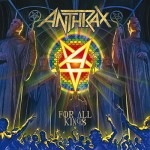 #3. For All Kings (2016) — It kills a small part of my rusted, raged soul to rank this above enduring classics like Fistful and State of Euphoria, but truth must be spoken to the filthy, rotting masses. Yes, the second installment of the Joey Belladonna redemption arc is that good. I hoped for something as solid as Worship Music, and got clobbered by a vital, adventurous version of Anthrax that sounds like the 80s are back, but the band is older, wiser, and better able to expand their sound in smart ways. From how they come out swinging on “You Gotta Believe” and into “Monster at the End,” you can’t help but be impressed by just how classically Anthrax the material is. What seals the deal for me is how the album sounds like classic Thrax, but a more mature, world-weary version of the band. The 80s/90s version could never have pulled off a massive mood piece like “Blood Eagle Wings,” but now they can. They even inject wistful melancholy into cuts like “Breathing Lightning” without disrupting the album’s identity. For All Kings isn’t perfect, but it’s light-years better than anything the Big Four released since the early 90s. Look who had the last laugh!
 #2. Among the Living (1987) — This is likely to be the winner in most Anthrax catalog rankings, and I certainly understand why. This was the album that truly broke the band through to mainstream consciousness with MTV running “hit” single “Indians” heavily outside of Headbangers Ball. The track listing reads like a who’s who of their best-known cuts like the title track, “Caught in a Mosh,” and “I Am the Law.” This is the sound of a band sure of their identity and writing from a place of confident inspiration. The material has a rowdy, carefree vibe that could only come from a New York upbringing, as if they’re poking you in the chest and daring you to find fault with what they were doing. My friends and I beat this album to absolute death the year it came out as we watched Anthrax’s public profile rise and escape the confines of underground metal. It seemed like the world was their oyster and that these cats would be bigger than Jesus. I still love this one and always will, but the back half is less amazing than the front, and I’ll never think of it as their best output.
 #1. Spreading the Disease (1985) — This is the real magic bullet in the Thrax arsenal. Coming off the decidedly different Fistful of Metal debut, Neil Turbin was streeted, and in came Joey Belladonna with his much larger range and charisma. The sound shifted to a more thrashed out focus with a punk energy under the surface, and the writing was sharp and tight. Opener “A.I.R” grabs you around the neck and holds you in place as the band introduces you to the new sound, and there’s no denying they found the secret recipe here. Even the clunky, chunky production by Carl Canedy works somehow, giving everything a loveably rough, unfinished sound. Joey blows the doors off on eternal classics like “Madhouse,” “Aftershock,” “Armed and Dangerous,” and “Medusa,” and Thrax even dabble in moody prog on the brilliant cut “The Enemy.” Then there’s the closer “Gung Ho,” which at the time was the fastest shit anyone had ever heard. This is a flawless album that successfully marries the classic heavy metal sound of Fistful of Metal with thrash, and this is where Anthrax was and always will be at their very best. Blast “Medusa” at ear-bleeding volumes and tell me I’m wrong. Yeah, I thought so. Everything is in the right place at exactly the right time here, and it will forever go down as one of the best albums of the 80s. There is no other correct choice, folks.
 #5. For All Kings (2016) — I’ve mentioned it before, but 2016 evidenced a ridiculously strong year for thrash metal titans. Megadeth and Testament put out very strong records, and Anthrax also carried the torch with For All Kings. The continuity of quality from Worship Music to For All Kings satisfies in every, and the album is laden with earworms and creative riffing bolstered by a sense of drama Anthrax never previously deployed. Outside the band’s elite material, For All Kings is the album I return to most often, and that’s largely thanks to “Breathing Lightning.” This tune unabashedly rips and remains a staple in my road trip playlists, and the Dark Tower references intensify my affection even further. Several other tracks draw me back as well, including “Monster at the End,” “Blood Eagle Wings,” and especially “All of Them Thieves.” For a band thirty-five years in,