
Ranking Metallica is the hardest job in this genre, because there is no version of this list that doesn’t start an argument. Eleven studio albums across forty-three years, a top four that almost nobody orders the same way twice, and a bottom half where the received wisdom is mostly wrong. This is every Metallica album ranked worst to best — and the criteria are stated before we start, because a ranking without them is just a list of opinions.
The criteria, before album eleven
A ranking without stated criteria is a list of opinions. Here’s what’s being judged, in every entry:
The songs. How strong is it front to back, and how much of it do you actually return to.
What it did at the time. Influence, and whether the record changed anything — for the band or for everyone who came after.
The production. Not as a footnote. How a record was made determines whether you can live with it, and on this list that decides one placement outright.
What it does now, in 2026. Put it on today, at full volume, and see what happens.
Those four criteria aren’t decoration and they have consequences. Hardwired above Death Magnetic only makes sense if production counts — and it does. Load above 72 Seasons only makes sense if impact counts — and it does. If you disagree with either placement, the useful argument is with the criteria, not the order.
The thing worth saying up front is that this catalogue has moved around in public estimation more than any other in metal. Records that were hated are now defended. Records that were untouchable have been quietly reassessed. The consensus at the very top and the very bottom is right. Everything between three and ten is genuinely up for grabs, and that’s where this ranking earns or loses its argument.
11. St. Anger (2003)

The verdict: Last, and the consensus is right for once — but not for the reason everybody repeats.
The record. Everyone talks about the snare. Fine — it’s a bin lid, there’s no debating it. But the snare gets blamed for a record whose actual problem is that there are no guitar solos, no choruses to speak of, and eleven songs averaging nearly seven minutes with nowhere for any of them to go. Kirk Hammett was talked out of soloing entirely. Take the lead guitar off a Metallica record and you’ve removed one of the four things the band is for.
What it did then. It went to number one in thirty countries and it was the first Metallica album a large part of the audience simply stopped playing. It arrived alongside Some Kind of Monster, which meant the record and the footage of the band nearly disintegrating were in public simultaneously — and the film is a considerably better piece of work than the album it was documenting.
What it does now. There’s a version of this record buried in it. “Frantic” has a genuine riff. The title track has the anger the title promises. What’s missing is any evidence that anyone in the room was making decisions.
Putting this on the air in 2003 was the strangest experience I’ve had with a Metallica record. The audience didn’t argue about it the way people had argued about Load. They just didn’t want it, and they said so straight away without much room for discussion.
It’s one of the most hated albums in metal history and the reputation is earned.
Standout track: “Frantic.”
10. Reload (1997)

The verdict: The leftovers, and they sound like leftovers.
The record. Load and Reload were recorded together — one enormous batch of material split across two releases eighteen months apart. Anybody who has worked with a session’s worth of tapes knows what that means in practice: the best of it went out first.
What it did then. It sold, because 1997 Metallica sold whatever they put out. It did nothing else. Where Load provoked a fight, Reload provoked a shrug, which for this band is worse.
What it does now. Two songs justify it. “Fuel” is a genuinely great opener and it has never left the setlist. “The Memory Remains” has the Marianne Faithfull vocal and a melody that lodges. After that it’s seventy-six minutes of a band with nothing left to say that cycle, and the length is the tell.
The reason it’s below Load rather than above it is simple. Load is a worse listen with a purpose. Reload is a marginally smoother listen with none.
Standout track: “Fuel.”
9. 72 Seasons (2023)
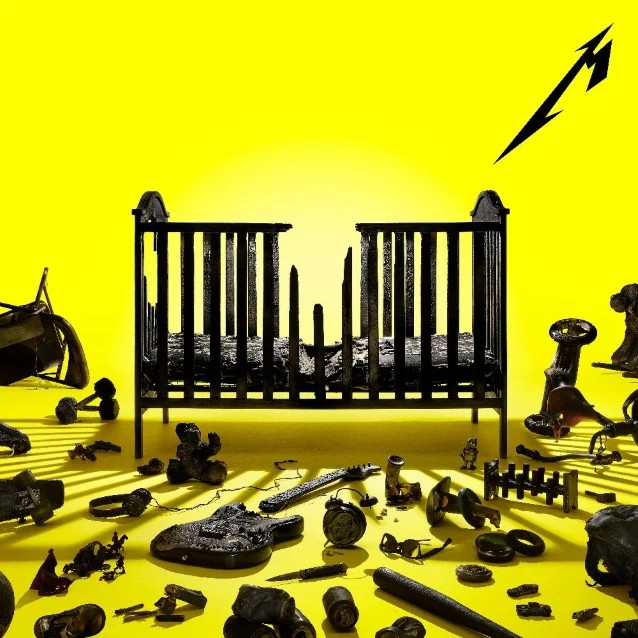
The verdict: Competent, and it changed nothing at all.
The record. Their most recent album, and by some distance the hardest to form a strong feeling about. It’s well played, well produced, unmistakably Metallica, and seventy-seven minutes long. The riffs are solid. Hetfield’s writing about childhood and the way the first eighteen years of a life shape everything after is the most personal lyrical territory he’s worked in.
What it did then. Nothing much, and that’s the whole entry. It arrived, it charted, it toured enormously, and the conversation about it was over inside a month.
What it does now. “Lux Æterna” is three and a half minutes of straight-ahead speed and it’s the best thing here by a distance. “Screaming Suicide” works. “Inamorata” is eleven minutes long for no reason anybody has been able to explain.
Here’s why it’s below Load, and this is the reasoning that holds the bottom half of this list together. A flawed record that mattered outranks a tidy one that didn’t. Load started an argument still running thirty years later. 72 Seasons is a perfectly good album that left the conversation exactly where it found it. If one of the criteria is what a record did, then a record that did nothing has to place accordingly.
Standout track: “Lux Æterna.”
8. Load (1996)

The verdict: Flawed, and it changed what Metallica was. That counts for more than tidiness.
The record. Seventy-nine minutes, fourteen tracks, and a complete reconstruction of the band. Southern rock, blues phrasing, alternative-radio production, and Hetfield singing rather than barking. The haircuts got more coverage than the songwriting, which was unfair then and is ridiculous now.
What it did then. It split the audience down the middle and it has never fully healed. It also worked — it went to number one in ten countries and pulled in an audience who’d never have touched Justice.
We’ve already made our position on this era clear, and I’m not going to contradict it here: the pure thrash identity faded for a time, and no, we can’t blame them for it. A band who’d survived what they’d survived by 1996 were entitled to make a different record. The problem with Load isn’t the ambition. It’s that fourteen tracks is at least four too many and the sequencing buries the best of it.
What it does now. “Until It Sleeps” is a genuinely strange single for a metal band to have had a hit with, and it holds up. “Bleeding Me” is one of the best things Hetfield has written in any era. “King Nothing” still lands live. The back half is where the trouble is.
Eighth, above two albums that are easier to listen to, because it did something and they didn’t.
Standout track: “Bleeding Me.”
7. Death Magnetic (2008)

The verdict: The bigger swing, and it was mastered into a brick wall.
The record. Rick Rubin replaced Bob Rock, the solos came back, the songs got long and structurally ambitious again, and the band audibly wanted to make a thrash record. On songwriting alone this is the better of the two modern albums — “All Nightmare Long” has more ideas in it than anything on Hardwired, and “The Day That Never Comes” earns its seven minutes.
What it did then. It was received as a redemption after St. Anger, and then the mastering became the story. It is the loudest, most heavily clipped record Metallica have released — compressed to the point of audible distortion on the drums and cymbals. It became the standard example in the loudness-war argument, and the Guitar Hero III versions of the same songs circulated as proof of what the record could have sounded like.
What it does now. This is where the criteria do their work. Songs aren’t the only thing an album is. You can admire the writing on Death Magnetic and still find that twenty minutes into it at volume your ears have given up. That isn’t a preference — it’s a measurable property of the master, and it’s permanent. There’s no remaster that undoes what was baked in.
Seventh, below a less ambitious album, because a record has to be playable before anything else about it matters.
Standout track: “All Nightmare Long.”
6. Hardwired… To Self-Destruct (2016)

The verdict: Lower ambition, properly made, and that’s exactly why it wins.
The record. Twelve songs, and the first Metallica album in decades that sounds like it was made by people who’d agreed on something before pressing record. Greg Fidelman engineered and mixed it, and it has dynamics — you can hear the kick drum, the cymbals have air around them, and the guitars have edges rather than a wall.
What it did then. It was a conscious return to the thrashier end of what they do, and we’ve said so on this site before. The title track is three minutes long, which for 2016 Metallica was close to a statement of intent.
What it does now. “Spit Out the Bone” is the reason this album ranks where it does. It’s the last track, it’s seven minutes, and it’s the fastest, most aggressive thing they have recorded since 1988 — Ulrich playing like a man who’s been told it’s his final take, and a mid-section from about 4:20 that genuinely takes the floor out. I’ve had that track on in the car and found myself driving considerably faster than I intended.
Is it as ambitious as Death Magnetic? No. Does “Now That We’re Dead” need six and a half minutes? Also no. But you can put this record on at proper volume and still be listening at the end of it, and the album ranked below it can’t manage that.
Standout track: “Spit Out the Bone.”
5. …And Justice for All (1988)

The verdict: Astonishing songwriting, sabotaged by its own mix.
The record. The most technically ambitious thing Metallica ever attempted. Nine songs, sixty-five minutes, structures that fold in on themselves, and a political fury that nothing else in their catalogue matches. “One” is the song that broke them on MTV and it’s still the best long-form piece they’ve written. “Blackened” is the best album opener they have. “Dyers Eve” is Hetfield settling accounts with his parents at a tempo almost nobody could play.
What it did then. It was their first top ten album in America and the moment thrash metal arrived in the mainstream on its own terms rather than by softening. It also produced the Grammy loss to Jethro Tull, which remains the funniest thing that ever happened to this band.
What it does now. And here’s the problem, and we’ve already put it on record: the infamous lack of audible bass left many fans scratching their heads, and time hasn’t softened it. Jason Newsted played on this album and you essentially cannot hear him. The low end is gone, the drums sound like a biscuit tin, and a record built on riffs this good has no weight underneath them.
Fifth, and it hurts to put it there. On the writing alone it’s a top-three record. But if production is one of the criteria — and it has to be, or the Hardwired placement is dishonest — then the same standard has to apply here. Justice is the album that most deserves a remix and is least likely to get one.
Standout track: “Blackened.”
4. Ride the Lightning (1984)

The verdict: The better-made album. Better-made isn’t the same as better.
The record. The leap. Eight songs, and the distance between this and the debut twelve months earlier is the steepest year-on-year improvement in the band’s history. “Fade to Black” invented a template — the clean intro, the build, the climactic solo — that a thousand bands have used since. “Creeping Death” has the best crowd moment in their catalogue. “For Whom the Bell Tolls” is Cliff Burton’s record as much as anyone’s.
What it did then. It got them signed to Elektra, it brought dynamics and structure into thrash, and it’s the album that made Master of Puppets possible. Everything sophisticated about this band starts here.
What it does now. It holds up completely. There isn’t a bad song on it and there are three untouchable ones.
So why is it fourth, below the debut? Because of what the next entry argues. This is the better-crafted album and I’m not pretending otherwise. It’s more varied, better arranged and better recorded. The case against it isn’t that it’s worse. It’s that craft isn’t the only axis a record gets measured on, and on the axis that matters for a thrash album — pure velocity and threat — Kill ‘Em All is still ahead.
You’ll disagree. Most rankings do. That’s the section below.
Standout track: “Fade to Black.”
3. Kill ‘Em All (1983)

The verdict: Raw thrash primacy, and still the fastest and meanest thing they made.
Here’s the argument this page is built on, so let’s have it properly.
The record. Ten songs, fifty-one minutes, recorded for almost nothing, and the sound of four people in their late teens and early twenties who had worked out something nobody else in America had. “Hit the Lights” opens it. “The Four Horsemen” is seven minutes of a band who hadn’t yet learned they weren’t allowed to do that. “Whiplash,” “Motorbreath,” “Metal Militia” — that’s not a debut, that’s a manifesto with a tracklisting.
What it did then. It created American thrash metal. Not contributed to, not helped shape — created. Every one of the Big Four records that followed exists in relation to this one, including the one Dave Mustaine went off and made after taking his riffs with him. “The Four Horsemen” is his “Mechanix,” slowed down with new lyrics, and the fact that the argument is still going thirty years later tells you what was at stake on this record. It’s also, straightforwardly, one of the greatest debut albums metal has produced.
What it does now — and this is the case.
Put Kill ‘Em All on at full volume, then put Ride the Lightning on at full volume, and pay attention to what your body does.
Ride the Lightning is the better album by every measure a producer would use. More dynamic range, better arrangements, more variety, a cleaner mix, more sophisticated writing. Nobody sensible disputes that.
And it is not as fucking fast.
That’s the whole argument and I’m not going to dress it up. Thrash metal is a genre built on velocity and threat, and Kill ‘Em All has more of both than anything that came after it — including the two records above it on this list. It’s the only Metallica album with no ballad, no clean intro, no mid-tempo breather and nothing resembling a concession. Fifty-one minutes of total commitment to one idea, executed by people too young to know you were supposed to vary the pace.
The better-made album is not automatically the better album. A record that does one thing at maximum intensity can outrank a record that does five things well, and on a thrash list it should. Ride the Lightning is where Metallica learned craft. Kill ‘Em All is where they were dangerous, and the danger was the point.
If you rank by execution, put Ride the Lightning third. If you rank by what a thrash record is actually for, this goes third. The rest of the genre was built from this one, not from the album after it.
Standout track: “Whiplash.”
2. Metallica — The Black Album (1991)

The verdict: Not just enormous. Genuinely great — and the discipline is the achievement.
Let me be explicit about the claim being made here, because a ranking that puts this second is claiming something specific. This is not a concession to sales. Over thirty million copies is a fact about the world, not an argument about quality. It’s second because it’s a superb record.
The record. Twelve songs, sixty-two minutes, and the most disciplined writing of their career. Coming off Justice — nine tracks, none under four minutes, structures folding into themselves — they made an album where nothing is longer than it needs to be and every song has a spine you could hum. That’s harder than writing Justice. Anyone can add a section. Taking them out is the difficult part.
Bob Rock’s production is the other half of it. After the Justice mix, they made a record where you can hear everything — the bass exists, the drums have weight, and the guitars sit in a space rather than filling all of it.
What it did then. It changed the size of heavy metal. “Enter Sandman” went onto formats that had never played a metal record. “Nothing Else Matters” got played at weddings. “The Unforgiven,” “Wherever I May Roam,” “Sad But True” — four singles that each did a completely different job.
This is the only time a metal record has become genuinely unavoidable rather than merely popular. It was on rock radio, on pop radio, in shops, on television, in car adverts. Nothing in this genre has managed it since, and nothing is going to.
What it does now. It hasn’t aged, which for a record this successful is remarkable. The cost is real and worth stating: this album ended Metallica as a thrash band and started the argument that has followed them for thirty-five years. But you don’t dock a record for being too good at what it set out to do.
Second, and the only thing between it and the top is the album three releases earlier that did something no band has managed since.
Standout track: “Sad But True.”
1. Master of Puppets (1986)

The verdict: The peak of thrash as an art form, and nothing has touched it in forty years.
The record. Eight songs, fifty-four minutes, and the only album in this genre where ambition and execution are in perfect balance. “Battery” opens on acoustic guitars and then removes the floor. The title track is eight and a half minutes with four distinct movements and not one wasted bar. “Orion” is an instrumental built around Cliff Burton’s bass that works as a piece of composition rather than a showcase. “Welcome Home (Sanitarium)” does what “Fade to Black” did and does it better.
What it did then. It’s the record that proved thrash metal could carry serious artistic weight without slowing down to do it. It was their commercial breakthrough and the last album Cliff Burton made — and you can hear how much of this band’s sophistication was his. Our own position on the site is that the first three albums are the holy trinity and this is the monumental one, and nothing about the intervening forty years has changed that.
It also changed what rock radio would entertain. Before Puppets, an eight-minute thrash song with no chorus was not something a program director would put in rotation. After it, the argument shifted — not because the format got braver, but because enough people wanted to hear it that refusing became the harder position to hold.
What it does now. It’s the record I’d hand to somebody who has never heard metal and wants to understand why people care, and it’s the record I still put on for myself. Forty years, and “Battery” at 0:53 when the distortion arrives still does the thing it did the first time.
There are heavier albums. There are faster ones — including the one at number three. There is no better one, and the gap between this and everything underneath it is the widest on this page.
Standout track: “Master of Puppets.”
What about Garage Inc., Garage Days, S&M and Lulu?
People search for where these land, and the honest answer is that they’re not in the ranking — with three different reasons, stated plainly rather than waved away. Most competing pages drop them silently, and anyone who knows this catalogue notices.
This ranking covers studio albums of original Metallica material. That’s the rule doing the work.
Excluded because they’re covers, not original material
Garage Inc. (1998) — and this one deserves proper treatment, because calling it “a compilation” and moving on is wrong. Half of it isn’t one. Disc one is eleven covers, ten of which were recorded fresh at The Plant Studios in Sausalito across September and October 1998, produced by Bob Rock with Hetfield and Ulrich. Only “Tuesday’s Gone” came from elsewhere — a December 1997 radio-broadcast recording at KSJO in San Jose. Disc two is the archive: the complete 1987 $5.98 E.P., the 1984 Creeping Death B-sides, the late-eighties and early-nineties one-offs, and the Motörhead covers from Lemmy’s fiftieth. Metallica’s version of Thin Lizzy’s “Whiskey in the Jar” from this record won the Grammy for Best Hard Rock Performance — their fourth in that category inside nine years.
So it’s out because this page judges original material, not because it’s a lesser release. That distinction matters and it’s why it gets a paragraph rather than a line.
Where would it land if covers counted? Somewhere around sixth or seventh. Disc one is a loose, genuinely enjoyable record made by a band with nothing to prove, and “Turn the Page” and “Whiskey in the Jar” are better performances than anything on Reload. It would sit above the late-nineties originals and below the first four albums, which tells you something about 1998.
The $5.98 E.P. – Garage Days Re-Revisited (1987) — five songs, all covers, so it can’t sit in a studio-album ranking. It’s also the most interesting thing excluded here and it’s worth knowing why.
It was cut shortly after Jason Newsted joined, and it was his first release with the band. It’s deliberately rough — recorded fast, mixed loose, with a sleeve note about how little it cost. After Master of Puppets and the loss of Cliff Burton, a band under that much pressure made a five-track covers EP that sounds like four people in a garage. That was the point. It’s the sound of Metallica reminding themselves and everybody else what they were before any of it happened, and it’s the warmest thing in their discography.
Garage Days Revisited (1984) — the covers from the Creeping Death single, produced by Metallica and Mark Whitaker. Same rule: covers, not original material. Both tracks live on disc two of Garage Inc.
Excluded because they’re live
S&M (1999) and S&M2 (2020) — the San Francisco Symphony records, plus the various live EPs and one-off live releases. Live albums aren’t studio albums and a ranking that mixes them is measuring two different things.
Excluded on credit
Lulu (2011) is credited to Lou Reed and Metallica, not to Metallica. That’s the reason it’s out — it isn’t a Metallica album. Whether it’s any good is a separate argument and it isn’t one this page is picking.
Beyond Magnetic (2011) is an EP of Death Magnetic outtakes, so it’s out on both counts — EP, and not an album of its own.
Is St. Anger really that bad?
Yes, and the reasons people give are usually the wrong ones.
The snare drum is the most-repeated criticism and it’s the least important. The real problems are structural: no guitar solos anywhere on the record, almost no choruses, and eleven songs averaging close to seven minutes with no arrangements to justify the length. Kirk Hammett was talked out of playing leads. Removing the lead guitar from a Metallica album takes away one of the four things that makes it one.
There’s a decent forty-minute album inside it. “Frantic” and the title track both work. What’s missing is any sign that somebody was making decisions.
Where does the Black Album rank?
Second, on this list, and not as a nod to its sales.
It’s there because the songwriting discipline is the most impressive thing the band has ever done — coming directly off the sprawl of …And Justice for All and making a record where nothing outstays its welcome. Bob Rock’s production fixed the low end that Justice had lost. And four of its singles each did a completely different job.
It cost them their identity as a thrash band, and that argument has run for thirty-five years. But you don’t mark a record down for succeeding at exactly what it set out to do.
Are Load and Reload actually good?
Load is better than its reputation. Reload is roughly as good as its reputation, which isn’t very.
They were recorded together as one batch and split across two releases, which matters — the stronger material went out first. Load has “Bleeding Me,” “Until It Sleeps” and “King Nothing,” and it’s a genuine attempt at a different kind of record. Its problem is length: fourteen tracks when eight or nine would have made the case far better.
Reload has “Fuel” and “The Memory Remains” and then seventy-six minutes to fill. The difference is purpose. Load was trying to do something. Reload was finishing the tapes.
Is Kill ‘Em All better than Ride the Lightning?
On this ranking, yes — and it’s the most contested call on the page.
Ride the Lightning is the better-made album. More varied, better arranged, better recorded, more sophisticated. That isn’t in dispute and it’s why most rankings place it higher.
The case for Kill ‘Em All is that a thrash album is judged on velocity and threat, and the debut has more of both than anything that followed it. No ballad, no clean intro, no mid-tempo breather, no concessions — fifty-one minutes of total commitment to one idea. The better-crafted album isn’t automatically the better album, and a record that does one thing at maximum intensity can beat a record that does five things well.
Ride the Lightning is where Metallica learned craft. Kill ‘Em All is where they were dangerous.

Which Metallica album should you start with?
Master of Puppets, without much hesitation. It’s their best album and it’s also the most complete demonstration of what the band does — speed, structure, melody and genuine musical ambition in the same fifty-four minutes.
If it doesn’t land, the honest second option is the Black Album, because it’s built to be accessible and nothing on it demands patience. And if you want to understand what the fuss was about in the first place, start at Kill ‘Em All and work forward — the first four albums in order is one of the great runs in music, and hearing them chronologically shows you a band improving faster than almost anyone ever has.
Every Metallica album, ranked
TL;DR
- Eleven studio albums from 1983’s Kill ‘Em All to 2023’s 72 Seasons.
- Best: Master of Puppets (1986). Eight songs, perfect balance of ambition and execution, Cliff Burton’s last album, and the widest gap between a number one and a number two on this page.
- Worst: St. Anger (2003) — and the real problems are the missing guitar solos and absent choruses, not the snare drum everybody quotes.
- The Black Album is second on merit, not sales. The songwriting discipline after …And Justice for All is the achievement.
- Kill ‘Em All is third, above Ride the Lightning. The better-made album isn’t automatically the better album, and on velocity and threat the debut is still ahead.
- Hardwired beats Death Magnetic because Death Magnetic was mastered into a brick wall. Songs aren’t the only thing an album is.
- Load beats 72 Seasons because Load changed what Metallica was and 72 Seasons changed nothing. A flawed record that mattered outranks a tidy one that didn’t.
- Not ranked: Garage Inc., the Garage Days releases (covers), S&M and S&M2 (live), Lulu (credited to Lou Reed and Metallica) and Beyond Magnetic (an EP of outtakes).
FAQ
What is the best Metallica album?
Master of Puppets, released in 1986. It balances ambition and execution better than anything else in thrash metal, contains “Battery,” the title track, “Orion” and “Welcome Home (Sanitarium),” and was the last album Cliff Burton recorded with the band. Forty years on, no Metallica album has come close to it.
What is the worst Metallica album?
St. Anger (2003). The commonly cited problem is the snare drum sound, but the more serious issues are the complete absence of guitar solos, the lack of real choruses, and eleven tracks averaging nearly seven minutes without arrangements to support that length.
How many albums does Metallica have?
Eleven studio albums: Kill ‘Em All (1983), Ride the Lightning (1984), Master of Puppets (1986), …And Justice for All (1988), Metallica (1991), Load (1996), Reload (1997), St. Anger (2003), Death Magnetic (2008), Hardwired… To Self-Destruct (2016) and 72 Seasons (2023).
Is Kill ‘Em All better than Ride the Lightning?
On this ranking, yes — Kill ‘Em All places third and Ride the Lightning fourth. Ride the Lightning is the better-produced and better-arranged album, but Kill ‘Em All is faster, more aggressive and more single-minded, with no ballad or mid-tempo track anywhere on it. A thrash album is judged on velocity and threat, and the debut has more of both.
Why isn’t Garage Inc. in the ranking?
Because it consists entirely of cover versions, and this ranking judges albums of original Metallica material. It is not excluded for being a lesser release — disc one is eleven covers recorded fresh in 1998 with Bob Rock at The Plant Studios, and the band’s version of Thin Lizzy’s “Whiskey in the Jar” from it won a Grammy for Best Hard Rock Performance.
Eleven albums, forty-three years, and a middle order that has never been settled. Is Kill ‘Em All really third, or have I got that badly wrong? Settle it in the comments. And keep it locked on the Loaded Radio stream — follow Loaded Radio for daily rock and metal news.
The post Metallica Albums Ranked: All 11 From Worst To Best appeared first on Loaded Radio.