Blog

  • VESSELES Reclaim Their Own Voice on “Eternally Within Us”

    Some re-recordings are designed to improve production or tighten performances. For VESSELES, revisiting Home is an act of ownership—an opportunity for creator Valira Nyvran to inhabit the music completely and tell its story through their own voice. That process can now be heard on “Eternally Within Us (Reclaimed),” the first advance offering from Home (Reclaimed). […]

    Source

  • XION Leave a Scorch Mark with “Burned Onto You”

    Precision without restraint can feel clinical. Energy without control quickly collapses into noise. XION occupy the volatile space between the two, and their new video for “Burned Onto You” shows why the young Swedish musicians are rapidly becoming one of their country’s most closely watched metal bands. The track comes from the Falun quintet’s second […]

    Source

  • Midnight to Release “Satanic Attack Live!” November 6th on Metal Blade Records

    – September 16th, 2026 –

    New Video/Single Now Playing + Pre-Orders Available

    Watch/stream MIDNIGHT’s “You Can’t Stop Steel” HERE

    Reigning in hell, screaming like a storm, MIDNIGHT‘s obscenely intense aural display of lust, filth, and sleaze ripped the Los Angeles faithful a new one at two sold-out shows on May 28th-29th, 2026. As part of MIDNIGHT‘s Satanic Royalty 15th Anniversary World Tour, the incendiary gigs at Hollywood venue Knucklehead were recorded in all their sweaty, filthy glory, resulting in Satanic Attack Live!, set for release on November 6th via Metal Blade Records.

    Photo by Tanner Rawleigh

    Recorded by Mark Borders with mixing/mastering done by Zach Rippy, Satanic Attack Live! captures ten tracks off 2011′s landmark Satanic Royalty LP – live and in the original album running order – plus five additional songs, including “Shock Til Blood,” “T.A.P.,” and “Fucking Speed And Darkness.”

    “Did I ever think there would be a MIDNIGHT live, in concert record album? Haha shit, naw!,” says the band’s aural architect, Athenar. “But if you’re reading this, you are probably holding a copy in your bloody semen/leukorrhea-dripping paws. With the help of D.K. Vagslay, Iron Possessor, and about 300 dirt merchants and headbanging Hollywood sleazeballs, it was possible to concoct such a document of disgust.”

    Watch MIDNIGHT‘s “You Can’t Stop Steel” video HERE

    Satanic Attack Live! will be released on CD and digital formats as well as vinyl with included poster in the following color variants:

    Blue White Black A Side B Side (US)
    180g Black (EU)
    Blood Splatter (EU – Ltd. 350)

    A Satanic Attack Live! LP + 7″ special edition vinyl (incl. poster) will also be available (EU + Band Exclusive – Ltd. 500).

    Find pre-orders at: metalblade.com/midnight

    Satanic Attack Live! Track Listing:
    01. Unholy And Rotten
    02. Evil Like A Knife
    03. Satanic Royalty
    04. You Can’t Stop Steel
    05. Rip This Hell
    06. Necromania
    07. Black Damnation
    08. Lust Filth And Sleaze
    09. Violence On Violence
    10. Savage Dominance
    11. Holocausting Deafening
    12. Shock Til Blood
    13. T.A.P.
    14. Fucking Speed And Darkness
    15. F.O.A.L.

    MIDNIGHT Live w/ Gwar, Mac Sabbath, X-Cops:
    10/27/2026 Jefferson Theater – Charlottesville, VA
    10/28/2026 The Masquerade (Heaven) – Atlanta, GA
    10/29/2026 FIVE – Jacksonville, FL
    10/30/2026 Bad Astronaut – Houston, TX **
    10/31/2026 The Lost Well – Austin, TX **
    11/03/2026 Brass Mug – Tampa, FL **
    11/04/2026 Revolution Ft. – Lauderdale, FL
    11/05/2026 The Beacham – Orlando, FL
    11/06/2026 House of Blues – Myrtle Beach, SC
    11/07/2026 The Ramkat – Winston-Salem, NC
    11/08/2026 Brooklyn Bowl – Nashville, TN
    11/09/2026 The Hall – Little Rock, AR
    11/10/2026 AM/FM – Dallas, TX
    w/ Gwar, Mac Sabbath, Atomic Rule:
    11/12/2026 Ogden Theater – Denver, CO
    11/13/2026 Complex – Salt Lake City, UT
    11/14/2026 Brooklyn Bowl – Las Vegas, NV
    11/15/2026 Cargo Concert Hall – Reno, NV
    11/17/2026 Marquee Theater – Tempe, AZ
    11/18/2026 House of Blues – Anaheim, CA
    11/19/2026 UC Theatre Taube Family Music Hall – Berkeley, CA
    11/20/2026 Senator – Chico, CA
    11/21/2026 Midtown Ballroom – Bend, OR
    11/23/2026 Showbox Sodo – Seattle, WA
    11/24/2026 Knitting Factory – Spokane, WA
    11/25/2026 The Vogue Theatre – Vancouver, BC
    11/27/2026 Midway Music Hall – Edmonton, AB
    11/28/2026 Macewan Hall – Calgary, AB
    11/30/2026 Burton Cummings Theater – Winnipeg, MB
    12/02/2026 Bourbon – Lincoln, NE
    w/ Gwar, Mac Sabbath, X-Cops:
    12/03/2026 The Rave – Milwaukee, WI
    12/04/2026 Crofoot – Pontiac, MI
    12/05/2026 House of Blues – Cleveland,OH
    12/06/2026 Roxian Theatre McKees – Rocks, PA
    12/08/2026 9:30 Club – Washington, DC
    12/09/2026 The Palladium – Worcester, MA
    12/10/2026 Palladium Times Square – New York, NY
    12/11/2026 The Fillmore Philadelphia – Philadelphia, PA
    12/12/2026 The NorVa – Norfolk, VA
    ** MIDNIGHT headlining date

    MIDNIGHT Recording Lineup:
    Athenar – bass/vocals
    DK Vagslay – guitars
    Iron Possessor – drums

    https://midnightofficial.com
    https://www.facebook.com/midnightviolators
    https://www.instagram.com/midnightviolators

    Buy iTunes Artist Page Artist News

  • Black Veils Through History

    Black Veils Through History

    Few objects in Gothic culture carry as much symbolic weight as the black veil. A simple piece of dark fabric can transform a face into a mystery. It conceals identity while drawing attention to its absence. It hides emotion while suggesting that powerful feelings remain just beneath the surface.

    For centuries, black veils have appeared in mourning rituals, Gothic literature, religious ceremonies, fashion, and cinema. Their meanings have changed across time, yet a common thread remains. The veil always stands between what is visible and what is hidden.

    This tension explains its enduring appeal within Gothic culture. Gothic stories are filled with concealed truths, secret histories, hidden desires, and identities that exist behind carefully constructed appearances. The black veil transforms those invisible ideas into a visible symbol. Its history reveals how a practical object gradually became one of the most powerful images of mystery, grief, and psychological concealment.


    Black Veils Through History
    Black Veils Through History

    The Black Veil and Victorian Mourning

    The black veil became firmly associated with mourning during the nineteenth century.

    Following the death of Prince Albert in 1861, Queen Victoria entered a prolonged period of mourning that influenced British society for decades. Her public grief helped establish black clothing and mourning veils as visible symbols of loss and remembrance.

    Victorian mourning customs were highly structured. Clothing communicated social information, and the black veil became one of the clearest signals that an individual was grieving.

    Yet the veil carried deeper meanings than simple identification.

    By partially concealing the face, it created a symbolic barrier between the mourner and the outside world. The wearer remained visible but distant, present yet separated.

    This visual tension reflected the emotional reality of grief itself.

    Loss often creates a sense of separation from ordinary life. The mourning veil gave that feeling a physical form.

    Through Victorian mourning culture, the black veil became permanently linked to death, memory, and emotional absence.


    From Grief to Mystery

    The symbolism of the black veil gradually expanded beyond mourning.

    Because it concealed part of the face, it naturally encouraged speculation. Observers could see the individual, but not completely. Identity became uncertain. Intentions became difficult to read.

    This ambiguity transformed the veil into a symbol of mystery.

    Unlike a mask, which often creates an entirely new identity, the veil occupies a more unsettling space. It reveals enough to maintain recognition while withholding complete understanding.

    That balance between revelation and concealment made the veil particularly attractive to Gothic writers and artists.

    The Gothic imagination has always been fascinated by hidden truths. Locked rooms, family secrets, forbidden knowledge, and concealed identities appear throughout the genre.

    The black veil became a perfect visual expression of these themes.

    It suggested that something important remained hidden just beyond sight.


    Nathaniel Hawthorne and the Power of Concealment

    Few literary works explore the symbolism of the black veil more directly than Nathaniel Hawthorne’s The Minister’s Black Veil.

    In the story, Reverend Hooper begins wearing a black veil that covers part of his face. He never fully explains his decision, and this absence of explanation becomes the source of the story’s power.

    The veil unsettles everyone around him.

    Friends become uncomfortable. Members of his congregation grow fearful. Ordinary interactions suddenly feel strange.

    What makes the story remarkable is that the veil itself changes nothing about Hooper’s character. Instead, it changes how others perceive him.

    The fabric becomes a symbol onto which people project their anxieties, suspicions, and fears.

    Hawthorne ultimately suggests that every individual carries hidden aspects of identity. The black veil merely makes this reality impossible to ignore.

    “When the friend shows his inmost heart to his friend; the lover to his best-beloved; when man does not vainly shrink from the eye of his Creator, loathsomely treasuring up the secret of his sin; then deem me a monster, for the symbol beneath which I have lived, and die! I look around me, and, lo! on every visage a Black Veil!”

    — Nathaniel Hawthorne, The Minister’s Black Veil

    Hawthorne’s conclusion reveals the deeper meaning of the veil. The symbol is not unique to Reverend Hooper. Every person carries hidden fears, private guilt, unspoken desires, and aspects of identity concealed from public view. The black veil simply makes this universal condition visible.


    Freud, Repression, and the Hidden Self

    The enduring fascination of the black veil becomes easier to understand through psychology.

    The black veil became a powerful Gothic symbol because it reflects a fundamental psychological experience.

    People often conceal aspects of themselves from others. In some cases, they even conceal them from themselves.

    Sigmund Freud argued that thoughts, desires, and memories can be pushed beyond conscious awareness through repression. Although hidden, these elements continue influencing behavior and perception.

    The black veil functions as a visual metaphor for this process.

    Something remains present but inaccessible. The observer knows there is more to see, yet complete understanding remains impossible.

    This tension between visibility and concealment explains why the veil appears so frequently in Gothic narratives. It symbolizes the hidden layers of identity that exist beneath social appearances.

    The veil suggests that every person contains secrets, whether acknowledged or not.


    Jung and the Shadow Behind the Veil

    Carl Jung expanded these ideas through his concept of the Shadow.

    According to Jung, every individual possesses traits, emotions, and impulses that remain hidden from conscious awareness. These rejected aspects of the self form the Shadow.

    “The shadow personifies everything that the subject refuses to acknowledge about himself.”

    — Carl Jung, The Archetypes and the Collective Unconscious

    The black veil serves as an ideal symbol for this hidden dimension of personality.

    The face remains recognizable, yet part of it is obscured. Identity becomes incomplete. The viewer senses a concealed reality that cannot be fully accessed.

    This uncertainty creates both fascination and discomfort.

    Many Gothic stories rely on exactly this psychological effect. Characters encounter people whose true motives remain hidden, forcing them to confront ambiguity and doubt.

    The veil becomes a reminder that human beings are never entirely transparent, even to themselves.


    From Mourning Symbol to Noir Icon

    During the twentieth century, the black veil acquired new meanings.

    While it retained its association with grief and loss, it also became linked to mystery, seduction, and danger.

    Film noir embraced the visual power of concealment.

    The genre thrives on uncertainty. Characters hide motives. Relationships are built on deception. Truth remains obscured until the final moments.

    Within this world, the black veil became a natural symbol.

    A veiled figure immediately suggests that something important remains hidden. The audience understands that appearances cannot be trusted.

    The veil no longer communicates grief alone.

    It communicates secrecy.

    This shift helped transform the veil from a historical mourning accessory into a lasting symbol of noir culture.


    The Femme Fatale and the Veil

    Few noir archetypes illustrate the symbolic power of the black veil more effectively than the femme fatale.

    These characters often appear elegant, sophisticated, and alluring. Yet beneath the surface lies uncertainty. Their motives remain difficult to interpret. Their intentions are never fully visible.

    The black veil amplifies this ambiguity.

    It transforms concealment into a visual language.

    Rather than revealing identity, it encourages speculation. The audience begins searching for hidden meanings behind every gesture and expression.

    This dynamic mirrors the psychological function of suspense itself.

    What remains concealed often proves more compelling than what is openly displayed.

    The veil therefore becomes more than a fashion accessory.

    It becomes a storytelling device that deepens mystery and uncertainty.


    Why Concealment Creates Fascination

    The enduring appeal of the black veil ultimately stems from a simple psychological principle.

    People are drawn to what they cannot fully understand.

    A completely visible face provides information. A partially concealed face invites interpretation.

    The mind instinctively attempts to complete what remains hidden.

    This process transforms the veil into an engine of imagination. Observers project meanings, emotions, and narratives onto the concealed figure.

    The result is a symbol that remains endlessly adaptable.

    Whether representing grief, guilt, mystery, temptation, or hidden identity, the black veil continues to derive its power from the same source:

    the tension between what can be seen and what remains concealed.


    The Black Veil in Modern Gothic Fashion

    Although Victorian mourning customs have largely disappeared, the black veil remains a powerful presence in Gothic fashion.

    Contemporary Gothic culture rarely uses the veil as a symbol of literal mourning. Instead, it embraces the deeper meanings the object acquired through literature, psychology, and visual art.

    The veil suggests mystery without requiring explanation.

    It creates distance while inviting attention. It conceals identity while making the wearer more visually striking.

    These contradictions make it perfectly suited to Gothic aesthetics.

    The Gothic imagination has always been attracted to ambiguity. Beauty exists alongside darkness. Attraction coexists with unease. Visibility remains inseparable from concealment.

    The black veil communicates all of these tensions through a single visual gesture.


    Alexander McQueen and Gothic Reinvention

    Few modern designers explored the symbolic power of the veil as effectively as Alexander McQueen.

    Throughout his career, McQueen repeatedly incorporated veils into collections that examined mortality, identity, memory, and transformation.

    His designs often treated clothing as a form of storytelling. The veil became more than an accessory. It functioned as a narrative device capable of altering how a figure was perceived.

    By partially concealing the face, McQueen emphasized the tension between revelation and secrecy that has always defined the veil’s symbolism.

    The wearer appeared both present and distant, familiar and unknowable.

    In this sense, McQueen helped carry the black veil from Victorian mourning culture into contemporary Gothic aesthetics while preserving its essential symbolic power.


    Why the Black Veil Endures

    Many historical fashion elements eventually lose their cultural significance.

    The black veil has proven remarkably resilient.

    Its survival comes from its symbolic flexibility. The veil can represent grief, mystery, guilt, memory, secrecy, transformation, or hidden identity without losing its visual impact.

    At the same time, its meaning remains consistent.

    Something important exists beyond immediate perception.

    The observer can see part of the story, but not all of it.

    This simple idea continues to resonate because it reflects a fundamental truth about human experience. People are rarely as transparent as they appear. Every individual contains private memories, hidden fears, and aspects of identity that remain concealed from the outside world.

    The black veil transforms this reality into a visible symbol.


    The Symbol Behind the Fabric

    The lasting power of the black veil has little to do with fabric itself.

    Its significance comes from what it represents.

    Victorian mourners used the veil to express grief. Hawthorne transformed it into a symbol of hidden sin and secrecy. Psychology connected it to repression and the unconscious. Noir culture embraced it as an image of mystery and uncertainty. Gothic fashion adopted it as a visual expression of identity and ambiguity.

    Across these different contexts, the underlying symbolism remains surprisingly stable.

    The veil marks a boundary between what is visible and what is hidden.

    It reminds us that appearances are rarely complete and that every individual contains dimensions that remain beyond immediate understanding.

    This is why the black veil continues appearing throughout Gothic culture.

    It embodies one of the genre’s most enduring obsessions:

    the belief that the most important truths are often the ones concealed from view.


    Wear the Darkness

    If Black Veils Through History resonates with your love of Gothic symbolism, dark fashion, and mysterious aesthetics, explore the Edgar Allan Poets store. Our designs celebrate the symbols, stories, and imagery that continue shaping Gothic culture.


    Edgar Allan Poe Gothic apparel and noir-inspired fashion from the Edgar Allan Poets store


    Join the Noir Newsletter

    Receive more essays exploring Gothic fashion, symbolism, literature, noir aesthetics, and the cultural history behind the dark imagination.


    Frequently Asked Questions

    Why did Victorians wear black veils?

    Black veils were commonly worn during mourning as visible symbols of grief, remembrance, and social separation following the death of a loved one.

    What does a black veil symbolize in Gothic culture?

    The black veil symbolizes mystery, hidden identity, secrecy, grief, and the tension between what is visible and what remains concealed.

    Why is The Minister’s Black Veil important?

    Nathaniel Hawthorne’s story transformed the black veil into a powerful literary symbol of hidden truths, guilt, and psychological concealment.

    How does psychology explain the symbolism of veils?

    Psychological interpretations often connect veils to repression, hidden aspects of identity, and the unconscious mind because they visually represent concealment.

    Why does the black veil remain popular in Gothic fashion?

    The veil combines elegance, mystery, and symbolism, making it one of the most recognizable and enduring elements of Gothic aesthetics.
    The post Black Veils Through History appeared first on Edgar Allan Poets – Noir Rock Band.

  • “What I feared most when parting ways with Brent was that he’d pass away”: How Mastodon survived two of the worst years of their lives and rebuilt the band from the ashes of tragedy

    “Going back to your question about what I feared most when parting ways with him,” says Bill Kelliher, softly, “it was that he’d pass away.

    On August 20, 2025, that fear became reality. Incendiary Mastodon guitarist Brent Hinds was killed in a motorcycle accident in Atlanta at the age of 51. It was a devastating punctuation mark to a 25-year creative partnership that had fractured just five months prior, with Brent acrimoniously quitting the band and taking his grievances to social media while the band remained silent.

    In the recently released 35-minute documentary, The Mastodon In The Room, the surviving members addressed the messy reality of Brent’s departure and subsequent death with remarkable candour. But while that film looks backwards, sitting down with Hammer this afternoon, the conversation repeatedly drifts somewhere else entirely: forwards.

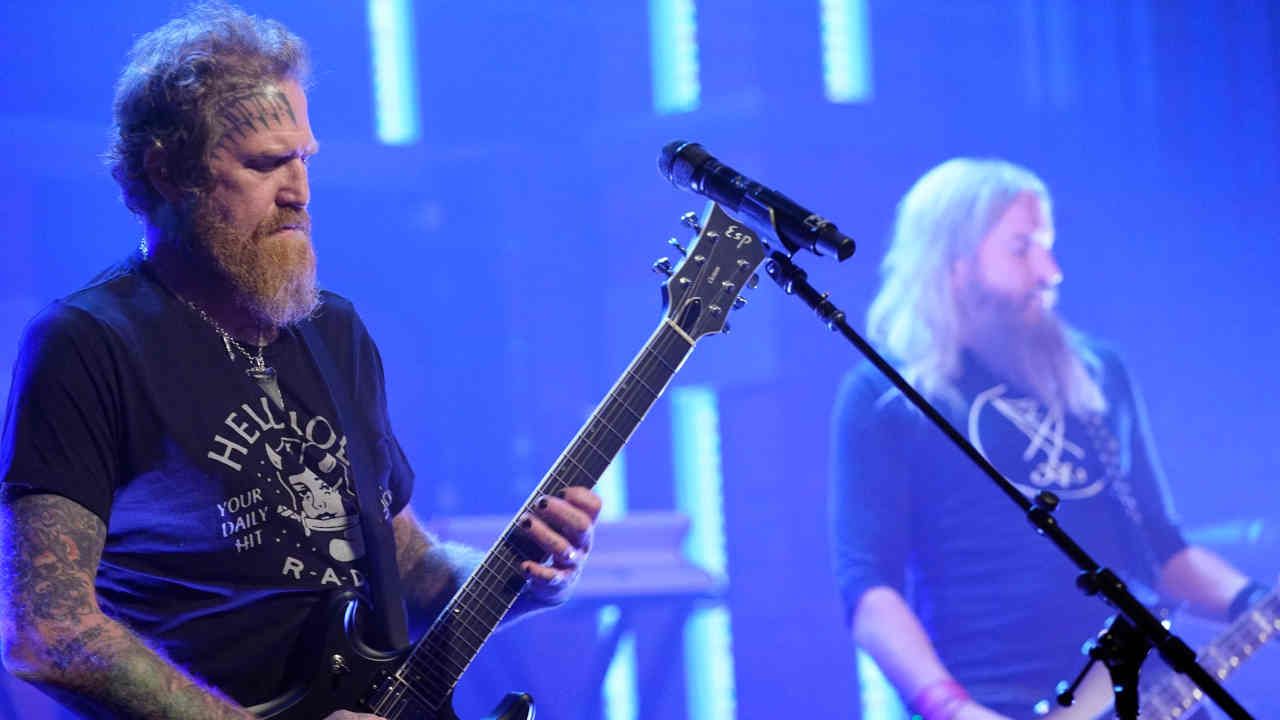
    Spain is currently baking beneath a relentless, tarmac-melting heatwave, but backstage at Rock Imperium Festival, in Mastodon’s air-conditioned enclave, guitarist Bill is the very picture of chill.

    “The tour has been going really, really well,” he says, leaning back. “Every single night is better than the last.”

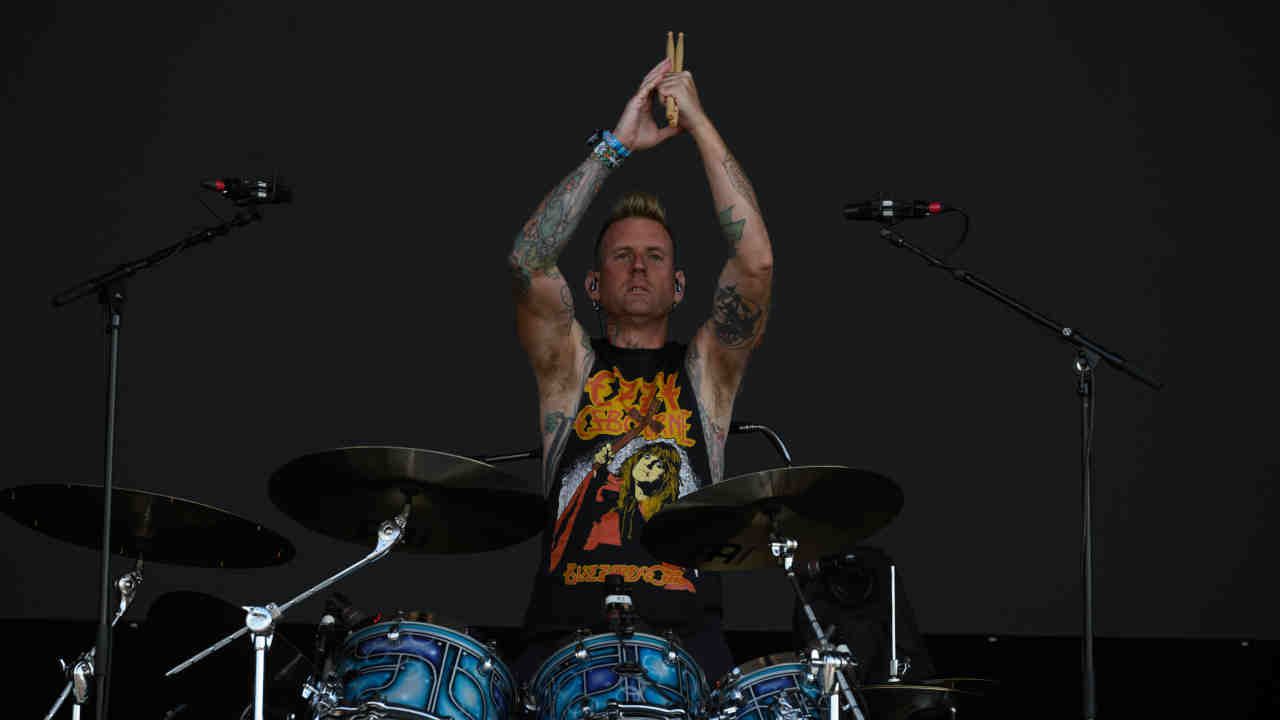
    Among all members of the band, the emotional baseline is identical. Drummer Brann Dailor is a blur of kinetic energy, plopping down on the couch with drumsticks in hand, hammering out a lightning-fast, spitfire rat-a-tat on his thigh, then nodding with approval; after a month of shows, this suffices for his readiness check.

    “There’s a heatwave ripping through Europe and we’ve been following it closely, so it’s been pretty steamy,” he says. “But the shows have been awesome and it’s been a lot of fun.”

    Grinning beneath his baseball cap, bassist Troy Sanders adds, “Usually people are getting grumpy by now. But the joy is real. We truly enjoy each and every show. It’s a real treat.”

    Considering all that Mastodon have endured in the past 18 months, such boundless optimism sounds almost jarring. To understand how the band arrived here, we need to rewind.

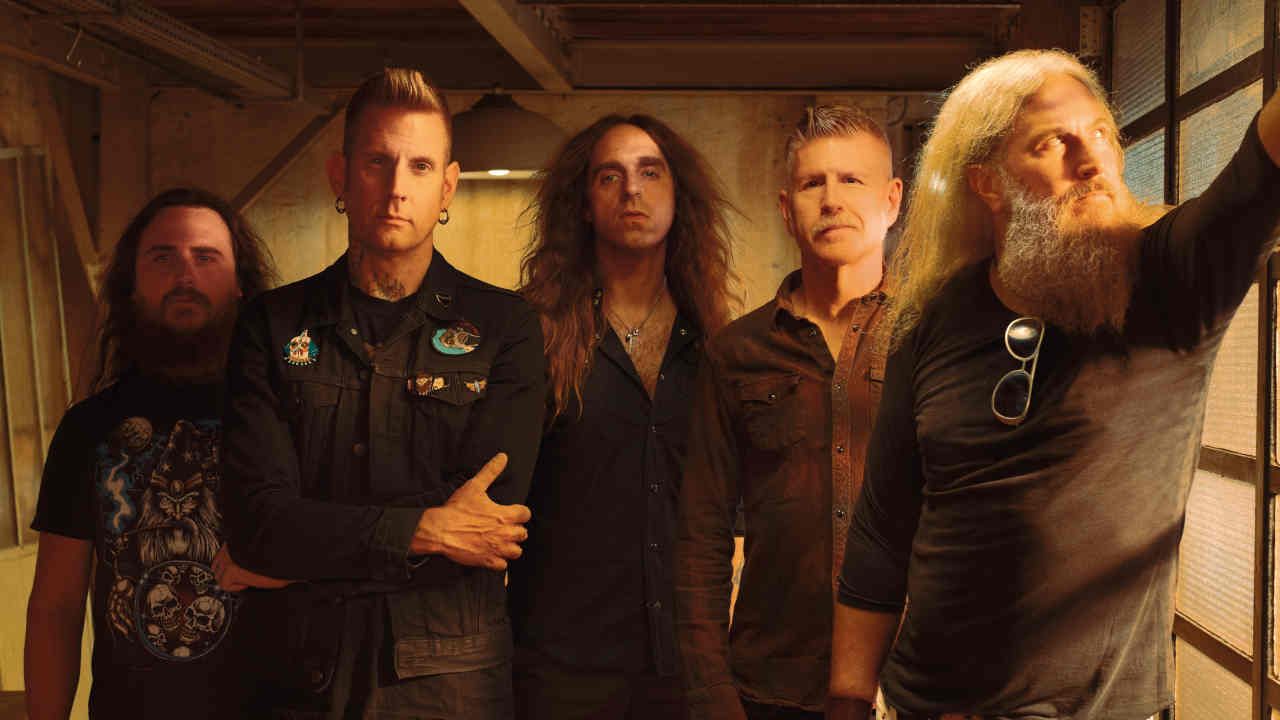
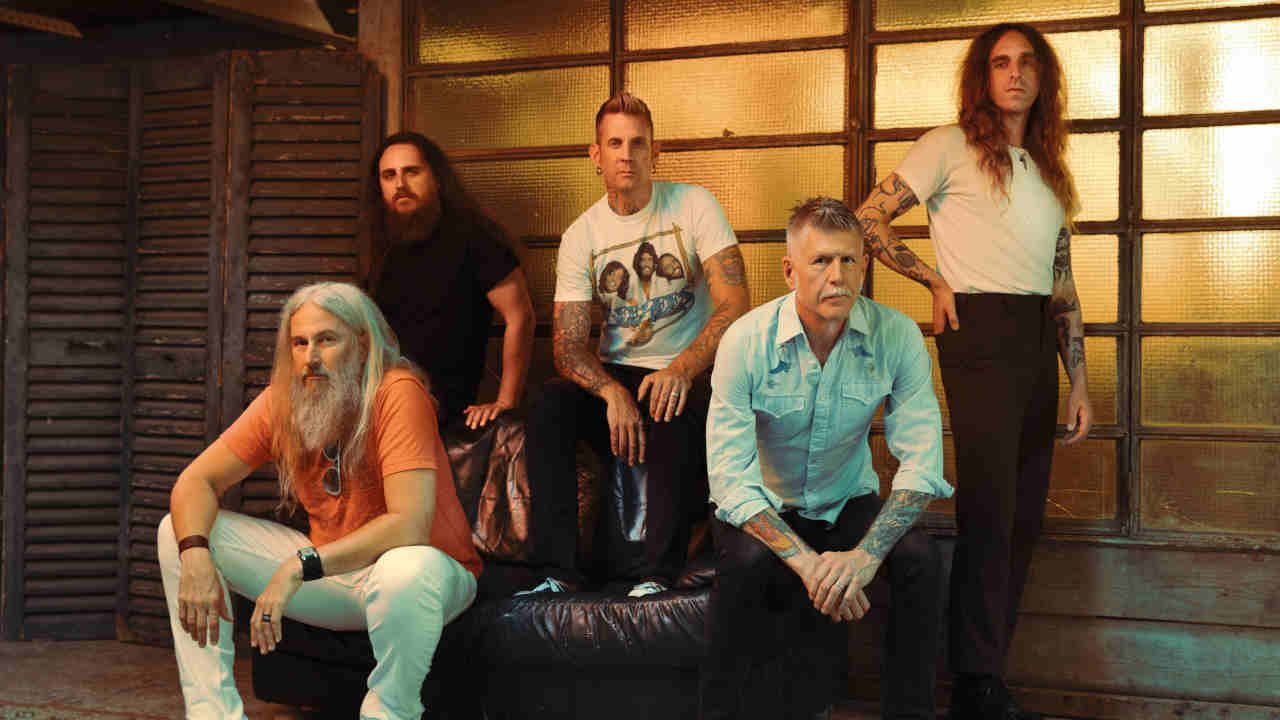
    Mastodon posing for a photograph in 2026

    Mastodon in 2026: (from left) Joao Nogueira, Brann Dailor, Nick Johnston, Bill Kelliher, Troy Sanders (Image credit: William Lacalmontie/Press)

    Last year put the boot in as soon as it began. In February 2025, Brann lost his mother, Michele, after a lengthy period of ill-health. It was a tragic prelude to the tumult ahead.

    Six weeks later, the other shoe dropped. In March, Brent quit Mastodon, severing a bond that had been buckling under progressive, heavy strain for years. As the band discuss in The Mastodon In The Room, the downward spiral had become impossible to ignore: missed cues, erratic onstage outbursts, and a widening social gulf driven by Brent’s escalating battles with alcohol.

    For a long time, the remaining trio hesitated to act, holding onto memories of the early years when they were just four guys trying to make each other laugh in a cramped tour van. But by 2021, around the Hushed And Grim tour, the collective enthusiasm had withered.

    The end, when it came, was abrupt. During a tense band meeting in their rehearsal space, as members discussed the impact of Brent’s behaviour, the guitarist rose up and stormed out, never to return. For Brann, it was an emotional haymaker after the loss of his mother.

    “I was definitely struggling just being a person,” he explains. “Then the turmoil with Brent just made everything worse. I had this big, heavy grief cloak on, dragging my carcass around, and I wasn’t having fun.”

    Fortunately, the raw material that would eventually emerge as the band’s latest album, Marrow Deep, had already taken shape. By the time Brent left the band, the skeletons of 23 songs had already been written – without Brent’s involvement.

    Mastodon performing onstage in 2026

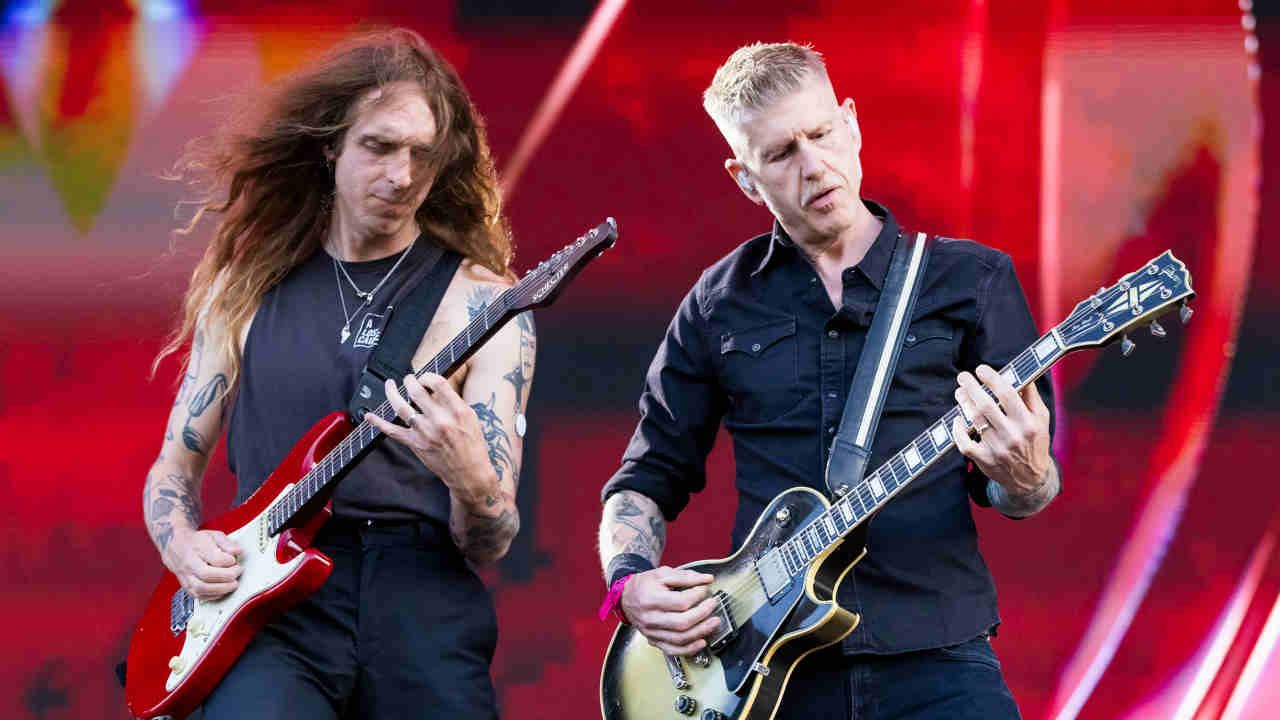
    Mastodon’s new guitarist Nick Johnston with Bill Kelliher in July 2025 (Image credit: Scott Legato/Getty Images)

    “It had already been quite evident that Brent’s interest in participating was waning,” adds Troy. “We didn’t want to continually invite a dark cloud to come loom over us while we’re trying to be creative. We just kept doing it where the excitement and energy were at 100%.”

    I was immediately shocked and saddened. But unfortunately, I wasn’t surprised.

    Troy Sanders

    Two days after announcing Brent’s exit, the band drafted YouTube guitar virtuoso Ben Eller to handle immediate touring commitments, bringing a welcome predictability back to an erratic live engine. But while Ben provided vital onstage stability, the permanent role required something beyond pure technical proficiency – it needed the creative friction of two wildly disparate guitar personalities.

    “Ben’s style is a little too similar to Bill’s,” Brann explains. “It would be like having two Bills. The special thing about our band was that Brent’s playing was so wildly different.”

    Enter Nick Johnston. A virtuoso within the progressive instrumental scene, he wasn’t a standard metal journeyman; he was the necessary creative counterweight.

    “We wanted a yin-and-yang situation,” Brann says. “Somebody who could emote during solos and bring a different side of the coin. Nick approaches the instrument like nobody else I’ve ever heard.”

    “Nick’s been wonderful,” says Bill. “He’s one of the nicest humans I’ve ever met. He brings things to the table that I’d never come up with, and vice versa.”

    Nick arrived in May 2025, working alongside longtime touring keyboardist João Nogueira, whose atmospheric textures added a fresh dimension to the arrangements. Rather than merely mimicking the past, the two began reshaping the transitions and interludes. Together, Nick and João injected a sophisticated progressive flourish –a level of intricate, fluid musicianship that felt striking even for a band with Mastodon’s formidable technical pedigree.

    Amazingly, after 25 years, Mastodon were expanding their sonic palette. But the ultimate test of this new five-piece was fast approaching. In August, just 10 days before they were scheduled to enter the studio to record the album, the news broke from Atlanta: Brent was gone.

    Word of his fatal accident spread rapidly. A subsequent Atlanta Police investigation concluded Brent had been travelling at nearly 70mph – twice the legal speed limit – and that excessive speed was the decisive factor in the crash. For the surviving members, whatever resentment had built up during the public fallout of the split evaporated the moment the news broke.

    “I was immediately shocked and saddened,” says Troy. “But unfortunately, I wasn’t surprised. I don’t mean that in any distasteful manner, whatsoever. I’ve done everything I could as a friend and as a bandmate over the years. I don’t know what else I could’ve done, so I’m kind of forced to just let go.”

    Mastodon posing for a photograph in 2026

    (Image credit: William Lacalmontie/Press)

    “I wasn’t surprised that it happened, but I was shocked,” adds Bill. “I just didn’t think it was going to happen like that.”

    The fact was that they began grieving Brent long before the crash. Reflecting this afternoon, there’s only a quiet sadness and a deep, genuine fondness.

    “Whenever someone rides by on a loud motorcycle, I think of Brent first,” says Bill. “He was omnipresent in my life. Even though we didn’t always see eye-to-eye – more times than not we did – I cared about the guy. I always thought
    he would outlive us all, because he had nine lives and got away with everything.”

    “When Brent was in a good mood – his normal, happy
    self, not hungover Brent – it was so much fun,” Brann adds. “We were the funniest people we knew. I miss that aspect of it: the camaraderie, the jokes, and the fun. And musically, he would just rip some solos – snatch them right out of the sky and make you cry. I miss all of that.”

    Barely a week after his passing and still reeling from the news, Mastodon entered the studio. “It was difficult. It was dark. It was sad,” Troy says. “But it was also necessary.”

    I had this big, heavy grief cloak on, dragging my carcass around, and I wasn’t having fun

    Brann Dailor

    Historically, Mastodon have processed personal tragedy through a cinematic filter of concept albums and mythology – Moby Dick, czars and villainous emperors – using grand metaphors to absorb the concussive force of real-world pain. On Marrow Deep, the masks are gone, the lyrics replaced by a stark, collective honesty, with the word ‘we’ frequently overtaking the insular ‘I’.

    “It probably wasn’t intentional,” Troy says, considering the shift. “But that’s where we all were.”

    Across towering tracks such as Your Ghost Again and Moth And Bone, grief and the wreckage of their fractured friendship with Brent are laid bare. When Troy roars, ‘Our faces hit the wall again… the wound is cutting deeper’ on the latter, there is no protective imagery left to hide behind. The nerve is fully exposed.

    That starkness crystallises halfway through the album, on In The Ruins. Built around a long-gestating riff from Bill, the track took shape when co-producer Patrik Berger suggested slamming from its quietest moment straight into its most punishing movement.

    “When Troy put his lyrics over the top, it shot to the top of everybody’s list,” reveals Brann. “He is pulling from his own experience there. He lost his home and all his possessions in a Florida hurricane. It’s something he’s very quiet about, but it was devastating.”

    Mastodon performing on TV show Late Night With Seth Meyers in 2021

    The late Brent Hinds with Mastodon on Late Night With Seth Meyers in 2021 (Image credit: Lloyd Bishop/NBC/NBCU Photo Bank via Getty Images)

    Conversely, A Vampire’s Demeanor offers a blast of straightforward metal built around a driving main riff written by Brann.

    “Every time we played it in the rehearsal space, I just wanted to play it forever,” Brann says. “To me, that’s a festival song. I can already see a crowd jumping in unison at Download.”

    The band’s newly unlocked chemistry really speaks for itself.

    “If you want an example of the new dynamic, look at a song like Poisonous Weapons,” says Bill. “I threw a ‘riff grenade’ into the room to see what Nick and João would come up with. In the middle section, they turned my basic formula into this incredibly proggy space jam. It’s the same on The Three Fates – the placement of that part at the end of the song is a hint of what’s to come.”

    That forward-looking outro anchors the album’s closing epic – a track that ultimately bridges the band’s raw new reality with their signature move. Because for all of Marrow Deep’s unvarnished realism, they couldn’t completely resist the gravity of ancient myth.

    “I did squeak in some mythology anyway,” Brann laughs, tracking the origin of the song back to the Greek Moirai – mythological sisters who spin, measure, and inevitably snip the thread of human life. “I look at Brent and my mom as being similar in the way they both did a good job of hiding from that third sister with the scissors,” Brann muses. “One of them on purpose, and one of them not on purpose.”

    It’s a telling inversion. Once, mythology was Mastodon’s shield against the world. On Marrow Deep, it arrives only as a postscript, after the band have already bared their souls in plain English.

    “Hopefully,” Brann continues, “it ends the record on a hopeful note.”

    Having navigated the brutal gauntlet of the last 18 months, the grief hasn’t vanished, but for the first time in years, Mastodon feel bound together by something far greater than mere survival. They are looking to the future.

    “All five of us want to be here for all the right reasons,” Troy says. “All five of us are very much in sync. We’re all extremely happy to be here and so grateful for every fucking show.”

    Whenever someone rides by on a loud motorcycle, I think of Brent first. He was omnipresent in my life.

    Bill Kelliher

    If Marrow Deep serves as the definitive, bruising conclusion to a traumatic chapter, it also kicks the door wide open to a thrilling new era. Because Nick joined the fold after much of the album was already sketched out, the next Mastodon record will be the first built from the ground up by this newly minted five-piece – a prospect that electrifies Bill.

    “I feel like the next record, in another year or two, will showcase even more of Nick and me playing off each other,” he says. “Toward the end of Brent’s time in the band, I was writing most of the rhythms and song structures anyway, and he would come in like a finishing carpenter to add the crazy solos. It’s a similar set-up with Nick, but Nick is much more receptive and absolutely full of fresh ideas.”

    “You’re never going to truly replace Brent,” Brann says. “He was a unique unicorn to the 10th power. But Nick is his own kind of unicorn; I love that about him. I love his playing, and I’m excited to dig in more with him writing-wise.”

    But it isn’t just the promise of new riffs that has breathed life back into Brann. Given all that’s transpired, we ask him what’s making him happy these days.

    “Besides my awesome wife, my cool dog, and all my amazing friends?” he replies. “It’s my kickass band. I feel more confident than ever going onstage knowing that the show is going to be fucking awesome.”

    Troy agrees: “Coming off the stage, we look around and get to hug and high-five, because we’ve done this thing that I’ve always called magic. It’s just like, ‘Oh, wow, that was unbelievable. So beautiful. Thank you. I love you.’ ‘Fuck, I love you too, man!’ It’s great.”

    Mastodon’s Brann Dailor onstage in 2026

    (Image credit: Katja Ogrin/Getty Images)

    “Mastodon now is the band I’ve always wanted to have,” says Bill. “It’s five guys who are all on the same page, who all want to be here, and who want to do what is best for the group. We love getting onstage, making people rock out, making awesome-sounding records, and continuously pushing ourselves. It’s a joy to go out there and do what we do best, which is play some heavy-ass metal and prog rock.”

    The scars are permanent, but the uncertainty is gone. Mastodon have spent a quarter of a century turning tragedy into high art, but the view down the road is no longer defined by what they’ve lost – it’s defined by the vast, uncharted territory waiting to be conquered. For a band who have spent their entire existence screaming into the void about death, loss, and the cruel impermanence of time, this might just be the most subversive outcome of all. Not mere survival, but glorious, undeniable renewal.

    Marrow Deep is out now

  • Ed Sheeran’s Opening Acts Drop Out After Macklemore’s Removal

    Finneas and three other musicians dropped out of Ed Sheeran’s tour on Tuesday, citing the right to free speech after the rapper Macklemore was removed over his “Free Palestine” remarks onstage.
  • EIVØR Shares Official Music Video for “Spøkilsir / Revenants” From Upcoming Studio Album “Tungl”

    Faroese luminary singer-songwriter Eivør has unveiled a new track from her upcoming studio project, Tungl, due out on October 16th. Today’s release, “Spøkilsir / Revenants”, weaves hypnotic dream-pop and trip-hop textures into an evocative meditation on embracing the ghosts of our past.

    Eivør speaks about the song: “In ‘Spøkilsir / Revenants,’ we find relief in the imperfect. I think we all carry ghosts. Things in the past we would have liked to have handled differently, or little flaws within ourselves we try to hide from the world. But often when we learn to fully embrace each other’s flaws, quirks, and darker sides, they become endearing. We become more patient and forgiving, not only towards each other, but also towards ourselves.”

    Eivør adds: “The music video was created by my dear friend Gwenaël Akira, whose enthusiasm and dedication always make working with him inspiring. We wanted to create an inner world, a reflection of the voices, shadows, and different versions of ourselves that live inside our heads. Gwenaël conceived a mirrored box, almost like a room inside the mind, and an incredible team of artists in the Faroe Islands brought it to life.”

    Director Gwenaël Akira adds: “At the heart of Spøkilsir was one constructed room: a space where one body could become many and reflections could express what cannot easily be said. Finding the emotional truth within those images with Eivør was a very special process.”

    Tungl will be available in the following formats, and is available to pre-order here.

    • CD Jewelcase
    • Digipack – Artist Exclusive
    • 1LP gatefold (crystal clear vinyl)
    • 1LP gatefold (white & black marbled vinyl) – Nuclear Blast & Independent Stores
    • 1LP gatefold (transparent & black marbled vinyl) + 7″ bonus vinyl – Artist Exclusive
    • Whether you’re already embedded into Eivør’s ever-expanding world or yet to fall under its spell, Tungl is a far-reaching journey of discovery.

    Tungl – a Faroese word for ‘moon’ – sees Eivør reach further into elemental realms than ever before. Immersive, unmoored, and steeped in a sense of time-stretched drama where familiar marker points give way as an inner compass emerges over its 10 searching tracks, it’s an album also in tune with a very contemporary need for navigation, self-belief, and rejuvenation in the most uncertain of times.

    Eivør spent this summer performing across Europe, presenting a select number of headline concerts and appearing at leading festivals including Paléo Festival, Brutal Assault, Summer Breeze and ArcTanGent.

    To celebrate the release of Tungl, Eivør will present three special album release concerts in October. Eivør will be playing two consecutive nights at Nordic House in Tórshavn, Faroe Islands, on 16 and 17 October, before she returns to Harpa’s Eldborg Hall in Reykjavík, Iceland, on 23 October for a unique performance featuring special guest musicians in one of the Nordic region’s most iconic concert halls. These intimate events will offer audiences a rare opportunity to experience Tungl performed in a special setting before Eivør embarks on her extensive international tour.

    Eivør will also be undertaking an extensive headline tour across North America later this year, and across Europe and the UK into 2027.

    Find and purchase all tickets here.

    The post EIVØR Shares Official Music Video for “Spøkilsir / Revenants” From Upcoming Studio Album “Tungl” appeared first on Sonic Perspectives.

  • From the Holy Ground to Hamburg: WACKEN Takes Over Bahnhof Pauli

    For four days, Hamburg’s Reeperbahn becomes one of the busiest meeting points in the international music business. This year, the world’s largest metal festival is bringing a piece of the Holy Ground with it. During the Reeperbahn Festival, taking place from September 16–19, 2026, Wacken Open Air will present an industry reception, its own four-band […]

    Source