Forty years ago, Slayer delivered one of the most uncompromising metal records of all time, Reign In Blood, on October 7, 1986. Executed with unrelenting speed, unmatched integrity, and unflinching intensity, the Gold-certified album has influenced generations of bands to follow, resonated with legions of tastemakers and peers, and incited both obsession from fans and fear from the mainstream in equal measure.
Now, the legendary multi-GRAMMY® Award-winning Los Angeles-born thrash institution and most uncompromising member of “The Big Four” will celebrate four decades of this watershed album with the release of a brand-new Liquid Filled Vinylon November 20, 2026.
The limited-edition Blood Filled Zoetrope 1LP is loaded with crimson-red liquid and available exclusively via Sound Of Vinyl. It stands out as the first-ever “Blood” infused version of Reign In Blood.
Reign In Blood notably served as Slayer’s first collaboration with Rick Rubin as producer and their debut for American Recordings. The quartet — Tom Araya [vocals, bass], Kerry King [guitar], the late Jeff Hanneman [guitar], and Dave Lombardo [drums] — channeled the ferocity of their live show during the studio sessions. The record’s 10 songs infamously clocked in at only 28 minutes and 58 seconds, yet that was all Slayer needed to forever change the course of heavy metal history.
From Araya’s infamous blood-curdling howl at the beginning of “Angel Of Death” to the last strains of rainfall tapering off into feedback on “Raining Blood,” Reign In Blood remains a pillar not only of Slayer’s catalog, but of popular culture at large. Armed with classics like “Altar Of Sacrifice,” “Piece By Piece,” and “Criminally Insane,”to say Reign In Blood’s influence has only grown over the years is an understatement; it has simply consumed everything in its path.
This year, Slayer will herald the record’s legacy with a handful of special live engagements where Araya and King — joined by drummer Paul Bostaph and guitarist Gary Holt — are performing Reign In Blood in its entirety. Next up, they take the stage at Palacio De Los Deportes in Mexico City, Mexico on October 21, followed by a much-anticipated set at Sick New World Texas on October 24.
Concluding the North American campaign, they will take over Kia Forum in their hometown of Los Angeles for two sold-out headline shows on November 13 and 14 featuring support from Cannibal Corpse, Cavalera, and Crowbar. Slayer closes out 2026 with headline shows in Bogotá, Colombia; Santiago, Chile; Buenos Aires, Argentina; and São Paulo, Brazil.
Slayer 2026 Tour Dates
10/21 Mexico City, Mexico @ Palacio De Los Deportes
10/24 Fort Worth, TX @ Sick New World Texas
11/13 Los Angeles, CA @ Kia Forum
11/14 Los Angeles, CA @ Kia Forum
12/5 Bogotá, Colombia @ Vive Claro – Distrito Cultural
GAMMACIDE UNLEASHES TOXIC MERCENARIES ON LIMITED-EDITION VINYL OCTOBER 30
Texas Thrash Metal Veterans Celebrate Their First New Studio Album in More Than 35 Years With Toxic Neon-Green and Ultra-Limited Blood Moon Vinyl Pressings
For Fans Of: Exodus, Dark Angel, Nuclear Assault, Sacred Reich, Overkill
Dallas, Texas | October 2026 Vinyl Release: October 30, 2026 CD Release: September 11, 2026
Texas thrash metal cult legends Gammacide are bringing their long-awaited comeback album to vinyl. Following the September 11 CD release of Toxic Mercenaries , the band’s first full-length collection of new material in more than 35 years will receive its highly anticipated vinyl release on October 30, 2026 , through NoLifeTilMetal Records .
The vinyl edition will be available as a limited-edition toxic neon-green pressing , with an even more limited “Blood Moon” red/black swirl vinyl edition available directly through NoLifeTilMetal Records. For longtime followers of the Texas underground and collectors of classic thrash, this marks a fitting physical release for one of the year’s most unlikely and ferocious metal comebacks.
Toxic Mercenaries delivers eight brand-new tracks that prove Gammacide’s trademark attack has lost none of its bite. Blistering riffs, chaotic lead work, bulldozing drums and Varnam Ponville’s unmistakable vocals tear through songs including “Overload,” “Sinkhole,” “Predator Or Prey” and “Soldier of Fear.”
The album follows Gammacide’s triumphant return to the stage in 2025, when the band reunited to perform at Hell’s Heroes Festival in Houston, Texas . The response was overwhelming, leading to an East Coast tour, shows in Mexico and, ultimately, the decision to enter the studio in January 2026 and create the first new Gammacide music since the band’s breakup in 1992.
FROM TEXAS THRASH CULT HEROES TO A 35-YEAR COMEBACK
Formed in 1986 by guitarist Rick Perry and bassist Eric Roy , Gammacide quickly established themselves as one of the most vicious young bands emerging from the Texas metal scene. Their 1987 five-song demo became a prized release throughout the international tape-trading and fanzine underground.
With guitarist Scott Shelby joining the lineup in 1988, Gammacide developed the dual-guitar assault that would define their sound. The band recorded Victims of Science at Sound Logic Studios in Dallas in 1989, with the album released by Wild Rags Records in early 1990.
More than three decades later, Victims of Science remains a cult favorite among underground thrash devotees.
Now, Toxic Mercenaries carries that legacy forward without attempting to recreate the past. The new material sounds like Gammacide, because it is Gammacide: fast, hostile, chaotic and unapologetically rooted in the Texas thrash tradition.
THE VINYL EDITION
Toxic Mercenaries arrives October 30 on vinyl through NoLifeTilMetal Records , giving fans the opportunity to add Gammacide’s historic comeback album to their physical collection.
Vinyl formats include:
Limited “Toxic” Neon-Green Vinyl
Ultra-Limited “Blood Moon” Red/Black Swirl Vinyl , available directly through NoLifeTilMetal Records
The album’s artwork and layout were created by Scott Waters , whose extensive metal design credits include Mortification, Lizzy Borden, Hades, Patriarchs in Black and Anger As Art.
Toxic Mercenaries was produced by Gammacide vocalist Varnam Ponville alongside David Treadway of DDTstudio Productions .
THE TOXIC MERCENARIES HAVE RETURNED
Gammacide’s story could have ended in 1992. Instead, more than three decades later, the band has returned with an album that sounds less like a nostalgic reunion and more like unfinished business.
With the CD already released and the vinyl arriving October 30, Toxic Mercenaries gives the band’s old-school supporters and a new generation of thrash maniacs eight fresh reasons to turn the volume up and hit the pit.
Gammacide is:
Varnam Ponville – Vocals Rick Perry – Guitar Scott Shelby – Guitar Chance Lehman – Bass Joey Gonzalez – Drums
Toxic Mercenaries is available on CD now, with the limited-edition vinyl release arriving October 30, 2026 , via NoLifeTilMetal Records .
A central figure in the Quiet Storm R&B of the 1980s, Jackson explored a tender and refined longing on tracks like “You Are My Lady” and “Jam Tonight.”
As he was growing up in the port city of Jaffa in western Israel, Kobi Farhi’s family gave him mixed messages on how he should view the world. His uncle Kitz had PTSD after serving in the Six-Day War between Israel and the surrounding Arab countries, and he once told Farhi that Arabs “want to kill you and throw you into the sea”. Meanwhile, his father was a veteran of the Yom Kippur War who showed compassion to the men he’d been conditioned to hate, giving blankets to detained Egyptian soldiers. And his grandmother Lily was close friends with an Arab woman named Yousra, to the point that Farhi went to Yousra’s daughter’s wedding when he was five years old.
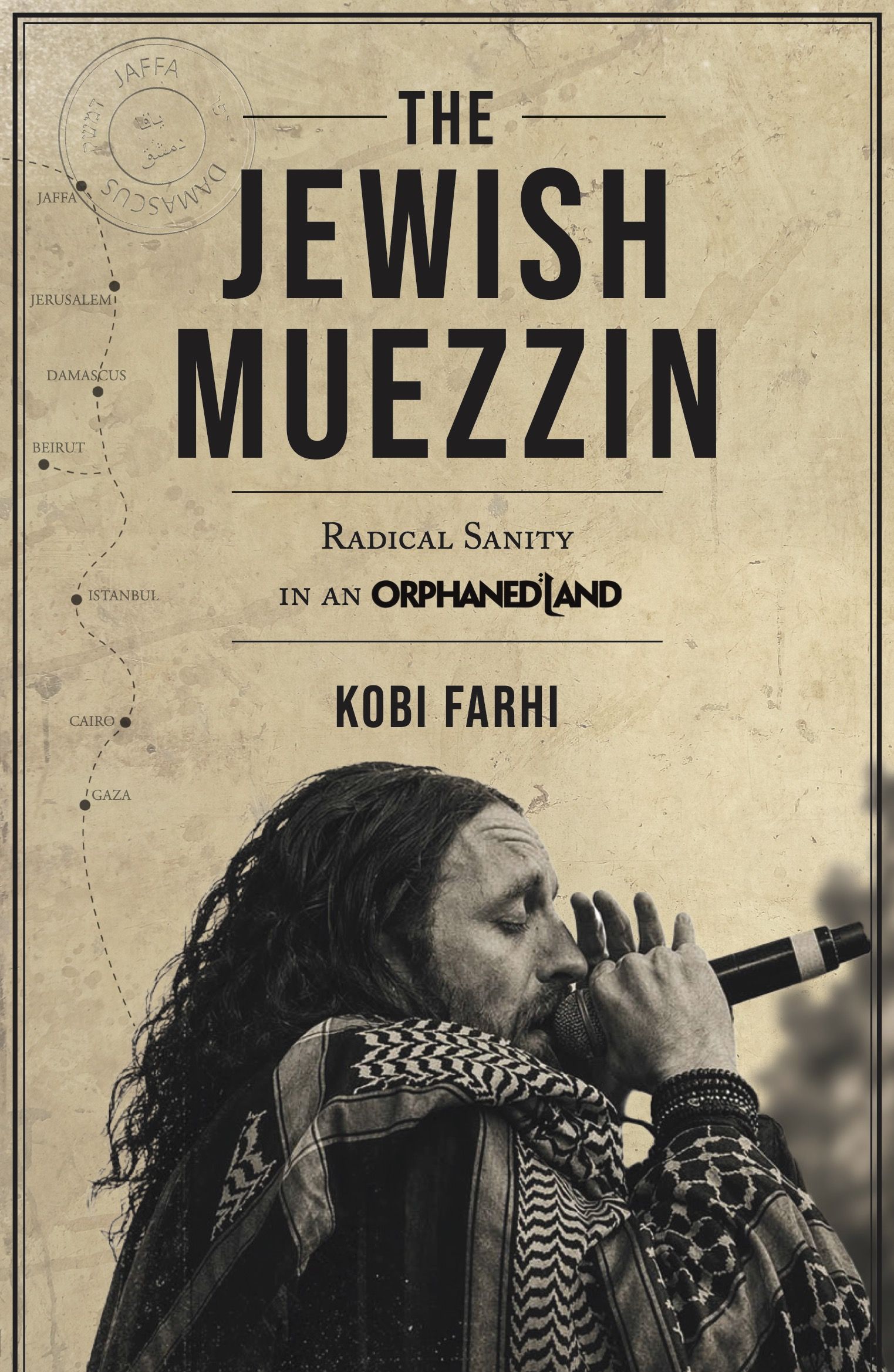
At the start of his new memoir, The Jewish Muezzin: Radical Sanity In An Orphaned Land, it seems that Farhi has adopted his uncle’s outlook. He recalls, in May 1992, aged 16, finding out that an 18-year-old Palestinian had murdered 15-year-old Israeli girl Helena Rapp: one in a long series of Palestinian terror attacks which intensified after the Six-Day War gave Israel control over the West Bank and Gaza Strip.
In response to the killing, Farhi spray-painted “death to Arabs” on a shopping centre wall and searched for a person who looked Arabic, so he could attack them. He chased after one man on the street, but ultimately didn’t hurt anyone. Today he remembers the episode as something he’s “ashamed of”. Since then – through his progressive folk metal band Orphaned Land, which he co-founded in 1991 – he’s adhered to his dad and grandma’s examples, writing song after song advocating for peace in the Middle East.
“At the beginning of the book, when I was a teenager, I’m showing how easy it is to fall for indoctrination and brainwashing,” the talkative yet soft-spoken singer, now 51, says on a video call with Metal Hammer. “You’re made biased by the media and everything, because the newspapers are always red; you’re always seeing the bad news.
“I went to extremism. But, as time went by and I asked myself questions, I started to adopt my grandma and Yousra’s friendship as proof that coexistence is possible. If I take my 35-year career with Orphaned Land, I would say that, for the first two years, I was an extremist; the last 33, I have gone with my grandma and Yousra’s narrative.”
Orphaned Land’s commitment to unity has defined such tracks as 2013’s Brother, which lamented how skin-deep differences between the Abrahamic religions have been used to fuel generations of violence. And it hasn’t been just words. For decades, Farhi put a Palestinian keffiyeh, a traditional scarf, on his microphone stand.
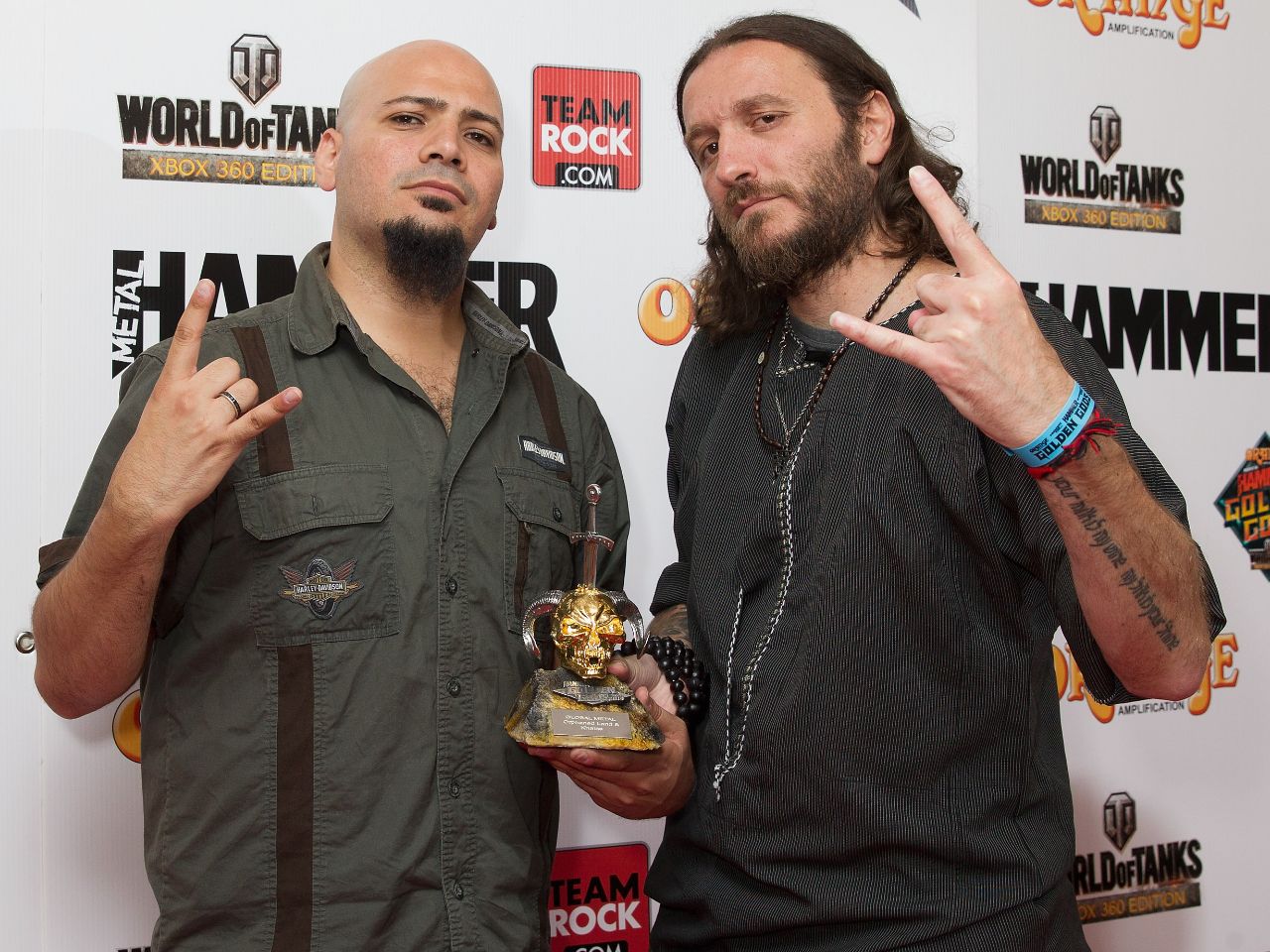
The band have performed with multiple Palestinian artists; when they won the Global Metal Award at the 2014 Hammer Golden Gods, Farhi shared it with Abed Hathout of Palestinian tourmates Khalas. The Jewish Muezzin’s title reflects Farhi’s belief that music has the power to overcome cultural and religious divides, a muezzin being the person at a mosque who sings the Muslim call to prayer.
“The magic over the course of my life has always been music,” he says. “The sound of the muezzin calling to people from the mosque was there five times a day when I was a kid, and I loved the music. It was music that drew me for the first time to the Muslim culture.”
Before Farhi could fully dedicate himself to writing songs and using them to confront hate, he – like every other Jewish citizen of Israel once they turn 18 – was summoned to serve in the IDF. He loathed it (he had to cut his long hair short before reporting for duty), but for a year he was a model soldier. He worked as a mechanic, never seeing active combat. “I never wanted to be a fighter,” he explains.
When he requested to take the leave he’d earned so that Orphaned Land could make their 1994 debut album Sahara, he was denied. He went anyway, recording and doing a photoshoot where he wore a Palestinian keffiyeh, then refused to apologise upon his return. He was court-martialled and sentenced to 28 days in military prison. During the final two weeks, he had to guard Palestinian captives; he later recreated a melody that they sang and used it for the Sahara song Aldiar Al Mukadisa (‘Holy Land’).
“I always looked at them with a certain curiosity,” he says of his feelings while being in close proximity to Palestinians for the first time. “I wanted to understand what drove them to commit acts of violence against Jews and Israelis, who in many cases were not always soldiers. No hatred, no feeling of revenge; a lot of questions. Maybe that’s why, when I heard the melody, I didn’t resist. I said to myself, ‘They love music. They find comfort in music’, and I was enchanted by it.”
After Orphaned Land made two further albums, 1996’s El Norra Alila and 2004’s Mabool, they scored their breakthrough with 2010’s The Never Ending Way Of Orwarrior, co-produced by Steven Wilson. That May, the band supported their idols Metallica at the US giants’ show in Tel Aviv. Lead guitarist Kirk Hammett was such a fan that he asked Farhi if he could buy one of their CDs. The singer darted to the merch stand and rushed back with a copy of …Orwarrior.
When I heard Palestinian prisoners singing, I didn’t resist. I was enchanted by it
Kobi Farhi
Did Hammett ever pay up? “No,” Farhi replies matter-of-factly, “but he rewarded us by writing a review in Metal Hammer [where he said, ‘I really like what they are doing’]. One of your childhood heroes writing a review of your album, being acknowledged in that way… I can show it to my kids one day.”
However, as Orphaned Land’s fanbase grew, so too did pockets of resistance to their inclusive messaging. In band pictures promoting …Orwarrior, Farhi was dressed as Jesus, while figures around him in traditional Jewish garb assumed Muslim prayer positions, and vice versa. It was a call for togetherness which got misconstrued as blasphemy. “The three Abrahamic religions all come from the same source,” Farhi reasons, “and I always thought that the solution to the problems should be going back to the source of things.”
Farhi (right) sharing his Metal Hammer Golden God with Abed Hathout of Palestinian metal band Khalas. (Image credit: Jo Hale/Getty Images)
In other cases, people were punished for being fans. Farhi writes about the time an Egyptian man was sentenced to six months in prison because authorities found an Orphaned Land CD in his home. He also remembers Mysour, the young Muslim metalhead who inspired the Prog Award-winning music video for 2017 single Like Orpheus. Farhi hasn’t seen her since a picture of her with Nergal from Behemoth circulated online; he believes that someone must have banned her from going to shows.
However, it’s the last three years that have posed the greatest threat to Farhi’s goal of coexistence. On October 7, 2023, Palestinian terrorist organisation Hamas attacked Israel, killing around 1,200 people and taking 251 hostages (166 were freed, including eight who were rescued alive, and 85 have been confirmed killed). It was the deadliest attack on Jewish people since the Holocaust. Israel’s military response was swift and horrific: more than 74,000 Palestinians have been killed in the West Bank and Gaza. A UN commission of inquiry has accused Israel of committing genocide by deliberately targeting Palestinian children; Israel vehemently denies having genocidal intent.
The last 70 pages of The Jewish Muezzin are largely dedicated to Farhi’s nuanced thoughts on the conflict and the fierce global discourse surrounding it. He recalls, at 6:29am on October 7, hearing sirens wail and hurrying his children out of bed, into a nearby bomb shelter (he’s talking to Hammer from Greece, where the family have spent much of their time since the attacks).
As a confessed former extremist himself, he writes of Hamas: “Without agreeing or sympathising, God forbid, I have no trouble understanding how a Hamas monster is born. He is a man oppressed, controlled and stripped of purpose or independence.”
He’s a staunch opponent of Prime Minister Benjamin Netanyahu and the slaughter of Palestinian civilians, and also outspoken against the rising tide of reactionary, antisemitic hate crimes around the world.
“[Netanyahu has] divided Israeli society to the extent that leftists are [considered] traitors,” Farhi says. “I think he built a hate machine towards leftists, myself included. I don’t love Israel less than right-wing people, I don’t love the Jews less. People in the government have said that we should wipe out Gaza. It’s very disturbing that these people represent me, because you see what’s happening around the world, even in the UK. Jews are being attacked in the UK and feel unsafe. You can see how people are going very fast to a collective blame. Itamar Ben-Gvir [Israeli minister of national security] says something, and the Jews of the UK are to blame.”
Alternative music has been far from immune to the divisions stemming from the conflict. In November 2024, Kneecap rapper Liam Óg Ó hAnnaidh allegedly waved the flag of Lebanese political party and military group Hezbollah onstage (he was cleared of the charge of committing a terror offence earlier this year). Bob Vylan controversially chanted “death, death to the IDF” while performing at Glastonbury 2025 (an investigation by Avon and Somerset Police concluded that no action against the punk-rap duo would be taken). All the while, Disturbed frontman David Draiman has faced ongoing backlash for writing “Fuck Hamas!” on an IDF projectile during a June 2024 visit to Israel.
Farhi is critical of what he considers to be sloganeering from artists with no personal connection to Israel or Palestine. “In order to resolve the conflict, we need to be open and dive into the complexity of things,” he explains.
In order to resolve the conflict, we need to dive into the complexity of things
Kobi Farhi
He’s disappointed in Draiman (a fellow Jew of Israeli ancestry), as well. He reveals in The Jewish Muezzin that the two first fell out over the artwork for Orphaned Land’s 2013 album All Is One, which Draiman alleged was an “imitation” of Disturbed’s 2002 cover for Believe (both pieces feature religious symbols merged together to promote coexistence); Farhi counters that “the combination of symbols, messages or ideas from all religions has been done so many times over the centuries”.
After Draiman wrote on the IDF artillery shell, Farhi says that the American singer “lost his voice”: “You can be in favour of Israel – that’s fair enough. You’re Israeli, but you could bring people together. You could address things [from] the right perspective. Every time he speaks now, that photo will come up again. He lost the ability to talk to everyone.”
Farhi writes that he feels like he’s caught in the middle of a bridge he himself built. Even some of those closest to him have fallen into steadfast nationalism after October 7. Amidst all the intense rhetoric, Israelis’ trauma following Hamas’ attacks, the widespread violence against Jews and the dreadful stories continuing to emerge from Palestine, does he still believe in Orphaned Land’s defining mission? Is peace truly possible?
“There’s a chance for peace in two ways,” Farhi replies, undeterred. “I think one is leadership: if a brave leader rises up, I think the people will follow. Everywhere has psychopaths, but I think the common people want to live in peace; I don’t think people wake up in the morning and want to kill someone.
“The second one, to maintain peace, we need to change the education system. They never taught us at school about human behaviour. You know what they taught us? Trigonometry. What about talking and listening to each other? Today, people don’t listen to the other side because it will be [seen] as weakness.”
Currently, the future of Orphaned Land is unclear. The band haven’t released an album since 2018’s Unsung Prophets And Dead Messiahs, nor have they performed internationally since 2024: a date on their European tour that year was threatened with a boycott but went ahead without incident. Even though Farhi considers Orphaned Land his “life’s project”, its future depends on the response to The Jewish Muezzin – and whether or not people will listen to what he has to say.
“We’re probably the only band in the metal scene that was born into this conflict, wrote six albums about it, went on tour and shared awards,” Farhi states. “I don’t think there is a similar activism to this, and I don’t want to throw it away. I just don’t understand where to go from here. I’m leaning back, releasing the book and wondering where this will take everything.”
The Jewish Muezzin: Radical Sanity In An Orphaned Land is out now via Lemon Soul.
Since forming in 2019, Portland, Oregon duo Spirit Possession has peddled sinsational thrashy black metal. Released in 2020, their self-titled debut supplied a solid if one-note dose of chaotic metal madness, but it was 2023 follow-up Of the Sign… that nabbed my attention. On it, Spirit Possession funneled their blackened anarchy into tighter compositions that slithered and snaked with lithe technicality. Now Spirit Possession returns with third album Cathedral Speech, and it flits and flutters with the band’s signature blend of restless riffage and garage rock aesthetics. When all is said and done, does Cathedral Speech conjure hymns of a higher power?
Black metal often gets associated with trem-heavy guitar lines, but the genre rarely exhibits the riff-forward vitality that Spirit Possession harnesses. Guitarist and vocalist S. looses family-style platters of noodles on Cathedral Speech, taking listeners through a serpentine journey of lawless leads (“The Sharpening”), frenetic hammer-ons (“Hanged Angels as Patternwalls”), and thrash-forward chug-a-lugs (“Cathedral Speech”). Meanwhile, drummer A. attacks her kit with a like-minded, organic philosophy as she tumbles across snares, toms and cymbals with a nimble grace that unfurls in chaotic spurts (“Second Liturgy”) before receding into restrained timekeeping (“Trinity Possessor”). Together, the dual forces behind Spirit Possession radiate the aura of DIY music, steeping Cathedral Speech’s atmospheres in primitively boisterous black metal while simultaneously retaining a firm melodic footing.
Cathedral Speech sees Spirit Possession dart between tracks and tempos with wile and guile, restlessly plunging into assorted paces while maintaining cohesion through the album’s forty-three minutes. Of the Sign… explored slightly rowdier compositions that injected more Venom compared to Cathedral Speech, which (relatively speaking) spools out a little more slowly. Still, Venom supplies an apt comparison for Spirit Possession’s raw energy, especially at Cathedral Speech’s peak energy. “Hanged Angels as Patternwalls” buzzes with an unrefined air that harkens back to Welcome to Hell, “Cathedral Speech” bounces and squeals with Devil Master’s punk-fueled mischief, and the ending triad of “First Levitation,” “Second Liturgy,” and “Trinity Possessor” recalls Negative Plane and Aura Noir’s slow-burn acidity. Altogether, Cathedral Speech elicits a rollicking good time that preserves Spirit Possession’s core charm while advancing their songwriting to promote a stronger sense of unity during its runtime.
With Cathedral Speech succeeding on so many fronts, the only sin holding it back is Spirit Possession’s dedication to their sonic palette. Not to suggest the record is one-note, because Cathedral Speech teems with interesting pockets of riffs and ideas. It’s only that I find myself occasionally getting lost in the album’s folds, and while I don’t mind the journey through Spirit Possession’s songs, they would benefit from more distinct personalities to differentiate them. The final three tracks in particular can run together, and crafting hooks and anchors to center listeners would help orient them in such turbulent, free-form arrangements. Of the Sign… combatted this with a more diverse range of track lengths, and having a concise, snappy track or two to latch onto may have helped break up some of Cathedral Speech’s evenness. More positively, the production nails the primal style of Spirit Possession’s trademark hubbub without ever losing sight of individual performances, and the overall duration feels just right.
Album number three finds Spirit Possession exerting more control over their tumultuous brand of black metal, and immense promise lurks in this direction. Spirit Possession established a successful template for the duo before Of the Sign… cranked the dials up and delved into bedlam with renewed focus and fury. The songwriting on Cathedral Speech sounds more mature than on earlier releases, but trades that for a smidge of Spirit Possession’s eagerness and pluck. Even so, I greatly enjoyed my time with Cathedral Speech, and with a little more fine-tuning I think that Spirit Possession’s next platter can fully realize the band’s potential. Until then, I’ll keep spinning the good word and communing with Spirits.
(With pride, we present Todd Manning’s review of the the tenth and penultimate album from Godflesh, which is out now on Relapse Records.) If nothing else, 2026 has provided the metal world with “return-to-form” albums from two of its most endearing and long-lived acts. Neurosis is probably the first to come to many people’s minds, […]
 Since forming in 2019, Portland, Oregon duo Spirit Possession has peddled sinsational thrashy black metal. Released in 2020, their self-titled debut supplied a solid if one-note dose of chaotic metal madness, but it was 2023 follow-up Of the Sign… that nabbed my attention. On it, Spirit Possession funneled their blackened anarchy into tighter compositions that slithered and snaked with lithe technicality. Now Spirit Possession returns with third album Cathedral Speech, and it flits and flutters with the band’s signature blend of restless riffage and garage rock aesthetics. When all is said and done, does Cathedral Speech conjure hymns of a higher power?
