Few bands can match the sheer velocity and release cadence of Krallice! Since their 2007 inception, the band have 15 full length albums to their name! Largely a studio project, live appearances have been rare but performing as Roadburn Festival’s in-house band for the 2026 edition must be seriously respected! They will add appearances at this autumn’s Damnation and Desertfest Belgium to their list. As well as album 16 “Scour Order” via Profound Lore records, joining the ranks of Bell Witch, Spectral Wound, and other prestigious extreme metal acts who also call the record label home. This is significant as Krallice has largely released music independently. So, what can we expect from “Scour Order”?
Well, there’s raw and gritty albums. Then there’s rushed and half-baked releases. Sadly, “Scour Order” is leaning too close to the latter! To keep it concise, it just feels like Krallice has produced much better records than this! “Years Past Matter” offered a deep dive into the cosmic atmospheric reaches of black metal whilst retaining the pace and ferocity that pushed Krallice beyond the reaches of the genre.
“Crystalline Exhaustion” offered a similar explosive burst of black metal but with an indulgent synth driven spine that added mystery, intrigue and melody to proceedings. All of these elements are absent from “Scour Order”. The overall sound feels flat and never reaches the crushing highs of those albums. With so much studio experience, this should be a record that learns from the lessons – victories and defeats – from the past. This at times feels like devolution though.Then again, we’d be complaining if it sounded too polished and sterile. So we can’t have it both ways. Surely there’s a happy medium though?
Maybe it’s one that needs some time to get used to. Because after a few listens, ‘Her Green Arms’ began to resonate with me and the raw unpolished aggression started to strike a chord. As did the final song and album title track ‘Scour Order’. Except that this was much quicker to get on board with. Despite being an indulgent thirteen minutes, this journey felt worth it and traces of that cosmic atmosphere were becoming more salient in the mix, as well as some psychedelic spice to add urgency and tension. This one flows like lava, consuming everyone and everything in its path! A saving grace and satisfying end to what has been an album not up to Krallice’s high standards!
Ever since 2010, Elena Tonra has led the London indie-rolk trio Daughter; they shared their decade-old outtake “Not Enough” earlier this year. Back in 2018, Tonra released a self-titled solo album under the name Ex:Re. She never intended to make a follow-up, but she got to working on a few fragments of songs a few years ago, and now she’s got another Ex:Re record on the way. It’s called Save As — great title, a menu selection that I used constantly — and it comes out next month.
Last week I went to the Norwegian Consulate in Manhattan, where all Norwegian musicians live when they play Bowery Ballroom (someone fact check that), and I ran into Sondre Lerche, the Bergen-born singer-songwriter who just released a lovely new album called ‘Acrobats’ on PLZ/Virgin. He’s on tour in the US this month before heading home for a run of shows in Norway.
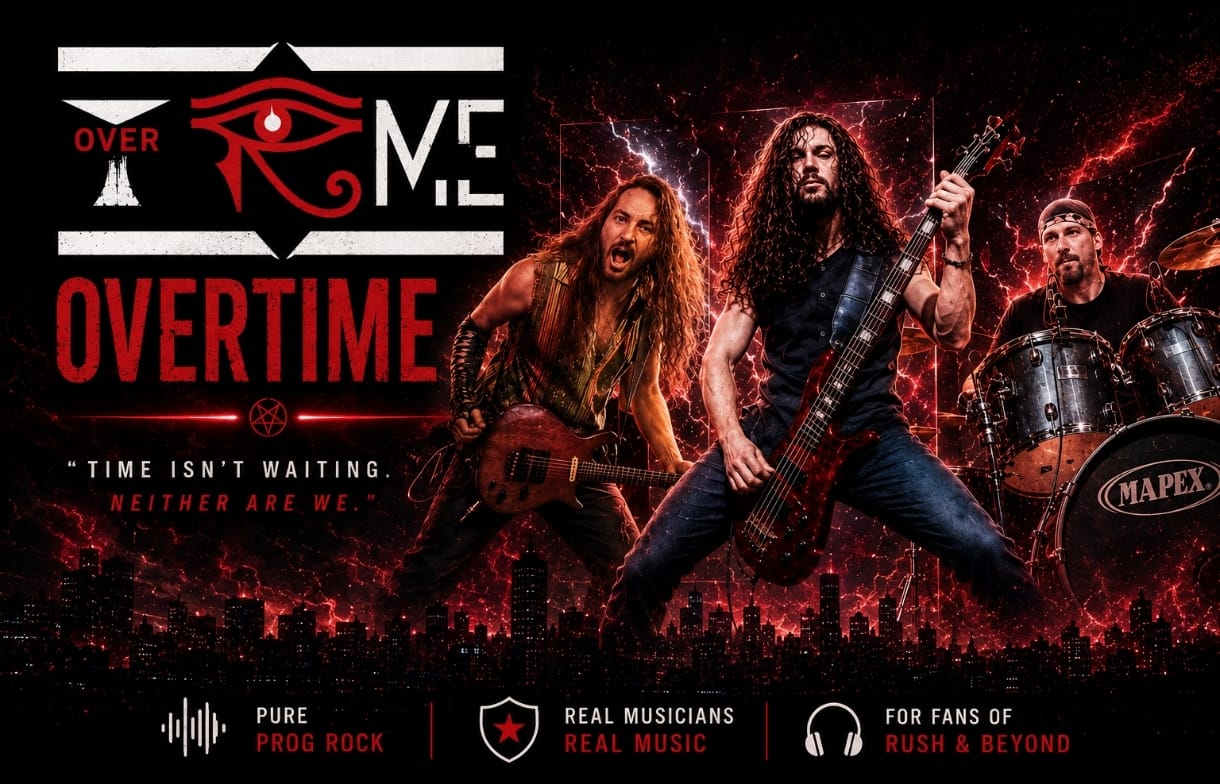
Over Time is an instrumental progressive hard rock trio from Split, Croatia, consisting of Alen Koljanin on guitar and composition, Danijel Stojan on drums, and Luka Brodarić on bass.
The band draws from progressive and classic rock, with Rush standing as an obvious progressive reference alongside the harder-edged influence of Van Halen and Led Zeppelin. But while those names help explain where some of the inspiration comes from, Over Time are at their most interesting when those influences become secondary, and the trio simply sounds like itself.
The project began during the COVID period, when Stojan invited Koljanin to jam in his garage. Koljanin arrived with riffs and compositions built around unusual meters and tempo changes, turning what started as informal sessions into complete instrumental pieces. Brodarić later joined on bass, completing the three-piece lineup.
That trio format is important to the way Over Time works. The music is technically demanding, but it rarely feels as though complexity exists simply to demonstrate technique. Odd meters, abrupt rhythmic turns and tempo changes are woven into songs in a way that often feels more like a change in intensity than an exercise in counting.
When listening to Over Time, their devotion to progressive technicality and classic rock ’n’ roll becomes apparent almost immediately. Rapid guitar trills, eccentric grooves and shifting rhythms sit alongside old-school rock production and a distinctly 1980s-influenced guitar tone.
What impressed me most about the rhythmic changes is that they usually feel natural. You can hear the timing and tempo move if you are paying attention, but those transitions rarely sound forced. Instead, they often create a sudden change in dynamics, pushing the music somewhere new without interrupting its momentum.
That is where the interaction between guitar, bass, and drums becomes particularly important. Music built around constantly shifting meters only works when the whole band moves together, and Over Time’s arrangements depend heavily on that relationship. The guitar may take the most immediately noticeable role, but the rhythmic framework underneath it is what allows the more complicated passages to keep their sense of groove.
Finding Their Own Identity
Among the tracks, “Overtime” is probably the clearest introduction to what Over Time are trying to do on their own terms.
It combines progressive structure with the directness of hard rock — heavy riffs, melodic guitar work, rhythmic movement, and enough changes to keep the track evolving without losing its basic rock character. Rather than sounding like a tribute to a particular era or artist, “Overtime” feels like the best snapshot of Over Time developing their own musical identity.
“Für Eddie” and “L’Zepp” lean more openly toward classic hard rock. Both have a more upbeat, familiar rock feel, while still filtering those influences through the band’s unusual rhythmic approach.
“Ode to Rush,” as its title suggests, moves closer to the progressive side of the band’s influences. It has a more relaxed character while maintaining the structural movement and technical playing found throughout the rest of their music.
Then there is “4 in 1,” perhaps the most overtly progressive concept of the group. The composition moves through four different tempos and also features guest keyboardist Duje Ivić, whose organ playing brings another texture into the band’s sound. The shredding organ sections add a different flavour without sounding disconnected from the guitar-driven material around them.
Across these tracks, Over Time manage to reference older progressive and hard rock without simply reproducing it. There is a recognisable classic-rock character to the production and guitar tone, but the constant rhythmic shifts give the material a more modern and sometimes more extreme edge.
The Challenge of Instrumental Rock
Being completely instrumental also creates one of the band’s biggest challenges.
Instrumental music — particularly songs stretching beyond four minutes — has to work harder to hold the attention of listeners who might normally connect with a song through a vocal melody or chorus.
Bands such as Polyphia and Animals as Leaders have approached that problem by making the guitar itself function almost like a vocalist. Their central melodies can become hooks that remain in your head in much the same way a sung chorus might.
Over Time take a somewhat different approach.
Their strength lies more in movement, musicianship, riffs, solos, and changing dynamics. There are plenty of technically impressive guitar moments, and Koljanin delivers some genuinely epic and shredding lead work, but I don’t always find those melodies as immediately memorable as the hook-focused approach used by bands such as Polyphia.
That is not necessarily a problem with the music — it is more a question of audience.
At the moment, I can imagine Over Time connecting particularly strongly with guitar players, musicians and listeners who enjoy progressive arrangements and technical rock. If the band ever wanted to reach further outside that audience, one possibility would be to experiment more often with recurring guitar melodies that perform the psychological role of a vocal hook.
That does not mean becoming Polyphia or abandoning what makes Over Time distinctive. In fact, their old-school character is part of what makes them interesting. A memorable recurring melodic idea placed inside their existing rhythmic approach could potentially make that sound accessible to an even wider audience.
Old-School Rock, Pushed Further
Ultimately, Over Time sound like musicians who genuinely enjoy what happens when classic hard rock is pushed into less predictable territory.
The influence of Rush, Van Halen and Led Zeppelin can certainly be heard, but Over Time are not simply recreating those bands. Their identity comes from the combination of those older influences with constantly shifting tempos, unusual meters, heavy riffs and the interaction of three musicians working inside arrangements that rarely stay still for long.
The result is music that can sometimes sound as though it belongs to the classic-rock era — only more rhythmically restless, more technically extreme and less interested in following conventional song structures.
For listeners who enjoy real instruments, progressive musicianship and guitar-driven rock that refuses to remain in one place for very long, Over Time are well worth hearing.
The band currently releases its music exclusively through YouTube, where listeners can hear “Overtime,” “Ode to Rush,” “Für Eddie,” “4 in 1,” “L’Zepp” and the rest of the band’s material.
About Over Time
Over Time is an instrumental progressive hard rock trio from Split, Croatia.
Built around guitar-driven compositions, odd time signatures, changing tempos, and the chemistry between guitar, bass, and drums, the band combines progressive structure with the weight and directness of classic hard rock.
Rather than chasing current trends, Over Time focuses on musicianship, real performances, and songs designed to develop and change as they move.
10th September 2026 Support: Gorod, Defects, BruteAllies Words: Matthew Williams Photos: Rich Price
Due to some small football team in Stretford playing on a Thursday night, the roads around the M56 and into Manchester city centre were busier than usual, so I arrived late at Rebellion and missed opening act BruteAllies. I hope to catch them again, as I’ve heard good things.
Next up were rising metal stars Defects. With Tony Maue at the helm, they play a blend of heavier, alternative metalcore with soaring melodies packed alongside aggressive rhythms. Playing a few songs from their soon to be released album, they launch into the title song “Artificial Icons” followed by “Signs”, as their flashing sign lights up the venue. They have a mighty drum sound and plenty of deep, throaty screams and the two guitarists offer an expansive range of riffs.
With phones held aloft, the torches are out for “Dream Awake” and the double bass kicks in with solos fired off from both sides of the stage. There’s a throwback to the snappy snare sound of Therapy’s “Teethgrinder” on “End of Days” before the thunderous “Critic” is performed. Maue introduces their latest single “Where Did I Go Wrong” which showcases his vocal range perfectly, as they end with another good song “All For Nothing”.
I don’t profess to being an expert of French technical metal, but with their latest album, “The Ember Gone”, Gorod have me very intrigued. There’s a haze across the stage, but it was clear enough for me to witness the guitar wizardry on display from both Mathieu Pascal and Nicola Alberny during “Signs” as they have fret tapping battles galore amidst a flurry of fast drumbeats and bruising bass lines. They delve into their older songs with “We Are the Sun Gods” which is crazily fast, yet composed and controlled, with a drum solo sandwiched in the middle of it.
After playing what feels like an X-Files inspired song called “The Orb”, vocalist Julien Deyres talks about the release of their 8th studio album and introduces “Forgiveness” as one of the guitarists plays a weird twin necked vertical guitar. It’s eerie and sinister in the sound, but technically excellent and enjoyable. “We always end on the same song, and it’s dedicated to all of you” as the frontman screams out “Disavow Your God” which is a cacophony of fast and furious noise leaving the crowd very happy.
What American death metal band Allegaeon played during their set is anyone’s guess, but from the smiles of joy on the faces in the crowd, I’m going to say that the masses thoroughly enjoyed it. As the intro plays “Refraction” the band walk on and they explode into “Chaos Theory” as the animated Ezra Haynes appears and completely dominates the stage. Their huge sound is enhanced by the guitarists playing 8 or even 9 string guitars from what I saw, as well as the monstrous pounding of a 6-string bass from Brandon Michael.
Heads start to bang rapidly as they play a mightily impressive version of “The Swarm” as it has an insane amount of speed and jet-propelled drumming from Jeff Saltzman. “Manchester, you have brought your smiles tonight” says the beaming frontman, as they play the flamenco influenced “Gray Matters Mechanics – Apassionata Ex Machina” which is quite something to witness live. The solos are brilliantly bonkers, and they rhythm is tight as anything, and they really get to showcase their wide skillset.
From watching back my videos, I think they finished with the following 3 songs, the more melodic musings of “Our Cosmic Casket” which detonates like a bomb such is the ferocity of the music, before they go onto the incendiary “1.618” which is heavy and fast as hell. Haynes comments on having “a great time” and leads into “one more” song which appears to be “Biomech – Vals No. 666” and again demonstrates their technical playing skills, with lots of vocal switches between the frontman and Michael Stancel on guitar, who displays his accomplished guitar playing for all to see. Overall, an intriguing evening of technical death metal and for me to go back and listen to more of these bands.
On Saturday, Sept. 12, SNL UK returned for its second season. Jeff Goldblum hosted, with CMAT as the musical guest. She performed “Stay For Something” and the title track from her third album, Euro-Country, which was released in August 2025. She also made a cameo in the recurring sketch “45 More Seconds With Fouracres,” in which the characters get into a lightsaber fight over black pudding. Tina Fey, who hosted the first episode of the first season, also guested in a pre-taped sketch about an “immersive” Paddington experience.
Last year, Brandi Carlile released her latest LP Returning To Myself, and she’s getting ready to share an expanded edition, amazingly titled Returning To Myself (Sad Gay Version), next week. The singer-songwriter commenced a three-night stint at Colorado’s Red Rocks on Friday (Sept. 11), and she brought out Alanis Morissette during the second show.