Tony Iommi has revealed that he turned down the opportunity to record a final Black Sabbath album with the band’s original lineup.
In an exclusive interview in the new issue of Classic Rock, Iommi reveals that Andrew Watt, who produced Ozzy Osbourne’s final two albums, 2020’s Ordinary Man and 2022’s Patient Number 9, had approached him in the early 2020s about making a Sabbath album with the original lineup.
“I’d met Andrew Watt when he was producing Ozzy,” says Iommi. “He was very keen and a bit too excited. He also didn’t know what it was like working with the original Sabbath, working with Bill [drummer Bill Ward]. Also, we’d done 13, and I didn’t like the idea of: ‘Now here’s another album.’”
Ward was initially slated to appear alongside Iommi, Ozzy and bassist Geezer Butler on 13, but the recording lineup was eventually completed by Rage Against the Machine and Audioslave drummer Brad Wilk after Ward backed out of the sessions following a contractual dispute.
“The whole Sabbath experience this time around was great,” he said. “We all made friends, we didn’t fuck around, we all knew that we had a job to do, and we did it. It was a lot of fun. So we’re going to do one more album, and a final tour.”
While Sabbath completed their year-long The End tour in early 2017, the only new release from the band was an accompanying EP, which included four previously unreleased tracks from the 13 sessions and four live tracks from their 2012–2014 reunion tour.
At the Budapest stop of the Faithkeepers Tour on 1 September, Judas Priest proved that they still belong on arena stages, with a set featuring rarities, timeless classics and a phenomenal vocal performance from Rob Halford. 1 September 2026 – Budapest, Papp László Budapest Sportaréna To mark the start of the school year in September, […]
Few images appear more frequently in Gothic literature than the ruined castle. Its towers crumble, and its corridors stand empty. Its walls bear the marks of centuries of neglect. Yet these structures are far more than dramatic settings. Ruined castles became some of the Gothic tradition’s most powerful symbols.
They represent the collapse of once-great powers, the persistence of the past, and the unsettling realization that all human achievements eventually decay. At the same time, Gothic writers transformed these architectural ruins into reflections of psychological experience. Crumbling walls began to mirror crumbling minds. Abandoned halls became symbols of memory, repression, and hidden fears.
This dual symbolism helps explain why ruined castles continue haunting literature, art, and popular culture. They remind us that decay is never merely physical. It is historical, emotional, and deeply human.
Ruined Castles and the Gothic Imagination
Why Gothic Literature Needed Ruins
The Gothic novel emerged during a period of profound social and political change.
Across Europe, traditional systems of authority faced increasing challenges. Revolutions, industrialization, and changing social structures created uncertainty about the future. Many writers responded by turning toward the past.
Ruined castles offered the perfect setting for these anxieties.
They stood as visible reminders that power is temporary. Once-mighty families, kingdoms, and institutions could disappear, leaving only fragments behind.
Unlike modern buildings, castles carried centuries of accumulated history. Their worn stones suggested forgotten stories, buried secrets, and unresolved conflicts.
For Gothic writers, these structures became natural homes for mystery.
The castle was not simply a backdrop.
It became a symbol of history refusing to remain buried.
The Castle of Otranto and the Birth of Gothic Architecture
Horace Walpole’s The Castle of Otranto (1764) established many of the conventions that would define Gothic fiction.
Its castle dominates the narrative. Hidden passages, mysterious chambers, supernatural events, and ancient secrets all unfold within its walls.
The building functions as more than a location.
It embodies the instability of inherited power.
Throughout the novel, the castle’s oppressive atmosphere reflects the moral and political tensions surrounding the ruling family. The physical structure becomes inseparable from the history it contains.
Walpole demonstrated that architecture could carry emotional and symbolic weight.
Future Gothic writers would expand this idea, transforming castles into living representations of fear, memory, and decline.
Ann Radcliffe and the Atmosphere of Decay
Ann Radcliffe refined the Gothic castle into a more psychological symbol.
In novels such as The Mysteries of Udolpho, decaying castles create emotional tension through atmosphere rather than direct horror.
Long corridors, locked rooms, distant sounds, and deteriorating walls encourage characters and readers alike to imagine unseen dangers.
Radcliffe understood that uncertainty often produces greater fear than certainty.
The castle’s physical condition contributes directly to that uncertainty. Its deterioration suggests that order is breaking down and that hidden truths may emerge at any moment.
By connecting architecture with emotional experience, Radcliffe helped establish one of Gothic literature’s defining principles:
the environment can become a reflection of human fear.
The Fall of Aristocratic Power
One reason ruined castles became such enduring Gothic symbols is their connection to declining authority.
These structures were originally built to project strength, permanence, and control. When Gothic writers depict them in ruins, they reverse that symbolism.
The broken walls suggest vulnerability rather than power.
The abandoned halls suggest absence rather than authority.
As readers move through these fictional ruins, they encounter a world where old certainties no longer hold.
This theme resonated strongly during the eighteenth and nineteenth centuries, when social hierarchies were changing rapidly throughout Europe.
The ruined castle became a visual metaphor for a world in transition.
Its decay reflected broader cultural anxieties about history, identity, and the future.
When Architecture Becomes Psychology
As Gothic literature evolved, ruined castles began acquiring meanings that extended beyond history and politics.
Writers increasingly used architecture to represent psychological states.
The crumbling castle no longer symbolized only the collapse of aristocratic power. It also became a reflection of fear, memory, guilt, and mental instability.
This transformation proved crucial to the development of Gothic fiction.
Architecture and psychology became intertwined.
A deteriorating building could express emotions that characters struggled to articulate directly. Dark corridors suggested hidden memories. Locked chambers represented repression. Structural decay mirrored emotional collapse.
The Gothic imagination discovered that ruins could reveal as much about the human mind as they did about history.
Edgar Allan Poe and the House as Mind
No writer explored this relationship more effectively than Edgar Allan Poe.
Although The Fall of the House of Usher features a mansion rather than a medieval castle, it continues the Gothic tradition of architecture as symbolism.
From the opening pages, the building appears inseparable from the fate of the Usher family. Cracks run through its walls. Decay touches every surface. The atmosphere feels heavy with sickness and despair.
The structure becomes an external representation of the psychological condition of its inhabitants.
As Roderick Usher’s mental state deteriorates, the house appears to deteriorate alongside him. The physical and emotional landscapes become impossible to separate.
Poe understood that architecture could generate fear without relying on monsters or supernatural threats.
The building itself becomes unsettling because it seems alive with memory, anxiety, and decline.
This idea would influence generations of Gothic writers and filmmakers.
Dracula’s Castle and the Geography of Fear
Bram Stoker’s Dracula offers another influential example of Gothic architecture.
Perched high above the surrounding landscape, Dracula’s castle functions as a threshold between familiar reality and the unknown.
When Jonathan Harker arrives, he enters a world governed by different rules. Ordinary assumptions no longer apply.
The castle’s isolation contributes significantly to its power.
Its labyrinthine passages, locked rooms, and inaccessible spaces create a constant sense of uncertainty. Readers experience the same disorientation as Harker, never fully understanding what may be hidden beyond the next doorway.
Like many Gothic castles, Dracula’s residence embodies both physical and psychological danger.
The building traps characters within its walls while simultaneously confronting them with fears they cannot easily escape.
Architecture becomes a mechanism of suspense.
Why Ruins Feel Uncanny
Part of the emotional power of ruined castles comes from their uncanny quality.
They occupy a space between life and death, presence and absence.
A ruin remains recognizable as a human creation, yet it no longer fulfills its original purpose. It exists as a fragment of something that once felt complete.
This ambiguity creates unease.
Visitors encounter traces of former lives without fully understanding them. Empty rooms suggest forgotten stories. Broken walls hint at vanished histories.
The imagination instinctively attempts to fill these gaps.
Gothic writers recognized this psychological response long before modern psychology attempted to explain it.
Ruins encourage speculation because they preserve evidence of the past while withholding complete explanations.
The result is a powerful mixture of curiosity and discomfort.
The Castle as a Repository of Memory
Ruined castles also function as containers of memory.
Their walls seem to preserve traces of previous generations, forgotten conflicts, and unresolved histories.
Characters in Gothic fiction rarely encounter castles as empty spaces.
Instead, they enter environments saturated with the weight of the past.
Family secrets, ancestral crimes, and hidden tragedies often remain embedded within the architecture itself.
This relationship between memory and place helps explain why ruins continue appearing throughout Gothic literature.
The castle becomes a physical representation of history’s persistence.
The past may be forgotten, denied, or suppressed, but it never completely disappears.
Within the Gothic imagination, ruined castles ensure that history always finds a way to return.
Ruined Castles in Modern Gothic Fiction
Although contemporary Gothic stories often move beyond medieval castles, the symbolism remains remarkably consistent.
Modern writers and filmmakers continue using decaying architecture to explore themes of decline, memory, and hidden corruption.
The physical structure may change, but its narrative function remains familiar.
A deteriorating building still signals that something beneath the surface has begun to break apart.
Guillermo del Toro’s Crimson Peak provides a striking example. Allerdale Hall is not a castle in the traditional sense, yet it performs the same symbolic role. Its collapsing foundations, leaking roof, and decaying interiors mirror the moral deterioration of the family that inhabits it.
The building feels haunted not simply because ghosts appear within it, but because every room bears the marks of past secrets and unresolved tragedies.
Architecture becomes memory made visible.
The house itself tells part of the story.
Mexican Gothic and the Reinvention of the Ruin
Silvia Moreno-Garcia’s Mexican Gothic demonstrates how Gothic symbolism can evolve while preserving its essential themes.
High Place functions much like the ruined castles of earlier Gothic fiction. Isolated from the outside world and burdened by a disturbing history, it becomes a physical manifestation of decay.
The source of that decay, however, reflects modern concerns rather than medieval anxieties.
Questions of colonialism, exploitation, inheritance, and family control replace many of the aristocratic fears found in eighteenth-century Gothic novels.
Yet the underlying symbolism remains recognizable.
The building conceals secrets.
The past refuses to disappear.
Psychological and physical deterioration become inseparable.
The Gothic ruin survives because its symbolism remains adaptable.
Why Ruined Castles Still Fascinate Us
The enduring appeal of ruined castles extends beyond literature.
Even people with little interest in Gothic fiction often find themselves drawn to abandoned fortresses, decaying mansions, and forgotten architectural spaces.
Part of this fascination comes from the questions these places inspire.
Who lived here?
What happened?
Why was this place abandoned?
Ruins rarely provide complete answers.
Instead, they invite speculation. Their incomplete nature encourages the imagination to participate in reconstructing lost histories.
This process resembles the experience of reading Gothic fiction itself.
Readers encounter fragments, clues, and mysteries, gradually building meaning from what remains hidden.
The ruin becomes a collaboration between history and imagination.
The Enduring Power of Gothic Ruins
Ruined castles became central to the Gothic imagination because they unite two powerful forms of decay.
The first is historical.
Crumbling walls remind us that power, wealth, and social authority are temporary. Every empire, family, and institution eventually faces decline.
The second is psychological.
Gothic writers transformed architectural ruins into reflections of memory, fear, guilt, and emotional collapse. Buildings became mirrors of the mind.
This combination explains why ruined castles continue appearing throughout Gothic literature, cinema, and art.
They are not simply remnants of the past.
They are symbols of what humanity fears most: loss, transformation, and the realization that nothing remains unchanged forever.
From Walpole’s medieval fortress and Radcliffe’s decaying estates to Poe’s House of Usher, Dracula’s castle, and the haunted architecture of contemporary Gothic fiction, the ruin remains one of the genre’s most enduring images.
Its stones may crumble.
Its power over the imagination endures.
Wear the Darkness
If Ruined Castles and the Gothic Imagination resonates with your love of Gothic literature, dark symbolism, and haunted architecture, explore the Edgar Allan Poets store. Our designs celebrate the places, stories, and ideas that continue inspiring the Gothic imagination.
Join the Noir Newsletter
Receive more essays on Gothic literature, symbolism, dark history, haunted architecture, and the ideas that continue shaping Gothic culture.
Frequently Asked Questions
Why are ruined castles important in Gothic literature?
Ruined castles symbolize historical decline, hidden secrets, and psychological decay, making them ideal settings for Gothic storytelling.
What was the first Gothic castle in literature?
Horace Walpole’s The Castle of Otranto established the castle as one of the defining symbols of Gothic fiction.
Why is The Fall of the House of Usher important to Gothic architecture?
Poe transformed architecture into psychological symbolism, using the House of Usher as a reflection of emotional and mental decline.
How does Dracula use Gothic architecture?
Dracula’s castle creates isolation, uncertainty, and fear while serving as a symbolic threshold between ordinary reality and the supernatural.
Why do ruins continue to fascinate modern audiences?
Ruins encourage imagination by preserving traces of the past while leaving important questions unanswered.
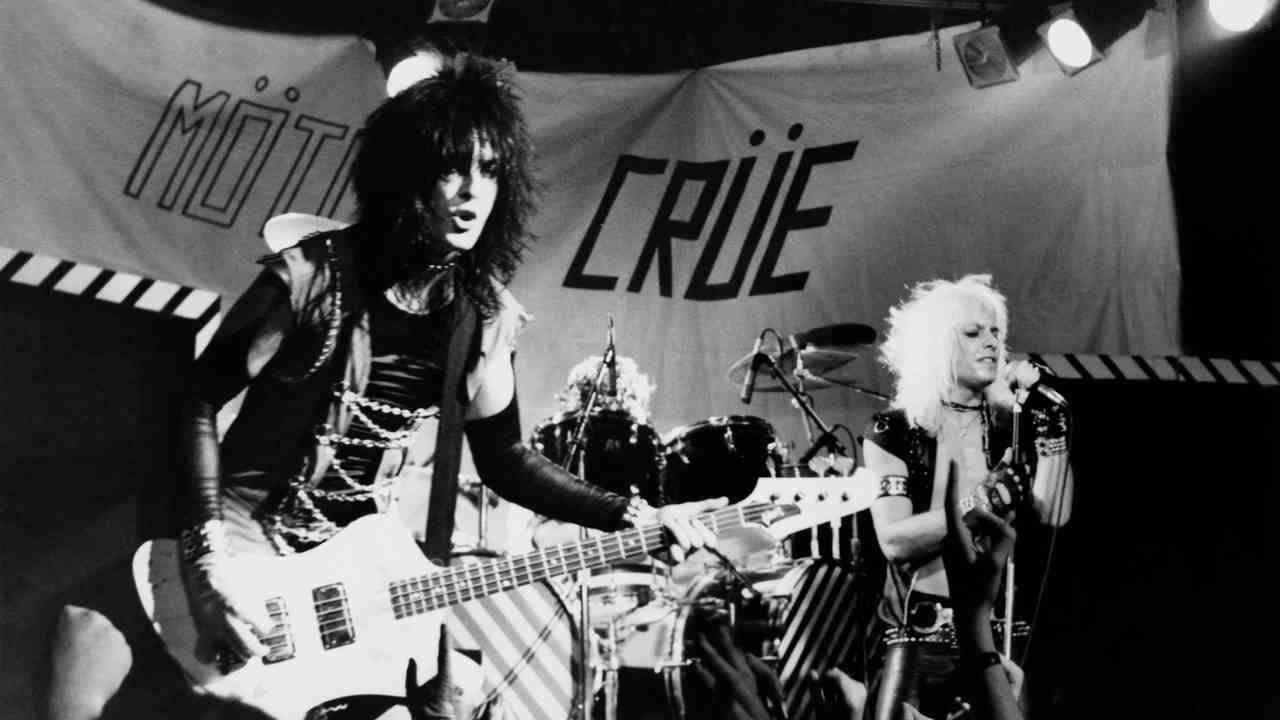
Back in November 1981, just less than 12 months after they got together, Mötley Crüe were total unknowns; young, dumb and practically overflowing with cum. The four band members – singer Vince Neil, bassist Nikki Sixx, drummer Tommy Lee and guitarist Mick Mars – inhabited the Mötley house in Los Angeles. a den of iniquity later portrayed so graphically in their book The Dirt, and without the proverbial pot in which to urinate.
The band’s sleazy adaptation of hard-rock themes was hardly in demand at the time. Gigs were in short supply – as was toilet paper. Six months earlier all 100 copies pressed of their aptly titled seven-inch vinyl debut single Stick To Your Guns (b/w Toast Of The Town) had been given away free at the band’s live shows. And yet the full-length album they’d been dying to make would ignite a glam-metal revolution.
In the days before Doc McGee and Doug Thaler handled their affairs and Elektra Records signed the group’s royalty cheques, Mötley Crüe were managed by Allan Coffman – a former construction worker who was the brother-in-law of a friend of Mars – and his wife. The group were being paid just $20 a week. Indeed it was drummer Tommy Lee’s willingness to ‘take one for the team’ that enabled them to visit the studio at all.
“We were all in relationships at the time except for Tommy, and the manager at Hit City West studio was this girl,” singer Vince Neil reminisces with a mischievous grin. “She wasn’t very attractive, but we made Tommy do her for some free recording time.”
Self-produced by the group, recorded over just three days and mixed at Cherokee Studios (with Coffman And Coffman Productions credited as executive producers), the album was made for the miserly sum of $2,500. Just 20,000 copies were pressed on their own label, Leathür Records.
(Image credit: Chris Walter/Getty Images)
“Too Fast For Love was a demo tape, man,” Neil exclaims. But, without doubt, its audaciousness paid off. Once Elektra signed the group, Roy Thomas Baker, of Queen fame, was brought in to remix the original Leathür edition.
“A lot of people say Roy screwed up the album, and I agree,” admits Neil. “I prefer the rawness of the version that we did ourselves.”
In fact Mötley had apparently tried to persuade Andy Scott, guitarist of The Sweet, to oversee the record, but their efforts were in vain
“That’s absolutely true,” Neil confirms. “Mötley Crüe loved Sweet’s Desolation Boulevard album. We also asked Herman Rarebell [drummer with the Scorpions] to produce us and take a share in the band, but he passed. I still tease him about that.”
Neil is amused to be reminded that the press release that accompanied Too Fast For Love called the group’s style “A return to the hard-driving sound of The Beatles re-energised for the 80s”.
Considering that Mötley Crüe went on to become one of the most copied bands in the world, it didn’t sound like they thought of themselves as particularly original.
“You’ve gotta remember that in the 1980s, music was still recovering from the punk rock movement,” the singer protests. “We were one of the first bands to take punk and mix it with glam and metal. We started a whole new trend.”
So many acts never quite manage to surpass their first two or three albums. So what is it about the spark of a group’s earliest work?
“Well, you have your whole life to write your first album, and then a year before the sophomore curse kicks in,” Neil reasons. “To me, Too Fast For Love has some great material. We still do most of those songs on stage. Some are pretty juvenile, Come On And Dance makes me want to cringe a little, but we were a young band back then, and for the time that it came out, we were so far ahead of the game.”
Originally published in Classic Rock issue 150 (September 2010)
Twisted Teens are all the rage. The New Orleans band just announced their third album of the year, The Holy Cross Tigers, to follow February’s Blame The Clown and July’s Florida Water Blues. Yesterday, Jeff Tweedy covered Blame The Clown‘s “Wild Connection” for his Substack.
Santa Monica’s inaugural Ocean Way Festival has been canceled. The event had been slated for Sept. 26 and 27 with headlining performances from the Killers and Olivia Dean, but it will no longer take place due to beach erosion.