Blog

  • Why Asia Didn’t Hire ELO’s Roy Wood as Vocalist

    Carl Palmer recalls how close the supergroup came to being fronted by the Wizzard leader. Continue reading…
  • Listening Now : James E. Gray – Simulation

    James E. Gray’s Simulation explores the unsettling space between reality, mortality and the possibility that everything around us may be something less certain than it appears. The track carries a dark, atmospheric quality that fits naturally within its spooky alternative and space-rock aesthetic, creating a sense of unease without sacrificing its melodic character. After years of development from its original demo, the song feels deliberately considered, with its themes given room to unfold rather than being rushed. Simulation is an intriguing and cinematic piece that invites listeners to question what is real, what is imagined, and where the two begin to blur.

    Connect:

    Instagram

  • Mastodon Play Secret Atlanta Tour Warmup With Live Debuts, Rarities, & Baroness’ John Baizley

    In 2024, Mastodon played an intimate hometown warmup for their tour under the name Big Hairy Elephant. Last night, they did it again, this time at Atlanta’s Earl with Baroness’ John Baizley.

    The post Mastodon Play Secret Atlanta Tour Warmup With Live Debuts, Rarities, & Baroness’ John Baizley appeared first on Stereogum.

  • BLIND ILLUSION FEATURED BY BRAVEWORDS AHEAD OF STAGE FLIGHT: LIVE AT THE UC THEATRE RELEASE – @thebeast

    FOR IMMEDIATE RELEASE
    BLIND ILLUSION FEATURED BY BRAVEWORDS AHEAD OF STAGE FLIGHT: LIVE AT THE UC THEATRE RELEASE
    Progressive Thrash Metal Pioneers Prepare to Unleash Historic Live Album Featuring Original Vocalist David White
    Progressive thrash metal pioneers Blind Illusion have been featured by BraveWords in a new article spotlighting the band’s upcoming live album, Stage Flight: Live At The UC Theatre , arriving October 16 through Hectic Records / Bleeding Priest Records.
    The album captures a historic 2025 performance at the UC Theatre in Berkeley, California, featuring the return of original Blind Illusion vocalist David White during a special celebration surrounding Exodus’ 40th anniversary of Bonded By Blood .
    BraveWords highlights Blind Illusion’s unique progressive approach to thrash metal and the band’s nearly five-decade history, describing Stage Flight: Live At The UC Theatre as a release that connects the group’s legendary past with its continuing evolution.
    Founded in 1978 and led by mastermind Mark Biedermann , Blind Illusion continues to carry the legacy of its landmark 1988 debut, The Sane Asylum , while pushing its sound and history forward with a new generation of performances.
    Stage Flight: Live At The UC Theatre will be released October 16 as a limited-edition 12-inch vinyl LP, with only 500 copies being pressed through Hectic Records / Bleeding Priest Records. Digital pre-orders are also available.
    Blind Illusion is:
    Mark Biedermann – Lead Guitar / Vocals
    Martin Lacour – Lead Guitar
    Avery Thurman – Bass
    Phil Cosentini – Drum
    Check out the feature here: https://bravewords.com/news/blind-illusion-announces-stage-flight-live-at-the-uc-theatre-featuring-original-vocalist-david-white/


    Check them out on YouTube: 


    Connect: 
    https://blindillusion.bandcamp.com/album/stage-flight-live-at-the-uc-theatre
    https://www.instagram.com/blindillusionofficial
    https://www.facebook.com/officialblindillusion
    https://ffm.to/bclink1
    https://www.hectic.com/product/blind-illusion-live
    Contact:
    David Hecht
    Hectic Records
    david@hectic.com
  • “There was a giant, red welt on my chest, and at my feet there was a huge pig’s foot with a big toenail on it.” How the world’s weirdest band went from cult outsiders to MTV mainstays

    Primus are not like other bands. A bewildering anomaly for the last 40 years, these Bay Area oddballs must be the weirdest band ever to conquer the metal world. Record companies have no idea what to do with them, magazines tie themselves in knots trying to describe them, and their fans are almost as weird and unconventional as the band themselves. When Primus played at Lollapalooza in 1993, in support of their bizarrely successful third album, Pork Soda, the response was a little… well, meaty.

    “Back then I was a strapping young fellow and I’d play with my shirt off,” says singer and virtuoso bassist Les Claypool, whose band played their first UK dates in a decade this August.

    “I go up to the microphone and boom! It was like somebody punched me in the chest. I looked down and there was a giant, red welt on my chest, and at my feet there was a huge pig’s foot with a big toenail on it. There was a juggler at the festival, and he used to juggle chainsaws, and for some reason he’d cut up some pig onstage, so someone thought they’d be clever. ‘Pork soda? I’m gonna throw this pig knuckle at Les!’ If it had hit me in the face it would’ve fucked me up hard!”

    While Les never expected to be dodging chunks of pig carcass, he had already become accustomed to people reacting strangely to his band. Formed in El Sobrante, California, in 1984, when Les was 21 years old, Primus were anything but conventional.

    These three guys, who didn’t necessarily fit together, just happened to have this amazing chemistry, and it became Primus.

    Les Claypool

    Inspired by a dizzying array of disparate influences, from Funkadelic and the Grateful Dead to Frank Zappa and Rush, they were never a metal band in any meaningful sense. In fact, after a brief involvement with Bay Area thrashers Blind Illusion, Les – who had gone to high school with Metallica’s Kirk Hammett – had primarily learned his trade via funk, jazz-adjacent improvisation and freewheeling jam band rock.

    After a slow gestation, during which Les worked with numerous drummers and guitarists, Primus finally coalesced around the now classic line-up of Les Claypool, guitarist Larry ‘Ler’ LaLonde and drummer Tim ‘Herb’ Alexander. They sounded heavy, funky and doggedly eccentric. It really shouldn’t have worked.

    “Once Larry and Herb showed up, it was like, ‘OK, I’m the only guy that has any kind of R’n’B or soul background’,” says Les. “Herb was this world music and Rush fanatic, and Ler came from the metal world. He was in Possessed when he was 15! But his heroes were Frank Zappa, Jerry Garcia and Eddie Van Halen. So it just became this weird hodgepodge. These three guys, who didn’t necessarily fit together, just happened to have this amazing chemistry, and it became Primus.”

    Being fiercely original has its benefits, but in mid-80s San Francisco Primus found themselves firmly out of the musical loop. The Bay Area thrash metal scene was absolutely flying, but it was no obvious home for this deeply peculiar power trio. Famously, Les auditioned for Metallica when they were searching for a replacement for the late Cliff Burton, but it quickly became apparent that he was too damn weird for the job.

    “We were always this weird band!” laughs Les. “Promoters didn’t know who to put us with! They put us on with Swans one time, and put us on with [cult Californian punk troupe] the Pop-O-Pies, but there was never really anyone for us to play with. Then suddenly, Fishbone and the Red Hot Chili Peppers would come to town, and we were like, ‘Woah, that’s cool!’ Then along came Faith No More, and we’d play with them too, and Mr. Bungle would open for us… so a scene developed in the Bay Area.”

    As heavy music entered a new and subtly radical era, Primus were still unlikely contenders for success, but Les had the ambition to back up his extraordinary musicianship and unique approach to songwriting. When his band’s local popularity increased, he asked his auto mechanic father for a favour.

    “Well, we were as poor as church mice, but I told my dad that if we recorded some live material and we pressed up some albums, I thought they would sell,” says Les. “So he loaned us $3,000, which was a big deal for a mechanic, and we took that money and we made that live recording, which became [debut release] Suck On This. We printed up 1,000 units and went around and sold them at local record stores and took that money and pressed up some more, and paid my father back.”

    Suck On This was released on Les’s own label, Prawn Song, in November 1989 and swiftly became a huge underground hit. Sensing an opportunity, the trio took the money they had made from selling their debut and hit the studio to record their debut studio album, Frizzle Fry, which emerged a few months later.

    We became the beaver band

    Les Claypool

    Full of songs that had been honed over their first few years as a live band, including Too Many Puppies and John The Fisherman, it was another word-of-mouth triumph and, against the odds, Primus were soon pursued by a number of record labels, including the recently founded Interscope Records.

    “My manager didn’t want us to sign with Interscope because they had no track record, the only thing they’d ever released was that song Rico Suave by [Ecuadorian rapper] Gerardo,” says Les. “But their A&R guy, Tom Whalley, came to one of our shows, and he saw the crowd going crazy, came backstage and said that he wanted to sign us! He knew nothing about us. He didn’t know that we’d already sold 80,000 records on our own. I said, ‘This is who we’re going with, because he wants us because of us, and not because we sold 80,000 records…’ and obviously it worked out!”

    Despite still being resolutely weird, Primus were well-suited to the musical developments of the early 90s. Their second album, Sailing The Seas Of Cheese, was widely associated with the then inescapable funk-metal movement that brought us the Chili Peppers, Faith No More and other bands that blended metal with slap bass, to varying degrees of efficacy.

    In truth, it was a much more perverse and distinctive piece of work, with two sort-of-hit-singles – Jerry Was A Race Car Driver and Tommy The Cat – that became ubiquitous on MTV. The latter song was also played by Primus during a cameo in movie sequel Bill & Ted’s Bogus Journey, which also helped to push the record towards its eventual gold status.
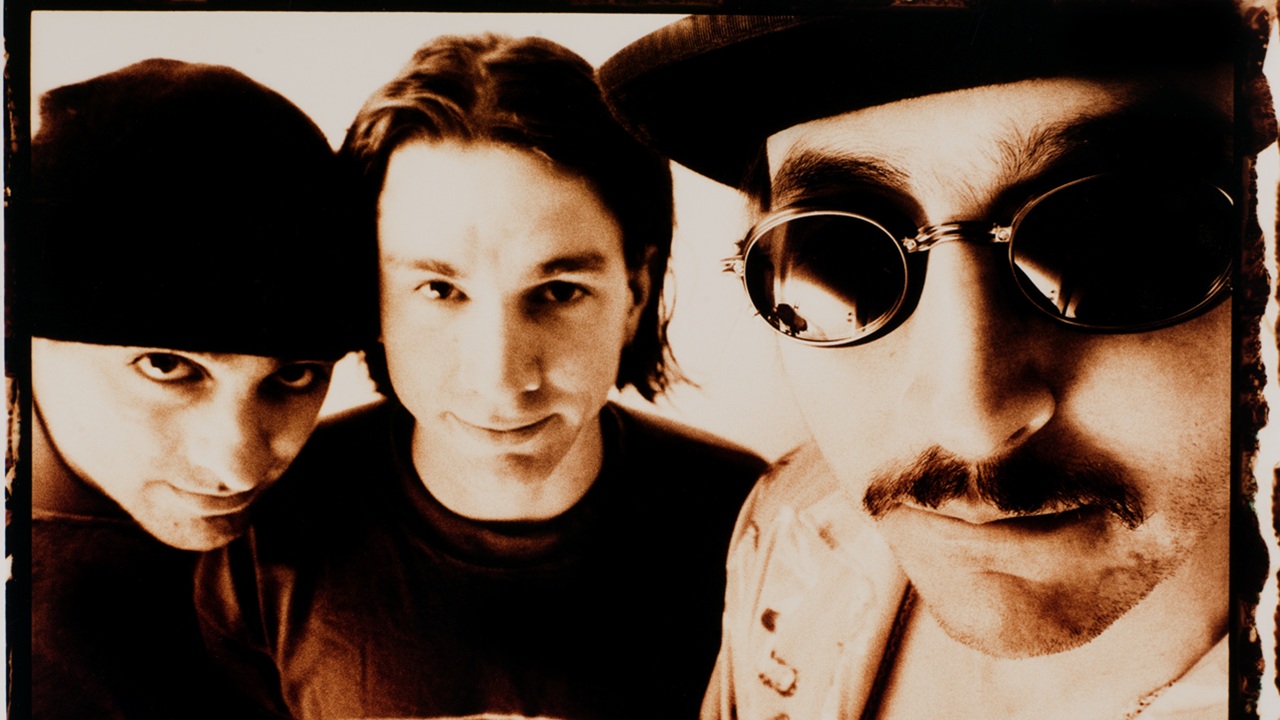
    Primus press shot 1995

    (Image credit: Niels van Iperen/Getty Images)

    In constant demand as a live act, they spent the next few years touring relentlessly, pausing occasionally to make new albums, including the dark and moody Pork Soda (1993) and Tales From The Punchbowl (1995), which provided Primus with their next significant hit, Wynona’s Big Brown Beaver. A scratchy, country-funk riot, with a suitably bizarre video, its popularity threatened to reduce the band to a novelty act.

    “Wynona’s Big Brown Beaver was a kind of double-edged sword,” says Les with a wry smile. “It was just going to be one of those upright bass and banjo ditties that we’d throw on a record for texture, but the record company picked it because it was catchy, and it became some kind of hit. But for a lot of people who didn’t necessarily know Primus, they thought we were a joke band after that. We became the beaver band!”

    To make matters worse, Wynona’s Big Brown Beaver was commonly interpreted as a rather unsavoury tribute to Hollywood star Winona Ryder. Awkward.

    “She approached me at a radio festival, and she was a little miffed. I said, ‘Hey, look, it’s not about you!’ In fact, it’s spelt differently! I just needed a name. It could have been Jessica or anything. But the song is literally about a beaver.”

    An even more significant encounter with pop culture came in 1996, when South Park creators Trey Parker and Matt Stone invited the band to record the theme song to their new TV show.

    I was thankful that we stopped before we shit our pants

    Les Claypool

    The duo had been fans of the band since they performed at the University Of Colorado in the 80s, for an event called Alferd Packer Day, named after the first person convicted of cannibalism in the United States during the gold rush era.

    Pre-South Park, Parker and Stone would later make their directorial debut with Cannibal! The Musical, which Les would pick up on VHS during a trip to Tower Records in London, not knowing that its creators were Primus fans.

    “I bought it because I remembered Alferd Packer Day, not knowing that Matt and Trey were the ones that made it. A few years later, we get a letter, ‘Hey, we’re big fans, can you do the theme song for this cartoon we’re doing?’ So we did it and obviously they’ve taken over the world!”

    Primus spent the rest of the 90s making more weird music. Tim ‘Herb’ Alexander quit, and was replaced by new drummer Bryan ‘Brain’ Mantia, with whom the band released the grubby and polarising Brown Album in 1997.

    “I relish the fact that it’s Tom Waits’ favourite Primus record,” says Les, referencing the grizzled American singer and frequent Primus collaborator. “He says, [gruff Tom Waits voice], ‘It sounds like it needs a good wash!’ Ha ha ha!”

    1999’s Antipop was even more polarising. Released as nu metal became the dominant force in mainstream heavy music, it featured appearances from James Hetfield, Tom Morello and ex-Police drummer Stewart Copeland, and the album’s first single, Lacquer Head, was controversially produced by Fred Durst. The band still sounded as unique as ever, but the album’s reliance on star cameos and the presence of the Limp Bizkit frontman divided fans.

    “It took a long time for me to be able to listen to Antipop, because it was an odd time for us as people,” Les explains. “It just got messy, we were in different head spaces. It was an awkward time. It was not fun anymore, so we stopped. I was thankful that we stopped before we shit our pants.”

    Primus called it quits in the year 2000. Les Claypool embarked on a dizzying array of other projects, including Oysterhead and Colonel Claypool’s Bucket Of Bernie Brains, before seeing the error of his ways in 2003, whereupon the classic Primus line-up, featuring a returning Tim ‘Herb’ Alexander, reformed for some celebratory live shows.

    The reunion did not last, and, by early 2010, Herb had fled the nest once again. He was replaced by Jay Lane (who’d also played with band in the late 80s), with whom the new-look Primus recorded 2011’s Green Naugahyde. By 2013, the latter was out and Herb was back in for a third go-round on the carousel.

    But as chaotic as Primus may have seemed from the outside, Les and Larry were still having fun. In 2014, they released their most out-there album yet, a full-scale interpretation of classic 1971 movie Willy Wonka And The Chocolate Factory.

    “There’s a few things, especially now I’m older, that I’ve had the idea to do, and I need to start knocking a few things off the list!” says Les. “I’ve always wanted to reinterpret the Willy Wonka movie. I told Ler that I wanted to do it and he was stoked. We only had a certain amount of time to perform it, because we had to get licences from Roald Dahl’s family, so it was one and done, but it was a lot of fun.”

    2017’s The Desaturating Seven was equally leftfield, based on Italian author Ul de Rico’s classic children’s book The Rainbow Goblins, which the frontman used to read to his children when they were little. To date, it’s the last record the band have released, though Les says they hope to have their first album in a decade ready to roll (almost inevitably, it will feature yet another drummer, John ‘Hoffer’ Hoffman, replacing the once-again-departed Herb Alexander).

    What Primus’s 10th album will sound like is anyone’s guess, though their new EP, A Handful Of Nuggs, gives a few clues, with strong echoes of the Frizzle Fry era filtered through a wonky, psychedelic lens (alongside a ripping version of Dio’s Holy Diver, sung in characteristically depressive fashion by cult clown Puddles Pity Party). But ultimately, who knows?

    “It’s part of the joy and part of the agony,” concludes Les. “I always joked that we were ‘psychedelic polka’, but we’re this odd, eclectic, dynamic mixture of fromage. We’re like the gum on the bottom of your shoe!”

    Funk? Metal? Psychedelia? Polka? Four decades in, and Primus remain gloriously unpredictable freaks following their own deranged logic. Long may they baffle.

    A Handfull Of Nuggs is out now via AFO Records.

  • Charli XCX Kicks Off Music, Fashion, Film Tour With Live Debuts & Underscores Collab

    It’s Music, Fashion, Film Fall. Charli XCX kicked off her tour for the phenomenal album in Philly last night, and the show had live debuts and an Underscores collab.

    The post Charli XCX Kicks Off <em>Music, Fashion, Film</em> Tour With Live Debuts & Underscores Collab appeared first on Stereogum.

  • Lil Durk Found Not Guilty Of Murder-For-Hire

    In late 2024, Lil Durk was arrested over a murder-for-hire plot that targeted rival rapper Quando Rondo. He was then hit with additional charges. On Friday (Sept. 11), the Chicago rapper was found not guilty on all charges.

    The post Lil Durk Found Not Guilty Of Murder-For-Hire appeared first on Stereogum.

  • Faydark And The Most Unpleasant Place Imaginable, “Menzoberranzan” (Interview)

    Menzoberranzan is a national anthem for a fictional location. As the second album by the Ohio dungeon synth artist Faydark, it recalls the history of the titular region. In Dungeons & Dragons lore, Menzoberranzan is a city-state from Forgotten Realms, a popular campaign setting. Faydark, real name Jake Kohn, who also composes under the alias Vale Minstrel, characterizes it with grand orchestral synths that move through its eras, seasons, and regimes. It’s like a non-verbal documentary delivered with an enthusiasm befitting a YouTube lore deep-dive. 

    Compositionally, Menzoberranzan is closer to classical music with its dramatic swells and long-form movements than it is traditional dungeon synth, or even video game soundtracks. The latter is a large influence on Kohn. Final Fantasy and EverQuest moulded his mind. The densely-layered melodies imprinted a hunger for the fantastical. To him, if one is to convey the scripture of a land, it must be large, robust, mighty, and hearty. There’s no space for minimalism. 

    Kohn made that obvious in a conversation with Kaptain Carbon, “Fantasy to me represents endless imagination and a natural desire to experience the universe in a much more profound and interesting way.” That’s the best way to absorb Faydark–a realm we cannot reach, represented with highlights and hues we recognize but cannot produce with our hands. Although Faydark honors the dungeon synth forefathers, he reworks them to fit the Hero’s Journey. He celebrates fantasy tropes as much as he does the genre’s solitary roots.

    Last year, Kohn performed at Great Lakes Dungeon Siege under his Vale Minstrel mantle. He returns to the festival next month as Faydark. We spoke to him about his new record, gear set-up, and more.

    …

    …

    You take inspiration from old-school RPGs. How is composing for Faydark different than composing for video games, which are more loop-based and inherently repetitive?

    Faydark, I feel, is closer to something like classical in its structure, with movements, scenes, and isolated sequences as opposed to repetitive, loop-based video game music. It’s not particularly complex music like classical tends to be. Structurally, the riffs are more like old-school dungeon synth. Mortiis, Gothmog, Depressive Silence, and, for me, Morketsvind, but stretched out. Each section sets up the next. At times, themes are visited in each part that are subtly interwoven through the whole song, or certain riffs are revisited for repetition and emphasis. So I think it’s quite different. Spiritually I think it (could be) quite the same!

    How difficult was it to write Menzoberranzan as a single piece? Did you have to change your mindset since Lost Empires was four different, albeit long, songs?

    It ended up being easier, actually. That method just seemed to be what this album called for. As I started writing it, I intended to just make it four long songs, like Lost Empires, but it seemed hard to finish the first track. Each successive part seemed to spill into the next one in a natural way. After 15 minutes or so of material I had the idea, what if this just kept going and was one long 45-minute narrative? I think to make a long 10-minute song with a beginning, middle, and end that all go together takes a degree of focus that I had a hard time finding last year, so it became easier for me to make something like three-to-six minute “scenes” and string them all together in a way that made sense. That’s just how this one turned out.

    You recorded Menzoberranzan on a 1990’s Roland JV hardware, how pivotal is that gear to Faydark? 

    Totally essential! I think Menzoberranzan is actually spread out quite a bit, a little bit too much with the sounds it used, as far as patches. I had just recently got the JV-1080 and filled it full of some of the expansion cards that Spectrasonics made for Roland in the ‘90s (four in the JV1080, and one in the JV90 for a total of five). So, at the start of Menzoberranzan, I had like 1,400+ patches across those two pieces of hardware to write with. Frankly it was too much! An overwhelming flood of new sounds. It slowed me down and made everything take a lot more time. Since then I have gotten more used to it. For the new Faydark album I am primarily returning to just the JV90 and Orchestral 1 expansion card. Those are still the best!

    How does that compare to your gear for Vale Minstrel?

    Completely different. Vale Minstrel was 100% VST. Not a single piece of hardware. Faydark is almost all hardware. Maybe like 85-90% anyways. There is some VST backup behind the audio of Faydark, mostly just to keep the MIDI around in the event I want to change something later and re-record the audio. It can also help to punch through the mix a bit and make it slightly richer in some cases. There’s also some drums and percussion in Faydark that is VST, although not much. On the new album, nearly all the percussion is hardware only (JV90). Other than that, Faydark is all JV hardware and probably always will be! Although I use a Korg X5D for live shows. It is much smaller than the JV90 but has the same powerful 64 voices and patches from the same era. 

    Faydark’s music is compositionally quite rich (I think specifically of “Cormanthyr ”). What led you to favor this sound instead of the skeletal strain of dungeon synth?

    Probably just taking inspiration from other artists that have similar style of epic and long sagas of music and media through the lens of Fantasy Fantasy, which, in its essence, is epic. Nothing short and skeletal can really be considered epic! It must be a long journey, with many peaks and valleys. Moods and narratives. Battles, seasons, and dreams. It just has to be really, really long! Just like all the great fantasy books. I also really enjoy the artistic decision-making that comes with longer, sometimes complex compositions. It makes everything more interesting and more fun! But it is a lot more work.  

    Lost Empires covers four different regions of Faerûn. How did you convey their history and personality differently on each of the tracks?

    Each track was composed with the lore of these regions fresh and ingrained in my mind. Envisioning the rich tapestry of oil paintings from the ‘80s and early to mid ‘90s. All the fantasy art of TSR. The novels that many grew up reading and all the characters and locations that are endemic to The Realms. I have been a fan of this setting since I was a young teenager, so it really just made sense to have it ingrained into this project. I feel like there are many synergies with the project’s name Faydark, which of course comes from Everquest, a game I feel is very plainly and obviously styled after Dungeons and Dragons, in particular, the golden era of 2E and 2.5E. It’s the quintessential high fantasy setting and imagery that I enjoy the most.”

    For someone unfamiliar with D&D, can you explain the significance of Menzoberranzan and why you’d dedicate an album to it?

    I think there’s a fair argument that Menzoberranzan is the most unpleasant place in all of Toril. Within the Material Plane anyways. I mean, what could possibly be worse? An entire city absolutely crazed with murder and paranoia. A non-stop orgy of torture, death, ritualistic sacrifice, dark magic, and warfare. An absolute nightmare. More or less the last place you’d ever want to be. The original idea of Faydark was ‘Ambient Drow’ music and the earliest tracks I composed go back to 2020 or 2021 and are much, much more ambient in nature. I plan on releasing that stuff at some point, probably as a split EP. Those ideas got shelved and the first album ended up just being related to Faerûn in general, but I knew the time was ripe after that to finally make a Drow album. There will surely be more I am guessing! All praise the Spider Queen!

    Since you were making music as Vale Minstrel and Faydark last year, did you find that they influenced or affected one another?

    Well, the way it worked out, the first four Vale Minstrel albums got progressively more orchestral in nature. That wasn’t really intentional; it just seemed natural for it to evolve that way. But eventually it got so far outside what the first few Vale Minstrel albums were, which were very upbeat and light medieval fantasy synth music, that eventually it made more sense for me to port the more orchestral sounds over into something which fit that style more. Faydark, meanwhile, still had the early ambient material sitting around that I wasn’t happy with at the time, so I decided it would make more sense to revive Faydark and continue the style that Vale Minstrel had become but through a different lens. And with hardware! I do still think there will be some new Vale Minstrel at some point in the future but for now I am fully focused on Faydark.

    Do you try to tell unbiased histories of the locations in Faydark, or are they accounts by an unnamed narrator with their own views?

    I think they are open to interpretation, like your own game or campaign that you are writing, you may take some bits and pieces of the lore and histories of the setting, but ultimately add plenty of your own material to the mix. I find it strange when I do that with writing, in games like Dungeons and Dragons, when your stories begin to take on a life of their own and have odd synergies with the established lore that seem to connect coincidentally and not by design, as if the world is something that is mutable and bendable to your will. I guess music can be much the same in that sense.

    …

    Menzoberranzan is available now. Buy tickets for Great Lakes Dungeon Siege here.

  • Lady Gaga Now Literally Mother

    Lady Gaga’s been busy this year, winning Grammys, making a cameo in The Devil Wears Prada 2, touring last year’s Mayhem, and getting nominated for Emmys. Now, the pop legend often referred to as mother is actually a mother.

    The post Lady Gaga Now Literally Mother appeared first on Stereogum.

  • 10 Best Rock Songs About Destiny

    10 Best Rock Songs About Destiny

    The concept of destiny has fascinated philosophers, theologians, and artists for centuries, yet it remains an elusive and deeply personal topic. How does one truly define destiny? Is it a predetermined path that we are bound to follow, or is it shaped by our choices, with fate intervening only when necessary? Some may view destiny as a universal force guiding our lives, while others see it as a personal journey, one that we must carve out ourselves. Perhaps it is a combination of both, blending the individual and the cosmic in ways that we may never fully understand. This collection

    The post 10 Best Rock Songs About Destiny appeared first on ClassicRockHistory.com.