Blog

  • MATANZICK Confirmed for Runway Rock Fest 2027 Alongside Dirkschneider, Roy Khan, Gotthard, Pretty Maids & More – @thebeast

    FOR IMMEDIATE RELEASE
    MATANZICK Confirmed for Runway Rock Fest 2027 Alongside Dirkschneider, Roy Khan, Gotthard, Pretty Maids & More
    Norwegian Metal Force MATANZICK Joins Stacked Runway Rock Fest 2027 Lineup at Starmoen Airfield
    May 21–22, 2027 | Starmoen Airfield, Elverum, Norway
    Norwegian metal force MATANZICK is officially confirmed for Runway Rock Fest 2027 , taking place May 21–22, 2027 at Starmoen Airfield in Elverum, Norway. The announcement places MATANZICK on a massive festival bill alongside some of the biggest names in rock and metal, including Dirkschneider performing a special Accept set, Roy Khan, Gotthard, Pretty Maids, H.E.A.T, Michael Monroe, Girlschool, Tank , and more still to be announced.
    For a band that has spent more than a decade building its reputation through hard work, aggressive songwriting, and high-energy live performances, the Runway Rock Fest 2027 confirmation marks another major step forward for MATANZICK.
    Formed in 2010, MATANZICK has developed a sound rooted in heavy metal, thrash, and groove metal, combining precision riffing, powerful rhythms, and an uncompromising live attack. The band’s approach is straightforward: write strong songs, play them loud, and let the music do the talking.
    That philosophy was on full display with the band’s latest album, Chronicles of the Abyss , originally released November 28, 2025. The album showcases MATANZICK at its most focused and aggressive, delivering a collection of songs built around crushing riffs, tight musicianship, and a raw, modern edge without losing sight of the traditional metal foundation at the heart of the band.
    The album has already received strong reactions from European metal media, with reviews landing in the 8/10 to 9/10 range and praise directed toward the band’s combination of aggression, precision, atmosphere, and consistency.
    The campaign surrounding Chronicles of the Abyss continues with the official music video for “Shattered Omen,” giving listeners another look at the sound and intensity MATANZICK will bring to the stage.
    Watch “Shattered Omen”:

    Stream Chronicles of the Abyss:
    https://ffm.to/x27e7q7
    https://ffm.to/nzjrjbm
    Now, with Runway Rock Fest 2027 officially confirmed and additional live activity on the horizon, MATANZICK is looking ahead to an increasingly busy chapter.
    The festival’s 2027 lineup already represents a heavyweight gathering of classic and modern rock and metal, making MATANZICK’s inclusion a significant opportunity to introduce their brand of uncompromising Norwegian metal to an even wider audience.
    And the band is ready.
    MATANZICK Statement


    “Chronicles of the Abyss is our most focused and aggressive work. Built on riffs, energy, and everything that defines us as a band.”


    With Runway Rock Fest 2027 now on the calendar, MATANZICK is continuing to build momentum both at home and internationally. The band is available for interviews and is preparing additional live activity and plans throughout 2027.
    This is Norwegian metal with no unnecessary decoration and no interest in following trends. Just riffs, energy, attitude, and the kind of heavy music that is meant to be played loud.

    MATANZICK is ready for the runway.
    Runway Rock Fest 2027

    May 21–22, 2027
    Starmoen Airfield
    Elverum, Norway
    Confirmed artists include:
    Dirkschneider – Special Accept Set
    Roy Khan
    Gotthard
    Pretty Maids
    H.E.A.T
    Michael Monroe
    Girlschool
    Tank
    MATANZICK
    …and more to be announced
    Production Credits

    Album: Chronicles of the Abyss
    Produced by: MATANZICK
    Mix & Mastering: Red Line Studio & Jelöy Sound Mastering
    Label: Independent / MATANZICK
    Management: Independent

    MATANZICK Online

    Stream Chronicles of the Abyss:
    https://ffm.to/x27e7q7
    https://ffm.to/nzjrjbm
    MATANZICK is available for interviews.
  • claire rousay & Martyna Basta Announce New Album hotel room: Hear “cool girls go to heaven”

    The LA-based sonic impressionist claire rousay does a whole lot of collaborating, working with peers like more eaze, Grumpy, and William Tyler. Soon, she’ll follow a little death, the solo album that she released last year, with hotel room, a full-length team-up with Polish ambient composer Martyna Basta.

    The post claire rousay & Martyna Basta Announce New Album <em>hotel room</em>: Hear “cool girls go to heaven” appeared first on Stereogum.

  • FOREIGNER Announces “Foreigner Unplugged” European Acoustic Tour

    Foreigner, one of rock’s most enduring bands, has announced “Foreigner Unplugged,” a four-show European tour that will bring the band’s catalog of Top 10 hits to fans in a rare, stripped-down acoustic setting.

    The Foreigner fan pre-sale kicks off Monday, Sept. 7 at 10 a.m. local time, with tickets opening to the general public Wednesday, Sept. 9 at 10 a.m. local time.

    Set for April 2027, the intimate run features Luis Carlos MaldonadoJeff PilsonBruce Watson and Michael Bluestein reworking Foreigner‘s biggest hits in acoustic form, giving fans a whole new way to experience some of rock’s most enduring songs.

    The tour hits four of Europe’s best-known venues, kicking off April 12 at Dublin’s 3Olympia Theatre before moving to the London Palladium on April 14, Paris’ L’Olympia on April 16 and Vienna’s Globe Theatre on April 18.

    With a catalog packed with anthems like “I Want To Know What Love Is,” “Cold As Ice,” “Hot Blooded,” “Juke Box Hero,” “Waiting For A Girl Like You,” “Urgent” and “Feels Like The First Time,” “Foreigner Unplugged” puts the melodies, musicianship and vocals front and center in an up-close setting fans rarely get to experience.

    British singer-songwriter Billy Lockett joins Foreigner as a special guest for the Dublin, London and Paris dates.

    With 10 multi-platinum albums and 16 Top 30 hits under its belt, Foreigner stands as one of the most popular rock acts on the planet, with a catalog that continues to drive sold-out tours and has racked up more than 80 million in total sales. The band’s list of enduring anthems also includes “Head Games,” “Say You Will,” “Dirty White Boy” and “Long, Long Way From Home.” Its worldwide No. 1 hit “I Want To Know What Love Is” holds a spot in Spotify’s exclusive Billions Club.

    Fifty years into its career, Foreigner remains a major chart presence, backed by strong airplay and continued album success, and its catalog sales recently landed the band among the Top 40 Best-Selling Music Artists Of All Time, according to Business Insider.

    The post FOREIGNER Announces “Foreigner Unplugged” European Acoustic Tour appeared first on Sonic Perspectives.

  • John Maskell’s history of two groups – Group 004 + 1 and The Beat Syndicate

    John Maskell got in touch to provide a more detailed account of his time with The Beat Syndicate who are listed on this site here and his first band Group 004 + 1 (originally called Johnny & The Bobcats).

    Here are John’s recollections:

    Photo was taken at a photographic studio after The Beat Syndicate won a beat competition at Coronation Gardens in Leyton, east London in June 1965. Diana Doors presented us with a recording test at Pye Studios

    The group Bobby & The Bobcats formed early in 1962. Bobby left the group that November and The Bobcats held an audition at a youth club in Edmonton, north London.

    Unbeknown to me, my good friend had put my name down to go up and sing, so when my name was called, I had no choice but to go up on stage, something I had not done, previously. To my surprise I was told to turn up for practice and the group then became Johnny & The Bobcats, based in Tottenham, north London.

    In January 1964, the group was renamed Group 004 + 1.

    John Maskell (lead vocals)

    Bobby Savage (lead guitar)

    Tony Deeks (rhythm guitar)

    Joey Vale (bass)

    Bernie Allen (drums)

    Left to right: John Maskell; Joey Vale; Tony Deeks; Bernie Allen and Bobby Savage. Photo taken at the Swan Public House in Tottenham

    The group progressed rapidly and before long we were supporting some big names in the pop industry.

    One was at the West Cliff Ballroom in Ramsgate, Kent. We were booked to support singer Duffy Power and a group called The Beat Syndicate.

    Duffy Power didn’t turn up for rehearsal; his manager didn’t know where he was and put the organisers in a very nervous situation, not knowing who the top of the bill was.

    Duffy eventually turned up quite close to start time and was told he would have to go on first, which meant that Group 004 + 1 were told to go on last.

    The end to this story came around three months later when I left Group 004 + 1 and was asked to join The Beat Syndicate.

    My last appearance with Group 004 + 1 was at Shoreditch Town Hall supporting Gene Vincent & The Shouts.

    The following is a list of all the venues and artists we supported in the period that I recall as Johnny & The Bobcats/Group 004 + 1.

    Johnny & The Bobcats gig list:

    The Swan Pub, Tottenham, north London (as Johnny & The Bobcats) Resident band every Thursday, Friday and Saturday night and every other Sunday morning between January 1963-July 1964.

    John singing in the Swan pub in 1964

    Tudor Hall, Hoddesdon, Herts (as Johnny & The Bobcats) with Cliff Bennett & The Rebel Rousers in January 1963

    Cuckoo Hall Lane Youth Club, Edmonton, north London (as Johnny & The Bobcats) on 13 February 1963

    Alison Hall St Patrick’s Church, Enfield, north London (as Johnny & The Bobcats) on 18 February 1963

    Alison Hall St Patrick’s Church, Enfield, north London (as Johnny & The Bobcats) on 10 March 1963

    The Cambridge pub, Edmonton, north London (as Johnny & The Bobcats) in April 1963

    The Ritz Cinema, Turnpike Lane, Wood Green, north London (as Johnny & The Bobcats) in May 1963

    Hastings Pier, Hastings, East Sussex with Verne Rodgers & The Rebounds and The Beat Syndicate (as Johnny & The Bobcats) in May/June 1963 (confirmed by my diary)

    California Ballroom, Dunstable, Beds (as Johnny & The Bobcats) with Brian Poole & The Tremeloes on 11 October 1963. This gig is listed on the Cali website but does not show us as support group but it is in my diary. This attendance numbers were boosted by the two coaches that came with fans from the Swan pub in Tottenham to support us.

    The Kings Head, High Beach, north London (as Johnny & The Bobcats) in November 1963

    Hackney Empire, Hackney, north London (as Johnny & The Bobcats) (shortly before it closed and was eventually refurbished) with Norman Vaughan, Hilda Baker & Our Eli, Ted Rogers (not the 3-2-1 variety), Jackie Rae, Salky Gowers, Keith Fordyce (compare) and various acrobats and jugglers in November or December 1963

    The Angel pub, Edmonton, north London (as Johnny & The Bobcats) in December 1963

    Pub in Cambridge in Cambridgeshire in late 1963

    Group 004 + 1 gig list:

    Howard Hall, Ponders End, Enfield, north London (as Group 004 + 1) in January 1964

    The Manor House dance hall, Finsbury Park, north London with The Hollies on 1 December 1963 (or January 1964)

    The Cambridge pub, Edmonton, north London (as Group 004 + 1) in January 1964

    The Ritz Cinema, Turnpike Lane, Wood Green, north London (as Group 004 + 1) in January 1964

    Club Noreik, south Tottenham, north London with The Paramounts and Jackie Rae (as Group 004 + 1) on 25 January 1964. This gig is shown in The Paramounts LP insert but support acts not shown. 

    The Swan Pub, Tottenham, north London (as Group 004 + 1) in January 1964. This was a continuation of our residency under the new band’s name. 

    California Ballroom, Dunstable, Beds with The Merseybeats (as Group 004 + 1) on 17 January 1964 (confirmed by Cali website)

    The Chez Don, Dalston, east London (as Group 004 + 1) on 15 February 1964

    Alison Hall, St Patrick’s Church, Enfield, north London (as Group 004 + 1) on 18 February 1964

    The Cooks Ferry Inn, Edmonton, north London (as Group 004 + 1) on 21 February 1964

    Cuckoo Hall Lane Youth Club, Edmonton, north London (as Group 004 + 1) on 27 February 1964

    Gig in Finchley, north London with Bern Elliott & The Fenmen (as Group 004 + 1) in February or March 1964

    Cuckoo Hall Lane Youth Club, Edmonton, north London (as Group 004 + 1) on 12 March 1964

    West Cliff Concert Hall, Ramsgate, Kent with Duffy Power & The Beat Syndicate (as Group 004 + 1) on 13 March 1964 (advert confirms this).

    Cooks Ferry Inn, Edmonton, north London (as Group 004 + 1) on 15 March 1964 (confirmed by my diary)

    Club Noreik, south Tottenham, north London (as Group 004 +1) on 27 March 1964 (confirmed by my diary)

    Gig in Haywards Heath, West Sussex (possibly The Pilgrim) (as Group 004 + 1), possibly in March 1964

    Kingston Jazz Cellar, Kingston upon Thames, Surrey with The Cy Laurie Jazz Band (as Group 004 + 1), possibly in March 1964

    Noreik Club, south Tottenham, north London with Georgie Fame & The Blue Flames (as Group 004 + 1) on 17 April 1964 (confirmed by my diary)

    Noreik Club, south Tottenham, north London with The Kinks (as Group 004 + 1) on 25 April 1964 (confirmed by my diary)

    Noreik Club, south Tottenham, north London with The Moquettes (as Group 004 + 1) in April or May 1964 (confirmed by my diary)

    West Cliff Concert Hall, Ramsgate, Kent with Deke Arlon & The Offbeats (as Group 004 + 1) in May 1964 (confirmed advert but no support acts printed)

    Greenham Common American Air Base, Newbury, Berkshire as Group 004 + 1) on 29 May 1964. The next day troops were returning to the USA and the site was closing.

    Noreik Club, south Tottenham, north London with The Undertakers (as Group 004 + 1) in May/June 1964

    Cooks Ferry Inn, Edmonton, north London with The Steampacket (featuring Long John Baldry, Julie Driscoll, Brian Auger Trinity and a little known Rod Stewart) (as Group 004 + 1) in June 1964

    Fishmongers Arms, Wood Green, north London (as Group 004 + 1) possibly in late June 1964

    Shoreditch Town Hall, Shoreditch, east London with Gene Vincent & The Shouts (as Group 004 + 1) on 3 July 1964. This gig is listed on the Spent brothers’ website but does not show support acts. This was my last gig with Group 004 + 1.

    There were many more gigs with Group 004 + 1 which are not listed here where I don’t have more information.

    I left Group 004 + 1 in mid-July 1964. The band continued to perform under another name, which I don’t have the details of. They did a short tour of Austria in 1965 and continued to perform until 1966.

    I joined The Beat Syndicate in late August 1964, based in Leytonstone, east London.

    The Beat Syndicate:

    John Maskell (lead vocals)

    Mick George (lead guitar)

    Jim Newton (rhythm guitar)

    John Powis (bass)

    Eddie Latrielle (drums) replaced in late 1964 by Tony Smith (drums)

    Photo shoot circa June 1965. Left to right: Tony Smith; Jim Newton; John Maskell; John Powis and Mick George. The image was captured at a photographic studio after they had won a beat competition held at Coronation Gardens in Leyton, east London

    Our session at Pye Studios was organised by none other than Alan. A Freeman, the top man. We recorded two tracks “Try as I My” our own composition, and “Early One Morning”. Regrettably, the single was never released and the only copy given to the group has been lost in time.

    One gig I remember was at a great venue known as the Cellar Club, Kingston upon Thames. We were booked to support The Nashville Teens, who were in ascendancy at the time. We arrived at 7pm and played until 9pm, finishing our stint. The owner of the club then came and asked us if we would play on as The Nashville Teens were up north recording a TV spot and were fog bound unable to get a flight back. We agreed to carry on until they arrived.

    In the audience were two of The Plebs, formerly with Screaming Lord Sutch & The Savages. Derek Sirmon and Danny McCulloch realised we had been playing a long time and came up and gave our drummer and bass player a break. Having emailed Derek Sirmon, he replied remembering the night in question.

    The stage at this venue was similar to the one in the film The Blues Brothers, where the stage slimmed out to a narrow run almost the length of the dance area. We played for a total of four and a quarter hour and I was on stage for most of the time, what a great night. The Nashville Teens turned up around 12.30am, just as most people were leaving.

    The following is a list of all the venues I recall or have recorded in my diary that The Beat Syndicate played. Some of these gigs don’t have dates due to a lack of information. However, the connection the gigs and artists are accurate.

    The Beat Syndicate gig list:

    Weathersfield American Airbase in Essex in August 1964

    Dorothy Ballroom, Cambridge with Bob Kidman & His Orchestra, Eric Squire & His Quartet and The Prestons (source: Glenn Povey’s book Echoes: The Complete History of Pink Floyd) on 5 September 1964

    Leyton Baths, Leyton, east London with The Animals on 12 September 1964

    Hastings Pier, Hastings, East Sussex with Patrick Dane & The Quiet Five on 19 September 1964

    Lakenheath American Airbase in Suffolk in October 1964

    Walthamstow Assembly Hall, Walthamstow, north London with The Fairies and Dean Brent & The Strollers on 24 October 1964

    Leyton Baths, Leytonstone, east London with Dave Berry & The Cruisers (gig is listed on Dave Berry’s website but with no support acts shown)

    Cuckfield Queens Hall, Cuckfield, West Sussex with The Deputies on 13 November 1964

    Merton College, Oxford with The Quiet Five on 29 November 1964 (confirmed by college literature)

    Leyton Baths, Leyton, east London with Tony Jackson & The Vibrations on 5 December 1964

    Red Lion, Leytonstone, east London on 4 January 1965 (We played downstairs in the bar while upstairs in the dancehall was The Who). This gig was confirmed on The Who website, with no pub gig details. 

    Leyton Baths, Leyton, east London with Wayne Fontana & The Mindbenders in February 1965

    Ilford Palais, Ilford, east London in February or March 1965

    Snodland Drill Hall, Snodland, Kent on 13 February 1965

    Synagogue, Chingford, east London with Unit Four Plus Two in March or April 1965 (with an audition on 20 and 22 June 1965)

    Chez Don, Dalston, east London (around 1 March 1965)

    Chez Don, Dalston, east London (around 6 March 1965)

    Large pub in Borehamwood, Herts (possibly The Linx) on 9 March 1965

    Walthamstow Assembly Halls, Walthamstow, north London with Neil Christian & The Crusaders (last gig with Jimmy Page) on 27 March 1965

    Two Puddings, Stratford, east London on 3 April 1965 (we played downstairs in the bar while Sean Buckley & The Breadcrumbs played upstairs in the dance hall)

    Walthamstow Assembly Halls, Walthamstow, north London with Wayne Fontana & The Mindbenders on 24 April 1965

    Byron Hotel, Greenford, west London on 24 April 1965

    Chicksands American Airbase, Chicksands, Beds for two days in April 1965

    The Palais, Deal, Kent (between 1-4 May 1965)

    Ciros’ Club, Great Portland Street, central London in May or June 1965

    Green Tree, Hatfield, Herts (between 16-18 May 1965)

    Walthamstow Assembly Halls, Walthamstow, north London with Tony Rivers & The Castaways on 22 May 1965

    Rhodes Centre, Bishop’s Stortford, Herts with Troy Dante & The Infernos on 24 May 1965

    Chez Don, Dalston, east London (between 4-8 June 1965)

    Chez Don, Dalston, east London with Mickey Finn & The Blue Men (around 6 June 1965)

    Coronation Gardens, Leytonstone, east London (won beat competition) on 19 June 1965

    The Woodstock, north Cheam, Surrey (audition on 20 and 22 June 1965)

    Stratford Town Hall, Stratford, east London (between 27-30 June 1965)

    Leyton Baths, Leyton, east London with The Rebounds (between June and August 1965)

    Two Puddings, Stratford, east London (played downstairs in the bar in July 1965)

    Gig in High Wycombe, Bucks with The Swinging Blue Jeans in August 1965

    Gig with The Mojos (around 12-16 August 1965)

    Cellar Club, Kingston upon Thames, Surrey with The Nashville Teens on 12 August 1965

    Walthamstow Assembly Hall, Walthamstow, north London with The Big Boss Men on 14 August 1965

    Wimbledon Palais Beat Competition with various groups, including Pink Floyd who did not get selected, in August 1965 (The Beat Syndicate came fourth place in our heat)

    Coronation Gardens, Leytonstone around 30 August 1965

    The Wake Arms, Epping, Essex in August or September 1965

    Granada Cinema, East Ham, east London with The Honeycombs between mid-to-end of September 1965

    In late September 1965 I left The Beat Syndicate who continued to perform into 1968/1969.

    There were many other bookings with both of my bands that I haven’t been able to list, and I’d welcome any additions below in the comments section.

    These are a few of the ones with The Beat Syndicate where I don’t have any details of when they took place:

    Bentwaters American Airbase in Suffolk (two night: Friday and Saturday)

    Chicksands American Airbase in Beds (two nights: Friday and Saturday)

    Weathersfield American Airbase in Essex (two occasions)

    Alconbury American Airbase in Huntingdon, Cambridgeshire

    Burdrop Park American Services Hospital base in Wiltshire

    Fairfield Hall, Croydon, Surrey


  • FOG WALL: “GLOOMWEAVER”

    (Below is a review by a former NCS writer who now goes by the moniker Obsolete Mystic. His subject is the debut album from a Nevada-based duo who call themselves Fog Wall, an album they are independently releasing today.) I love FromSoftware. In the realm of video games that studio have always been visionaries and […]

    The post FOG WALL: “GLOOMWEAVER” appeared first on NO CLEAN SINGING.

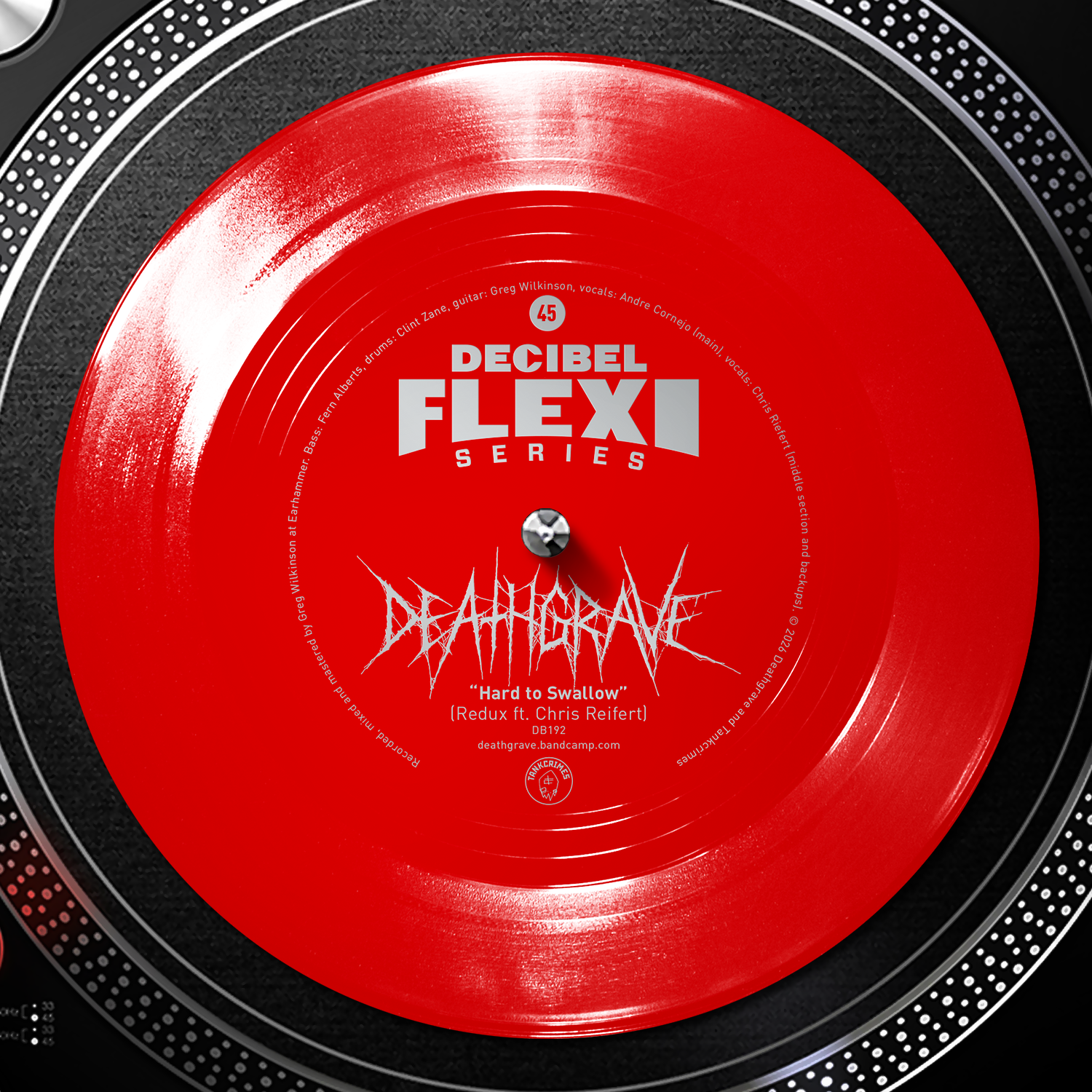
  • Five For Friday: September 4, 2026

    Greetings, Decibel readers!

    What an incredible day for new releases! We’ve got two big Decibel favorites down below, names that will definitely be fresh in the minds of subscribers, along with some lesser-known bands that are definitely worth your time. And there’s a new Sigh album. Let’s go!

    Acausal Intrusion – Vomit Meditations

    Terrifying, menacing technical blackened death metal with a special twist. Although the band’s sound follows the dissonant tradition of bands like Gorguts (Obscura specifically) and Ulcerate, they also find interesting moments to sneak melody into the mix. A candle in the dark, if you will. But not a sign of hope, more a spark that lights a devastating blaze.

    Stream: Apple Music

    Chat Pile – Who Loves the Sun

    The kind of band that kind of baffles me at first — “What is this?” “Do I like it?” “Where does that highway go to?” — but starts to grow on me pretty quickly. There’s a lot of stylistic alchemy going on here, but I feel like you could sum this up as “indie with teeth.” If that sounds cool to you, check out our cover story on Chat Pile in Decibel #264.

    Stream: Apple Music

    Devil Master – Bloody Dreams

    Oh hey, we did a recent cover story on these guys too! Devil Master has been weaving their unique sonic web for awhile now, throwing various high-contrast threads of punk, black metal, thrash, and goth rock into the machine and seeing what happens. I think Bloody Dreams shows years of experimentation and refinement continue to pay off, with this album showing more of a fist-pumping rock-out vibe than 2022’s atmospheric Ecstasies of Never Ending Night. The soundtrack to your next ghouls’ night out.

    Stream: Apple Music

    Rahvn – The Purity of Vengeance

    Badass blackened death metal from Minnesota. If you’re in the mood for punishment mixed with fiery elegance, this EP should be at the top of your list. Normally I’m not a fan of the kick-drum sound used here, but it fits so well on songs like “Distilled Visions” and “Macabre” that I have to give in and admit it couldn’t be any other way. In other words, the “death metal” part of their sound is basically Formulas Fatal to the Flesh and Black Seeds of Vengeance, which makes for a wicked concoction once you add the eerie black metal side of things.

    Stream: Apple Music

    Sigh – Goh-Ka

    The latest from the Japanese masters of … well, how do you even sum up Sigh at this point? Perhaps the genius of the band is in the fact that you can’t easily categorize them, but still recognize who you’re listening to. There’s soaring and epic moments, punishing and blistering moments, and totally baffling and surprising moments — all on the same album. As it should be. Mikael Åkerfeldt‘s guest guitar solo on the Scorpions-esque “Unputenpu” is a nice bonus too!

    Stream: Apple Music

    The post Five For Friday: September 4, 2026 appeared first on Decibel Magazine.

  • The Masque of the Red Death and Modern Pandemics

    The Masque of the Red Death and Modern Pandemics

    When Edgar Allan Poe published The Masque of the Red Death in 1842, he was not writing a medical story. He was writing about a human illusion.

    Throughout history, people have searched for ways to protect themselves from catastrophe. Wealth, walls, distance, technology, and power often create the comforting belief that danger belongs to someone else. Poe’s story dismantles that belief with ruthless precision.

    The plot is deceptively simple. A devastating plague known as the Red Death ravages the countryside. Rather than helping his suffering population, Prince Prospero gathers a thousand wealthy courtiers and retreats into a fortified abbey. The gates are sealed. Supplies are abundant. Entertainment is endless.

    The prince believes he has escaped reality. Then reality enters the castle. The mysterious figure of the Red Death appears among the masked guests, moving through the lavish chambers until the illusion of safety finally collapses. For generations, readers have interpreted the tale as a meditation on mortality. Yet the story also speaks directly to moments of social crisis, particularly pandemics. Poe explores not only the fear of death but the temptation to believe that privilege can create immunity from it.

    That idea remains remarkably relevant. Modern pandemics have repeatedly exposed the limits of wealth, power, and social status. Although circumstances change, the human desire to hide from danger remains constant. Nearly two centuries after its publication, The Masque of the Red Death continues to resonate because it confronts a question that every generation must face. Can anyone truly isolate themselves from the realities shared by all humanity?


    The Masque of the Red Death and Modern Pandemics
    The Masque of the Red Death and Modern Pandemics

    Disease and Death in Poe’s World

    Although the Red Death itself is fictional, Poe wrote during a period when epidemic disease was a constant presence.

    The nineteenth century witnessed repeated outbreaks of cholera, yellow fever, and other infectious illnesses that could transform ordinary life into chaos with frightening speed. Death was more visible than it is in many modern societies. Families frequently experienced the loss of children, spouses, and parents at relatively young ages.

    Poe understood this reality personally.

    Throughout his life, he witnessed illness and premature death among people he loved. These experiences profoundly shaped his literary imagination. Death appears repeatedly throughout his fiction and poetry, not merely as a dramatic event but as an unavoidable force that challenges human attempts to impose order on existence.

    The Red Death emerges from this cultural and personal background.

    Yet Poe was less interested in describing a specific disease than in examining how people respond when confronted by mortality. The plague functions as a symbol of every threat that reminds human beings of their vulnerability.

    This symbolic dimension helps explain the story’s enduring power.

    Readers do not need to experience the exact circumstances Poe imagined. They only need to recognize the universal fear that lies beneath them.


    Prince Prospero and the Illusion of Safety

    At the center of the story stands Prince Prospero, one of Poe’s most revealing characters.

    Prospero is not portrayed as a heroic leader attempting to protect his people. Instead, he withdraws from a suffering world and surrounds himself with luxury, entertainment, and privilege.

    His solution to the plague is isolation.

    He gathers a thousand members of the aristocracy, seals the gates of the abbey, and creates a self-contained world designed to exclude danger. Inside the walls there is music, wine, dancing, and spectacle. Outside there is disease and death.

    The separation appears absolute.

    Poe carefully constructs this contrast to expose a dangerous assumption: the belief that wealth can create immunity from reality.

    Prospero’s mistake is not simply arrogance.

    His mistake is believing that mortality operates according to social boundaries. The prince treats death as though it were a problem that can be managed through resources and exclusion.

    The story’s horror emerges from the realization that such boundaries are ultimately meaningless.

    The walls succeed in keeping people out.

    They cannot keep death out.


    The Seven Rooms and the Journey of Life

    The most famous symbols in the story are the seven colored rooms through which the masquerade unfolds.

    Rather than arranging these chambers in a straight line, Poe places them in a winding sequence that prevents guests from seeing all of them at once. The design creates a sense of mystery and progression.

    Many critics interpret the rooms as representing the stages of human life.

    The progression begins with brighter colors associated with youth and gradually moves toward the final black chamber illuminated by blood-red windows. This last room evokes mortality, judgment, and the end of life’s journey.

    The guests avoid this chamber whenever possible.

    Its presence disrupts the festivities by reminding them of what they are trying to forget.

    This detail reveals one of Poe’s most important insights.

    People often attempt to avoid thinking about death, yet awareness of mortality remains present beneath everyday distractions. The black room functions as a physical manifestation of that suppressed knowledge.

    No matter how elaborate the celebration becomes, the final chamber waits at the end of the sequence.

    Just as it does for everyone.


    The Visitor No One Expected

    The turning point of The Masque of the Red Death arrives during Prospero’s elaborate masquerade.

    For months, the prince and his guests have lived within the illusion that they successfully escaped the plague. Music fills the halls. Costumes transform reality into spectacle. The outside world appears distant and irrelevant.

    Then an unexpected figure appears.

    Among the revelers walks a mysterious masked guest whose appearance resembles a victim of the Red Death itself. The costume is so disturbing that it immediately unsettles the crowd.

    The reaction is revealing.

    The guests are not frightened merely because the figure looks grotesque. They are frightened because the figure introduces reality into a world built upon denial.

    Throughout the story, Prospero attempts to transform catastrophe into entertainment. The masked visitor destroys that illusion with a single appearance.

    The figure functions as more than a character.

    It becomes a symbol of the truth that cannot be excluded, disguised, or forgotten indefinitely.

    The prince may control the guest list.

    He cannot control mortality.


    The Clock That Interrupts the Party

    Another of Poe’s most memorable symbols appears in the black chamber.

    There stands an enormous ebony clock.

    Every hour, its chimes interrupt the celebration. Musicians stop playing. Dancers freeze. Conversations cease. Even the most carefree guests momentarily lose their confidence.

    The scene repeats throughout the masquerade.

    Each interruption reminds the guests of something they desperately wish to ignore.

    Time continues moving forward.

    The clock serves as a perfect companion to the black chamber itself. Together they symbolize the inevitability of mortality. No amount of luxury, distraction, or social privilege can halt the passage of time.

    Psychologically, the clock represents a universal human experience.

    People often occupy themselves with work, entertainment, relationships, and ambitions. These activities provide meaning and fulfillment, yet they can also function as distractions from deeper existential questions.

    The chimes force those questions back into awareness.

    For a few uncomfortable moments, the guests remember what the party was designed to make them forget.

    The clock becomes the voice of reality inside a palace dedicated to denial.


    When the Red Death Enters the Abbey

    Eventually, Prince Prospero decides to confront the mysterious visitor directly.

    Enraged by what he perceives as an insult, he pursues the figure through the sequence of colored chambers. The chase carries him symbolically through the stages of life represented by the rooms themselves.

    The pursuit ends in the black chamber.

    There, Prospero collapses and dies.

    When the terrified guests finally seize the mysterious intruder, they discover that no physical person exists beneath the costume. The Red Death itself has entered the abbey.

    This revelation transforms the story from a tale of plague into a philosophical allegory.

    Poe is not suggesting that disease literally takes human form. He is illustrating the impossibility of escaping mortality through wealth, status, or isolation.

    Prospero’s fortress appears invulnerable.

    Yet the very force he sought to exclude was present all along.

    The ending remains powerful because it dismantles one of humanity’s most persistent fantasies: the belief that sufficient resources can remove us from the conditions shared by everyone else.


    Why the Story Felt Relevant During Modern Pandemics

    The COVID-19 pandemic renewed interest in The Masque of the Red Death for understandable reasons.

    Readers recognized familiar themes: fear of disease, social disruption, uncertainty, and attempts to create safe spaces amid crisis.

    Yet the strongest parallel is not quarantine itself.

    Prospero’s actions differ significantly from modern public health measures. His goal is not collective protection. He abandons the wider population and focuses exclusively on preserving a privileged circle.

    The story’s real relevance lies elsewhere.

    Poe exposes the temptation to believe that catastrophe affects different groups unequally. Throughout history, people have often assumed that wealth, status, or geography provide complete protection from events threatening society as a whole.

    Modern pandemics repeatedly challenge that assumption.

    Although resources can influence outcomes, no social group exists entirely outside the realities of illness, uncertainty, and mortality. Crises reveal connections that ordinary life sometimes allows people to ignore.

    This insight helps explain why Poe’s story continues to feel contemporary.

    The details change.

    The underlying human behavior remains remarkably familiar.


    The Failure of Privilege

    One reason The Masque of the Red Death remains so powerful is that its central warning extends far beyond disease.

    Poe is not simply describing a plague.

    He is examining the belief that privilege can separate certain people from realities that affect everyone else.

    Prince Prospero possesses wealth, influence, and authority. He controls access to resources that most people can only imagine. Yet none of those advantages alter the fundamental condition shared by every human being.

    He remains mortal.

    This insight gives the story its enduring relevance.

    Throughout history, societies have repeatedly created barriers intended to provide security from uncertainty. Wealth can purchase comfort. Power can create distance. Technology can reduce risks. Yet no system completely eliminates vulnerability.

    Poe’s story challenges readers to recognize this uncomfortable truth.

    The walls of the abbey appear strong.

    The illusion behind them is fragile.

    The moment the Red Death enters the masquerade, the distinction between prince and peasant disappears. Mortality ignores social hierarchies.

    Everyone eventually confronts the same destination.


    Why the Story Continues to Resonate

    Many nineteenth-century stories remain confined to the concerns of their own era.

    The Masque of the Red Death continues speaking to modern readers because its themes are psychological rather than historical.

    Fear of illness changes form across generations.

    Fear of mortality remains constant.

    The desire to avoid uncomfortable truths remains constant.

    The temptation to believe that danger belongs to someone else remains constant.

    Poe understood these impulses with extraordinary clarity.

    Rather than focusing on medical details, he explored how people respond when confronted by forces beyond their control. The story asks readers to consider not only how they face mortality, but how they attempt to avoid thinking about it altogether.

    That question remains as relevant today as it was in 1842.

    Modern societies may possess advanced medicine, global communication, and scientific knowledge that Poe could never have imagined. Yet human psychology has changed far less dramatically.

    People still seek certainty in uncertain times.

    People still search for walls capable of keeping fear outside.


    The Masquerade Never Ends

    At first glance, The Masque of the Red Death appears to be a story about plague.

    On a deeper level, it is a story about denial.

    Prince Prospero creates a world dedicated to distraction. Music, luxury, costumes, and celebration become tools for avoiding a reality that waits beyond the abbey walls. The tragedy is not that he fears death. Every human being does.

    The tragedy is that he believes death can be excluded from the conversation entirely.

    Poe’s final image remains unforgettable because it strips away every illusion the story has constructed. Wealth fails. Power fails. Isolation fails. The masquerade ends, and the truth remains.

    No wall is high enough, and no gate is strong enough.

    No privilege is absolute enough.

    The Red Death enters anyway.

    Nearly two centuries later, readers continue returning to the story because its central lesson extends beyond pandemics, politics, or history.

    Poe reminds us that mortality is the one reality shared by every human being. Attempts to escape that truth may provide temporary comfort, but they cannot provide permanent protection.

    The masquerade changes with every generation.

    The lesson remains the same.


    Wear the Darkness

    If The Masque of the Red Death and Modern Pandemics deepened your appreciation for Poe’s symbolism, Gothic literature, and noir psychology, explore the Edgar Allan Poets store. Our apparel celebrates the stories and ideas that continue to illuminate the darker side of human nature.

    Edgar Allan Poe Gothic apparel and noir-inspired fashion from the Edgar Allan Poets store


    Join the Noir Newsletter

    Receive more essays on Edgar Allan Poe, Gothic literature, symbolism, noir psychology, and the cultural forces that continue shaping the Gothic imagination.


    Enter the Gothic Atmosphere

    Continue the atmosphere behind The Masque of the Red Death and Modern Pandemics through the official Edgar Allan Poets playlist, where Gothic storytelling, noir emotion, and dark music meet in sound.


    Frequently Asked Questions

    What is the main message of The Masque of the Red Death?

    Poe’s story argues that wealth, power, and isolation cannot protect human beings from mortality. The tale explores the illusion of safety in the face of unavoidable realities.

    What does Prince Prospero represent?

    Prince Prospero symbolizes privilege, denial, and the belief that social status can create separation from suffering and death.

    What do the seven rooms symbolize?

    Many critics interpret the seven colored rooms as representing the stages of human life, culminating in the black chamber associated with mortality and the end of existence.

    Why did the story become popular again during COVID-19?

    Readers recognized themes of disease, fear, uncertainty, and social inequality. The story’s exploration of denial and the illusion of immunity felt particularly relevant during a global crisis.

    Is the Red Death a real disease?

    No. The Red Death is a fictional plague created by Poe. It functions primarily as a symbol of mortality and humanity’s inability to escape it.


    The post The Masque of the Red Death and Modern Pandemics appeared first on Edgar Allan Poets – Noir Rock Band.

  • “Now I can step back. Congratulations.” Journey frontman Arnel Pineda hints at exit as the hard rock legends invite tribute band vocalist onstage at two Japanese shows

    Journey have had a complicated history, and it may be about to get more complicated still, as frontman Arnel Pineda has hinted that he may be ready to “step back” from the band.

    The hard rock legends are several months into their Final Frontier farewell tour, which launched on February 28 at the Giant Center in Hershey, Pennsylvania, and is set to run through to November 28, back where it all started for the band, in their hometown San Francisco.

    During the past week, the tour reached Japan, and on August 29, when the group kicked off their Japanese dates at the Mizuho PayPay Dome Fukuoka, they surprised fans by bringing out Hugo Valenti – the former Valentine and Open Skyz singer who fronted Journey tribute band Voyage for the best part of two decades before founding Hugo – The Ultimate Journey Tribute – to sing 1983 single Faithfully with them for the first time, while frontman Arnel Pineda took a break from the stage.

    “I wrote this next song in 1982 about the road life we live, how it takes people dedicated, people who are loyal, like you Journey fans out there,” keyboardist Jonathan Cain told the Fukuoka crowd ahead of introducing Valenti. “Thank you for coming tonight. We got a special treat for you tonight. We have a dear friend that’s coming all the way from New Jersey to visit Japan, and I thought we’d have him sing a song for you tonight. So give it up for our friend Hugo Valenti.”

    It’s not uncommon for Arnel Pineda to step back during concerts and allow other members of the band to take lead vocals. Setlist FM reports that, in Fukuoka, drummer Deen Castronovo sang Lights and shared lead vocals on Anytime with Cain, while Jason Derlatka sang lead on Of A Lifetime and Suzanne.

    But when Valenti showed up again with the band in Tokyo to sing both Faithfully and deep cut Keep On Runnin’ some eyebrows were raised.

    Now, responding to an Instagram post showing photos of Valenti onstage at the Ariake Arena in Tokyo, Pineda has shared his own thoughts.

    “that’s the band right there,” the singer posted. “now i can step back..congratulations @journeyofficial 🔥🔥🔥”

    Earlier this year, Steve Perry shot down rumours that he is going to rejoin his former band on the tour.

    The singer had been the subject of speculation that he would be returning to the group he fronted from 1977 to 1987 and again for a short stint in the 1990s.

    In a statement on social media in February, Perry said: “To all my friends, I’ve been hearing these recent rumours, and I wanted to speak to you all directly.

    “While I’m always grateful for the love people still have for Journey, the rumours about me rejoining the band are simply not true, and I want to gently put them to rest.

    “I completely understand why people would hope for that. The music we created together means a great deal to me too.

    “But I’m continuing to explore new creative work and really enjoy working on new music that reflects where I am today.”

    Journey’s Final Frontier tour will continue at Los Angeles’ Crypto.com Arena on September 12. Full dates here.

  • Blue Medusa’s “Crocodile.” Music Video Released

    The third single from the Alissa White-Gluz-fronted outfit.

    The post Blue Medusa’s “Crocodile.” Music Video Released appeared first on Theprp.com.

  • Eliminators Release Shit-Stomping Debut Album E.F.F.E.

    I got to know Ace Stallings a few years ago, when he was maybe the busiest hardcore promoter in Richmond. Stallings is an extremely cool presence, both welcoming and imposing, and he’s about as passionate about hardcore as a person can be. He’s been a great frontman for bands like Break Away, Mutually Assured Destruction, and Sentinel. These days, Stallings is living out in the Bay Area, where he books tons of shows and fronts the straight-edge hardcore punk crew Eliminators.

    The post Eliminators Release Shit-Stomping Debut Album <em>E.F.F.E.</em> appeared first on Stereogum.