Last year, Deafheaven released their album Lonely People With Power. It was heavy, and it was also great. In the many years since they first came to internet prominence, Deafheaven have had a complicated relationship with the extreme metal underground that birthed then, and they seem to be fully embracing intensity right now. In fact, they apparently have a new EP in the works, and guitarist Kerry McCoy identifies it as “the heaviest thing” they’ve ever done.
Andy La Rocque played guitar for King Diamond for forty years. That ended, and according to King it took two days to decide and years to arrive at. Speaking to Frank Godla of Metal Injection, the singer said they’re still friends and always will be, that it wasn’t about anything anyone said or did, and that Andy’s side project had nothing to do with it. Then he described the moment he knew — and it wasn’t a conversation. It was watching Andy’s face when he saw the new touring plans.
STREAM THE METAL BREAKDOWN DAILY NOW:
Scott Penfold covers the King Diamond split on today’s Metal Breakdown Daily — what ended a forty-year partnership, how Gus G got the call, and the line King dropped about his own songwriting that nobody asked him for. Download the free Loaded Radio App on Apple iOS and Google Play and get it every weekday morning.
The moment he knew
This is the part that stayed with me.
King’s account: he had a feeling recently that when Andy heard the new touring plans and the new plans overall, the reaction wasn’t “yay.” It was more like — oh my God. Are you kidding me?
That’s it. That’s how a forty-year partnership ends. Not an argument, not a betrayal, not a contract. A man looks at a tour schedule and his face does something, and the person who’s known him for four decades reads it instantly.
King doesn’t think Andy likes touring the way they’re touring now. And he’s seen it before, more than once.
Michael Denner stopped playing with Mercyful Fate because he couldn’t handle the road — too much friction at home, missing it too much. King says he totally understands it. Former King Diamond bassist Chris Estes was the same. So was former guitarist Herb Simonsen.
His summary: most of the people who stopped playing with him along the road stopped for that reason. Family.
And then the line that explains why none of this is going to change: they tour longer now, and they’re going to keep going that way, because it’s very, very important.
There’s no villain in that. It’s two men who want different amounts of the same life.
LIVE & LOUD: Stream the World’s Hardest Radio Station 24/7
Two days to decide, years to get there
Asked how quickly it happened, King was specific. The decision itself took two days.
But it had been coming for a while. His words: it’s not one thing, it’s not “you said this” or “you did this or that.” It really is moving apart a little bit here, a bit there.
He was also emphatic on what it wasn’t. Andy now plays in a band called Lex Legion, and King addressed that directly — the side project was never part of any reason for anything.
And he closed it with something that reads like a man still processing it. They played together for forty years. Think about it, he said. It’s crazy when you think about how long that’s been.
Forty years. Andy La Rocque joined in 1985, played on every King Diamond album, and became so associated with that guitar sound that a generation of players learned it note for note.
Two days.
How Gus G got the call
Here’s where it gets genuinely funny, and it’s the detail everyone will share.
King Diamond didn’t know who Gus G was.
He told Hank Shermann — his Mercyful Fate bandmate — that he was looking for a guitarist. Shermann said he should check out Gus G. King’s honest reaction: he did not know who that was.
Then Brian Slagel, the founder and CEO of Metal Blade Records, said the same name. King admits he didn’t respond, because he still wasn’t aware of him. Two separate people, independently, before it registered.
Then he went and listened. And by his own account it moved fast from there — wow, wait a minute here, okay.
There was never an audition. Gus was the first person they discussed and they never talked about anyone else. King asked Slagel to hook them up, or at least to ask whether Gus would be okay with him calling.
When Godla suggested some things are just meant to be, King agreed — that’s exactly what it felt like the whole time. And that’s also why it doesn’t feel like a horrible thing, he said, because it’s good for both him and Andy.
Worth pointing out, because Gus G has done this before.
In 2009 he replaced Zakk Wylde in Ozzy Osbourne’s band — a chair that had been occupied for the better part of two decades by a man whose playing was inseparable from the artist’s sound. He stayed until 2017 and played on the Grammy-nominated Scream.
Now he’s replacing Andy La Rocque after forty years.
That’s twice he’s walked into a job where the previous occupant was considered irreplaceable, and both times he got it without auditioning. Somebody recommended him, the artist listened, and that was the conversation.
Born Konstantinos Karamitroudis in Thessaloniki, he’s founded and driven Firewind across two decades and ten albums, released six solo records, guested with Bruce Dickinson, Arch Enemy, Doro and In This Moment, and won Metal Hammer’s Golden God for Best Shredder.
He is, in other words, exactly who you call.
What Gus will actually play
King was clear about the approach, and it’s more generous than most bands manage in this situation.
On the classic songs, Gus is going to copy Andy as closely as he can and fully honour that — because that’s what people want to hear and see.
But this isn’t a hired hand. King’s words: he’s in the band, one hundred percent. Playing, recording and touring for as long as it works out, and hopefully until they don’t play any longer.
Beyond the back catalogue, King wants him playing his own style, provided it fits. Not Firewind — some of that, sure, but a new side of him that he may not have explored himself. King reckons the way he constructs things might push Gus into technique he hasn’t used before.
That’s a man who’s thought about this properly rather than just filling a gap.
And then this, which is the most revealing thing in the entire interview.
King raised — unprompted — the concern he expected from fans. That Andy’s leaving, the songwriter’s leaving, what are they going to do now.
His answer: wait a minute, you’re forgetting something. He has written by far the most in King Diamond. On average seventy percent of the music, plus all the lyrics, across every album they made together. He said it’s probably a natural assumption that the guitarist or keyboardist wrote the music, but that was never the case here.
Nobody asked him that question.
I’m not going to pretend I know what that means, and I’d be careful reading too much into it. But there’s a difference between answering a question and pre-empting one, and a man who has just described a friendly, mutual, forty-year parting doesn’t usually feel the need to establish who did the work.
It’s the one moment in the interview where the grace slips slightly, and it’s human as hell.
Both bands are in the studio right now
The other headline, and it’s substantial.
King Diamond and Mercyful Fate are both recording, simultaneously, and King has set himself a rule: he’s not doing one more show without knowing there are new albums out.
Mercyful Fate has the priority. Deadline is December this year, and King reckons somebody would have to break a limb for that not to hold. Release around May 2027, a European tour that summer, then a US run in the autumn — mid-October to mid-December.
King Diamond’s album will be finished before they leave for Europe with Mercyful Fate, then it sits and waits. Likely release around April 2028, with rehearsals in Europe mid-April and a tour starting five weeks before festival season.
Both bands have new stage productions. King says the King Diamond one is getting an extra step up — even more theatrical.
For context on how long the wait has been: the last King Diamond album was 2007’s Grammy-nominated Give Me Your Soul…Please. The new one is part one of a horror trilogy titled Saint Lucifer’s Hospital 1920, trailed by “Spider Lilly” in December 2024 — filmed at the genuinely haunted Pennhurst Asylum with a guest appearance from Myrkur.
He’s got the whole three-album story written. He says he already knows what the stage will look like when they play the final note of the third album, live.
Nineteen years between albums, and the man has the ending mapped out.
The King Diamond lineup in 2026
King Diamond — vocals Gus G — guitars Mike Wead — guitars Pontus Egberg — bass Matt Thompson — drums
TL;DR
Andy La Rocque has left King Diamond after forty years, and Gus G of Firewind is replacing him.
King says they’re still friends and always will be, that it wasn’t about anything anyone said or did, and that Andy’s side project Lex Legion had nothing to do with it.
The decision took two days, but King says it had been building for a long time — moving apart a little here, a bit there.
The touring is the reason. King says when Andy saw the new touring plans, the reaction wasn’t excitement — and that most people who’ve left his bands over the years left because of family and the road.
King didn’t know who Gus G was. Hank Shermann recommended him, then Metal Blade’s Brian Slagel did. There was never an audition and Gus was the only name discussed.
King volunteered that he writes around seventy percent of the music and all the lyrics — a question nobody had asked him.
Both King Diamond and Mercyful Fate are in the studio now. Mercyful Fate first, deadline December, likely release May 2027. King Diamond’s album likely April 2028.
FAQ
Why did Andy La Rocque leave King Diamond?
King Diamond has said the split was gradual rather than caused by any single incident, and that the two remain friends. He indicated that Andy’s reaction to the band’s new touring plans suggested he no longer wanted to tour at the level they now do, comparing it to previous members including Michael Denner, Chris Estes and Herb Simonsen who stepped away for family reasons. King also stated that Andy’s side project Lex Legion was not a factor.
Who replaced Andy La Rocque in King Diamond?
Gus G, the Greek guitarist who founded Firewind and served as Ozzy Osbourne’s lead guitarist from 2009 to 2017. He was recommended by Mercyful Fate guitarist Hank Shermann and Metal Blade CEO Brian Slagel. There was no audition — King has said Gus was the first and only person discussed.
How long was Andy La Rocque in King Diamond?
Forty years. He joined in 1985 and played on every King Diamond studio album.
Is King Diamond releasing a new album?
Yes. Both King Diamond and Mercyful Fate are currently recording. Mercyful Fate’s album has a December 2026 deadline with a likely May 2027 release, followed by European and US touring. The King Diamond album will be completed before that tour and is expected around April 2028. It forms part one of a horror trilogy titled Saint Lucifer’s Hospital 1920.
Who is in King Diamond in 2026?
King Diamond on vocals, Gus G and Mike Wead on guitars, Pontus Egberg on bass and Matt Thompson on drums.
Forty years, ended in two days, and neither man had to say a word for the other to know. Where do you land on Gus G taking that chair? Tell me below. And keep it locked on the Loaded Radio stream — follow Loaded Radio for daily rock and metal news.
Blues rock thrives on raw power, created by combining the authentic intensity of the blues with the electrically amplified passion of rock and roll. Over the decades, from the genesis of blues rock in the early 1960s to the present, there have been albums that deliver something essential that keeps calling you back for another spin. The following 10 albums range from the pioneering work of blues rock titans to the contemporary blues rock acts of today.
Jeff Beck – Truth
Jeff Beck’s landmark debut album as a solo artist, Truth, was released in July 1968. Beck was constantly pushing the boundaries of the electric guitar, reinterpreting blues songs like “You Shook Me” and “I Ain’t Superstitious” by Willie Dixon. The album featured a formidable lineup, with the recently discovered Rod Stewart providing his raspy, impassioned vocals, future Rolling Stones guitarist Ron Wood playing bass, and Micky Waller on drums. The album contains 10 cuts, made up of three original compositions and seven covers, including the album’s opening song, “Shapes of Things,” by the Yardbirds, a band Beck had previously been a member of.
The Black Keys – Brothers
Brothers is the sixth studio album by the Black Keys and was released in 2010. It was recorded at the legendary Muscle Shoals Sound Studio in Alabama, where a deliberate minimalist approach was used during the recording process. Songs like “Everlasting Light,” “Next Girl,” “Tighten Up,” and “Howlin’ for You” blend gritty guitar riffs with cavernous drums, creating soulful grooves. Their raw garage blues rock roots evolved into something that sounds both primal and modern, with hooks that make the album endlessly replayable.
Joe Bonamassa – Sloe Gin
Sloe Gin was Joe Bonamassa’s sixth studio album, released in 2007. The album’s title was derived from the title track, which appeared on the late Tim Curry’s 1978 studio album. It became Bonamassa’s epic signature song about crushing isolation and emotional exhaustion. It’s an album that reveals more with every listen as Bonamassa evolves beyond his image as a young guitar virtuoso and enters the next stage of his career as a fully developed blues rock artist. The album moves effortlessly between heavy blues rock, acoustic blues, soulful ballads, and atmospheric instrumentals. It contains 11 mesmerizing tracks, including four originals as well as carefully chosen covers of songs by Chris Whitley, Alvin Lee, John Mayall, and others.
Gary Clark – Blak and Blu
Gary Clark Jr.’s 2012 release, Blak and Blu, is his third studio album but his first on a major record label. The original release featured 13 cuts that blended blues with soul, R&B, funk, psychedelic rock, and hard blues rock. One of the best tracks demonstrating Clark’s amazingly dexterous guitar work and ability to create a song that feels both vintage and modern at the same time is the nearly eight-minute “When My Train Pulls In.” The infectious rhythm, combined with biting guitar work and powerful vocals, creates a mesmerizing experience that reveals new layers with every spin.
Cream – Disraeli Gears
Disraeli Gears is Cream’s second album, and the band dives headfirst into the psychedelic counterculture groove. At the time, there was an ongoing debate about who the best power trio was, something Jimi Hendrix even joked about. Cream reinvents the blues at full throttle, from “Sunshine of Your Love” to “Tales of Brave Ulysses,” combining improvisation with carefully crafted studio rock. The album has 11 cuts that explore a variety of directions through the combination of Eric Clapton’s sharp, stinging guitar runs, Jack Bruce’s melodic bass, and Ginger Baker’s precise drumming.
The Jimi Hendrix Experience – Are You Experienced
Jimi Hendrix’s debut album, Are You Experienced, was released in May 1967, just prior to his landmark first American performance with his band at the Monterey Pop Festival in June 1967. It is considered one of the most musically explosive debut albums in rock history, redefining the way an electric guitar could sonically interpret a multitude of genres. Power trio dynamics were expanded and opened up to a myriad of possibilities by synthesizing blues, R&B, hard rock, psychedelia, and jazz-rock into something that still sounds startling and rewards the listener over multiple replays.
Led Zeppelin– Led Zeppelin
Led Zeppelin’s eponymous debut album was released in January 1969 after the quartet completed the tour dates for the Yardbirds’ final tour. The album was recorded in 30 hours and contains a potent fusion of amplified blues, folk textures, and high-voltage riffing. Two of the album’s nine songs are covers of Willie Dixon blues classics, with the rest consisting of originals or co-written songs. The combination of Jimmy Page’s sonic guitar wailing into the stratosphere and Robert Plant’s raw, explosive vocals, powered by John Paul Jones and John Bonham’s driving backbeat, creates a hypnotic experience that demands repeated listens.
John Mayall – John Mayall and the Blues Breakers with Eric Clapton
John Mayall’s album John Mayall and the Blues Breakers with Eric Clapton was released in 1966. It was nicknamed the “Beano” album because Clapton is seen reading a copy of the British comic on the album cover. Eric Clapton had recently left the Yardbirds when Mayall recruited him to play the blues. Clapton’s guitar was rich in overdrive, stellar guitar peals, and sustain, which contributed to the album’s raw power and emotional intensity. The album demonstrated that British musicians could interpret the blues with authentic feeling.
Stevie Ray Vaughan and Double Trouble – Texas Flood
Stevie Ray Vaughan’s debut album, Texas Flood, was released in 1983 and spearheaded a blues revival, driven in large part by his remarkable skill on the Stratocaster. The album is comprised of 10 cuts, including four covers and six originals, performed by Vaughan on guitar, Chris Layton on drums, and Tommy Shannon on bass. Vaughan’s Stratocaster prowess is the centerpiece of the power trio, delivering road-honed material with raw intensity and no excess polish. Vaughan’s pinched, muscular bends are reminiscent of Albert King, combining Texas blues grit with rock drive.
ZZ Top – Tres Hombres
ZZ Top’s commercial breakthrough occurred when they released their third studio album, Tres Hombres, in 1973. It peaked at No. 8 on the Billboard 200 and earned the band its first gold album certification, along with the nearly Top 40 single “La Grange,” which peaked at No. 41. The album features 10 cuts executed with precision by the trio of Billy Gibbons on guitar and vocals, Dusty Hill on bass and vocals, and Frank Beard on drums. The album is pure blues rock distilled through a Texas bar-band sound, filtered through Southern rock and a boogie beat. Gibbons draws inspiration from blues legends like Lightnin’ Hopkins and John Lee Hooker, as well as the more recent British blues rock of Peter Green’s Fleetwood Mac and the early Rolling Stones.
Each of these 10 albums is hypnotically magnetic, with raw blues rock power, grit, groove, and emotional voltage. These albums connect the distant past with the present, from the pioneering spirit of Jeff Beck and Jimi Hendrix to the modern edge of Joe Bonamassa and the Black Keys. Their enduring legacy refuses to fade away after a single spin because the best blues rock doesn’t just capture a moment but creates a conversation between the past and the present that demands another listen.
ArcTanGent 2026 was always set to be an emotional one, with fans of the more niche end of the underground scene gracing the grounds of Fernhill Farm for the last time. Tickets sold out not long after the announcement that the festival would be moving to new pastures for 2027, and there’s a palpable sense on site that everyone in attendance plans to make the most of every minute of their time here this weekend.
Words: Ellie Odurny // Photos: Paul Lyme
Erotic Secrets of Pompeii
It’s not even noon yet, and local band Erotic Secrets of Pompeii might be just slightly too much for the late morning crowd at the Bixler stage. Sunlight floods into the tent, illuminating the shirtless vocalist in a way that feels at odds with the intentionally bizarre nature of their output. No shade to the band (pun intended) – there’s a buoyancy to their music which suits a cheery midday set, but with shadier undertones and a hint of the macabre, a smaller, darker setting feels like it might be better suited.
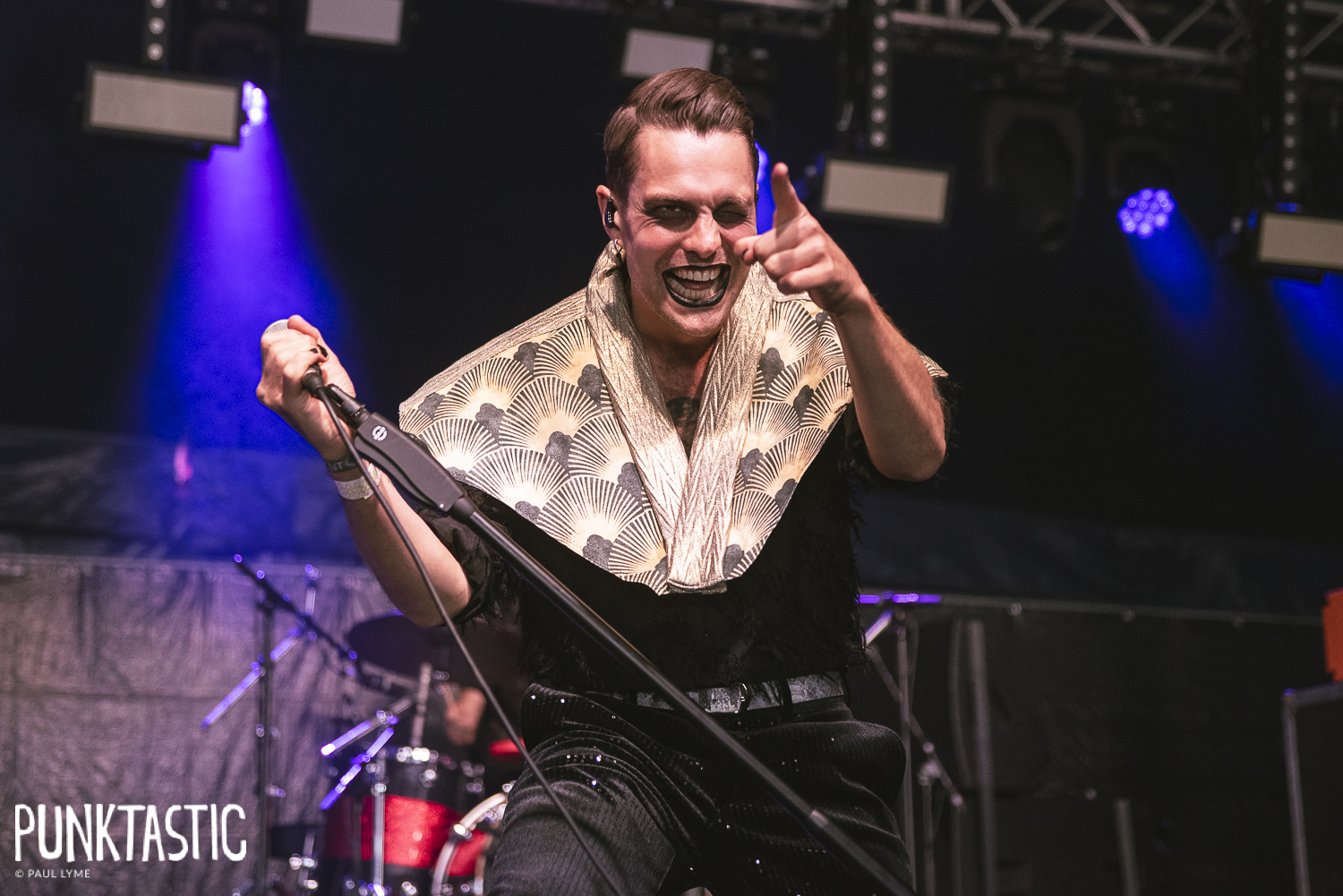
Meatdripper
Over on PX3, Meatdripper are less encumbered with sunlight, which allows their doomy sludge to permeate the tent and create an atmosphere of twisted, goblin-like psychedelic metal. Gloriously heavy, they stack groove-laden riffs on top of thundering basslines, with dual vocals winding and snaking around a distorted melody. Despite the hefty gloom, Meatdripper maintain a level of hazy warmth that keeps everything from veering into dirge territory.
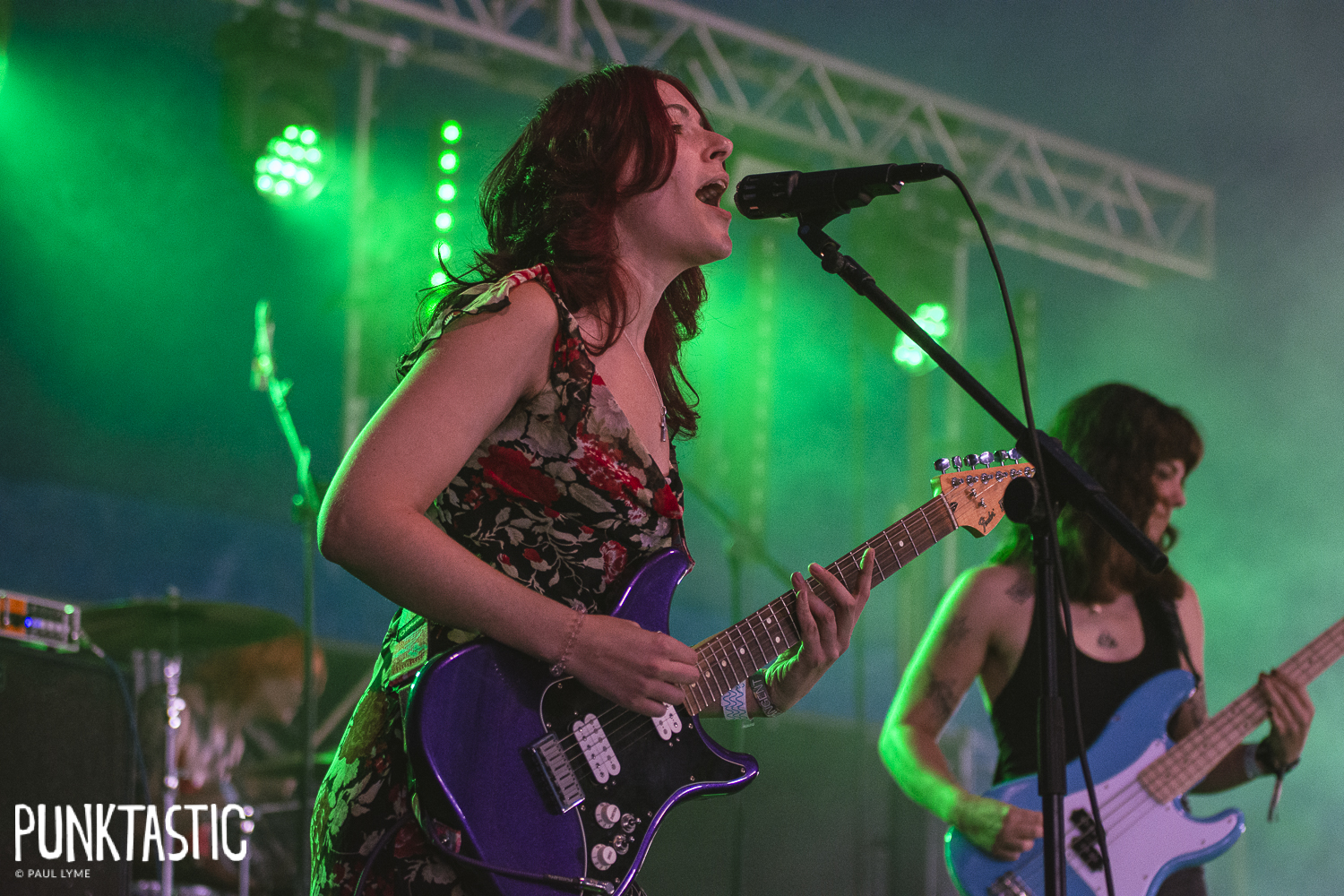
Reclus.É
Reclus. É have only been in existence for a few months, so it’s not surprising that the crowd gathered to catch them at the Yohkai stage isn’t massive. Tummyache vocalist Soren Bryce switches between sensitive, melodic whispers and heartfelt, ardent screams in a set that undulates between slower numbers with jazzy licks and faster, more ferocious post-punk stylings. Subtle, intricate guitars weave around alt-rock rhythms that feel carefully considered and deliberately understated.
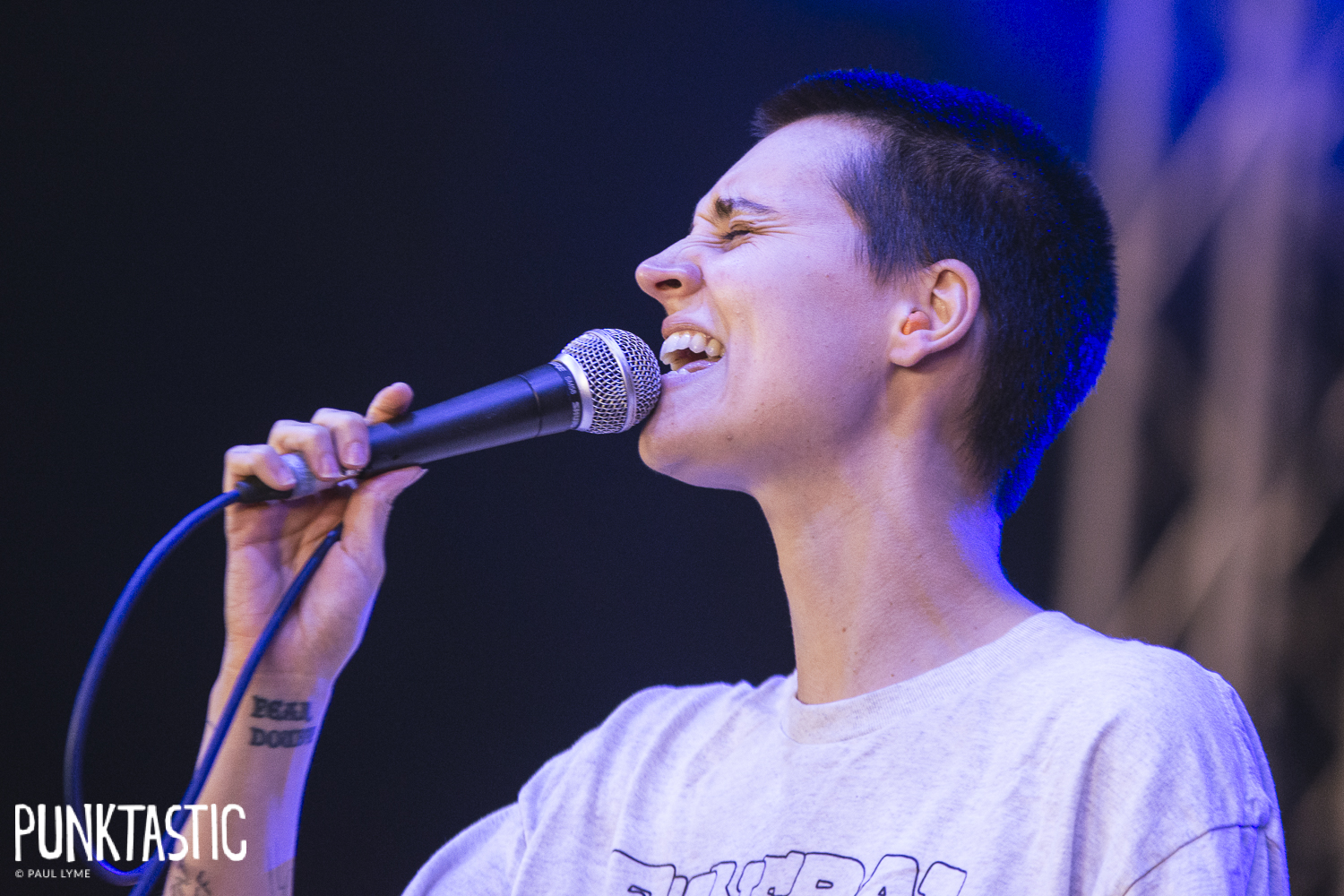
Din of Celestial Birds
One of the biggest challenges for any instrumental band is to convey a narrative without lyrics, and that is something that post-rockers Din of Celestial Birds do very well indeed. The soothing melodies flare into vast, penetrating moments of pure emotion before dropping back to emotive, sparse meditative sections. There is a profound sense that each member of the band is pouring their heart and soul into the performance, experiencing the serenity of the softer instants and intensity of the huge builds along with the audience. Moving and powerful.
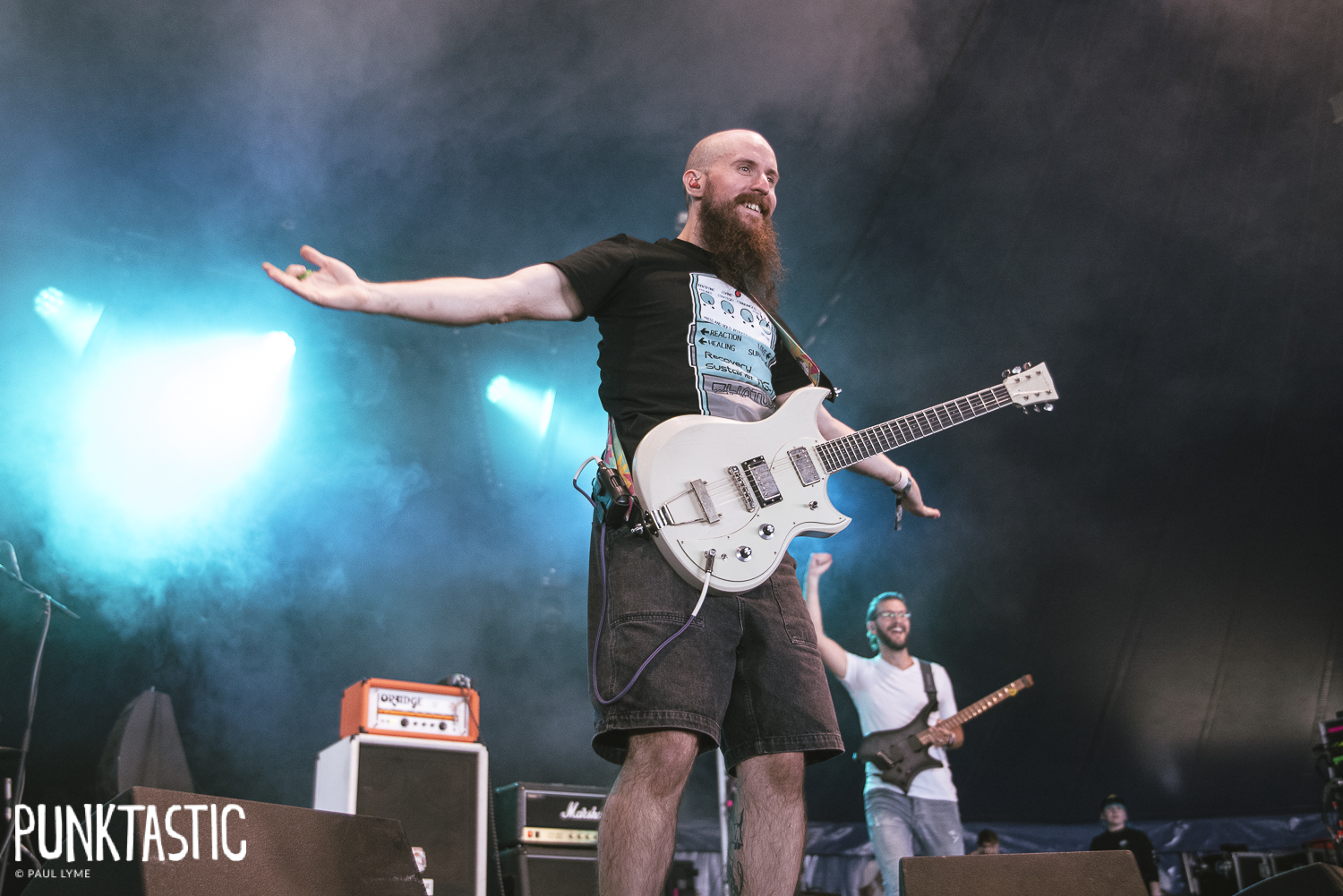
Gösta Berlings Saga
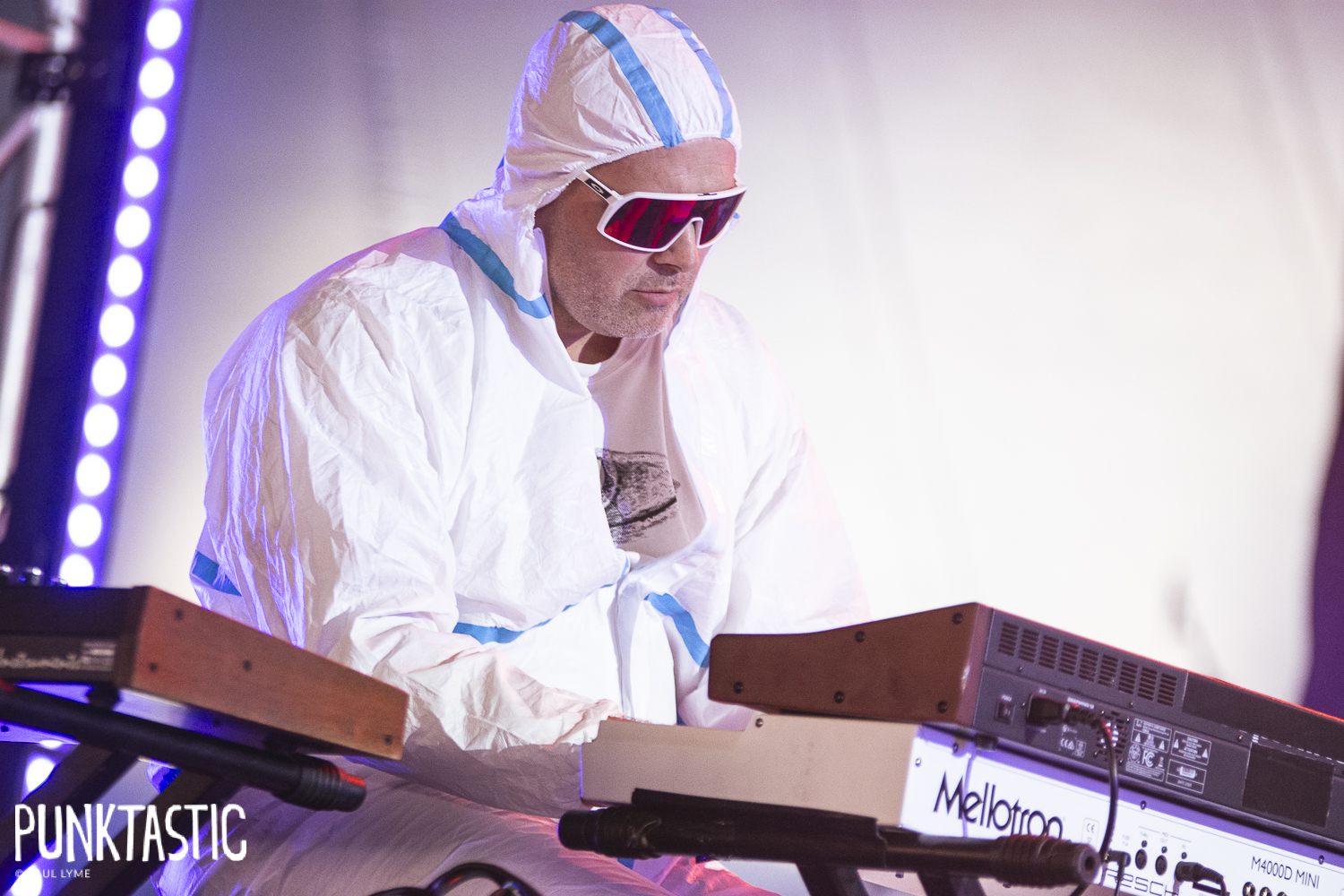
If you can ignore the Breaking Bad style white boiler suits, Sweden’s Gösta Berlings Saga present a fascinating display of intricate musicality. With one percussion set-up looking like part of a retro sci-fi set, they are a synth-heavy instrumental prog band with a sound that is firmly rooted in 70’s psych-rock, but with a modern experimental twist. The steady beat keeps the momentum marching ever forwards, the twinkly keys and warped synth sound like a soundtrack to a journey through alien lands. It’s oddly eerie, but in a way that’s intriguing far more than it is spooky.
Oathbreaker
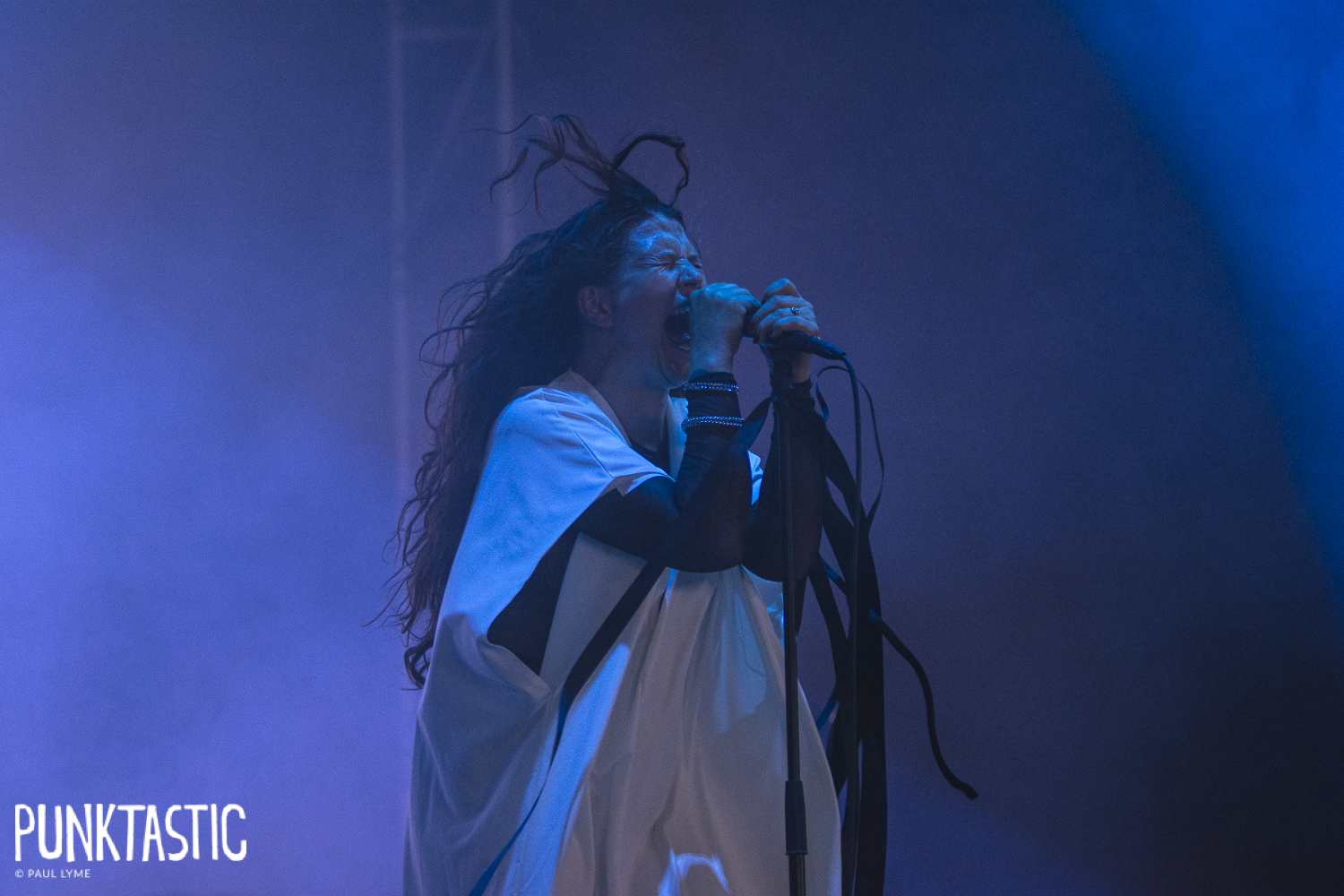
On hiatus since 2017, Belgian quartet Oathbreaker returned this year with a re-issue of 2016 album ‘Rheia’, and the crowd gathered at the main stage for their performance of the album is thick with anticipation. An Oathbreaker set is more of an immersive experience than a musical show, and there’s a sense that everyone here is ready to lose themselves entirely for the best part of the next hour. There are very few bands who manage to transition so organically between the softest, most delicate, stripped-back vocals and the raw, visceral power of abrasive blackened metal screams and furious drum rolls. During the solemn, introspective moments there is a tangible stillness to the crowd that makes the hairs stand up on the back of your neck. This stillness then explodes into an enormous outpouring of unadulterated fury, with vocalist Caro Tanghe’s emotionally charged wails demanding every ounce of attention and sucking you into an all-encompassing, expressive catharsis.
TTNG
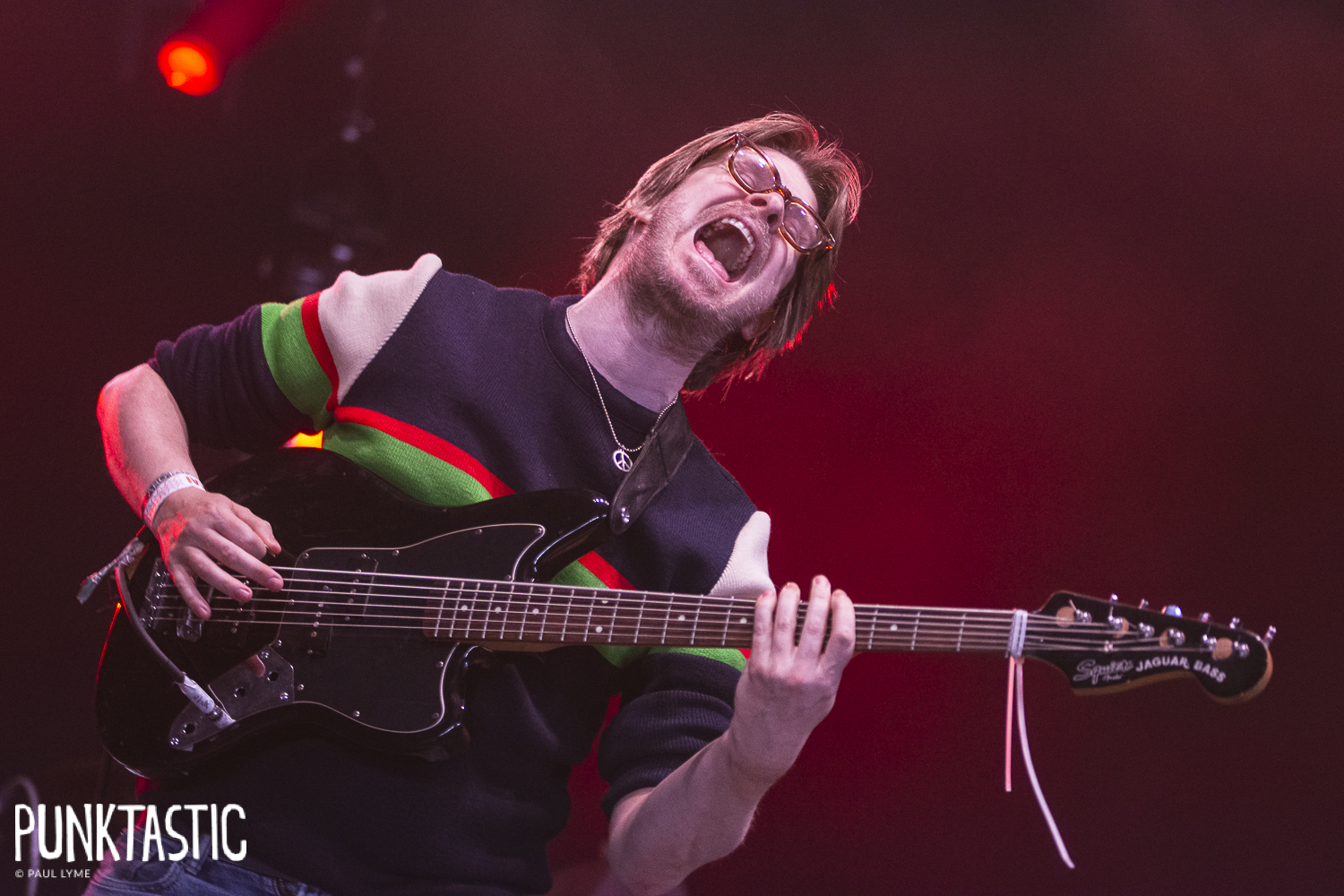
TTNG are another band that haven’t been around for a while, but with a new EP dropping just in time for ArcTanGent, they’ve brought their mellow, intricate brand of post-rock back to Fernhill Farm for an affable Saturday evening slot on the Yohkai stage. Punctuated with nimble guitar picking and tender vocals, TTNG are a welcome tonic to the more extreme acts peppered across the stages, and their set offers a chance to chill out and appreciate artistic musicianship without necessarily losing your mind.
Eivør
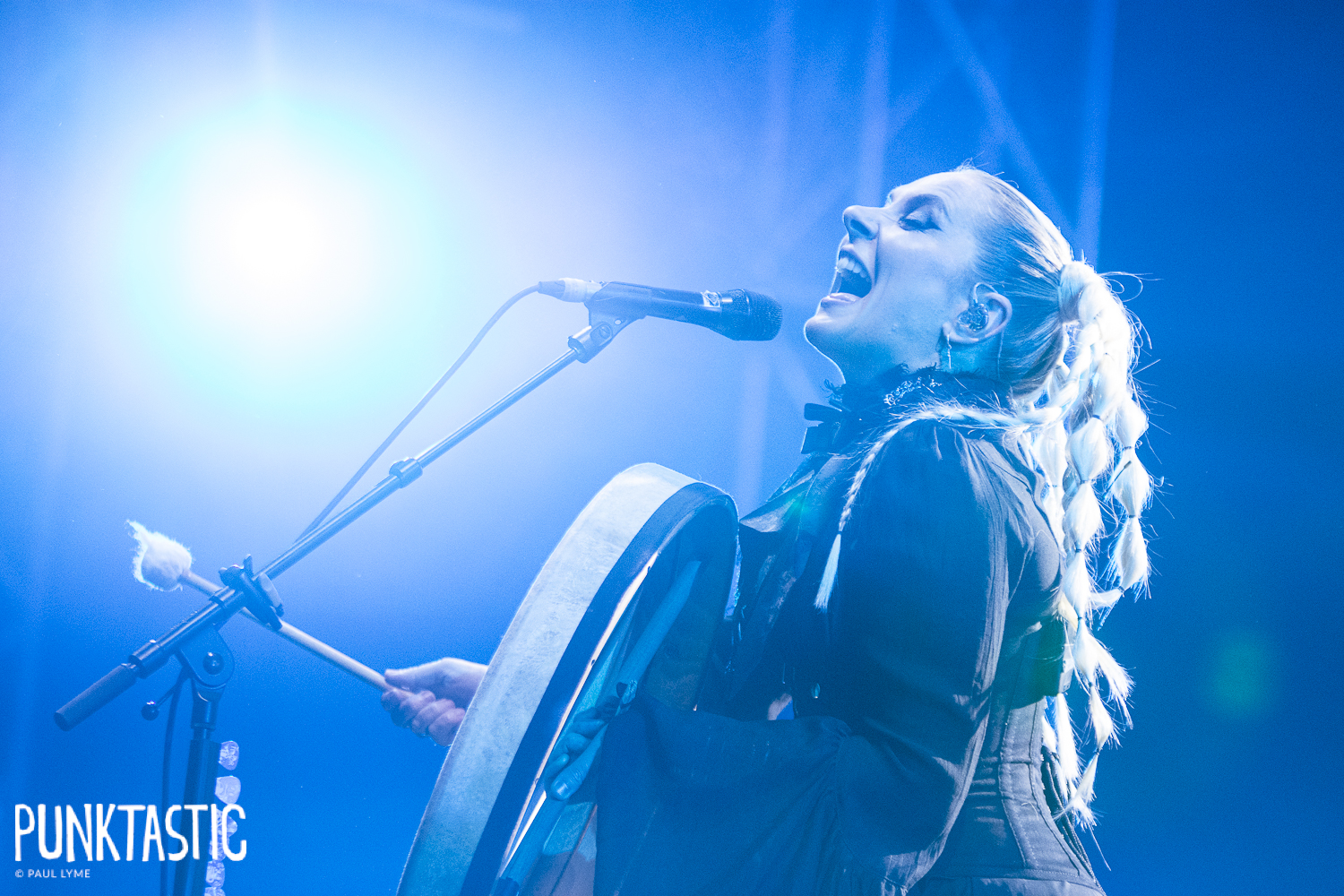
The softly spoken Eivør mixes traditional rhythms of Nordic folk with elements pulled from modern rock, electronica, classical and jazz. Backed by the force of a double stack of keys and mixers as well as a full drumkit to complement the iconic hand drum, the result is a compelling blend of dark and moody synth and primal, ancient ritual. Ethereal passages sung primarily in her native Faroese glide over deep synth and pulsating rhythms, creating an atmosphere that builds from a slow and sensual groove into an immense combination of beats, chords and powerful vocals.
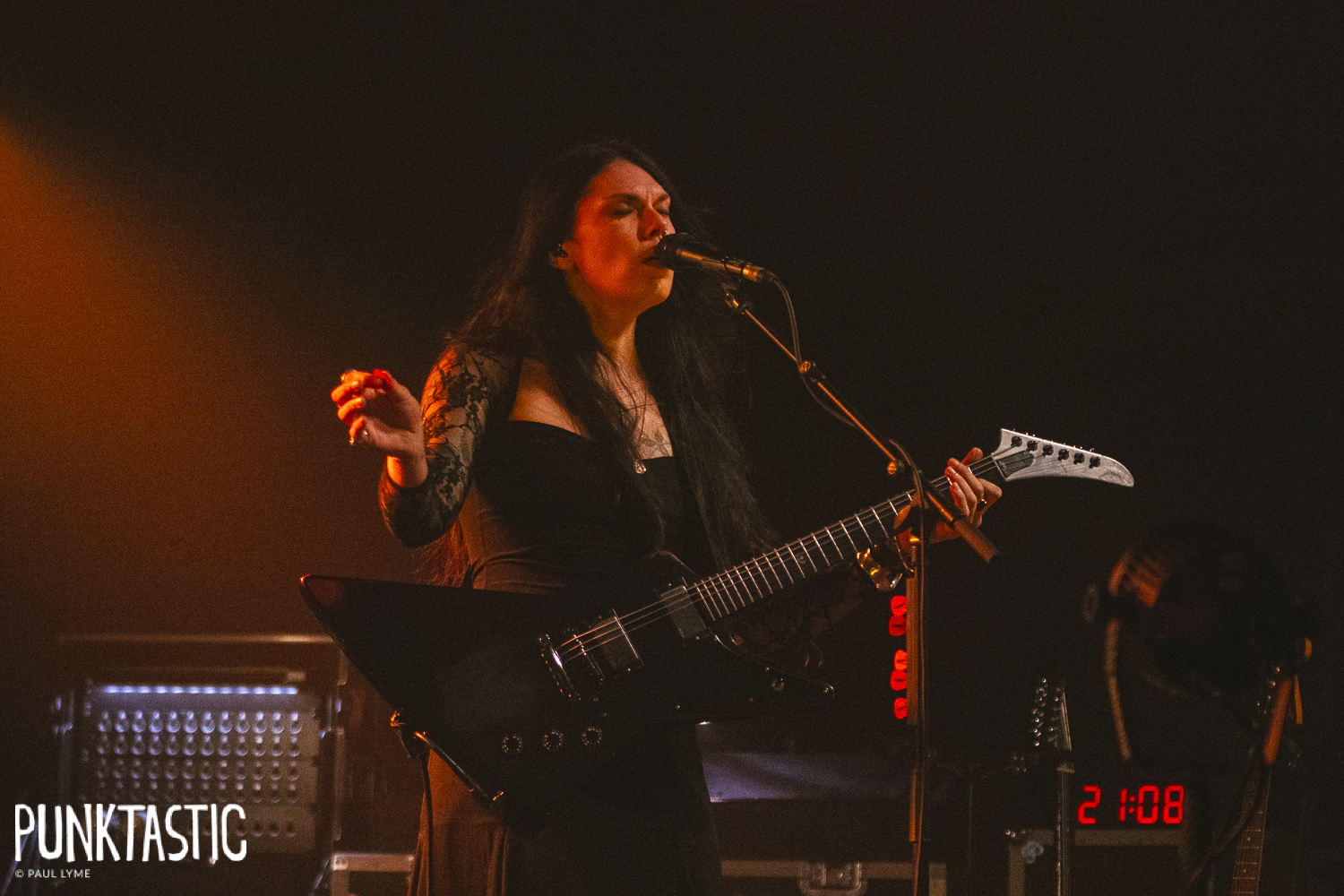
A.A. Williams
Closing the Bixler stage, A.A. Williams presents a masterclass in understated melancholy. Haunting melodies drift over dark and brooding guitars at a pace that forces the audience to lock in and zone out. The concentrated power of the slow, considered heaviness is no less impactful than the more high-octane, aggressive artists on the bill. Instead, it demands a more intentional focus from the listener, and looking around the tent it’s evident that the crowd are invested in each deliberately placed rise and fall, allowing space to absorb the full scope of Williams’ striking performance.
Cult of Luna and Julie Christmas
Neither Cult of Luna nor Julie Christmas are strangers to ArcTanGent stages. However it’s an incredibly rare treat to witness them join forces in a live setting to perform 2016’s ‘Mariner’ in full. As giants of the post-metal world, Cult of Luna deliver pounding rhythms and gigantic riffs which fill the space with dark intensity. But it’s the layers of Christmas’ shrill upper range over Johannes Persson’s fervent roars that make an already multidimensional sound that much more magical. The beauty of this collaboration is that it’s always floating around the edge of dissonance. The additional vocals from Christmas oscillate between melodic melodies and emotive screams, never fully blending with the crushing lower end, but never conflicting with it either. For an album centred on themes of space travel, the live experience is fittingly otherworldly, with dramatic backlighting silhouetting the seven bodies on stage in a shroud of interstellar mystery. Packed with raw emotion, musical prowess and deep narrative, the set exemplifies the spirit of the festival and delights a captivated crowd. As the smoke fades and the final notes of marathon closer ‘Cygnus’ draw to a close, it’s clear that this extraordinary show was a fitting finale for ArcTanGent’s last night at Fernhill Farm.
We’re coming up on the 25th anniversary of Liars’ classic debut album They Threw Us All In A Trench And Stuck A Monument On Top, an emblematic record from that era of New York rock ‘n’ roll. A quarter century later, Liars soldier on. For about a decade, Liars have been a solo project for frontman Angus Andrew. So there’s only one Liar. When he says that there are plural Liars, he’s lying. The last Liars album was The Apple Drop, which came out about five years ago, and now Andrew is coming back with a new one with the vivid title A Ban On Plastic Bag Bans.
Think of a superlative and you can probably apply it to Metallica. Easily the biggest band in heavy metal history, they’ve sold more than 150 million albums worldwide and will fill any building that you put them in – including ones in Antarctica. It’s a level of success that was hard-won for the American foursome, earned by a string of some of the greatest albums ever made (no record collection is complete without Ride The Lightning, Master Of Puppets and their record-setting ‘Black Album’) and persevering through such hardships as the death of their classic bassist, Cliff Burton.
Singer/guitarist James Hetfield and drummer Lars Ulrich started the future Grammy-gobblers in 1981, after Ulrich placed an ad in L.A. paper The Recycler. They picked up lead guitarist Dave Mustaine and bassist Ron McGovney as they started their quest to mesh the NWOBHM of Iron Maiden and Diamond Head with the scrappy hardcore of the Misfits, then quickly became a cult sensation in southern California. After replacing McGovney with Burton and Mustaine (who’d soon form Megadeth to enact his revenge) with Kirk Hammett, they released 1983 debut album Kill ’Em All and went nationwide, supporting Raven across the US.
1984’s Ride The Lightning and 1986’s Master Of Puppets continued their climb, but it was nearly all derailed when Burton died in a bus crash aged 24. Wounded and grieving yet refusing to give in, the band hired Jason Newsted and released 1988’s …And Justice For All. The subsequent Damaged Justice tour saw them headline arenas, but that was nothing compared to what they did after 1991’s self-titled follow-up, AKA the Black Album. Turning their scrappy thrash jams into stadium-sized stompers, it topped charts in dozens of markets and thrust them into the biggest rooms on Earth. They became the kings of metal and, 35 years on, still hold the crown.
Even though the mid-90s proved treacherous, with fans spurned by the members cutting their hair and embracing blues rock on Load (1996) and Reload (1997), their critiques merely pinged off of Metallica’s armour. The first true threat to their existence since ’86 came in the early 2000s, when a creatively stifled Newsted left and Hetfield entered rehab. The band responded by hiring Robert Trujillo and releasing St Anger: another fiercely divisive effort that cast them back to the rough-’n’-ready garage days before their debut.
After Death Magnetic (2008) brought back the long-missed thrashing of old, Metallica are once again bulletproof. Hardwired…To Self-Destruct (2016) and 72 Seasons (2023) were well-received and the band cemented their generational status with multimedia experiments, including the feature film Through The Never. As they prepare to become the first metal band to host a residency at Las Vegas venue The Sphere, cast an eye over their entire discography of original studio albums (sorry, no covers projects or live releases allowed!).
11. St Anger (2003)
Is it predictable that St Anger is rock bottom of another list like this? Yup. Is it still justified? Sadly, still yup. Metallica’s most hated album is far from the complete write-off many would have you believe; Frantic and the title track still go hard, songs like Invisible Kid and cult fan fave Dirty Window could have been world class with more work and the countrified re-dub of All Within My Hands the band have experimented with in recent years shows there’s a decent little song hiding under there.
Of course, none of that can cover for compositions that feel messy and disjointed and one of the most infamously disastrous production jobs in metal history. Artistically, St Anger is an interesting chapter in Metallica’s career at least: a raw, ugly cry from a band on the edge. Musically? This just ain’t it, no matter how you try to paint it.
10. Reload (1997)
When Reload hits the mark, it does so in style. Fuel might be basic as hell, but it remains a wonderfully simple, full-throttle burst of heavy metal adrenaline; The Memory Remains packs not just one but two of Metallica’s most earwormy moments (both its iconic chorus and Marianne Faithfull’s ‘Da da da daaa da, da daaaa’ refrain); The Unforgiven II is a more than worthy sequel to its predecessor and an outstanding power ballad in its own right.
That all said, Metallica’s confidence in their leftover material at this time was just a tad too optimistic, because Load’s sequel is packing way too much filler. James Hetfield’s wonderful lyrical streak was at least still in full flow, but even he wasn’t enough to save Reload from feeling largely unnecessary.
9. Death Magnetic (2008)
Critics were delighted with Metallica’s return to more traditional heavy metal fare (and solos!) when Death Magnetic arrived five years after the spectacular misfire of St Anger. In the cold light of day, it’s undoubtedly superior to its predecessor, featuring some full-on metal bangers (That Was Just Your Life, Cyanide) and two genuinely great power ballads in The Day That Never Comes and the severely underrated The Unforgiven III. Unfortunately, Death Magnetic as a whole is held back by two pressing issues.
Firstly, while a clear improvement on St Anger, the production is poor, Lars’ drums still sounding like they were recorded using kitchen utensils. Secondly, and not for the first or last time, many of the songs just go too long. The End Of The Line, All Nightmare Long and The Judas Kiss are all solid tracks pulled down by meandering riff repetition, while forgettable instrumental Suicide & Redemption feels particularly self-indulgent at a whopping ten minutes. Decent, but far from a classic.
8. Hardwired…To Self-Destruct (2016)
Hardwired…To Self-Destruct was both a refreshing reminder of Metallica’s ability to pen top-tier metal hits and frustrating further evidence of the problems that come with their now trademark lack of self-restraint. The first half of the record in particular is filled with killer material, from the pulsating thrash assault of Hardwired and Moth Into Flame to the groovy, Load-ish power of Now That We’re Dead and epic, anthemic closing moments of Halo On Fire.
The second half, however, is a big letdown, the likes of Confusion, Am I Savage, ManUNkind and Murder One largely plodding and toothless (a particular shame given the latter’s status as a tribute to the legendary Lemmy Kilmister). Luckily, Spit Out The Bone turns up right at the end to finish things on a big high. What a rager.
7. 72 Seasons (2023)
For the third time in a row, Metallica put out an album that was solid as hell and packing plenty of great moments, but a little bogged down by a lack of incisive editing and at least a couple of tracks that just didn’t quite measure up. What can’t be in any doubt, however, is that 72 Seasons is the best-sounding Metallica album in over 25 years, the likes of its rollocking title track, the triumphant Lux Æterna and majestic album-closer Inamorata sounding truly stadium-sized under the bedded-in fingers of Greg Fidelman.
Papa Het’s voice also has no right sounding this good this far into his career, the band’s talismanic frontman bellowing like a vengeful mountain god during the pounding If Darkness Had A Son. A couple of minutes snipped off here and there and a little more ambition on the musical side of things and this could have been special. As it is, 72 Seasons is still pretty damn decent.
Metallica in 2023. From left: Robert Trujillo, Lars Ulrich, James Hetfield, Kirk Hammett. (Image credit: Tim Saccenti/Jonathan Weiner)
6. Load (1996)
Throwing caution to the wind following the absurd success of The Black Album and confirming that their thrash metal days were well and truly behind them (at least for now), Load saw Metallica dip their toes into everything from grunge to alt-rock to country. The result is a deeply fascinating record that unquestionably features some of the Four Horsemen’s most boldly realised leaps of faith; both the emotional Bleeding Me and album-closing epic The Outlaw Torn remain deservedly thought of as two of the most compelling compositions of the band’s entire career.
There are missteps for sure, and it’s a little too long overall, but for many, Load remains the point where Metallica were still truly blazing their own trail and letting ambition guide their creative impulses. It also features some of Hetfield’s most impactful lyrics, his introspective self-dissection reaching a new level of insight and raw vulnerability.
5. Kill ’Em All (1983)
Metallica would become far more layered and sophisticated in their songwriting as the 80s wore on, but even four-plus decades later, there’s still something so primal and satisfying about Kill ‘Em All’s snotty, ‘fuck-you’ attitude and relentless, proto-thrash assault. Smashing together Messrs Hetfield, Ulrich, Burton and Hammett’s love of punk rock fury and NWOBHM might with the subtlety of a brick to the groin (with some not inconsiderable help from a certain Mr Mustaine), the quartet kickstarted a movement and produced one of heavy metal’s all-time great debut albums in the process.
It’s easy to overlook just how stacked with classic ‘Tallica cuts Kill ‘Em All is, too: Hit The Lights, The Four Horsemen, Motorbreath, Whiplash, Seek & Destroy…plenty of bands could release all that, call it a day and consider their career a job well done. Incredibly, Metallica were only just getting started.
4. …And Justice For All (1988)
Depending who you ask, …Justice is for all intents and purposes the last of Metallica’s ‘thrash’ records, but sees the band turning their backs on the short, sharp shock stylings they had embraced with their debut in favour of the more epic fare that had become their bread-and-butter. The loss of bassist Cliff Burton can be felt keenly, not least in the controversial decision to completely flatten the mix of newcomer Jason Newsted’s contributions, but also in the subtle shifts away from more classical-leaning compositions that Burton had contributed to the band’s sound.
In its place is an almost prog-like approach to song structure, Metallica effectively crafting their own metallic symphonies with even the more straight-ahead fare of Blackened, …And Justice For All and The Frayed Ends Of Sanity having multiple movements and segments. Fans might still clamour for Justice For Jason, but …AJFA shows just how hard Metallica were fighting to reinvent themselves and push their artistry to new levels, towering ballad One awarding them a level of MTV-friendly success that few of their contemporaries have ever been able to match, certainly never surpass.
3. Metallica (The Black Album) (1991)
Responding to the overly-ornate compositions of their previous album, Metallica ground their sound into its essential dust on The Black Album, producing one of the best-selling records of all-time in the process. The band didn’t lose their thrash entirely – Through The Never and Holier Than Thou have the same bulldozer-through-a-China-shop power that Master Of Puppets used so excellently, while the likes of Sad But True, Enter Sandmanand Wherever I May Roam deliver an enormity and instantly gratifying sound that better suited the arenas they were now playing.
Even with that, the band also found a whole new universe of depth and artistry with huge ballads like The Unforgiven and Nothing Else Matters,the latter even setting the stage for the band’s orchestral S&M thanks to some sublime arrangements by Michael Kamen. Naysayers might point to The Black Album as the point where Metallica stopped being Our Band, but therein lies the rub: Metallica were always too ambitious, too commercial and just too damn big to be satisfied with being the biggest fish in a small pond.
2. Ride The Lightning (1984)
There’s still a youthful rawness to …Lightning that captures the sparks flying between a youthful Hetfield, Ulrich, Burton and Hammett, the band already extricating themselves from their peers by sheer dint of having the finest songs and most ambitious compositions around. The album’s title-track is effectively a dry-run for the epic grandeur the band would ride so thoroughly on follow-up Master Of Puppets, while For Whom The Bell Tolls and Creeping Death awarded Metallica their first genuine arena-sized anthems.
There are also moments of respite and reflection; Fade To Black’s anti-suicide ballad might have ruffled feathers with the full-speed-or-nothin’ brigade, but the song’s beautiful composition, reflective lyrics and undeniable breakout headbangable moments showed that they had plenty to say and weren’t afraid to take chances on themselves.
1. Master Of Puppets (1986)
If you drilled down into the atomic structure of heavy metal, the genre’s evolution and its watershed moments, you’d probably find Master Of Puppetsembedded at the core. Black Sabbath might have kickstarted the genre almost 16 years earlier, but Metallica codified metal with their third studio album in ways that are evident in the sheer mind-bending number of bands who have professed an undying love for the album over the subsequent decades.
Thrash gone cinematic, Master… refined and reinforced everything Metallica had done with their second album but bigger, better, harder and yes, more metal. From the delirious rampage of Battery to the tooth-gnashing militaristic blows of Disposable Heroes and careening violence of Damage Inc. to the iconic title-track,Metallica never again sounded as all-conquering as they would on Master Of Puppets, slower efforts like The Thing That Should Not Be introducing a sludgy dynamism that showed the band’s toolkit was varied.
Again wetting their beaks with ballad Welcome Home (Sanitarium), Metallica were carrying themselves away from being anybody’s back-up to instead be absolute champions in their own right. A tour with Ozzy Osbourne helped cement them as metal’s Hot New Things and even the tragedy of the crash that took bassist Cliff Burton couldn’t slow the unstoppable machine the band had set into motion by writing an album so undeniably massive and untouchable that it basically created a division between themselves and just about every other metal hopeful at that point.
A serious contender for the greatest metal album of all time, it’s no overstatement that the spirit of Master echoes in everything from Machine Head’s The Blackening to Gojira’s Magma and just about any other grandiose, epic metal effort put to tape. You can all rest easy: the Master is here.
Metallica’s residency at The Sphere, Las Vegas starts on October 1.

 STREAM THE METAL BREAKDOWN DAILY NOW:
 LIVE & LOUD: Stream the World’s Hardest Radio Station 24/7

 Meatdripper
 Reclus.É
 Din of Celestial Birds
 Gösta Berlings Saga
 Oathbreaker
 TTNG
 Eivør
 A.A. Williams
 Cult of Luna and Julie Christmas

