Copenhagen, Denmark-based metal outfit He Who Saw The Abyss premiere a new single and music video by the name of "Orchid", streaming via YouTube and Spotify for you now below.
Read More/Discuss on Metal Underground.com
Oklahoma City-based deathcore sextet Mob Mentality premiere a new single and visualizer by the name of "THE GODFATHER", streaming via YouTube and Spotify for you now below. Skyler Conder (Varials, Cell, etc.) guests on this particular track.
Read More/Discuss on Metal Underground.com
I’m not fragile like a flower, but fragile like a bomb
A hometown can keep an inconveniently accurate record of your ambitions. Someone remembers what you promised at seventeen; someone else knows when you stopped calling. Returning means encountering earlier versions of yourself, along with the friends who helped you become them. For Vilnius quartet LOCAL BLOOD, that reckoning begins in Plungė, western Lithuania, where their shared history took root more than a decade ago. Their self-titled third album considers what survives the journey from youthful expectation to adult experience, with belonging becoming a more complicated proposition at every turn.
Released on November 5, the self-titled LP LOCAL BLOOD follows people who keep getting tangled in their own efforts to connect. A domestic argument becomes a ridiculous dance; a successful online identity leaves its owner alone in a castle; a would-be cowboy straps himself onto a failing horse and heads for the dancefloor. The jokes have consequences. Beneath the exaggerated poses sit exhaustion, damaged intimacy, and the desire to be recognised by someone who can see past the performance.
Musically, these eight songs roam through post-punk, gothic rock, and electronics with a welcome appetite for odd combinations. Chiming keyboards and metallic signals recur throughout, passing between western guitar figures, severe basslines, and passages of almost pastoral unease. The vocals travel from a subterranean baritone to expansive, impassioned choruses, giving the record both its theatrical weight and its flashes of absurdity. LOCAL BLOOD allow their contradictions plenty of room to move.
“With this album, we wanted to push ourselves further while staying connected to the sound that defines LOCAL BLOOD. It’s a record shaped by everything we’ve experienced together over the past few years — both on stage and off. We wanted it to feel raw, honest, and alive. Releasing it and taking these songs on the road across Europe feels like the beginning of a new chapter for us.” — LOCAL BLOOD
Šuokis opens with a chiming synth figure greeting a deep electronic bass tone, creating a small observatory of warbling metal and antiquated computer signals. The solemn baritone and bouncing bass pattern suggest Joy Division being drawn further into Kraftwerk’s electronic orbit, with early Agent Side Grinder offering another useful point of reference. As higher melodies and phased alarm tones gather above the rhythm, the arrangement acquires the bright, strange optimism of an early computer display, green lettering blinking across black glass. Sung in the Samogitian dialect, the opener places a regional voice inside this electronic machinery. Its repeated phrases take on the insistence of a communal chant, making the band’s first recording in the dialect an immediately physical statement of identity.
In Come Around, the electronic chirping takes on the contour of a Morricone whistle, ushering in a stretch of spaghetti-western post-punk with rumbling drums and circling guitars. Nick Cave’s dramatic gravity meets Agent Side Grinder’s measured delivery as a domestic dispute slips between complaint and slapstick. An argument about being fed without cutlery gives way to the blunt admission, “I cannot get healthy in the same place that makes me sick.” Then come the flailing limbs and an exasperated appeal to be heard. The absurdity catches how undignified a serious argument can become when both people have exhausted their eloquence. Increasingly unruly synth experiments crowd the closing stretch, while “But sometimes I come around” leaves the possibility of reconciliation awkwardly open.
Unicorn begins with drums that have the clipped dancefloor discipline of Gang of Four, setting up a thick, melodic bassline that holds firm beneath quivering metallic guitar effects and bubbling synths. Against that agile arrangement, the low vocal delivery sounds almost administrative while cataloguing a procession of modern identities: the overworked employee, the motivational gym enthusiast, the online saviour whose tears benefit from excellent lighting. Each role carries its own claim to authority, and the first-person delivery implicates the person trying them on. The repeated accounting of a seven-day working week makes ambition feel increasingly punitive. During the final quarter, the guitars grow heavier and the voice rises with them; the swing between “I am a winner” and “I am a loser again” finally produces a musical rupture worthy of the strain.
Long intervals between deep bass notes leave the opening of Vandeny exposed to an uneasy synth drone. The voice sounds more regretful here, and the eventual arrival of a steady drumbeat brings a measure of stability to the drifting arrangement. Guitar and bass melodies develop through layers of misty texture, recalling the rural eeriness and patient unfolding of And Also the Trees. The Lithuanian lyrics move through rivers, night swimming, and the feeling of having lost part of oneself. Water offers somewhere to withdraw and attempt a difficult conversation with the self. As the closing repetitions turn toward courage, the music gives that effort time to gather strength. Following the crowded social performances of Unicorn, this is a persuasive change of scale.
Buzzing synths and hurried strumming open Pankielis before giving way to a shout and a low, springing riff, setting up one of the record’s most forceful performances. Small piano-like notes and electronic chirps continue beneath the heavier playing, needling the arrangement while the voice becomes increasingly theatrical. The chorus reaches toward Killing Joke’s confrontational grandeur, with a delivery that recalls Jaz Coleman’s accusatory force. Inside this commotion stands a castle built on a terrible foundation: virtual victories, trend chasing from the bathroom, and the lonely pleasure of being excellent at games. The distinction between “Experience points” and “the point of the experience” neatly exposes the bargain. By the time “I just wanna be local” becomes the repeated appeal, the album’s title has acquired a palpable ache. All that carefully accumulated status has left an elementary need for company unanswered.
On Rose, the returning keyboard warbles introduce a deep melody with the rounded attack of piano, and the rhythm settles into a western saunter. Early on, the croon suggests Agent Side Grinder riding alongside Ritual Howls; as the notes lengthen, a Dave Gahan-like confidence enters the phrasing. The lyrics supply a gloriously ungainly companion for this music: a deadbeat horse named Rose, whose rider has sensibly equipped himself with a helmet and seatbelt. A lyrical reference to Whitesnake’s Is This Love completes the dancefloor fantasy. Rose needs a friend, and the lonely rover singing about her could clearly use one too. The closing na-na-na refrain turns that odd little predicament into an invitation for everyone else to join in.
A shuffling drum pattern moves through eerie electronic tones on White Lies, while sustained notes and a low bass knell give the opening a sombre darkwave footing. The desire for a body initially comes across with unnerving composure, as though absence has become an everyday inconvenience. That restraint gives the later vocal ascent considerable force: the phrasing opens toward Gahan again, and the guitars and bass swell around it. A more exposed passage, picked out with piano-like accents, brings the admission of slipping away into painful focus. Dinner and bedtime doomscrolling sit beside the fear of disappearance, giving the song a recognisably ordinary setting for its distress. The plea to be written about as taller after death carries the record’s concern with self-presentation into the obituary, where even the smallest flattering adjustment might feel like consolation.
Low percussion seems to travel through stone at the start of 8 Stitches, surrounding the slow, almost recited vocals with an enclosed, cavernous resonance. Echoing guitars gradually widen the space, establishing the album’s most thoroughly gothic setting. The lyrics place flowers inside a picture of a relationship that continues in the mind after its physical comforts have gone. An empty side of the bed and the arrival of a stranger suggest the awkward work of trying to repair a life while still reaching for the person who left it. The rhythmic subdivisions quicken before a rush of guitar with a folkish edge carries the voice upward. Repeated through that gathering force, “Your love to admire” sounds like a thought being tested for its ability to hold everything together.
Those recurring electronic chirps give the songs a family resemblance through every change of setting, from the domestic standoff of Come Around to the stone chambers of 8 Stitches. LOCAL BLOOD’s willingness to let absurd humour occupy the same space as emotional damage gives the album much of its character. Its people can be ridiculous, vain, and painfully difficult to reach, yet their need for affection remains legible. Across a record concerned with where its makers come from, the desire for a place among other people proves just as pressing as the geography.
LOCAL BLOOD is available now through Spotify and other streaming platforms. A 12-inch vinyl edition is available to pre-order via Bandcamp. Listen below.
Based in Vilnius, Lithuania, LOCAL BLOOD developed their combination of post-punk, darkwave, and alternative rock across Dystopian Disco (2022) and Loverman (2023). The quartet have toured Europe and received a Best Rock Act nomination at Lithuania’s M.A.M.A. Music Awards. Recorded during the summer of 2026, their third album accompanies a European run through Poland, Hungary, France, and Germany, followed by a November 26 album release concert at LOFTAS in Vilnius, with Kaunas alternative rock band RŪMAI joining them.
Remaining November 2026 tour dates:
November 16 — Barberaz, France — Brin de Zinc
November 18 — Tours, France — Canadian Café
November 19 — Le Havre, France — Mc Daid’s
November 20 — Singen, Germany — Teestube
November 21 — Cottbus, Germany — Chekov
November 26 — Vilnius, Lithuania — LOFTAS (album release show)
It was 10.30pm on a Friday night, and Pieces Of Molly frontman Ewen Glasgow was at home in Christchurch, New Zealand, when he received the Instagram message that might change his life: “Wanna come and tour the UK?”
The message came from Ralph Robinson, frontman with high-octane UK rockers Asomvel, who mine a similarly gritty vein of high-spirited rock’n’roll to the Kiwi quartet.
“I sent him our shit because they’re in the same lane as us,” says Glasgow. “If there was ever a band we could connect with at some point, it would be them.”
The trip isn’t one that a band like Pieces Of Molly can necessarily afford, but they’re throwing caution to the wind.
“We know there’s a big financial undertaking, but we were like, who cares?” says Glasgow.
“We’ll scrape some money together somehow,” adds bassist Doug Stewart. “Once we’re there, we’re there. That’s the key. We didn’t really think about how we’re going to sleep.”
This feels like a valediction for Pieces Of Molly. Like many young Kiwis, Glasgow spent time in the UK trying to get something off the ground.
“I was twenty-one or twenty-two, and just couldn’t really inject myself into the scene,” he says. “I was probably just really naive and didn’t know what the fuck I was doing. To be honest, I was just hanging out at the [much-missed drinking establishment] Cro Bar in London.”
Back in NZ, Glasgow put Pieces Of Molly together. The current line-up (completed by guitarist Sam Kubiak and drummer Kurt Fleming) have been together for seven years and released their debut album in 2022. A hot and fiery collection, it’s informed by the likes of AC/DC and Motörhead, and throws in the livewire energy of local garage rockers the D4 and The Datsuns. The album’s two singles – I Don’t Wanna and Dead Sky – both hit the Top 20 in the New Zealand chart.
Don’t Take Me To The Disco, the band’s second album, is an equally filthy affair, a breakneck collection of songs that frequently threaten to spiral off the rails but – aided by hypnotic riffing and smartly arranged gang vocals on the choruses – end up as purposeful as they are powerful. Mixed in Austin, Texas by Chris ‘Frenchie’ Smith, whose CV includes The Answer, Scorpion Child and Santana, it’s another high-velocity triumph.
So, what can UK music fans expect from Pieces Of Molly?
“Balls-to-the-wall, furious rock’n’roll,” says Glasgow. “I think we’re hungrier than most because we’re muzzled up in this corner of the world. It’s a lot harder for us to get these opportunities. For us, the UK is a mecca. It’s the heavy metal motherland.
Don’t Take Me To The Disco is out now. Pieces Of Molly’s tour with Asomvel kicked off on November 13. For dates and tickets, check the Asomvel website.
Detroit, Michigan-based slamming brutal death metal band SLAMINEM premiere their new single and music video for "Guilty Contagion", streaming via YouTube for you now below. The track is taken from the outfit's upcoming new album "The Slam Shady LP" (due out November 25, 2026) and features guest vocals from Wiggavisceration and Couch Cushion.
… Read More/Discuss on Metal Underground.com
Professionally captured live footage of Bleed From Within‘s August 08th, 2026 performance at the annual ‘Bloodstock Open Air’ festival in Walton-on-Trent, UK has now surfaced online. Below, you can watch the Scottish metalcore outfit’s complete 12-song set.
The show featured the following tracks: Read More/Discuss on Metal Underground.com
Fall Out Boy unveiled a new single, featuring a guest appearance from a bona fide hardcore/post-hardcore icon. Walter Schreifels, known for his work with Quicksand, Rival Schools, Gorilla Biscuits and others, lends his talents to the track, titled “Doomsday Generation (Slacker For The Ages)”.
The latest offering from the multi-diamond-certif… Read More/Discuss on Metal Underground.com
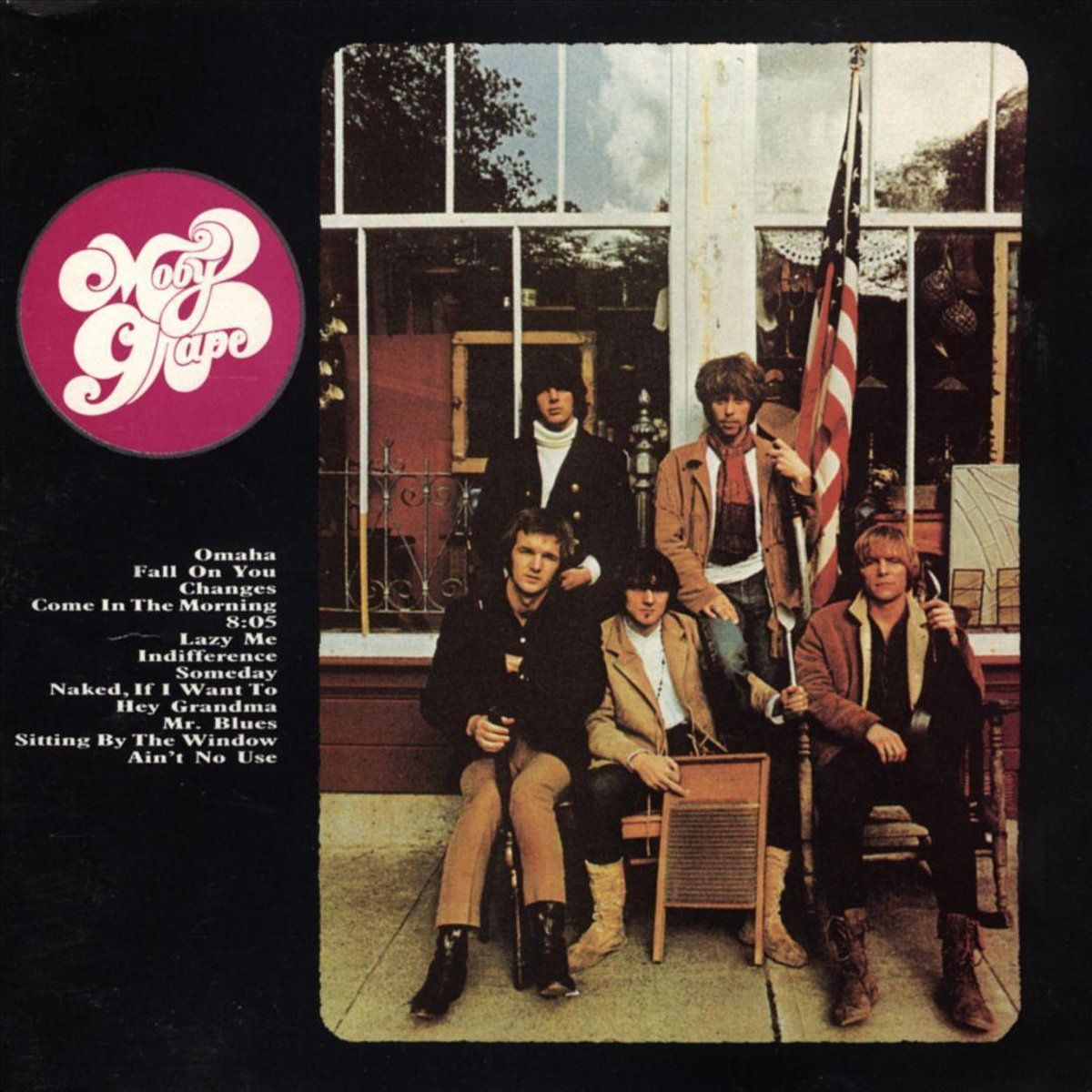
Hey Grandma Mr. Blues Fall On You 8:05 Come In The Morning Omaha Naked, If I Want To Someday Ain’t No Use Sitting By The Window Changes Lazy Me Indifference
The first album from San Francisco quartet Moby Grape flew directly in the face of the Summer of Love, eschewing hippie bullshit for fizzy songs that bucked and roared like the Rolling Stones or Buffalo Springfield. It was a record that should have set them off on a long career.
Alas, bad luck, record-company ineptitude and self-sabotage (drummer Don Stevenson is giving the finger on the original LP sleeve) served to undermine them from the get-go. And that wasn’t all.
“Every song was just amazing,” REO Speedwagon‘s Kevin Cronin told Classic Rock. “I loved the jangly guitar sound they had, and also the excellent vocals. All the songs on the album were released as a single on the same day, which diluted the commercial potential and ensured the band didn’t have the big hit they deserved.”
“They were trying to make a statement that every song was a great hit single,” Stevie Van Zant told us. “But, man, it killed the band.”
Every week, Album of the Week Club listens to and discusses the album in question, votes on how good it is, and publishes our findings, with the aim of giving people reliable reviews and the wider rock community the chance to contribute.
Leonard Nimoy Presents Mr. Spock’s Music from Outer Space – Leonard Nimoy
Side Trips – Kaleidoscope
We Are Paintermen – The Creation
What they said…
“San Francisco rock at its ’67 peak, this is genuine hippie power pop. Moby Grape sang like demons and wrote crisp songs packed with lysergic country-blues excitement, while the band’s three guitarists – Jerry Miller, Peter Lewis and Skip Spence – created a network of lightning.” (Rolling Stone)
“Harmonies run from sweet to intense, guitars likewise. Fast ones like the begin-with-a-bang Hey Grandma” and Spence’s anthemic Omaha rock as hard as the grungiest garage classics. Yet slow ones like the beseeching 8:05 and the resigned Sitting By The Window stand alongside the loveliest tunes in the country-rock canon this album initiated.” (Robert Christgau)
“As songwriters, Moby Grape blended straight-ahead rock & roll, smart pop, blues, country, and folk accents into a flavorful brew that was all their own, with a clever melodic sense that reflected the lysergic energy surrounding them without drowning in it.” (Allmusic)
What you said…
Fraser Fisher: I guess I’m a little different than most, as I’m very familiar with this album thanks to an older sibling. I still have an original copy of this album that I enjoy listening to once in a while, and it always brings back childhood memories for me, playing Hey Grandma relentlessly on my little Seabreeze record player as a little kid.
Probably their best album, as this band was plagued with bad management and drugs and soon fell out of fashion; though they did regroup a few times and recorded a few more LPs, they never really recovered.
Skip Spence was the first to fall following a path much like Syd Barrett did. Though he did get back into the music business before his death, he never really came to fruition. He did write songs while he was in a mental institution recovering for an album called Oar, a very strange album indeed.
Regardless of their problems, I don’t think they would have probably survived much further than the early seventies, with things changing in the music industry away from that sort of Laurel Canyon West Coast sound. But as I said, it’s an album I enjoy listening to once in a while, and it’s kind of neat to have an original copy, even though it’s a little worse for wear. A little interesting tidbit about the album is that on the front cover of the original pressing, the drummer, Don Stevenson, is seen giving the finger on the washboard, and apparently the record company didn’t like that, so they airbrushed it out shortly after the initial release.
John Davidson: I managed to piece ( or should it be peace) the album together on YouTube from various compilations, etc., but that was largely where the fun ended. Moby Grape sound like every late 60s flower power band at the same time. So much so that I wondered if they had inspired Spinal Tap’s Listen To The Flower People.
They switch from psychedelic pop to Californian blues to Creedence Clearwater Revival-style swamp rock, and then to Beach Boys harmonies before landing on Smokey Robinson pop, which certainly shows how the band had a range of talents available, but the downside is that they lack focus and identity.
I’m not sure if it shows supreme confidence or the exact opposite to dabble in five genres in as many tracks on your debut album.
As a sampler of what was going on in late 60s pop rock, it’s an interesting document, but as an album it’s not something I feel likely to reach for again. A curio, but not an essential one.
Philip Qvist: The joys of the 60s and the habit at the time of releasing different versions of the same album in different countries. The version that I was listening to clearly had songs missing from the playlist, as per Wikipedia. Not that it mattered, because Moby Grape left me a bit underwhelmed.
I guess when you have a band where all five band members could write and sing songs, then you can expect an album with a lot of variety, but also with the risk of the record turning into an inconsistent one in the process. Sometimes too much of a good thing can be bad for you, and Moby Grape (the album) is proof of that.
It’s an okay album, but it’s not one that will become a regular on my playlist. There were far better albums than this that came out in 1967. A 6/10 this week.
Mike Canoe: Like many other Summer of Love/Woodstock bands, it seems almost an obligation to go back and revisit a band like Moby Grape. Next year is going to be one seminal album after another celebrating its 60th birthday, so at least Moby Grape got in ahead of the rush. Unfortunately, it’s all too central casting “hippie rock band” for me and not enough garage rock grunt. I find myself not even liking most of the vocal harmonies, which may be a first. 8:05 and Omaha stand out, but the rest is a jumble with not enough rumble.
Adam Ranger: Moby Grape are a band I know of, but have heard little. On listening to this, what do I get?
Nice harmonies, jangly guitars, bluesy rock and some country rock that take you back to an earlier time (Although I was only 2 years old when it was released). It’s not bad, but perhaps lacks an identity: Five lead singers (all songwriters) probably contribute to that feel. Many songs are only two minutes long, and the whole album is short enough not to get bored.
If I want jangly guitars, my go-tos are The Byrds or Buffalo Springfield. For blues and harmony, it’s CSN&Y (Deja Vu, to be precise). So this Moby Grape album is interesting and listenable, but it’s not essential listening.
Chris Elliott: That’s an odd album. The problem when you have five songwriters is you get a random selection.
One minute we’re doing jangle pop psychedelia, then we’re a heavy blues band with a bit of jangle, but then we want to be MC5… and then we’re off into country rock. The heavier it gets, the more you think someone else did this better: the jangle psych is fine, but it’s not the Byrds or Alex Chilton; the country rock is pleasant but, again, forgettable.
It’s not essential. But it’s interesting. I’ll give it that.
Greg Schwepe: Being a big Zeppelin fan, I’ve long known that Robert Plant was a fan of Moby Grape, but had never checked them out. Seeing that my Spotify version said Moby Grape (with Bonus Tracks), I wanted to find out which tracks were on the original album and which were the bonus tracks since they weren’t really clearly marked. And in doing some internet sleuthing, I found that the original release had 13 tracks, while the current Spotify version has eight tracks; only three of which were on the original album. I’m sooooo confused! (Turns out I was not the only “Expert Reviewer” to have this problem!)
But it turns out it didn’t make much difference. Because after listening, it left me a little indifferent anyway, no matter what version I would have listened to. While I have heard similar bands from this era (but totally can’t remember them now!) that I liked, Moby Grape did not leave a big impression.
I will say “Indifference” might have been the one track that stuck with me a little, with its wiggly lead guitar. And looking back at my notes next to the remaining song titles I had written down, I found I had written down nothing half the time! Oops. No comments to refer back to.
Nothing I really disliked, but nothing that would ever make me listen again. Wait… what was the album that was picked this week? Totally forgot. 6 out of 10 on this one for me. Whatever it was.
Final score: 6.78 (23 votes cast, total score 156)
The last stretch of “Polaris” made me feel as if the ground had dropped away beneath me. I’ve followed Matt DeAngelis for a while, and his music and videos have often stayed with me long after I’ve heard or watched them. He keeps raising the bar for both. With this single, the songwriting and the images meet in a finale that feels almost weightless.
Elton John comes to mind when I hear the way DeAngelis moves from one chord to the next. A change in the harmony can make the melody feel brighter in an instant. I hear that same care in his choice of sounds and in the way he gives each one space around the vocal. There’s a level of finish here that I associate with established mainstream artists. DeAngelis brings that level of care to an independent project, release after release.
I’ve always thought his voice was a gift, and “Polaris” reminds me how well he knows what to do with it. Named after the North Star, the song looks for something constant in a world that keeps changing. I hear the star as a point of reference for that search, a way to think about what we know to be true and what gives our lives direction. He sings about those ideas with enough warmth to make them feel close. I found myself thinking about what I look to when I lose my bearings.
Polaris – The View from Iceland
The video, filmed in Iceland, is stunning. The landscapes give me that feeling of looking up at the night sky and realizing how much lies beyond what I can see. I love how much room the video gives the natural scenery. The images let you sit with the scale of the place, and the music makes that vastness feel strangely intimate. To me, the video is a masterpiece in its own right.
The final build is the moment I keep going back to. The arrangement grows fuller, and DeAngelis’s voice seems to rise right out of it. Watching that ending with the Icelandic landscape on screen, I felt as though the song could carry me straight out into the open. I wanted to stay there for a few seconds after the music ended.



 If you love this music,