Category: news
-
Mouser – S/T 12″ EP
The Dutch punk rock underground has been on an absolute roll over the past few years, consistently producing -
Atom Stone Unleashes New Single ‘Bad Decisions’
Hard rock/metal artist Atom Stone releases ‘Bad Decisions‘, the fourth single and title track from his highly anticipated upcoming album. This latest release captures the raw energy and emotional depth that have become hallmarks of Stone’s sound, blending gritty rock sensibilities with honest, unapologetic storytelling. ‘Bad Decisions‘ offers a powerful glimpse into the heart of […]
The post Atom Stone Unleashes New Single ‘Bad Decisions’ appeared first on ROCKPOSER DOT COM.
-
Book review: ZAPPA THE HARD WAY (Revised & Expanded Edition) by Andrew Greenaway
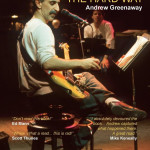 Wymer Publishing [Publication date 17.08.26] Andrew Greenaway’s revised and expanded ‘Zappa The Hard Way’ is a meticulously researched and even handed account of what proved to be Frank Zappa’s last tour. The 1988, 12 piece band (including a 5 piece … Continue reading
 The post Book review: ZAPPA THE HARD WAY (Revised & Expanded Edition) by Andrew Greenaway appeared first on Get Ready to ROCK!.
-
The ‘Big 4’ of ’70s One-Hit Wonders
These artists prove a lone hit can still resonate for decades. Continue reading… -
Mouser – ¡No Pasarån! 7”
The Dutch punk rock scene has long maintained a reputation for stirring out bands that honor the foundational -
Crowdfunder launched to help Moodring’s Hunter Young with medical bills
Posted on October 5th 2026, 12:53pm
-
WATCH: Turnstile’s Sensational Performance On SNL
Turnstile were the musical guest on this weekend’s SNL, bringing hardcore to one of the biggest stages on US television, and they nailed it.
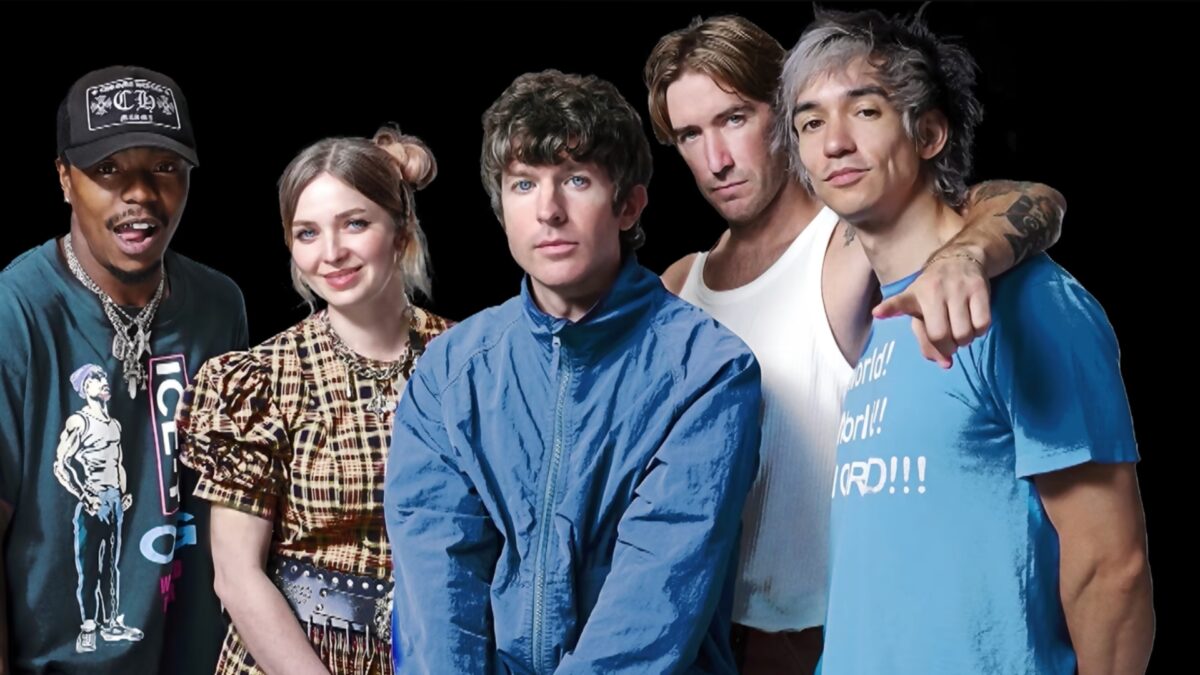
First up, they delivered a sterling rendition of ‘BIRDS’, all of the perfect tension and precise tenacity hitting like a freight train. All of the infectious energy of their live shows, bottled and delivered with heart, soul and passion, with every scrappy riff and throat-shredding vocal feeling just the right level of raw and real.
And then they returned for a second round, showing off their melodic and chaotic chops with a medley of ‘I CARE’ and ‘DULL’. The gorgeous refrains of the former, mixed with the sporadic blasts of the latter, a wondrous showcase of everything they are capable of in one swift one-two.
It’s the sort of performance that stands the test of time. That introduces a whole new world to a whole new audience, that changes lives in an instant. Like Slipknot on Conan and Knocked Loose on Kimmel before them, Turnstile on SNL is now a part of heavy music history.
Turnstile are currently in the middle of a special US tour, featuring a whole host of very special supports.
Here are the remaining dates:
OCTOBER
06 – LAWRENCE The University of Kansas on the Hill (with Slayyyter and Die Spitz)
07 – ST LOUIS Arsenal BG Ballpark (with Vince Staples and Die Spitz)
14 – VENTURA Ventura County Fairgrounds (with Pennywise and Die Spitz)
15 – LAS VEGAS The Amp at Craig Ranch Regional Park (with Vince Staples, Trash Talk and Febuary)
18 – SANTA ANA Observatory Festival Grounds (with Boy Harsher and Terror)The post WATCH: Turnstile’s Sensational Performance On SNL appeared first on Rock Sound.
-
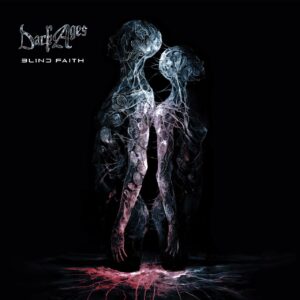
Dark Ages announce new album Blind Faith; the first single, “Road to Insanity,” now available
Dark Ages, a progressive metal band from Verona, have announced their sixth studio album, titled “Blind Faith.”
The album will be released on November 6, 2026, via the Andromeda Relix label. For the first time in their history, the band has chosen to break away from the concept album format—which in the past followed a strict narrative arc—a freedom that has allowed the musicians to explore new sounds and unprecedented stylistic choices, giving each track its own distinct identity. However, a common sentiment runs through all the tracks: Faith. The theme is explored in all its facets—from faith in oneself, in others, in one’s art, and in the power of inner and social change—and this is where the title “Blind Faith” originates.
Along with the announcement, Dark Ages are releasing the first single from the upcoming album: ‘Road to Insanity’; the track is accompanied by an official music video directed by Giovaschi.Angela Busato’s comments on “Blind Faith”:
“We’re finally announcing the release of our new album! It’s an album we’ve put a lot of care into, both in terms of the arrangements and the final sound. It’s the result of a lot of hard work spent locked away in the studio experimenting; without any thematic constraints, each song took shape in its own distinct way. I feel the band is really energized and driven! We can’t wait to let you hear what we’ve created!”The album was recorded at Mago Studio by Maurizio “Tachy” Fracchetti (Avio, TN), often referred to as the band’s sixth member due to the friendship and mutual respect that have bound him to the group since 2010. The original, visually striking cover art was created by Le Nevralgie Costanti, while the booklet design was handled by keyboardist Angela Busato of Kraken Promotion.
Simone Calciolari’s comments on “Blind Faith”:
“At the end of a new project, I always ask myself what I could have done to make it better, hoping that, through those songs, I’ve managed to convey my feelings and emotions—and I’m certain this is a thought shared by many artists. The same questions arose with ‘Blind Faith’ as well, but at the same time, I’ve come to fully appreciate everyone’s deep commitment, which casts it in a different light in my eyes—something deeper and more mature than in the past.”‘Blind Faith’ encompasses all the classic hallmarks of Dark Ages’ compositions, from the most refined and intimate tracks of the opener to the long, multifaceted suite ‘The Lighthouse (Blind Faith)’, ranging from straightforward songs (‘Good To Say Goodbye’, ‘Distant Suns’) and others that are more prog-oriented (‘The Fire We Hold’, ‘Sunset’), right up to the single ‘Road To Insanity’, where more modern influences come to the fore.
Tracklist:
- Time to Be Kings
- The Fire We Hold
- Good to Say Goodbye
- Road to Insanity
- The Lighthouse (Blind Faith)
- Distant Suns
- Sunset
Formed in the late 1980s by guitarist Simone Calciolari, Dark Ages underwent a decisive artistic turning point in 2008. With the addition of Angela Busato on keyboards and Carlo Busato on drums, the band definitively solidified its sound, laying the groundwork for the musical identity that still defines it today. From that point onward, a strong compositional continuity has guided the group’s evolution. A further significant shift occurred in 2016 with the arrival of singer Roberto Roverselli. With 10 years of experience under his belt, Roverselli has left an indelible mark on Dark Ages’ sound thanks to his extraordinary theatricality and great interpretive skill—qualities that deeply enrich the band’s live performances. This sixth album also marks the recent addition of Alberto Caria on bass; his inclusion has given a major boost to the songwriting process, bringing new energy to the band’s creative engine.
The post Dark Ages announce new album Blind Faith; the first single, “Road to Insanity,” now available first appeared on FemMetal – Goddesses of Metal.
-
Endspace – First Contact Review
 Death metal cornered the metal-and-SF market ages ago, but black metal has moved on its turf in recent years. Bands like Imperialist and Vorga adopt the aesthetic trappings and lyrical conceits of science fiction while trem-picking their guitars and blast-beating their drums. Others, like Labyrinthus Stellarum, go further, giving the music itself an alien, otherworldly quality by heavily incorporating electronic instruments. Checking all these boxes are Canadian duo Endspace: a cover that looks like the Tesseract from Interstellar, numbered “Transmissions” as song titles, a healthy dose of synthesizers and vocoders. And yet, Endspace seem to go even further, claiming they ‘create music that is light years ahead of what we’re accustomed to hearing.’ In deigning to make First Contact with us earthbound mortals, Endspace set extra-galactic expectations for their debut album.
To craft an experimental take on black metal, Endspace draw from veterans of experimental death metal. Shrouded in mystery (and masks [and shrouds]), a bit of internet research reveals that the band is comprised of 040118180514 and 102119200914. You might recognize these UPC codes from Fractal Generator, whose grindy brand of technical death incorporated touches of blackness. On First Contract, Endspace render black metal the centripetal force, though elements of its members’ necrotic origins orbit in the distance. The expected cacophony of blast beats and trem riffs initiates the call (“First Transmission”), but it doesn’t take long for a Krallicey version of black metal to surface (“Second Transmission”) and resurface (“Sixth Transmission”) via futuristic finger tapping. Endspace also know where the intergalactic slime lives, occasionally doling out some downright filthy riffage, reminiscent of Domination-era Morbid Angel (“Third Transmission,” “Seventh Transmission”). First Contact feels like black metal at its core, yet it doesn’t feel completely pinned down by it.
The big question is whether First Contact’s electronic instrumentation comes off as sci-fi style or substance. As a constant presence, the vocoders are constitutively substantive. Vocals usually mold an evil/aggro mood in black metal, so filtering the harshness through vocoders does give them a distinct artistic purpose within the genre. Indeed, the vocals read as radio waves: electromagnetic radiation wending its way through spacetime (“Fourth Transmission”). The synthesizers also ever-presently vibrate throughout First Contact, though Endsapce occasionally spotlight them. Midway through the “Fifth Transmission,” for example, the duo bust into an EDM-style bounce akin to …and Oceans, sure to get nightclubs on Nebulon 5 raving. The relatively dense production ends up being something of a Fermi paradox. Everything is discernible, but I can’t help but want more breathing room and, ergo, vaster soundscapes. And yet, I imagine Endspace wanted to capture the suffocating vacuum that is outer space. Despite the odds, they provide evidence of extraterrestrial civilization, though not as profoundly as advertised.

Endspace achieve a surprising degree of listenability for their experimental space-black by hitting a few Goldilocks zones. Concerning track length, no single “Transmission” feels like a fleeting intimation of weirdness, given the three-plus minute minimum. And yet, at a maximum of under five minutes, no “Transmission” feels like a desultory smorgasbord of ideas, either. Each possesses its own identity, whether it’s the floating guitar work of the “Second Transmission,” the house pulsations of the “Fifth Transmission,” or the creepy buzzings of the “Ninth Transmission.” Concerning album length, Endspace know not to overdo it on a First Contact, as evinced by the under 40-minute runtime. The album benefits from its plurality of vibes, even as its track naming convention suggests conceptual holism. The overt death metal stylings of the third and seventh “Transmission”s keep the album fresh without sounding like obtuse space junk. The name of the game is establishing lines of communication, some of which will pique a listener’s curiosity more than others.
And pique my curiosity Endspace did, continually. I wouldn’t go so far, though, as to categorize their debut as utterly avant-garde. First Contact challenges, but it readily engages more than it seems like it would. It consistently interests even as it lacks true standout moments (“Fifth Transmission” notwithstanding). This may be to Endspace’s future benefit, as the duo demonstrates focus on forging a unique sound, rather than forcing listeners to trace an arbitrary line between celestial objects. Endspace have a bigger, bolder transmission in them, it’s safe to say. For this, we patiently wait on Sol 3, with our antennas open to the callings of the cosmos.
Rating: 3.0/5.0
DR: 5 | Format Reviewed: 320 kbps mp3
Label: Transcending Obscurity Records
Websites: Facebook
Releases Worldwide: October 2nd, 2026The post Endspace – First Contact Review appeared first on Angry Metal Guy.
-
Neighbourhood Tower Channeling Darkness (Discovering the Light) Review
Neighbourhood Tower Channeling Darkness (Discovering the Light) Review
The album begins almost idyllically with the track “Stranger in a Strange Land.” This song opens with an atmospheric quality that feels serene. The sound is unique and intense, enveloping the listener and transporting them to a parallel dimension. The rich textures and layered instrumentation create an immersive experience.

Following this is “One Last Time,” where the tempo picks up slightly. The vocals here are noteworthy and, at times, reminiscent of Neil Young’s distinctive high pitch. The voice connects deeply with the listener, emphasizing emotional resonance in every note. This track balances urgency and sincerity.
Next is “Distance,” which takes us back to a more atmospheric sound, characterized by electronic elements that define the artist’s style. This piece stands out with its cinematic quality; the absence of lyrics allows the listener to fill in the gaps with their imagination. At times, pads emerge, evoking the iconic scores of horror films by John Carpenter. The music serves as a profound backdrop, reminiscent of an ethereal film score.
Channeling Darkness (Discovering the Light) – Sound and Atmosphere
Perhaps the most striking track is “Channeling Darkness.” Here, the vocal delivery is deeply intimate and introspective. The song feels as though it strips away layers, reaching the very soul of the listener. With a dusk-like atmosphere, it almost hypnotizes, creating a space for reflection and emotional release.
“Outer Skies” follows, propelling the audience into a journey across infinite expanses. This track evokes dreamlike visions, pushing the listener far beyond their immediate surroundings. It takes its time with pauses, encouraging moments of meditation and contemplation. The composition allows a tranquil ebb and flow, giving a sense of boundless exploration.
Concluding the album is “No Expectations,” which radiates a nostalgic vibe. This track conjures images of deserted winter beaches or cities after rain, where the pavement reflects bright signs. It encapsulates an atmosphere of quiet reflection and longing. The musicality exhibited in this piece showcases the impressive compositional skills of the artist.
Channeling Darkness (Discovering the Light) – Performance and Production
“Channeling Darkness (Discovering the Light)” is an intense and refined album. Each song offers a unique emotion and atmosphere, drawing the listener into a world of thoughtful exploration. The transitions between tracks are smooth, guiding the audience through a labyrinth of sound and feeling. This album is a journey worth taking, filled with sincerity and depth that resonate long after it ends. I would recommend it to anyone seeking a profound musical experience.
Atmospheric
 If you love this music: Discover More
The post Neighbourhood Tower Channeling Darkness (Discovering the Light) Review appeared first on Edgar Allan Poets – Noir Rock Band.