(After a hiatus since last spring our South African contributor Vizzah Harri has returned with his review of a debut album by the New York band Astral Alchemy, which was released this past June by Naturmacht Productions. As is often the case, the music prompted thoughts that led him off in many unpredictable directions, in […]
H.E.R. emerged in the mid-2010s as one of the most distinctive voices in contemporary R&B, but Gabriella Sarmiento Wilson had already been developing as a singer, songwriter, guitarist, pianist, and multi-instrumentalist for years. Raised in the San Francisco Bay Area, she signed with RCA while still young and eventually adopted the H.E.R. name, an acronym for Having Everything Revealed. The identity initially put the focus on the music rather than her face, helping create a sense of mystery around the project when H.E.R. Volume 1 arrived in 2016. The early H.E.R. releases built a catalog around understated production, guitar-driven soul,
We’re back to look once again at some death/doom offerings, this time from Night Hag, hailing from Virginia, United States, and their second full length work: Great Dismal Darkness. Formed in 2010 Night Hag’s early days are peppered with smaller releases: Demos, an EP, a Live Album, a Split with Cryptic Brood, but come 2022 the band finally released their debut album Phantasmal Scourge. Following this up with another Split, this time with Burial, the band eventually got to work on their second album, pinned for an October 16th release date, Great Dismal Darkness. Though this marks the band’s second full length work it’s actually their fourth release altogether through Rotted Life Records, evidently a relationship between band and label that’s working to either’s advantage. I’m familiar with Night Hag but hadn’t got round to their last record so this is an excellent chance to introduce myself to the band. I was ready for some bludgeoning death/doom.
Night Hag’s stance on death/doom is one of crushing atmosphere and laying the bass on so thickly there’s no avenue for running. What makes their performance feel so much more vicious is they aren’t hanging around; typically this approach to death/doom incurs slower, glacial pacing but Night Hag aren’t seeking to exact that degree of mercy herein. Their tempo is more often than not climbing, and seeking to climb ever higher, so the din wrought by such an assault is unassailable and impossible to hide from. But when it does slow, when the madness begins to abate, that’s when Night Hag lay on the dismal and macabre qualities of their atmosphere tenfold. It’s through those slower and more noxious elements the real horror of their sound comes forth with as basslines and drum strikes colour the air with darkening shades of black to craft inhospitable hues of desperation.
I particularly appreciated just how rapid the drums played across the record too for the blast beats were constantly on the attack, providing the tempo Night Hag desired to keep us invested in their heinous onslaught. What’s more the drums crash loudly too so even as the pace may calm periodically the impact the drums infer is forever prevalent, reminding you of their presence, reminding you to pay attention, that they’re not done with you quite yet. As the intensity climbs once more you’ll find the blast beats can be sent to the back of the mix as riffs and vocals take centre stage, but with that said you’ll still feel the drum skins struck with immense vigour and a genuine rapacity for visceral disembowelling.
One can imagine Night Hag being an excellent live band to champion their studio material upon the stage. It feels like what you hear on album is precisely what was captured in that recording studio with minimal alterations during the mix. The result is a death/doom record wondrously unburdened by overbearing mixing processes; granted some has to be done binding everything together yet I feel they applied as little as was needed to retain that authentic sound as heard in the moment. The byproduct is Great Dismal Darkness sounds as if it were discovered from some abyssal chasm, where light never touched its pores. You could view the record in its throes of torment or else the soundtrack to a harrowing, ceaseless slaughter.
Something Night Hag do here that makes their record accessible to every fan of death/doom is it never feels to drag. This subgenre of metal can be synonymous with plodding pacing and music taking longer than necessary to reach the next pivotal moment, but Night Hag’s blend of rapid fire devastation and steady, belligerent, nigh methodical punches make for a record that’s always on the move in some direction. Even as the atmosphere keeps reminding you this is no walk in the park you’ll plunge yourself headfirst into their miasmic, molasses-laden detritus. Coming out of their swamp will see the surface actively fight to keep you under its pressure, rising with you as your head seeks to break free. There’s never a point where you’ll want it over seeking that reprieve; the songwriting is always in motion and it’s audibly noticeable that track development is present too so you won’t be left thinking where else you’ll be taken.
In conclusion, Great Dismal Darkness truly lives up to its namesake as Night Hag pour a plethora of evils into their second full length record. For death/doom this might be one of the greatest offerings 2026 will deliver for their songwriting balances the cavernous atmosphere with active track development excellently. You know what you sign up for with Night Hag but it’s still great to see a band give you more than you’d perhaps expect and, the result is Great Dismal Darkness is a crushing record you’ll want to return to over and over again because it rewards the particular attention you need for such a bleak and apathetic piece of art. A stellar release by a band doing this longer than people will initially realise. It’s able to satisfy that longing for subterranean tone whilst not crushing your ribcage so entirely you can’t appreciate its dank vibe. Nocturnal and merciless, Night Hag are one to watch.
When they popped up a few years back with a pair of accomplished EPs, Starcleaner Reunion were an alluring, disorienting proposition. The band name alone raised questions: Reunion, you say? What exactly is a starcleaner? The surreal cartoons that graced their records gave the band a distinctive visual language. And then there was the music itself, startlingly sophisticated post-Stereolab Euro chic somehow emerging from suburban New Jersey. It was as though this band was dislodged from time and space, and we were getting to listen in on their hi-fi transmissions from just slightly outside our common reality.
Ed Sheeran is still facing consequences nearly two weeks after he ousted Macklemore from his tour, which then resulted in all his other tour openers and backing band dropping off in protest. The not-complicit pop singer is slated to perform tonight and tomorrow at Gillette Stadium in Foxborough, MA, which is owned by Kraft Group, whose Robert Kraft urged Sheeran to cut Macklemore from his tour. But now, angry fans and angry weather might cause complications for Sheeran’s shows.
Here are rock and metal songs that feature audio samples from famous speeches that've been given throughout history by politicians, scientists and more. Continue reading…
Maryland rock institution CLUTCH have announced their fourteenth studio album, Wasted Lands, set for release on 22nd January 2027 via the band’s own Weathermaker Music. An extensive variety of pre-order bundles are available now. The announcement arrives alongside the release of its raucously groovy, riff-driven title track, “Wasted Lands” and accompanying official music video which will be available to watch at 5pm (BST) today.
Got something you want to ask the band? You can find vocalist Neil Fallon in the live chat section answering your questions ahead of the premiere from 4:50pm BST under the OfficialClutch YouTube handle.
Written and recorded at their longtime Frederick, Maryland base, the Doom Saloon, Wasted Lands reunites CLUTCH with producer Machine for the first time since 2015’s Psychic Warfare. The sheer velocity of their creative collaboration can be felt from the first note of the record and is expertly displayed on today’s release title track, “Wasted Lands”. Neil Fallon’s lyrical knack of conjuring characters from a handful of strange, sharply observed details and dropping them into CLUTCH songs with their own vibrant and storied mythologies has long been a defining characteristic of the CLUTCH canon. On “Wasted Lands,” he conjures a creature so malign that H.P. Lovecraft and Stephen King are invoked only to make clear that even they could not dream it up. Rumour casts it as a government experiment, a heavenly angel or an omen preparing the ground for the end of days. Nobody knows for certain. The locals call it Neil Patrick Fallon.
Sharing some thoughts on today’s release, vocalist Neil Fallon says:
“The inspiration for the lyrics in Wasted Lands came about when it was brought to my attention that someone had been dragging my name on Facebook (weird, right?). Apparently, I had reneged on a free t-shirt and dinner. I think it was a prize in a pay to play contest. Not to overstate the obvious, but it was a load of horse hockey. Many people tried to explain to this person that it was not me and that they had been hustled. But they simply would not believe it. So I thought, screw it, no half-measures. You want a monster? Let’s give you one.”
Beneath Fallon’s lyrical story-craft, Jean-Paul Gaster, Dan Maines and Tim Sult lock into a classic-CLUTCH, riff-driven groove featuring a very intentional and strategically placed bass-drum hit from Gaster. One he knew would make the live crowd go wild.
He shares:
“There’s a part where Neil says, ‘Vegetable, mineral, man, or beast.’ And I put a bass drum on, ‘man or beast,’ and Machine thought that was kind of weird. He was like, ‘Man, you’re covering up the vocal!’ And I said, ‘No, that bass drum is gonna make the crowd go nuts, I guarantee it.’ And it does, because there’s nothing more exciting than having a big bass drum slam through a PA, and Neil singing a vocal on top of it. I mean, I get goosebumps from that, you know?”
Across Wasted Lands, CLUTCH keep their riff-heavy foundations intact while making room for a sharper melodic streak. Tracks including “Colorado Fuel And Iron,”“Stage Fright” and “Loaf ‘N Jug” build their considerable weight around chord progressions as much as individual riffs. “Beware The Fever” brings banjo onto a CLUTCH record for the first time, using a rough demo played by Fallon and recorded by Gaster during a writing session. Despite several attempts to re-record the performance, nothing quite came close so the original recording is what went on the record.
Fallon’s lyrics open in the rubble of the Georgia Guidestones on “The Drifter Returns” and close beneath an exploding star on “The Message Is Clear.” The route between them runs through Colorado’s Highway 50, abandoned company towns, corporate appetites, creature-feature horror and deep space.
Speaking on the announcement of their fourteenth studio album, CLUTCH share:
“Exploded monuments, haunted coal towns, robber barons, time cops, a chestburster, fifteen tons of antimatter and a creature called Neil Patrick Fallon. Wasted Lands came from one clear intention: write a great rock record that will make fans go nuts when they hear these songs live, while leaving enough space in the creative process to follow the unexpected turns that keep Clutch exciting to us and our fans after thirty-five years together.”
Hardcore Superstar return at full voltage with Halo, a huge, hook-loaded new single that captures the Swedish rock heavyweights at their most combustible. Driven by classic-rock swagger, serrated guitars and a chorus built for mass singalongs, Halo fuses muscle, melody and attitude into a blistering three-and-a-half-minute reminder of why Hardcore Superstar remain one of Sweden’s […]
British blues-rock guitarist and singer Joanne Shaw Taylor has released her new single, “You And Me (Rachel’s Song),” from her upcoming studio album, The Trouble With Love, arriving October 23 via Journeyman Records.
Released alongside an official lyric video, the song is a tribute to Taylor’s longtime friend Rachel and celebrates the lasting bonds of friendship through distance, change, and the passage of time.
“A song for my best friend Rachel,” Taylor shares.
Built around a warm groove and melodic chorus, “You And Me (Rachel’s Song)” finds Taylor reflecting on shared memories and the moments that take on greater meaning as the years pass. The song also looks toward the future, emphasizing the importance of maintaining close relationships despite the changes that life brings.
The single offers another preview of The Trouble With Love, which was produced by Taylor’s longtime collaborator Kevin Shirley. The album explores love in its many forms, incorporating elements of blues, rock, soul, Americana, and pop.
Previous singles include the title track, featuring Joe Bonamassa, and “What Good Is My Love?,” featuring Orianthi. Taylor has also released “Hell Or High Water,” “This Is Who I Am,” “Tired Of Being Right,” and “The Girl That You Loved Before.”
While much of the album focuses on romantic relationships, heartbreak, and personal growth, “You And Me (Rachel’s Song)” explores the enduring love found in friendship.
Taylor will support the album with a fall U.S. headline tour beginning October 28 in Albuquerque, New Mexico. The tour will include performances throughout the Southwest, Mountain West, Pacific Northwest, and California.
Select dates will feature Bywater Call, followed by a run of shows with Robert Jon & The Wreck.
The Trouble With Love will be released October 23 via Journeyman Records.
2026 TOUR DATES
October 28 – Albuquerque, NM – KiMo Theatre * October 29 – Flagstaff, AZ – Orpheum Theater * October 30 – Phoenix, AZ – Celebrity Theatre * November 1 – Tucson, AZ – Rialto Theatre * November 3 – Grand Junction, CO – Mesa Theater * November 5 – Colorado Springs, CO – Phil Long Music Hall * November 6 – Fort Collins, CO – Aggie Theatre* November 7 – Boulder, CO – Boulder Theater * November 9 – Salt Lake City, UT – The State Room ** November 10 – Boise, ID – The Egyptian Theatre ** November 12 – Spokane, WA – Knitting Factory ** November 13 – Tacoma, WA – Rialto Theater ** November 15 – Portland, OR – Aladdin Theater ** November 17 – Grass Valley, CA – The Center for the Arts ** November 19 – Napa, CA – Uptown Theatre Napa ** November 20 – Bakersfield, CA – World Records ** November 21 – Monterey, CA – Golden State Theatre **
* with Bywater Call ** with Robert Jon & The Wreck



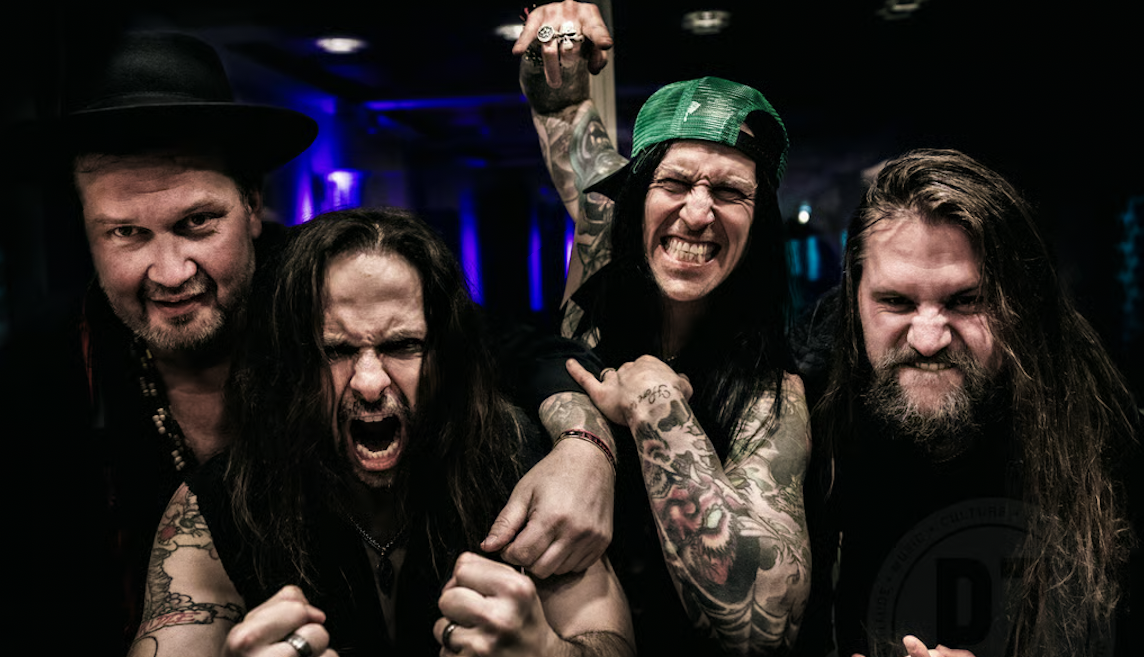 Hardcore Superstar return at full voltage with Halo, a huge, hook-loaded new single that captures the Swedish rock heavyweights at their most combustible. Driven by classic-rock swagger, serrated guitars and a chorus built for mass singalongs, Halo fuses muscle, melody and attitude into a blistering three-and-a-half-minute reminder of why Hardcore Superstar remain one of Sweden’s […]