Six more artists were revealed over the weekend.
The post Meshuggah, Testament, Sylosis, Etc. Booked For 2027 ‘Sonic Temple Art + Music Festival’ appeared first on Theprp.com.
Six more artists were revealed over the weekend.
The post Meshuggah, Testament, Sylosis, Etc. Booked For 2027 ‘Sonic Temple Art + Music Festival’ appeared first on Theprp.com.
 Hailing from Gothenburg, Sweden, Firebreather have been kicking around since 2016. They sketched out the bones of their sound on 2017’s self-titled, but it wasn’t until 2019’s Under a Blood Moon that they struck gold in the form of a small but potent infusion of Americana. That influence lessened on 2022 follow-up Dwell in the Fog, but a refinement of their groove kept the quality high. Four years later, the doomy trio returns with their fourth full-length in a decade, Blood That I Spill Turns to Fire. With this record, the band sought to keep things raw and heavy while adding a bit of melody and emotion to the brew. These elements can be tricky to mix, but how does Firebreather handle this new direction?
If you looked at the album art above and guessed stoner/sludge, you’d be right. With riffs too fat to fit through a barn door and a bass that registers on the Richter scale, Firebreather know how to rattle some teeth. These guys strike a balance between a slow and middle pace, favoring powerful, patient grooves over technical whizbangs and wankery. While Firebreather’s style may be too slow or repetitive for the layman and too fast for the funeral doom fan, true defenders of the faith will revel in Blood That I Spill Turns to Fire. Whether invoking the Sabbath (“The Sorrow Hides”), swinging with the ocean’s current (“El Cuervo”), or marching to Amon Amarth’s beat (“Against the Light,” “Shrines”), Matthias Nӧӧjd is a devout worshipper at the altar of the riff, savoring each fully before moving to the next. If Nӧӧjd brings the groove to Firebreather’s sound, bassist Jacob Madetoja brings the weight. Rumbling in step with Nӧӧjd’s fretwork, Madetoja turns Firebreather’s deep rumblings into a full-fledged earthquake.
The western flair from previous records seems to have disappeared, but that doesn’t hinder Blood at all. Firebreather’s latest effort surpasses their previous work while leaving their hallmark Conan-meets-High on Fire sound intact. Each track possesses a crystal-clear sense of self and flows effortlessly from verse to chorus to bridge and back, showcasing a focus on and vast improvement in raw songcraft. While Nӧӧjd still calls down from the mountaintop with a voice like a landslide, Blood sees him occasionally utilize softer, cleaner pipes. This isn’t a runaway success, but the variation is appreciated and allows Firebreather to orchestrate more dramatic compositions with more nuanced pushes and pulls. In a genre stereotypically focused on distortion and thiccness, Blood is surprisingly open with a DR of 9. Whatever magic Joona Hassinen wove at Studio Underjord made Blood an absolute pleasure to listen to—equal parts raw, dirty, and clear.

For all the praise I’m heaping on Firebreather, it’s the solo work that truly sets Blood apart. Suffused with the heart of our chosen genre’s distant progenitor, each time Nӧӧjd takes center stage, his guitar weeps with the same sweet sorrow that B.B. King’s and Albert Collins’s once did. Both “Only in the Eyes of Others” and “Protector of Realm” boast crooning, blues-soaked axe work—both guitar and bass—that could make a brick wall cry. On album highlight “Against the Light,” Madetoja soulfully slithers and winds around Nӧӧjd’s rhythmic fretwork, clearing the way for Nӧӧjd to crack the fucking skye. When I first heard this song, I could only imagine what tragedy gave birth to this impassioned centerpiece. Did his dog die? Is the thrill gone? Did he get the dyin’ flu? Whatever happened, I’m kinda thankful, because this solo fucking slaps.
There are a few dips—an overlong interlude here, a trimmable outro there, a suitable but unremarkable percussive performance—but in a genre that often drags and attempts to mimic drugs’ warped sense of time, Blood That I Spill Turns to Fire absolutely flies by, always leaving me wanting more. Firebreather’s fanatical worship of the riff, strong songwriting and flow, and soulful DNA make Blood an impressive entry a decade into the band’s career. I was surprised to find out this is Firebreather’s first visit to our Halls, but after spinning Blood That I Spill Turns to Fire, I’m certain they’ll be invited back.
Rating: 3.5/5.0
DR: 9 | Format Reviewed: 320 kbps mp3
Label: Heavy Psych Sounds Records
Websites: Bandcamp | Facebook | Instagram
Releases Worldwide: October 16th, 2026
The post Firebreather – Blood That I Spill Turns to Fire Review appeared first on Angry Metal Guy.

There are Ozzy Osbourne unreleased songs sitting in a vault, and the man who made them has finally said so. Andrew Watt, who produced Ozzy’s last two albums, has confirmed that he and Ozzy recorded material nobody outside the room has heard, that the songs were ‘made for a specific reason’, and that the last time anyone played them was in a Birmingham hotel room on July 4, 2025, the night before Back To The Beginning. Ozzy died seventeen days after that show. Watt says he hasn’t been able to listen to the songs since, and when he was asked whether they will ever come out, his whole answer was ‘kind of’.
 STREAM THE METAL BREAKDOWN DAILY NOW:
Scott Penfold breaks down the latest hard rock and metal news on today’s episode of The Metal Breakdown Daily. Download the free Loaded Radio App on Apple iOS and Google Play and stream the show now.
Speaking to Rolling Stone, Watt confirmed the existence of unreleased Ozzy recordings for the first time and gave one line of explanation: ‘There are some songs that we made for a specific reason. And, yeah, that’s all I can say. They’re hard for me to listen to.’
That is the whole statement, and every word of it is doing work. ‘Some songs’ means more than one and fewer than an album’s worth, or he’d have said album. ‘Made for a specific reason’ means these weren’t leftovers from the Patient Number 9 sessions that didn’t make the cut; they were written and recorded with a purpose in mind. And ‘that’s all I can say’ means the purpose is something Watt either isn’t allowed to discuss or doesn’t want to.
Asked whether the music might be released at some point, Watt answered ‘kind of’. Not no. Not yes. A producer who has spent the past year saying nothing about this picked the one word that keeps every door open and commits to nothing, which usually means a conversation is happening and the decision isn’t his.
 LIVE & LOUD: Stream the World’s Hardest Radio Station 24/7
Watt last heard the songs with Ozzy on the night of July 4, 2025, in Ozzy’s hotel room in Birmingham, hours before Back To The Beginning at Villa Park.
Watt had gone into the city with Sharon Osbourne and a few others to get a curry. Ozzy, by Watt’s account, kept texting: ‘Come to the hotel, come to the hotel.’ Watt and Sharon hesitated, because, as he put it, ‘He has a big day tomorrow.’ He went anyway, curry in hand, and sat with Ozzy while he drew, the way he usually did, and the two of them played back the songs they had made together and took notes.
‘That and the next day were the last times I got to see him,’ Watt said. ‘But we had a beautiful listening session and talked about a lot of stuff.’
Read that again with the dates in front of you. The night before the biggest farewell show in metal history, a 76-year-old man who could no longer stand to perform was in his hotel room working on unreleased music, making notes, planning what came next. Whatever these songs are, Ozzy was still thinking about them the day before he said goodbye.
Watt gives two reasons the songs are unheard, and he stops short of a third. The first is purpose: they were made for something specific, and that something hasn’t happened. The second is grief: he can’t listen to them.
The purpose is the part he won’t explain, and it’s the part worth thinking about. Songs made ‘for a specific reason’ in the last stretch of a man’s life, with a producer he trusted and a wife who was in the room, are not the same thing as spare tracks. They might be tied to a project that was already in motion. They might have been written for an occasion. They might be something Ozzy wanted held back until a particular moment. Watt’s ‘that’s all I can say’ leaves all of those on the table and rules out none of them.
The second reason needs no decoding. Watt was in that hotel room on July 4 and at Villa Park on July 5, and then Ozzy was gone. ‘They’re hard for me to listen to’ is not a producer protecting a release strategy; it’s a 35-year-old who lost a friend and hasn’t been able to press play since.
What Watt did not say is that the songs are unfinished, or that they aren’t good enough, or that the family doesn’t want them out. Every reason he gave is a reason of timing and feeling, not of quality. That matters, because it means the question is when, not whether.

Watt produced Ozzy’s final two studio albums, Ordinary Man in 2020 and Patient Number 9 in 2022, the latter winning two Grammys, and by Watt’s own earlier account Ozzy wanted to keep going after that.
Watt has previously described a plan for one more record after Patient Number 9: first an Ozzy and Tony Iommi project, then, at Ozzy’s suggestion, a full Black Sabbath album with Bill Ward on drums. Watt has said Ozzy asked him to call Iommi, Geezer Butler and Ward, and that the plan fell apart when Ward couldn’t commit. Iommi has given a different account, saying he was never keen on another Sabbath record after 13. Whether the ‘specific reason’ songs are connected to any of that, Watt hasn’t said.
What is clear is that Ozzy was writing and recording in the window between Patient Number 9 and Back To The Beginning, during the years his health kept him off the road. The Ozzy vault is not a new idea; fans have chased lost Randy Rhoads tapes for forty years. The difference here is that the person holding the tapes has confirmed they exist, in his lifetime, on the record.
Watt also used the interview to say what Ozzy did for him, and he put himself in a line that runs through Randy Rhoads, Jake E. Lee and Zakk Wylde.
‘If Ozzy Osbourne chose you, he gave you a career,’ Watt said. ‘I always loved rock music, but I was a pop producer before he chose to let me stand next to him.’ He named the precedents himself: Ozzy chose Randy Rhoads, chose Zakk Wylde, chose Jake E. Lee, and each one walked out of the audition with a life they didn’t have walking in.
The last name on that list is Yungblud. Watt says Ozzy loved him as a person and as an artist, put him on the Back To The Beginning bill, and chose ‘Changes’ for him to sing. ‘And he sang that song, and it changed his life,’ Watt said. Ozzy was still doing it the day before the end: picking people, handing them a song, and watching what happened.
Yes. Producer Andrew Watt, who made Ozzy’s last two albums, Ordinary Man and Patient Number 9, confirmed to Rolling Stone in October 2026 that he and Ozzy recorded songs that have never been released. He said they were ‘made for a specific reason’ and that he could not say more, adding that they are ‘hard for me to listen to’.
Possibly. Asked whether the songs could come out at some point, Andrew Watt answered ‘kind of’. No release, title, date or format has been announced by Watt, the Osbourne family or a label. Watt gave timing and grief as the reasons they remain unheard, not any problem with the recordings themselves.
Watt has not said. He produced Ozzy’s albums Ordinary Man (2020) and Patient Number 9 (2022) and has described Ozzy wanting to keep recording after that. The songs were finished enough to listen back to and make notes on by July 4, 2025, the night before Black Sabbath’s Back To The Beginning concert in Birmingham.
On July 4, 2025, the night before Back To The Beginning at Villa Park, Watt brought a curry to Ozzy’s Birmingham hotel room at Ozzy’s request. They listened to the unreleased songs together and took notes while Ozzy drew. Watt saw him again at the show the next day; those were the last two times he saw Ozzy, who died on July 22, 2025.
Ozzy Osbourne did, according to Andrew Watt. Watt said Ozzy loved Yungblud as a person and as an artist, brought him onto the Back To The Beginning bill, and personally chose ‘Changes’ for him to sing. Watt said the performance ‘changed his life’.
Loaded Radio covers hard rock and heavy metal news every day, with The Metal Breakdown Daily on the free Loaded Radio app for Apple iOS and Google Play. Follow Loaded Radio for the full story the moment these songs are announced.
The post Producer Breaks Silence on Secret Unheard Ozzy Osbourne Songs—And the Real Reason They’ve Been Kept Hidden appeared first on Loaded Radio.
KROQ’s iconic Almost Acoustic Christmas show is back for another year, and the line-up is filled with the very best of rock and alternative.

Up top, you have Foo Fighters and Weezer, both of whom have released massive albums this year.
They will then be joined by Sublime, Interpol, Joyce Manor, Julia Wolf, Almost Monday and The Linda Lindas.
A real wide range of sounds and styles, seeing the year out properly.
Almost Acoustic Christmas will be taking place at the Kia Forum in Los Angeles on December 12.
Tickets for the event will be on sale from October 30.
The post Foo Fighters, Weezer & More For KROQ Almost Acoustic Christmas Show appeared first on Rock Sound.
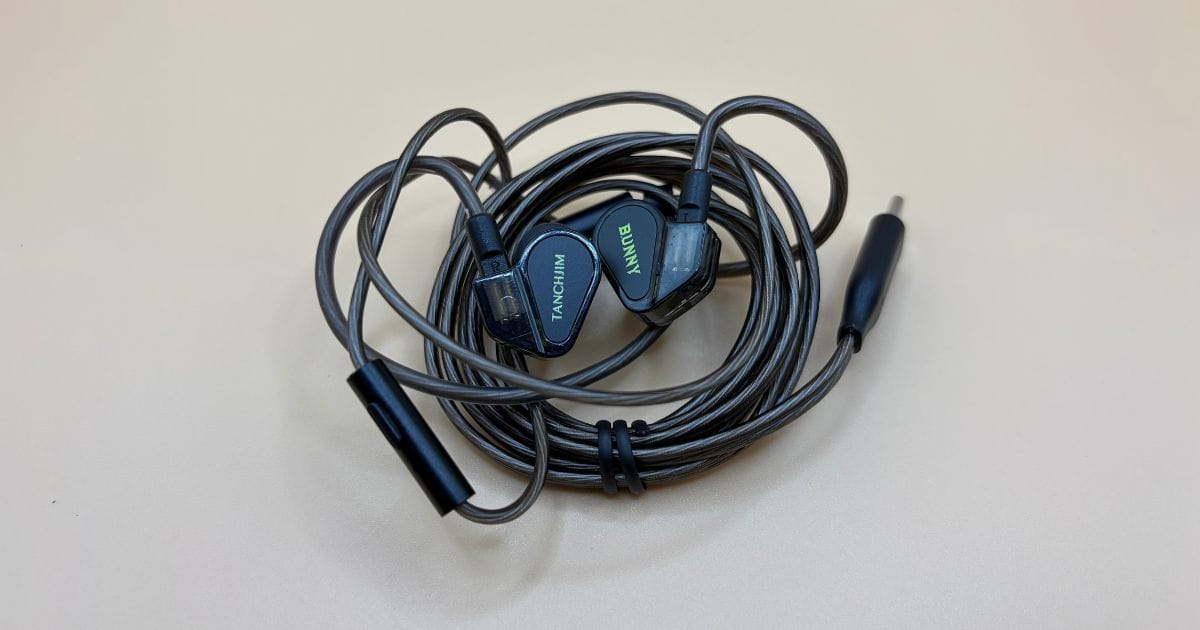
Gaming headsets are big, warm, and sometimes heavy enough to give you a neck workout. In-ear monitors are the opposite: tiny, light, and easy to wear for hours. Tanchjim wants to bring that idea to the budget crowd with the Tanchjim Bunny G, a USB-C gaming IEM that bundles a mic, a built-in DSP "sound card," and game-specific EQ into one cable.
The pitch is simple. Take one of the most talked-about $20 IEMs, tweak the driver, add the gaming extras, and keep it cheap. The question is whether it actually works, or whether it's mostly clever packaging.
Tanchjim is a Chinese audio brand best known for dynamic driver IEMs and its in-house DMT driver technology. They are known for their single-driver tuning strength, and the lineup includes models like the Zero, One, and Origin. Its original Bunny made a splash as a very cheap IEM that sounded far better than its price suggested, and the Bunny G builds directly on that success.
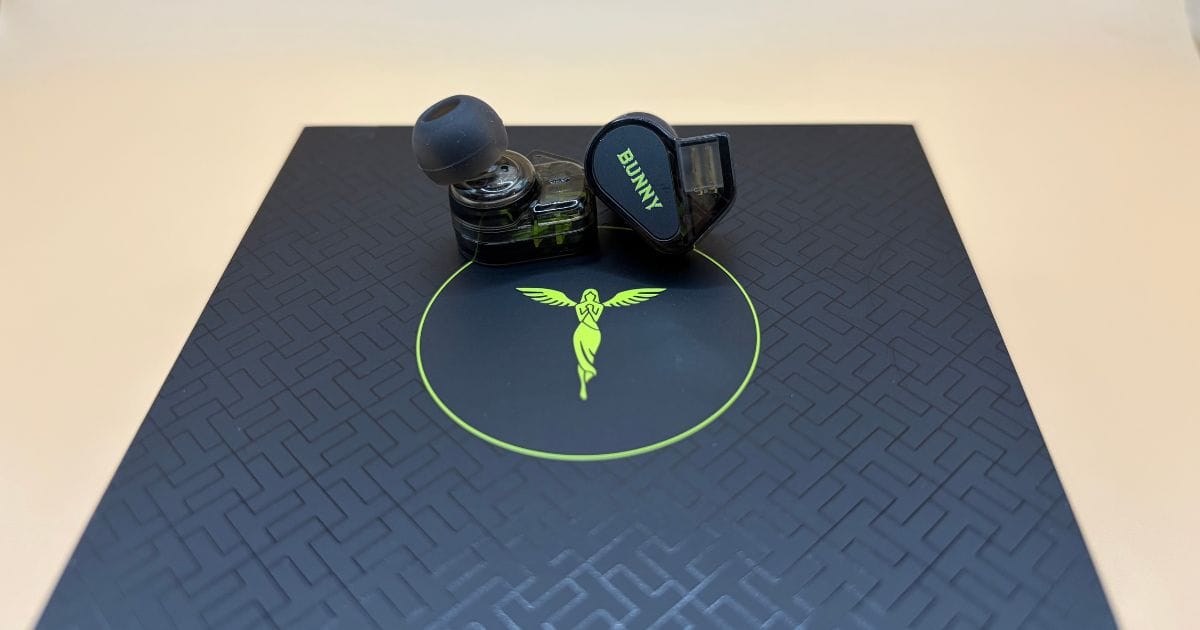
The Bunny G is the gaming version of the original Tanchjim Bunny. Tanchjim kept the comfortable shell shape from the original but gave it a smoked, translucent green look, a revised driver, and a different cable. The Bunny for Gaming is made for mobile or PC gaming.
Here's what's new:
It uses a standard 0.78mm 2-pin connection, so the IEMs themselves work with other cables.
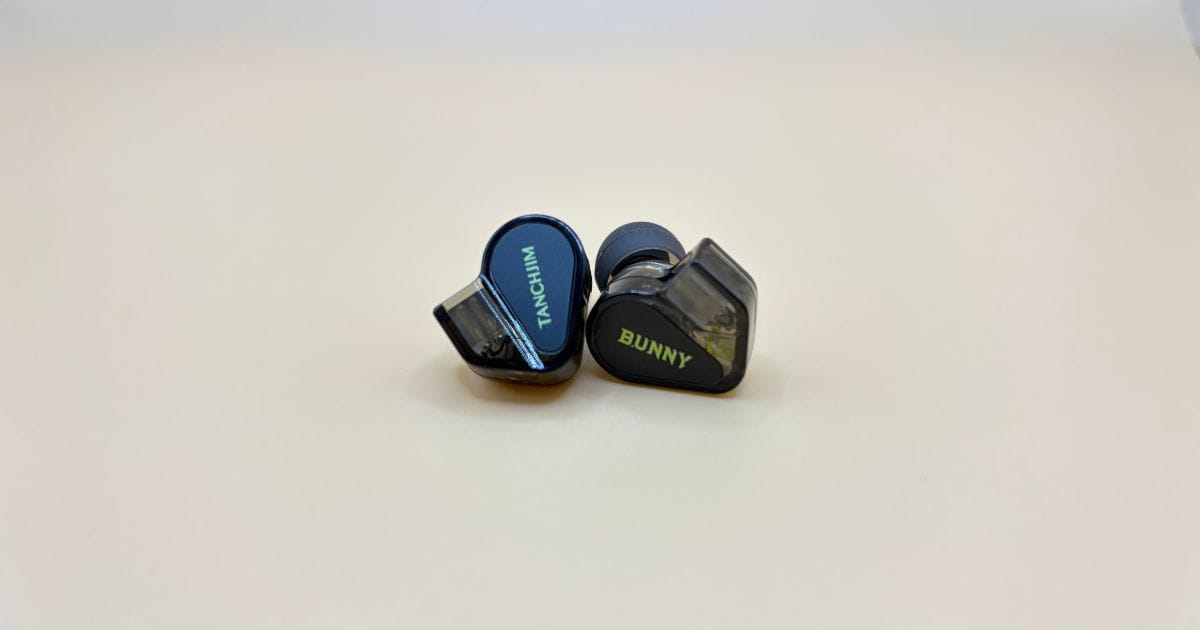
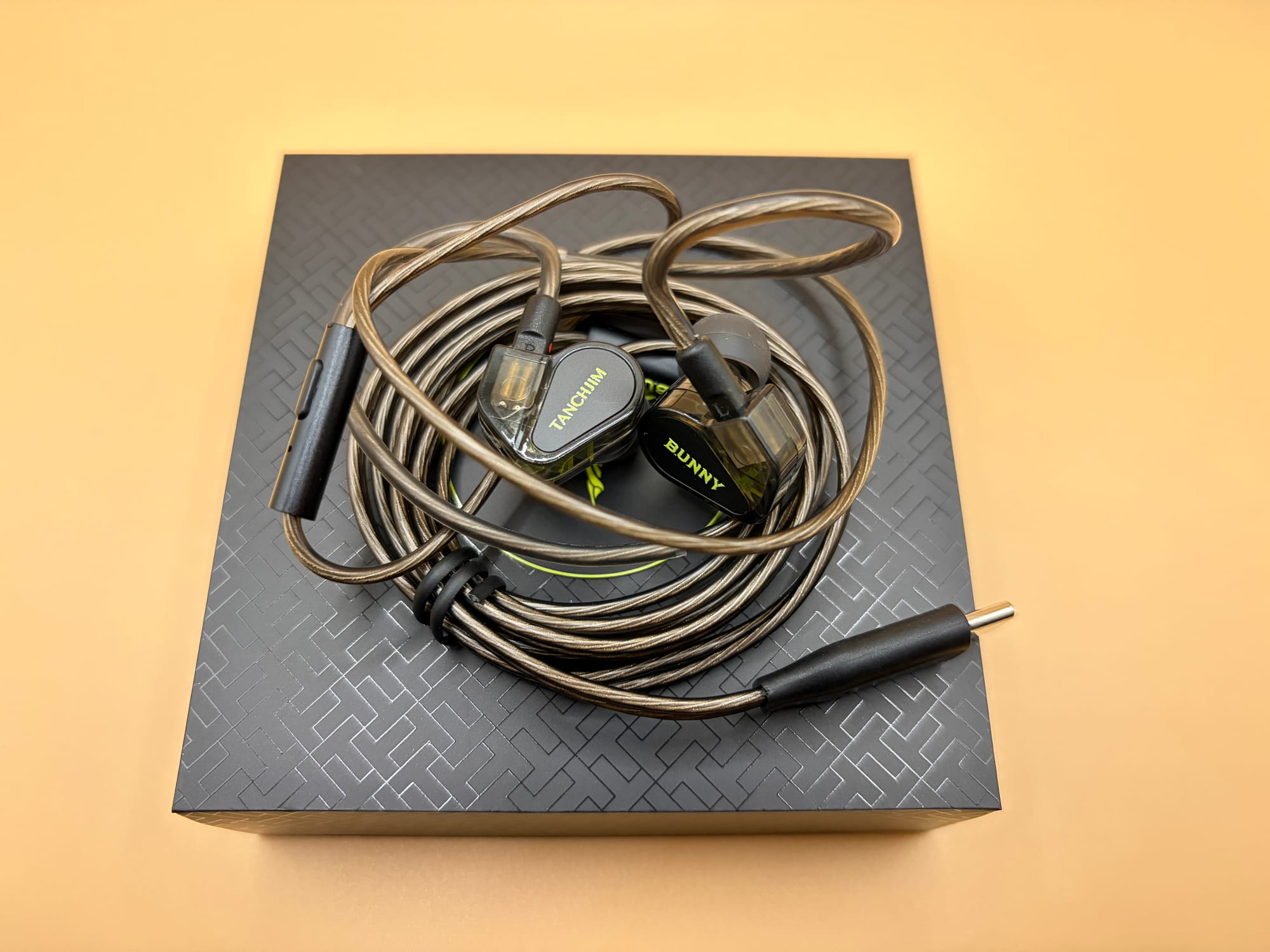
The Bunny G doesn't feel like a cheap IEM thanks to the smoked plastic shell and green accents, and the stock cable is an upgrade as well. In the box, you get the IEMs, the USB-C cable, a small pouch, documentation, and ear tips in two styles ranging from small to large.
The cable is silver-plated OFC copper, which means Tanchjim didn't cut corners on the basics. Durability during the month that we tried these out felt good, they seem like they will hold up during long term use.
On the default profile, the Bunny G leans into a mild V-shaped sound: a bit of extra low-end energy, a laid-back midrange, and smooth treble. It's a fun but not exaggerated tuning that is meant to be forgiving. There are eight presets in the app, so you can reshape it quickly if the default isn't quite right.
The bass leans toward the sub-bass region, with a fast, snappy character instead of a big, slow rumble. The bass feels natural and fun, with good punch on kick drums and a tidy, mud-free response. Don't expect earth-shaking sub-bass extension, but explosions and cinematic scores should feel satisfying without drowning out dialogue.
Mids are neutral and a bit laid-back. Vocals and instruments are well focused, with enough warmth and body to avoid sounding thin. Male vocals come across nicely weighted. Female vocals can sound a touch darker and softer, so if you love airy, breathy vocals, you may want to nudge the EQ.
Treble is smooth and well controlled, with natural timbre but subdued air. It's smoother and more refined than the original Bunny, though a bit of unevenness can show up at higher volumes.
Timbre keeps that classic Tanchjim dynamic driver feel, natural and tonally believable for the price. The soundstage is wide but shallow, leaning more toward width than depth. Imaging is strongest side to side and is accurate with decent sharpness, and instrument separation is solid without feeling cramped.
This is the big question, so let's be direct. The Bunny G has the right ingredients for casual and mid-level gaming:
Bottom line: Yes, it's a flexible, all-purpose set that's genuinely well suited to PC, phone, and handheld gaming, but it won't outperform much more expensive professional gaming IEMs.
No. Between the 30 ohm impedance and 123 dB/Vrms sensitivity, the IEMs are easy to drive, and the USB-C cable has its own DSP and DAC built in.
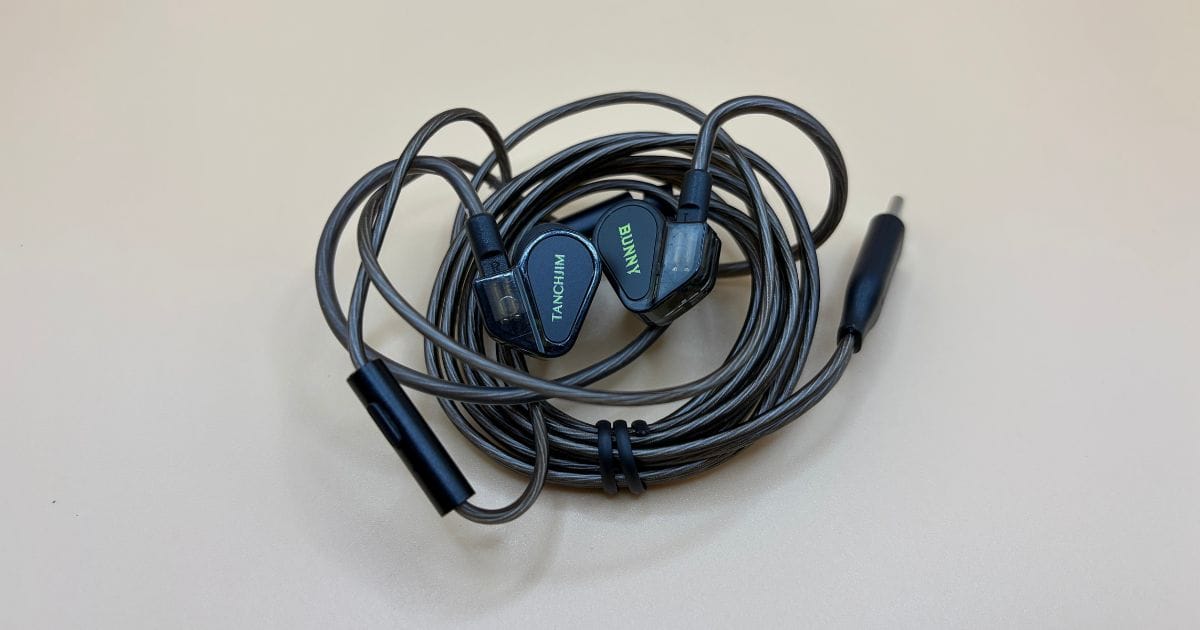
The comfort on the Bunny for Gaming is excellent, these are lightweight and fit in my ears very well, being perfect for long listening (or gaming) sessions. As a vented dynamic driver IEM in a plastic shell, expect moderate passive isolation, enough for gaming at home or commuting, but not a silent bubble in a loud room.
The original Bunny comes in a 3.5mm analog version and a USB-C DSP version, with warm-neutral tuning and forward mids that many people loved. The Bunny G adds the mic, game EQ, noise reduction, and a revised driver, with a slightly more V-shaped default sound. If you want a simple music IEM, the original is great. If you want a gaming or all-in-one USB-C set, the G makes more sense.
If you want a cheap, comfortable USB-C IEM that covers music, calls, and gaming, the Tanchjim Bunny G is a very smart buy. The tuning is fun without being extreme, the app features are unusually rich for the price, and the plug-and-play setup keeps things easy.
It isn't perfect. Female vocals can feel a bit soft, and the built-in DAC caps the sound quality. For just 30 bucks, though, that's easy to forgive.