R8FTOP 27’s Stay builds a dark and melancholic atmosphere from atmospheric synths, trance inspired textures and cinematic strings. The track has a spacious quality that allows each layer to gradually deepen the emotional tension, creating a feeling of movement without relying on a heavy rhythmic foundation. There is something almost dreamlike in the production, but beneath the cinematic surface sits a more troubled emotional core. The song explores the difficult space between holding on and recognising when attachment may have crossed into obsession, giving the otherwise immersive soundscape a strong sense of uncertainty. R8FTOP 27 keeps the arrangement restrained and intimate, allowing the textures to carry much of the emotion while the melodies give the track a clear sense of direction. Stay feels suspended between longing and doubt, with its atmospheric production turning that inner conflict into something spacious and absorbing.
A beautiful soundscape for the space between love and obsession.
Croatian folk/industrial metal collective Manntra have revealed details and first single in connection with their recent new album announcement. Dubbed Wild Hunt, it will be released through Napalm Records on December 25th, 2026.Recorded by Marko Matijević Sekul, Zlatko Štefančić, Žarko Pak, Simon Michael, Ingo Hampf and Felix Heldt. Mixed by Joerg Umbereit and Marko Matijević Sekul. Mastered by Joerg Umbereit. Read more…
Nobody is becoming the next Dave Grohl by typing a sentence into a text box. If that’s what you’re chasing, close this tab now. But if you’re a musician, producer, or just someone curious whether there’s actual money sitting inside these AI music tools right now, the honest answer is yes, there is, and it’s more grounded (and more complicated) than the YouTube gurus want you to believe.
The technology stopped being the hard part a while ago. The hard part now is the rulebook, because it rewrote itself over the last eighteen months quite a lot. Stuff that was a legal gray area in 2024 got settled in court through 2025 and 2026. Platforms that used to wave AI uploads through are now actively hunting them down. And a small handful of people figured out how to turn all of this into real income, sometimes shockingly high income, while plenty of others got their channels wiped for doing the exact same thing wrong.
Here’s what’s actually true right now, backed by what’s actually happened, not what a course landing page wants you to believe.
First, Do You Actually Own What You Make?
This is the question almost every “make money with AI music” article skips completely, and it’s the one that decides whether any of this is worth your time in the first place.
US copyright law has always required a human author. The Copyright Office laid this out directly in its guidance on AI and copyright: protection is available when AI is used as a tool to assist human creativity, but not when it stands in as a replacement for it.
That sounds discouraging until you look at the other half of the ruling. Where a person’s own creative choices show up in the finished work, rewriting a melody, restructuring an arrangement, editing raw AI output into something meaningfully different, that human contribution is protected.
There’s a genuinely famous example of this working exactly as intended. “Now and Then,” the “final” Beatles song built from a decades-old John Lennon demo using AI audio restoration, won a Grammy for Best Rock Performance.
Nobody disputes that it’s copyrighted, because Paul McCartney and Ringo Starr did real, audible creative work on top of the AI-cleaned vocal, adding new instrumentation and finishing the track by hand. The AI pulled Lennon’s voice out of a noisy old cassette. It didn’t write the song.
That’s the model worth copying at your own scale. Generate a raw idea, then actually finish it yourself, and you walk away with something you own. Upload the raw output untouched, and you walk away with something nobody can steal from you, mainly because there was nothing to own in the first place.
The Suno and Udio Earthquake
Suno and Udio are the leading AI music platforms.
If you tried making money with Suno or Udio in 2024, you were building on ground that hadn’t finished shaking yet. Warner, Universal, and Sony all filed federal lawsuits against both platforms that June, arguing their models had been trained on copyrighted recordings without a license and without a cent paid to the artists who made them.
That fight is mostly settled now, and how it ended changes what you’re actually allowed to do with these tools today. Warner settled with Suno in November 2025, picking up an equity stake as part of the deal, and Suno agreed to retire the models trained on unlicensed catalogs in favor of new ones built on properly licensed music.
Universal reached its own settlement with Udio that October, and Music Business Worldwide reported the two companies are now building a joint licensed platform together. Warner followed with its own Udio settlement shortly after, detailed by Decrypt, with Udio shifting toward a model where participating artists get paid when their voice or style is used.
Sony and Universal are still negotiating directly with Suno, so that piece isn’t fully wrapped up. But the practical upshot for you, sitting at your laptop right now, is simple. On Suno, free tier output is restricted to personal, non-commercial use, full stop. Udio’s free tier is a bit more flexible, allowing commercial use in many cases as long as you credit Udio, according to a breakdown of both platforms’ licensing terms. Either way, the clean, unrestricted commercial rights live behind the paid subscription. If you’re serious about earning anything from this, budget for it before you build a release plan around a tool you don’t actually have commercial rights to use.
Where You Can Actually Release This Stuff?
Streaming is still on the table, but it’s a lot stricter than it was a year ago, and your distributor matters more than you’d think.
Spotify allows AI generated music outright and always has. Royalties get paid the same way regardless of whether AI touched the track. What’s changed is transparency. Artists can now tag a release with specific AI disclosures, covering AI vocals, AI lyrics, AI production, and AI instruments, or file a plain “no AI” declaration that shows up right in the song credits, part of a system built around the industry’s DDEX metadata standard, as reported by CO/AI.
That disclosure is currently voluntary. What isn’t voluntary is the fraud sweep running underneath it. Spotify pulled more than 75 million spammy tracks off the platform in a single year, and in August 2026 it started labeling “AI Persona” profiles and cutting them out of algorithmic playlists and personal recommendations entirely, a move covered in detail by TechCrunch.
You can still upload, but the algorithm won’t recommend your tracks if they are flagged as AI.
Your distributor is the other half of this equation, and they don’t all play by the same rules. DistroKid allows AI generated music, but you have to accurately represent where it came from and can’t falsely claim human composition or performance credits. TuneCore takes a similar stance, requiring that the commercial rights granted by whatever AI tool you used actually cover the kind of distribution you’re asking them to do, with both platforms shifting the legal risk back onto you if something goes wrong, according to a breakdown of distributor policies.
CD Baby is the outlier. Their help center is blunt about it: they will not distribute fully AI generated content at all, regardless of what your AI tool’s terms of service say about commercial use, a policy confirmed directly to Hypebot. Know which lane your distributor is in before you build a release calendar around it.
YouTube, Spotify, and Deezer – What Each One Actually Pays?
The answer is different on every platform, so here’s each one broken down on its own.
YouTube
To join the YouTube Partner Program and earn ad revenue, you need 1,000 subscribers plus either 4,000 public watch hours in the past 12 months or 10 million Shorts views in the past 90 days, no active Community Guidelines strikes, and two-step verification turned on, according to YouTube’s current eligibility rules.
There’s also a lower 500-subscriber tier that unlocks things like channel memberships and Super Thanks, but not full ad revenue.
Yes, you can monetize AI generated music on YouTube, but there’s a catch that trips people up constantly.
In July 2025, YouTube renamed its old “repetitious content” rule to “inauthentic content” and started explicitly targeting mass-produced, templated AI uploads, think a static thumbnail looping an AI track with zero presentation around it, as ineligible for monetization, even when each individual video technically follows the rules.
A channel posting a handful of AI tracks with real thought and context behind each one is in a completely different position than one dumping fifty near-identical AI beats a week. You also need to actually hold commercial rights to the track from whatever tool generated it, and Content ID will flag anything that too closely resembles existing copyrighted material.
What you can earn depends entirely on watch time and niche, same as any other channel. A small to mid-size music channel pulling tens of thousands of monthly views typically nets somewhere in the low hundreds of dollars a month in ad revenue.
Real money shows up once you’re consistently in the hundreds of thousands to millions of views range. AI doesn’t change that math, it just changes how fast you can produce the content that eventually gets you there.
In theory, music content typically earns $1 to $3 per 1,000 views on YouTube, so a track that pulls a million views nets somewhere around $1,000 to $3,000, meaning you’d need several genuine hits, not just one, before this turns into real income.
Spotify
Spotify doesn’t take direct uploads from individual artists, you go through a distributor like DistroKid or TuneCore, and there’s no subscriber or follower threshold to clear first, royalties start accruing from your very first stream. What matters more than eligibility is the disclosure system covered earlier: tag AI vocals, AI lyrics, AI production, and AI instruments on a release, or file a plain “no AI” declaration.
You can monetize AI music on Spotify, and the platform pays the same royalty rate regardless of whether AI touched the track. The catch is that the payout itself is small.
Commonly cited industry estimates put Spotify’s per-stream rate somewhere around $0.003 to $0.005, so a track needs hundreds of thousands of streams just to clear a few hundred dollars.
Spotify’s fraud detection is aggressive enough now, 75 million tracks pulled in a single year, that artificially padding your numbers just gets you removed.
Unless you land a genuine hit or a viral moment, per-stream Spotify income on its own is closer to pocket change than a paycheck, which is exactly why the licensing route covered above tends to be more reliable for most people.
Deezer
Deezer runs through the same distributors as Spotify, so there’s no separate upload process to learn and no special eligibility gate either.
What’s different is how seriously Deezer has gone after AI fraud specifically. The company built its own AI detection tool, running since January 2025, and by 2026 was receiving somewhere between 60,000 and 90,000 fully AI-generated tracks a day, crossing half of all daily uploads at multiple points in the year.
Since June 2025 it’s been the only major platform to visibly tag AI tracks for listeners, a system detailed in a breakdown by PPC Land, and flagged tracks get pulled from algorithmic recommendations and editorial playlists automatically.
Deezer isn’t blocking AI music outright. Tagged tracks stay up and still earn royalties at the normal rate. But the company reports that up to 85 percent of the streams AI tracks do get are flagged as fraudulent and demonetized on the spot, which tells you how much of that traffic is bots rather than real listeners.
Genuine, organic plays get paid normally. Anything that smells like stream farming gets zeroed out, and Deezer is specifically built to catch exactly that.
Everywhere Else: TikTok, Apple Music, and Amazon Music
TikTok allows AI music, both distributed into its Commercial Music Library through the usual distributors and used as background audio in your own videos, but it requires labeling when content could realistically be mistaken for something it isn’t, mostly around voice cloning and artist impersonation rather than plain instrumental AI tracks.
TikTok has already removed tens of thousands of videos and banned thousands of accounts for undisclosed synthetic content, so using the labeling toggle is worth doing even when it feels optional. Money on TikTok rarely comes from a per-stream rate. It comes from a track going viral enough to drive sales, licensing interest, or an audience somewhere else. TikTok works better as a discovery engine than a direct paycheck.
Apple Music and Amazon Music both allow AI music through your distributor, but neither has built anything like Deezer’s detection system yet. Apple’s approach relies entirely on labels and distributors self-declaring AI involvement, with no independent verification on Apple’s side. Royalty rates on both are broadly similar to Spotify’s, small per stream, which means the same rule holds everywhere: streaming alone rarely adds up to real money unless you’re pulling genuine volume, and the steadier income usually comes from the licensing and client work covered earlier in this piece.
The AI Acts Who Are Actually Cashing In
Forget theory for a second. Here’s who’s actually making real money doing this, and how they did it.
The biggest headline of the last year belongs to Xania Monet, an R&B and gospel act created by Telisha Jones, a poet and design studio owner from Olive Branch, Mississippi. Jones writes the lyrics herself, drawing heavily on her own life, then runs them through Suno to produce the finished vocal and instrumental track. Within months the project had racked up millions of streams, landed a song at number one on Billboard’s R&B Digital Song Sales chart, and triggered a bidding war among labels that closed with a reported three million dollar deal from Hallwood Media, run by former Interscope executive Neil Jacobson, as reported in detail by Techloy. The AI didn’t write Xania Monet’s songs. Jones did. The AI gave her a voice and a level of production polish she couldn’t have produced solo.
Breaking Rust, an AI country persona, went in a similar direction, holding the number one spot on Billboard’s Country Digital Song Sales chart for two weeks in November 2025 and generating an estimated $469,963 across combined Spotify and YouTube activity, according to stream-based earnings estimates reported by Taste of Country.
Then there’s a scrappier example, and arguably the most useful one if building a fake persona isn’t your thing at all.
Comedian Willonius Hatcher used Udio to turn his Drake and Kendrick Lamar diss-track parody, “BBL Drizzy,” into a viral hit built entirely off his own ear for what sounded funny and good, tweaking the AI’s output over and over until it landed, a process documented in Kapwing’s research into the top earning AI acts. He wasn’t a professional musician. He had a good ear, patience, and a genuinely funny idea, and the tool did the technical heavy lifting.
The pattern across every one of these is the same. None of them are “type a prompt, upload, get rich.” Every single one involved a real person doing real creative work on top of the AI output, writing the lyrics, directing the sound, editing relentlessly. The AI supplied the production. The person supplied the reason anyone cared.
A More Realistic Lane: Licensing and Sync Work
Streaming royalties are small even for real human artists with real fanbases, so chasing a viral streaming moment is a long shot for most people. The more sustainable lane, and the one that doesn’t require you to build a fake persona or go viral at all, is licensing background music for people who need it constantly: YouTubers, podcasters, indie game developers, and small agencies who can’t afford to hire a composer for every project.
The actual workflow looks like this. You generate a base track in a tool built for this kind of work, things like AIVA, Soundraw, or Mubert, or a general purpose tool like Suno if you’re finishing it heavily by hand.
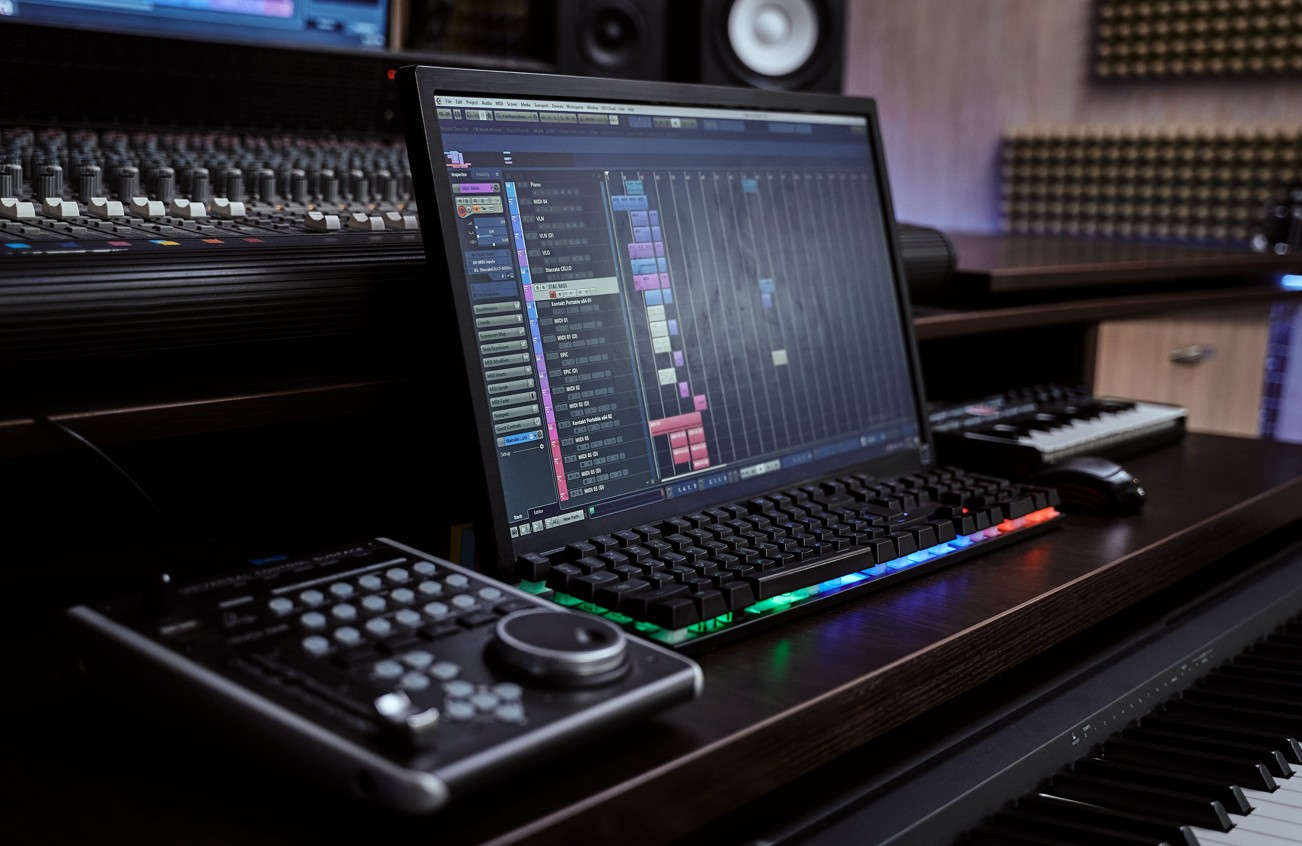
Then you pull it into a real DAW and actually finish it, adjusting the arrangement, mixing it properly, maybe layering a live instrument on top so it doesn’t sound like everyone else’s AI output.
AI music is still far away from using professional equipment and skills. Image credit: 123rf.com/konstantinraketa
If you don’t already have a DAW workflow dialed in, our breakdown of the best DAWs for beginners and pros is a solid place to start. From there you submit the finished track to a stock or sync library that accepts AI-assisted work, or you go direct and sell background scores to content creators who need something usable without hiring a full composer.
This is slower than chasing a viral moment, and nobody should be promising you a specific dollar figure here, be skeptical of anyone who does. But the demand for cheap, usable, rights-clear background music is constant, it doesn’t require an audience of your own, and it rewards the same skill that’s always mattered in production work: knowing when a track is actually finished versus when it just sounds finished.
So how much can you actually make?
For most people doing this steadily through licensing and freelance work, somewhere between a few dozen and a few hundred dollars a month once there’s a real catalog behind it, closer to a side hustle than a living. The table below breaks down why.
Roughly $10 to $50 per license sold. Every time a different person buys your track for their own video or project, you get paid somewhere in that range (after the platform takes its cut).
A large catalog, since most tracks sit unsold and the platform takes a 30 to 50 percent cut
Roughly $50 to $500+ a month once you’re placed, sometimes a flat fee near $500 per accepted track. Some libraries pay you a flat one-time fee just for getting a track accepted into their catalog, so Epidemic Sound is reported to pay around $500 per approved track as basically a purchase price, whether it ever gets used again or not. Other libraries pay based on actual usage instead, so every time a creator picks your track for their video, you earn a small cut, and that adds up slowly over months as more people find and use it.
Getting past curation, consistent output, and patience while your catalog builds usage over time
Freelance production or client scoring work
Your normal day rate, AI just speeds up delivery
Existing production skill. AI is a shortcut here, not a new income source on its own
Viral AI persona project
Six to seven figures in rare cases (Xania Monet’s $3M deal, Breaking Rust’s roughly $470K)
Virality, genuine songwriting, and a lot of luck. Not something you can plan a budget around
Note on word “license”: it just means someone paid to legally use one of your tracks in their own video, ad, or project. No contract or paperwork on your end, just a paid download with permission attached.
Other Ways People Are Making Money With AI Music
Producing for other artists. If you’re solid at mixing and arrangement, AI tools speed up the grunt work enough that you can take on more paying client work in the same number of hours. The AI isn’t the product here. Your speed and your taste are.
Custom scores for brands and small creators. Most businesses and podcasters don’t need a chart hit, they need a usable, specific track for a specific scene or ad, fast and cheap. This is closer to freelance composing than passive income, but it pays reliably.
Teaching what actually works. There’s a real, confused audience of musicians who’d rather pay for one honest, accurate breakdown of how to use these tools and stay out of legal trouble than sit through another hype-filled course. If you’ve actually figured this stuff out, that knowledge has value.
Selling beat packs and loop kits. Producers have sold instrumentals to other artists for years. AI-assisted beat packs, sold with clear commercial licensing terms attached, are just the newest version of that same hustle.
Where People Actually Get Burned
1. Using free tier output commercially
It’s against the platform’s terms, it’s easy to catch after the fact, and it’s the fastest way to get a track pulled once you’ve already built momentum around it.
2. Cloning a real artist’s voice without permission
Every major platform treats unauthorized voice cloning as a separate, more serious violation than ordinary AI use, and this isn’t a gray area anymore the way it might have felt a couple of years ago.
3. Mass uploading low effort tracks hoping something sticks
By mid 2026, AI generated tracks had crossed 50 percent of Deezer’s daily uploads, but accounted for barely one to three percent of actual listening, and an estimated 85 percent of the streams those tracks did get were flagged as fraudulent, according to a breakdown of AI music economics. Platforms are actively building detection systems specifically to catch this pattern. Volume without quality gets you flagged, not paid.
4. Building on a fake identity with no plan for transparency
Earlier in the AI music boom, a retro rock act called The Velvet Sundown racked up over a million monthly Spotify listeners before anyone realized the whole project, music, photos, backstory, was AI generated. Once that came out, the story became about the deception, not the music. If you’re going to build a persona project, decide up front how open you’re going to be about it, because getting caught hiding it tends to do more damage than just being upfront from day one.
5. Assuming you own something you never actually worked on
If a dispute ever comes up and you can’t point to real human decisions behind the track, you don’t have legal ground to stand on, no matter how much time you spent writing the prompt.
A Simple Plan to Actually Start With This
Pick a paid tier on whichever tool you’re using. Commercial rights only come with the paid plan, on every platform that matters.
Do real work on top of the raw output. Rewrite, rearrange, mix, add a real instrument or vocal if you can. This is what actually makes the track yours, legally and creatively.
Pick one lane on purpose: streaming, sync licensing, or direct client work. Trying to do all three badly is worse than doing one well.
Disclose AI use wherever your distributor or platform asks for it. It costs you nothing and keeps you off the crackdown lists.
Keep a record of your process. Save your prompts, your edit history, your mixing decisions. That record is what proves human authorship if anyone ever questions it later.
AI music was never going to make anyone the next rock star, and if that’s still what you’re chasing, this isn’t the tool for it. But treated like what it actually is, a genuinely useful piece of studio gear rather than a magic income machine, it can absolutely put a real, steady bit of extra money in your pocket. For a working musician or producer, that’s just a new tool in the kit.
Words by Annette Geneva Photos by Pete Mellows There are certain gigs where you walk out feeling like you have just been re-wired, like your brain created a new core memory and not just another one of hundreds or ridiculous tabs it has open that you never really go back to. HEALTH at The Odeon […]
It’s probably not that controversial to say that the bands reviewed after this wouldn’t have the impact and possibly the attention without In This Moment.
At a a time when the NWOAHM was all the rage In This Moment exploded out of that scene with aggression and grooves, topped with the incredible vocals of Maria Brink. From the metalcore beginnings into the gothic alternative metal act they are today, In This Moment have taken many shapes but have always been the guided by the creative drive of Maria Brink.
The band is her artistic outlet, curating the lyrics, music and visual presentation of the band and this month record is still a defiant, emotionally driven collection of songs that balance fury and femininity as Brink puts it herself: “Witch is my declaration of inner transformation, it’s about embracing the duality within”.
Begining with the punishing Shame, Witch starts off with exactly the kind of metallic battery you may expect from In This Moment, glitchy industrial twitches against down-tuned alt metal riffs, the synths creating the introspective atmospheres on I Want To Believe which features Dayseeker.
One of three guest on the record which includes Kim Dracula on the furious Heretic and Kat Von D on their cover of Pink Floyd’s Another Brick In The Wall. It’s their own tracks that punch through with Crawl right up there with beats of NiN, Sleeping With The Enemy features Brink’s magnetic vocal delivery and cleverest lyrics as Father brings synth wave elements to the balladry.
In This Moment still dwell in their own electronic darkness on Witch, introspective and thumping, with those unique vocals just capping everything off, it’s modern alt metal with gothic feminine overtones that still manages to impress. 8/10 Brat – Manslayer (Prosthetic Records)
Brat return with their new release Manslayer.
The title is self explanatory I should think, revenge, women taking back their power and their bodies from men who have taken that away, doing so at the end of a knife, the barrel of a gun or a stiletto heel through the face like the album cover.
Drawing influence from the lyrical content of country music, where women get revenge on this who have wronged them but Brat do it with a gore soaked death metal and grindcore assault, so the imagery is dialled up to slasher movie levels.
In fact the movie theme is present on the first half of this two part record. It’s the struggles fond themselves having to combat in the world of the interweb and ‘celebrity’ they display these struggles however through some horror movie themes, including body horror, nightmares and serial killers.
It’s Brat becoming more violent, channeling the sheer intensity of their live show into a record which has influences from bands such as Nails or Full Of Hell, once where metal and grind aren’t genres, they’re ways onomatopoeic ways to hurt you as you listen. Disgusting barks and growls, over abusive riffs and blastbeats, death metal, grind, thrash and much more from the ‘extreme’ side.
The second half of the record is where the real bimboviolence happens, everything before the interlude is traumatic, an event that causes what happens after it, tracks such as Femicidal Vengeance, which features solos from David Davidson from Revocation and Ways To Kill Your Husband are drenched in murder and bloody vengeance. As is Blistered Tongues which has Candace Buckingham from Walls Of Jericho adding her insanely vicious vocal to the whirlwind of aggression, the two frontwomen delivering and intensity and terror.
Manslayer moves Brat away from being genre tag into a more brutal and ferocious force of female anger, beware the Manslayer. 8/10
RØRY – Bloodletting (Sadcøre Records)
First emerging as an online advocate for understanding ADHD and neurodivergence through viral social media page ADHD Love and as the co-host Late Bloomers Podcast, doing both alongside her partner Richard Pink, Roxanne Emery has become one of the premier voices for mental health in this new influencer led world.
However after so much turmoil in her life a new found sobriety, love and family around her pushed her to have another go at music. Re-entering the music world as RØRY, her previous album went to the UK Top Ten and took her to stages such as Download Festival, these songs of sadness striking a chord with listening public and now RØRY returns with album number two, Bloodletting.
The sadness has been replaced by anger, therapy forcing her to confront decades of suppressed emotions, “I realised I was sick from being nice. I’d spent so much of my life being the bigger person” she says and on Bloodletting she confronts the emotions of rage, resentment, jealousy, revenge and hatred, writing the heaviest and most intense music yet.
RØRY even took vocal lessons and learned to scream to really hammer the aggression of this record home, it can be felt as [the death of a people pleaser] leads into the Kids These Days which I’m sure fans of Nigel will love, but that’s the point, confronting toxicity, in all it’s forms, be it what were surrounded by today or from her past on Dead Girl Walking, yet holding a candle to where you’re from no matter how complicated on Hometown.
It’s a record that balances rage and retribution, confronting all these things that had been buried for long, pouring out these emotions in the music, as lost loved ones are honoured on the heartbreaking A Cure For Cancer and the choice is made to live on Strange and [do you want to live?] closing the album on a defiant sting that tugs at the coldest of hearts.
RØRY moves from sadness into catharsis, apologies into rage, but importantly shows RØRY developing as an artist with her most diversely offering yet. 8/10
Scene Queen – Metalicious (Hopeless Records)
From Bimboviolence to Bimbocore its the new EP from Scene Queen
While I’m still not quite on board with the tag ‘bimbocore’, though it’s reclaiming that term, you can’t fail Scene Queen for using to describe her music. Pink, glitter, club mentality meets crushing modern ‘core’ music, taking aim at the often misogynist metal genre.
Especially the bands where the guys wear deep V-necks and run on the spot, or the ones with backwards caps and baggy jeans, Scene Queen does this from the opening of Pink Flip Phone which is a nu metal trapped in a glitter bomb, ready for the Millennial audience who remember Y2K and the Motorola Razr.
From here it’s electronic pulsations on Manicure, which moves from club beats to sickening deathcore breakdowns on this rage fuelled threat to anyone that abuses women. It’s beginning of Scene Queen showing off a more hybrid style than in her debut.
The songs get much heavier, the vocals having much more harsh screams than before on Tracksuit and the title track which features Left To Suffer, there’s also a strong pop influence on tracks such as Shopaholic, which refences Destiny’s Child or the bounce of Tits Out At Brunch.
More extreme, more pop, more bimbocore as Scene Queen follows up Hot Singles In Your Area with something more Metalicious. 7/10
Passive’s Welcome To The Show brings a cool indie rock energy with a melodic edge, balancing punchy alternative rock dynamics with the lighter touch of indie pop. The track has an immediate feel, built around catchy guitar work, a steady rhythm and enough movement to keep the arrangement lively without becoming overly polished. There is a confident sense of attitude running through the song, giving it the character of a band stepping onto the stage with something to prove. Passive keep the sound accessible while allowing the guitars and vocals to carry plenty of personality, creating a track that feels energetic, direct and easy to get into. Welcome To The Show has that familiar indie rock charm where strong melodies meet a little roughness around the edges, making it feel natural rather than overly constructed.
Indie rock with a little attitude and plenty of hooks.
The album opens with “Eyes Burn Red,” a track that showcases the band’s style. This alternative rock band draws heavily from the 90s. The music carries a nostalgic intensity, featuring intriguing and dynamic variations that captivate listeners. The combination of catchy hooks and thoughtful arrangements keeps the audience engaged throughout the song.
Following this, we encounter “Fool Me,” which presents an interesting progression. The vocals can remind listeners of Michael Stipe’s unique delivery. The melodic line is deeply nostalgic, evoking imagery of faded Polaroids that resurface long-forgotten memories. This song truly reflects the emotional depth found within the album.
Next is “Easier,” a track that brings a driving rhythm to the forefront. It stands out as a visionary piece, illustrating the band’s unique compositional vision. The music pushes boundaries while maintaining an engaging tempo. The exploration of rhythm and melody reveals the band’s distinct approach to songwriting.
Loss of Control – Sound and Atmosphere
“On Our Way” is another highlight, filled with intricacies and pauses. This avant-garde track surprises listeners with its rhythmic and harmonic variations. It’s a visionary composition, one that requires multiple listens to fully grasp its depth. Each play uncovers new layers, enhancing its complexity.
The song “Redacted” continues the album’s atmospheric journey, drawing listeners deeper into the band’s creative world. As the album progresses, the music becomes more immersive, threading a cohesive atmosphere throughout. The overall sound is characterized by crunchy guitars, counter-rhythms, and brief but intense solos that propel each song forward.
The vocals remain steady, avoiding exaggeration while seeking a hypnotic and nostalgic essence. “Loss of Control” features a melody that feels somewhat clearer than the other tracks but retains the unpredictability of the rhythm. The sound presents an intriguing blend of influences reminiscent of bands like R.E.M. and Counting Crows, enriched with an alternative underground flair.
Loss of Control – Performance and Production
Lastly, the album concludes with “Morning Light,” a track that feels almost like a hopeful mirage in another dimension. This delicate and ethereal song gracefully encapsulates the essence of the album. It serves as a fitting testament to the creative journey this band has embarked upon throughout the album.
Overall, this album is a delightful discovery that deserves to be shared with a wider audience. The craftsmanship in songwriting and musicianship is evident in every track. The dynamic variations, emotional melodies, and intimate songwriting establish a strong connection with the audience. The balance between nostalgic rock sentiments and contemporary explorations marks an excellent compositional endeavor.
The essence of this album is an amalgamation of nostalgia, emotional depth, and skilled artistry. For those seeking unique sounds, this album offers a rewarding experience. Fans of alternative rock should give this album a listen, as it promises to resonate on many levels.
Bullet For My Valentine will release their new album, Social Apocalypse, on March 19, 2027, via Spinefarm. The announcement arrives with a towering new single by the same name. Social Apocalypse is the band’s first new song in four years; on the title track, Matt Tuck rages against “the end of the world as we […]
The band immerses listeners in a shadowy and intense universe right from the first guitar riff. This opening creates a nostalgic aura mixed with a profound sense of mystery. The low, intense vocals remind me somewhat of the distinctive tone of Peter Steele from Type O Negative. Their gothic sound delves into the depths, echoing the philosophical notion that when one gazes deeply into the abyss, the abyss gazes back.
In the verses, there is a sense of emptiness, which starkly contrasts with the chorus. Here, the music explodes into a powerful mixture of distorted guitars and keyboards, creating a dystopian flavor. This sonic shift evokes imagery reminiscent of films such as “Blade Runner”. The atmospheric transformation is enchanting, especially at the 3:05 mark, when the song transitions into the bridge. At this point, the mood shifts slightly, offering a fleeting hint of hope. This feeling is enhanced by the inclusion of both male and female backing vocals, creating an experience that feels suspended in time.
As the song moves to its grand finale, the previously established stillness builds anticipation. The juxtaposition of intense instrumentation and gentle harmonies adds depth to the composition. It’s a fantastic journey through various emotional landscapes, engaging listeners with its intricacies.
Six Feet Inside You – Sound and Atmosphere
Each transition throughout the piece feels intentional, guiding emotions from one state to another. The band successfully crafts an auditory narrative that resonates deeply with themes of existential reflection and emotional turbulence.
The instrumental arrangements further enhance the overall experience, offering a rich tapestry of sound that captures the depth of the lyrics. The fusion of a dark atmosphere with brighter passages creates a dynamic listening experience.
The production quality elevates the experience, allowing each note and moment to breathe. The mixing captures the essence of the band’s vision, ensuring that every element is audible and resonates fully. The combination of gothic rock and atmospheric influences creates a unique identity for Vasa Kumora.
Six Feet Inside You – Performance and Production
“Six Feet Inside You” is a remarkable achievement. It invites listeners to deeply explore its layers while providing a transformative listening experience. I highly recommend it to anyone who seeks profound musical exploration. The interplay of various elements culminates in a powerful expression of artistry that deserves to be celebrated.
Bandcamp [Release date 09.09.26] I think husband and wife team Coty Hoover and Becca Smith, aka Admiral Radio, were put on this earth to harmonise together. Throughout this whole album they lay their harmonies down like sweet butter cream on … Continue reading →



 Words by Annette Geneva Photos by Pete Mellows There are certain gigs where you walk out feeling like you have just been re-wired, like your brain created a new core memory and not just another one of hundreds or ridiculous tabs it has open that you never really go back to. HEALTH at The Odeon […]


 If you love this music:
 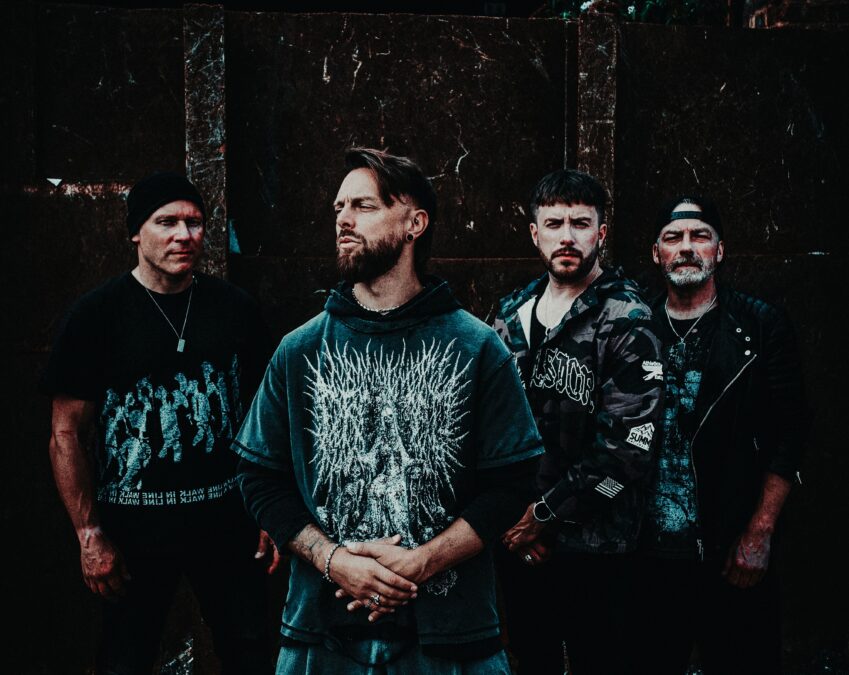 Bullet For My Valentine will release their new album, Social Apocalypse, on March 19, 2027, via Spinefarm. The announcement arrives with a towering new single by the same name. Social Apocalypse is the band’s first new song in four years; on the title track, Matt Tuck rages against “the end of the world as we […]