A delayed flight, a long queue in the supermarket, a postponed meeting, or an appointment that starts later than planned can suddenly leave you with some free time. While these moments may initially feel inconvenient and even irritating, they can also become welcome opportunities to relax or recharge for a while. Instead of counting the minutes until your schedule resumes, you can indulge in a few enjoyable activities. After all, there are plenty of ways to make idle moments feel worthwhile without requiring much preparation.
The next time your plans hit a pause, you don’t have to let boredom take over. Here are several simple ways to stay entertained whenever unexpected downtime comes your way.
1. Play Games That Keep Your Mind Engaged
Games are an excellent way to stay mentally active while filling small pockets of free time. Depending on what you enjoy, you might choose crossword puzzles, Sudoku, trivia quizzes, word games, strategy titles, or card games that encourage quick thinking. You can complete a level or solve a challenge without committing a large part of your day.
If you’re looking for a wider variety of digital entertainment, online casino games like popular JILI games or even table games like poker or baccarat can also provide engaging experiences that are easy to enjoy responsibly. You can rotate between different types of games to help keep the experience fresh whenever downtime unexpectedly appears.
2. Read or Listen to a Good Story
A good story has a way of making time pass naturally. Even a short reading session can transport you somewhere completely different, making a lengthy wait feel much shorter. You can also explore nonfiction titles that teach practical skills, biographies that introduce fascinating people, or short stories that fit neatly into a brief break.
If carrying physical copies isn’t practical, e-books offer a lightweight alternative that puts an entire library right in your phone, tablet, or e-reader. Since most digital reading apps automatically save your place, it’s easy to stop and continue whenever your day resumes.
On the other hand, if you need to keep your hands and eyes completely free, audiobooks provide that same immersive experience without requiring your full visual attention. They’re especially useful while commuting, walking through an airport, or relaxing in a waiting area.
3. Discover a New Topic or Skill
Sometimes, an unexpected break gives you the perfect opportunity to explore subjects you’ve always wanted to learn more about. Podcasts are ideal and particularly flexible options for this because many of them are designed for quick listening sessions. Whether you’re interested in personal finance, comedy, sports, history, or true crime, there’s likely a podcast that matches your interests.
Short educational videos, documentaries, and apps can be equally rewarding. You can learn a few important phrases in another language or watch a documentary about a topic related to your job. Rather than watching whatever happens to appear on your feed, choosing content intentionally can leave you feeling that your spare time was well spent.
4. Exercise Your Creativity
Unexpected free time can be an opportunity to create something instead of simply consuming entertainment. Journaling is one of the easiest places to start. You might write about your day, jot down ideas you’ve been thinking about, or record observations about the people and places around you.
Meanwhile, if you enjoy visual hobbies, a drawing app on your phone or a small, physical sketchbook lets you complete quick illustrations wherever you are. Another accessible option is photography. You can look for interesting lighting, architecture, or everyday moments and take pictures with your phone. This can make familiar surroundings feel more engaging. You might even take a photo that you can enter in a contest or two.
5. Explore Your Surroundings
Sometimes the most interesting entertainment isn’t on your phone at all. In fact, looking up from your screen may reveal opportunities you would have otherwise overlooked. So, if time and location allow, take a short walk around the area instead of remaining seated. You can browse through the items in a nearby bookstore, sample local food if you’re visiting a new place, or explore a small park you’ve never noticed before. Even people-watching while savoring a cup of coffee in a local café can become surprisingly entertaining as you observe the variety of conversations, routines, and personalities around you. These small discoveries add variety to your waiting time and can turn an ordinary delay into an interesting and unexpectedly enjoyable experience.
Keep Your Entertainment Kit Ready
One of the simplest ways to prepare for unexpected downtime is to build a small entertainment kit that travels with you. It doesn’t have to take much space, but having a few essentials readily available can make idle moments feel far more enjoyable. Your kit might include wireless earbuds, a portable charger, a fully charged phone, a downloaded playlist, an e-book, or a favorite puzzle app. If you enjoy reading on paper, slipping a slim novel into your bag can be just as useful.
Preparing these items ahead of time means you’ll spend less time wondering how to stay occupied and more time actually enjoying your break. With a little planning, unexpected downtime becomes less of an interruption and more of an opportunity to enjoy a few moments for yourself.
Unlike most musicians, when Billy Morrison asks the dreaded question: “Do you know who I am?” he’s expecting a shake of the head. For 57 years, the British guitarist has slipped expertly below the radar, managing to be both phenomenally successful and able to walk the streets unmolested – despite a solid-gold resumé that includes Billy Idol, The Cult, Camp Freddy and a talk show with best friend Ozzy Osbourne.
It’s a dual existence that the good-humoured Morrison nodded to on the title of his recent documentary Who The F%@k Is Billy Morrison?. But with his excellent new solo album Hollow building on the massive success of 2024 single Crack Cocaine, the guitarist might soon join the ranks of the A-listers he’s here to talk about.
Duff McKagan
I didn’t meet Duff when he was doing that [debauchery] shit. I met him after he had become an investor and a business brain. Early in our relationship, we were both on an overnight Virgin Atlantic flight from LA to Heathrow. Most of the plane was asleep, but in Upper Class there’s a bar. And Duff spent the whole flight teaching me about financial investments. I’m looking at him, thinking: “You’re Duff McKagan – the one whose fucking pancreas exploded – and I’m talking to you about how to invest.” But he knows his shit. It’s common knowledge that he invested in Starbucks, because he comes from Seattle. So if ever I need financial help, I call Duff.
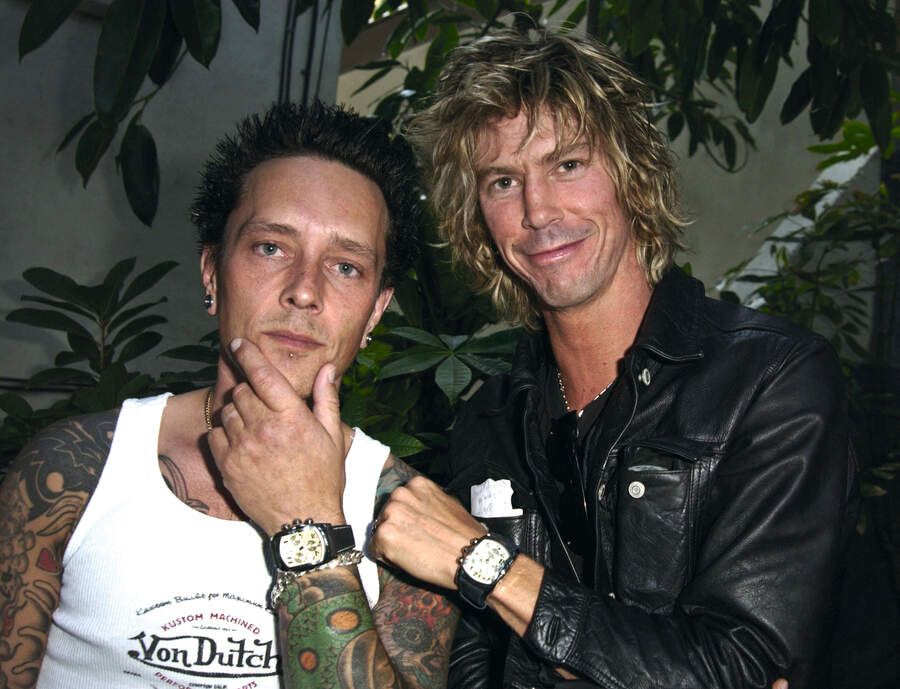
Billy Morrison and Duff McKagan (Image credit: J. Vespa/WireImage)
Lemmy
I do these occasional all-star shows in LA, where we play covers with a bunch of famous people. About twenty-five years ago, Ozzy gave me Lemmy’s cell number and said: “Drop him a line, he’s easy to deal with.” So I cold-texted Lemmy Kilmister. And I’m terrified. Because I don’t know how this legend of debauchery is going to respond. I just wrote: ‘Hey Lemmy, I’m a friend of Ozzy’s. I’m doing this gig at the Roxy. Would you come down and play Ace Of Spades and Bomber with us?’ Within seconds, he responded: ‘If you have a bottle of Jack Daniel’s and an eighth of Beryl’ – that’s Beryl Reid, which is Cockney rhyming slang for speed – ‘I’ll be there.’
At that show he was everything you would want Lemmy to be. His tech brought down his famous Marshall amp. It was ridiculously loud. The cowboy hat, the voice, the volume – he killed it. I don’t think [playing under the influence] made any difference. This is where everyone goes wrong in the music business, me included. You think you’re great, but you’re shit. There are precious few – Keith Richards being one, Lemmy being another – where, actually, it makes no difference. I’ve seen the man drink a bottle of Jack and snort three grams of speed, then I’d have a conversation with him.
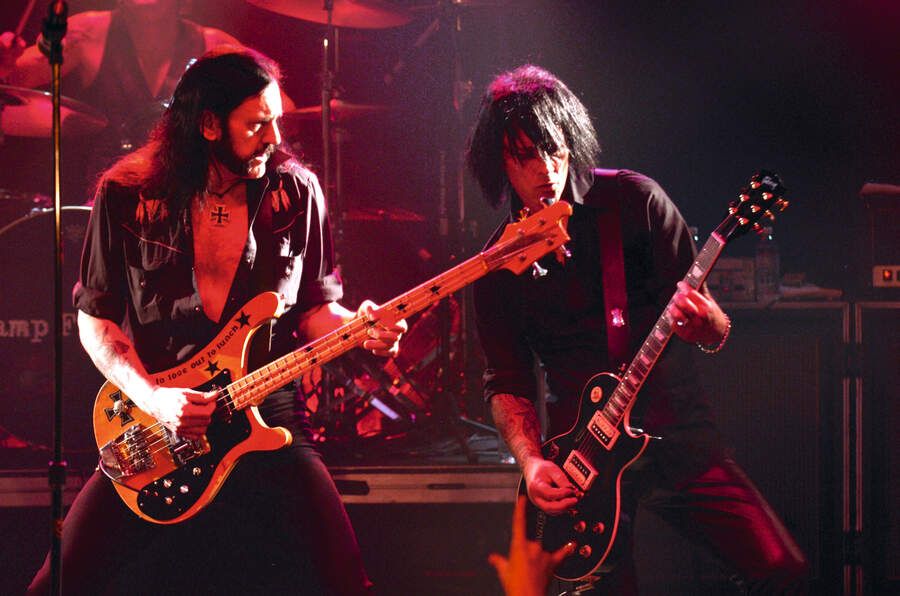
Lemmy and Billy Morrison during a Camp Freddy Benefit Concert for South East Asia Tsunami Relief at Key Club in Hollywood, California, 2004 (Image credit: Jeff Kravitz/FilmMagic, Inc)
Ozzy Osbourne
We were friends for twenty-eight years. Best friends, life shit, y’know? The first night I met him was at one of Sharon’s parties – this was when The Osbournes was on TV – and it was the most lavish party you’ve ever seen. I mean, there were real reindeer walking around, in real snow – in LA, when it’s eighty degrees outside! I don’t know how she pulled it off.
So I’m wandering around this beautiful Beverly Hills house, just so intimidated by the opulence. I’m not very good in those social circumstances. So I just opened this door off the kitchen, walked in and shut it behind me. The room was dimly lit, but I looked over and Ozzy was sitting on the couch by himself. He just said: “Hello, mate. You’re English? Sit down.” It was the most welcoming thing. And his first gesture was saying: “Want some chocolate?” He had this huge tray full of Topics, Flakes, Marathons, every English chocolate. He was like: “You like Topics? I fucking hate ’em!”
He was the funniest man I’ve ever known. We’d be like nine-year-olds, shaking with laughter at the Rock & Roll Hall Of Fame – Sharon would be like: “Shut the fuck up!” Late at night we’d be texting each other stupid, immature shit, then I’d get a text from Sharon saying: ‘Stop texting my old man, he’s laughing so much the bed’s shaking!’
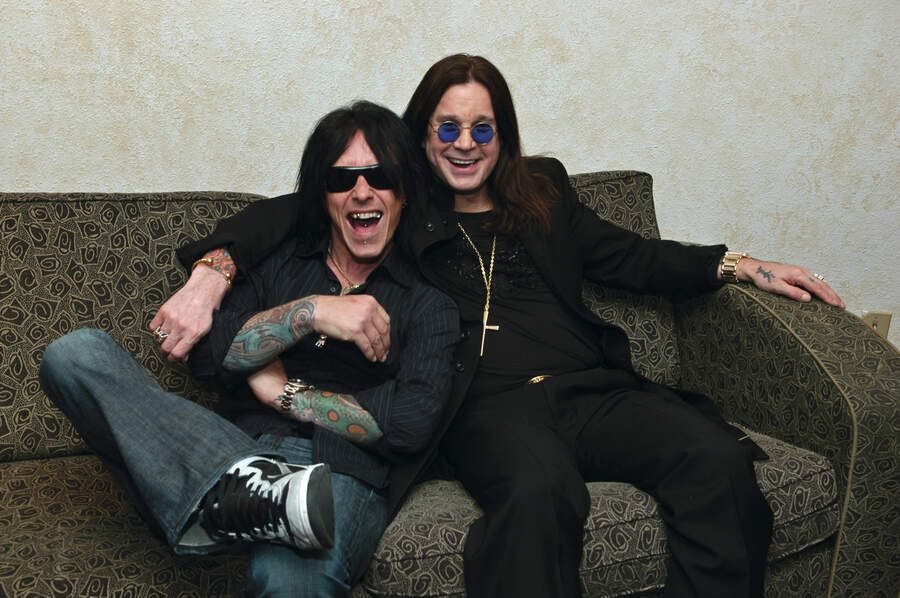
Billy Morrison and Ozzy Osbourne (Image credit: Robert Knight Archive/Redferns)
Billy Idol
I’ve been playing with Billy for eighteen years. He’s a cool motherfucker. And he knows he’s a cool motherfucker. Y’know, he comes to rehearsal on a fucking Harley. He’s Billy fucking Idol, that’s who he is. Let me tell you how cool Billy Idol is. Every singer on the planet forgets the words – if you’re not miming. Or they go out of tune. Because it’s noisy up there. But not many rock stars are cool enough to go: “Hold on, stop playing.” More than once I’ve seen Billy turn around to the band and say: “I fucked that up. Let’s go from the top.” Like, the audience deserves to hear it played right, y’know?
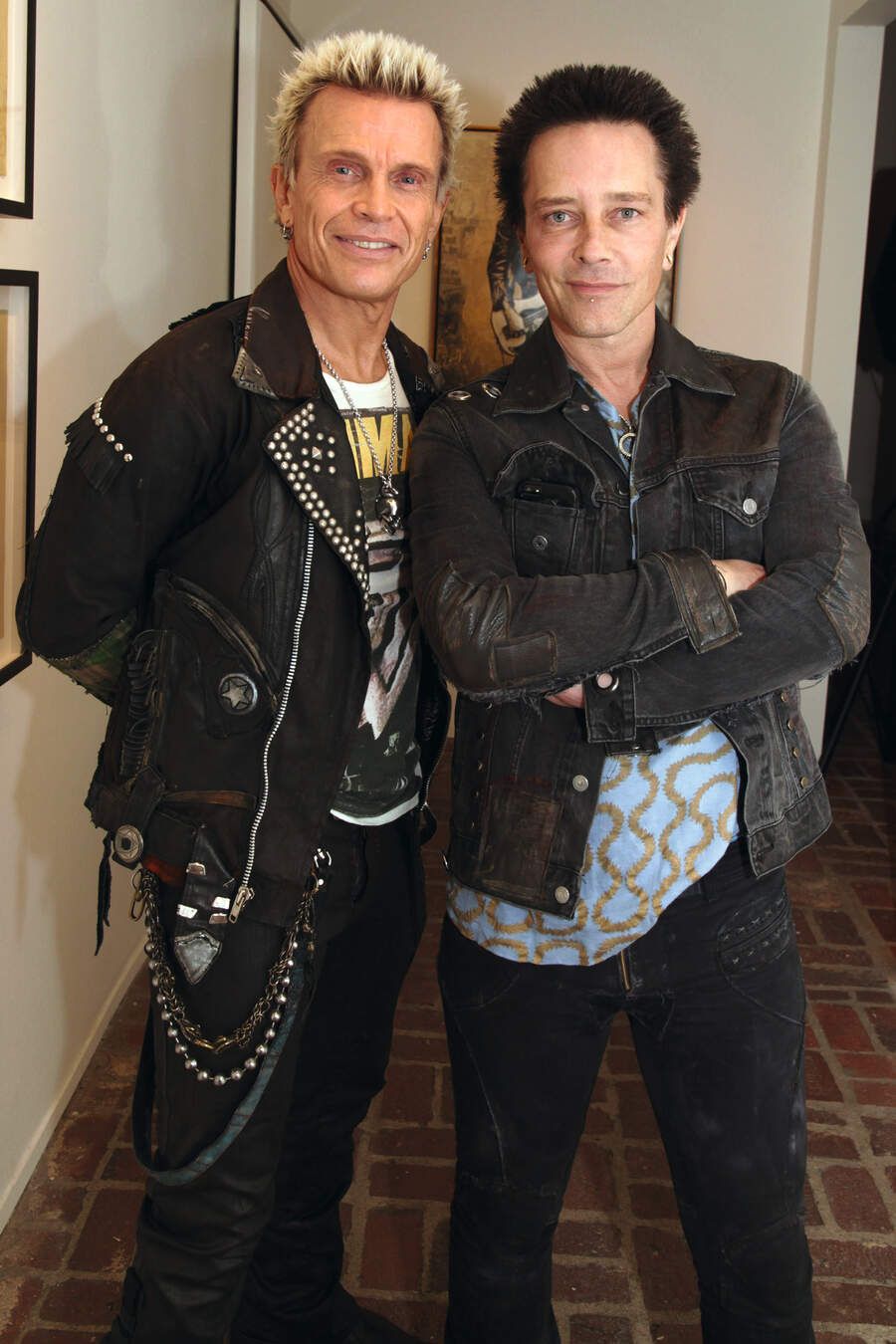
Billy Idol and Billy Morrison (Image credit: Paul Redmond/WireImage)
George Clinton
This is no word of a lie. The all-star band I was telling you about had a corporate gig at an old theatre in Hollywood. So around three o’clock in the afternoon, we’re soundchecking, and I see this homeless guy wander in. As he walks closer, I’m like: “That’s fucking George Clinton.” He’s got all the multi-coloured dreads and all of that. He walks right up to the stage and goes: “I want to play.” So I ask him: “Do you know The Clash, Should I Stay Or Should I Go?” And he says: “Yeah.” Which he didn’t. He had no idea how it goes. So we play it in soundcheck, and he’s just doing some shit in the mic. Then he says: “I’ll be back later.” So off he goes, and we’re all like: “There’s no way George is coming back.”
But I kid you not. I’m in the dressing room at eight-thirty p.m., when George walks in and says: “I’m ready.” And he got up and did Should I Stay Or Should I Go. Did he pull it off? I don’t remember, but probably not. Two days later, he got arrested for crack.
Nick Cave
Nick Cave won’t know who I am. But back in the day – I’m talking mid-eighties – the drug scene was in Brixton. Nick has given many interviews about his heroin addiction. I’ve given interviews about mine, and we were all in the same place. In the heroin scene, you had a dealer and he would be living in a squat, and that squat would have thirty people in it at all times, rotating, just a constant stream of people knocking at the door. This person sold heroin to not only me, but Nick Cave, Nico from the Velvet Underground and a few others.
I mean, I’ve stepped over Nick Cave shooting smack. He’s stepped over me shooting smack. But what gives me pleasure is to see people get out of that. Nick was way too talented to just die in a squat in Brixton. It was obvious he was one of the most intelligent people. A lot of heroin addicts are, man, and that’s the sad thing. There’s a lot of lost intelligence in heroin addiction.
Shirley Manson
The way I met Shirley was at a rehearsal complex in LA when we were getting ready to go on a big Billy Idol tour. I’m a bit of a flightcase whore. I like them to look sharp. It’s ridiculous, they get banged about on trucks. But you would be shocked at the level of bling that goes into my flightcases. I’m a visual artist as well. So I was spraying a stencil of a Playboy bunny with a Star Wars Stormtrooper face onto one of my cases. And I turn around and Shirley Manson’s there. She’s down on her knees, looking at the stencil, and she’s like: “That’s fucking brilliant. Can you do one on my guitar case?” So we exchanged numbers.
She’s a female Lemmy – she takes no shit. I’ve been on the receiving end of that too, but in a very loving way. I’ve been at dinner with her, and I’ve said something, and she’s turned around and said: “Don’t talk shit.” She’ll tell you how it is. And what’s not to love about that?
The Cult
Billy Duffy has known me since my heroin addiction. And because Billy lived in Brixton, he has a story about stepping over me to get out of his house. I had OD’d in his living room, apparently. But that’s not my story, because I don’t fucking remember it.
I had a baptism of fire when I joined The Cult. I auditioned, and Duffy said: “You’ve got the gig. We’re going on tour in a month.” But the first day, I show up early for pre-production rehearsals in this huge warehouse, and Ian [Astbury] and Billy have a massive argument. No idea what about. They’re like brothers, so they argue fiercely and often. And I’m standing there, like, “Fuck, what’s going on?” Both of them walk out, they go home.
The manager texts me later, saying: ‘We’re cancelling the rehearsals.’ So my first gig is at RFK Stadium in Washington, which is seventy thousand people. It’s just: “See you on stage in Washington”, and that’s what happened.
Adam Ant
I was a huge Adam And The Ants fan, but I’m not talking about the white-stripe-across-the-nose era. Way before that, they were one of the coolest punk rock bands on the planet. The guitar player was Matthew Ashman, and he was also in Bow Wow Wow and the Chiefs Of Relief. Unfortunately, he’s no longer with us. But on the fifteenth anniversary of Matthew’s death – and this shows how stupid I am, or tenacious – I had a thought: “What would be fun is if I resurrect all three of Matthew’s bands for one night only.”
Well, I did it. I organised a one-off night at the Scala, from a tour bus in America. And Adam agreed to do the gig. But… I’m gonna try and phrase this as nicely as I can. Adam has had [mental health] episodes in the past. And on the run-up to that gig I’m not sure whether he was having an episode, but there were some really anxious phone calls between me and him about the charitable nature of this show.
It was a charity show, I donated the money. But he wasn’t sure that that was gonna happen, based on his experience at Live Aid or something like that. So there were these really heavy twenty-five-minute phone calls where I didn’t speak, and Adam ranted down the phone. But, God bless him, we did the gig, he showed up, he was fucking brilliant.
About a year later, I ran into him again at Heathrow, and he was completely different. He was like: “Oh, hello, mate, how are you?” Chit-chat, chit-chat. So I still love Adam, but it was touch-and-go there for a second.
Cypress Hill
I’m mainly friends with B-Real and Sen Dog. We invited them to come and do (Rock) Superstar with us. So we had a trailer backstage just for Cypress Hill. We were on La Brea Avenue in Hollywood, doing a PlayStation party, and they’d shut the whole street down. About an hour before showtime, I went to knock on their trailer. And this door opened, and a nuclear-sized cloud of weed smoke enveloped me.
The next thing, about thirty people start coming out of this trailer that’s built to hold ten. These guys travel with an entourage. They are the epitome of hip-hop royalty. So they’re piling towards the stage, and one of them’s got a big glass bong that he’s walking down La Brea smoking. They hadn’t even legalised weed yet.
So I’m panicked. I’m looking around. But they don’t give a shit, y’know? When you first meet them, you don’t want to be the guy that’s like [coughing]. But since then I’ve learned that I’m allowed to say: “I’ve got to get some fresh air.” Y’know, B and Sen, they respect the fact I’m sober, and when I’ve worked in their studio I literally walk out every fifteen minutes and take a deep breath.
Al Jourgensen
The first time I met him, we were doing a charity show, and it was my idea that Ministry should do Iggy Pop’s Search And Destroy. Al was like: “I love Iggy Pop, no problem.” So he comes down, he’s great, he’s gracious, he does the soundcheck and nails it. But between soundcheck and the gig, Al takes some mushrooms and smokes the strongest weed. Even he’s not sure what was in that joint. So he comes on stage and he takes the microphone, and I’m like: “This is fucking awesome.”
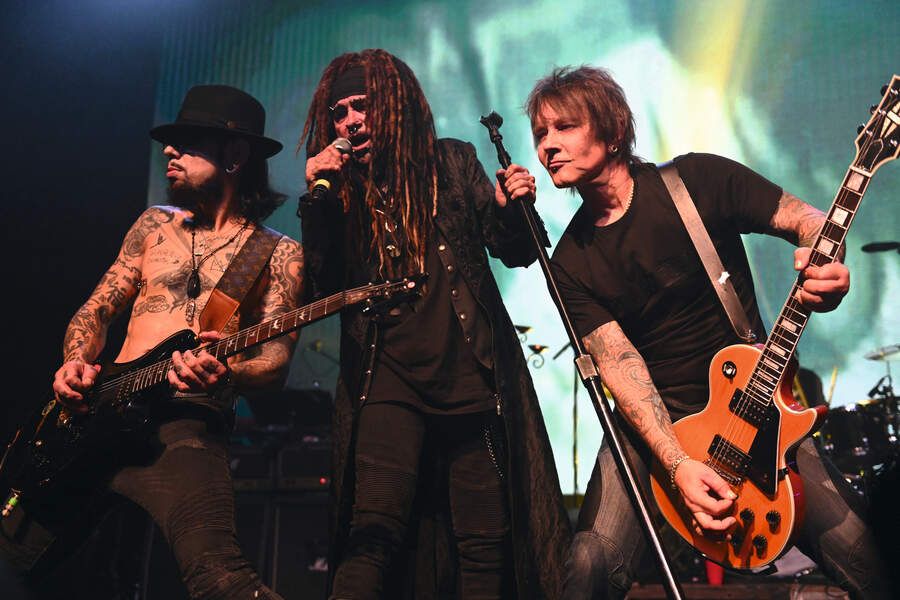
Dave Navarro, Al Jourgensen and Billy Morrison onstage during the second annual Above Ground concert benefiting MusiCares at The Fonda Theatre on September 16, 2019 in Los Angeles, California (Image credit: Scott Dudelson/Getty Images)
Then he starts singing at half-tempo. We’ve all learned to follow the singer. So, with no rehearsal, we go half-time. And we do this weird fucking version of Search And Destroy. Now, every time I see Al he tells that story and says: “I’m so sorry.” But I say: “Dude, what you did is inspire me to record it like that.” There’s a heavy version of Search And Destroy on the Ministry album Moral Hygiene, and that’s where that came from. Al is one of the greatest guys I’ve ever worked with – even through drug-fuelled mistakes.
Billy Morrison’s Hollow is out now via TLG | ZOID.
The Spinners began in Ferndale, Michigan, in 1954 as the Domingoes, formed by a group of young singers that included Henry Fambrough, Billy Henderson, Pervis Jackson, C.P. Spencer, and James Edwards. Bobbie Smith soon replaced Edwards, and by the early 1960s the group had become The Spinners and started recording for Harvey Fuqua’s Tri-Phi label. Their first national hit, “That’s What Girls Are Made For,” arrived in 1961 before the group moved into the Motown system later in the decade. Motown never turned them into the stars they should have been, although “It’s a Shame” finally gave them a major
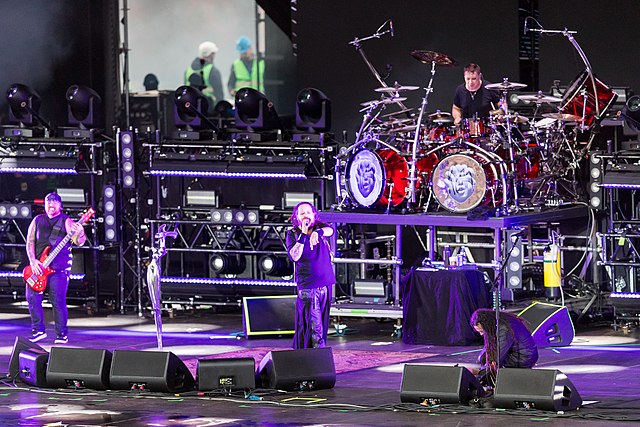
Korn formed in Bakersfield, California, in 1993 and became one of the bands most responsible for bringing nu metal into the mainstream. James “Munky” Shaffer, Reginald “Fieldy” Arvizu, and David Silveria came out of L.A.P.D. before Jonathan Davis and Brian “Head” Welch completed the original lineup. Their 1994 self-titled debut introduced a brutal mix of down-tuned guitars, hip-hop-influenced rhythms, funk bass, and intensely personal lyrics. Life Is Peachy pushed that sound further, while Follow the Leader and Issues turned Korn into one of the biggest heavy bands in the world. Songs such as “Blind,” “Freak on a Leash,” and “Falling
Transmission update: as we prepare to welcome the next evolution of Australia’s largest travelling music celebration in 2026, the network has expanded. At Good Things Festival in 2026, the three festival dates in Melbourne, Sydney and Brisbane this December will be the only place to exclusively catch LIMP BIZKIT, SIMPLE PLAN, SPIRITBOX, BAD RELIGION, ALEXISONFIRE, […]
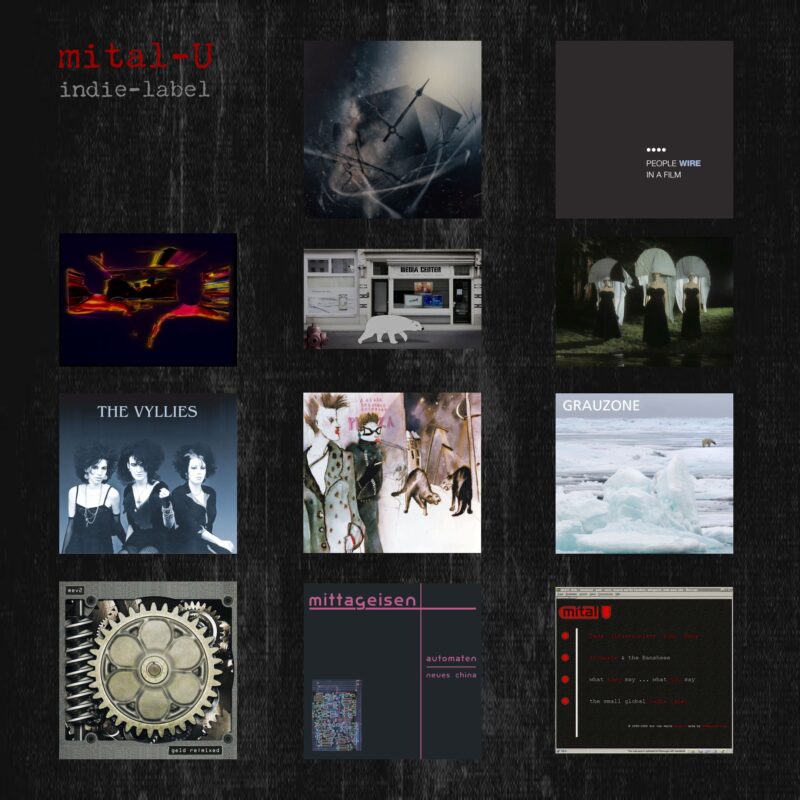
The history of mital-U begins well before there was a label to put on a record. In July 1979, Bruno Waser met members of the Lucerne band CRAZY at a Siouxsie and the Banshees concert in Baden. A year later, he produced CRAZY’s No Chance, regarded by mital-U and the Swisspunk archive as the first independently produced Swiss punk LP. The record preceded mital-U by sixteen years, but the encounter established the pattern that would eventually define the label: small-scale independence, personal relationships, and an interest in preserving culture that commercial institutions often overlook.
Waser soon formed mittageisen, among Switzerland’s early German-language post-punk groups, combining guitar and bass with analogue synthesizers and drum machines. Their 1985 single automaten travelled considerably farther than their home country, receiving international radio play from John Peel. When mittageisen ended in 1986, Waser stepped away from the project, returning in the 1990s as mev2, or mittageisen version 2, where music became increasingly entangled with computers, animation, and moving images.
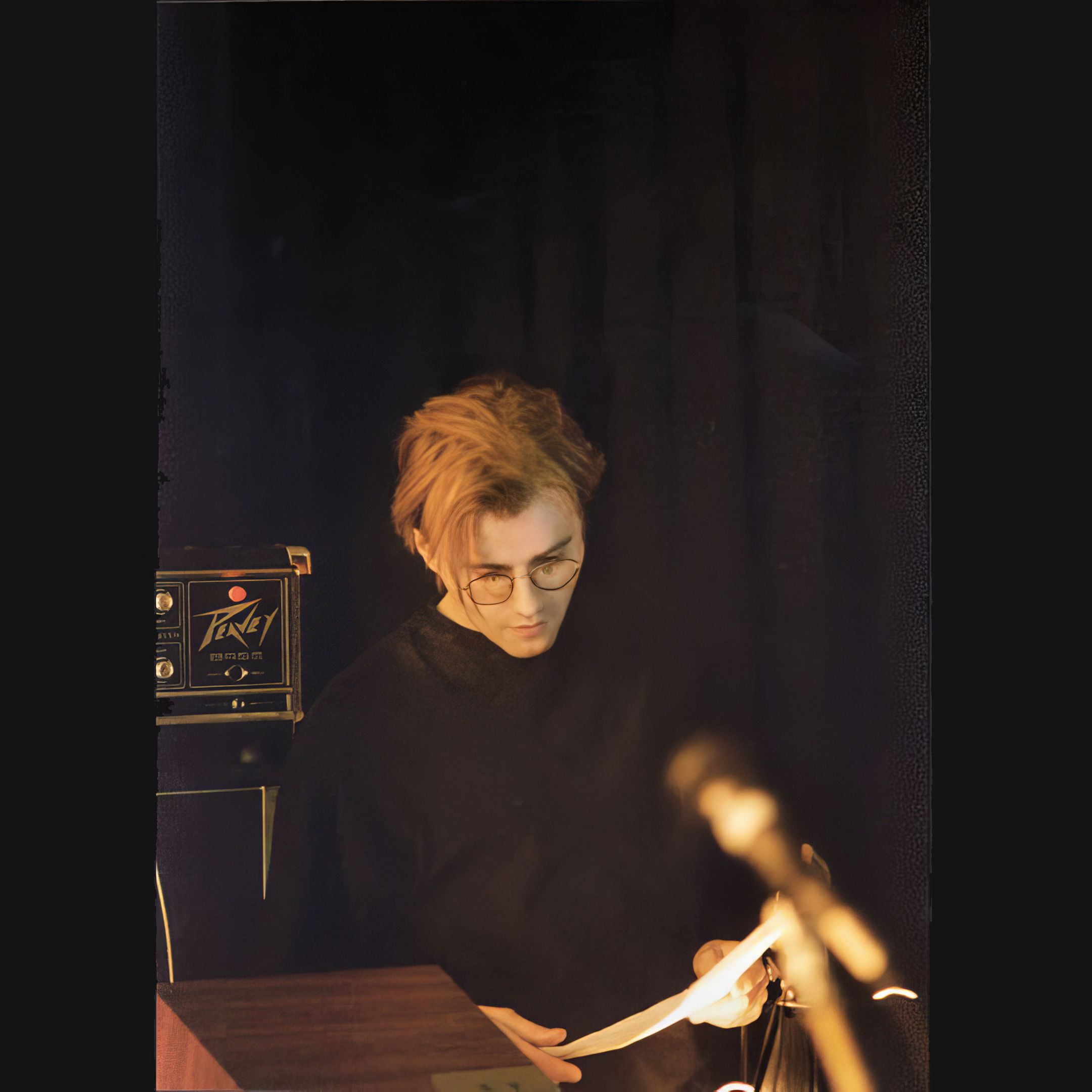
Bruno W of mittageisen, 1983
That convergence supplied the foundation for mital-U. Its first website appeared in August 1995, at a moment when an independent music label having any substantial presence online was still unusual; the formal label and mital-u.ch domain followed in early 1996. Even its name carries several overlapping ideas. “mital” joins the German Mittag with “metal,” while the “U” can stand for You, Urban, or Underground.
Over the next decade, mital-U issued mev2’s Geld-Arbeit, worked with former Grauzone member Marco Repetto, released Toini’s Electronic Biscuits, and participated in the Swiss Kult-Hits compilations, where Swiss punk and wave shared space with Yello, Kleenex/LiLiPUT, Grauzone, The Young Gods, and Stephan Eicher. By the late 2000s, however, another aspect of the label had become especially important: recovery.
Between 2008 and 2013, mital-U released substantial remastered collections devoted to mittageisen, Grauzone, and the Lausanne trio The Vyllies. Master recordings were restored and digitized; photographs, booklets, unreleased material, and period videos were gathered alongside them. Waser has said that archival releases are undertaken with the bands’ approval, with trust and direct relationships treated as essential parts of the process. Across these projects, the catalogue offers several points of entry into Swiss punk, darkwave, and electronic music, each shaped by a different set of musicians and circumstances.
CRAZY
Lucerne’s CRAZY supplied the practical education behind Waser’s later label work. Formed in 1979, the group belonged to the first generation of Swiss punk bands, with a lineup that included vocalist Urs Knüsel, guitarist René Kaufmann, bassist Markus Tremp, and drummer Christoph Buri. In Waser’s account of the period, Swiss punk grew from frustration with bourgeois respectability and boredom, a local response to a movement whose methods could be adopted wherever people felt the need to make something happen themselves.
The independently produced No Chance established that approach on record in July 1980. The later CRAZY (1980–1982) compilation gathers 18 remastered tracks drawn from the LP, the subsequent EP, and additional recordings, accompanied by a booklet. Its place in the catalogue gives the label’s post-punk history a concrete starting point: the bands, friendships, and self-organized releases that made the next developments possible.
mittageisen
Founded by Waser in 1981, mittageisen brought analogue synthesizers and programmed rhythm into contact with guitars, bass, and German-language vocals. Their self-titled debut, released in March 1983, helped establish the group within the early Swiss darkwave scene and earned Record of the Week recognition on the Swiss radio programme Sounds! The band’s name also carried a connection to John Heartfield’s antifascist photomontage and Siouxsie and the Banshees’ Mittageisen, extending Waser’s interest in the relationship between music, images, and political expression.
By the January 1985 release of automaten / neues china, mittageisen had developed a more explicitly electronic, dance-oriented approach. The 1981–1986 Remastered collection, issued by mital-U in 2008, follows that development across 19 tracks, including six previously unreleased recordings, with a 24-page booklet. Further editions have kept individual parts of the catalogue in circulation, including the 2016 vinyl reissue of automaten / neues china and the five-track digital EP 1983 Remastered, released in 2024.
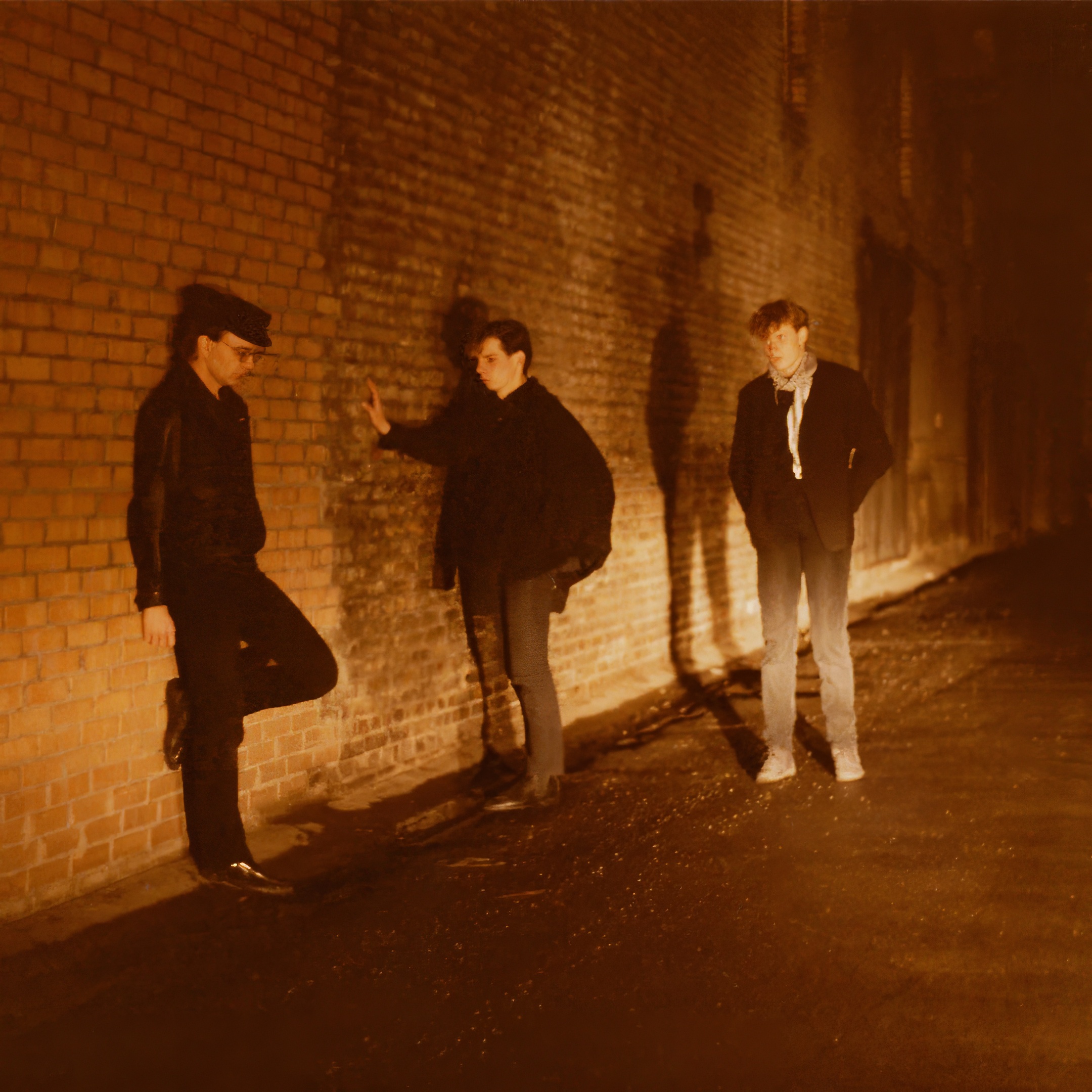
mittageisen, 1982
Grauzone
For many listeners, Grauzone will provide the most familiar introduction to mital-U’s archival work. The Bern group took shape in late 1979 around Martin Eicher, drummer Marco Repetto, and bassist G.T., with Stephan Eicher and saxophonist Claudine Chirac contributing to performances and recording sessions. Eisbär, first recorded for the 1980 compilation Swiss Wave – The Album, brought the band international recognition, reaching the singles charts in Austria and Germany. Their brief existence nevertheless extended beyond that one song, encompassing material such as Raum, Moskau, and Film 2 before the group dissolved in 1982.
Working with Off Course Records, mital-U restored and digitized recordings for 1980–1982 Remastered, released in 2010. The two-CD edition assembles 21 tracks and a 24-page booklet, including the English-language Polar Bear and a live recording of Plastikherz. In 2011, mital-U also produced the first official video for Eisbär. Together, the collection and video place the familiar single within a fuller account of the musicians who made it.
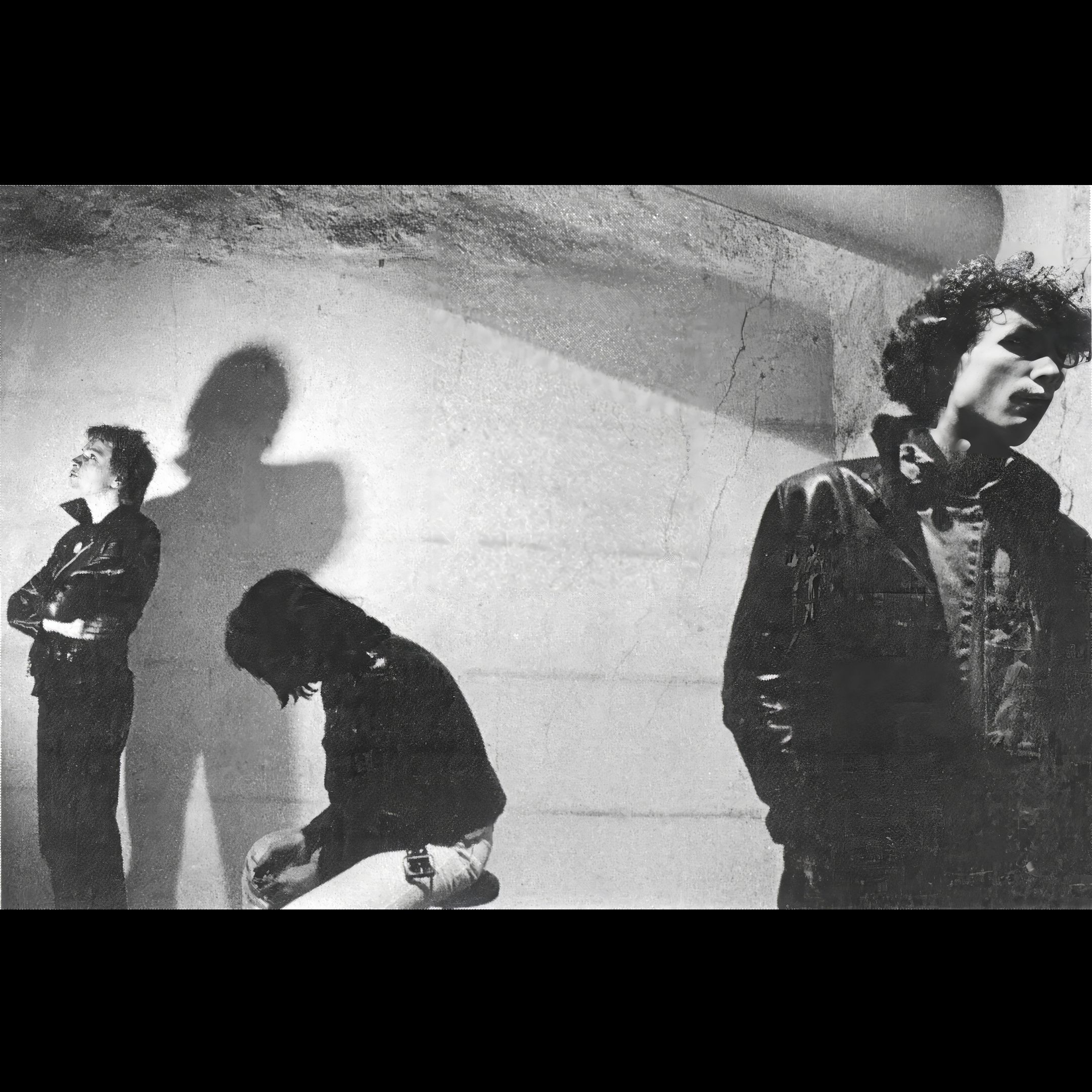
Grauzone, 1980
The Vyllies
Lausanne trio The Vyllies opened another part of Switzerland’s underground to international listeners. Ilona Prism, Ursula Nun, and Manue Moan met at the University of Lausanne in 1983 and began writing their own songs out of a shared concern about women’s place in the music business. Their first five-track release was recorded in Athens that December after an introduction through the Greek band Yell-O-Yell. Subsequent recordings brought cello, violin, and piano into their combination of synthesizers, bass, percussion, and vocals, giving their gothic and coldwave music a distinctive instrumental range.
Across Velvet Tales, Lilith, and Sacred Games, the group developed a body of work that included Ahia, Whispers in the Shadow, and Now We Fall, before separating in 1988. Released in 2013, mital-U’s 1983–1988 Remastered gathers 29 tracks across two CDs, accompanied by a 24-page booklet. The label’s restoration work has also extended to Urs Egger’s video for Whispers in the Shadow, preserving the visual dimension of a band whose theatrical presentation was closely connected to its music.
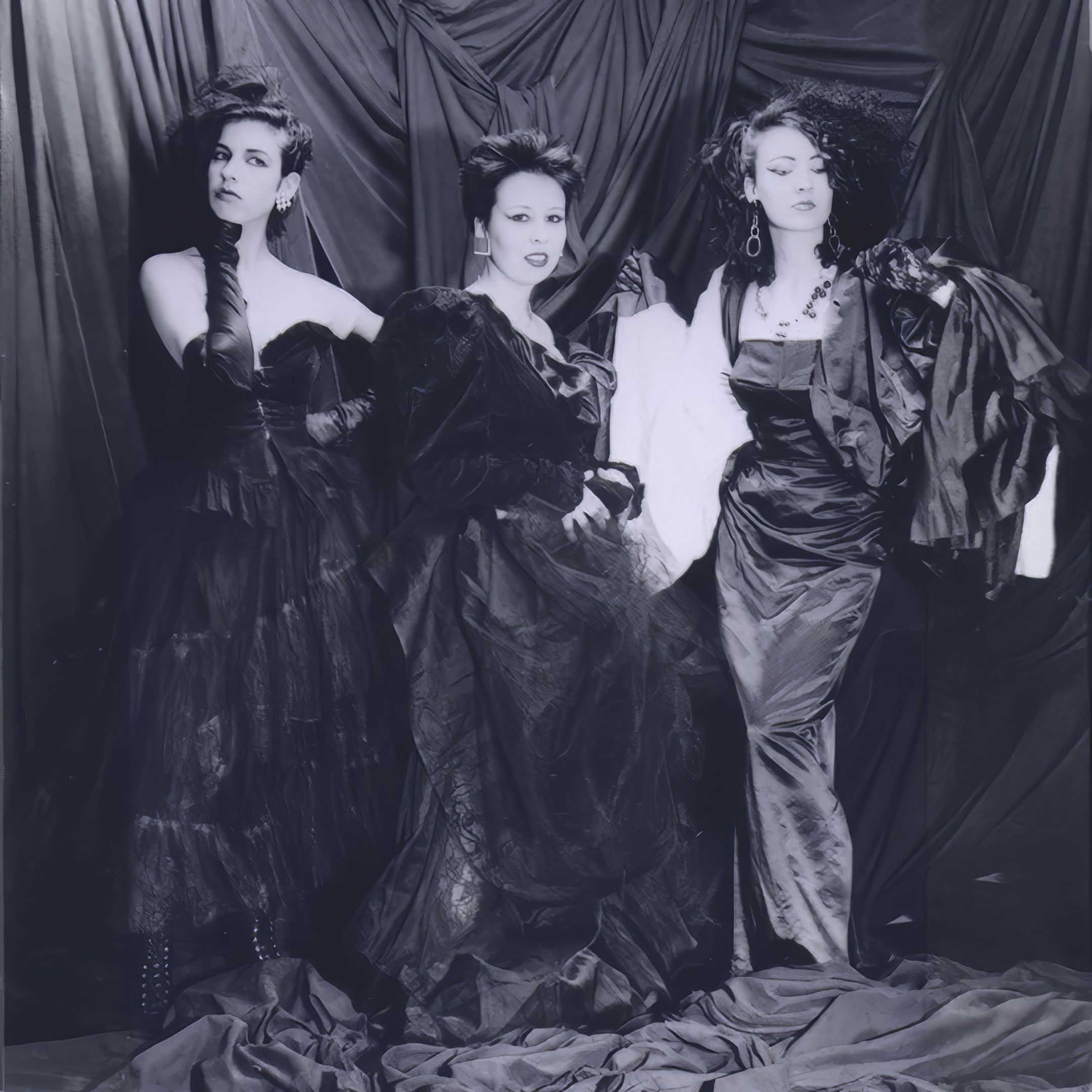
The Vyllies, 1985
mev2 and Toini
Waser’s own mev2 project connects the label’s historical interests with continuing musical activity. Begun in 1994, eight years after mittageisen’s dissolution, it gave him a setting for further work with electronic music and video. The 1998 Geld-Arbeit releases brought Marco Repetto into the project as a remix collaborator, carrying a friendship from the Swiss punk years into techno and ambient music.
That collaboration also informed Electronic Biscuits, released in 2002 and reissued digitally in 2022 as mev2 feat Toini. Raffaela Felder contributed voice, guitar, and electric piano, with Waser providing synthesizers and samples and Repetto joining him on remixes. More recently, mev2 has returned to mittageisen material through automaten (-6y edit) in 2023 and bestaendigkeit der erinnerung (v2) in 2025. These reinterpretations make the relationship between the label’s archive and its current work particularly direct: the same recordings can remain available in their original form while supplying material for new arrangements.
Wire
With Wire, mital-U’s interest in documenting post-punk extends into a feature film. The British group behind Pink Flag, Chairs Missing, and 154 is the subject of Wire – People in a Film, directed and produced by Malcolm Boyle and written by Graham Duff in collaboration with the band. Waser became involved through the project’s 2019 crowdfunding campaign and serves as senior executive producer, with mital-U working alongside Underground Head Films on production and promotion, including planned DVD and Blu-ray editions.
The project draws on filming at Rockfield Studios and interviews with Colin Newman, Graham Lewis, Robert Grey, Bruce Gilbert, and Matthew Simms, examining the people and working methods behind Wire’s music. In a September 2025 update, the filmmakers outlined plans for screenings in 2026 to mark the band’s fiftieth anniversary, followed by a full release in 2027 for the fiftieth anniversary of Pink Flag. Those dates were presented as intentions, with the film still being completed.
Material from the documentary has already appeared in Boyle’s video for 23 Years Too Late (24 Years Later Edit), unveiled in March 2026. The video accompanied the announcement of Read & Burn 03+, an expanded edition of Wire’s 2007 EP issued through the band’s own Pinkflag label for Record Store Day 2026. It offers an early look at the archival footage informing the film and connects that work to Wire’s continuing reassessment of its recorded catalogue.
Beyond the Records
Waser’s film work also includes an executive producer credit on Celeste Bell and Paul Sng’s Poly Styrene: I Am a Cliché, which premiered in 2021. Recent mev2 releases have also participated in EarthPercent fundraising, directing proceeds toward environmental causes.
Now thirty years old, mital-U occupies an unusual position between label, archive, production house, and cultural workshop. Its catalogue moves backward and forward at once: restoring recordings from Swiss post-punk history while releasing new mev2 material, producing films and videos, maintaining an extensive online archive, and using revenue left after expenses and artist payments to support future projects or environmental and social causes. For Waser, preservation appears to be an active practice, requiring old material to remain available, contextualized, and capable of entering the present again.
TIM MCGRAW makes Dallas personal on the PAWN SHOP GUITAR TOUR at Dos Equis Pavilion with a local guitar giveaway, a moving 9/11 reflection, family memories and career-spanning hits.
September 19 – Portland, OR – Keller Auditorium * Now November 10
Tickets for Vancouver and Portland will be honored on the rescheduled dates. Tickets for the canceled Chateau Ste. Michelle show will be refunded, and a special pre-sale for those ticket holders will take place on Thursday, September 17th at 10am local time ahead of 10am Friday, September 18th general on-sale for the November 8 show at Benaroya Hall in Seattle.
09/22/26 – Santa Barbara, CA – Santa Barbara Bowl
09/23/26 – Los Angeles, CA – Greek Theatre
09/25/26 – San Francisco, CA – The Masonic
09/26/26 – San Francisco, CA – The Masonic
10/01/26 – Morrison, CO – Red Rocks Amphitheatre
10/03/26 – Omaha, NE – Steelhouse Omaha
10/04/26 – Kansas City, MO – Uptown Theater
10/06/26 – Milwaukee, WI – Landmark Credit Union Live
10/07/26 – Minneapolis, MN – Orpheum Theatre (SOLD OUT)
10/09/26 – Chicago, IL – Auditorium Theater
10/10/26 – Chicago, IL – Auditorium Theater
10/12/26 – Detroit, MI – Fox Theatre
10/14/26 – Toronto, ON – Massey Hall
10/15/26 – Toronto, ON – Massey Hall
10/17/26 – Boston, MA – MGM Music Hall at Fenway
10/18/26 – Philadelphia, PA – The Met Philadelphia presented by Highmark
10/22/26 – Brooklyn, NY – Brooklyn Paramount
10/23/26 – Brooklyn, NY – Brooklyn Paramount (SOLD OUT)
10/25/26 – Washington, DC – The Anthem
10/27/26 – Durham, NC – Durham Performing Arts Center
10/28/26 – Asheville, NC – Thomas Wolfe Auditorium (SOLD OUT)
10/30/26 – Atlanta, GA – Coca-Cola Roxy
10/31/26 – Nashville, TN – The Truth
11/8/26 – Seattle, WA – Benaroya Hall * NEW VENUE – Rescheduled from September 18
11/9/26 – Vancouver, BC – Queen Elizabeth Theatre – Rescheduled from September 16
11/10/26 – Portland, OR – Keller Auditorium – Rescheduled from September 19
Canada has produced its share of internationally recognized blues artists, but Steve Marriner believes several of the country’s finest players still deserve considerably more attention south of the border.
During an appearance on the Blues Rock Show, the JUNO Award-winning Canadian singer, songwriter and multi-instrumentalist was asked about Canadian blues musicians he believes American audiences should know. Marriner quickly pointed to four artists, ranging from one of his favorite living guitarists to a veteran whose connection to the blues stretches back to Muddy Waters.
“Garrett Mason is at the very top of the list. He’s, for my taste, my favorite blues guitar player alive.”
Mason, the son of Canadian blues musician Dutch Mason, has developed a reputation for a raw, distinctive approach to the guitar that draws heavily from traditional blues without simply recreating the past. Despite earning recognition in Canada, including a JUNO Award for I’m Just a Man, Mason has remained relatively under the radar for many American blues fans.
Marriner also singled out Keith Hallett, a guitarist from Fredericton, New Brunswick.
“There is another guitar player from Fredericton, New Brunswick named Keith Hallett, who has his very distinctive style. He’s fantastic.”
Hallett has built his reputation through a stripped-down approach rooted in blues, roots and traditional American music. His playing has earned praise within Canada’s blues community, but he remains a name many listeners in the United States have yet to discover.
Marriner’s next recommendation reaches much further back into Canadian blues history.
“There’s a guy who’s been playing blues in Canada since the late sixties named Big Dave McLean. He lives in Winnipeg, Manitoba. He was friends with Muddy Waters and used to open for Muddy when he’d come through the prairies of Canada in the seventies. He’s maybe one of the most authentic blues performers I’ve ever seen anywhere,” said Marriner.
Big Dave McLean has spent decades establishing himself as one of Canada’s most respected traditional blues musicians. Based in Winnipeg, McLean emerged during an era when many of the original architects of Chicago blues were still touring extensively.
For Marriner, that history isn’t simply an interesting footnote. It is part of what makes McLean’s performances stand apart. Calling someone “one of the most authentic blues performers” he has seen anywhere is particularly high praise coming from a musician who has spent much of his career immersed in blues and roots music.
“And then a guy from Toronto who’s another harmonica player and maybe my favorite blues songwriter, Paul Reddick is his name.”
Reddick has been an important figure in Canadian blues for decades, both as a performer and songwriter. While his harmonica playing is an obvious part of his musical identity, Marriner specifically pointing to Reddick’s songwriting reveals another side of what has earned him such respect among his peers.
Together, Marriner’s selections offer a glimpse into a Canadian blues scene that extends well beyond the handful of artists who have achieved widespread recognition in the United States.
Garrett Mason, Keith Hallett, Big Dave McLean and Paul Reddick represent different generations and approaches to the music, but Marriner sees something special in each of them. And for American blues fans looking beyond the familiar names, his recommendations provide four compelling places to start.
Watch Steve Marriner’s full interview on the Blues Rock Show below.


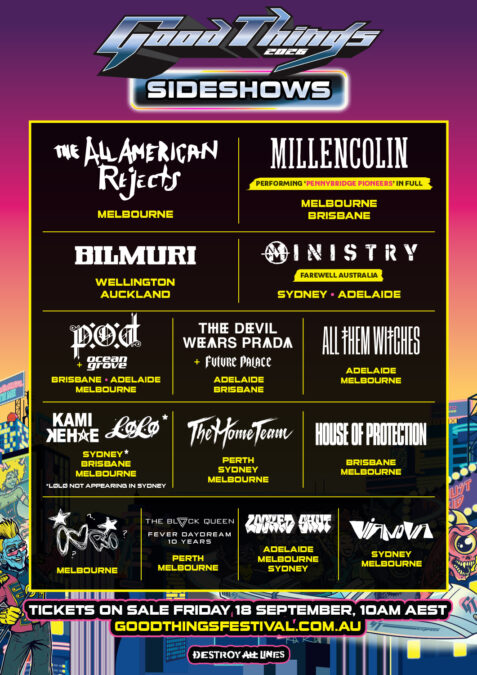 Transmission update: as we prepare to welcome the next evolution of Australia’s largest travelling music celebration in 2026, the network has expanded. At Good Things Festival in 2026, the three festival dates in Melbourne, Sydney and Brisbane this December will be the only place to exclusively catch LIMP BIZKIT, SIMPLE PLAN, SPIRITBOX, BAD RELIGION, ALEXISONFIRE, […]