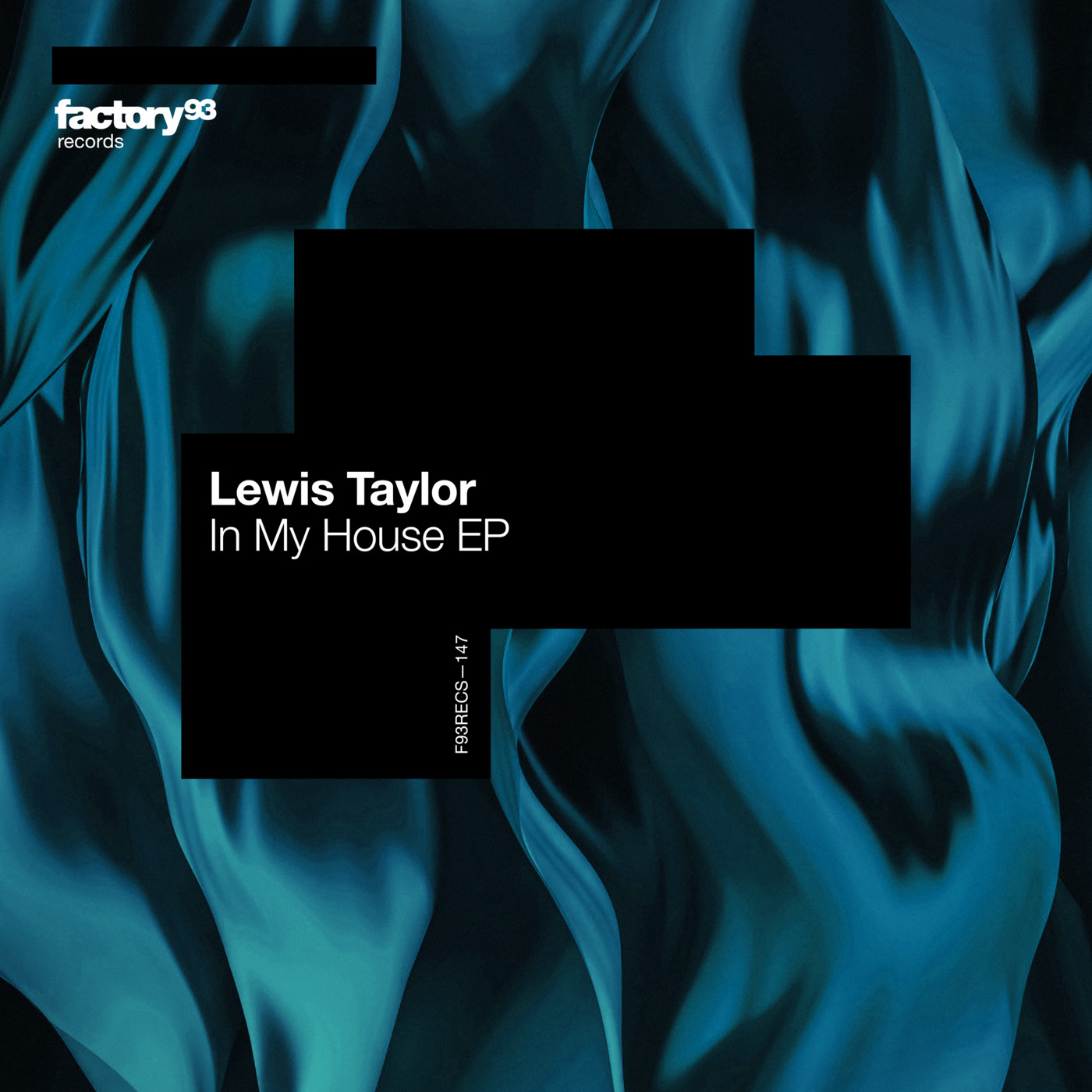
Lewis Taylor’s In My House is a groove-driven house cut built squarely for the dancefloor. The track combines classic club euphoria with contemporary UK garage and minimal influences, anchored by an instantly memorable vocal hook, pumping bassline and crisp, energetic drums. Bright organ stabs, high-pitched pads and retro synth touches add colour to the arrangement without taking away from its relentless momentum. There is a strong sense of movement throughout, with Taylor balancing melodic details and rhythmic drive in a polished, highly functional club production. At 130 BPM, In My House keeps things energetic and focused, delivering that satisfying combination of groove, vocal catchiness and late-night house energy.
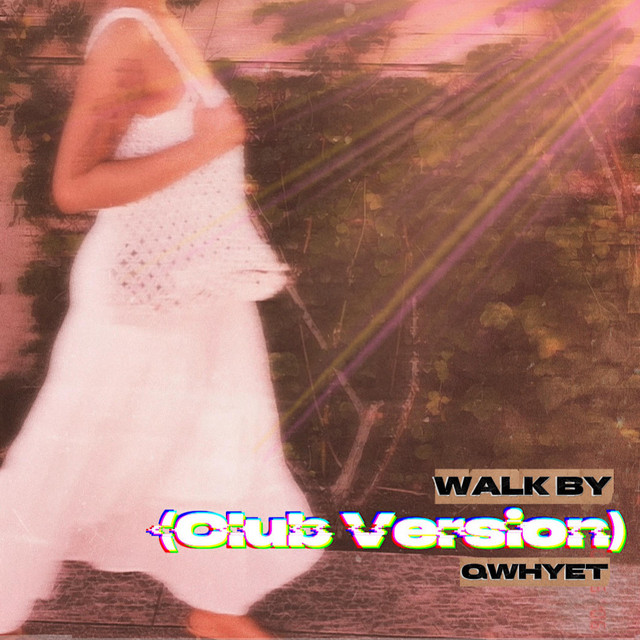
Qwhyet’s WALK BY (Club Version) takes an emotionally charged song and pushes it into a darker, more physical club territory. Distorted percussion, saturated electronic textures and driving rhythms create a tense, energetic backdrop, while Hijkatelyn’s vocals retain the emotional core of the track. The contrast between the raw, abrasive production and the strong melodic presence gives the track an appealing balance of intensity and vulnerability. Built for the dancefloor but never sacrificing its songwriting character, WALK BY (Club Version) feels immersive, restless and atmospheric, gradually pulling the listener into its heavier electronic world. A compelling club rework that combines emotional vocals with a gritty, late-night electronic pulse.
Dina Summer’s Burning Heart is a beautifully smouldering synthpop track that captures the seductive tension of an intense, uneven relationship. Sparkling organ-like synths glow above a dark, propulsive bassline, creating a bittersweet contrast between brightness and shadow. The vocals add a sensual, almost hypnotic presence, pulling the song deeper into its nocturnal atmosphere. With its infectious groove, retro synth textures and polished production, Burning Heart feels both nostalgic and immediate, channeling the spirit of classic 80s synthpop while retaining Dina Summer’s darker, club-oriented identity. It is sleek, emotional and irresistibly danceable, with just enough darkness beneath the surface to keep the flame burning.
In July 1974, the 25-year-old Rick Wakeman had his first heart attack. The keyboard player, who had left Yes earlier that year following the tour for the divisive Tales From Topographic Oceans album, had been taken ill just a day after staging a show in support of his third solo album, the hugely successful Journey To The Centre Of The Earth, at the Crystal Palace Bowl in South London.
And so it was that he found himself stuck in Wexham Park Hospital in Slough, Berkshire for six weeks while he recovered. The heart specialist who was treating him advised him to stop playing and effectively retire. “I had been told that I would not be able to work again, and if I did my heart would give out,” Wakeman told Classic Rock in 2013.
Wakeman was having none of it. Defying doctor’s orders, he spent his convalescence sketching out the album that would become The Myths and Legends of King Arthur And The Knights Of The Round Table. The tale of the fabled British ruler had caught Wakeman’s imagination after being taken on holiday as a child to Tintagel in Cornwall, whose castle was said to be the site of Arthur’s court Camelot. A more recent visit to Tintagel had ignited the idea of writing an album based around the Arthurian legends.
“I was staying at the King Arthur’s Arms, and I was looking out at the ruins of the castle,” Wakeman told The Strange Brew. “I’d always been fascinated by the legends, but being there, in that atmosphere, it just felt like the right time. I wanted to do something that had a narrative but wasn’t just a retelling of a book. I wanted to pick out the characters – Galahad, Guinevere, Merlin – and give them their own musical identity.”
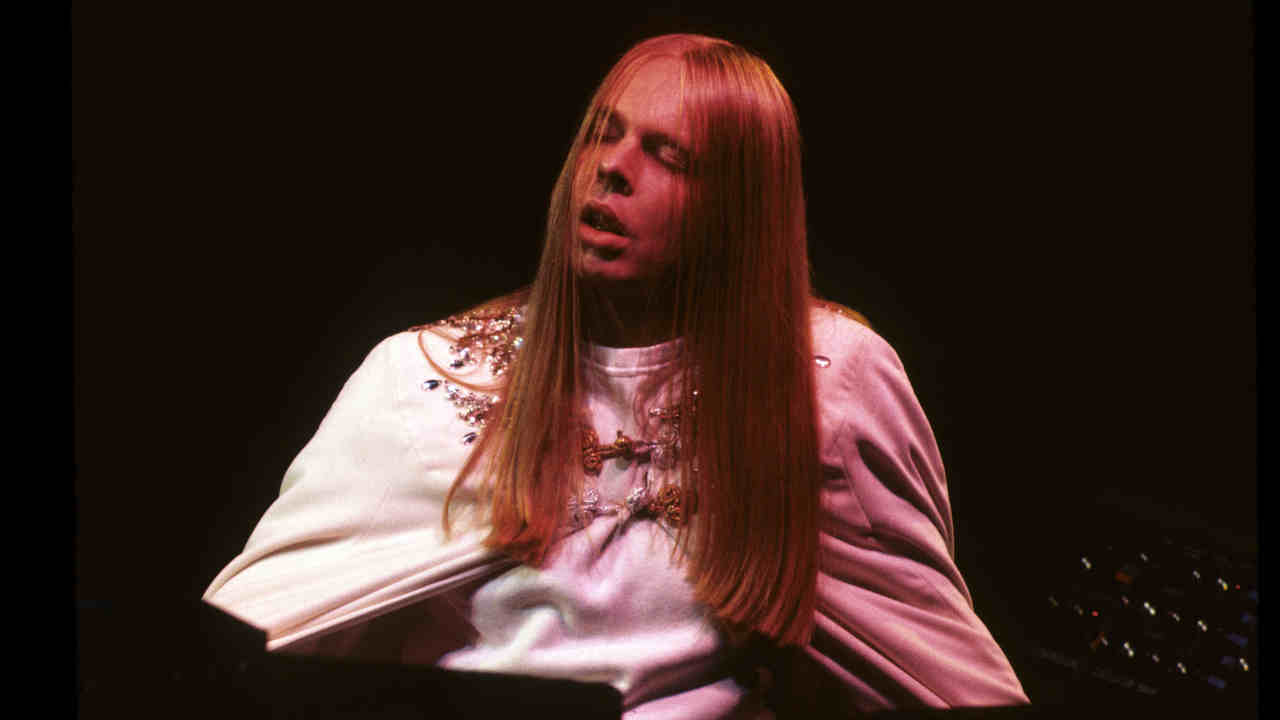
Rick Wakeman in 1974 (Image credit: ABC Photo Archives/Disney General Entertainment Content via Getty Images)
Cooped up in his hospital room, Wakeman began devouring books on the subject, scribbling musical ideas on manuscript paper and humming them into a cassette recorder someone had smuggled into his room for him. The very first song he wrote there reflected both his health issues and the medical advice that he should quit: The Last Battle.
“It’s not really just the last battle of King Arthur but it was probably my last battle because I wasn’t going to give in,” Wakeman later said of the song’s defiant title.
The album itself was no less ambitious. “Writing Arthur was different from …Six Wives,” he told The Strange Brew, referring to his second solo album, The Six Wives Of Henry VIII. “With …Six Wives, I was painting portraits of people I could research in history books. With Arthur, I was painting legends. The music had to be grander. I remember sitting at the piano and trying to find a theme that sounded ‘ancient’ but with a modern, progressive edge..”
Even at that early stage, he had big plans for both the record and a huge live extravaganza to accompany it – a King Arthur Day, held in the grounds of Tintagel Castle on Easter Monday.
Rick Wakeman with the English Rock Ensemble in 1974 (Image credit: Michael Putland/Getty Images)
“I’d like it to be more of a pageant than a rock show and involve the local people in making it a complete show, with jousting, medieval bands and knights,” he told Melody Maker journalist Chris Welch at the time. “It’s got to be planned in advance so we can cater for 100,000 people,” he added optimistically.
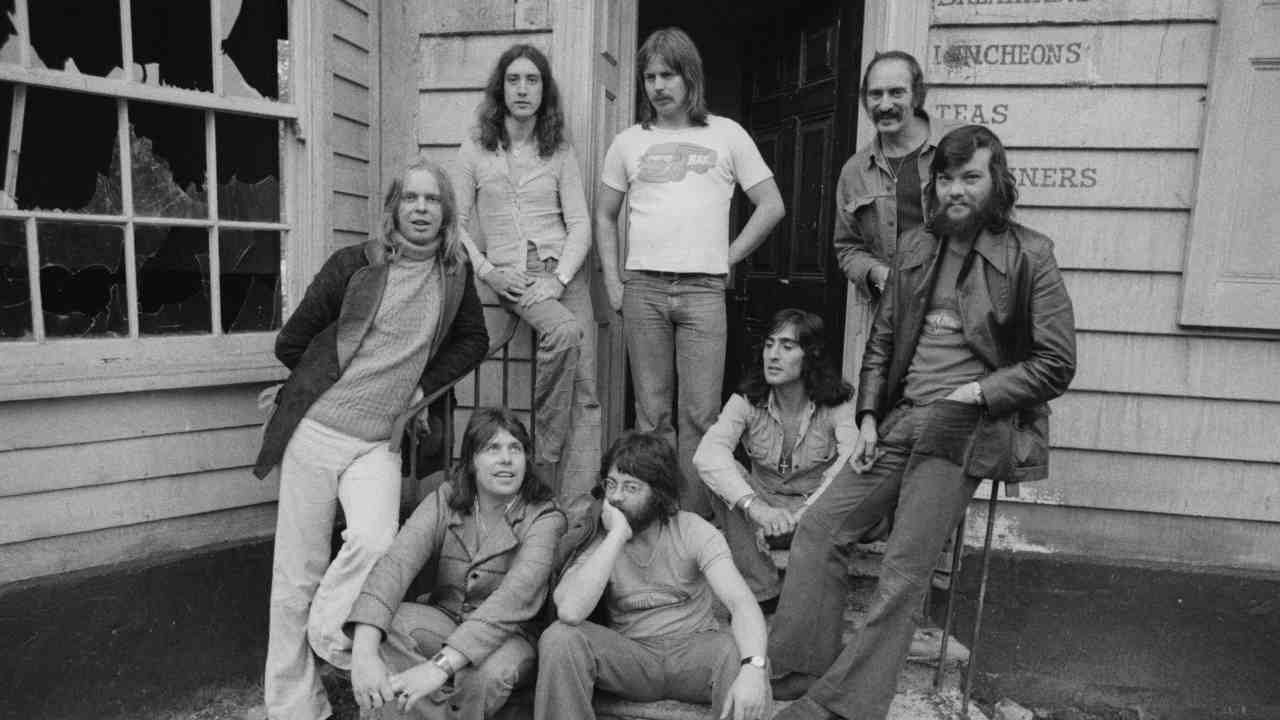
Wakeman began recording the new album in earnest at Morgan Studios, Northwest London in November 1974. He was joined by the so-called English Rock Ensemble – vocalists Ashley Holt and Gary Pickford-Hopkins, guitarist Jeffrey Crampton, bassist Roger Newell, drummer Barney James and percussionist John Hodgson. They were joined by narrator Terry Taplin. And then there was the 45-piece New World Orchestra and the 48-strong English Chamber Choir. The latter pushed Wakeman’s label, A&M, over the edge.
“The label thought I was mad. I told them, ‘I want an orchestra, a choir, a rock band, and narrators,’” Wakeman told The Strange Brew. “They said, ‘Rick, that’s going to cost a fortune.’ And I said, ‘Yes, but it’s King Arthur! It can’t be small.’ We were pushing the boundaries of what a concept album could be. It wasn’t just about the music; it was about the spectacle.”
Among Wakeman’s arsenal of keyboards was a Mellotron, which was duly deployed to evocative effect. “The Mellotron was essential for King Arthur…,” he told The Strange Brew. “It has that slightly eerie, haunting quality that fits the Lady of the Lake or the mystery of Merlin. I used the choir tapes and the string tapes to create this wall of sound that felt like you were in a great hall or on a misty battlefield. It gave the album its atmosphere – that feeling of being half-real and half-dream.”
The finished album delivered on the grand yet dreamlike atmosphere. From the mysterious, sombre drift of the opening Arthur onwards, it struck an enchanting balance between complexity and melodic heft, as surging Mellotrons and squelching Moogs collide with real choirs, vivacious orchestral interventions and the exhilarating of sound live guitars, bass and drums.
Wakeman certainly didn’t sound like a man who had recently had a brush with death. His synth solo on Sir Lancelot And The Black Knight is one of the most outrageous things he has ever recorded, not least the moment when its underlying pulse is hijacked by a brief burst of hip-shaking samba.
Elsewhere, a labyrinth of layers and contrasting keyboard tones gave the ominous Merlin The Magician an ethereal quality in keeping with the mystical overtones of the King Arthur story, while the pomp-fest of The Last Battle is 10 minutes of euphoric grandeur.
The Myths And Legends Of King Arthur And The Knights Of The Round Table was released in March 1975. Although it didn’t replicate the phenomenal success of Journey To The Centre Of The Earth, it still did more-than-respectable business on both sides of the Atlantic, reaching No.2 in the UK and No.21 in the US. And while Wakeman’s vision of a huge King Arthur-themed gig in Tintagel never materialised, he did something arguably even madder: a live show… on ice.
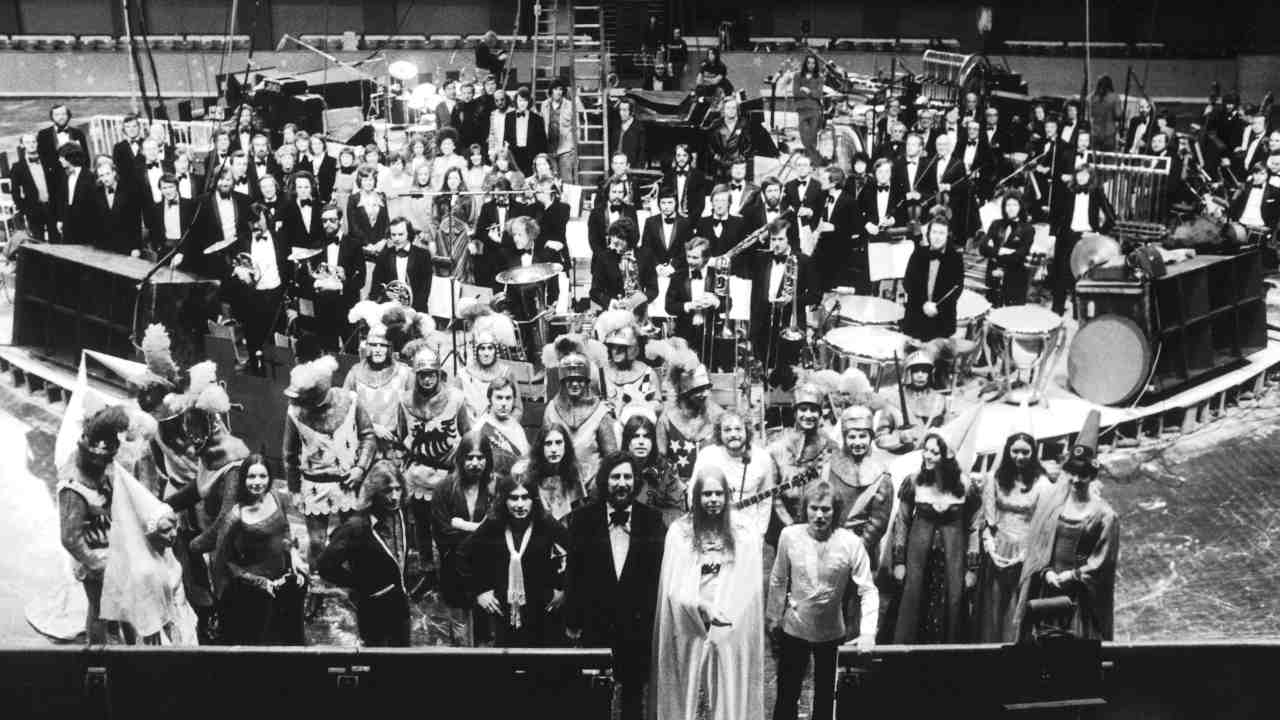
Rick Wakeman with the entire cast of the King Arthur On Ice stage show (Image credit: Michael Putland/Getty Images)
After Wakeman’s suggestion for a one-off gig at Wembley Stadium was deemed too ambitious, they settled on the smaller Wembley Empire Pool, which stood nearby. Three shows were planned between May 30 and June 1, 1975. There was just one problem – it had been booked by an ice dancing troupe for a show due to start immediately afterwards.
“I wanted to do the King Arthur… show at Wembley,” Wakeman told Classic Rock. “And they said: ‘You can’t, there’s an ice rink installed.’ I said: ‘Sod it, I’ll do it on ice.’”
Funded by Wakeman himself, the resulting shows were either one of rock’s most unique spectacles or its grandest folly. As well as the English Rock Ensemble, the keyboard wizard was joined by an orchestra, a choir and a small army of more than 60 skaters playing various characters from the King Arthur story, from Arthur and his paramour Guinevere to a phalanx of knights.
“I wanted the concerts to be musical and entertaining,” Wakeman told Metal Talk. “I followed some great advice given to me by David Bowie, who told me to do what I wanted to do on stage, especially if I was using my own money. ‘Don’t let any promoter, agent or manager tell you,’ he said. ‘They don’t have the imagination…’ I’m forever indebted to David for that.”
The sold-out shows were ridiculously entertaining, but they were also hugely expensive to the point of wiping Wakeman out financially. He managed to tour the US and South America – albeit without the ice rink – but it wasn’t enough to reverse his parlous fortunes. He had only one option: rejoin Yes. By the end of 1976, he was back in the band he’d left two years earlier.
Today, The Myths and Legends of King Arthur And The Knights Of The Round Table stands as one of the high points of both prog’s Golden Age and Wakeman’s own career, even if its own legend has been overshadowed by those infamous, ultimately ruinous gigs.
But it was just as important for Wakeman on a personal level, a blast of symphonic defiance in the face of both medical advice and even death itself. Looking back on the Wembley gig, he recalled playing The Last Battle – the song he’d composed while convalescing in hospital and ignoring his doctor’s insistence that he hang up his cape.
“I vividly saw myself lying in bed at Wexham Park Hospital, absorbing the consultant’s unwanted advice that I should contemplate early retirement,” he later said. “It showed the piece had far more subconscious meaning than I’d realised when I wrote it. It was, in retrospect, as much about me as about events at Camelot.”
Few musical instruments possess the emotional depth of the cello. Its voice can sound mournful without becoming sentimental, beautiful without becoming delicate, and powerful without losing intimacy.
For centuries, composers have turned to the cello when exploring grief, longing, solitude, and introspection. Few instruments communicate these emotions with the same natural authority. This quality helps explain why the cello occupies a special place within Gothic culture.
The Gothic imagination has always been drawn to beauty that exists alongside darkness. It finds meaning in melancholy, mystery, memory, and emotional complexity. The cello embodies all of these qualities.
Its sound feels human. Unlike brighter instruments that project outward, the cello often seems to speak inward. Its voice resembles contemplation rather than celebration, reflection rather than spectacle. That distinctive character has made the cello one of the most emotionally evocative instruments ever created.
The Dark Beauty of the Cello
Why the Cello Feels Different
Part of the cello’s emotional power comes from its range.
Positioned between the violin and the double bass, it occupies a space remarkably close to the human voice. Its lower register conveys gravity and warmth, while its higher notes can express vulnerability without losing richness.
This combination allows the instrument to communicate emotional complexity with unusual effectiveness.
Listeners often describe the cello as singing rather than merely playing. Its tone feels conversational, almost confessional, as though the instrument is revealing private thoughts rather than performing for an audience.
That intimacy creates a strong connection between the music and the listener.
The cello does not simply communicate emotion.
It invites emotional identification.
A History of Melancholy and Expression
The cello emerged during the sixteenth century and gradually became one of the most expressive voices in Western music.
Its development accelerated during the Baroque era, when instrument makers such as Antonio Stradivari refined its construction and expanded its musical possibilities.
As composers began exploring deeper emotional themes, the cello proved uniquely suited to the task.
Unlike instruments associated primarily with brilliance or virtuosity, the cello excelled at conveying introspection.
Its sound could move effortlessly between sorrow and beauty, creating emotional contrasts that later became central to Romantic and Gothic aesthetics.
This ability to balance darkness and elegance would eventually become one of the instrument’s defining characteristics.
Bach and the Discovery of the Cello’s Voice
No composer contributed more to the cello’s expressive identity than Johann Sebastian Bach.
His Six Suites for Solo Cello transformed the instrument from a supporting voice into a complete musical storyteller.
Within these works, Bach revealed the cello’s remarkable emotional range.
Moments of serenity coexist with passages of profound loneliness. Joy appears briefly before giving way to reflection. The music continually moves between light and shadow.
This balance remains one of the reasons the suites continue resonating with modern audiences.
The compositions demonstrate that melancholy does not need to be bleak.
It can also be beautiful.
That idea lies at the heart of Gothic aesthetics.
When Beauty and Darkness Meet
The Gothic tradition rarely separates beauty from darkness.
Instead, it explores the tension between them.
A ruined castle can be beautiful because it is decaying. A tragic poem can be moving because it confronts loss. A haunting melody can feel comforting because it acknowledges sorrow rather than avoiding it.
The cello expresses this same emotional duality.
Its sound often feels suspended between opposing states. Strength exists alongside vulnerability. Warmth coexists with melancholy. Darkness remains inseparable from beauty.
This tension helps explain why the instrument appears so frequently in music associated with Gothic, noir, and dark romantic aesthetics.
The cello does not merely accompany these themes.
It embodies them.
The Cello and the Language of Melancholy
Throughout music history, composers have repeatedly turned to the cello when exploring emotional states that resist simple expression.
Joy can be communicated through many instruments. Triumph often benefits from brilliance and volume. Melancholy requires something more nuanced.
The cello excels in this territory.
Its tone possesses a natural gravity that allows it to express sadness without becoming theatrical. Even when performing lyrical passages, the instrument often retains a sense of emotional depth beneath the surface.
This quality explains why the cello appears so frequently in music concerned with memory, loss, longing, and introspection.
The instrument does not simply communicate sorrow.
It communicates complexity.
Listeners often hear vulnerability and strength at the same time, creating an emotional ambiguity that feels deeply Gothic.
From Bach to Modern Darkness
While Bach revealed the cello’s expressive possibilities, later composers expanded its darker dimensions.
During the Romantic period, composers increasingly explored intense emotional landscapes. The cello became one of their most effective voices.
Works such as Max Bruch’s Kol Nidrei demonstrate how the instrument can create an atmosphere of reflection and spiritual longing. The music feels intimate and personal, as though the listener has been invited into a private emotional space.
In the twentieth century, composers discovered that the cello could also communicate unease and psychological tension.
György Ligeti’s cello works often explore darker sonic textures, revealing how the instrument can evoke uncertainty and disquiet alongside beauty.
These contrasting approaches highlight the cello’s remarkable versatility.
Whether expressing sorrow, mystery, or anxiety, the instrument maintains its emotional authenticity.
Why the Cello Feels More Gothic Than the Violin
The violin and cello belong to the same instrumental family, yet they often evoke very different emotional responses.
The violin tends to project outward. Its bright tone can soar above an orchestra, drawing immediate attention. It often conveys urgency, excitement, or dramatic intensity.
The cello behaves differently.
Its voice feels more grounded and introspective. Rather than reaching upward, it often seems to draw listeners inward.
This distinction helps explain why the cello appears so frequently in Gothic and dark romantic music.
The Gothic imagination is less concerned with spectacle than with emotional depth. It explores memory rather than celebration, reflection rather than display.
The cello naturally complements these themes.
Its sound creates atmosphere while preserving intimacy.
Even in moments of dramatic intensity, the instrument rarely loses its sense of human vulnerability.
The Sound of Solitude
Many Gothic works revolve around isolation.
Characters wander through ruined landscapes, confront painful memories, or struggle with emotions that separate them from the world around them.
The cello seems uniquely capable of expressing this experience.
A single cello performing alone can fill a space with emotional presence while simultaneously suggesting loneliness.
The instrument creates a paradox that few others achieve so effectively.
Its voice feels full, yet solitary.
Powerful, yet vulnerable.
Comforting, yet haunted.
These contrasts mirror the emotional tensions found throughout Gothic literature and art.
The same qualities that make a Gothic novel compelling often make the cello unforgettable.
The Cello Beyond Classical Music
The instrument’s emotional character has allowed it to move far beyond the concert hall.
Contemporary artists continue using the cello to create music that explores darkness, atmosphere, and introspection.
One of the most influential examples is Apocalyptica, whose cello-driven interpretations demonstrated that the instrument could retain its emotional depth even within heavy music.
Their work revealed a connection that many listeners immediately recognized.
The cello’s dramatic voice already possessed many of the qualities associated with Gothic and alternative music.
The instrument did not need to be transformed into something darker.
Its darkness was already there.
Why Modern Audiences Still Connect With the Cello
Musical tastes change over time, yet the cello continues to resonate with listeners across genres and generations.
Part of its enduring appeal comes from its emotional honesty.
The instrument rarely feels artificial or distant. Its voice communicates directly, creating the impression of a conversation rather than a performance.
This quality allows the cello to remain relevant even in musical landscapes very different from those in which it first emerged.
Whether appearing in classical compositions, film scores, alternative music, or contemporary experimental works, the instrument retains its distinctive emotional identity.
Listeners recognize its voice immediately.
More importantly, they recognize the emotions it conveys.
The Cello and Gothic Atmosphere
Gothic aesthetics depend heavily on atmosphere.
A Gothic novel is rarely frightening because of what it reveals. It is memorable because of what it suggests. The same principle applies to Gothic music.
The cello excels at suggestion.
Its tone can imply longing without explaining its source. It can express sadness without becoming despair. It can create tension without resorting to aggression.
These subtle emotional shades make the instrument particularly effective in dark and atmospheric music.
Like a ruined castle, a fog-covered landscape, or a candlelit corridor, the cello invites interpretation.
It creates emotional space rather than dictating a single response.
The listener becomes part of the experience, filling the music with personal memories and associations.
Beauty, Darkness, and Emotional Complexity
One reason the cello feels so naturally Gothic is that it refuses simple emotional categories.
Its voice can sound beautiful and sorrowful at the same time.
Strength can coexist with vulnerability.
Warmth can coexist with melancholy.
These contradictions are not weaknesses.
They are precisely what give the instrument its emotional depth.
The Gothic tradition has always embraced complexity over certainty. It explores emotions that exist between happiness and despair, fascination and fear, memory and loss.
The cello expresses these emotional spaces with remarkable clarity.
Its music often feels less like a statement and more like a reflection.
The Dark Beauty of the Cello
Few instruments embody the Gothic imagination as naturally as the cello.
Its voice combines beauty and darkness, intimacy and distance, strength and vulnerability. These qualities allow it to express emotions that many other instruments struggle to capture with the same depth.
From Bach’s solo suites and Bruch’s lyrical reflections to Ligeti’s unsettling soundscapes and Apocalyptica’s modern reinterpretations, the cello has repeatedly demonstrated its ability to transform melancholy into art.
Its enduring appeal comes from more than technical brilliance.
The instrument speaks to experiences that remain central to human life: longing, memory, solitude, reflection, and the search for meaning within loss.
That emotional richness explains why the cello continues to occupy a unique place within Gothic culture.
The instrument does not merely accompany darkness.
It gives darkness a voice.
Wear the Darkness
If The Dark Beauty of the Cello resonates with your love of Gothic music, dark aesthetics, and emotionally powerful art, explore the Edgar Allan Poets store. Our designs celebrate the sounds, stories, and symbols that continue inspiring Gothic culture.
Join the Noir Newsletter
Receive more essays on Gothic music, dark aesthetics, literature, symbolism, and the artistic traditions that continue shaping alternative culture.
Frequently Asked Questions
Why is the cello associated with melancholy?
The cello’s range and tone closely resemble the human voice, allowing it to express sadness, longing, and emotional depth with unusual realism.
Why does the cello feel Gothic?
The cello naturally conveys themes central to Gothic aesthetics, including melancholy, mystery, solitude, memory, and emotional complexity.
What makes the cello different from the violin?
While the violin often projects brilliance and intensity, the cello typically feels warmer, deeper, and more introspective.
Which composers helped define the cello’s emotional character?
Johann Sebastian Bach, Max Bruch, and György Ligeti all demonstrated different aspects of the cello’s expressive potential, from beauty and reflection to tension and unease.
How is the cello used in modern Gothic music?
Artists such as Apocalyptica have shown how the cello’s dramatic and atmospheric qualities fit naturally within dark, alternative, and Gothic-inspired music.
Apeiron Bound’s single “Thought & Memory – Reverie” opens with an introspective and sophisticated introduction. The band consistently produces high-quality music that transports listeners to another dimension. The enchanting shifts in guitar arrangements are harmonically splendid and elevate the overall experience. This unique blend of fantasy and progressive elements creates an immersive, expansive atmosphere.
As the song progresses, the vocals enter the mix without overwhelming the instrumental backdrop. Instead, they blend with the overall sound. This futuristic and enveloping mood is enriched with intricate musical layers. Each component is carefully arranged, allowing for a depth that may be overlooked upon first listening. The complexity of the arrangement reveals itself gradually, rewarding attentive listeners with newfound details.
The rhythmic changes throughout the track are engaging and create dynamic dialogues between the drums and bass. The interplay between these foundational elements propels the music forward while maintaining a steady groove. The guitars play a pivotal role, alternating from driving riffs to awe-inspiring solos that showcase the band’s technical ability.
Thought & Memory – Reverie – Sound and Atmosphere
The uniqueness of the overall sound is a signature trait of Apeiron Bound. They effortlessly combine various musical influences, creating a distinctive auditory experience. Alongside the lead vocals, backing vocals contribute to the ethereal quality of the music. The harmonies they create enhance the overall richness, taking the listening journey to greater heights.
The song beautifully straddles the lines between progressive rock and metal. It embodies the energy and intricacies of both genres, resulting in an intellectually stimulating track. Each element, from the complex arrangements to the melodic lines, works synergistically to produce a formidable piece of music.
Thought & Memory – Reverie – Performance and Production
As the track reaches its conclusion, listeners are left with resonating thoughts. The shift between lush melodies and powerful passages encapsulates the human experience of thought and memory.
The arrangements defy the conventional structure typically found in mainstream music. They embrace an experimental approach while also honoring their progressive roots. The song encourages active listening and engages the mind, making it a remarkable addition to any music lover’s collection.
Apeiron Bound’s “Thought & Memory – Reverie” offers an immersive experience, rich in musical textures and emotional depth. It serves as a showcase of their musical talents and a source of inspiration. Those open to delving into a diverse musical journey will find much to admire in this single.
Iommi recently revealed that a famous producer was "very keen" to do a new Black Sabbath LP with the original lineup in the early 2020s, but Iommi didn't want to. Continue reading…
Reetoxa Double A Side 2 (Akaroa / Erica And The Stars) Review
The EP begins with “Akaroa,” a track highlighted by a captivating guitar riff. This song strikes a balance between intensity and singability, reminiscent of the vibes found in “Shine” by Collective Soul. The vibrant instrumentation sets a lively mood, inviting head nods and toe taps. The structure of “Akaroa” showcases Reetoxa’s ability to blend melodic hooks with driving rhythms. Every chord progression is a delightful surprise, carrying the listener along a journey of sonic richness.
Transitioning into “Erica And The Stars,” the mood shifts to a more delicate realm. The song opens with a tender arpeggio that gently sets the stage. Strings create a beautiful interplay, painting a lush musical landscape. This introduction serves as a gentle invitation to a world filled with deep emotional resonance. As the track progresses, it gradually builds in intensity, revealing layers of sophistication. The dynamics within this song subtly transition, highlighting Reetoxa’s careful construction of melodies.
The emotional depth of “Erica And The Stars” is undeniable. Its infectious melody has the power to resonate deeply with listeners’ hearts. The strings and arpeggios intertwine beautifully, creating a feeling of upliftment. Each section of this song elicits a vivid emotional response, a reflection of Reetoxa’s compositional skill. The subtle crescendos offer moments of reflection, drawing the audience even closer to its essence.
Double A Side 2 (Akaroa / Erica And The Stars) – Sound and Atmosphere
As this captivating journey reaches its conclusion, the EP offers a karaoke version of both songs. This unique addition allows fans to engage with the music on a personal level. It’s an interesting touch, encouraging listeners to experience the joy of performance themselves. The interactive element of karaoke fosters a sense of community among fans, inviting them to share these tracks in their own way.
“Double A Side 2 (Akaroa / Erica And The Stars)” is a solid release. It showcases Reetoxa’s versatility and their knack for creating impactful music. Each track embodies distinct qualities, making the listening experience diverse yet cohesive. The contrasting energies of the songs allow the EP to maintain interest throughout.
Double A Side 2 (Akaroa / Erica And The Stars) – Performance and Production
In keeping with the vibrant and emotional nature of the EP, “Akaroa” and “Erica And The Stars” stand out in their craftsmanship. Reetoxa successfully combines catchy melodies with thoughtful instrumentation. The transition from the energetic to the introspective reflects their range and musical sensibility. With engaging compositions and rich production, this EP is very much worth a listen.
“Double A Side 2” brings together two compelling pieces of music, each resonating emotionally and energetically. The catchy nature of “Akaroa” offers a vibrant entry point, while “Erica And The Stars” delves deeper into emotional exploration. Together, these songs create an enriching musical experience that will leave listeners wanting more.
Lace and Lee’s RoadKill is a catchy country-leaning indie folk track with a charmingly unconventional subject at its centre. Built around warm folk textures and an infectious melodic approach, the song finds an appealing balance between earthy Americana character and indie sensibility. The standout element is the beautiful double-vocal interplay, with the two voices blending naturally and giving the track an intimate, almost conversational quality. There is also a playful, slightly nerve-racking edge beneath the warmth, adding tension and personality to the songwriting. RoadKill feels organic, memorable and refreshingly distinctive, offering a catchy introduction to Lace and Lee’s folk-driven sound.


 If you love this music: