Reetoxa Double A Side 2 (Akaroa / Erica And The Stars) Review
The EP begins with “Akaroa,” a track highlighted by a captivating guitar riff. This song strikes a balance between intensity and singability, reminiscent of the vibes found in “Shine” by Collective Soul. The vibrant instrumentation sets a lively mood, inviting head nods and toe taps. The structure of “Akaroa” showcases Reetoxa’s ability to blend melodic hooks with driving rhythms. Every chord progression is a delightful surprise, carrying the listener along a journey of sonic richness.
Transitioning into “Erica And The Stars,” the mood shifts to a more delicate realm. The song opens with a tender arpeggio that gently sets the stage. Strings create a beautiful interplay, painting a lush musical landscape. This introduction serves as a gentle invitation to a world filled with deep emotional resonance. As the track progresses, it gradually builds in intensity, revealing layers of sophistication. The dynamics within this song subtly transition, highlighting Reetoxa’s careful construction of melodies.
The emotional depth of “Erica And The Stars” is undeniable. Its infectious melody has the power to resonate deeply with listeners’ hearts. The strings and arpeggios intertwine beautifully, creating a feeling of upliftment. Each section of this song elicits a vivid emotional response, a reflection of Reetoxa’s compositional skill. The subtle crescendos offer moments of reflection, drawing the audience even closer to its essence.
Double A Side 2 (Akaroa / Erica And The Stars) – Sound and Atmosphere
As this captivating journey reaches its conclusion, the EP offers a karaoke version of both songs. This unique addition allows fans to engage with the music on a personal level. It’s an interesting touch, encouraging listeners to experience the joy of performance themselves. The interactive element of karaoke fosters a sense of community among fans, inviting them to share these tracks in their own way.
“Double A Side 2 (Akaroa / Erica And The Stars)” is a solid release. It showcases Reetoxa’s versatility and their knack for creating impactful music. Each track embodies distinct qualities, making the listening experience diverse yet cohesive. The contrasting energies of the songs allow the EP to maintain interest throughout.
Double A Side 2 (Akaroa / Erica And The Stars) – Performance and Production
In keeping with the vibrant and emotional nature of the EP, “Akaroa” and “Erica And The Stars” stand out in their craftsmanship. Reetoxa successfully combines catchy melodies with thoughtful instrumentation. The transition from the energetic to the introspective reflects their range and musical sensibility. With engaging compositions and rich production, this EP is very much worth a listen.
“Double A Side 2” brings together two compelling pieces of music, each resonating emotionally and energetically. The catchy nature of “Akaroa” offers a vibrant entry point, while “Erica And The Stars” delves deeper into emotional exploration. Together, these songs create an enriching musical experience that will leave listeners wanting more.
Lace and Lee’s RoadKill is a catchy country-leaning indie folk track with a charmingly unconventional subject at its centre. Built around warm folk textures and an infectious melodic approach, the song finds an appealing balance between earthy Americana character and indie sensibility. The standout element is the beautiful double-vocal interplay, with the two voices blending naturally and giving the track an intimate, almost conversational quality. There is also a playful, slightly nerve-racking edge beneath the warmth, adding tension and personality to the songwriting. RoadKill feels organic, memorable and refreshingly distinctive, offering a catchy introduction to Lace and Lee’s folk-driven sound.
Kenny Mehler’s album “Cornbread and Whiskey” opens with an infectious energy. The title track, “Cornbread and Whiskey,” infuses the listener with vitality. This lively country rock song makes it hard to resist tapping along. Its vibrant rhythm sets the tone for what’s to follow.
Next is “Pasadena,” which begins with a melody reminiscent of Dave Matthews. However, as soon as the vocals enter, the song transforms into dynamic country rock. It brings a joyful, danceable vibe that is hard to ignore. The incorporation of ska elements adds a delightful twist, encouraging listeners to stay on their feet.
“Moses Brown” takes a different direction, introducing a gospel influence. The instrumentation here is superb, with beautiful violin and piano arrangements. The passion and energy of Kenny Mehler shine through in this track. His vocal delivery resonates with warmth, further enhancing the song’s uplifting spirit.
Cornbread and Whiskey – Sound and Atmosphere
Following this is “Song of the Week,” another standout effort. This track effectively lifts one’s spirits with its upbeat tempo. It envelops the listener with energetic rhythms while showcasing refined musical progression. The mix of lively instrumentals creates an enjoyable and optimistic atmosphere.
The album then introduces “Upside Down.” This song features a syncopated groove that is infectious. Mehler’s passion is palpable in his performance, as he pours his energy into each note. The rhythmic pulse of the music invites repeated listening and compelled dancing.
The closing track, “Gin and Juice,” stands out due to its minimalist beginning. This simplicity allows for an intimate listening experience before the song erupts into a fast-paced bluegrass. The energy that unfolds truly evokes the spirit of the Appalachian sound, marking a high point for the album.
Cornbread and Whiskey – Performance and Production
Throughout “Cornbread and Whiskey,” Kenny Mehler successfully blends traditional Americana with modern Nashville country. Each track displays his songwriting skills and musical versatility. The result is an album that is entertaining and filled with heartfelt expressions. From the opening track to the last note, listeners are treated to a diverse range of influences and styles.
This cohesive collection demonstrates Mehler’s commitment to his craft. Every song illustrates his talent for storytelling through music. The compelling arrangements and skilled instrumentation make this album truly enjoyable.
“Cornbread and Whiskey” is an impressive reflection of Kenny Mehler’s musical journey. It expertly combines diverse influences while remaining true to its roots. Each song contributes to a rich tapestry of sound and emotion.
Some records describe escape; Sehnflucht attempts to become one. The new album from German atmospheric black metal project STERNWEH moves through cosmic longing, emotional isolation and the desire to disappear into another world. Crushing walls of guitar and desperate screams collide with fragile acoustic passages, clean vocals and shoegaze-inspired textures, creating a constant tension between […]
Experimental Metal Project Channels Suffering, Bliss, Wonder, Escape, and Gnosis Into a Twelve-Part Journey Within
There are albums that tell a story, and then there are albums that take the listener somewhere.
Culak enters the latter territory with Twelve Gates , an ambitious and eclectic metal album set for release December 12, 2026 , through independent imprint Song & Silence . Conceived as a journey through twelve trials within a single being, Twelve Gates explores an unpredictable landscape of darkness, revelation, suffering, bliss, perseverance, quietude, escape, and gnosis.
Rather than confining itself to a single stylistic lane, Culak embraces the uncertainty of the journey itself. The result is an album built around contrast, atmosphere, experimentation, and emotional catharsis, with each passage serving as another doorway into the larger narrative.
Originally established as an experimental project in January 2013 , Culak has evolved into a lifelong vessel for processing and expressing the extremes of human experience. Over the years, the project has developed a discography defined by its willingness to follow inspiration wherever it leads, leaving listeners with one question after each release: what comes next?
Twelve Gates continues that philosophy.
The album’s twelve-trial concept follows a being moving inward, confronting the obstacles and experiences that exist within itself. Rather than presenting a straightforward linear narrative, Culak uses metal as the language through which those experiences can be explored and interpreted.
“Twelve Gates is an eclectic metal album that conveys a being’s journey through twelve trials within itself.”
The album’s accompanying narrative expands upon that concept and will be available as a bonus item with the album’s Bandcamp pre-order , offering listeners another way to experience the world behind the music.
Entirely written, recorded, mixed, and mastered by Christian Culak , Twelve Gates represents a deeply personal and self-contained creative vision. The album’s artwork comes courtesy of Xenoyr , adding another dimension to the atmosphere surrounding the release.
For listeners drawn to adventurous, progressive, experimental, and boundary-pushing metal, Culak’s Twelve Gates offers an experience that refuses to reveal all of its secrets at once.
For Fans Of: So Hideous, Uneven Structure, and Mastodon
TWELVE GATES
Culak
Release Date: December 12, 2026 Release Type: Full-Length Album Genre: Metal Label: Song & Silence Written, Recorded, Mixed & Mastered by: Christian Culak Artwork by: Xenoyr
ABOUT CULAK
Originating as an experimental project in January 2013, Culak has blossomed into a lifelong vessel for catharsis. Through an ever-evolving approach to metal, the project channels an extensive range of experiences including suffering, bliss, wonder, escape, perseverance, quietude, and gnosis. The result is an unpredictable discography that continually challenges the listener to embrace the unknown and wonder what will come through the next gate.
Twelve Gates by Culak
On February 19th 2027, heavy/power metal masters Firewind will return with their next long player entitled Myths, Gods & Titans. Alongside disclosed details, you can also give a spin to the first single “The Legend Of Achilles”. Read more…
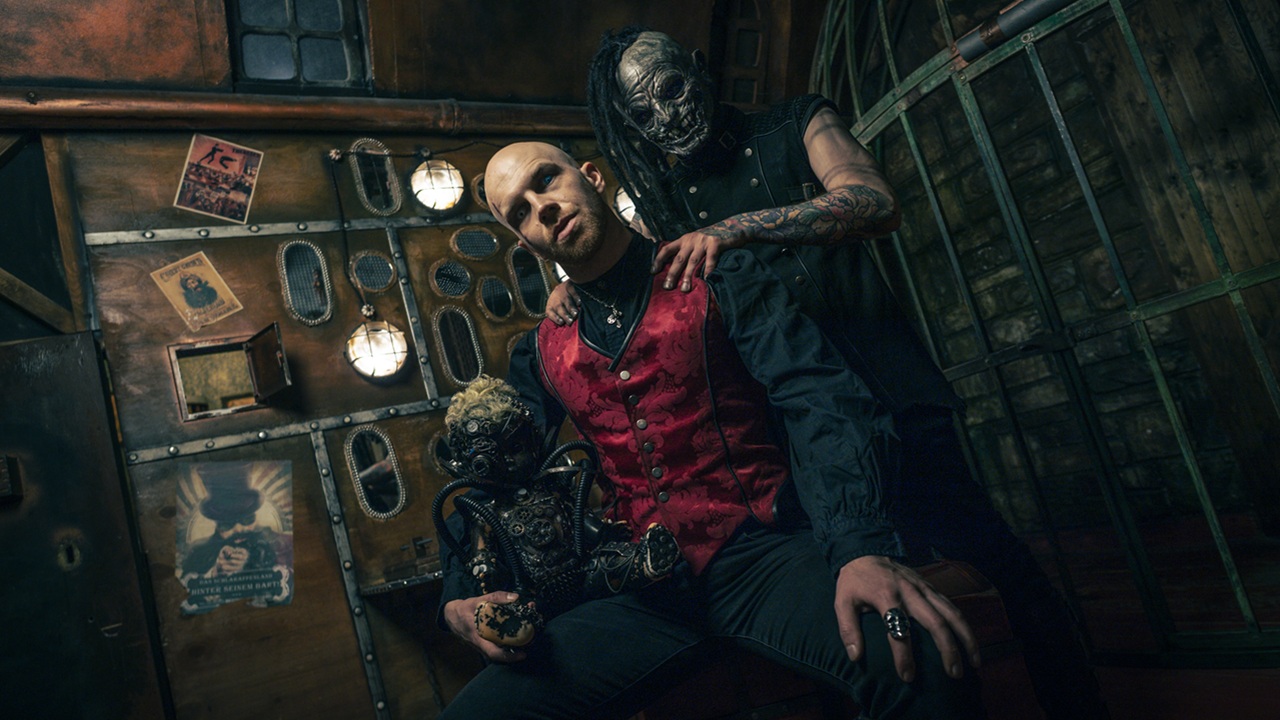
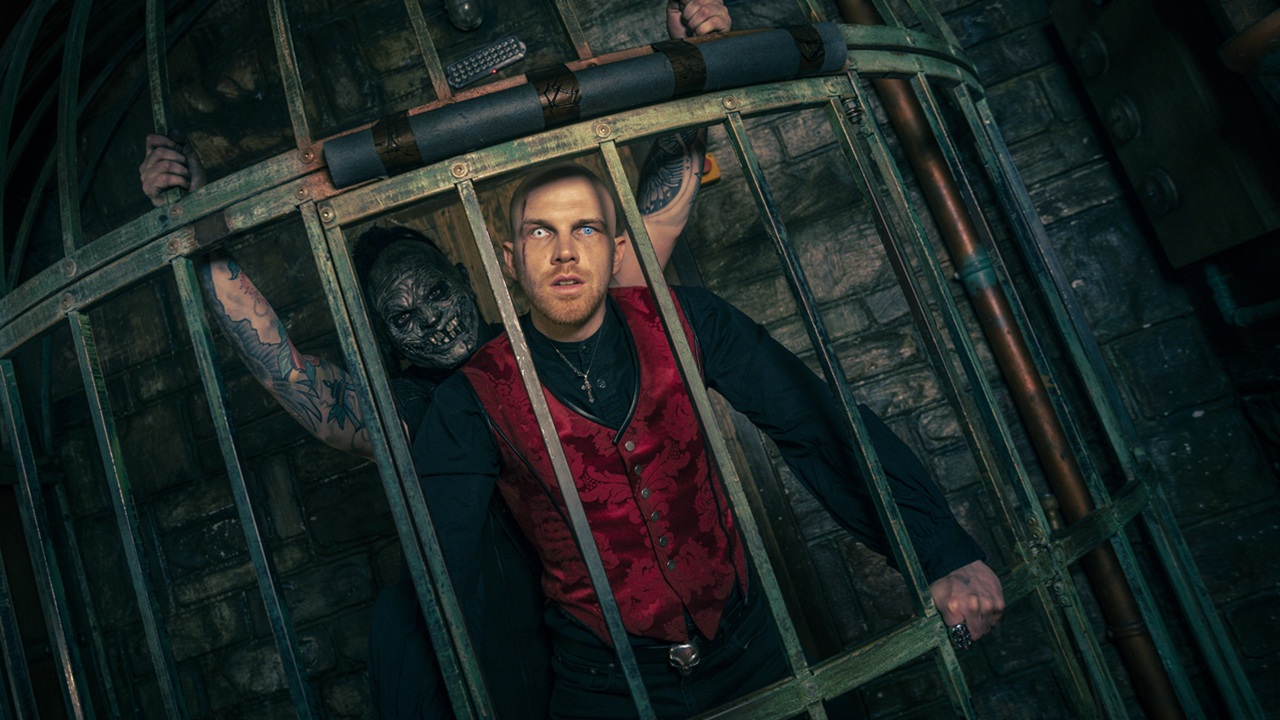
“For fook’s sake!” blurts the figure to our left in a passable northern English accent. His one good, crystal-blue eye roves frantically across the pipes and vents just out of reach through the bars of the cage we’re currently locked in. The other eye is milky white, with a vicious-looking scar crossing the socket. To the other side, a tattooed and dreadlocked entity with a face like the Devil’s scrotum is trying to decipher a clue left on a scroll by the dastardly puppeteer who has us trapped in this dismal steampunk dungeon.
We were informed on entering that we only had an hour to make it out or we’d join the Puppet Master’s show forever. A quarter of that allotted time has already ticked away and we’re still stuck in the part of the room we were first ushered into.
“Don’t worry, once your blood is removed and your veins filled with oil, it won’t hurt anymore,” giggles the disembodied voice of our unseen guide, who introduces himself as ‘Pinocchio’.
“For fook’s sake,” shouts the one-eyed figure again. “Now you’re just threatening us!” His name is Dr. Dead and you might hope that a self-proclaimed mad scientist would have the perfect cracked-yet-methodical mindset to guide us through the fiendish puzzles blocking our way to freedom.
“You’d think so wouldn’t you?” he grins, with a gleam in his eye. “But no, it turns out we’re just really bad at this.”
Thankfully, we haven’t fallen into an unlikely Saw-style scenario and we certainly hope that no one is actually going to replace our blood with oil if we fail to get out in time.
There are no other zombie bands because it’s a complete nightmare.
Dr. Dead
Instead, Metal Hammer is at Finest Escape, an escape room in Nuremberg, along with Dr. Dead and his undead minion, Tommy Kemp – vocalist and guitarist respectively in rising zombie-metal band Dominum. Neither have done an escape room before, but when we meet at the impressively atmospheric venue on an otherwise ordinary weekday morning, they’re more than up for the challenge.
“It’s always good to try something new,” smiles Tommy, or Jochen Windisch as he’s known to his flesh-and-blood parents. He’s not yet ensconced in his dead skin mask but does have swathes of black and white makeup covering his face and neck.
“He’ll wear that all the time,” shrugs Felix Heldt, the man behind the Dr. Dead persona and the mastermind behind Dominum. “The rest of us will scrub ourselves clean and he’ll be scurrying round a festival like a raccoon.”
Dominum may not be A-list famous outside their native Germany just yet, but that could well change with their just-released fourth album, Night Is Calling. It’s the kind of classic Euro-metal with a killer conceptual gimmick that has served the likes of Sabaton and Powerwolf so well. The transformation of Felix and Jochen into Dr. Dead and Tommy Kemp is a reasonably involved process but the pair whip through it in about 10 minutes.
“I know why there are no other zombie bands – it’s because it’s a complete nightmare,” the singer laughs. “To get the look, and to find a way that you can take it on tour and not look cheap. And be quick with it too. Like when you have to do social media stuff and you get asked ‘Can we do this thing real quick?’ And Tommy was like, ‘Sure, give me three hours so I can do the make-up.’ We had to speed it up.”
Once the pair are fully transfigured, Ralf, Finest Escape’s manager, nods in approval. “You could be scary actors in our escape rooms,” he says.
He’s a little worried about them overheating in their full horror regalia but the pair are used to performing in sweltering conditions.
“When we played [Belgian metal fest] Graspop we had masks that weren’t as tight as the ones we have now. It was so hot that sweat was just pooling in the chin,” nods Tommy.
“It’s not only the mask but the costumes and layers,” adds Dr. Dead. “And we’re all sweaters. Some people come offstage and you’re like, ‘Did you even play?’ We look like we just got in a washing machine. But you don’t realise that too much when you’re into the game. It’s just the eyes of the boys are getting redder and redder, because I can only see their eyes during the show.”
Back in the escape room we now have the additional worry that we’re locked in quite a small space with two self-confessed heavy sweaters.
“There’s pirate bands, there’s werewolf bands, there’s a lot of Viking bands, why is there no zombie band?”
Dr Dead
Fortunately, we finally make it out of the cage when Dr. Dead hurls a missile into a target at the other side of the room with impressive accuracy.
“I never had you pegged as one-hit wonders,” cackles Pinocchio, as a pneumatic tube delivers a key with a jump-scare clatter.
Even while their plans for world domination were still being drawn up, Dominum’s last album, 2024’s The Dead Don’t Die, was a Top 10 hit in their homeland.
“We were very happy because having a Top 10 record as a band that had existed just two years back then, that’s a wild thing. We’re very grateful that people seem to like this crazy thing we do, so this is what drives us,” smiles Dr. Dead.
The mad scientist’s talkative if somewhat less madcap alter-ego Felix and his quiet compatriot Jochen have played together for years, but Top 10 albums and huge festival crowds were not previously on the cards.
“You’re just happy that you have a gig, and then you drive 1,200 kilometres and play in front of 30 people. That was our band, but we loved it,” Dr. Dead recalls as we enter the escape room proper.
The germ of Dominum came from Felix’s role as a producer. He’s worked with the likes of German power metal band Warkings and folk rockers Dartagnan, but it was when he set sail with Austrian pirate metallers Visions Of Atlantis that something clicked into place.
“You drive to the studio and you feel like a pirate and go ‘Yarrgh!’ all the time, and then you drive home and think about everything. I watched The Walking Dead and I was thinking, ‘OK, so there’s pirate bands, there’s werewolf bands, there’s a lot of Viking bands, why is there no zombie band?’”
Lots of reasons really, but at the same time none at all. Leeds thrash lunatics Send More Paramedics actually got there first, but the nascent Dominum had spotted a gap in the market that they sank their rotting gnashers into. With the zombified Patient Zero installed on bass and Victor Hiltop on drums, their infection started to spread.
Appearances at Graspop and the main stage at Wacken followed, as well as a couple of UK jaunts that resulted in Dr. Dead picking up his frequent ‘For fook’s sake’ expulsion. The zombie metal idea had legs as well as teeth, it seems. Their popularity continues to grow like an undead plague but there will always be those quick to dismiss them as nothing more than a gimmick.
“We committed to this zombie thing but I think a band can only be persistent and last longer if the backbone is good,” Dr. Dead says as he and Tommy work their way through the puzzles of the next two rooms.
We’ve been asked not to give too many of the escape room’s secrets away, but suffice to say there are secret panels and hidden devices and – naturally – a terrifying metallic doll.
“Please take me with you,” it wails, causing the good doctor to hastily thrust it at his reanimated companion.
“I hope that the quality of the music and art helps us to not get drowned by the ‘whatever-metal’ tag,” the Doctor continues. “Ghost don’t say that they’re ghoul metal or Pope metal, it’s just Ghost. The bands that are successful, it’s not really about the masks. It’s just a way to tell the lore and to entertain.”
Holger FichtnerHolger Fichtner
As we pass the halfway mark the tension genuinely starts to grow. Metal Hammer is here primarily as an observer, but we’re also roped into searching the rooms and helping to decipher the odd clue.
“I can put my stick in but I can’t do anything with it,” Dr. Dead states at one point, as he kneels by a chair occupied by his bandmate. Before anything smutty can pass our lips,
Pinocchio gets there first. “It’s not only about putting it in, it’s also about pulling it out,” he giggles.
It’s the hint they need to unlock the final room and at last meet our sinister guide, Pinocchio, who turns out to be a two-foot-tall metallic figure of the puppet of the same name.
“It seems like the circus must be in town!” he shrieks as we enter.
He’s obviously done a bit of research, The Circus Is In Town being both the lead single and opening track on the aforementioned Night Is Calling. It’s a twisting, shouting Grand Guignol fanfare of a song and the perfect teaser for an album filled with theatrical excess.
“I think if you combine Ghost and Sabaton, that’s an idea of where it’s going, because it always has a dramatic component to it. It’s emotional but it also wants to be epic all the time,” says Dr. Death.
“When you see the masks you think this must be a brutal death metal band, but we’re not death metal guys. We like melodies and he likes Taylor Swift,” he adds, pointing to his guitarist.
Everywhere I go, I get mangoes
Tommy Kemp
Dominum’s most hardcore fans, the Doctor explains, are known as the Living Dead Squad and their ranks are growing all the time.
“When we play a headline show, the front row is all in make-up; it reminds me of The Rocky Horror Show. They bring us strange gifts sometimes. I’ve had a few Dr. Death voodoo puppets and I’m glad I have them so no one can stick a pin in. Tommy gets lots of mangoes,” he chuckles.
“I mentioned it on an Instagram Q&A and now everywhere I go I get mangoes.” Tommy elaborates. “It’s cool though, because they’re expensive.”
Now isn’t the time for fruit-based discussions. Time is ticking, and there’s still one last puzzle to solve. It involves Tommy setting a series of dials while Dr. Dead deciphers instructions via a vintage screen and set of steampunk goggles. The pair suddenly become increasingly frantic, speaking in panicked German. Eventually there’s a heavy clunk and the last door swings open. Freedom!
It’s a good job Dr. Dead and Tommy made it out of the escape room in the nick of time, given that Dominum are due to play their biggest UK headlining shows later this year.
“It will be good for the world because there’s a lot of crazy stuff going on with very crazy people in high positions,” Dr. Dead says. “This is where we come in, because once a zombie bites you, you’re infected. And you know what? We all taste the same.”
Night Is Calling is out now via Napalm. Dominum’s UK tour begins on December 12.
Finnish black metal band Uhrattu announce the signing of a new deal with Black Lion Records for the release of their debut full-length instalment in 2027. More details coming soon. Read more…
Mastodon pulled out several rarities and debuted songs from their latest LP, 'Marrow Deep.' Plus, Baizley will be joining them on their upcoming tour! Continue reading…

 If you love this music: Discover More