Blog
-
Mastodon Play Secret Show With Baroness’ John Baizley – See Video
Mastodon pulled out several rarities and debuted songs from their latest LP, 'Marrow Deep.' Plus, Baizley will be joining them on their upcoming tour! Continue reading… -
Soliloquium – Unveil ‘Time Stands Still’ Single
After recent new album announcement, Soliloquium now present a lyric video for the first single called “Time Stands Still”. The upcoming music output Upheaval will land in stores on October 23rd, 2026.
Read more… -
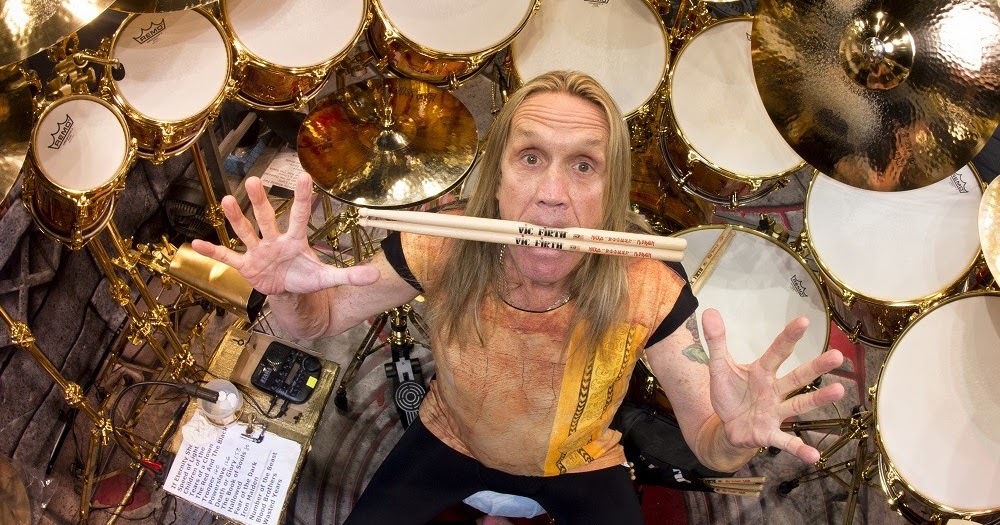
Nicko McBrain Wants To Play Drums on the Next Iron Maiden Album

Nicko McBrain has not played live with Iron Maiden since December 2024, when he stepped off the stage at the final show of the Future Past tour. He is still, officially, their drummer. Speaking exclusively to Metal Hammer, the 74-year-old says that if the band go back into the studio he’d be “delighted” to get back on with them — with one condition attached, and two specific songs in mind as the model.
 STREAM THE METAL BREAKDOWN DAILY NOW:
Scott Penfold covers the latest hard rock and metal news stories on today’s Metal Breakdown Daily. Download the free Loaded Radio App on Apple iOS and Google Play and get it every weekday morning.
What he said
McBrain’s position is straightforward and he didn’t dress it up.
“If Iron Maiden went into the studio, I’d be delighted to get back on with them.”
Then the condition: “But it’d have to be something more simple really.”
And he named what he means. “Stranger In A Strange Land” and “Wasted Years” — both from 1986’s Somewhere In Time. His line: that kind of song. He’d love to do something like that.
Which is a more interesting answer than it first appears. Those aren’t filler tracks. “Wasted Years” is one of the best songs Adrian Smith has written and one of the most enduring things in the entire Maiden catalogue. “Stranger In A Strange Land” is a fan staple. Neither is a gallop, neither is technically punishing, and both are built on feel rather than stamina.
He isn’t asking to be carried. He’s asking for the kind of song he can still play properly.
 LIVE & LOUD: Stream the World’s Hardest Radio Station 24/7
What actually happened to him
The context matters, and he’s spoken about it with no self-pity at all.
In January 2023, McBrain suffered a transient ischaemic attack — a mini-stroke — that paralysed the entire left side of his body. He continues to live with the effects.
And there’s a detail in this interview that stops you cold.
He was due to have cataract surgery that same day.
His words: the miracle was that he had the stroke in the morning, rather than while he was under the twilight anaesthetic.
An hour or two later and he’d have been sedated on an operating table, with nobody in the room looking for the signs.
He toured for eighteen months anyway
This is the part that makes the man.
McBrain played the entire Future Past run — eighteen months — and has now revealed he could only feel seventy percent of his hand while doing it.
His account: it was incredible to get any use back out of it at all. And then the specific.
He couldn’t play the drum fill in the intro of “The Trooper.”
He had to adapt it.
Sit with that for a second. “The Trooper” is from 1983. He’s played it thousands of times. That intro is one of the most recognisable drum figures in heavy metal, and he rewrote it mid-career so he could get through the set, in front of arenas, without telling anyone why.
He says Steve Harris and the band were enormously supportive, but that his body just wasn’t bouncing back.
He stepped down from the live lineup in December 2024 at the last show of the tour. Simon Dawson has played the shows since.
We Recommend – Iron Maiden Albums Ranked: All 17 Studio Albums, Worst To Best
Bruce called him a hero, and meant it
Speaking to Loudwire in 2024, Bruce Dickinson didn’t hedge about what he’d watched.
He said McBrain was paralysed entirely down his left side. That in May 2023 they were supposed to be rehearsing for a huge tour and Nicko wasn’t even sure he could play drums.
“He couldn’t hold a fork.”
Three months after that, Dickinson said, he was on tour. And then the question that lands hardest — can you imagine how hard that is for a drummer of Nicko’s calibre, in front of ten thousand people?
The bit nobody’s connecting
Here’s why this is a bigger story than a retired drummer saying he’d like to work again.
Bruce Dickinson has already said he’d rather Iron Maiden make another album than head straight back out on the road.
So put the two together.
The singer wants a record. The drummer — who is still officially in the band — wants to be on the record, and has named the kind of material he can play. That’s two of the three people whose enthusiasm actually determines whether a Maiden album happens.
The third is Steve Harris, who writes most of them and decides when they get made. He hasn’t said anything either way.
Their last album was 2021’s Senjutsu — five years ago, and their longest gap between records in some time. If there’s a seventeenth Iron Maiden album, the pieces of it are quietly assembling in public and nobody’s noticed.
It’s also the second story in two days about whether a founding-era band has one more record in them — Tony Iommi revealed yesterday that he turned down exactly that offer for Black Sabbath, and that door is now permanently shut. Maiden’s isn’t.
Also – Judas Priest Albums Ranked: Full Discography
What he’s doing instead
He’s been busy for a man who retired.
His autobiography, Hello Boys And Girls, arrives October 22 via Harper NonFiction. The publisher’s pitch is a thrilling, hilarious and deeply personal account that takes readers behind the scenes of one of Britain’s biggest bands.
And he’s on the road right now in the United States — with his own Iron Maiden covers band, Titanium Tart.
Read that back. A man who stepped away from Maiden because his body couldn’t take the tour is currently touring America playing Maiden songs in a tribute act he put together himself.
That tells you everything about why he wants back in a studio.
Where Maiden are right now
The band are in the States continuing the Run For Your Lives world tour, marking fifty years.
The setlist is drawn entirely from their first nine albums — 1980’s Iron Maiden through to 1992’s UK chart-topping Fear Of The Dark. Those same nine records get a vinyl box set on December 11.
Fifty years on, and still one of the two or three bands that define what British heavy metal actually is, alongside Priest and Sabbath.
Nicko joined in 1982. He’s played on every album since Piece Of Mind. And he’s still in the band.

TL;DR
- Nicko McBrain says he’d be “delighted” to drum on Iron Maiden’s next album if the band go back into the studio, telling Metal Hammer he’s still up for recording.
- His one condition: the material would need to be simpler. He named “Stranger In A Strange Land” and “Wasted Years” from 1986’s Somewhere In Time as the kind of song he’d love to do.
- He suffered a mini-stroke in January 2023 that paralysed his entire left side — on the same day he was due to have cataract surgery. He has said the timing was a miracle, because it happened before he went under anaesthetic.
- He toured for eighteen months afterwards with seventy percent feeling in his hand, and had to adapt the drum intro to “The Trooper” because he could no longer play it as written.
- He stepped down from live duties in December 2024 at the final Future Past show. Simon Dawson has played the shows since. McBrain remains officially Iron Maiden’s drummer.
- Bruce Dickinson has already said he’d rather the band make an album than tour again immediately.
- His autobiography, Hello Boys And Girls, is out October 22, and he’s currently touring the US with his Maiden covers band Titanium Tart.
FAQ
Is Nicko McBrain still in Iron Maiden?
Yes. He stepped down from the band’s live lineup in December 2024 at the final show of the Future Past tour, and Simon Dawson has handled touring duties since, but McBrain remains officially Iron Maiden’s drummer.
What happened to Nicko McBrain?
He suffered a transient ischaemic attack — a mini-stroke — in January 2023, which paralysed the entire left side of his body. He continues to live with the effects, and has said he had only around seventy percent feeling in his hand throughout the eighteen-month Future Past tour that followed.
Will Nicko McBrain play on Iron Maiden’s next album?
He has said he would be “delighted” to, on the condition that the material is simpler than some of the band’s more demanding work — citing “Stranger In A Strange Land” and “Wasted Years” as the kind of song he’d like to record. No new Iron Maiden album has been announced.
Who is Iron Maiden’s drummer now?
Simon Dawson plays drums on tour, having taken over from Nicko McBrain in December 2024. McBrain remains the band’s official drummer.
When is Nicko McBrain’s book out?
Hello Boys And Girls is published on October 22, 2026 via Harper NonFiction.
The singer wants an album. The drummer wants to be on it. All that’s missing is Steve Harris saying yes. Do you want another Iron Maiden record, or is Run For Your Lives the right place to stop? Tell me below. And keep it locked on the Loaded Radio stream — follow Loaded Radio for daily rock and metal news.
The post Nicko McBrain Wants To Play Drums on the Next Iron Maiden Album appeared first on Loaded Radio.
-
10 Best Rock Songs About Ghosts

So many people are afraid of ghosts. But I have a different philosophy. If I ever see a ghost, well then that will prove something to me something that has never been proven before. For something just based on belief, if I see a ghost, to me that means there is life after death. I don’t care if it’s a scary ghost; I’m hoping it’s a Friendly Ghost like Casper. Regardless of whatever type of ghost I see, I will know that there’s something beyond, and that will be comforting. I think? # 10 – Ghosts Are Gone – Stevie
The post 10 Best Rock Songs About Ghosts appeared first on ClassicRockHistory.com.
-
Celine Dion Begins Her Paris Comeback Concert Run
Her long-awaited concert return highlighted a side of the French-speaking superstar rarely seen in the United States. -
The Fall ‘Post Script’ – Album Review
A strange, visceral and fitting final mutation from The Fall orbit, with lost Mark E Smith vocals reborn inside new industrial soundscapes.
The post The Fall ‘Post Script’ – Album Review appeared first on Louder Than War.
-
Love Is Noise – Will Put Out 4-Track EP Next Month
Next month, on October 9th, alternative metal collective Love Is Noise will put out a brand new EP dubbed The Space Between Happiness And Heartache. The latter was mixed by Sam Bloor and mastered by Bob Cooper.
Read more… -
Scardust – Present Cover Of Clean Bandit’s Song ‘Symphony’
Scardust are thrilled to unveil a powerful rendition of Clean Bandit‘s song “Symphony”, featuring guest perfromance by Mia Asano on violin. It was mixed by Joost van den Broek at Sandlane Recording Facilities. Orchestration and programming by Joost van den Broek.
Read more… -
Nihil Admiral – The Axes, the Flesh Hooks and the Spits Review
 Veiled in mystique, Nihil Admiral proves elusive as details about them dance outside my reach. Lacking a traditional landing page on socials or the Archives,1 I’m forced to draw conclusions and inferences without the comfort of cross-reference materials I usually take for granted. I’m not flying completely blind, though, as Nihil Admiral’s promo materials mention that this Trondheim, Norway troupe features members from Misotheist, Corroder, Goat the Head, and others. While no specific band members are mentioned in the press kit, the Bandcamp page for single “Life’s Lower Phase” offers a few names, though it’s unclear whether they’re all full-time members of Nihil Admiral’s debut. Regardless, involvement doesn’t necessarily beget quality, so let’s dive in and test how sharp The Axes, the Flesh Hooks and the Spits really are.
 From the gritty production to the grainy, snowbound album art, The Axes could only be raw black metal. And as you might expect from a name like Nihil Admiral, the atmosphere is rife with lawlessness and wiolence. Given the raw aesthetic the band perpetuates, Nihil Admiral recalls early Darkthrone and Satyricon seen through the lens of Paysage d’Hiver. Misotheist supplies another suitable reference point, as The Axes’ furiously driving compositions remind me of the most aggressive moments in Misotheist’s discography, even if Nihil Admiral’s song lengths better map to crossover thrash. Given the high regard these inspirations engender, it should be no surprise that from moment to moment Nihil Admiral delivers wonderfully wicked black metal.
Rime-ridden, icy fury whips at each track on The Axes, defining the black metal onslaught permeating Nihil Admiral’s debut. Rabid tremolos fill scant runtimes along with manic blast beats and coarse, deathly roars (“The Axes, the Flesh Hooks, and the Spits”), which submit a welcome contrast against the requisite blackened rasps.2 Nearly every track launches its assault with frenzied riffs and an ugly barrage of snare ‘n’ kick abuse, and Nihil Admiral does it convincingly. “Stare” begins with a thrashy lick guaranteed to get heads banging while a scorching guitar gallops past with Hellrippering speed and riffcraft. Conversely, penultimate track “Southern Cross” enters with a slower, synth-forward build before loosing the tempestuous fury Nihil Admiral commands so well. Over eight lean tracks, The Axes, the Flesh Hooks and the Spits slash and skewer with keen edges.

However, despite the murderous precision of Nihil Admiral’s instruments, The Axes leaves more impression than impact. The band sounds properly pissed off, but I struggle to remember any of The Axes’ songs besides the back half of “The Eye of Logic,” and that’s only because of its similarity to Ramin Djawadi’s Game of Thrones title sequence. Otherwise, The Axes, the Flesh Hooks and the Spits’ meager runtime passes by in a scathing yet fleeting flurry. And speaking of the runtime, Nihil Admiral’s twenty-five minutes aren’t enough to satisfy. I usually applaud a less-is-moar approach, but given that The Axes doesn’t do enough to develop their arrangements, such a concise runtime suggests a lack of ideas that would have been better off marinating rather than serving half-baked. Closing track “Its Own Beyond” provides an apt example, where horns subtlety support guitar trems as they blur into an exciting mixture before the song just… ends. Potential abounds, and refining the songwriting to intentionally mold tension would have gone a long way towards delivering a more effective conclusion to The Axes, and applied across the album would have manifested a better experience altogether.
Though I’m left disappointed by Nihil Admiral’s debut, I’m excited by their potential. Captivating second-wave worship lives here, with glimmers of originality shimmering through the cracks. Unfortunately, the album is held back by an abrupt duration that doesn’t allow tracks to mature into their best possible forms. The Axes, the Flesh Hooks and the Spits doesn’t shy away from remorseless music subscribed to nihilism, but neither do these deadly implements hook me with their blackened burs. Even though The Axes miss their mark, with more deliberate songwriting I’m confident that next time Nihil Admiral wrests the reins of chaos, they can seize listeners with an experience worthy of their rank.
Rating: Disappointing
DR: 10 | Format Reviewed: 320 kbps mp3
Label: Rekviem
Websites: Bandcamp3
Releases Worldwide: August 14th, 2026The post Nihil Admiral – The Axes, the Flesh Hooks and the Spits Review appeared first on Angry Metal Guy.
-
A Final Black Sabbath Album with the Original Lineup Almost Happened but Tony Iommi said No

Tony Iommi has told Classic Rock that producer Andrew Watt approached him in the early 2020s offering to make a final Black Sabbath album with all four original members — Ozzy, Geezer, Bill Ward and Iommi himself. It would have been the follow-up to 2013’s 13, the first Sabbath album in 35 years and the only US number one of their career, which Bill Ward never played on.
Iommi turned it down. Three years later Ozzy said the one thing he regretted about 13 was that Ward wasn’t on it. Ozzy died in July 2025, which means the album Watt was offering can now never exist.
STREAM THE METAL BREAKDOWN DAILY NOW:Scott Penfold covers the katest hard rock and metal news stories on today’s Metal Breakdown Daily. Download the free Loaded Radio App on Apple iOS and Google Play and get it every weekday morning.
What Iommi actually said
The offer came from Andrew Watt — the producer who made Ozzy’s final two solo albums, 2020’s Ordinary Man and 2022’s Patient Number 9, and who has since worked with the Rolling Stones and Pearl Jam.
Iommi’s account, to Classic Rock: he’d met Watt when he was producing Ozzy. Watt was very keen, and a bit too excited.
Then the reasons.
“He also didn’t know what it was like working with the original Sabbath, working with Bill.”
And: they’d already done 13, and he didn’t like the idea of now here’s another album.
That’s it. No acrimony, no falling out. A man who’d been through the process once deciding he didn’t want to go through it again, from a producer who — in Iommi’s reading — didn’t understand what he was volunteering for.
LIVE & LOUD: Stream the World’s Hardest Radio Station 24/7The quote that changes everything
Here’s what almost nobody covering this today is going to put next to it.
In 2022, Ozzy was asked by Stereogum whether he felt good about where 13 left things. His answer was not kind.
He said no, not really — that he didn’t get a charge from the album, that Rick Rubin was a good friend but he was just singing, that it was like stepping back in time but not to a glorious period. That Geezer did a lot of the lyric writing, which he’s very good at. That it wasn’t an earth-shattering experience.
And then this:
“The only thing I really regret, to be honest, is that Bill Ward didn’t play on the album. It wasn’t really a Black Sabbath album.”
He went further. He said he wasn’t ruling out that one day they might all go in a room and come up with the perfect Black Sabbath album — and that 13 wasn’t recorded the way Sabbath recorded records, that they’d gone back past the point where the band took charge, to when someone else had full control. Which, he said, they’d never done from Vol. 4 onwards.
Andrew Watt was offering exactly the album Ozzy described. Original lineup. Bill Ward included. From the producer Ozzy had just made two records with and clearly trusted.
And one of Iommi’s stated reasons for declining was Bill — the precise thing Ozzy said he regretted.
I’m not suggesting Iommi was wrong. He’d lived through the 2012 contract collapse and he knew what the room was like in a way none of us do. But the shape of it is hard to look at: the one man who could have said yes said no, and the singer who wanted it most never got told there was an offer on the table at all, as far as any of this reporting suggests.

Why Bill Ward wasn’t on 13
The context that makes the whole thing make sense.
Ward was initially on board for the 2011 reunion of the original lineup. In early 2012 he stepped away, describing what he’d been offered as an “unsignable contract” that did not reflect his contributions to the band. In May 2012 he formally announced he was declining both the scheduled dates and the album sessions.
So 13 — the first Black Sabbath album in 35 years to feature Ozzy, Iommi and Geezer Butler — was made without its drummer. Brad Wilk of Rage Against the Machine played on the record. Tommy Clufetos, Ozzy’s regular touring drummer, handled the live shows.
And Rubin’s first suggestion for the chair was something else entirely: Ginger Baker of Cream.
Iommi’s reaction, to Rolling Stone: “I thought, ‘Bloody hell?’ I just couldn’t see that.”
Wilk got the job instead.
We Also Recommend – The 13 Greatest Frontmen In Heavy Metal History, Ranked
What 13 actually achieved
Worth stating clearly, because it complicates the “it wasn’t really a Black Sabbath album” verdict.
It went to number one on the Billboard 200 in June 2013 — the first US number one album of Black Sabbath’s entire career. Forty-three years, and the reunion record is the one that did it.
It also entered the UK chart at number one. The last time Sabbath had topped the UK chart before that was October 1970, with Paranoid — a gap of forty-three years there too.
Commercially it’s the most successful thing they ever released. Ozzy’s own verdict on it was that he didn’t get a charge from it. Both of those are true at once, which is fairly typical of this band.
Where it sits against the rest of the catalogue is a separate argument, and we’ve ranked every Black Sabbath album here.
The Rick Rubin stories are extraordinary
The reason Iommi wasn’t keen to go again is scattered across a decade of interviews, and it’s the funniest material in this whole story.
Rubin’s opening instruction was to forget they were a heavy metal band. Geezer’s account, to SiriusXM’s Trunk Nation: Rubin played them their first album and told them to cast their minds back to when there was no such thing as heavy metal, and pretend this was the follow-up to that. Geezer’s verdict — a ridiculous thing to think.
On what Rubin actually did: Geezer said he still doesn’t know. It was “yeah, that’s good,” “no, don’t do that,” and when you asked why, “just don’t do it.”
On the vocals: Geezer said Ozzy went nuts one day after doing about ten different takes with Rubin saying each time that it was great but to do another one. Ozzy’s response — if it’s great, why am I doing another one? — and then he lost it.
On the amps, and this is the best of it. Rubin wanted Iommi to use 1968 amplifiers. Iommi told SPIN he pointed out that was fifty years ago and his had blown up long since. He arrived at the studio to find twenty different vintage amps waiting. Rubin said they were vintage. Iommi said that doesn’t mean they sound good, they’re just old. He tried all of them and liked none of them.
And the summary line, also to SPIN, when asked what he’d learned from working with Rubin: “Yeah, I learned how to lie on the couch with a mic in my hand and say ‘Next!’”
Read all that back and “I didn’t like the idea of: now here’s another album” starts to sound less like reluctance and more like a man who’d done his time.
Check Out – Ghost Members 2026: Every Nameless Ghoul Identified
The follow-up that was already half-written
The other detail worth knowing: there were songs.
In 2014, Geezer said they had four tracks left over from the 13 sessions, and that maybe they’d fill in another four or five and put out a second album — if it was right. Not for the sake of it, not for the money. But maybe.
Ozzy, around the same time, told Abu Dhabi’s The National that if they had another album in them he’d do it, though he hadn’t discussed it with the others and his solo career was going well. His line: time is not on my side any more.
By 2015 he was more guarded, telling NOLA.com he didn’t want to say there was going to be another album because he didn’t want to be asked a year later what happened to it.
Then the farewell tour was announced instead, launching in early 2016, and Ozzy confirmed the record had been scrapped. His reasoning was pure showbusiness: an album would take three or four years, and if they made one and it went to number two, people would say it was over. “There’s only one more place you can go after No. 1 and that’s No. 2.”
So the material existed. The appetite existed, on Ozzy’s side at least. And when Andrew Watt turned up offering to finish the job with the full original lineup, the answer was no.
How it actually ended
The original lineup of Black Sabbath — Iommi, Osbourne, Ward and Butler — played together for the last time at Back To The Beginning, a charity show at Villa Park in Birmingham on July 5, 2025. All four of them, in their own city, for the first time in twenty years.
Ozzy died seventeen days later, on July 22, 2025. He suffered a heart attack at his family home near Chalfont St. Giles in Buckinghamshire and was airlifted to Harefield Hospital, where he was pronounced dead. He was 76.
Which means the last thing the four of them did together was a concert rather than a record — and given what they built, and what the four of them started in Birmingham in 1968, there are worse endings.
But there was an album on offer, and now there isn’t.
TL;DR
- Tony Iommi has revealed to Classic Rock that producer Andrew Watt offered to make a final Black Sabbath album with the original lineup in the early 2020s.
- Iommi turned it down. His reasons: Watt was “a bit too excited,” didn’t understand what working with the original Sabbath and with Bill Ward was actually like, and they’d already done 13.
- Watt produced Ozzy’s final two solo albums, 2020’s Ordinary Man and 2022’s Patient Number 9.
- Bill Ward didn’t play on 13 — he withdrew in early 2012 over what he called an “unsignable contract.” Brad Wilk of Rage Against the Machine drummed on the record instead, after Rick Rubin first suggested Ginger Baker.
- 13 was Black Sabbath’s only US number one album, and their first UK number one since Paranoid in October 1970.
- In 2022 Ozzy said his one regret about 13 was that Ward wasn’t on it, and that it “wasn’t really a Black Sabbath album” — while leaving the door open to making “the perfect Black Sabbath album” one day.
- The original four played together for the last time at Back To The Beginning in Birmingham on July 5, 2025. Ozzy died on July 22.
FAQ
Why did Tony Iommi turn down a final Black Sabbath album?
He told Classic Rock that producer Andrew Watt, who approached him in the early 2020s, was “very keen and a bit too excited,” and didn’t understand what working with the original Black Sabbath lineup — and specifically with Bill Ward — was actually like. Iommi also said that having already made 13, he didn’t like the idea of immediately doing another album.
Who is Andrew Watt?
An American producer who worked on Ozzy Osbourne’s final two solo albums, 2020’s Ordinary Man and 2022’s Patient Number 9, and has also produced for the Rolling Stones and Pearl Jam. He met Iommi during the Ozzy sessions and subsequently proposed a Black Sabbath album with the original lineup.
Why wasn’t Bill Ward on Black Sabbath’s album 13?
Ward was initially part of the 2011 reunion but withdrew in early 2012, describing the agreement he had been offered as an “unsignable contract” that did not reflect his contributions to the band. Brad Wilk of Rage Against the Machine played drums on 13 instead, with Tommy Clufetos handling live duties.
Was 13 a successful album?
Commercially, hugely. It debuted at number one on the Billboard 200 in June 2013 — the first US number one of Black Sabbath’s career — and also topped the UK chart, their first there since Paranoid in October 1970. Ozzy Osbourne was less enthusiastic about it artistically, telling Stereogum in 2022 that he “didn’t really get a charge from the album.”
When did the original Black Sabbath lineup last play together?
July 5, 2025, at the Back To The Beginning charity concert at Villa Park in Birmingham. Ozzy Osbourne died seventeen days later, on July 22, 2025, aged 76.
An album with all four of them was on the table, and the one man who could have said yes said no. Would you have wanted it, or is Back To The Beginning the better ending? Tell me below. And keep it locked on the Loaded Radio stream — follow Loaded Radio for daily rock and metal news.
The post A Final Black Sabbath Album with the Original Lineup Almost Happened but Tony Iommi said No appeared first on Loaded Radio.