One of those songs drew inspiration from a Darkthrone record.
The post ‘Prog-Hop’ Artist Ando San Signs With Sumerian, Debuts New Tracks “Hype Man” & “Triggas” appeared first on Theprp.com.
One of those songs drew inspiration from a Darkthrone record.
The post ‘Prog-Hop’ Artist Ando San Signs With Sumerian, Debuts New Tracks “Hype Man” & “Triggas” appeared first on Theprp.com.
The song begins gently with a light guitar strumming, establishing an intimate mood. Jeremy Parks’s voice joins the melody, showcasing his artistic abilities. The delicate introduction draws listeners in, setting a serene atmosphere.

As the piece unfolds, a piano enters, adding depth to the emotional landscape. This added layer enhances the song’s nostalgia and dreamlike quality. The interaction between these instruments creates a rich auditory experience. The arrangement evokes feelings associated with timeless love and deep connections.
Listeners might find hints of influences from artists like Passenger, whose storytelling resonates within the vein of this track. Yet, there are also echoes of legendary songwriters from the past, including Bob Dylan. This interplay of contemporary and classic songwriting clearly demonstrates Parks’s craft.
The lyrics are centered on a profound love. In his words, he expresses, “the greatest love I’ve ever had, the true love of my life.” This declaration not only reveals the significance of the subject but also frames her as both inspiration and driving force behind the song.
The structure of this folk ballad effectively showcases Parks’s capabilities as a songwriter. The simplicity of the arrangement provides a platform for the emotional weight of the lyrics. Each musical and lyrical element works together harmoniously, reflecting the joy and sorrow intertwined in romantic relationships.
The thematic elements explore the essence of vulnerability in love. The listener feels a commitment and sincerity that until now has been rare. As the song progresses, it embodies the journey of love, encompassing both moments of bliss and introspection.
“Allison” serves as a vehicle for emotional expression. Parks demonstrates how music can articulate feelings that are often difficult to convey in plain words. He adeptly captures the essence of love as a source of joy and heartache.
This single not only highlights his mastery in songwriting but also reveals a depth of emotion that engages a wide audience. The combination of heartfelt lyrics and minimalistic yet effective instrumentation makes the song memorable.
The song resonates with anyone who has experienced love in its various forms. It reinforces the idea that, while love can be fleeting, its impact is enduring. This single invites listeners to embrace love and loss, encouraging a deeper understanding of the human experience.
Nostalgic
 If you love this music: Discover More
The post Jeremy Parks Allison Review appeared first on Edgar Allan Poets – Noir Rock Band.
Mötley Crüe has announced a special 45th-anniversary limited edition box set of its landmark debut album, Too Fast For Love, due Oct. 30 via BMG. The announcement is accompanied by the first-ever streaming release of a previously unreleased demo, “Nobody Knows What It’s Like To Be Lonely,” recorded in March 1981.
One of the finest debut albums in hard rock history, Too Fast For Love was originally self-released in November 1981 in a pressing of just 900 LPs on the band’s own Leathür Records imprint. Fueled by the Crüe’s explosive live shows, the album quickly became a sought-after underground release, and Elektra Records signed the band less than six months later. A retooled tracklist and remixed, remastered version were issued in August 1982, with lead single “Live Wire” hitting airwaves alongside the recently launched MTV — giving many hard rock fans their first introduction to the Crüe. Too Fast For Love went on to be certified platinum in the U.S. and gold in Canada, charting at No. 77 in the U.S. and No. 17 on the U.K. Rock & Metal chart.
Too Fast for Love 45th Anniversary Deluxe Edition Contents:
An ultra-limited version with additional elements, hand-numbered in a run of 250 copies, is available exclusively at the Crüeseum. Standard editions of Too Fast For Love will be available on CD and LP, including physical retail exclusives at Walmart, independent retail, Amazon and Revolver. For the first time ever, the 1981 Leathür Records version will be available on streaming services.
Mötley Crüe is currently on The Return Of Carnival Of Sins tour, its first full tour in three years, spanning 33 cities across North America with support from Extreme and Tesla. The Live Nation-produced trek — celebrating the 20th anniversary of the band’s groundbreaking 2005–2006 “Carnival Of Sins” tour as well as the band’s 45th anniversary — launched July 17 in Burgettstown, Pennsylvania, and runs through the end of September. The band has pledged $1 from every ticket sold to ASAP! (After School Arts Program) through the Mötley Crüe Giveback Initiative to fund hands-on arts programs for young people.
The tour follows a Las Vegas residency at Dolby Live at Park MGM that ran from Sept. 12 through Oct. 3, 2025 — initially postponed after frontman Vince Neil suffered a series of strokes, culminating in a major stroke on Christmas night 2024 that left him unable to get out of bed when he woke up the following day.
Too Fast for Love 45th Anniversary is available to pre-order here.

The post MÖTLEY CRÜE Announce “Too Fast For Love” 45th-Anniversary Deluxe Box Set & Shares Unreleased 1981 Demo “Nobody Knows What It’s Like To Be Lonely” appeared first on Sonic Perspectives.
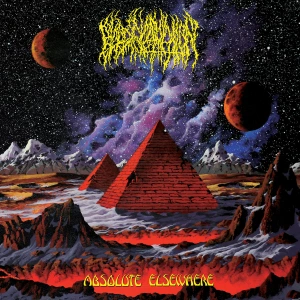
Absolute Elsewhere dominated the voting ballots for our favorite death metal albums of the decade. However, it proved polarizing, with one writer saying, “I’d be down to contribute, only problem is if we get writer consensus and it’s a bunch of lame shit like Blood Incantation or whatever, I probably won’t be that stoked to write blurbs.” Beefs and hilarity ensued in the email chain. Enough so that those who derided Absolute Elsewhere passionately did so, and it would’ve been immoral not to platform their thoughts, since we are a democratic workers co-op, and all dissenting opinions of this magnitude are welcome, even those from our loyal intern Joel Madden.
Seeing as how Absolute Elsewhere was a lightning rod for heated takes, we decided to showcase our arguments for and against it being crowned our favorite death metal album of the decade thus far, albeit begrudgingly.
…
…
Blood Incantation went all the way with Absolute Elsewhere. “The Stargate” and “The Message” each run for about twenty minutes, giving the band room to move through death metal, ’70s prog and electronic music. Blast beats and guttural vocals can suddenly drop away for Mellotron, clean guitar or a long stretch of synthesizers, only for the heaviness to come rushing back.
The guitar work is a huge part of the album’s character. Dense, dissonant riffs sit alongside melodic solos that sometimes feel almost weightless by comparison. Morris Kolontyrsky’s David Gilmour-inspired lead early in “The Stargate” is a great example, bringing a completely different texture into the song before the death metal takes over again. Later, Tangerine Dream’s Thorsten Quaeschning appears on synths, taking the song even further into the ’70s electronic experimentation that runs through the album.
There’s a real sense of freedom and adventure to Absolute Elsewhere. It’s a wonderfully bizarre and highly ambitious record made up of two enormous songs, and it became one of the most acclaimed metal albums of 2024, reaching an audience far beyond death metal. TIME even ranked Absolute Elsewhere the seventh-best album of the year. Blood Incantation’s roots in death metal run through the entire record, but they’re just as invested in seeing how far they can stretch its boundaries. The prog passages have room to develop, the solos are memorable in their own right, and the heavier sections retain their aggression. It’s an album that keeps changing as you listen, with each new direction feeling like a natural part of the record. This record is a reminder of what can happen when musicians are willing to take real risks and see where their ideas take them.
–Lily O’Delia
…
The fact that Absolute Elsewhere didn’t make a strong impression on me is its own sort of condemnation. Blood Incantation’s discography is full of stunning proggy moments. When I hear those sliding, melodic basslines on “Subterranean Aeon,” or the psychedelic reverb-heavy exhalations throughout the bridge of “Hidden Species,” or the huge gong hit (no pun intended) and subsequent clean guitar on “The Giza Power Plant,” I can’t help but grin with that same vaguely conspiratorial glee that I experienced when I used to pore over those Time Life Mysteries of the Unknown books. By contrast, much of Absolute Elsewhere went in one ear and out the other, and the parts that did stand out were jarring genre shifts where the seams between death metal and prog rock weren’t just glaringly obvious–they were of entirely different colors.
I remember precisely two passages on the album after multiple listens. At the two-minute marks on both “The Stargate [Tablet I]” and “The Message [Tablet III],” there are incredibly awkward transitions–or lack thereof–from cleaned-up versions of Blood Incantation’s trademark spacefaring death metal and extended prog sections that feel like entirely different songs from an entirely different band. As mentioned above, Blood Incantation typically punctuates these inflection points with some kind of percussion or perhaps a melodic throughline. Here, we have nothing of the sort, just Dragon Ball instant-transmissions to other, less interesting realms. This incongruity only becomes more pronounced as each movement continues exploring the, erm, far side of Earth’s largest natural satellite, if you catch my drift. When the songs eventually slam back into death metal mode with emphatic OUGHs, I can’t help but wonder what these prog-first excursions contributed to either the journey or the destination.
Some of you fellow prog fans might argue that the genre has always been full of awkward segues. Do I also nitpick those weird double-time bursts of hard rock on Rush’s “Xanadu” or that bizarre funk that bubbles around Robert Fripp’s spiderlike fretboard maneuvers on “Lark’s Tongues in Aspic Pt. 1,” or…[gestures in the direction of Gentle Giant’s discography]? Occasionally, yes. However, I would argue that those moments are as memorable on their own as the musical leaps that precede and succeed them, and that is precisely where Absolute Elsewhere falls short.
–Alex Chan
…
Absolute Elsewhere may not be best understood as a death metal record, although the fact that it came from death metal feels critical to its expansiveness and insistence on driving towards its aims; lots of extreme metal wants to get cosmic, but only death metal wants to open a university about it. In presenting itself as one text, two songs, and six “tablets” all at once, the record invites an approach that processes how its treasures are nested within each other, to be read in various combinations, zoomed-in and zoomed-out on. Blood Incantation’s familiar, titanic death metal becomes a sort of slipstream via which portals containing very different song modes can be entered, absorbed, and maybe reintegrated back into the whole, your close listen becoming a process the same story is received by very different means. I could expand on those portals—there’s the Floydian chants that arise in “The Stargate” and orbit back around in “The Message,” the peak indie cloud-breaking of the opening passage of “The Message,” the part where they visit the Tangerine Dream plane, literally— but at the risk of calling this record a campaign setting, the only way to understand it is to get involved. Absolute Elsewhere is stately, powerful, and gloriously, fundamentally progressive. Metal might be the only genre where it can be a problem if you’re too good to go unnoticed by all but the first ten rows; just ask Deafheaven, or more recently Agriculture. Don’t let a bunch of noise at the gates stop you from passing through. Inside, it’s all music.
–Josh Rioux
…
…
What made me appreciate Blood Incantation’s demo and Starspawn so much when it first came out was how the band would play with progressive ideas while still delivering crushing death metal songs. It sounded like they knew what they were doing and had a competent grasp on music theory without feeling like they got high on the smell of their own farts. Then, Hidden Histories came out. Something felt off to me. I couldn’t place it at first, but after a while I realized that the album was implying grandiose ideas without ever paying them off. After a year of seeing Histories praised to no end in every publication, I wrote the band off as something that wasn’t for me anymore. With the release of the ambient Timewave Zero (a release I, in fact, did enjoy), it became apparent that Blood Incantation wasn’t a death metal band, but merely a band using death metal as a conduit to express their “artistry.” By the time Absolute Elsewhere came out, I was over it. It feels like the band is talking down to you because you “just don’t get it, man,” but with the same patronizing demeanor of a college kid who decided to get REALLY into the Criterion Collection and weed. The big problem is that nothing after Starspawn makes me feel anything. It’s empty.
There was a time in my life when I would have called Blood Incantation one of my favorite modern death metal bands. This was also a time in my life when Tomb Mold wasn’t getting called posers for wearing PlayStation shirts on magazine covers and we had no idea that Sanguisugabogg was going to turn into one of the worst things to happen to modern metal (I miss when they only had that demo about taking a piss or whatever). Unfortunately, that time has passed; I’m no longer the same whippersnapper I was back then in my early ‘20s, when I could down an entire 24-pack of shitty beer in one night and then show up to my shift the next morning half-drunk and KILL it. What I’m trying to say is that things change; sometimes you wake up and realize you do, in fact, get hangovers, and sometimes you hit play on an album and realize that a band you thought was cool are actually dorks. I don’t care about your college thesis; I just want to hear some riffs.
–Caylen Darling
…
I can accept, admittedly, the argument that Absolute Elsewhere is not best described singularly as a death metal album; its balance is certainly a progressive rock album that subsumes progressive and extreme metal elements rather than the other way around. But where for, say, Ne Obliviscaris you can utterly bypass the extreme metal and still have the core of their sound, that isn’t the case on Absolute Elsewhere. Blood Incantation’s lineage as a death metal band is what wields the progressive rock, with it being used in the places a typical death metal band, especially a proggy one, would have mellower sections for heightened contrast. Opeth, a band that was producing predominantly progressive rock records as far back as Still Life, doesn’t have their work of that early era facing this same debate, even if it would perhaps better reframe their later work. This sonic expansion was always on the docket; their demo clearly signals toward the “Vitrification of Blood” 20-minute suite of their debut, which in turn signals toward the inverted 2112 album structure of Hidden History of the Human Race and its similarly monumental Side B suite. Absolute Elsewhere does not represent a pivot of the band from death metal. It is the completion of their vision of death metal that happens to contain these other elements as fundamental pillars.
–Langdon Hickman
…
Absolute Elsewhere is a stapled-together construction of progressive rock and death metal that is so derivative of its influences that it deifies them. I love it, but I have to as it is rather than as a death metal album because approaching it as the latter disappoints. “The Stargate [Tablet I]” pivots away from its voracious opening too quickly and suddenly to fully satisfy one’s bloodlust, a problem that doesn’t exist when the record is taken as a transient being but becomes apparent when considered as a death metal album. It inserts death metal snippets where there should be songs. While the cosmic logic dictating the album allows for this and asks you to rethink the purpose of transitions and cohesion, the groove and harmonious disharmony of death metal is neutered by it.
Death metal doesn’t congeal with its surroundings on Absolute Elsewhere. It sparks against them. Which is not inherently bad, and once again, what I enjoy about the album, but it does nothing to advance the death metal itself. On Starspawn, Blood Incantation turned their ambition into the genre and explored it. Comparatively, on Absolute Elsewhere, their death metal feels inert, as if they put it on hold to expand their parameters. The metallic core remains unchanged since Starspawn. It feels wrong to call an album that’s only half death metal–that death metal being in suspension since 2016–“the best death metal album of the decade.”
Absolute Elsewhere doesn’t mine the carcass dry like Blood Incantation did before on “Viltrification of Blood (Part 1),” but sucks the blood like a mosquito before flying to a new host. The death metal here represents only the easy parts of the genre; what should be elementary in Blood Incantation’s book. And, for a band as good at writing both caveman death metal and death metal that explores the genre’s inner workings, it’s disappointing that Blood Incantation do plunge deeper. Absolute Elsewhere misses the connective tissues, song structures, and other intangibles that separate a token death metal band from one you listen to after leaving the venue. To reiterate, that was the intention with Absolute Elsewhere, and the album benefits from this when it’s taken as being “music with death metal in it,” but when looked at as the death metal album of the 2020s, is it not too much to ask for the death metal to be more than a carousel?
–Colin Dempsey
…
Whereas our favorite black metal albums of the 2020s ranged from single-digit-listener Bandcamp releases to major-label records, staff voting for our collective favorite death metal records of the decade reached a strong consensus. There are seemingly more agreed-upon takes for death metal, at least among devotees. Perhaps it’s because the genre nurtures the stubborn as handsomely as it does the visionaries. It aims and accomplishes what it’s always set out to do, yet is unafraid of ambition or tweaking itself to the chagrin of ne’er-do-wells.
It’s then ironic how many large death metal bands didn’t make the cut on many, if any, of our ballots. Legends like Cannibal Corpse may have received a single vote despite still making good records. Modern acts, including 200 Stab Wounds, Fulci, Gatecreeper, Necrot, Hath, and even Undeath earned piecemeal praise, and don’t even get me started on the lack of attention Sanguisugabogg got (thankfully). In most cases, this speaks to how stiff the competition has been for death metal in the 2020s, which exists in a post-OSDM revival, post-cavernous, post-Maggot Stomp overstimulation timeline. It’s not that death metal is in a new era per se, just that in 2026, the waves that marked the late 2010s and early 2020s have crested. The playing field is more even. Tastes have returned to the tabula rasa–death metal that’s good.
To summarize what death metal has been in the 2020s would be as large of a misnomer as it would’ve been to encapsulate its 2000s or, hell, 1990s stage. Based on our picks, the genre is weird, varied, and forward-thinking, while remaining strongly devoted to its founding ideals.
–Colin Dempsey
…
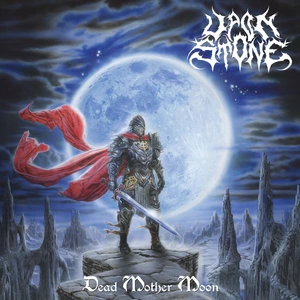
There’s a theory that I’ve heard going around these last few years; what you liked when you were kid is what’s actually cool, and what you liked when you were a dweeb in high school is actually lame. When I was a kid, I thought dragons, big-ass swords, knights, and castles were cool. Now at 30, I realize that kid-me was SPOT ON. All that to say, Dead Mother Moon features an album cover with TWO of those combined. We got a Knight holding a Big-Ass Sword , and yeah, it’s awesome, though its appeal doesn’t end there. How about some of the best melodic death metal riffing to ever emerge from the USA? Upon Stone tears through thirty minutes of the most European-ass music not to come out of Gothenburg that I’ve heard since first discovering The Black Dahlia Murder’s Miasma in 2005. Absolutely killer.
–Caylen Darling
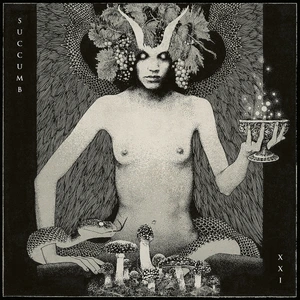
Throughout XXI, Succumb moves between death metal, hardcore, grind, and black metal, often switching pace several times within a song. Derek Webster’s dissonant guitar riffs and Kirk Spaseff’s bass play against Harry Cantwell’s aggressive drumming, while Cheri Musrasrik’s vocals give the record much of its appeal. Her harsh screams and growls at times have the rawness of hardcore vocals. “Lilim” opens at full speed, while “Maenad” moves between frantic passages and slower stretches. The six-minute “Smoke” crosses back and forth between fast, chaotic passages and languid riffs. Musrasrik finds inspiration in mythology, literature and history, writing about subjects ranging from the Boxer Rebellion to Arthurian legend. XXI is abrasive and unpredictable, constantly shifting in pace and intensity, and that restlessness is a large part of what makes this record memorable and exciting.
–Lily O’Delia
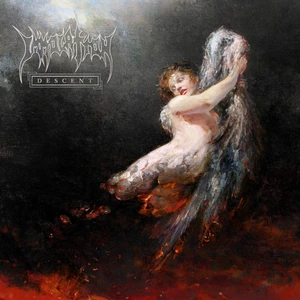
Immolation is absolutely in the conversation of greatest death metal band of all time. Their consistency is just as remarkable as their quality and their philosophy of “no gods, just riffs” has served them extremely well over the decades. 2026’s Descent only strengthens their case. It’s a monstrous album that delivers exactly what people come to Immolation for: incredible, monolithic, pummeling death metal.
The production is magnificent. The guitars are thick and imposing, while the rhythm section has all the weight of a runaway freight train. Finally, the blast-furnace-like vocals are delivered with the gravitas of a sermon. Immolation’s unyielding aggression towards religion feels more appropriate now than ever and it has resulted in one of the best albums of their esteemed career.
–Kevin Zecchel
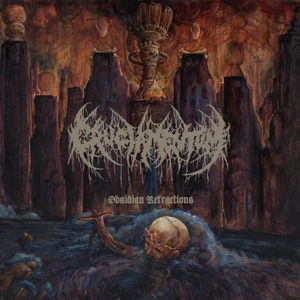
Cruciamentum always stuck out to me amid the 2010s wave of cavernous and atmospheric death metal. 2015’s Charnel Passages went triple platinum on my Bluetooth speaker when I was toiling away working a dead-end job at a Midwest pizza shop, and I feared that there’d never be a proper follow-up to that masterpiece, considering the gap between Charnel and Obsidian Refractions spanned nearly a decade. Luckily, Obsidian picks up exactly where they left off eight years prior, dragging you into doom-laden graves of morbid macabre metal and rising like the undead to stand above their brethren and proving they aren’t just another Incantation clone.
–Caylen Darling
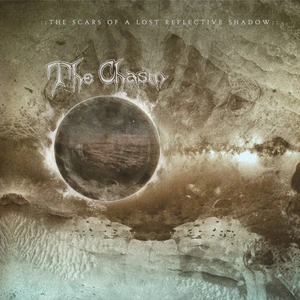
People often talk about how long-running bands, especially extreme metal ones, usually suck after their first few albums. Death metal bands that are still killer over 30 years later are celebrated for a reason: it’s pretty rare. The Chasm are one of those rare bands, and after decades of mind-bending, iconoclastic death metal that blends elements of heavy metal, progressive thrash, and longtime songwriter Daniel Corchado’s myriad other musical interests, they came back with their most aggressive album in years, The Scars of a Lost Reflective Shadow. The album preceding it was instrumental, and the couple of albums before that were fairly sparse vocally, so it was a pleasant surprise to hear Daniel not only doing vocals again but writing such a raging, ferocious album–probably the most intense The Chasm album since the 1990s. The Chasm is one of my favorite bands ever, and if The Scars of a Lost Reflective Shadow ends up as their swansong, it’s a fine one.
–Brandon Corsair
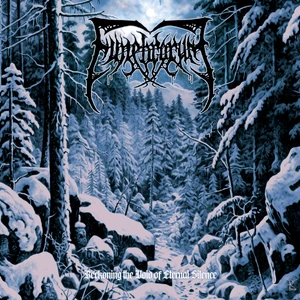
After a nearly two-decade drought of new music, New Jersey’s Funebrarum returned earlier this year with Beckoning the Void of Eternal Silence, a death-doom tour de force that is primed to push hard for year-end lists but also finds itself being honored for this decade of death dominance. One listen to the title track will make quick sense of this; this is an old-school album with production that provides the ample griminess that often gets sanitized by the genre today. Tracks like “Sa Nagba Amāru” and “From Rotting Burial Shrouds” come across in traditional Finnish death metal fashion, both in the growling vocals as well as the doom dirges, which lack speed yet provide ample heft to this substantial slab. Funebrarum expertly balance extremity and simplicity for an excellent equilibrium from start to finish.
–Tom Campagna
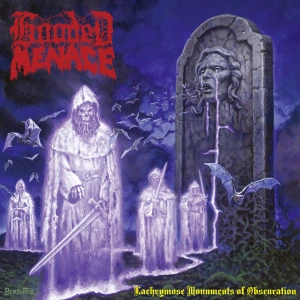
Finnish death/doom mainstays Hooded Menace have been on a stratospheric trajectory since their 2008 debut, Fulfill the Curse, and 2025’s Lachrymose Monuments of Obscuration convincingly continues this trend. From the first notes of “Twilight Passages” to the final dirge-like melodies of the closer “Into Haunted Oblivion,” every riff and harmony that Lasse Pyykkö conjures up is an earworm that entwines the darkened grime of a haunted tomb with the sophisticated expression of a seasoned poet, all while Harri Kuokkanen cataclysmically bellows. Lachrymose stands as the platonic ideal of the band’s sound, captivating and enthralling the listener at every turn. For a band to continuously improve and release the best material of their career nearly 20 years in is frankly astounding, and yet Hooded Menace have done so without the slightest inclination of slowing down or losing steam.
–Eric Wing
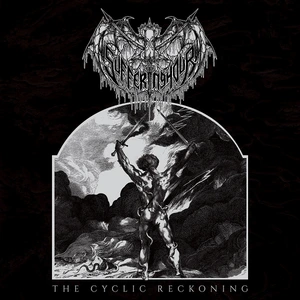
Hair-splitting about whether The Cyclic Reckoning is more black metal or death metal misses that it’s of both worlds, challenging two sets of expectations through psychedelia. As genre lines blurred through the 2010s, to the point that now “blackened death metal” and “black/death metal” are arguably referring to two separate subgenres, Suffering Hour’s second album came early in 2021 to blur them further. It does so by pulling as much from Blut Aus Nord as it does Gorguts, with as much unpredictability as that combination implies. It’s a psyche at odds with itself, negativity and self-assessment permeating through serpentine guitar lines and unconventional song structures. Genre be damned; nothing much sounds like The Cyclic Reckoning.
–Colin Dempsey
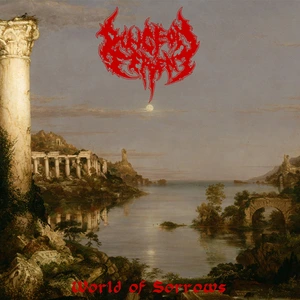
As a disclaimer, I released this album on my record label back in 2021, so I’m a little surprised my editor assigned me this one! Anyways, World of Sorrows is great proof that death metal doesn’t have to sacrifice meanness to be melodic, and the band’s self-proclaimed genre of “brutal melodic death metal” feels as exciting to me now in 2026 as it did when I first heard Dungeon Serpent. In the 1990s, there was a brief time when bands like Desultory, Amorbital, Kataklysm, and Intestine Baalism pushed the boundaries of what death metal meant with a mix of ripping death metal riffs and gorgeous melodies, but for the most part that went away as melodic death metal spun off into its own ever more saccharine direction and death metal largely relegated melody to window dressing rather than a centerpoint of the music. Coming off the “caveman” and cavernous trends of the 2010s, World of Sorrows felt like a breath of fresh air to the scene, and I still listen to it regularly.
–Brandon Corsair
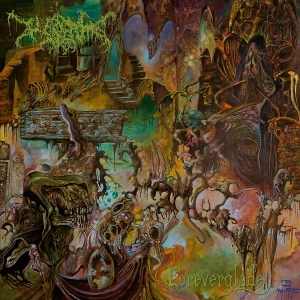
Worm’s Foreverglade pushes death-doom into wonderfully strange territory. The Florida group creates a swamp of down-tuned riffs, deep growls, and funeral-doom pacing, then cuts through it with some of the album’s most distinctive features: bright, intricate guitar solos and eerie synthesizers. The contrast gives songs like “Murk Above the Dark Moor” and “Cloaked in Nightwinds” a surprising amount of movement, shifting from drawn-out doom passages into melodic leads and bursts of death metal. Nihilistic Manifesto’s solos are especially memorable, bringing a distinctly classic heavy metal feel to the album’s murkier death-doom. Worm also make their Florida origins part of the album’s identity, translating the decay and strange beauty of the swamps into sound. Foreverglade remains one of the decade’s most distinctive expressions of death-doom.
–Lily O’Delia
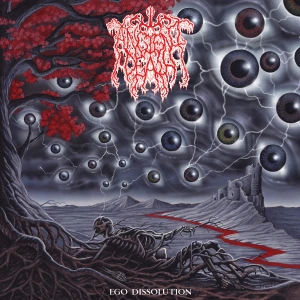
Massachusetts-based Ancient Death’s 2025 album, Ego Disillusion, is an ode to OSDM that also synthesizes genre-adjacent elements of doom and progressive, and I can’t tell you how refreshing it is to hear a quality, mid-paced death metal album these days. The guitar mix and capture are on point, the tone dripping with atmosphere that intermingles with a bassline that has just the right amount of reverb. The drumming isn’t an annoying cacophony of blast beat buzz and drives everything forward in a way where every strike is allowed to breathe. The death growls are pretty standard compared to the layered nature of the instruments, but are accentuated by some interesting occasional clean female vocal cuts from bassist Jasmine Alexander. Perhaps the star of the show is the memorable solos that permeate the six songs and two instrumentals on the playlist, reminding me of the best aspect of the genre that Ancient Death clearly respects and has an acuity for. An inspired debut from a young band that’s clearly had some good ideas in waiting for a while.
–KAOS_agent
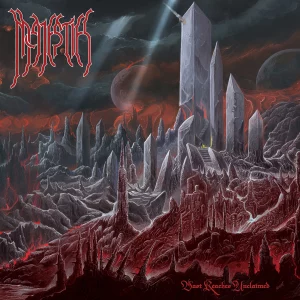
By 2023, melodic death metal was a shell of its former glory and desperately needed a swift kick in the ass. Enter: Vast Reaches Unclaimed. Courtesy of 20 Buck Spin, what Minnesota’s Majesties delivered on their debut record is nothing short of a revelation, pulling influence from the earliest material of Ceremonial Oath, Dark Tranquillity, Eucharist, In Flames, At the Gates, and so many more. The end result is Vast Reaches Unclaimed, a scintillating and ferocious exhibition of gallant riff wizardry that has since stood unmatched. If there was ever a case to be made for melodeath bands to start taking influence from everything that came out before 2000, Majesties presents about as convincing a case as I can think of. Put simply, if No Fashion Records founder Tomas Nyqvist is raving about your record, you’ve done something truly special.
–Eric Wing
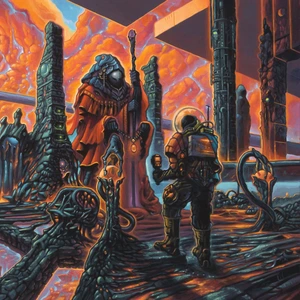
“Less is more” is a perfect example of how quippy truncation means a loss of fidelity of thought. The better axiom is “every new detail changes the whole,” which opens up the obvious understanding that maximalist projects can quickly become unpredictable and unwieldy in a literal sense. Cryptic Shift build off of the school of macro-scale avant/progressive death and thrash in the vein of greats like Gorguts, Mekong Delta, and Edge of Sanity, allowing a narrative substrate to exist so as to justify a deliberately open-ended composition. This is not the lazy longform work of drone or ambient artists letting an algorithm generate a multi-hour track and calling it a day. Any one of the 20+ minute tracks would have made a fine standalone release, replete as they are with a Dark Angel Time Does Not Heal-sized number of riffs. That it has both, each masterful suites, plus a scattering of “more approachable” 10-minute tracks achieves a thing that can only come about from more. You soar across what feel like universes of riffs, replete with their own flora, fauna, atmospheres and oceans, and still the horizon of space stretches onward.
–Langdon Hickman
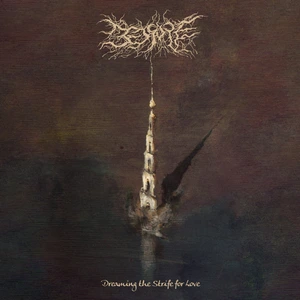
Bedsore’s debut album was a dream-like haze that showed promise and experimentation while still staying mostly in well-trodden OSDM territory. Then, they followed it with Dreaming the Strife for Love, an album that accelerated their growth unbelievably quickly. It’s as much indebted to ‘70s prog and psych as it is death metal. Being from Italy, Bedsore is clearly taking inspiration from acts that were a part of the prog rock scene the country boasted in the 1970s, such as PFM or Banco del Mutuo Soccorso.
There are places where Dreaming only barely resembles a metal album, featuring a greatly expanded palette of arrangement ideas and instrumentation, including keyboards, organs, trumpets, saxophones, and flutes. Harsh vocals echoing up through the sonic veil and pummeling blastbeats pummeling remind you that you are still listening to death metal. It’s a complex album with incredible ideas and execution.
–Kevin Zecchel
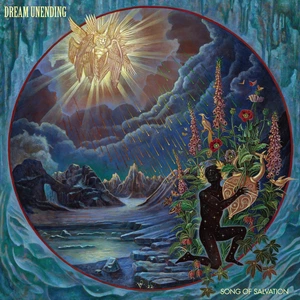
A distant allure calls you toward unreachable havens: the voice of a siren from a galactic paradise. It beckons heavenly, withholding its claws until you’re close. Dream Unending is an international collaboration between Derrick Vella (Tomb Mold) and Justin DeTore (Boston Strangler, Rival Mob) with oceanic guitars and beastly gutturals that hide a monster. Song of Salvation floats on melodic guitar oceans, pushing you out into the beyond until you’re grabbed by a vicious growl. Slow throughout the pleasure and pain, each track makes you bask in their beautiful chaos. These five songs across 43 minutes are a perfect amalgamation of evil and good, blending into a darkness that destroys euphoria.
–Aidan Sibley
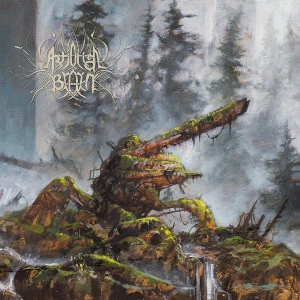
Artificial Brain’s first three albums are among the best technical death metal releases this side of Colored Sands, eschewing the flashy guitar solos and tempering the gnarled dissonance that define the polar extremes of the genre for a sound that is all their own. This 2022 self-titled release marked a turning point for the band: while the live lineup had always featured a rotating crew of musicians, Artificial Brain was the final album to feature vocalist Will Smith and drummer Keith Abrami. It thus became a fitting sendoff for these founding members and a reaffirmation–nay, a celebration–of the band’s uniquely unnerving and gorgeous storytelling. Witness concatenated arpeggios crystallize into icy rings as if formed from the remnants of a shattered moon; a calculated orbital bombardment reduces craggy mountain ranges and once-proud capital cities to the same grey ash; the twin-sun twilight is shattered by the shuddering, subsonic death rattle of a cybernetic civilization. Artificial Brain will never sound quite like this again, but the universe is vast, and the next phase of the band’s journey will certainly take them to uncharted star systems far beyond the range of our sensors.
–Alex Chan
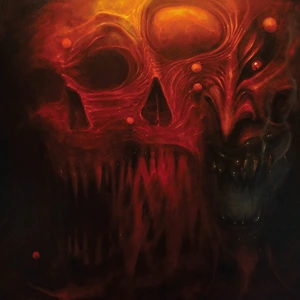
The spiritual inheritors of later Death’s thrashy brain-maze innovations, Horrendous’ signatures are their emotional heat and their impression of organic liquidity, their compositions molten forms feeling less shaped than grown and whipped into morphic frenzies in real-time. Ontological Mysterium contains all the sinewy riffage and whiplash pivots of their excellent earlier records, but finds new air in absorbing some of the lovely melodicism and epic scope of gothic side-project The Silver, resulting in a record that feels both warmer and more formally expansive than what came before. Matt Knox’s raven-throated shrieks still carve through the upper reaches of these tracks, but his open-hearted cleans pour like elixir down through the mix, too, while the band proves they can do seemingly anything and make it fit the bar, from gorgeous, fruitiger aero jazz to solar prog, architectural, sky-scraping thrash, and screaming blood-hot death. Album highlight “Chrysopoeia (the Archaeology of Dawn)” literally translates to “the making of gold”, a term that fits pretty well for what may be the most alchemical death metal band of their era.
–Josh Rioux
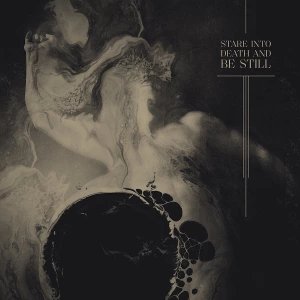
Attempts to define death metal in a narrow musicological sense fail inevitably because its aesthetic driver is a sensibility and not a strike sound, a way it makes you feel rather than a thing it does in an easily musically describable way. Ulcerate have never played death metal per the traditional conception, but their furious combination of brooding and bleak post-metal composition with frenetic death metal drumming and vocals assembles to only one nameable shape (aside, perhaps, extreme prog metal). Stare Into Death and Be Still takes the emotional clarity of their otherwise quite avant-garde approach to the genre and brings it to icy deathgazing, creating a sense of being suspended in void of oil. The despair of their earlier work and the fury of the record to follow is temporarily halted here; instead, there is a sense of deep horror, a total fixation on the point of consciousness dissolving within the brain and the fundamental terror that poses. It is, literally, metal of death.
–Langdon Hickman
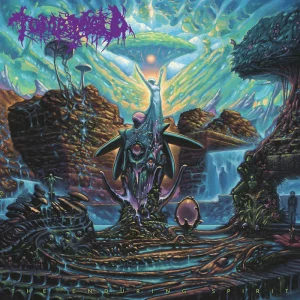
Tomb Mold’s brand of tastefully technical pummelling always served a higher purpose than its own sake, and on The Enduring Spirit, they went beyond the abstract and into the ethereal, as in: “Everlasting dream intravenous / Auric bliss in referentia.” Fittingly, the music—and especially the solos—are exploratory and satisfying rather than flashy or masturbatory, the result of (painful?) growth and evolution. Indeed, the four years between Planetary Clairvoyance and The Enduring Spirit was required for the mixture of their first three records in quick succession to stew in a cauldron. What comes next is anyone’s guess, but it sure as shit’s gonna be a wild fuckin’ journey of discovery.
–Steve Lampiris
Heilung is waking up. More than a year has passed since the world-famous ritual collective’s last performance. Now, after a period of rest, they are officially ending their hiatus. This October, Heilung will return to Lava Studios to begin work on their highly anticipated fourth full-length studio album.
“When Heilung creates its magic, we do so by fully immersing ourselves in our bubble by closing the doors to the noise of the outside world, which these days, between automation and conflict, seems louder than just a few years ago”, Heilung says.
“In German, Heilung means healing. It speaks to one of the core intentions for our project: to heal. Because healing is needed and has always been needed”, they continue. “The path the band has taken, and will remain committed to, is deeply rooted in history, spirituality, and art. It will not be influenced by any modern ideology, trend, or form of automation.
“Heilung lives between all this. It lives in the imperfections between the perfect. It lives in the grass and, sometimes, the thorns beneath our bare feet. It lives in laughter, crying, love, and fear.
Everywhere you focus, there’s a door that leads to healing. Heilung guards this door and welcomes you inside”.
As the world eagerly awaits their next official studio album, today, Heilung is excited to reveal Sagas, a special amplified gift from the past that they will soon share with their fans.
“This is no ordinary Heilung release”, the collective says about Sagas. “This is something special”.
Sagas collects the recordings Heilung made in collaboration with computer game developer Ninja Theory for Hellblade II: Senua’s Saga. It includes unheard recordings that do not appear in the game.
“Eight years ago, we began collaborating with Ninja Theory”, Heilung says. “This led to a long, intensive and hyper-creative period that focused on the crossroads between vast Icelandic landscapes and the innermost corners of the human mind. Some of the sounds we created found their way into Hellblade II: Senua’s Saga. However, many did not. Until now, with Sagas. Soon, these recordings of our travels from deep underground ice caves, over bursting volcanoes, through endless lava deserts and into the very depths of our own minds will be released in their raw entirety”.
Heilung doesn’t play shows. They perform a ritual. Every performance begins with Kai Uwe Faust leading Christopher Juul, Maria Franz, and the rest of the Nordic collective in an ancient prayer. Soon after, the audience is swept into rapture, swayed by incense and throat singing, primordial rhythms, subtle electronic textures, a mesmerizing light show, an army of warriors, and bursts of fire.
Since they began in 2015, Heilung has been paving melodic paths to the past with their unique and mystifying sound. Evading all conventional genre tags and the confines of any specific label, the group aptly describes their sound as “amplified history,” emphasizing their ability to connect modern society with the rudiments of humanity’s beginnings through music.
“Our ancestral Nordic civilizations did not just pop up, exist, and disappear in isolation”, says Faust, a throat singer and one of Heilung’s three composers. “With singing these primordial songs, we want to give tribute to these cultures, reconnect to the beginnings, and remember that we all, from East to West, from past to present, are connected through the exchange of ideas and inspiring each other”.
While Heilung features authentic and archaic instrumentation that ranges from rattles and ritual bells to human bones and throat singing, their captivating brand of music is far from primitive. Producer and founding member Christopher Juul implements subtle electronic elements that elevate the musical atmosphere and provide a more in-depth and layered soundscape.
Indeed, Heilung’s success has been unprecedented, achieving milestones in its few short years of existence that many do not see in a lifetime. The collective already had rapidly been growing a buzz upon the self-release of their first full-length Ofnir in 2015, but their dizzying upward trajectory really took off from the moment they set foot on the stage at Castlefest in 2017 for the now-legendary debut of their live ritual. Luckily for those who were not fortunate enough to bare witness to this magical event, the full ceremony was captured on film, having since been viewed by tens of millions of fans across the globe.
As Heilung trekked across Europe and brought their mystifying experience to new audiences, talk of this new band and their stunning ceremony made its way to Season of Mist label owner Michael Berberian, who quickly offered the band a record contract after seeing their undeniable musical impact for himself.
Heilung has performed their rituals all over the world. After completing their 2025 Amplified History tour, Heilung went on hiatus. After a restful period, in September 2026, the collective announced that they would return to the recording studio in October to record their fourth studio album. They also announced Sagas, which collects the recordings they made in collaboration with Ninja Theory for Hellblade II: Senua’s Saga.
More information about Sagas is coming soon.
The post HEILUNG Enters Studio for Next Official Album “Sagas” appeared first on Sonic Perspectives.
In April, the young-ish Chicago quartet Friko released Something Worth Waiting For, a staggering indie rock album we rated as one of this year’s absolute best. This Friday, they’ll release an expanded version of that record. After sharing “Necessary” along with the announcement, the band followed up this week with another bonus track, the raw and catchy “Dirty Diamond.” It does that thing so many Friko songs do well, where all the members play with wild abandon without ever falling out of sync. Bailey Minzenberger’s drums feel especially unhinged here.
The post Friko – “Dirty Diamond” appeared first on Stereogum.
That song was previously exclusive to the Japanese release of “Death Above Life”.
The post Orbit Culture Launch “Nuclear God” Music Video appeared first on Theprp.com.

Soulfly and Nailbomb lay waste to the grounds of London as they strike the ignition with a groove Metal dose of nihilistic and tribal power – a fitting reminder of the mammoth legacy Max Cavalera is nowhere near finished carving out.
Words: Lucy Dunnet
Photography: Dominic Beaven
Hailing from Gloucestershire, Prodigal show up to support the Nailbomb + Soulfly extravaganza with a blend of grunge, alternative, nu-Metal, and shoegaze that immediately has the crowd whispering, “Ooh, Deftones.” Deftones, but with less seduction and more grit.
They start torturously heavy, then lean into some chilling melodies and even some Korn-esque “boom da da booms” that sound like frontman Stan Kayley’s vocal cords have been run through a shredder. It is great.
“I don’t wanna see you waste another second of your life. We set the tone, and then they [Nailbomb and Soulfly] come out,” barks Stan at the crowd of nodding Churchill dogs who have not quite found their dancing feet yet.

With their neck-whipping riffs, spasming vocals and the overall heady atmosphere that this four-piece breathe out whilst on stage, Prodigal may not physically warm the crowd up, but they certainly get them excited.
It is almost too easy to forget that witnessing Nailbomb live is still a totally nutty experience that was never meant to happen. Up there as one of Metal’s greatest one-album, two-show wonders, the Nailbomb duo of Max Cavalera and Fudge Tunnel’s Alex Newport released Point Blank in 1995, played live twice – including their legendary set at Dynamo Open Air Festival – then nada for over 30 years.

During an interview with Metal Hammer discussing the reason behind Nailbomb’s resurrection in 2024, Max said, “The main reason is that I just really love the Point Blank record. It’s one of my top five records of all time. I learned so much from making it, that there’s this other way of making music, which is total freedom.”
It is that total freedom that swarms London’s The Electric Ballroom tonight. Chants of “Cavalera” heave through the venue and, despite morphing into a SpongeBob SquarePants sing-song, serve as a warm welcome for the Cavalera-led crew that take over the stage.

“I never thought I’d be here, playing with my son Igor,” Max says mid-set, the pride and joy evident on his face as he looks to the guitarist on his right.
With the stench of the devil’s lettuce bringing out the green in Max’s wayward curls, tonight’s iteration of Nailbomb whip through the primal Point Blank tracks with reckless abandon as the crushing change of pressure in the room gives way to a suffocating push pit and eager crowdsurfers.

From Wasting Away all the way through to Sick Life, it is filthy chaos incarnate. The no-fucks-given nihilism that is the make-up of this record comes out in an unwieldy purge on stage, with foot-stomping, fists flying, and Pig Destroyer’s Alex Cha windmilling over his sampler like he is the last wind turbine standing in the face of an apocalyptic catastrophe.
It is “bloody awesome”, wheezes the crowd when the band leave the stage to make way for Soulfly.
As the crew cover the stage in camo netting, Max is offered a short break of respite before returning with his trailblazing groove Metal group, Soulfly.
With their splintering thirteenth album, Chama, released at the tail-end of last year, Soulfly have been charging around the world, not so subtly proving to everyone that they are still very much setting the world ablaze.

Soulfly are a band that could just as easily power up a rebellion as they can a whole room of sweaty moshers. Every scream and thumping riff comes straight from the crumbling streets of Belo Horizonte, Max’s birthplace in Brazil and the place where he found Metal in the same way a drowning man finds oxygen.
Every song, be it No Hope = No Fear and Bumba from their self-titled ’98 album, or Chama’s No Pain = No Power, give The Electric Ballroom a serious blast of pummelling, hair-ripping groove power.

The crowd bounces all over the place, one moment a sea of warriors celebrating post-battle, the next a group of a couple of beers in football fans, egged on by every “OOH OOH AI AI” chant Max leads from the front of the stage (of which there are many).
Warbringer’s Chase Bryant looks perfectly at home on the camo netted-up, tribal grounds of Soulfly, weaving in between his bandmates with his feet out. Maybe going barefoot is a secret knack for bass players because the weighty four-string becomes the growling engine of tonight’s turmoil.

“In Capoeira, we clap to the beat,” Max instructs as he brings out a berimbau for a scratching, stripped-back rendition of Umbabarauma. As if veterans of Capoeira displays, the crowd claps, chants and sways to the glistening notes and booming commands coming from this Brazilian legend.
Max Cavalera looks happier than most people even a third his age to be on this stage, and becomes the leader of a tribe we all want to be a part of, and can be, so long as we scream “porrada” and move to the beats of Soulfly’s hypnotic drums until the very last blast fades.


