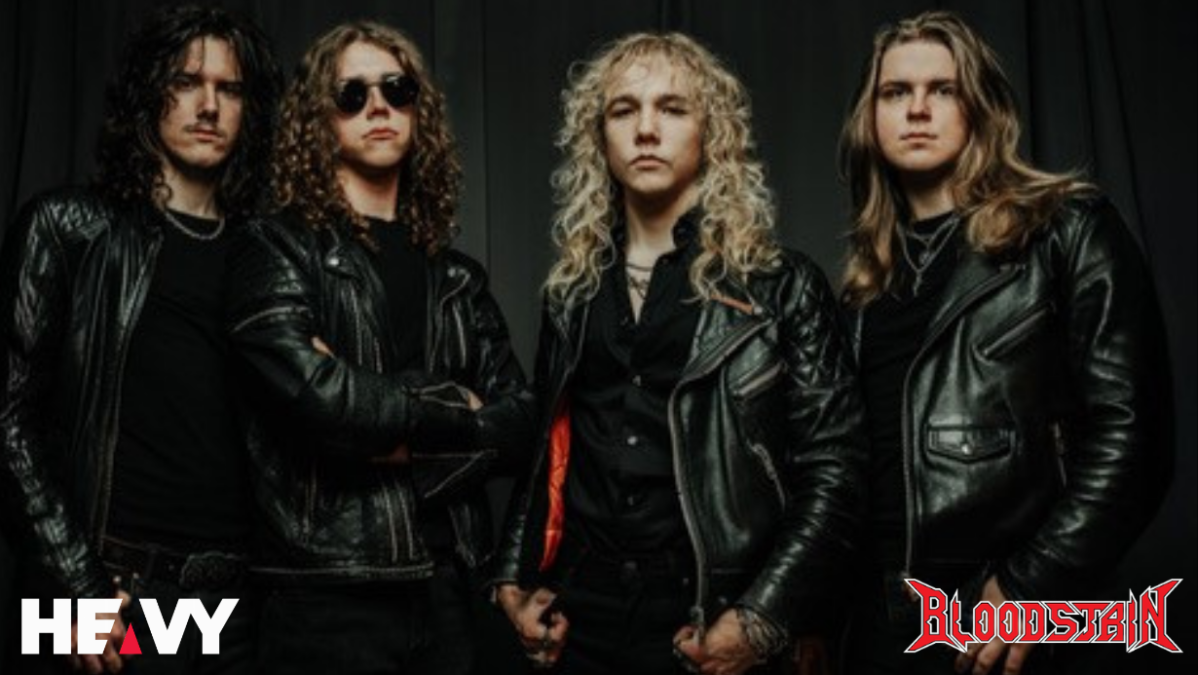
 Every now and then, a band comes along that leaves a massive, unforgettable dent in the heavy music landscape right out of the gate. If you have been paying attention to the underground metal circuit lately, you already know that Stockholm’s very own heavy metal prodigies, Bloodstain, are exactly that band. Ever since they burst […]
Blog
-
BLOODSTAIN: Laying It All On The Line With Self Titled Debut Album
Every now and then, a band comes along that leaves a massive, unforgettable dent in the heavy music landscape right out of the gate. If you have been paying attention to the underground metal circuit lately, you already know that Stockholm’s very own heavy metal prodigies, Bloodstain, are exactly that band. Ever since they burst […] -
Lisa LeBlanc Shares New Single “A Fleeting Thought Becomes Another Fleeting Thought”
Polaris-nominated Acadian songwriter Lisa LeBlanc has today announced her new album, Patchwork, out 29th January 2027 via Bonsound and -
Getting Dumber Share New Video
An album about trying to remain authentically human in an increasingly artificial world. 11 future clock-rock and hour-pop -
TVOD Release New Single “Bottomless Pit”
Brooklyn based rockers, TVOD have today released the fourth and final single,”Bottomless Pit” from their forthcoming second album, The Farm, -
Advent Horizon – Falling Together Review
WORDS
The post Advent Horizon – Falling Together Review appeared first on Last Rites.
-
Epitaphe – III Review
There’s nothing quite like that sense that you get as a listener that you’ve fully connected with an artist through their music. There’s about a million ways it can happen, from simple appreciation of the music and its elements to empathy elicited through sound and story and, of course, emotion kind of sits right at the center of it all. The music may or may not parallel your experience exactly, but there is a certain magic in the realization that you may be experiencing the music just the way the artist imagined.
France’s Epitaphe make doom/death, so the appeal to darker emotion is blunt and unapologetic. Their approach to songwriting, however, is neither, instead exploring the nuance within the broader experience of heavy emotion as it relates to and is affected by the darkness. On their third album, III, there is a continued emphasis on sound as metaphor for emotion, songwriting as a model for its process. Across five songs in 54 minutes, the album runs the full range of tone and texture, its light both ever-present and -struggling.
Release date: September 11th, 2026. Aesthetic Death (CD + LP) and Gurgling Gore (MC).The album art is a terrific place to start. Looking closely one can discern direction in what initially feels like a static image; the border represents transition, active and persistent. The silvery blue space dominates, having encroached unforgivingly on the golden meadow, which confirms the perspective offered by the album’s third song and centerpiece, “Spring Frost.” If you’ve lived in an area that gets spring frost, you know that it can be sudden and catastrophic, a cruel mockery of the fragile hope in nascent buds and sprouts. And you only need to be human and a little insightful to see the parallel, perhaps remembering a time when you were coming out of a dark period and just beginning to feel good about things again, however cautiously, only to find yourself laid low by some unexpected misfortune, or maybe just the fucking blues out of nowhere, all of it carrying extra weight because the light had just been so close.
The opening five minutes or so of “Spring Frost” are genuinely serene, swaying between comfortable and detached. Gently picked acoustic guitar and bass dance delicately with oblique rhythms, textures, and effects, imparting a tautness, a thinning skin over blooming malignancy. Saxophone drifts and sweeps in and out of angles as darkness approaches with dissonant guitar until the full crush of winter falls over nearly ten minutes of bludgeoning dissonant doom and death. Even as so much death/doom (and other subgenres, for that matter) capture the essence of that emotional weight so well, “Spring Frost” frames it especially in the details, reflections and wisps, as if to remember, “There was sunshine! There was warmth and beauty!” rendering the blight all the more disheartening.
Those subtle but critical lines and arcs and gradient light on an otherwise dark canvas offer simple implications for contextual imagery. The brief acoustic opener “Half-Light,” for example, is sad but warm, and it echoes softly, suggesting perhaps a large empty room, a lonely chair next to a darkened window with sheer white curtains, the sort of setting in which such a song might be written. Strange percussion and other effects help to foreshadow the coming storm of “Windswept,” as distorted snare hits land like sleet against outside walls, weird little whispers like wind through cracks, separations in the walls and windows. When the first proper song finally opens it is big like bad weather and brings similar feelings of awe and dread, frightening in its breadth. Like a raging derecho front, the band is at full blast from the first seconds, conjuring the awful power of wind, rain and sleet, thunder and lightning. Immolation, Incantation, Dead Congregation.
The midsection of this 16 minute epic brings the listener back to the quiet room, if they’re so inclined, and poignant contemplation, a break in the storm. The strange percussion returns, now more clearly distingushiable as decayed snare and hi-hat, staccato static like rain on the windowpane, a little like Fuubutshushi’s ambient jazz or maybe the gauzy apparition of Paul Motian. It’s warm here and safe, for now. Saxophone and guitar move together, melody coalescing but then struggling against dissonance until big riffs push it back into the relentless dark and shades of Opeth and Ikuinen Kaamos. The final minutes of ringing harmonies might recall Drudkh’s exquisitely painted twilight skies. As with each of the songs on III, the details in “Windswept” play a critical role in shaping transitional movement, even if it’s left to the listener whether the shift might be out of the darkness or ultimately back into it.
Coming out of “Spring Frost,” “Transient” whispers and embraces with warm acoustic melody and a touch of melancholy in portending the album’s epic closer, “Liminal.” Carefully packed with progressive ideas, “Liminal” courses through suffocating funeral doom to progressive death metal in a haze of ambient-electronic effects for what feels like a hypnagogic terror trip. After ten minutes in the maelstrom, the listener is granted respite, surrounded by wistfully ringing guitar and misty percussion.
In the midst of the darkest night, we find shades of lighter gray, slivers of light. And even as the sun dissipates the dark, it will be obscured again. Everything is temporary, fleeting. Good or bad, this too shall pass. And that might be the point. Whether by enlightened acceptance or exhausted resignation, there is peace in acknowledging the inevitability of change, if one is willing. The notion of impermanence is right there in the song titles on III and, at the same time, the execution of the thematic devices throughout these thoughtfully crafted songs give the album a remarkable depth that offers not just an interesting perspective, but an exposition of experience that leaves itself open to whoever might relate in whatever way, depending on how it resonates with them.

The post Epitaphe – III Review appeared first on Last Rites.
-
Interview with Wytch Hazel
One of the most interesting acts to come out of the United Kingdom is Wytch Hazel. And since they performed at Wacken Open Air, we had the chance to chat with them.
Benedetta
Hello guys, how are you doing guys today?
Wytch Hazel
Very good, very warm.
Benedetta
And you’re playing Wacken in the legendary 35th anniversary edition. How do you feel?
Wytch Hazel
It feels exciting. I’m 35 years myself, so it feels quite special. I was born when Wacken was founded, so it’s very exciting. It’s meant to be. I’m actually quite honoured as well. I think we mentioned in this festival, early in the band, one day we’ll hope to play Wacken and then years later, finally we’re here. It’s crazy, isn’t it? It’s a privilege. It’s a great show as well. The crowd are lovely. Really cool.
Benedetta
So, you have obviously a lot of experience in playing live shows, but you also are experienced in the studio working on music. Do you think that the life of an artist is a lonely life?
Wytch Hazel
Depends how you live it, I’d say. We don’t tour quite a lot. We still have full-time jobs, so we just live like normal people. We have partners we come home to, and pets, and family. To us, for me personally, it doesn’t feel lonely. When we are touring, we all get on so well. It doesn’t feel like isolation. Sometimes it’s nice to be on your own. I’m quite an introvert, so sometimes it can be too many people. It’s nice to take yourself away and put your needs out here. I think we’re all pretty grounded by now. We can be around people and talk. Other times, we’ll take ourselves away and just be at peace, I guess. We all live in the north of England, don’t we? Where there’s lots of nice walks, if anyone wants to visit.
Benedetta
Do you think that we will ever reach some equality between men and women in the metal world?
Wytch Hazel
We’d like to think so. We’re all advocates for equality, really. I think we’re seeing signs of positive change. I’ve seen a lot of more female-fronted bands. People are wanting that, the catalyst for it is that the fans want that. It’s cool. We want variety. I think there’s a lot of positive steps forward. Loads of legacy bands are recruiting women now to replace members that are leaving as well, which is obviously positive. You just need more women to do it: more women see it, more women feel like they can join in. We’re getting there, I think. I’ve noticed quite a lot of positive attitude. I feel like that’s moved on. I always like to think that when I see someone playing a stage, that’s an excellent musician. I don’t say that’s an excellent female musician. That’s the sort of attitude we should all be taking. Everyone should be welcome. I’m looking forward to seeing a few bands that are actually playing. I saw Castle Rat, we played with them in France, didn’t we? They’re pretty cool. We actually stole some of their stage gear. We were all dressed in white white, and they had a white dress, a wedding dress. They were rushing around just before their set and we took the wedding dress. We didn’t steal it on purpose, because we were dressed in white, we thought it was ours. Most bands don’t have white clothes. We just picked up all the assorted white cloth and shoved it in a suitcase. They were cool about it, to be fair. But we gave it back as soo nas we realized our mistake.
Benedetta
Guys, thank you so much for taking the time to do this. Is there anything else that you want to add to our viewers and readers of fan metal?
Wytch Hazel
Just keep supporting music, underground music scenes. Probably not just in heavy metal genre, I think. We’re really grateful for that, so please continue.
The post Interview with Wytch Hazel first appeared on FemMetal – Goddesses of Metal.
-
Barbican Estate Announce Second Album ‘Rock Drill’
Tokyo-formed, London-based trio Barbican Estate return with their most expansive and experimental record to date, featuring new singles